hde 100c chapter 14
 Call Kai
 Learn
Learn Practice Test
 Spaced Repetition
 Match
Match Flashcards
 Knowt Play
1/28

There's no tags or description
Looks like no tags are added yet.
Name | Mastery | Learn | Test | Matching | Spaced | Call with Kai |
|---|
No analytics yet
Send a link to your students to track their progress
29 Terms
successful aging
based on a view of later life as a time of positive growth and development
Rowe and Kahn definition of successful aging
identifies the criteria of avoiding disease and disability, maintaining high cognitive and physical functioning, and remaining productively engaged with life
active aging
process of optimizing opportunities for health, participation, and security
WHO model of active aging
economic determinants
behavioral factors
personal factors
social environment
physical environment
health/social service systems
sucessful cognitive aging
cognitive performance that is above the average for an individual’s age group as objective measured
superagers
individuals 80 years and older with episodic memory that is comparable or superior to that of middle-aged adults
positive psychology
an area of theory and research that seeks to provide a greater understanding of the strengths and virtues that enables individuals and communities to thrive
life satisfaction
overall assessment of an individual’s perceptions and attitudes about one’s life at a particular point in time
focuses on cognitive process in which people judge their level of contentment
subjective well-being
individual’s overall sense of happiness
taps into emotions or affect, such as asking people to rate their levels of happiness
awareness of age-related change (AARC)
asks people to rate their gains and losses in the domains of relationships, physical functioning, health, and engagement
paradox of well-being
refers to the findings from research on successful aging that older adults maintain high subjective well-being despite facing challenges from their objective circumstances
social indicators
objective measures of social and economic well-being
social indicator model of well-being
demographic and social structural variables account for individual differences in levels of well-being
set point perspective
proposes that people’s personalities influence their level of well-being throughout life
age-friendly environment
defined by WHO, promotes active and health aging by making it possible for individuals to build and maintain their intrinsic capacities throughout life, maximizing their functional ability
free of physical and social barriers
communicative ecology model of successful aging (CEMSA)
proposes that their own ways of seeing and talking about themselves can influence the way older adults feel about aging and, ultimately, their actual ability to age successfully
Planck hypothesis
tendency of peak scientific productivity to occur in early adulthood
creative potential
total number of works that a person could hypothetically product in a life span with no upper limits
elaboration
requires that an individual receive training in the techniques of a particular creative field
career age
age at which an individual began to produce creative works
equal odds rule
creative individuals who produce more works are more than likely to produce one or more of high quality than those who produce fewer works
blind variation and selective retention (BVSR) theory
proposes that true creativity requires producing many ideas in a trial-and-error fashion
Types of dementia
Dementia is an umbrella term for loss of memory and other thinking abilities severe enough to interfere with daily life
Alzheimer’s
vascular
Lewy body
Caused by presence of certain types of structures in the brain called lewy body
Frontotemporal
Affected the temporal and frontal lobes (don’t need to remember)
Other, including Huntington’s
Mixed dementia
Cause of dementia
High blood pressure through multiple small strokes, parts of the brain lack essential nutrients, brain diseases can cause dementia
Mix dementia
caused by more than one thing; brain changes of more than one type of dementia occurs simultaneous
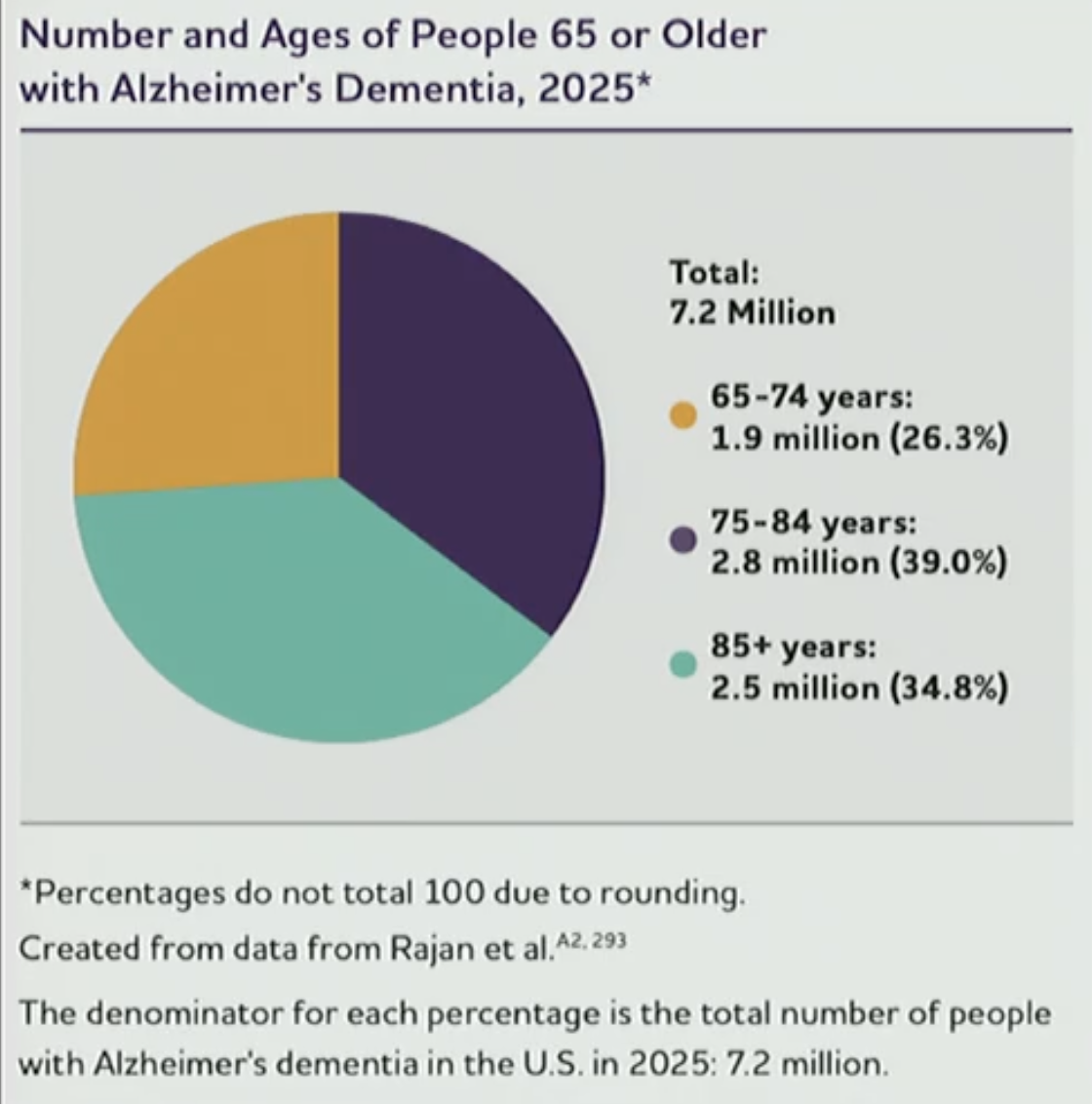
Who have alzheimer’s disease (65+)
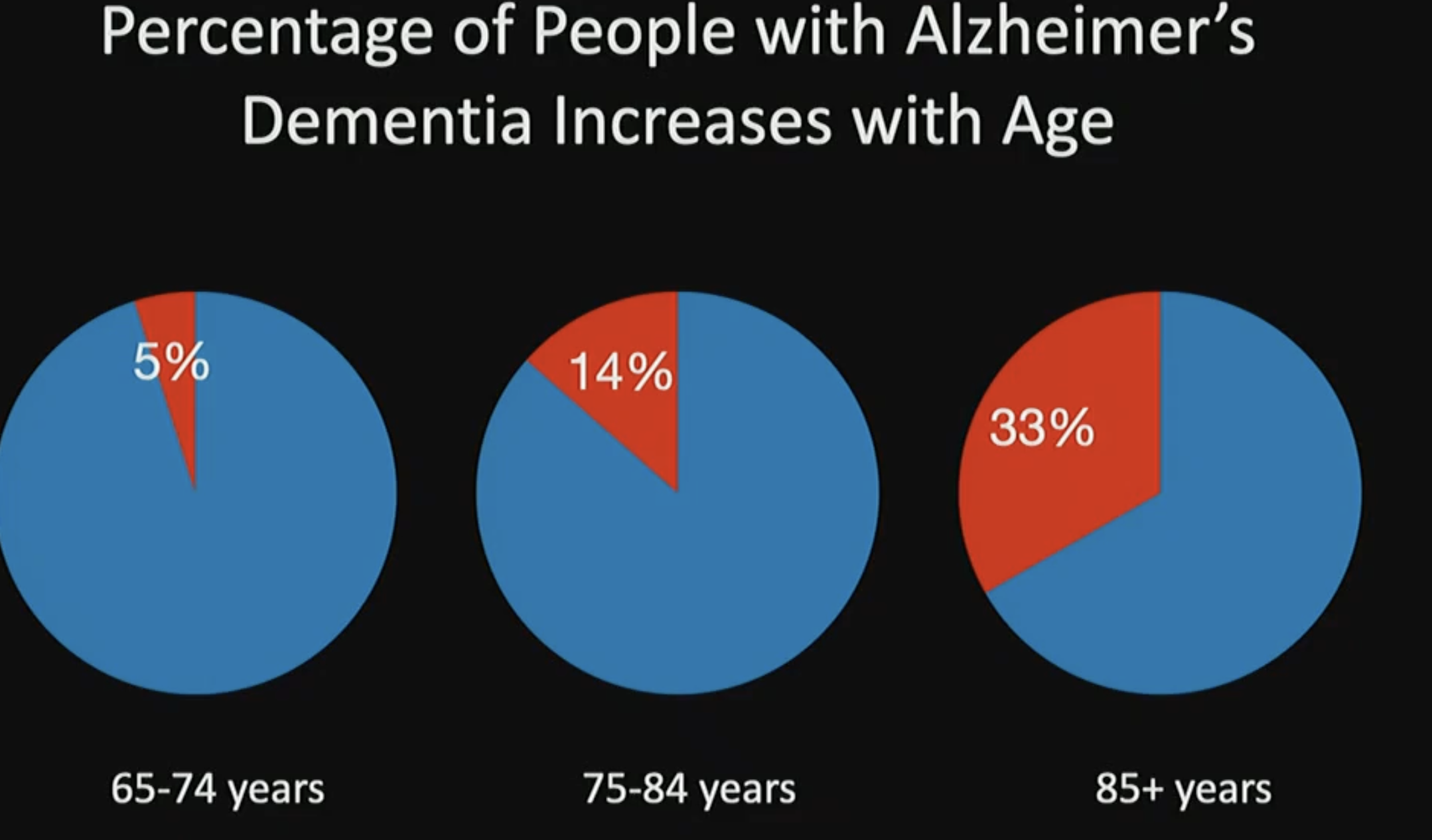
represent the percentage of all people in an age group who have alzheimer’s disease and who don’t have the disease
dying from AD
AD notes on death certificate as the underlying cause of death
The disease started the chain of events that led directly to the body shutting down
dying with AD
AD → condition → death
The disease was present in the body but did not cause the fatal event