biopharm exam 2 - biologics
 Call Kai
 Learn
Learn Practice Test
 Spaced Repetition
 Match
Match Flashcards
 Knowt Play
1/110

There's no tags or description
Looks like no tags are added yet.
Name | Mastery | Learn | Test | Matching | Spaced | Call with Kai |
|---|
No analytics yet
Send a link to your students to track their progress
111 Terms
storage temperature
vaccine potency (effectiveness) is strongly affected by
cold temperature (2-8°C)
most vaccines are stored at _______
potency
storing vaccines at too high a temperature can decrease _______
true
T/F: freezing can decrease potency
a weak response or no response
loss of potency may result in _____
cold chain
______ must be maintained to ensure vaccine quality
true
T/F: we should use separate dedicated refrigerator and freezer units 'if possible'
false (freeze-thaw cycling)
T/F: it is ok to use frost-free freezers for vaccines
true
T/F: we should not store any vaccine in a dormitory-style or bar-style combined refrigerator/freezer unit under any circumstances
0.5°C
document storage temperature with a logger unit in each refrigerator and freezer with accuracy of _______
middle level shelves
we should keep products in original package on _______
true
T/F: we can fill the top and bottom shelves and door shelves with water bottles to maintain temperature after door is opened and closed
-do not freeze the diluent (only vaccine product/vial)
-do not store items directly under the cooling vent
-leave space between the products in freezer to allow cold air circulation
CDC advice for frozen products
weekly
when maintaining the temperature log, we should review the data ______ to identify any problems.
shortest expiration time
use the vials with the _______ first to maintain fresh supplies.
true
T/F: if offs-site delivery is necessary, deliver in a portable freezer with temperature logging device
primary structure
______ is the amino acid sequence of an individual peptide chain
covalent bonds
primary structure is maintained by _______ between amino acids.
secondary structure
_______ describes regions of alpha helix, beta sheet, or random coil configurations
false (non-covalent bonds)
T/F: secondary, tertiary, and quaternary structure is primarily maintained by covalent bonds.
tertiary structure
______ is the overall 3-D configuration of individual peptide chains
non-covalent
________ include hydrogen bonds, ionic bonds, and van der waals or hydrophobic interactions
quaternary structure
________ is the overall 3-D configuration of a protein composed of 2 more individual peptide chains.
normal (native)
the ______ conformation is required for protein drug activity.
quaternary
_______ means a specific tertiary or quaternary structure of a peptide or protein
denature
______ means to change the 2°, 3°, and/or 4° structure of a protein to an unnatural or inactive conformation.
aggregate
_____ means to stick together due to non-covalent interactions between molecules
false (may be reversible or irreversible)
T/F: denaturation and aggregation are irreversible
potency
irreversible changes decrease the _________ of the product.
amino acids; 3° and 4°
protein denaturation can lead to aggregation by exposing _________ that are normally hidden in the interior of the _________ structure
albumin
egg white contains mostly the protein ______ in water.
false (irreversible)
T/F: heating albumin causes a reversible change in the protein structure
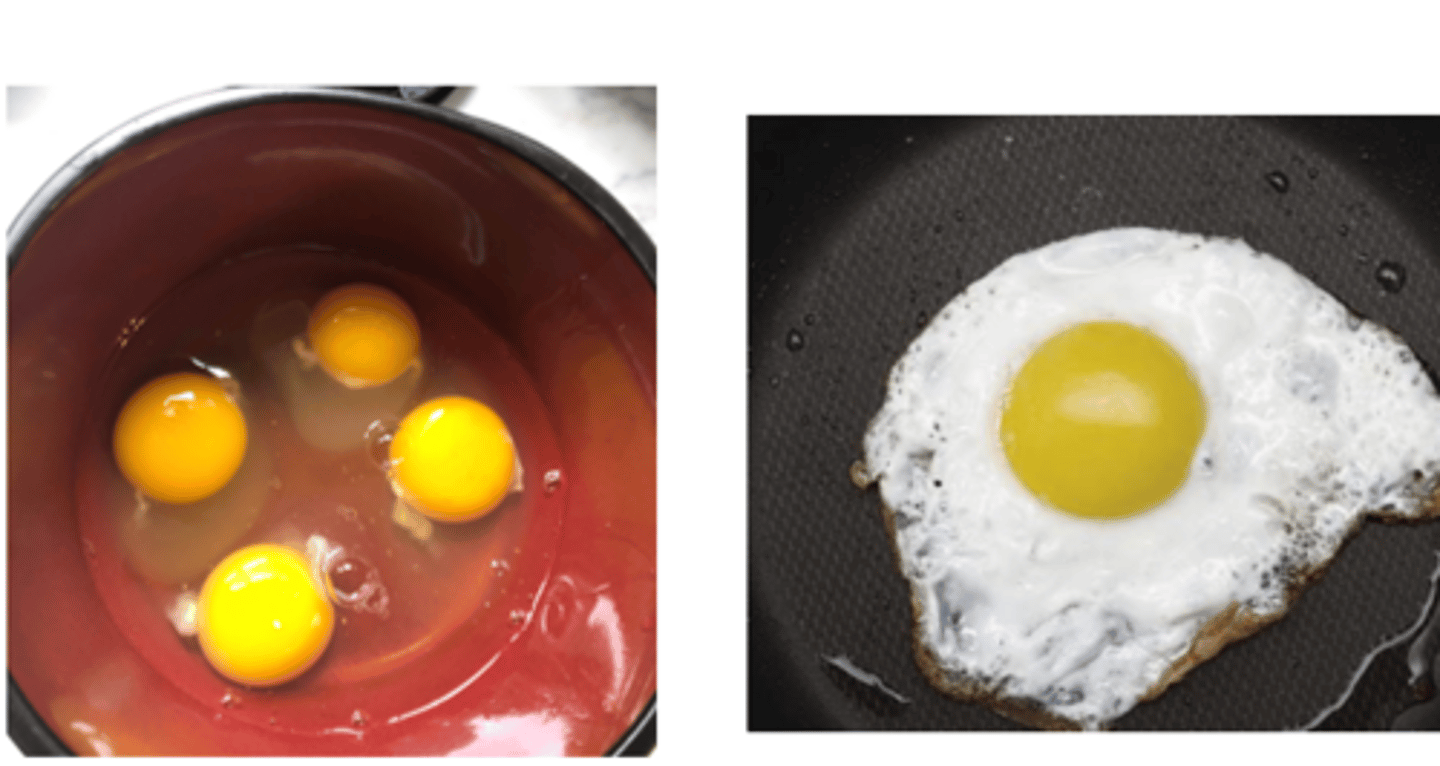
stability
______ means the extent to which a product maintains its original characteristics over time during storage.
false
T/F: a stable product changes over time
destructive changes
an unstable product exhibits _______ over time.
-physical state
-storage temp
-solution pH
-protein concentration in solution
-concentration of additives
-preparation procedures
protein stability depends on several factors
denaturation and aggregation
Freezing, storing the product at too high a temperature, or causing foaming in a protein can lead to _________.
freezing
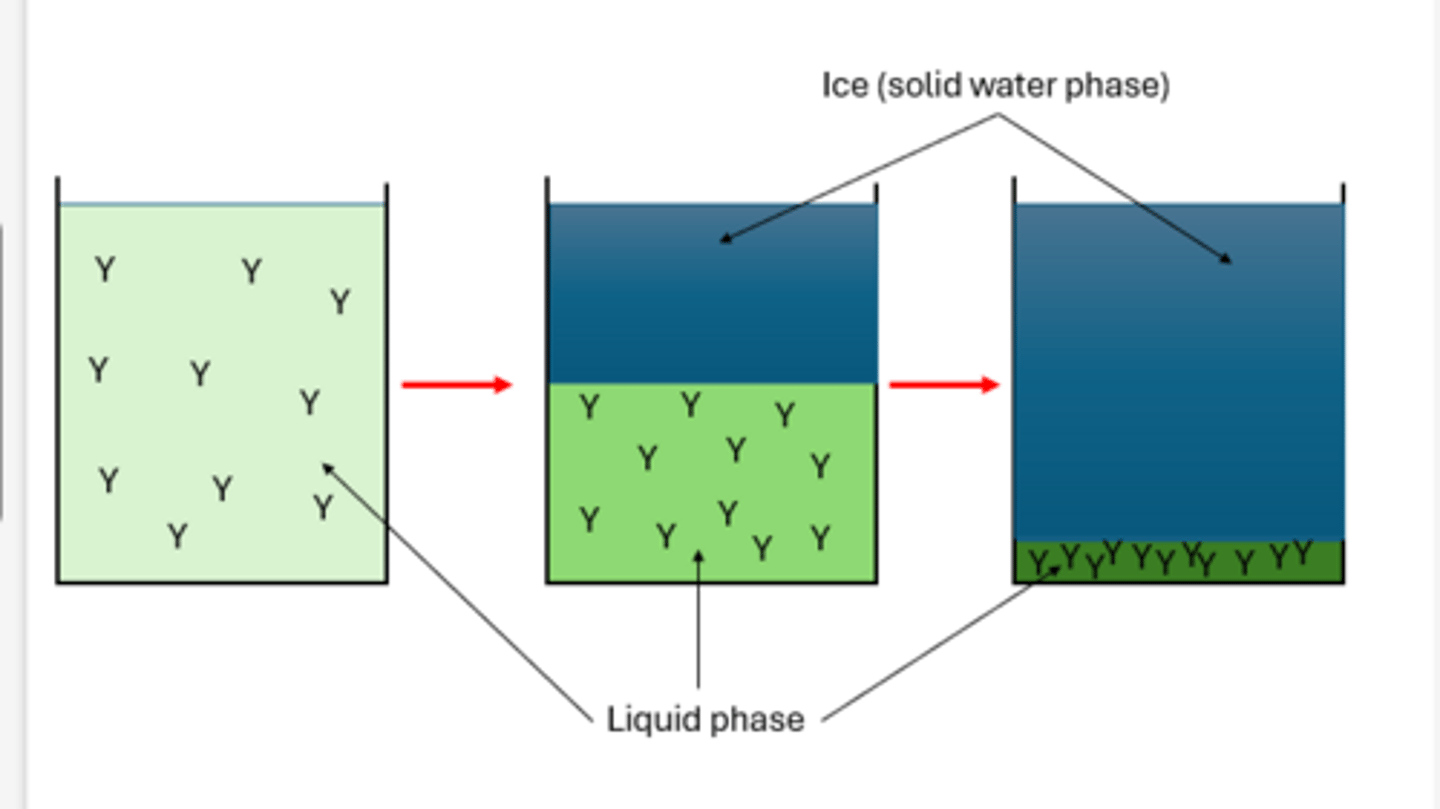
_______ is the crystallization of water molecules out of the solution
true
T/F: during freezing, the dissolved solutes remain in the liquid phase
decreases; increases
during the process of freezing, the liquid volume ______ and the concentration of all solutes _______.
cyroconcentration
_______ means the increase in dissolved solute concentration that occurs during freezing of an aqueous solution.
cryoconcentration in monoclonal antibody
the following image is showing
peptide bonds; 1°; irreversible
protein molecules can be sheared by adjacent ice crystals as they grow during freezing. this breaks ______ in the protein chain. ______ structure is destroyed. this is _______
true
T/F: increasing solute concentration alters non-covalent interactions
increases
protein concentration ______ due to decrease in liquid volume.
true
T/F: denaturation and aggregation may be reversible or irreversible when the product thaws
additive
repeated freezing and melting produce _________ destructive effects.
frost-free
_______ freezers cause freezing-melt cycling
-20°C
frozen products should be maintained at ________
0°C
frost-free freezers periodically heat the cooling coil above _____ to remove ice from coils.
true
T/F: products inside the freezer may approach 0°C and partially melt with each heating cycle then re-freeze when the temperature returns to -20°C
how long the product is stored
the number of melt-freeze-melt cycles a product is exposed depends on _______
cryoconcentration
each cycle exposes some of the drug in the vial to _______
true
T/F: effects on product quality are additive with each melt-freeze-melt cycle
cryoprotectant
protein products that are shipped and stored frozen usually contain a
cryoprotectant
a _________ is an excipient to maintain protein structure during the industrial freezing procedure
industrial freezing
______ is much faster and much gentler on protein structure than you do in the pharmacy.
false
T/F: it is okay melt and then refreeze and administer a protein product that are shipped and stored frozen.
false
T/F: with a cryoprotectant, it is impossible to destroy the protein structure with the slow freezing used in the pharmacy.
kinetic energy
higher temperature causes all dissolved molecules to have higher ________
weak noncovalent bonds; secondary, tertiary, and quaternary
higher kinetic energy can overcome ________ responsible for __, ___, and___ structure.
true
T/F: conformation changes can occur when the temperature is too high
increase; oxidation and hydrolysis
chemical reaction rates ______ with temperature. resulting is faster _____ and _____.
sulfur-containing; aromatic amino acids
______ and _____ are more susceptible to degradation.
false (may change all levels)
T/F: chemical degradation may change only some levels of protein structure.
primary
change in an amino acid, even if chain does break is a change in _____ structure
true
T/F: change in primary structure may cause a change in higher level structure
irreversible
chemical change is generally _______
true
T/F: chemical degradation may induce denaturation and/or aggregation
false
T/F: products that are shipped and stored at refrigerated temperature is okay to use if frozen.
stored frozen until use
products that are shipped and stored frozen are designed to be
light
products that are shipped and stored at refrigerated temperature should be protected from
20-25°C; 15°C and 30°C
controlled room temperature is ________ with brief excursions allow between ______ as long as that do not adversely affect product quality
-protected from heat and light
-stored at stated temperature range
products that are shipped and stored at room temperature should be
foam
_____ is air or gas bubble in a liquid mixture
gas
the foam volume is mostly _____
liquid solution
the bubble wall is composed of the _______
surfactants
foams are stabilized by ______ in the liquid phase.
surfactant
a ____ is a chemical compound the concentrations at interfaces.
interface
the ______ is a bubble is where the gas an liquid phases meet.
surfactants
most proteins behave as ______ in aqueous solution
protein molecules at the gas-liquid interface experience __________ as compared to protein molecules dispersed liquid phase.
volume of foam produced
the extent of protein damage is proportional to the
vigorous agitation
_____ promotes foaming
parenteral administration
_______ is administered for most proteins
large
biologics typically have ______ molecular weights
false (very slowly)
T/F: proteins diffuse very fast across GI mucosa
-stomach pH
-proteases in gastric and pancreatic secretions
Proteins degrade when given orally due to ______ and ______
-IV
-IM
-SC
-intranasal
-inhalation
common routes of administration for biologics
solution
drug molecules must be in ________to distribute through the body
blood or lymph vessels
proteins given by IM or SC injection can be take up into _______ or ______
slower
rate of protein uptake into capillaries is _______ as protein size increases.
clefts; fenestra
protein molecules can enter capillaries through _____ and ______
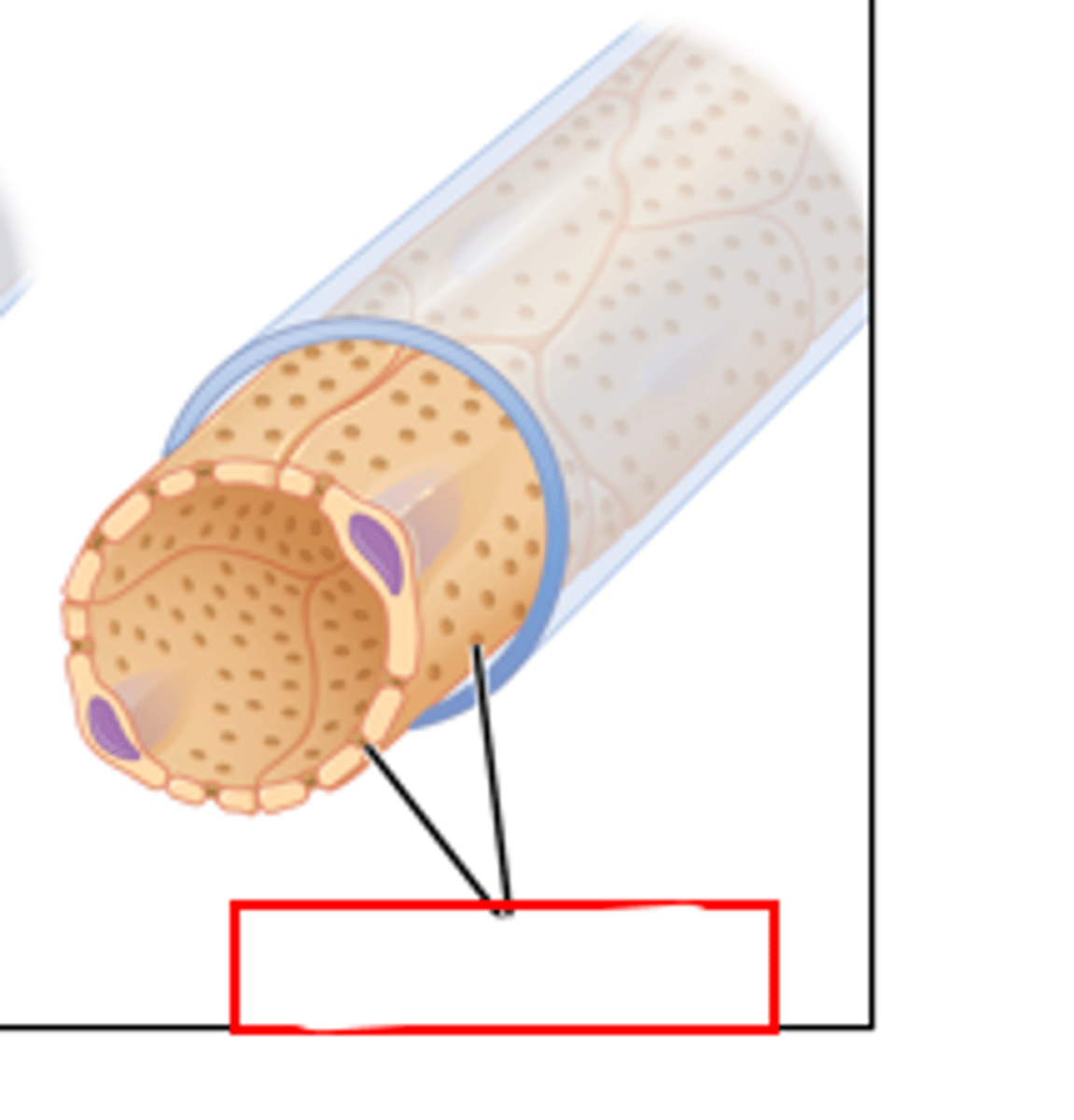
fenestra
_____ or holes in endothelial cell structure
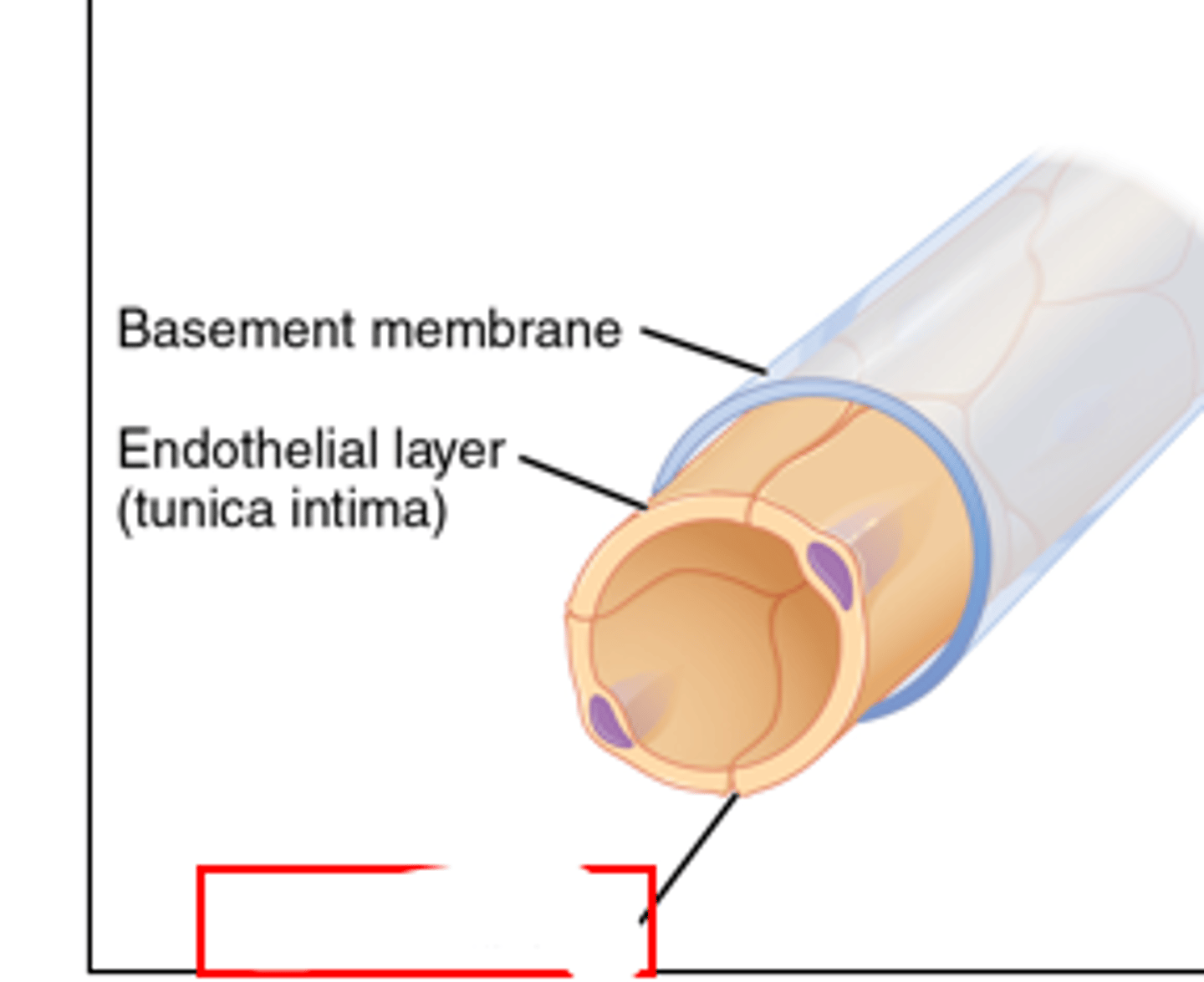
intercellular gaps
______ where endothelial cells meet
intercellular cleft
this is showing
fenestra
this image is showing
return extracellular fluid to the blood
one function of lymph system is to ______
true
T/F: lymph vessels have larger gaps in their walls than capillaries
false (more quickly)
T/F: protein molecules can be taken up more slowly into lymph vessels than capillaries