Ch 46-Animal Reproduction Learning Objectives
 Call Kai
 Learn
Learn Practice Test
 Spaced Repetition
 Match
Match Flashcards
 Knowt Play
1/19

There's no tags or description
Looks like no tags are added yet.
Name | Mastery | Learn | Test | Matching | Spaced | Call with Kai |
|---|
No analytics yet
Send a link to your students to track their progress
20 Terms
what are the pros of sexual reproduction
increase genetic variation
what are the minuses of sexual reproduction
requires twice fitness (both parents must be fit)
loss of “ideal” individual (offspring are not clones)
less efficient
slower population growth (asexual reproduction produces more after generations)
Vicar of Bray Hypothesis
sexual reproduction increase variation which means greater chance of getting more fit traits
more variation is beneficial in changing environments
Red Queen Hypothesis
evolutionary arms race between hosts and pathogens
pathogens adapt to common host genotypes
sexual reproduction produces rare hosts genotypes
increased host variation (sexual reproduction) makes it difficult for pathogen to specialize
what are the different ways animals reproduce
asexual reproduction — somewhat common in invertebrates
budding
parthenogenesis
sexual reproduction
hermaphroditism
gonochorism
external and internal fertilization
budding
makes clone of parent
parthenogenesis
unfertilized egg makes offspring (in some vertebrates)
hermaphroditism
animals produce both female and male gametes
simultaneous: they have both parts at the same time
sequential: they can start one gender and end the other
gonochorism
separate sexes (as the kinds of gametes produced, not gender or sexually)
external fertilization
often associated with aquatic animals
releases eggs and sperm into the water where sperm swim to eggs
many (not all) have a planktonic larval stage
internal fertilization
sperm deposited in or near the female reproductive tract fertilize eggs within the tract
how does sexual reproduction solve the problem of producing gametes
male and female reproductive structures
describe male reproductive structures
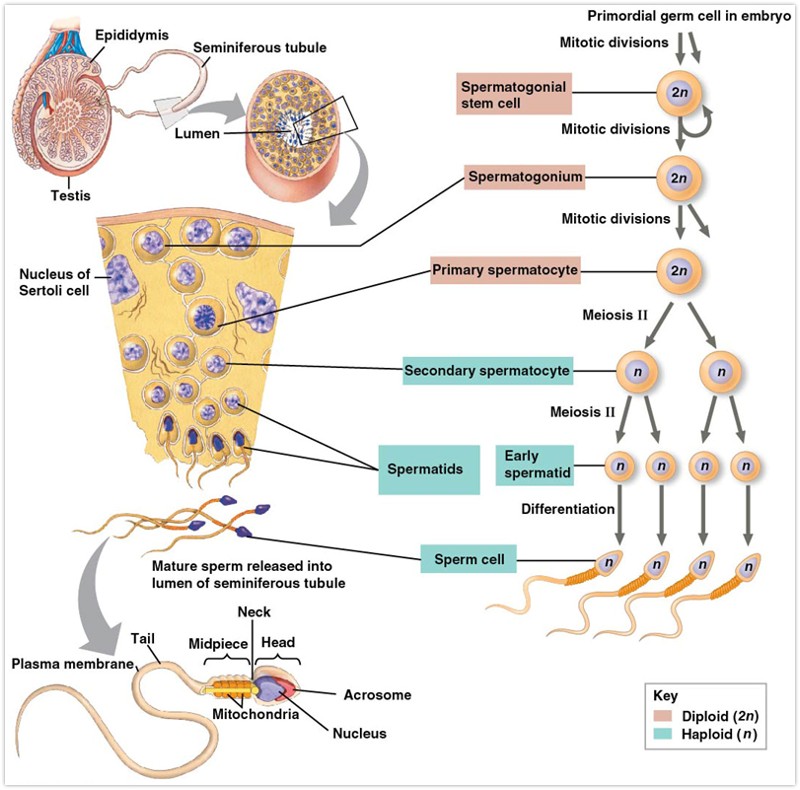
male gametes (sperm) is produced in the testes
composed of highly coiled tubes
seminiferous tubules
leydig cells (produce testosterone)
sertoli cells (provide nutrients for developing sperm)
from the seminiferous tubules the sperm pass into the epididymis
spermatogenesis: make sperm
during this process the cells move from the outer edge of the tubule toward the center
the sperm cells mature in the epididymis
spermatogonia (diploid) through mitosis
cells undergo meiosis (spermatocytes initially diploid)
produce haploid spermatids
mature into final sperm cells haploid
describe female reproductive structures
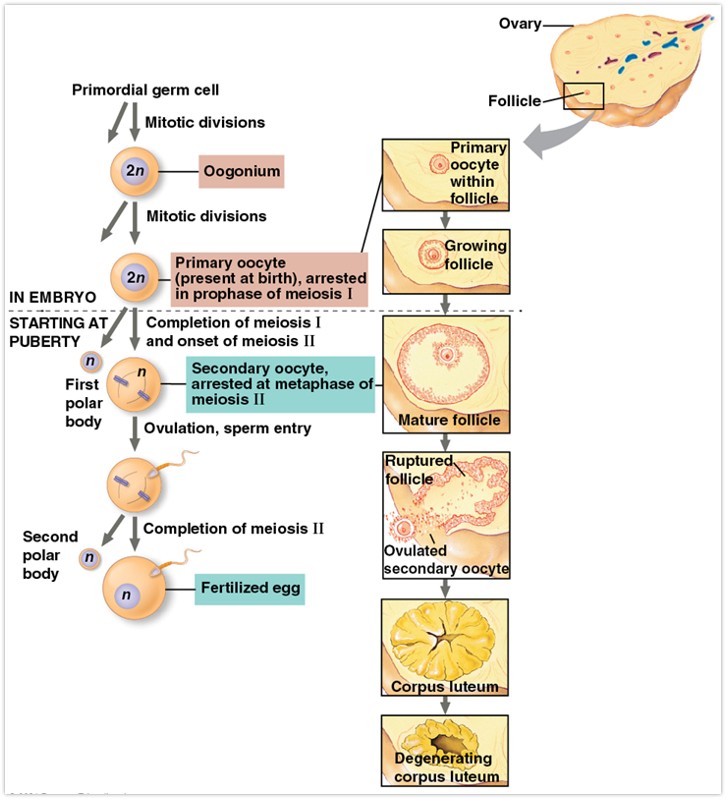
the ovaries are composed of an outer covering surrounding up to 400,000 follicles (present at birth)
from puberty to menopause follicles mature and egg cells are released (ovulation) - monthly
oogenesis: production of eggs
oogenesis (diploid) enter meiosis and become primary oocytes
but stop in prophase I of meiosis and become primary oocytes
after puberty FSH stimulates one or more primary oocytes to complete the first meiotic division and pause in metaphase II
the mature follicle ruptures releasing the secondary oocyte from the ovary
at the time of ovulation the egg is in metaphase II of meiosis
after a sperm penetrates the egg it is triggered to complete meiosis
how does sexual reproduction solve the problem of bringing gametes together
sperm passage
ovulation
fertilization
describe sperm passage
during ejaculation the sperm are propelled from the epididymis through the vas defernes and out the urethra
3 sets of glands add secretions to the sperm to form the semen
seminal vesicle: fructose (60% total volume)
prostate gland: anticoagulant enzymes and citrate
bulbourethral gland: neutralizes the acidic environment of the urethra
describe ovulation
the egg travels into the oviduct. the remaining cells of the follicle form the corpus lutem
helped by the cilia that line the oviduct and travels along to the uterus
after a sperm cell penetrates, the egg is triggered to complete the meiosis
describe fertilization of egg and sperm
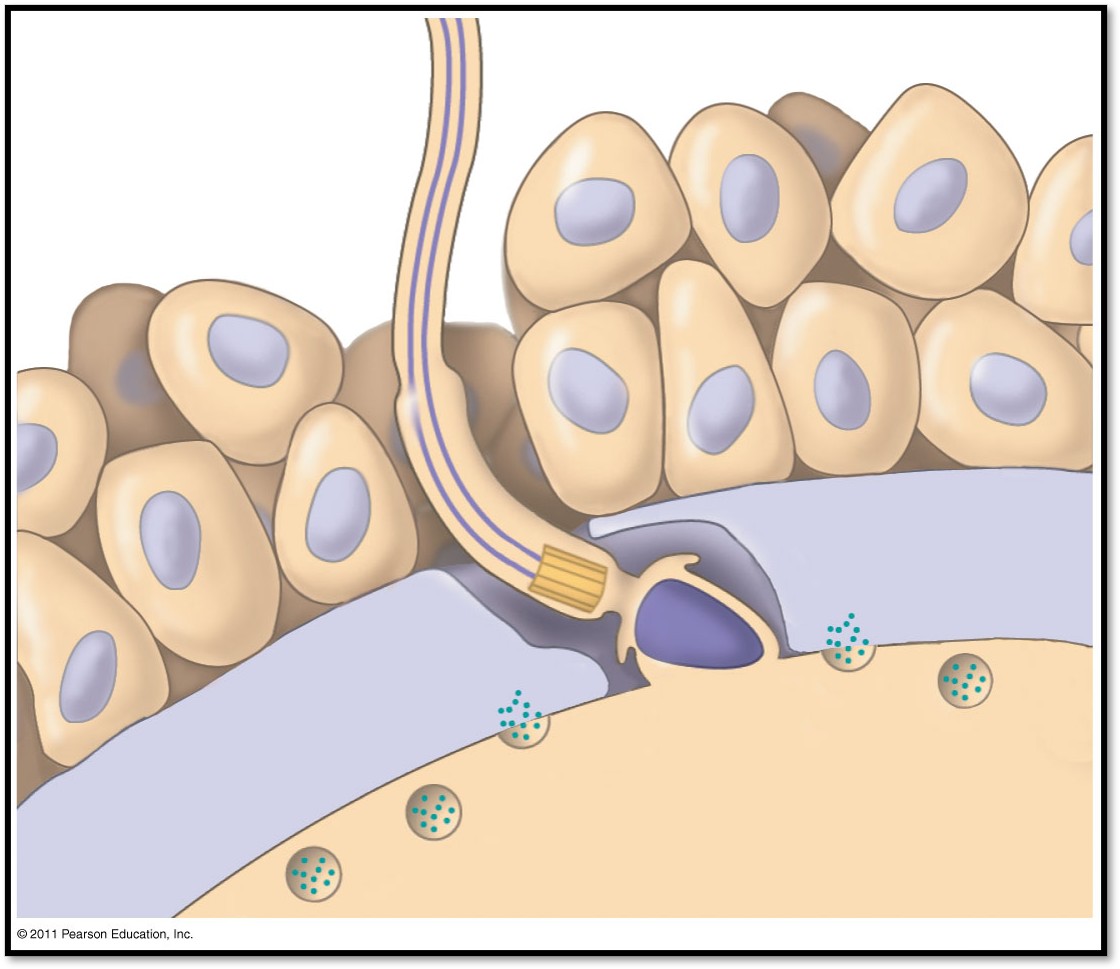
sperm travel through the outer later of egg cells to reach the zona pellucida —the extracellular matrix of the egg
when the sperm binds to a receptor in the zona pellucida, it triggers a slow block to polyspermy (solves the limit of fertilization of 2 gametes)
if fertilized the developing embryo will implant in the thickened lining of the uterus (endometrium)
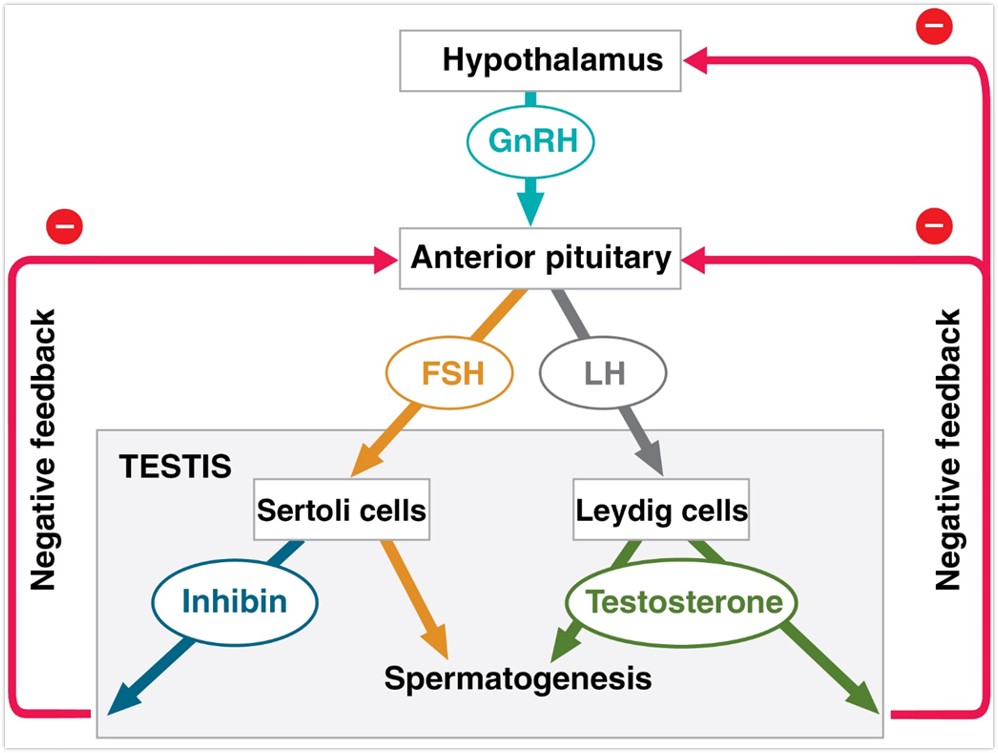
describe hormonal regulation in males
hypothalamus
GnRH (gonadotropin releasing hormone)
Anterior pituitary gland
FSH and LH (follicle stimulating hormone and luteinizing hormone)
Testes
FSH acts on sertoli cells supporting spermatogenesis
LH stimulates leydig cell production of androgens (testosterone—also needed for spermatogenesis)
inhibin provides negative feedback that inhibits the production of FSH and LH
too much testosterone provides negative feedback
describe hormonal regulation in females
hypothalamus
GnRH (gonadotropin releasing hormone)
Anterior pituitary gland
FSH and LH (follicle stimulating hormone and luteinizing hormone)
Ovaries
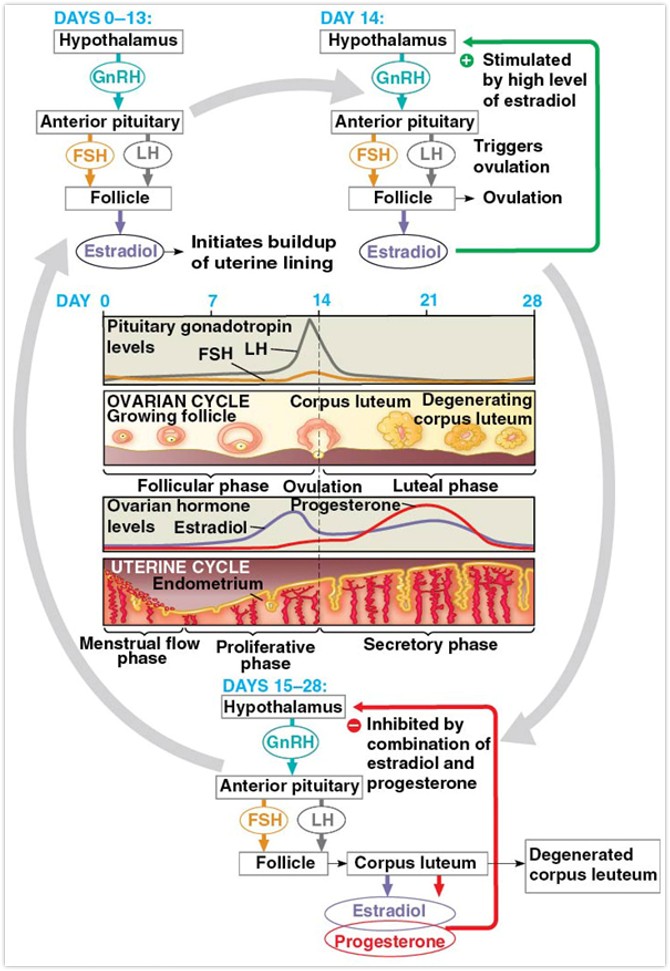
FSH stimulates maturation of follicle (estrogen)
LH stimulates ovulation and development of corpus luteum
day 0-13 follicle is growing
day 14 estradiol gives positive feedback
the big peak in LH stimulates ovulation
the estradiol peak guides peak in LH
estradiol and progesterone inhibit production of GnRH
releases the egg
ruptured follicle = corpus luteum
corpus luteus produced progesterone as it degenerates
endometrium thickens as a result of progesterone
preparation for fertilized egg implantation
day 15-28: negative feed pack
no more eggs released