the Nervous System 2024 - STUDY ME
 Call Kai
 Learn
Learn Practice Test
 Spaced Repetition
 Match
Match Flashcards
 Knowt Play
1/73

There's no tags or description
Looks like no tags are added yet.
Name | Mastery | Learn | Test | Matching | Spaced | Call with Kai |
|---|
No analytics yet
Send a link to your students to track their progress
74 Terms
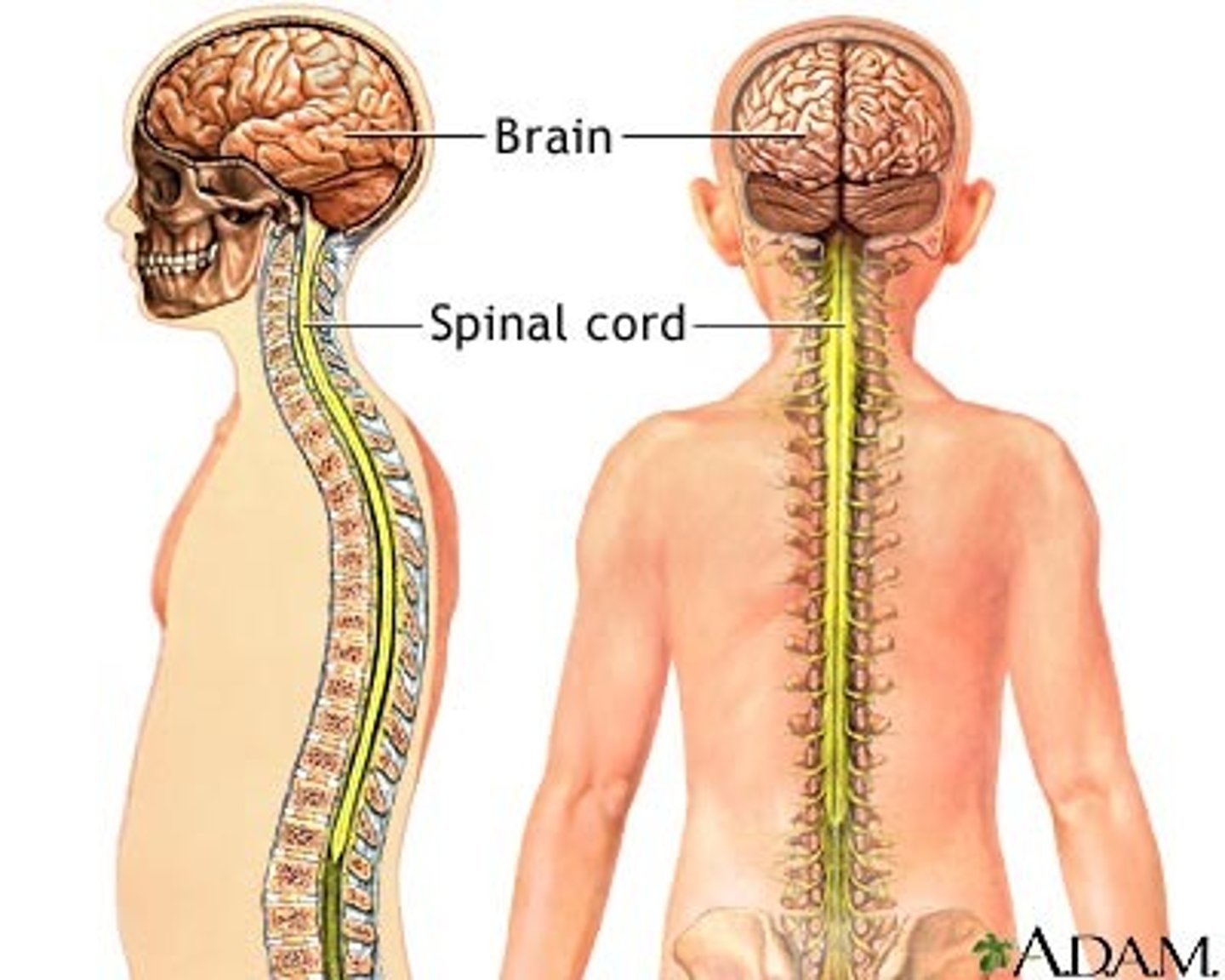
CNS
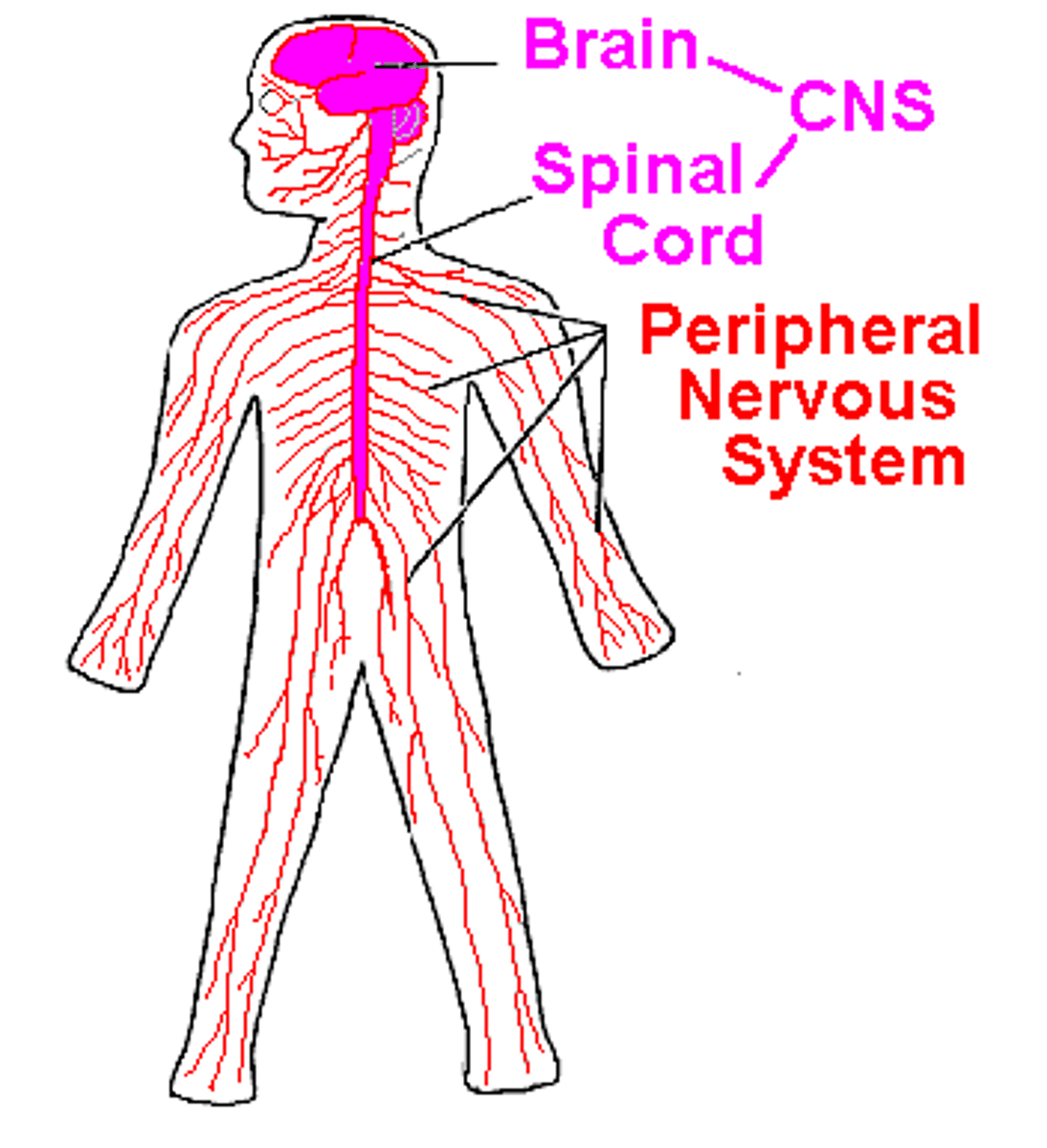
Central Nervous System -- the brain & spinal cord
PNS
Peripheral Nervous System -- all the nervous tissue located OUTSIDE of the brain & spinal cord; nerves connects the CNS to structures of the body; includes sensory receptors, afferent & efferent nerves, & effectors like muscles & glands
sensory input
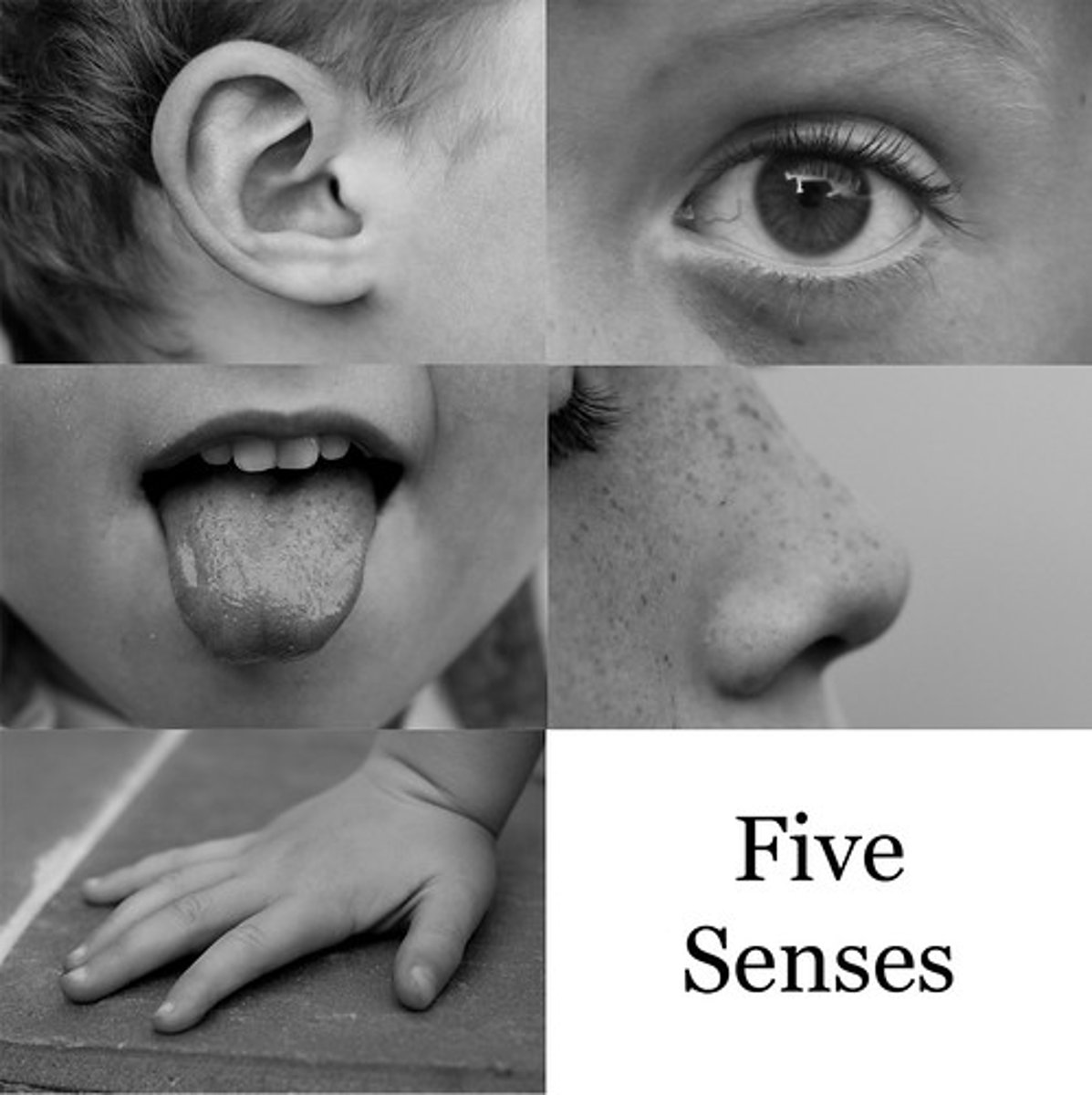
the part of your PNS that gathers information using the 5 senses (taste, touch, smell, sight, hearing)
integration
the process that happens in your CNS which allows you to interpret the sensory input and make a decision; integration neurons are also called association neurons

motor output
the response of your muscles or glands to an impusle
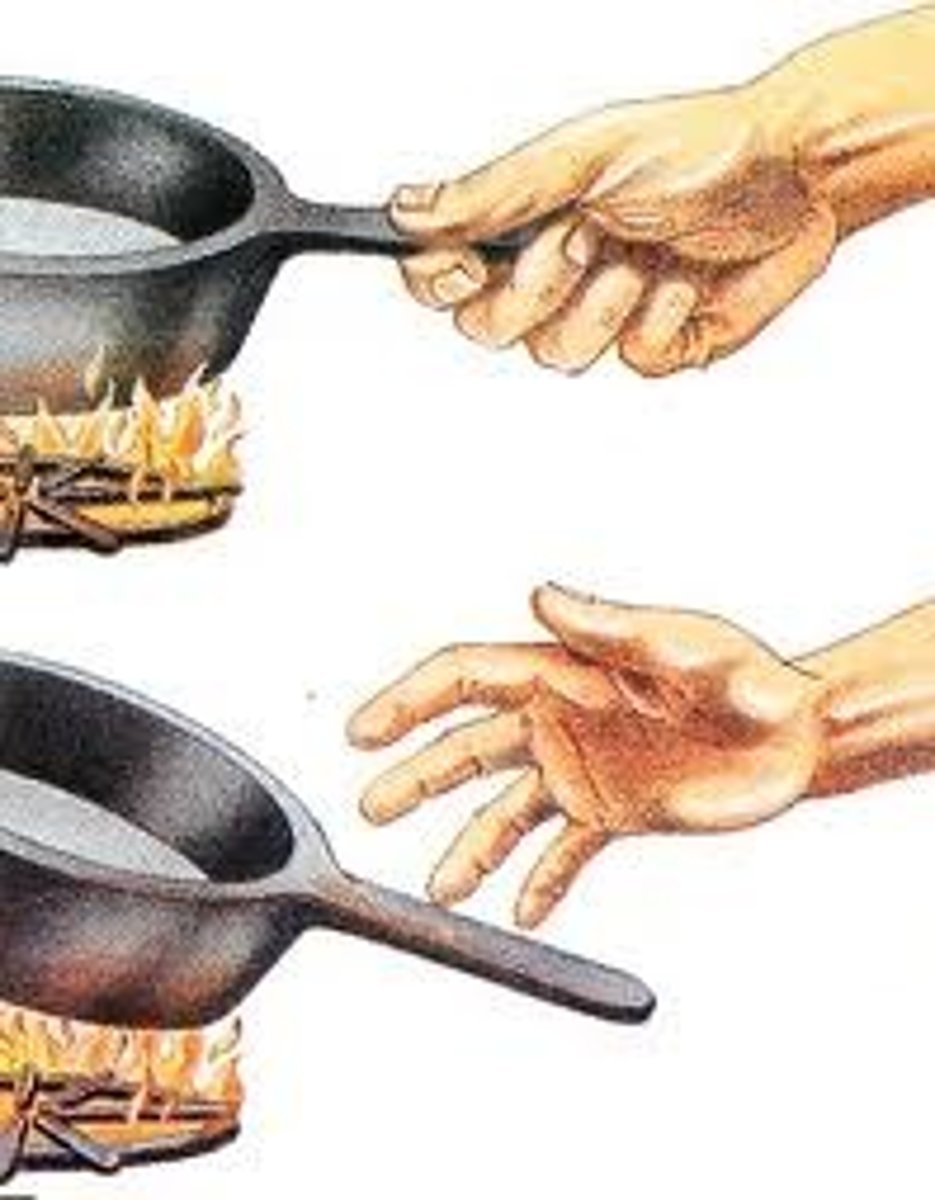
afferent
the sensory division of the PNS; neurons or nerves of this division carry impulses towards from the brain or spinal cord to input stimuli gathered by the 5 senses
efferent
the motor division of the PNS; neurons or nerves of this division carry impulses away from the brain or spinal cord as a response to stimuli

somatic
the VOLUNTARY division of the efferent system (skeletal muscle)

autonomic
the INvoluntary division of the efferent system; the brain stem and diencephalon are the major parts of the brain that use hormones to control automatic actions for the body; controls cardiac muscle & smooth muscles of the internal organs
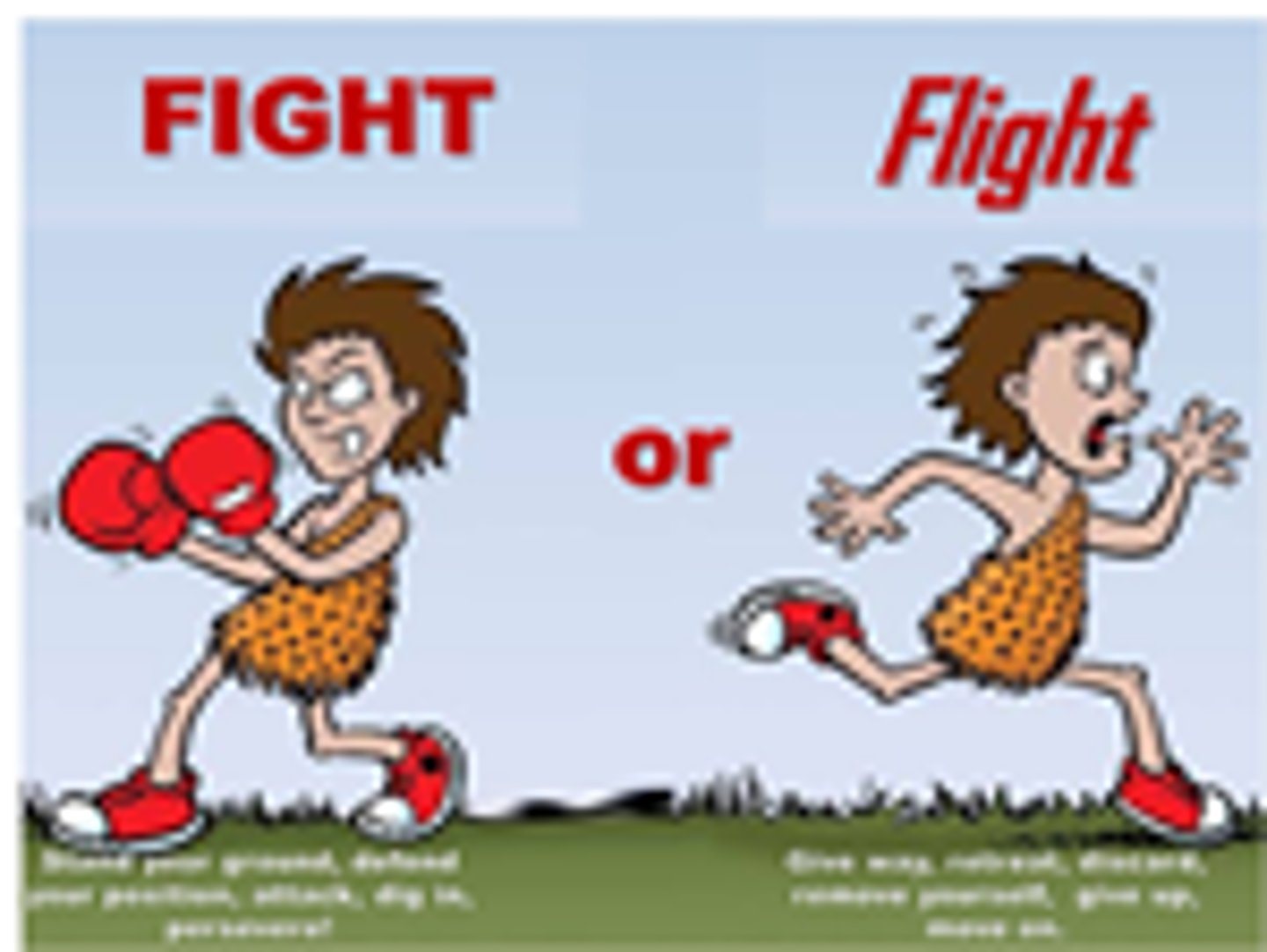
sympathetic
"fight or flight" division of the autonomic nervous system - usually influenced by emotion
parasympathetic
"rest & digest" division of the autonomic nervous system - usually influenced by emotion
neuroglia
also known as "glia," support cells that provide neurons with structure, nutrients, insulation, and waste removal; they cannot even transmit impulses
Picture: nuroglia appear to be small, dark dots
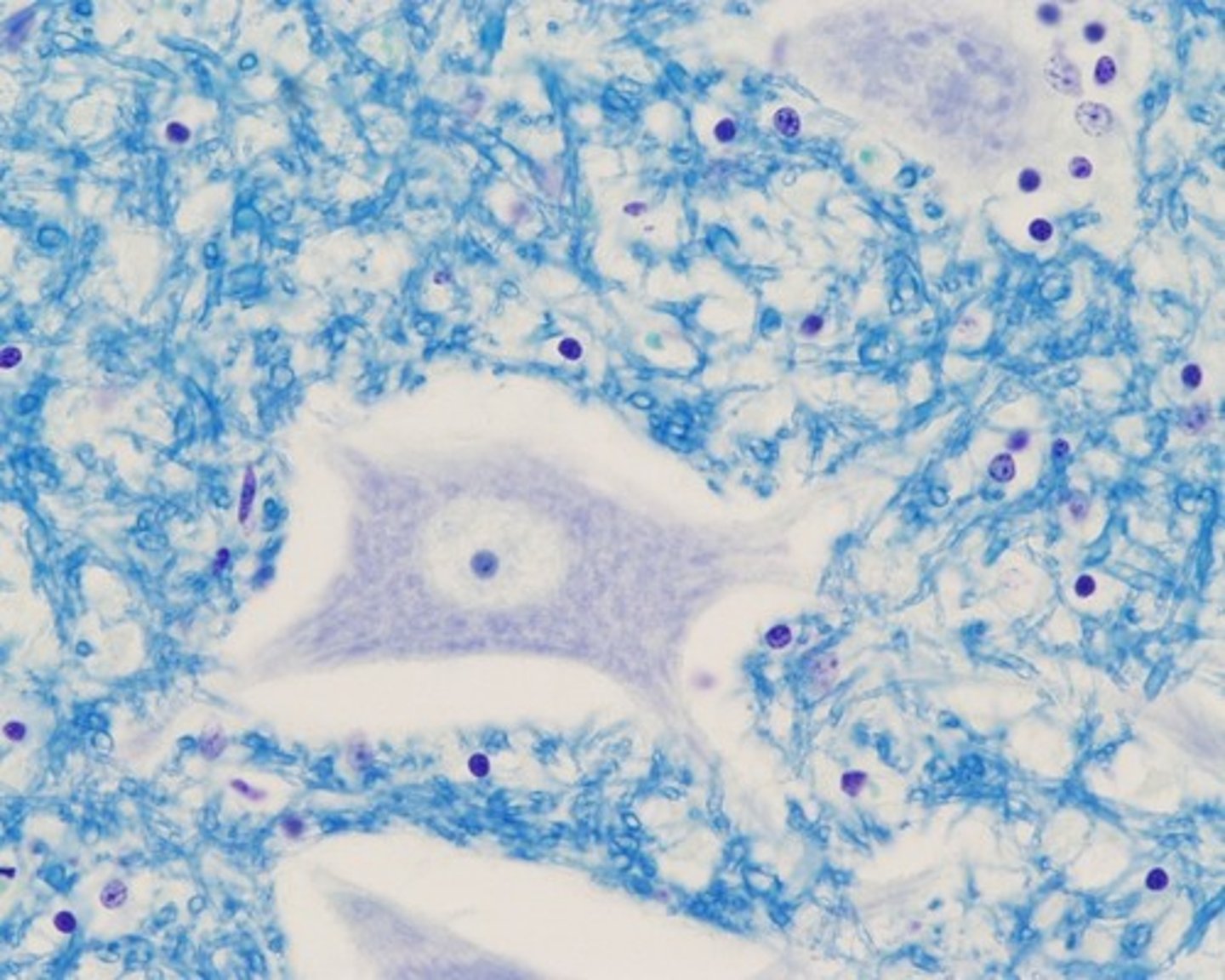
neuron
nerve or brain cells that transmit impulses
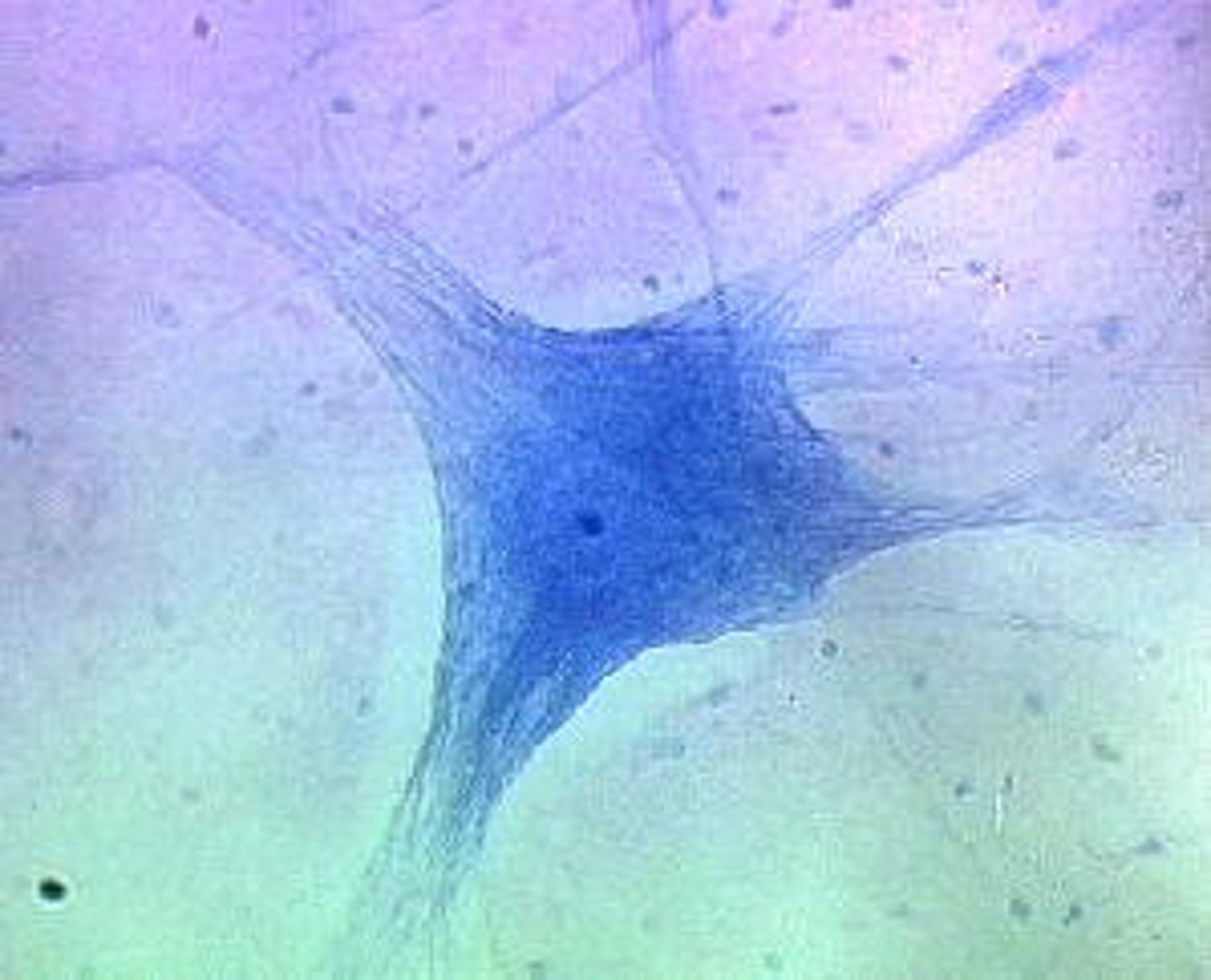
cell body
the bulk part of the neuron that contains the nucleus & nucleolus; it looks like the head of the neuron
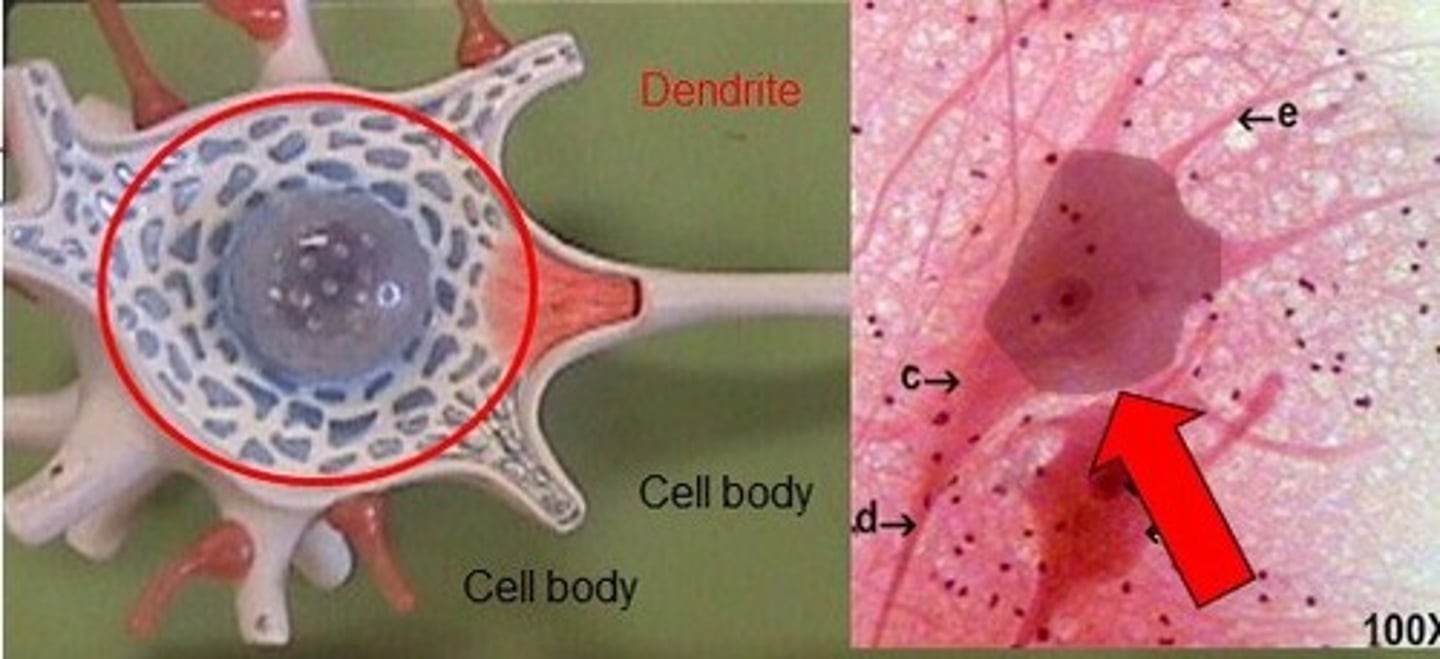
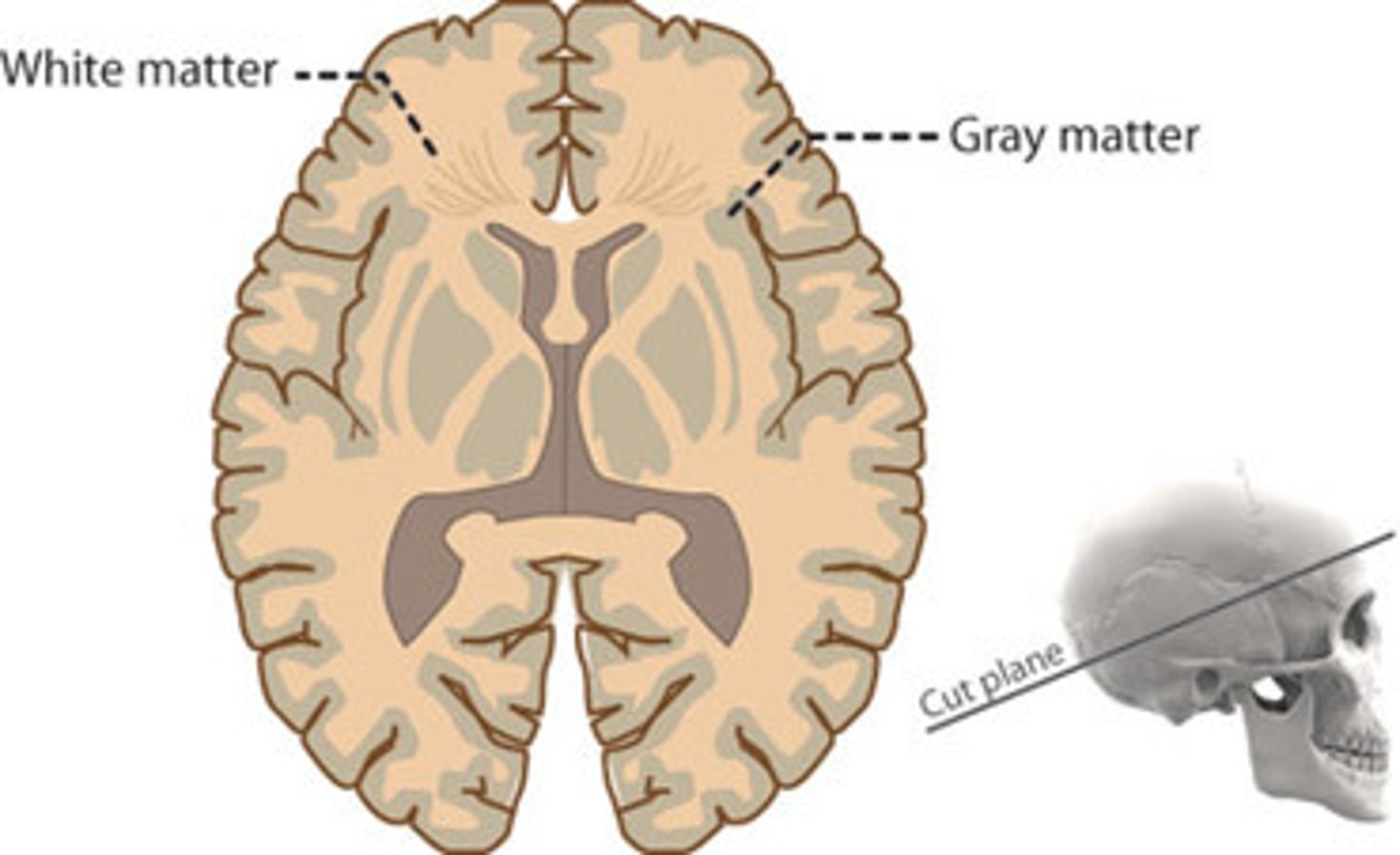
gray matter
unmyelinated nervous tissue found in the CNS
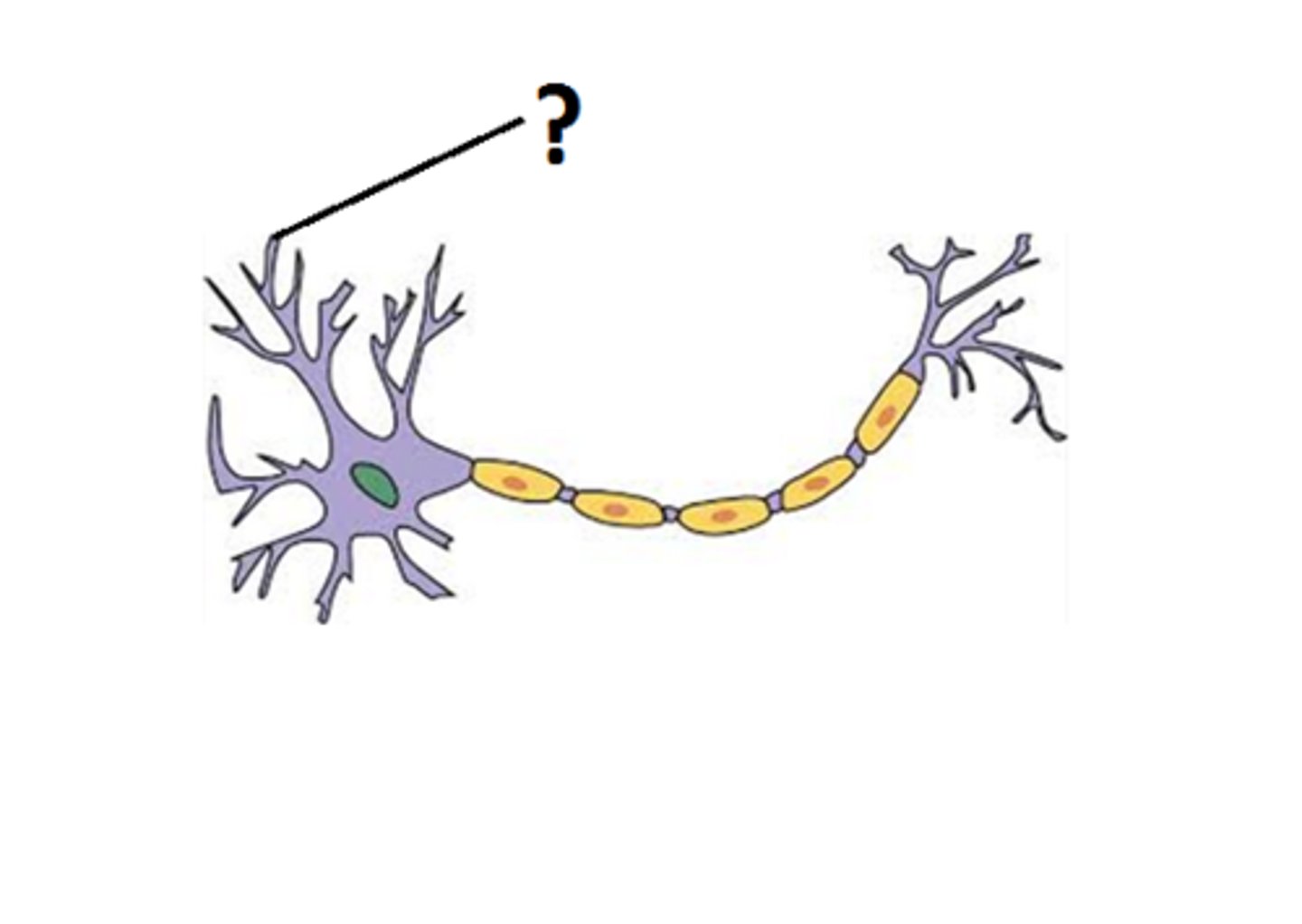
dendrites
the receiving process of a neuron;
carries messages towards the cell body
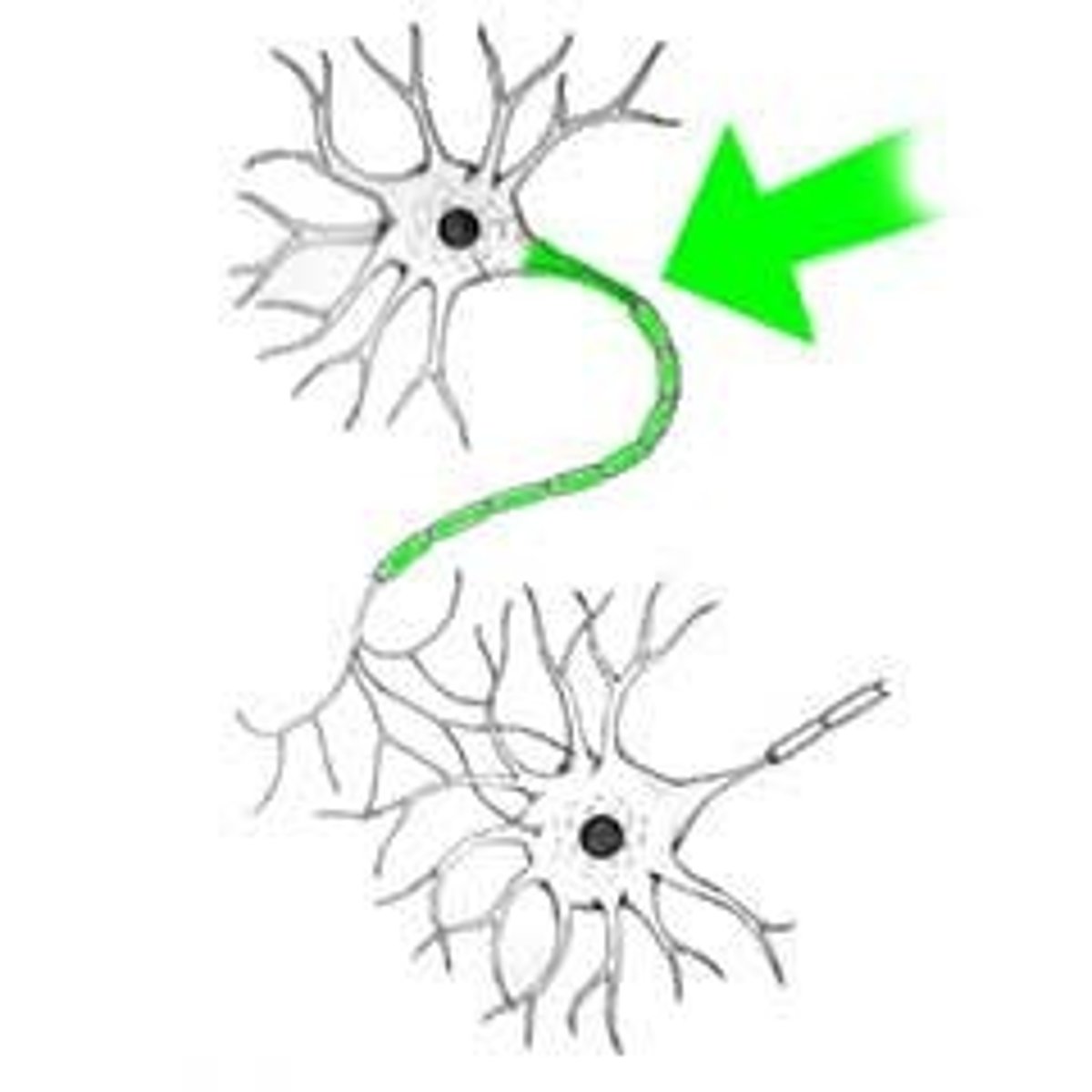
axon
the extra long sending process of a neuron;
carries messages away from the cell body
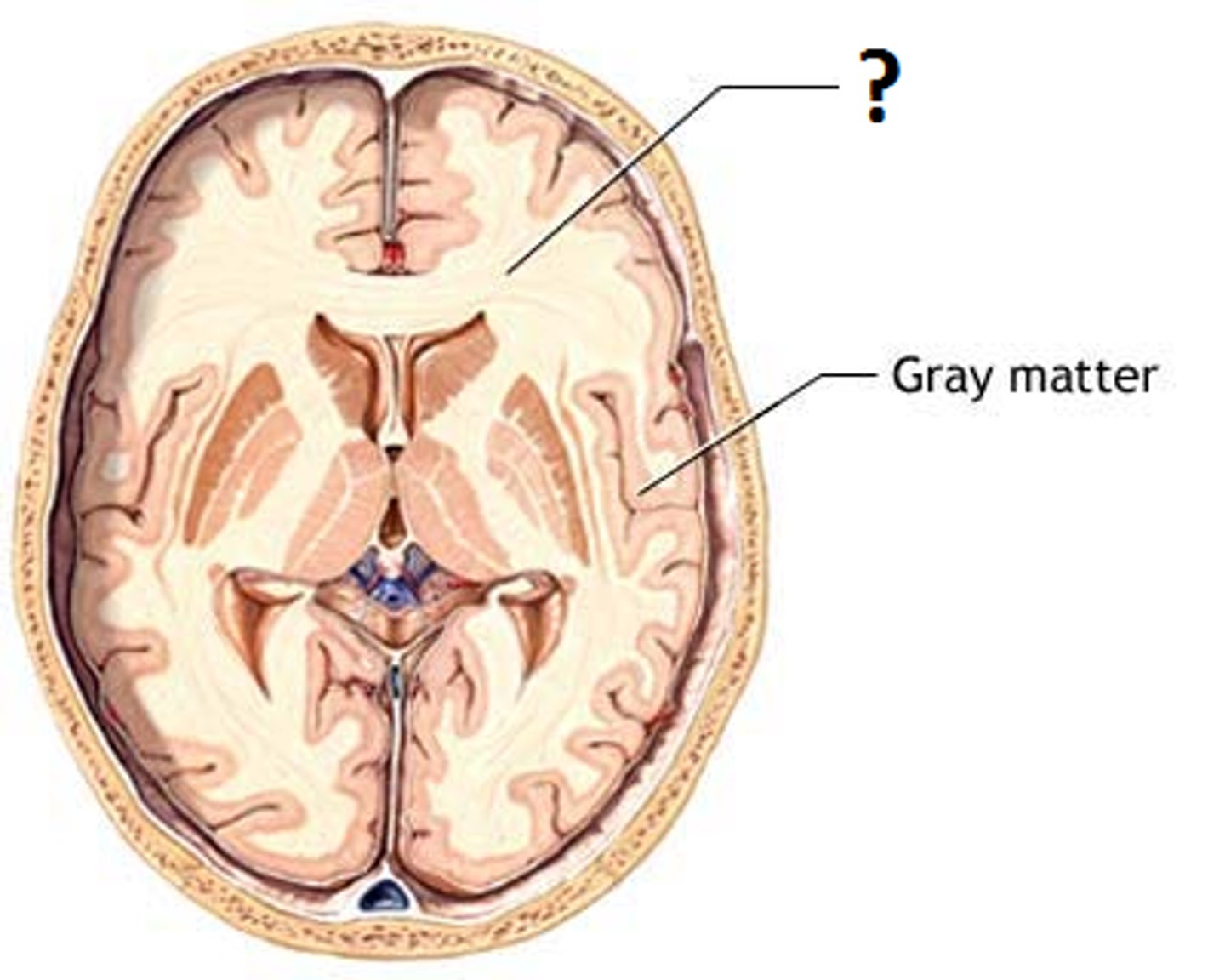
white matter
myelinated nerve fibers (myelin sheathing is made of fat which gives it a white color)
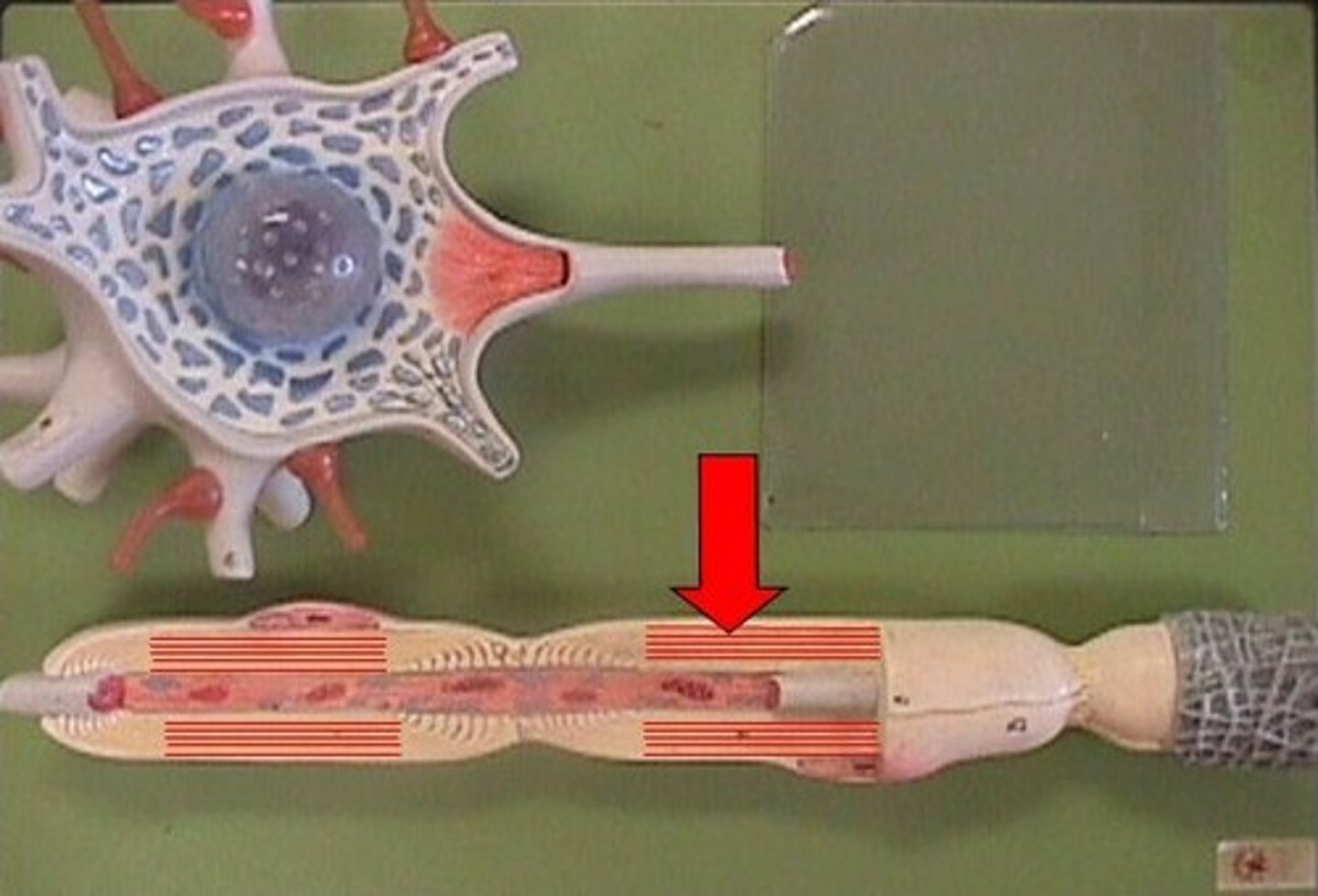
myelin sheath
a fatty band of insulative lipid protein that surrounds axon fibers to allow faster impulse conduction; creates white matter; produced my oligodendrocytes in the CNS and schwann cells in the PNS
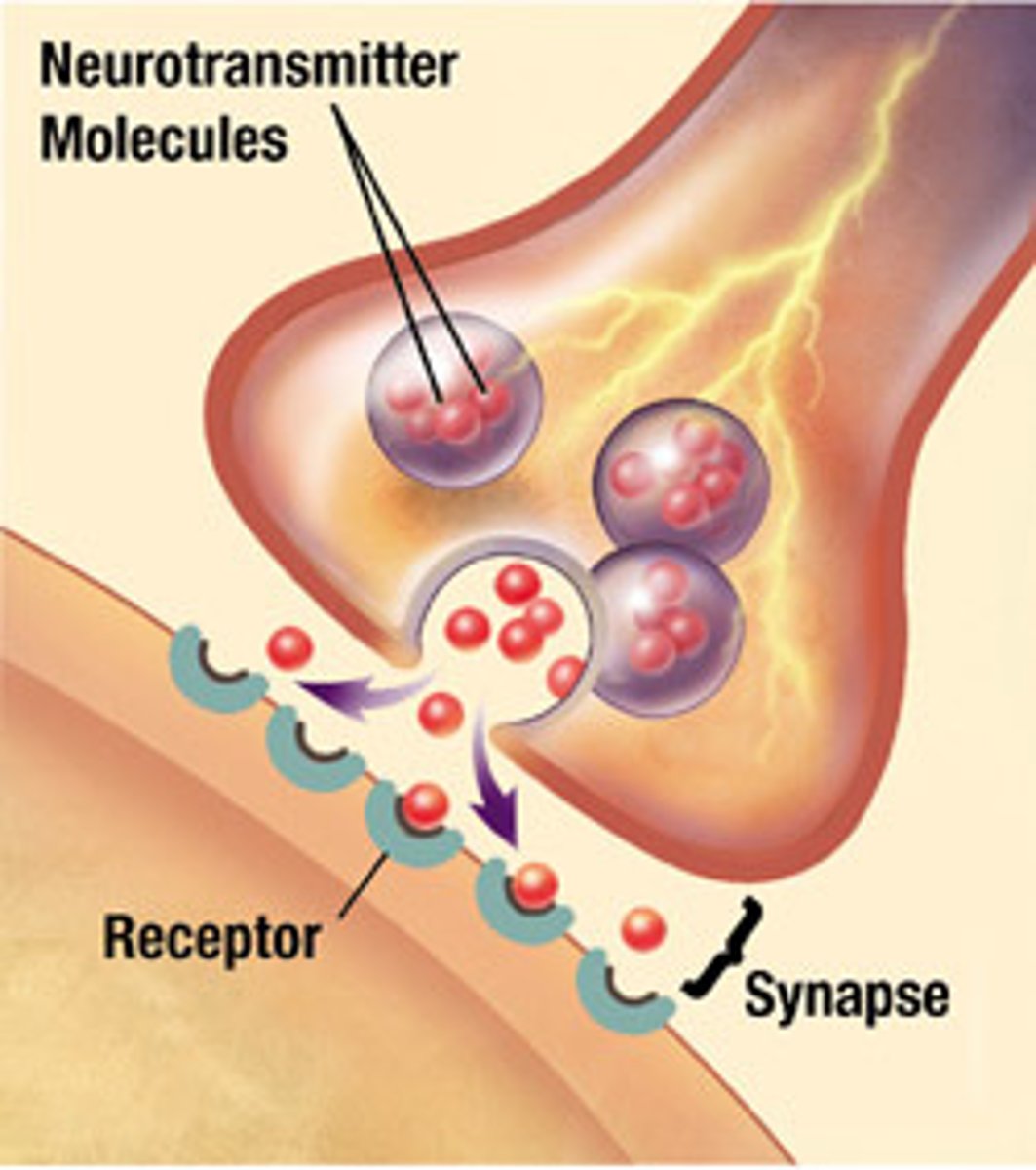
synapse
junction between nerves that allows information to be transmitted from one neuron to another
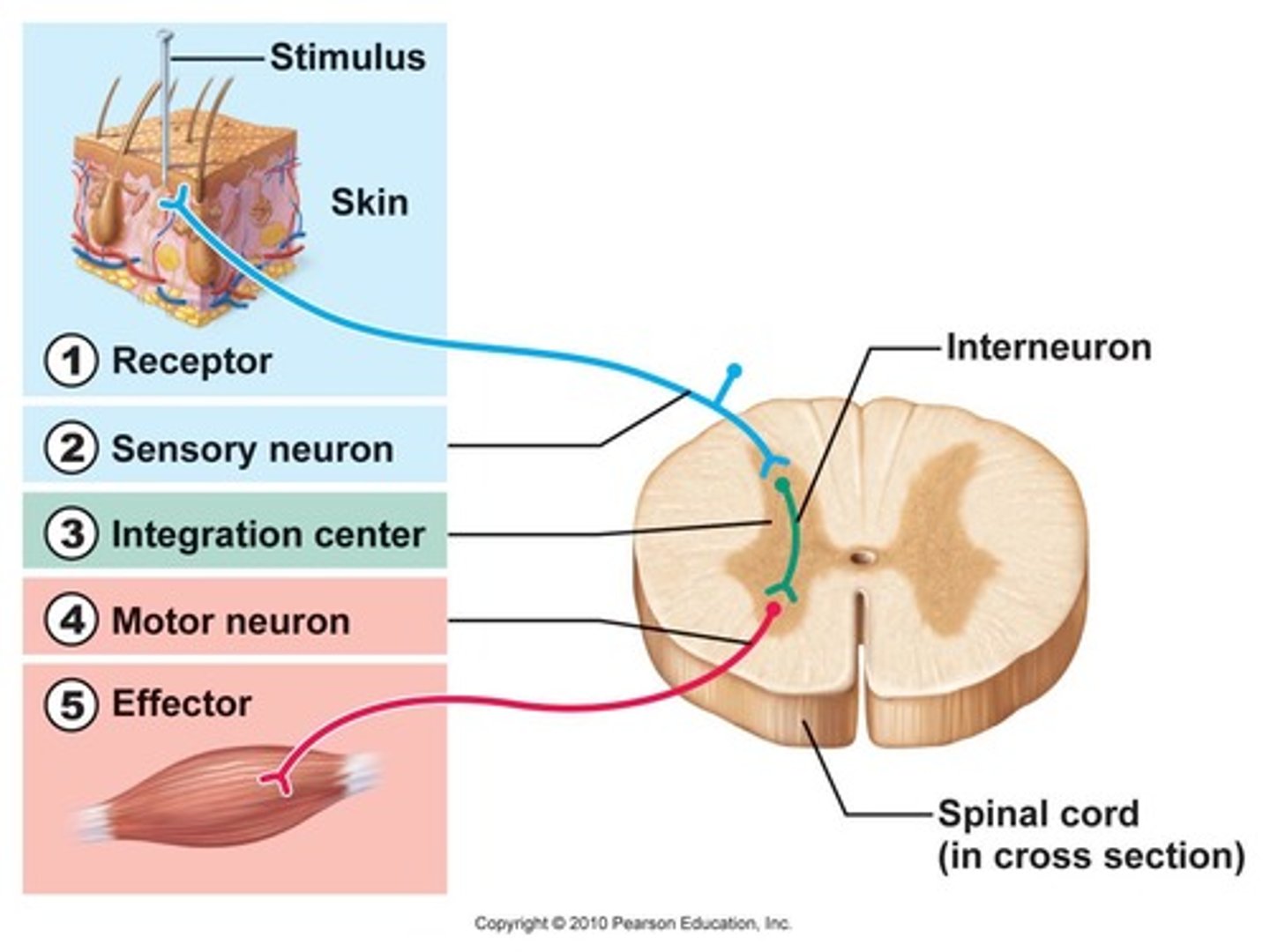
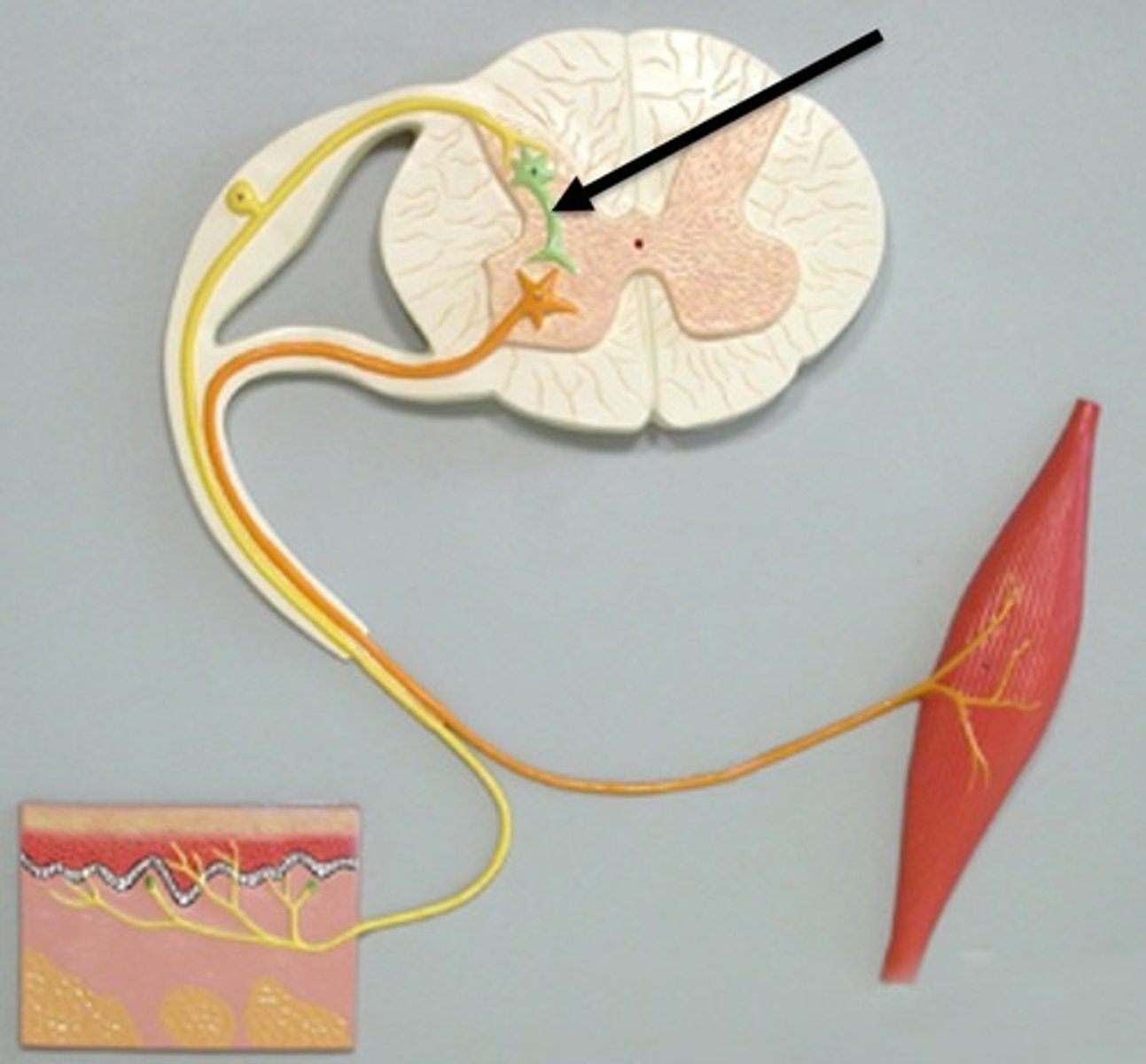
reflex arc
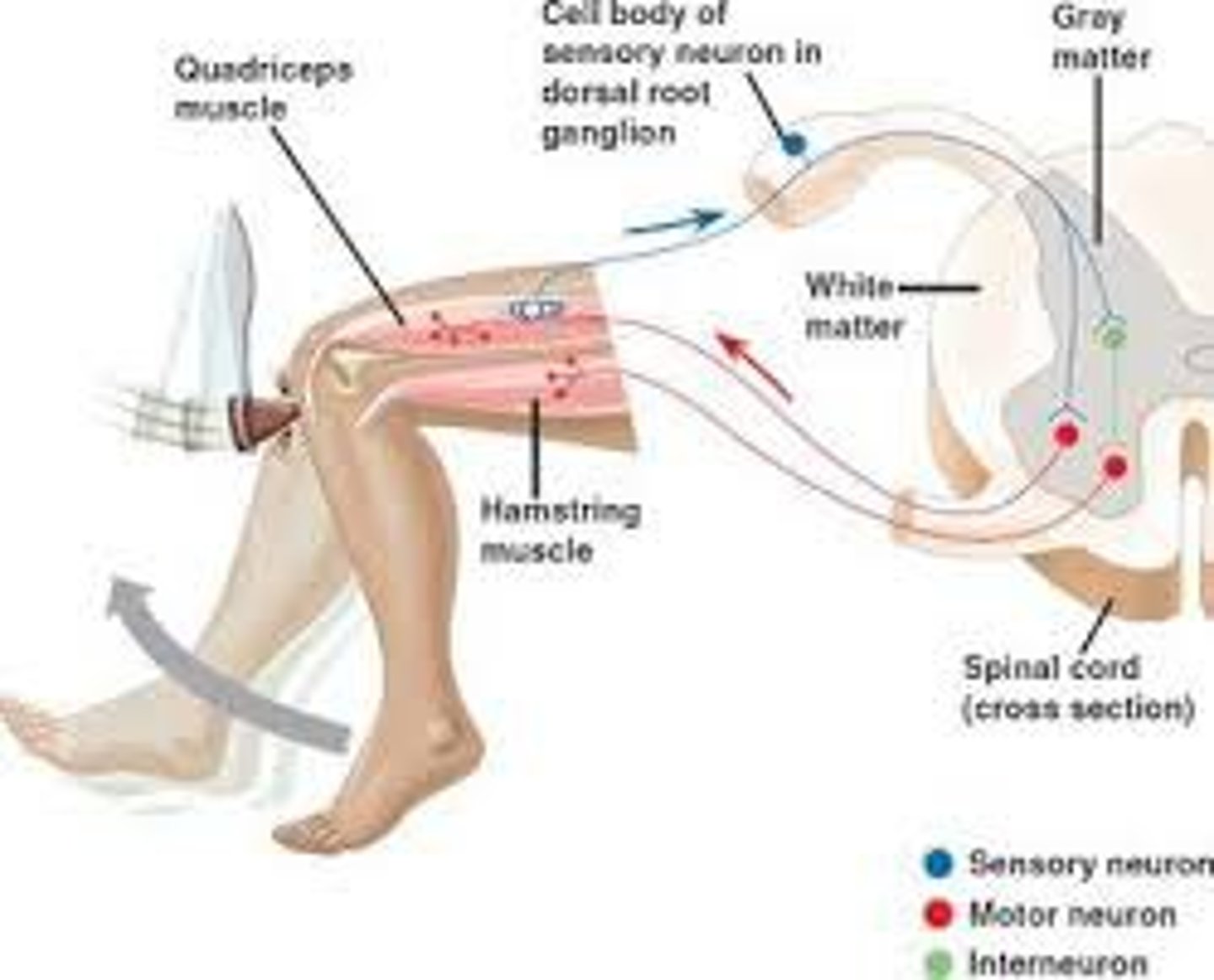
the route of a rapid, predictable and involuntary response to stimuli; includes receptor, afferent neuron, integration center, efferent neuron, effector; often times, the integration center is just the spinal cord
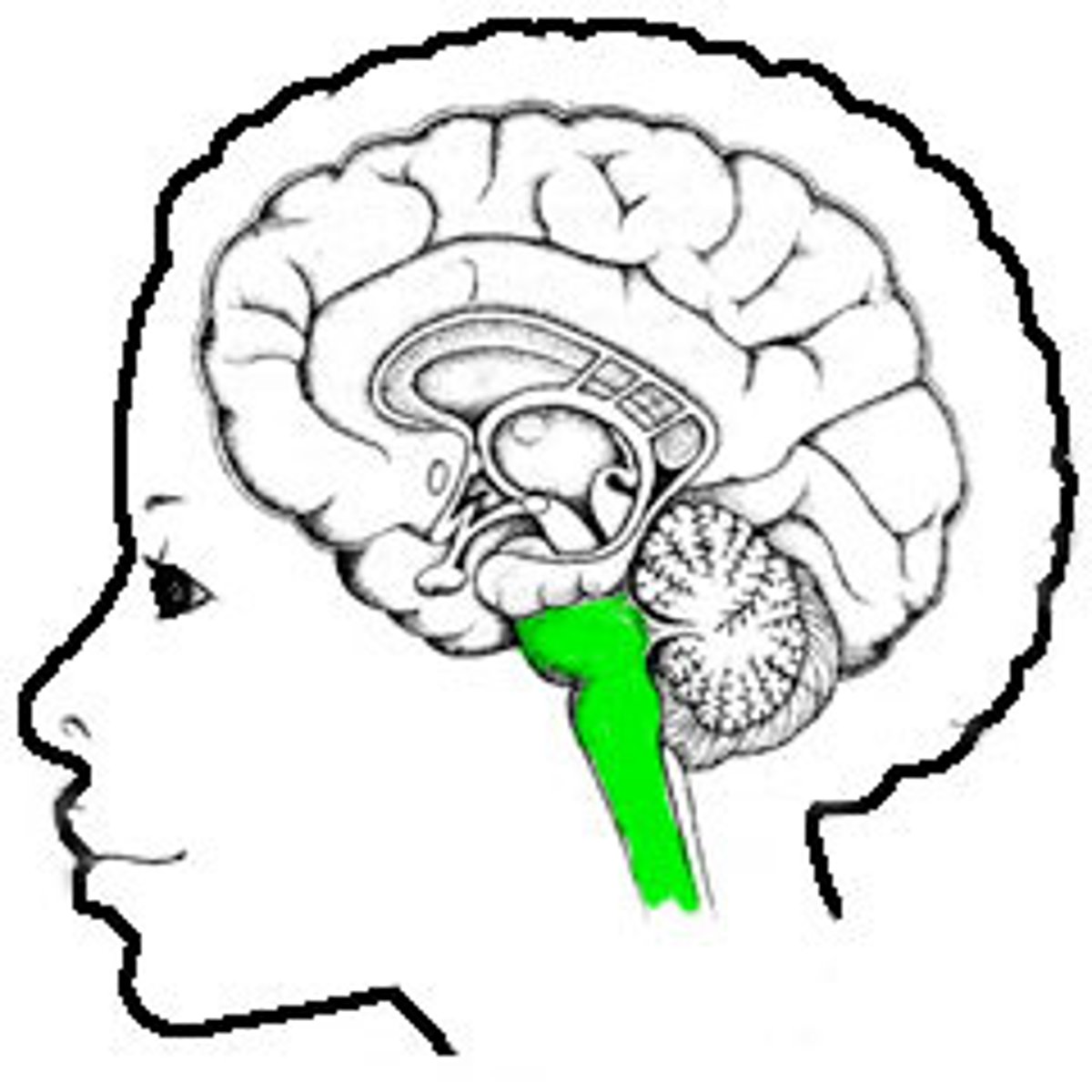
brain stem
pons, midbrain, & medulla oblongata
diencephalon
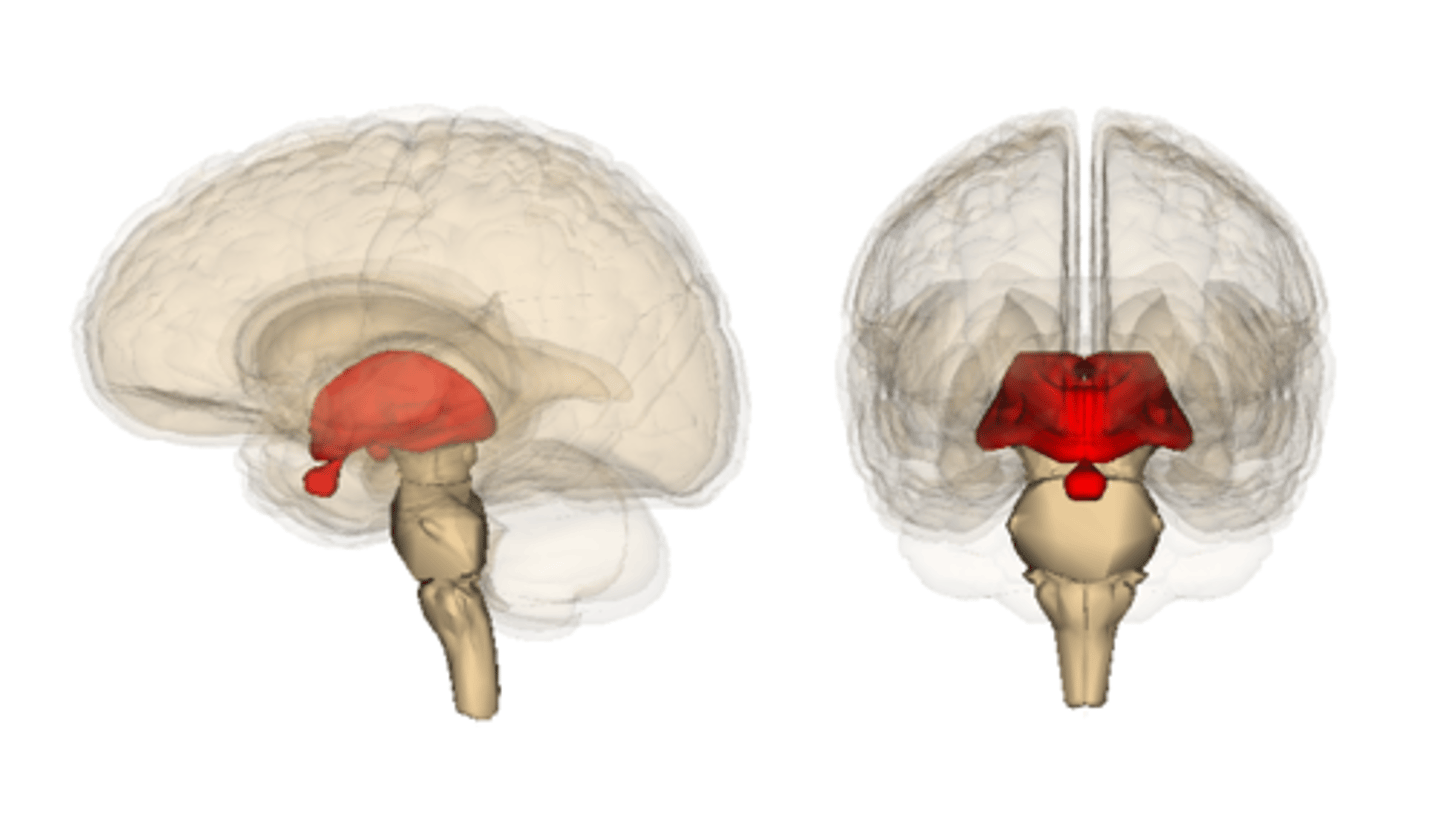
portion of the brain above the brain stem that consists of the thalamus, epithalamus, & hypothalamus
sulcus
a shallow groove or crease on the surface of the cortex that divides gyri
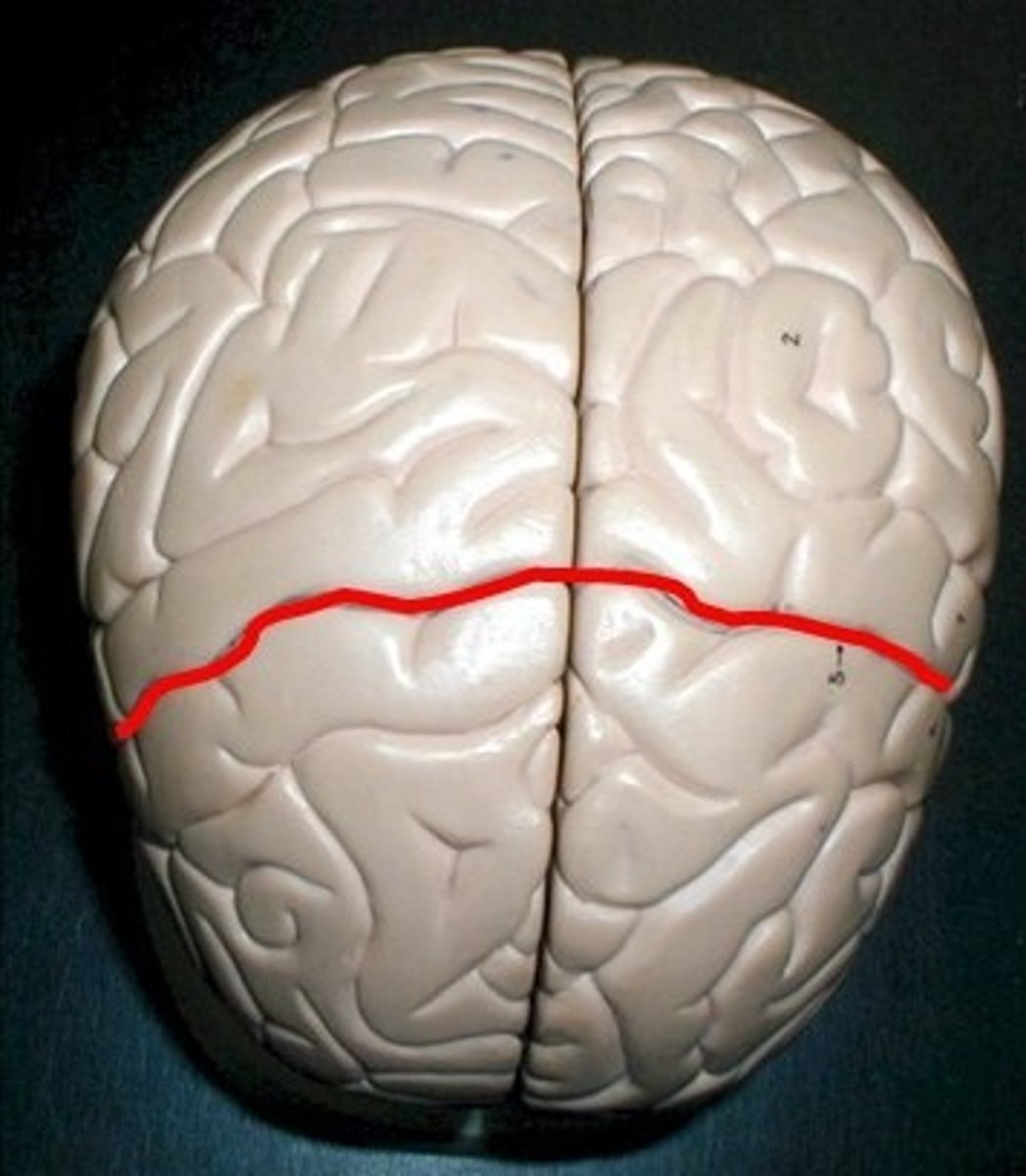
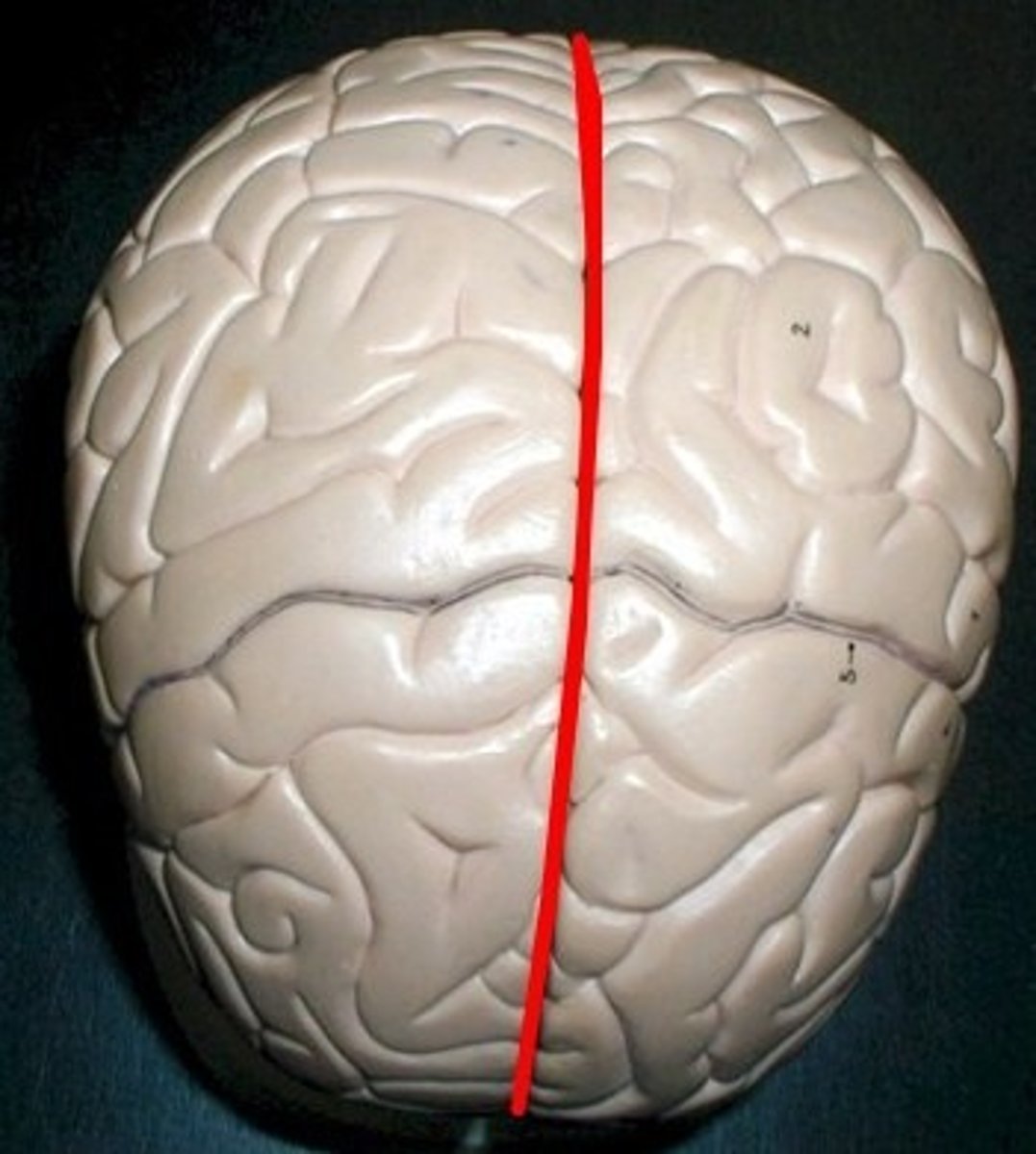
fissure
deep groves in the brain like the one that divides the cerebrum into the right and left hemisphere
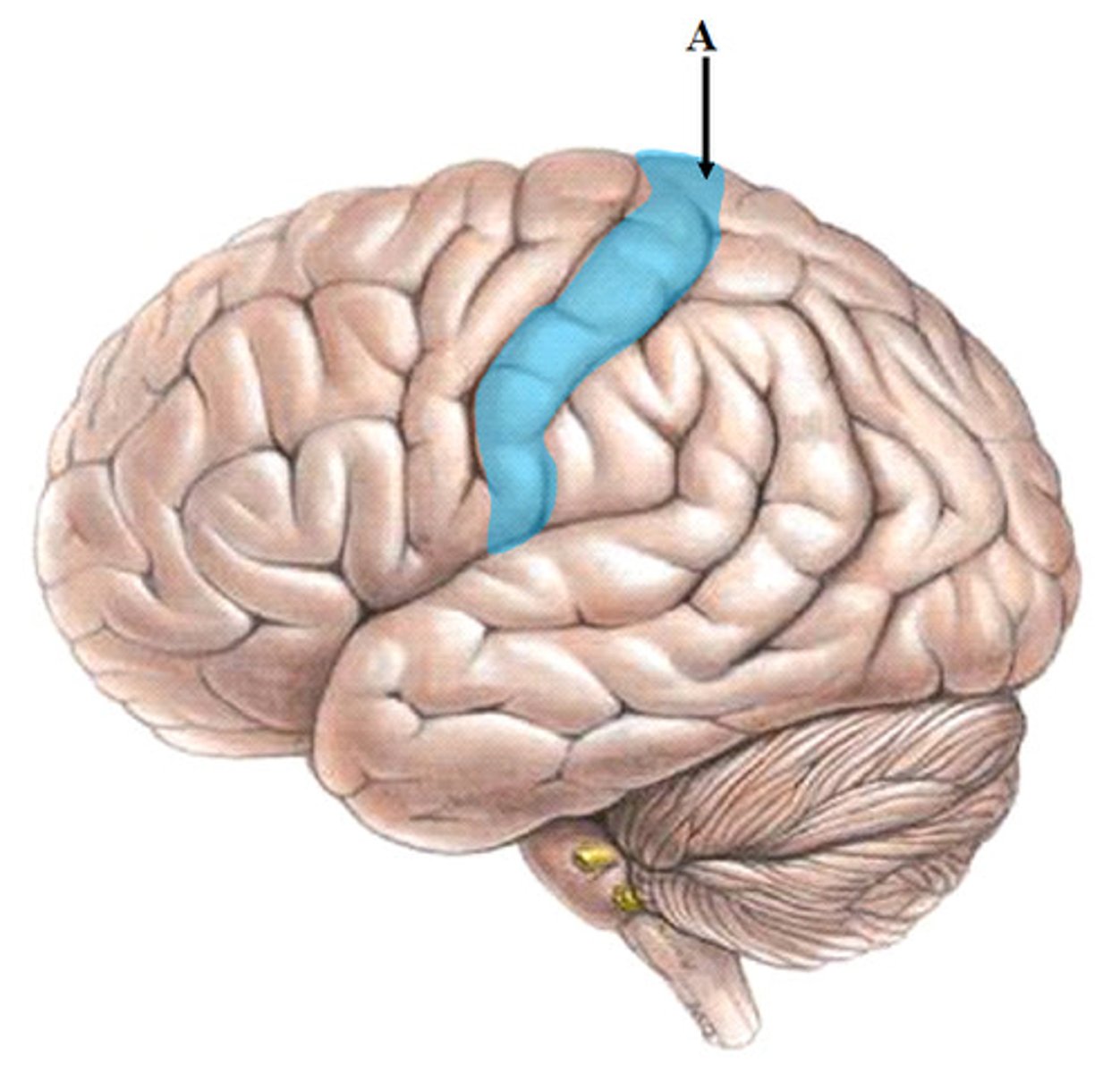
gyrus
a ridge on the cerebral cortex surrounded by one or more sulci (looks like a worm)
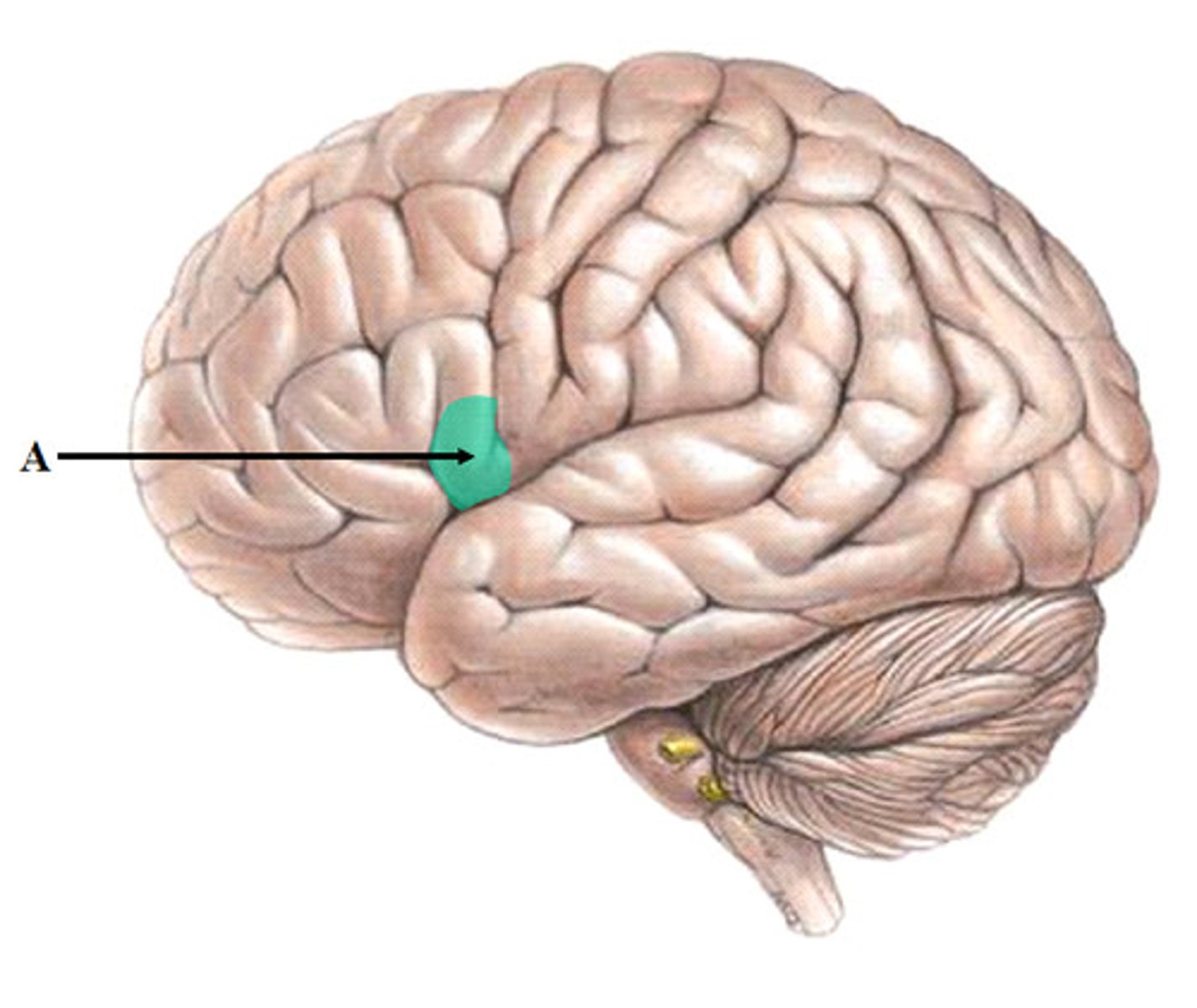
Broca's area
the area of the left cerebral hemisphere that is responsible for motor control of the speech muscles
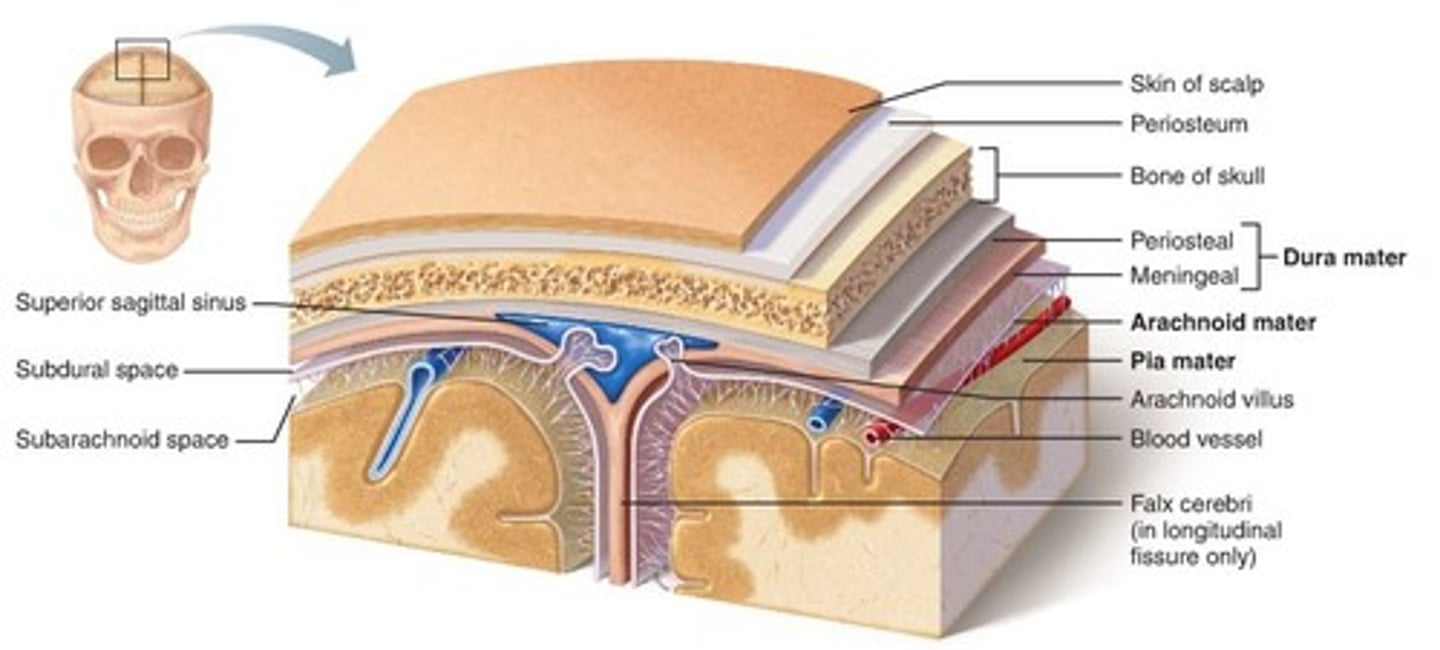
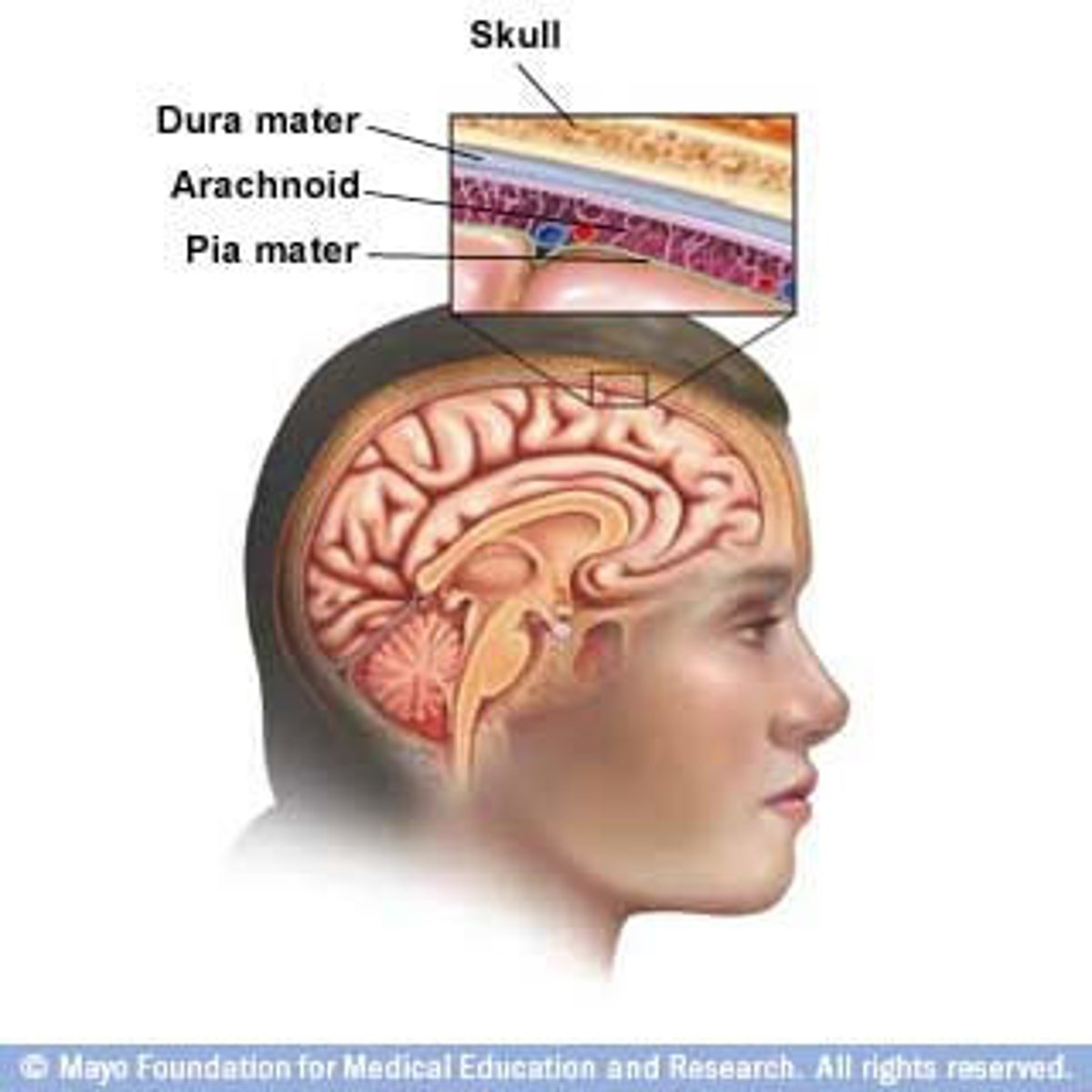
meninges
three protective membranes that surround the brain & spinal cord (dura mater, arachnoid, and pia mater)
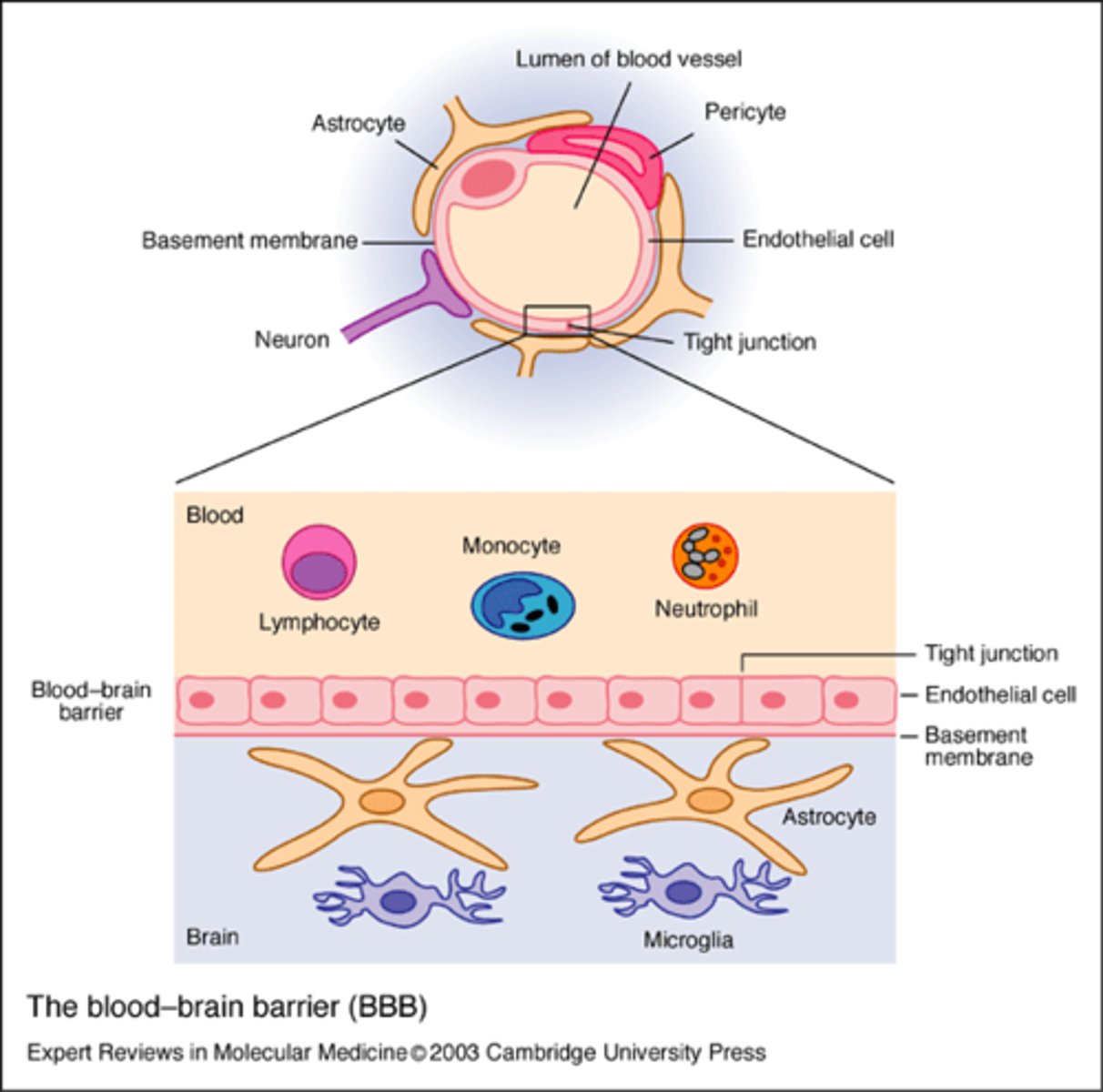
blood-brain barrier
filters blood before it can enter the brain; it is effective against waste like urea, bacteria, parasites, etc...; it is NOT effective against thing like nutrients, alcohol, anesthetics, etc...
reflexes
simple, rapid, involuntary programmed responses to stimuli;
the picture shows a knee-jerk reflex in which a message is being sent to the spinal cord to respond
cerebellum
section of the brain that coordinates body movements, including balance
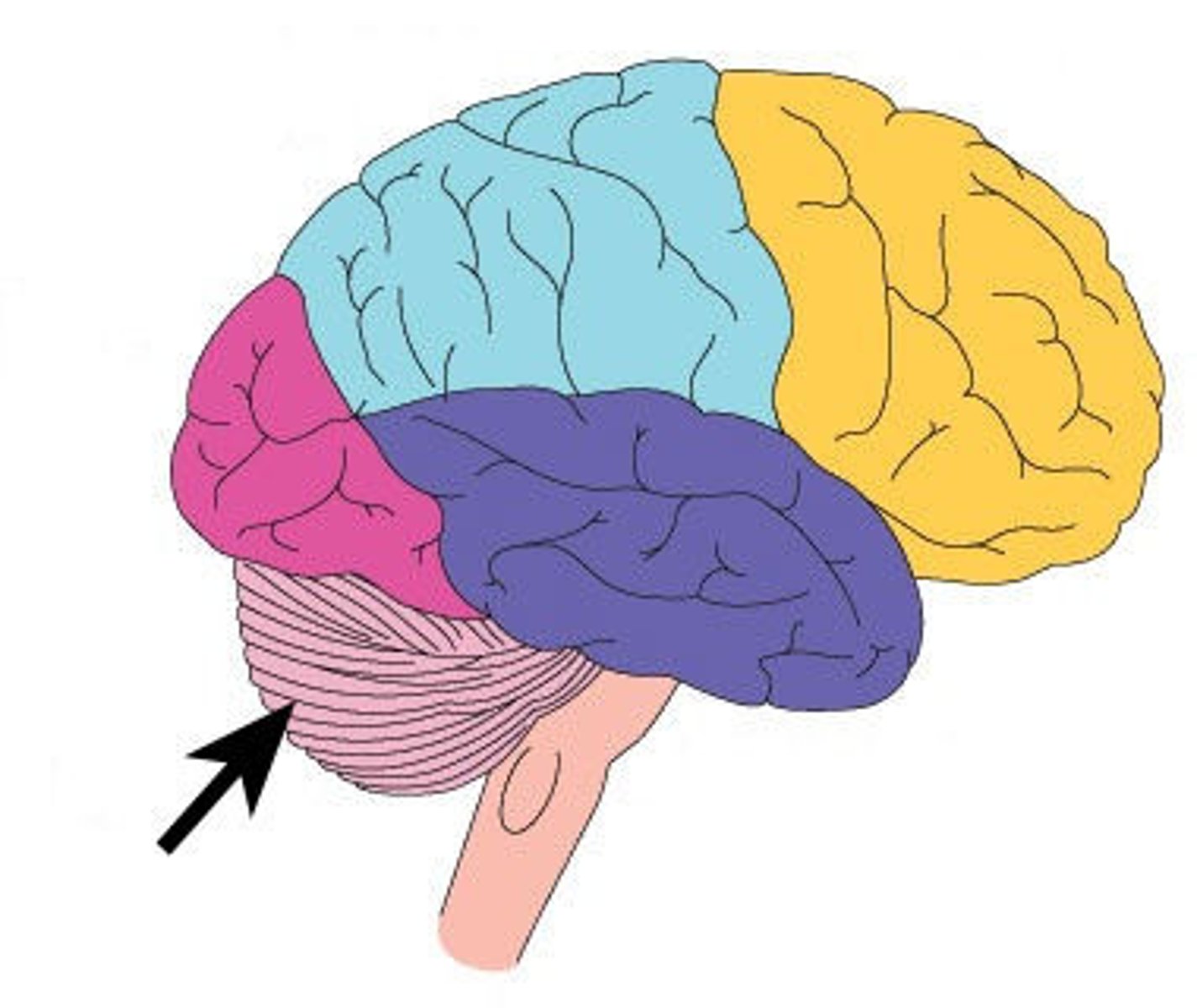
cerebrum
the largest portion of the human brain that allows for individual thought processes, skill development, and personality; also called the right & left cerebral hemispheres
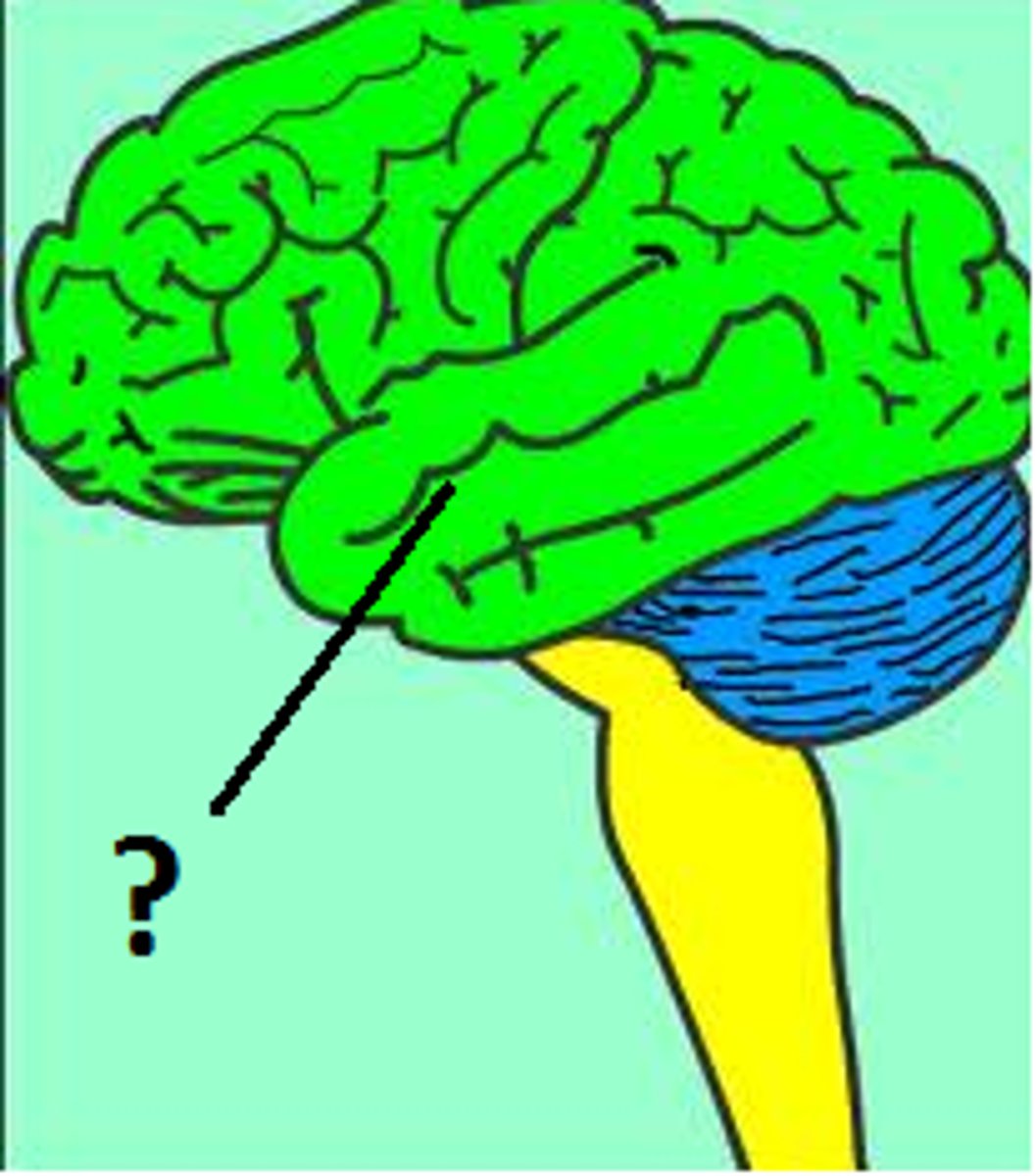
sensory cortex
the parts of the cerebrum that receive stimulus information from the senses
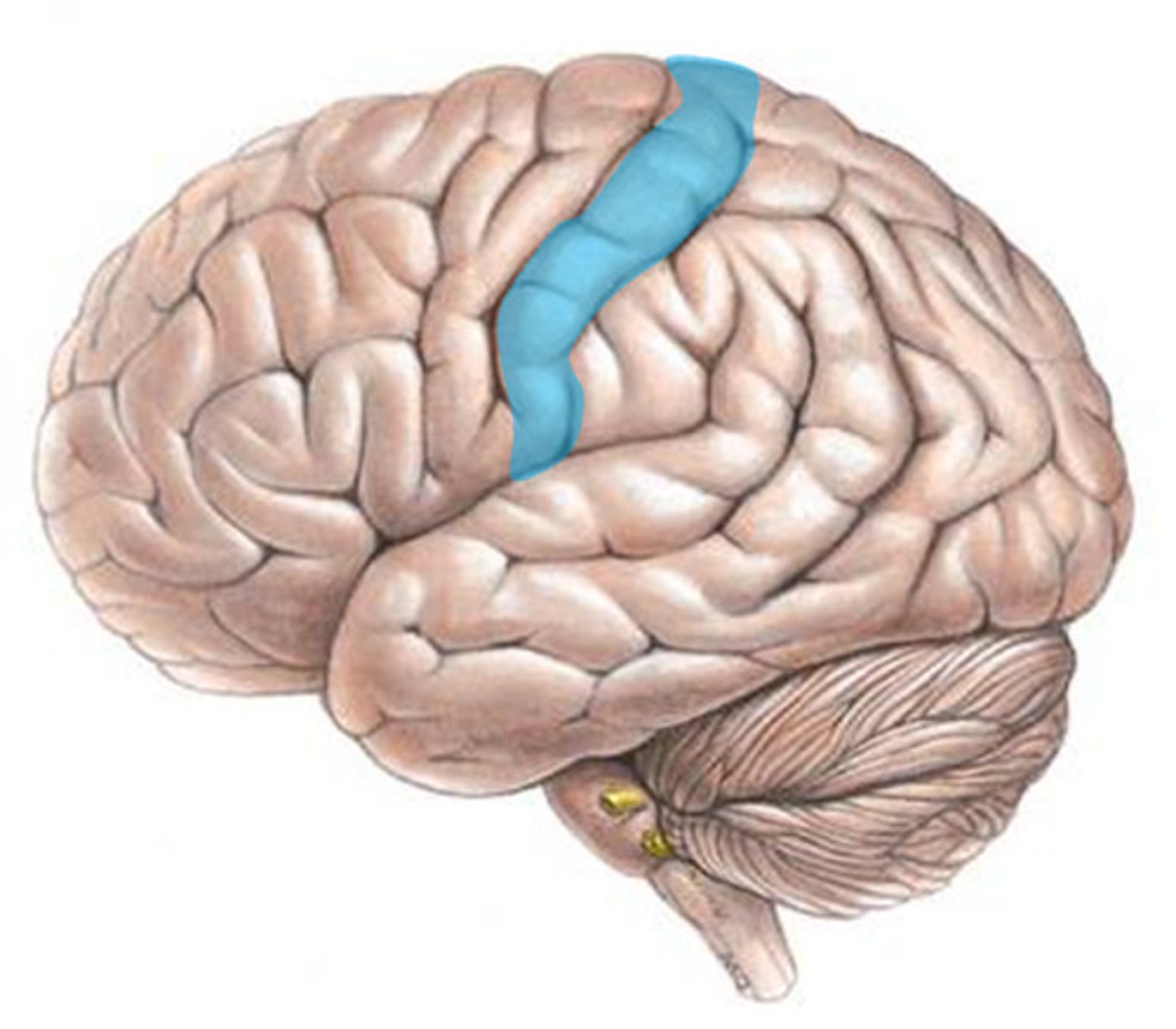
meningitis
inflammation of the meninges/lining of the brain
association neuron
also called interneuron; neurons inside the CNS that connect motor and sensory neurons
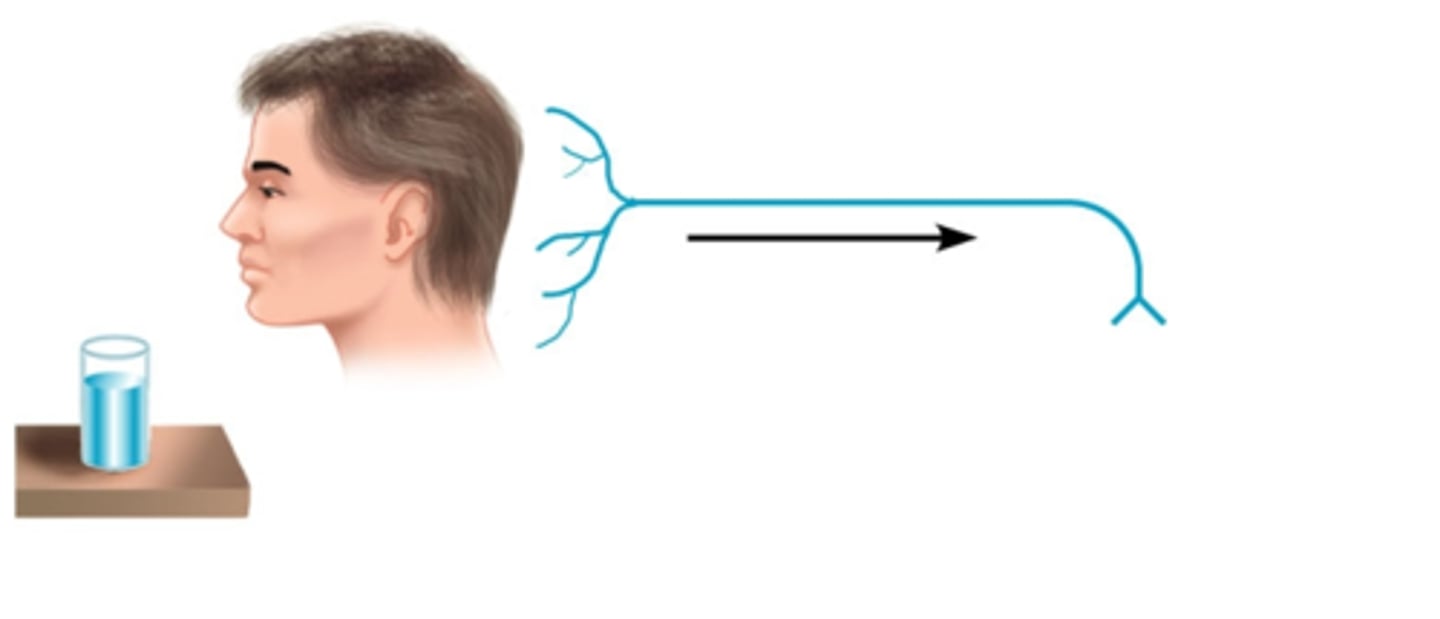
sensory neuron
also called afferent neuron; carries messages, or impulses toward the spinal cord and brain from a sensory organ
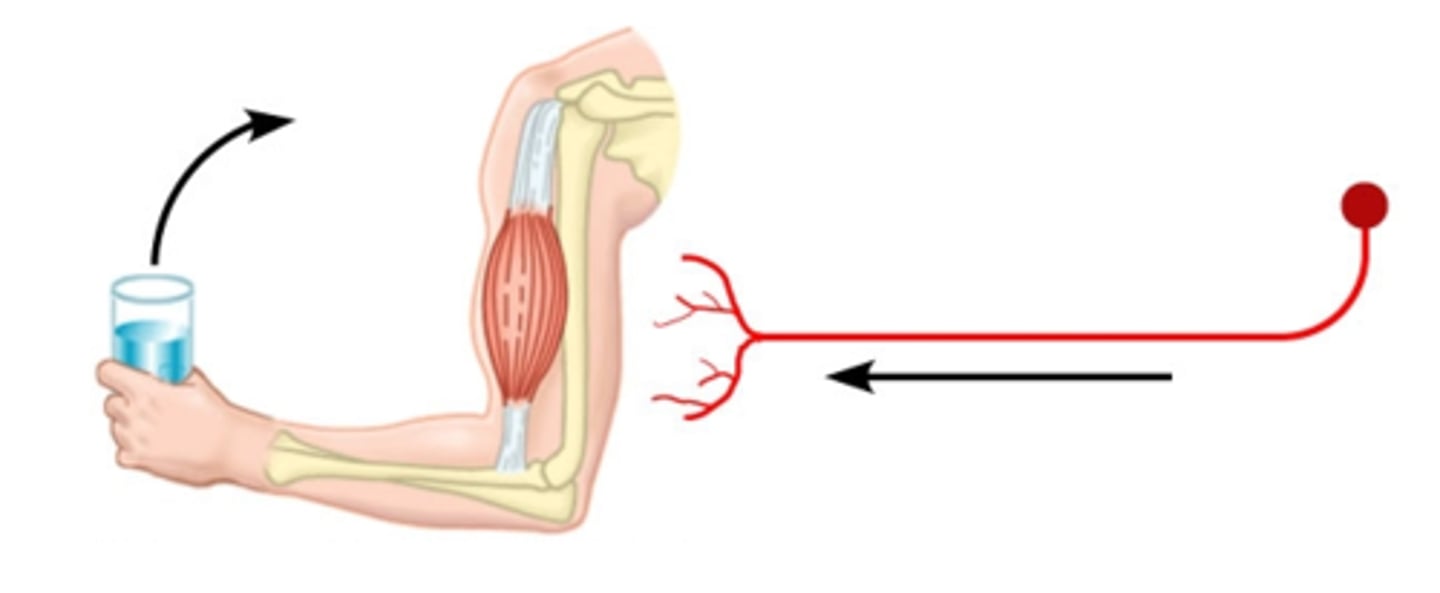
motor neuron
also called efferent neuron; sends an impulse to a muscle or gland (away from the CNS), causing the muscle or gland to react
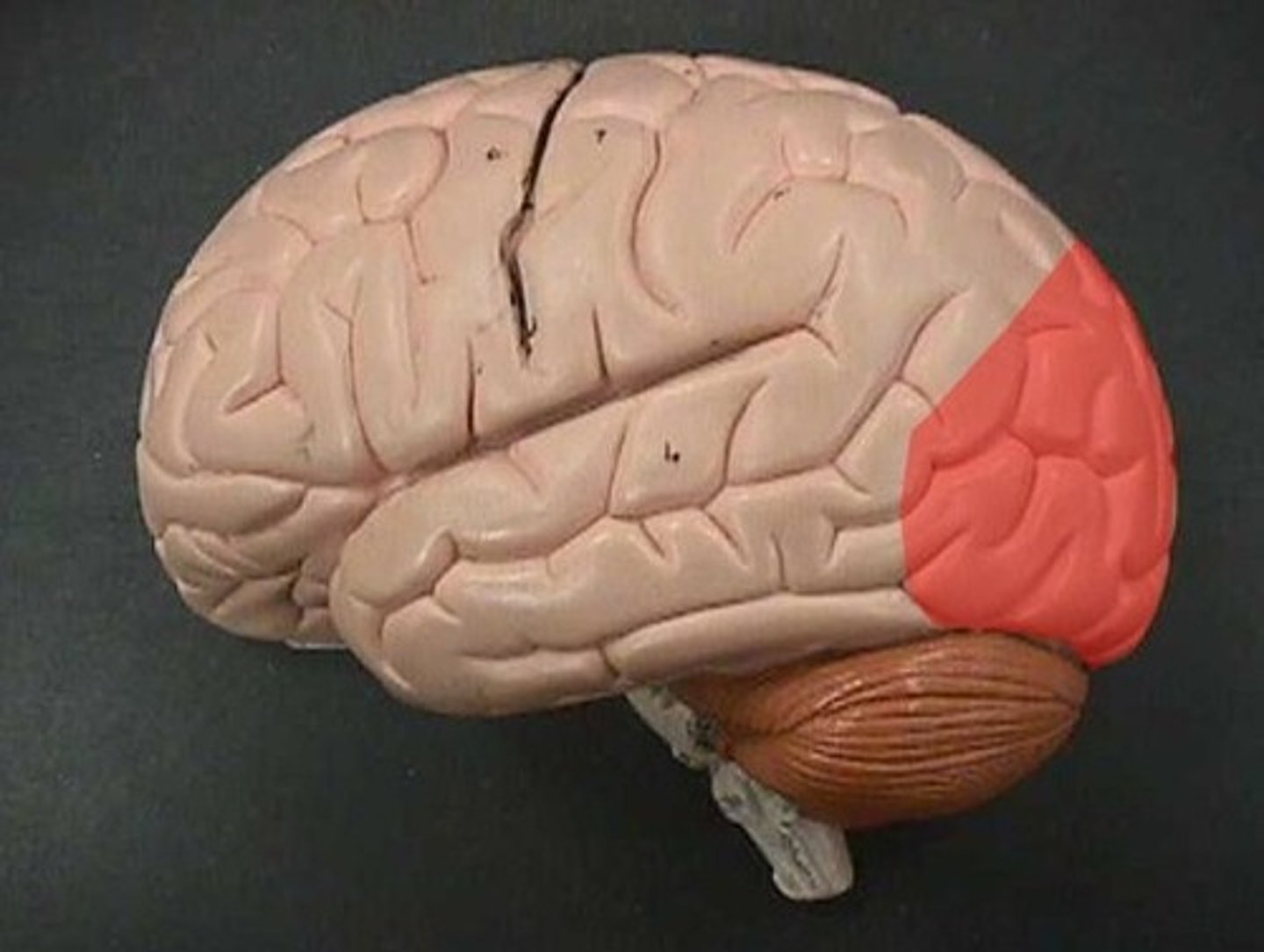
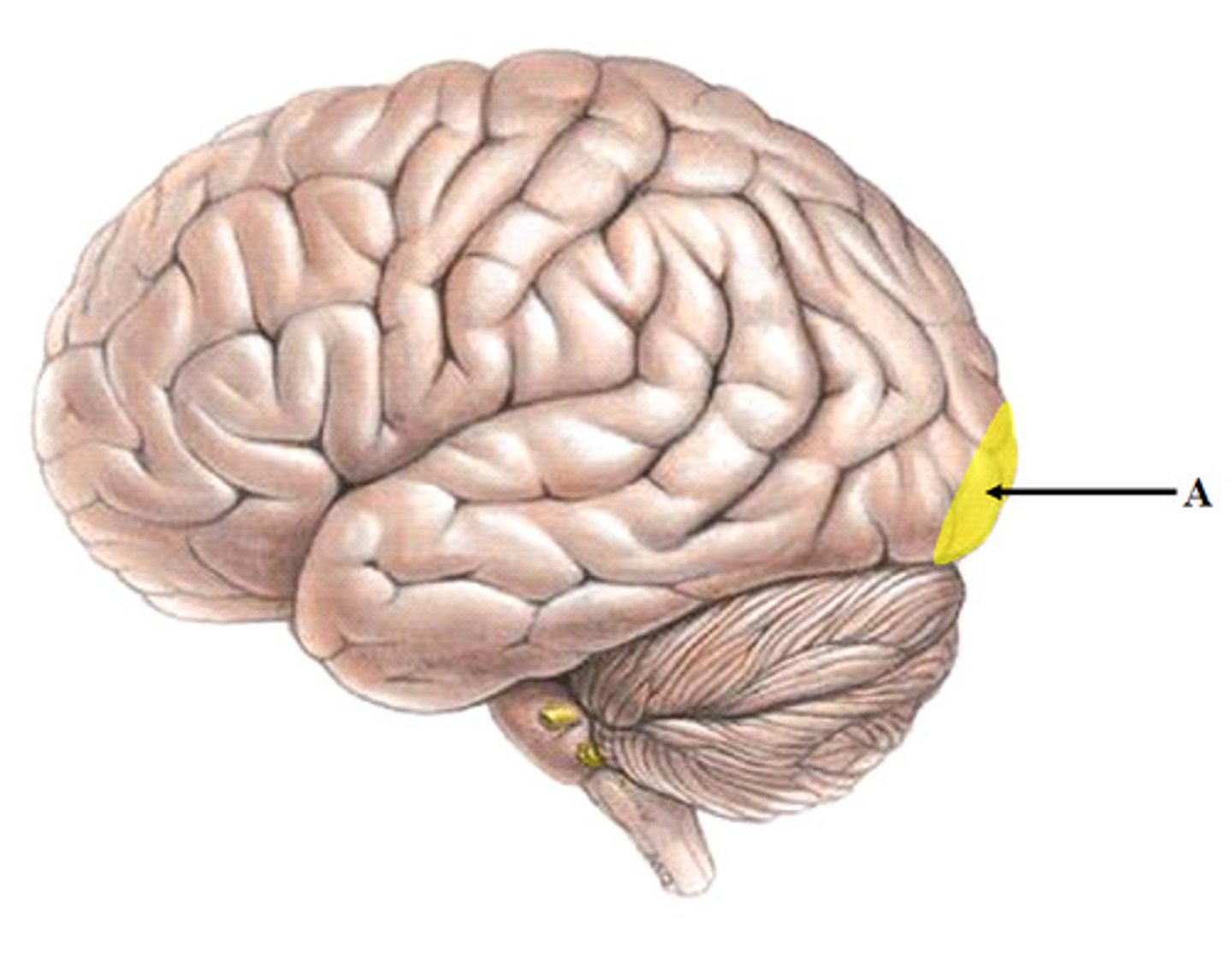
occipital
most posterior lobe of the cerebrum that controls eyesight
ventricle
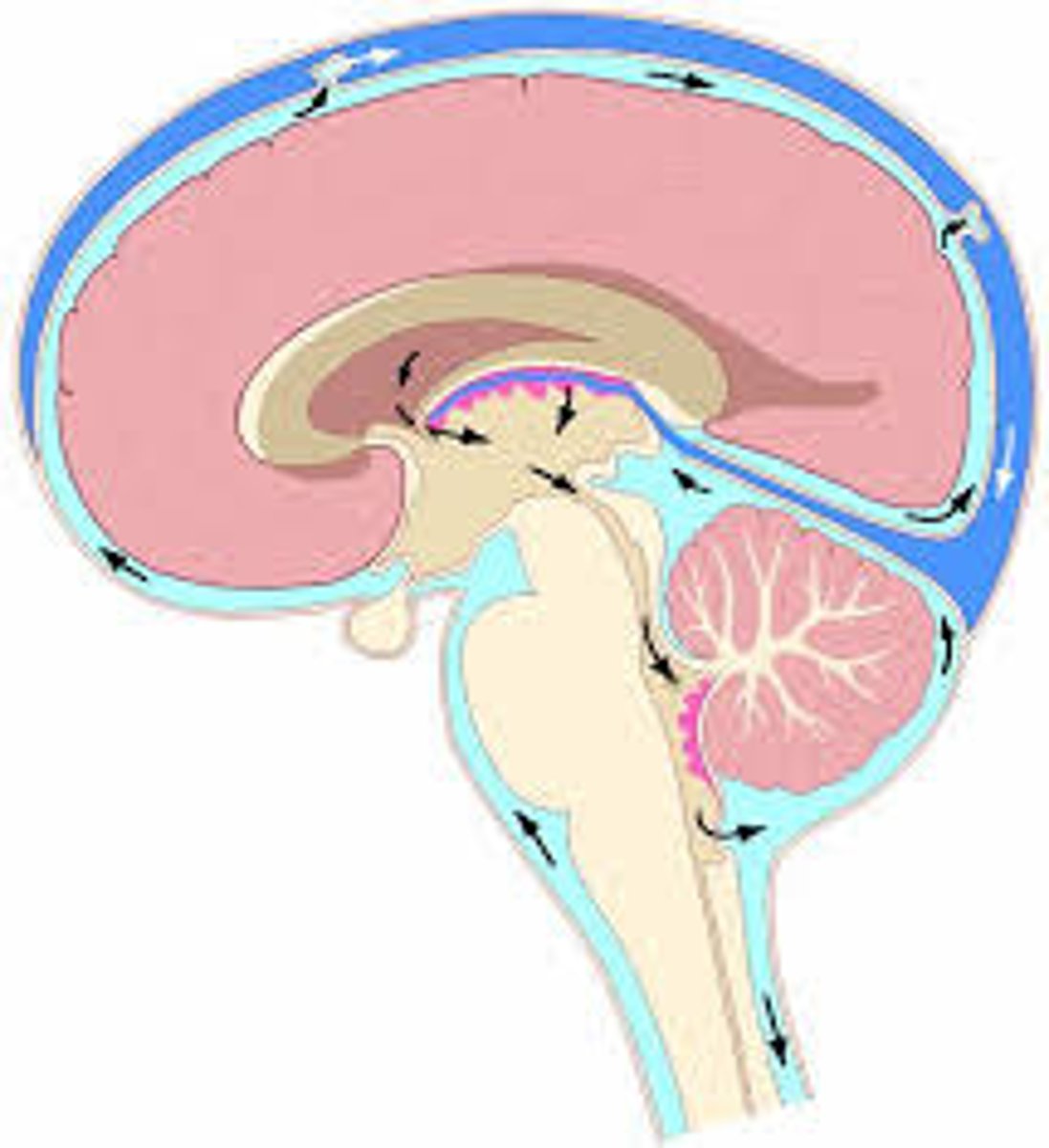
cavity within the brain that contains cerebral spinal fluid; the brain has four
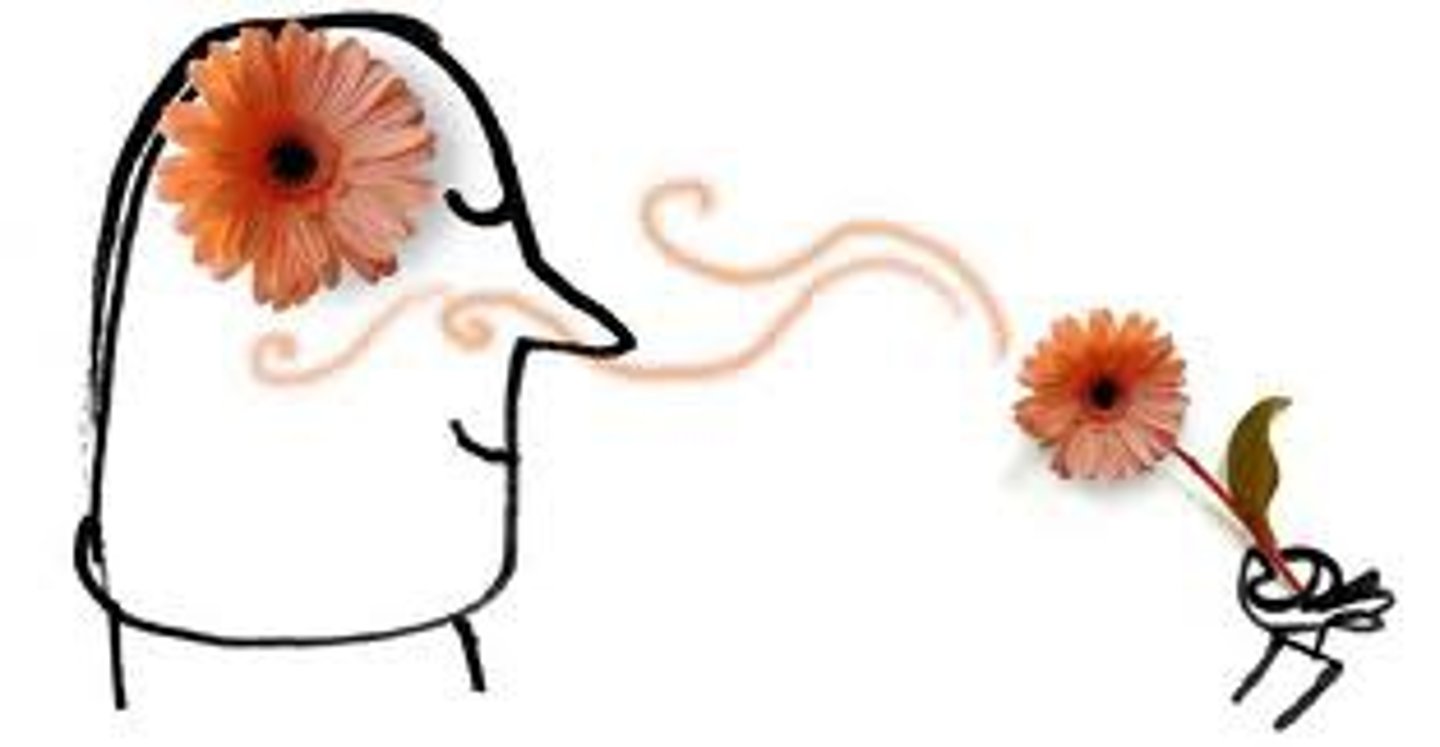
stimuli
changes or information received by senses
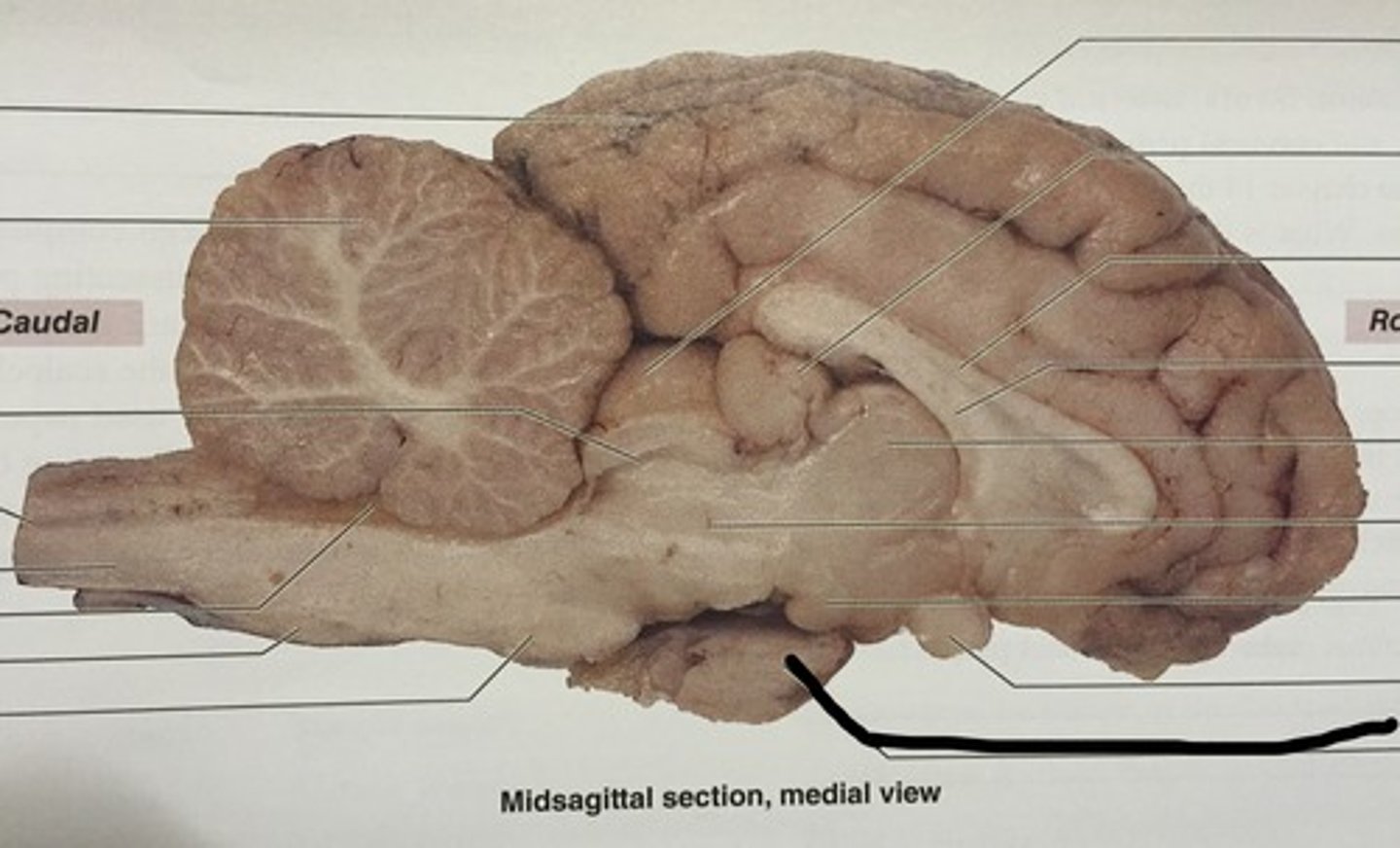
pituitary gland
regulates growth; also called they hypophysis; hangs from the hypothalamus of the diencephalon; probably removed when the meninges were dissected
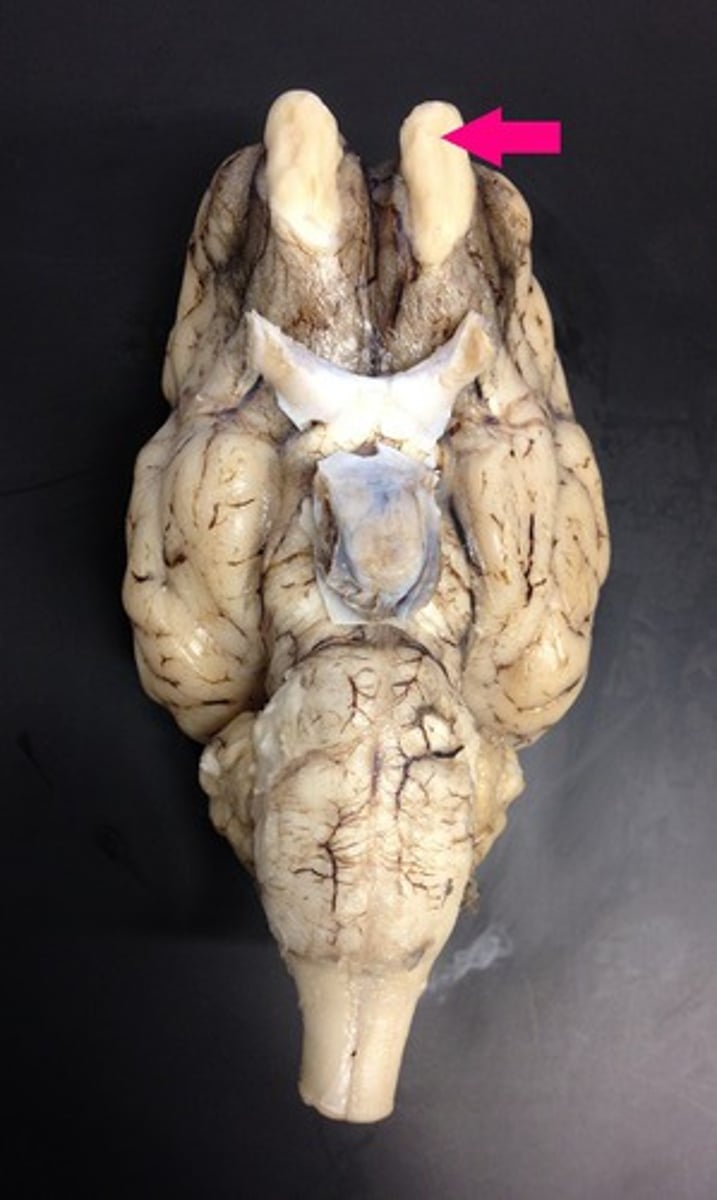
olfactory bulb
brain structure that picks up smell information from the nose; Cranial Nerve I
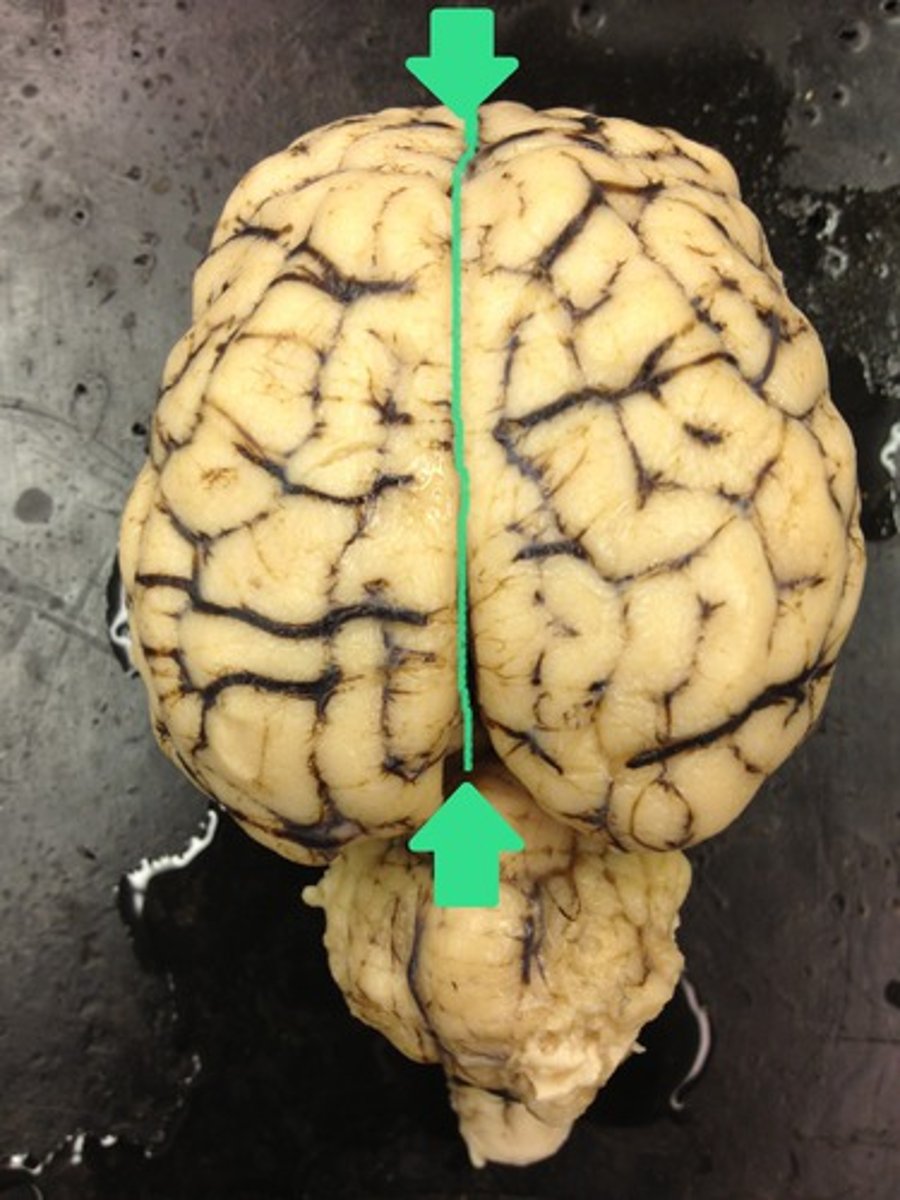
longitudinal fissure
deep groove that separates left and right hemispheres
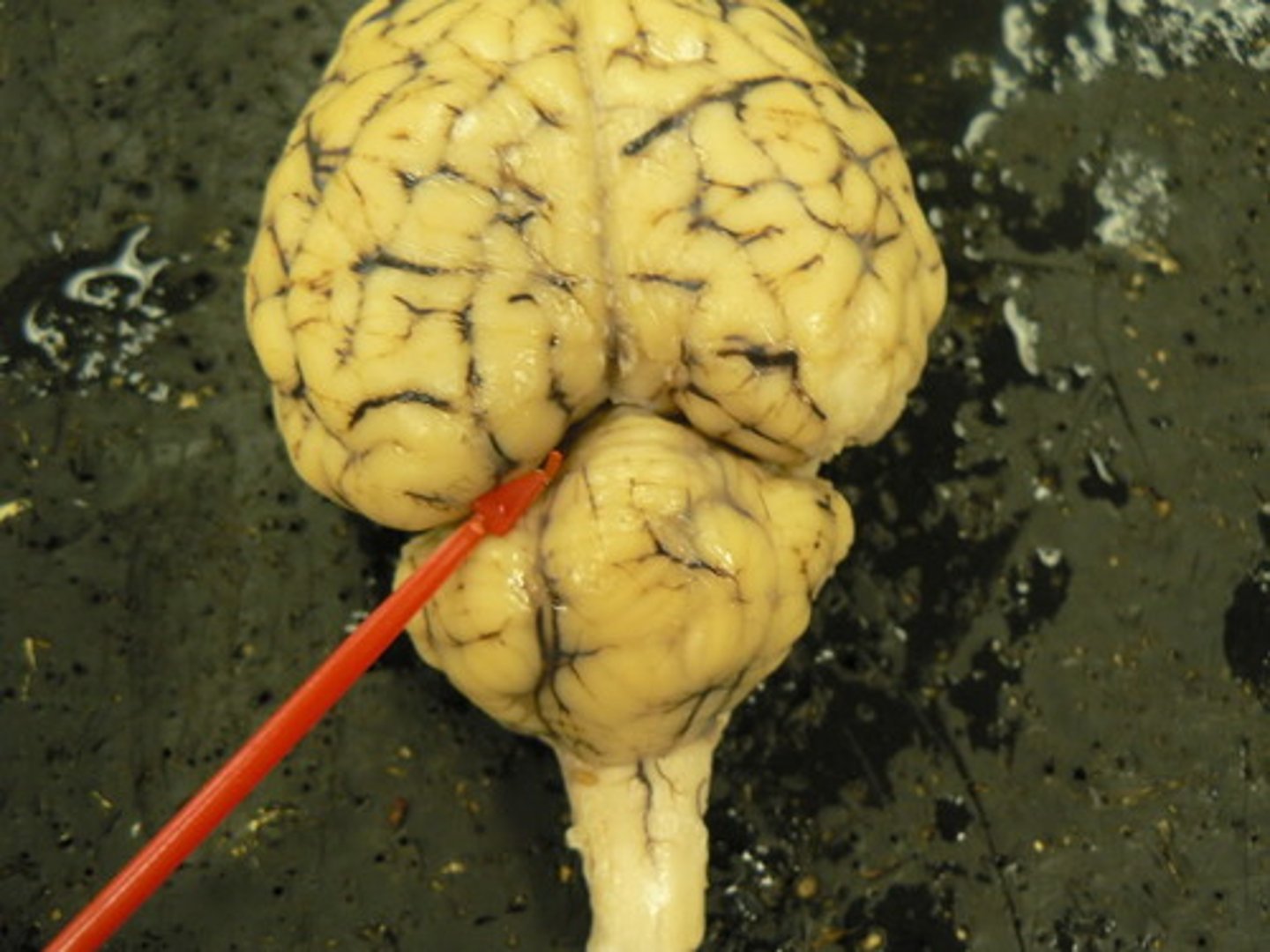
transverse fissure
deep groove that separates cerebrum from cerebellum
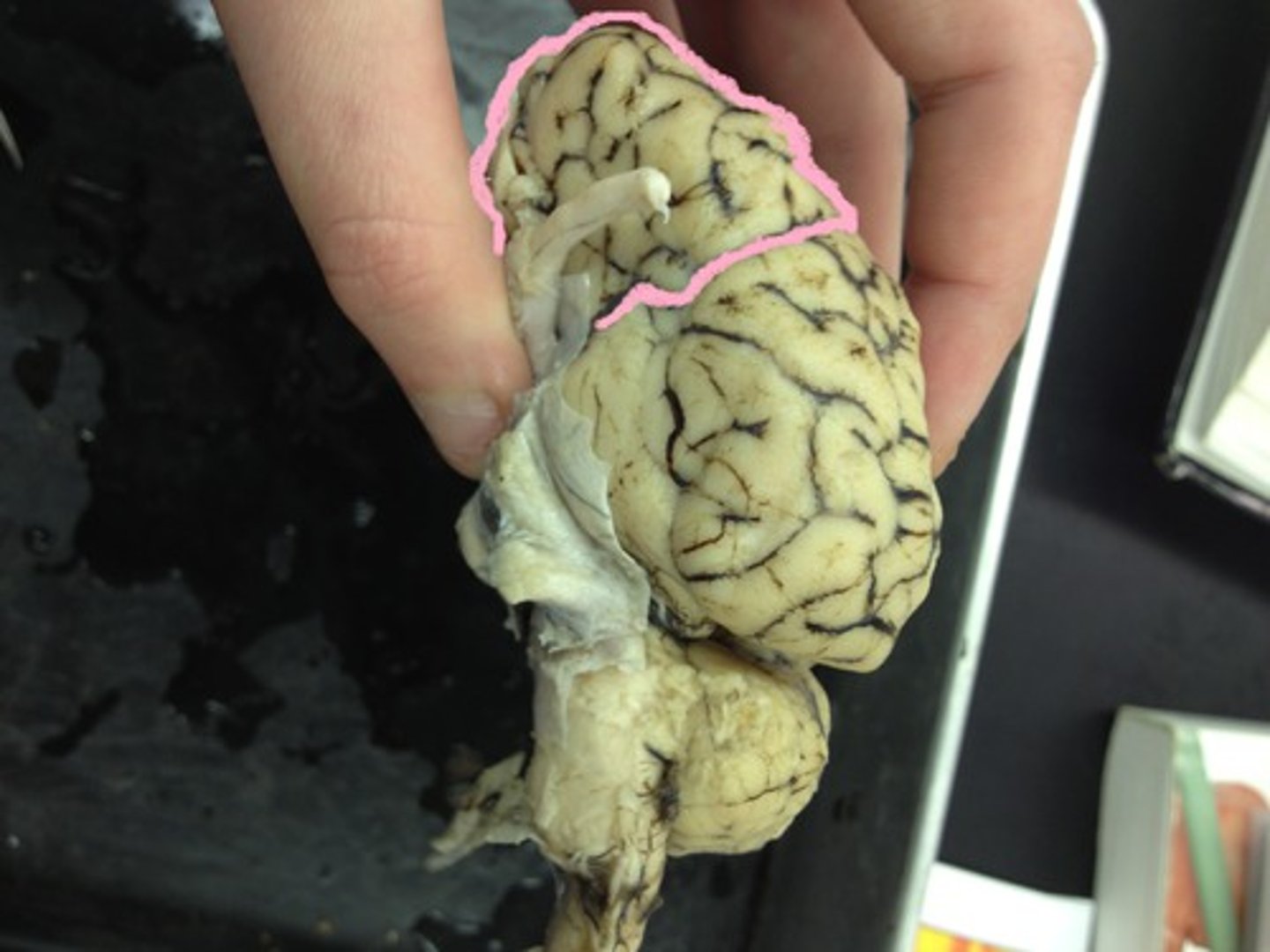
frontal
A lobe of the cerebrum that has specialized areas for skeletal muscle movement (motor cortex), abstract thinking, planning, memory, and judgement
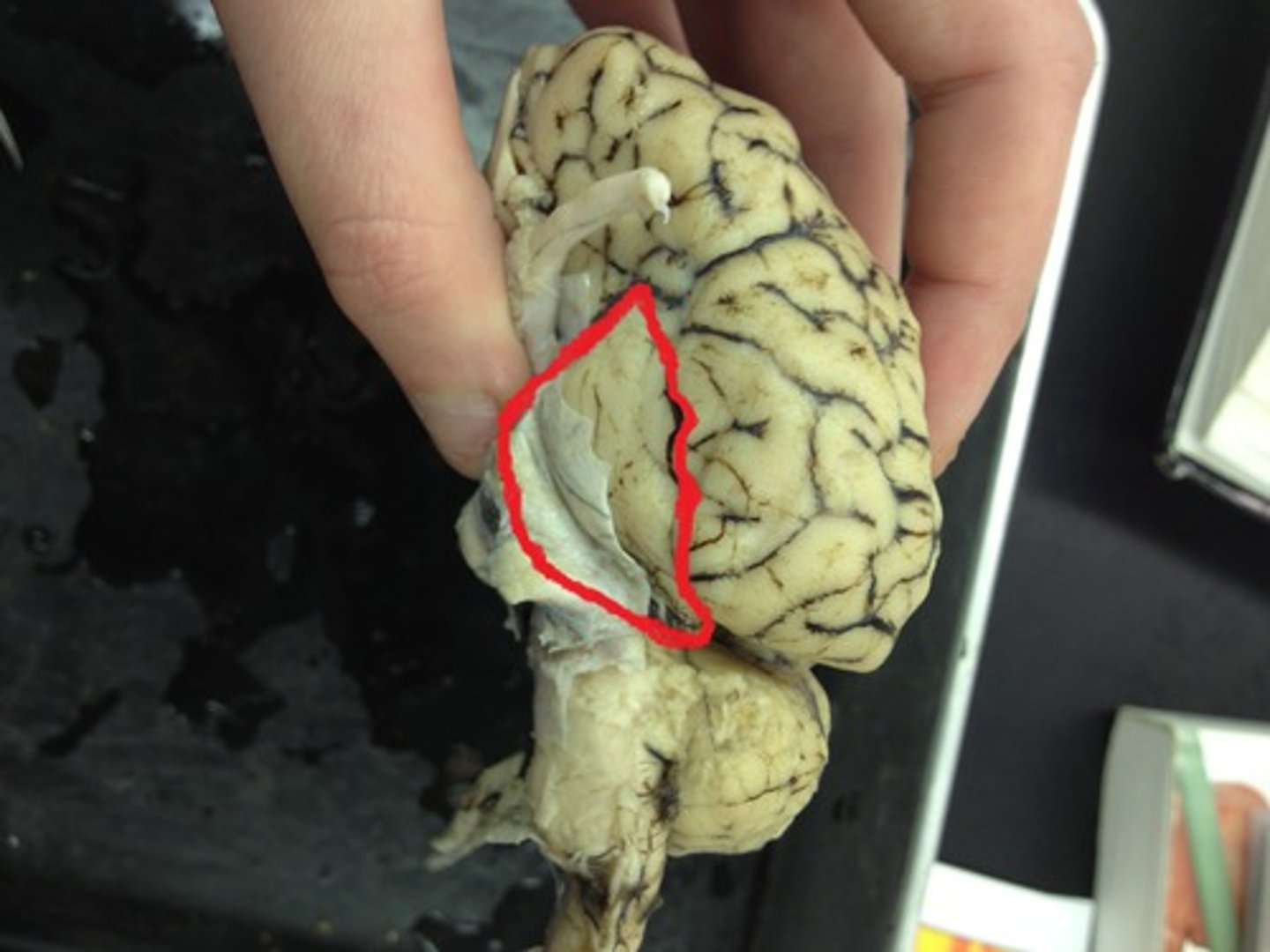
temporal
A lobe of the cerebrum responsible for hearing and language on the left. Smell, & taste are also processed near these areas.
parietal
A superiorly located lobe of the cerebrum whose functions include processing information about touch.
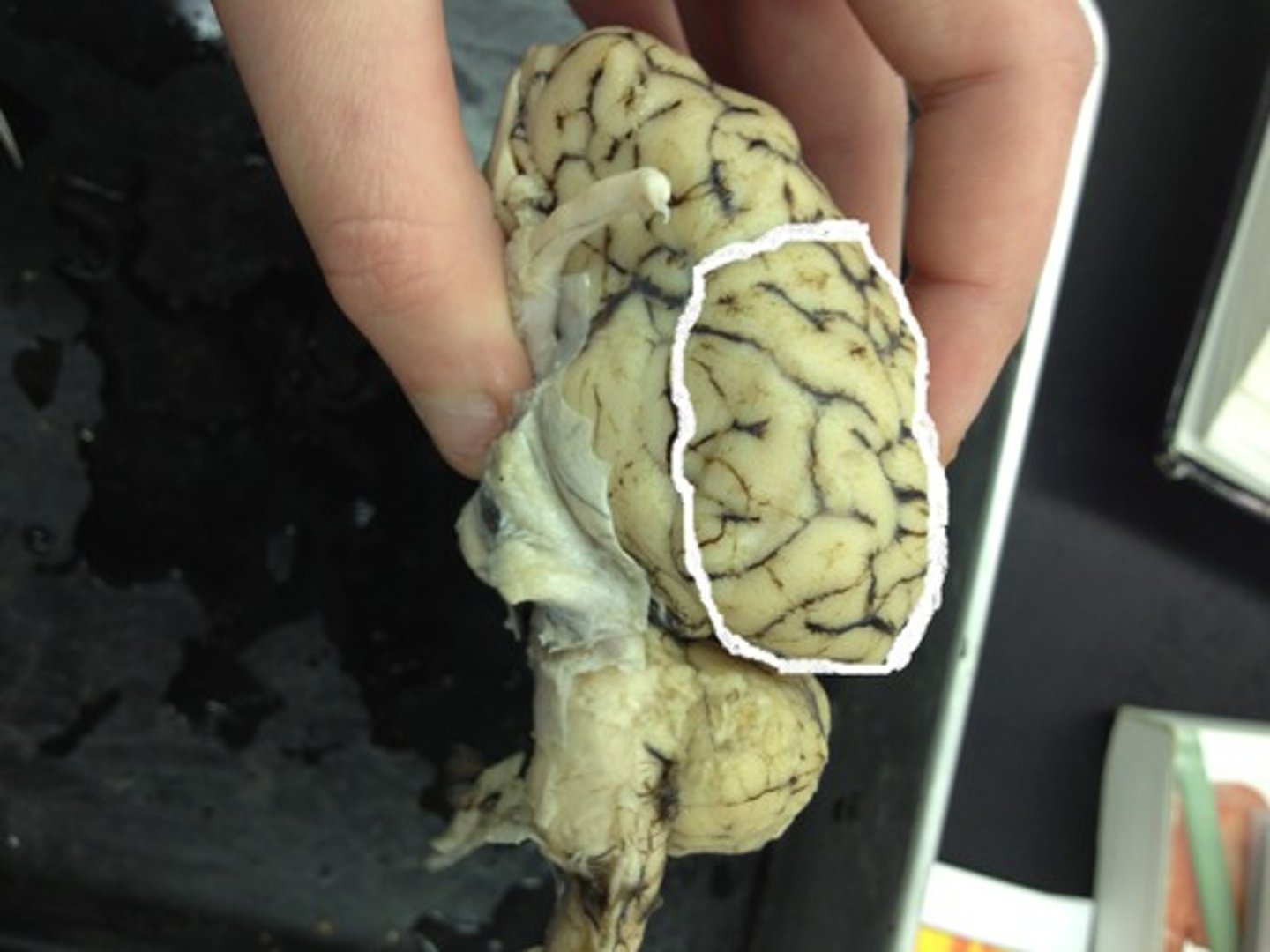
medulla oblongata
Part of the brainstem that controls vital life-sustaining functions such as heartbeat, breathing, blood pressure, and digestion.
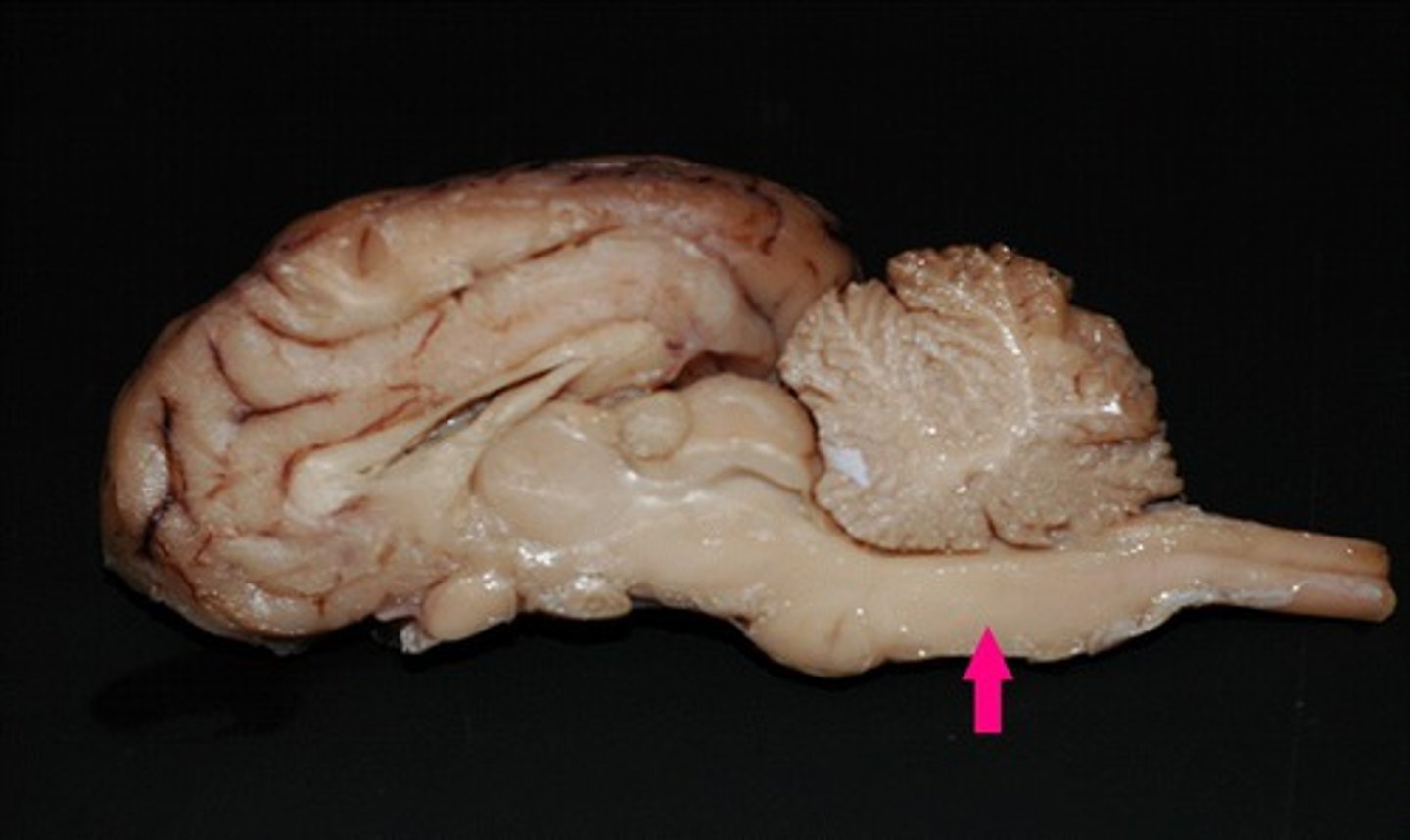
pons
Middle part of the brainstem that relays information from the cerebellum to the rest of the brain; breathing and waking
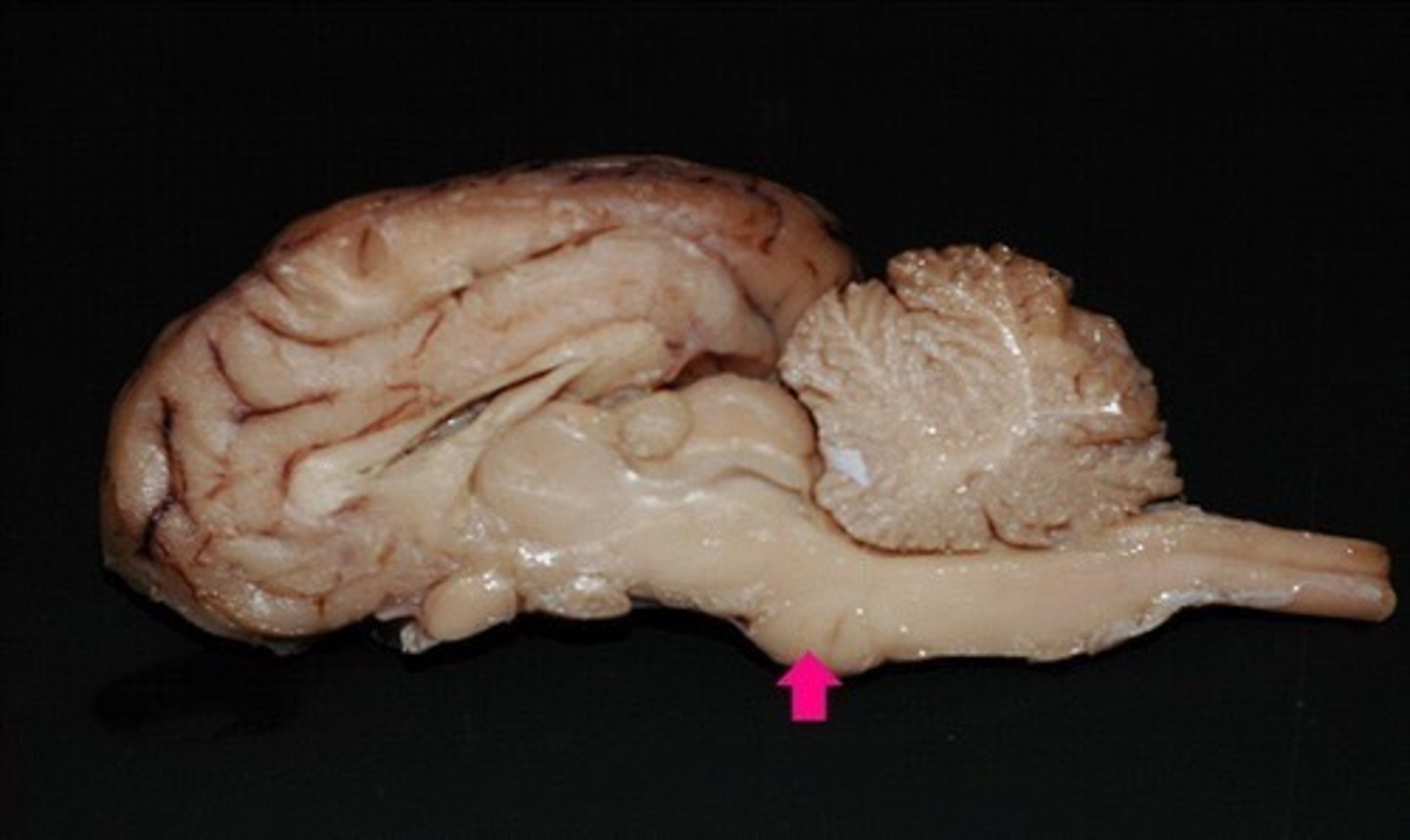
midbrain
Superior part of the brainstem (in the middle of the brain) that regulates temperature, motor control, sleep-wake cycle, and arousal.
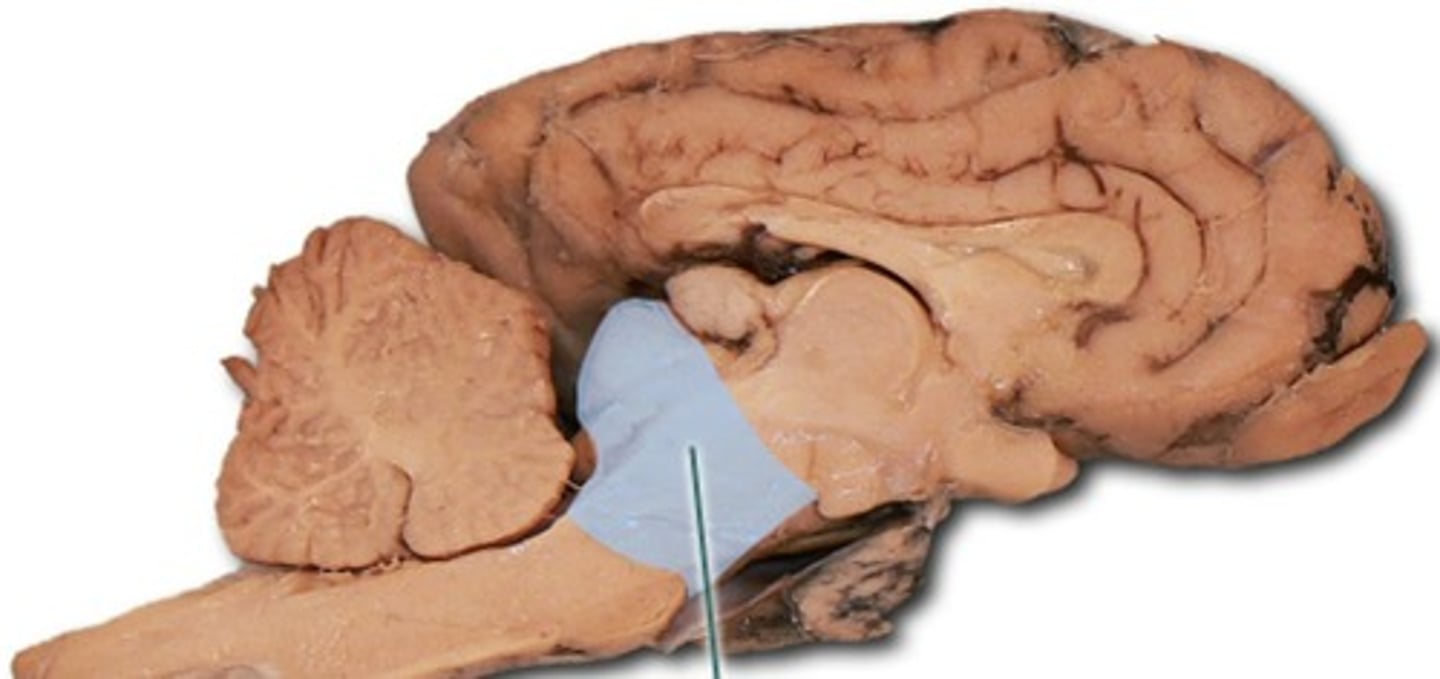
arbor vitae
white matter of the cerebellum; controls coordination of the arms, legs and any actions requiring hand-eye coordination
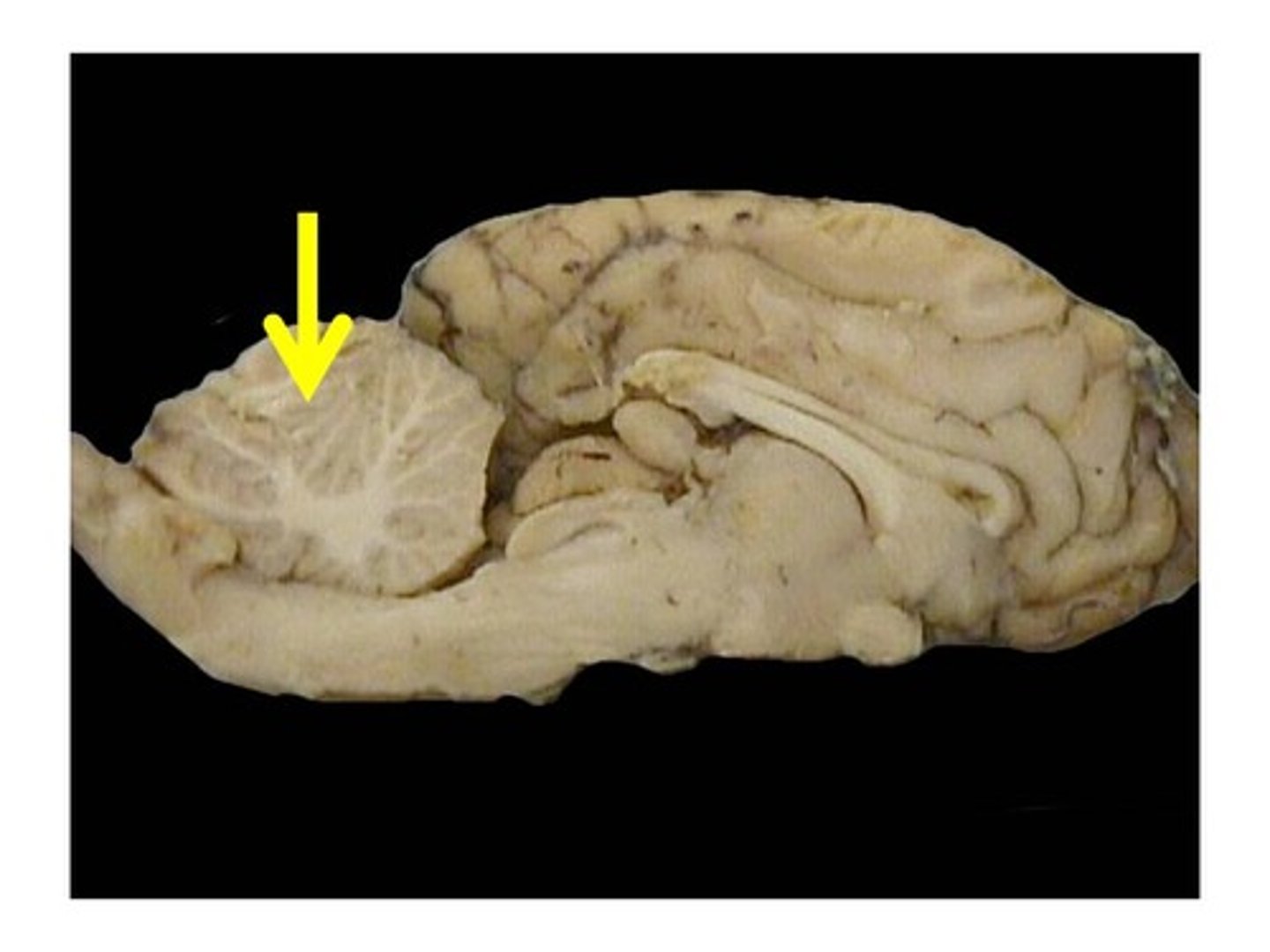
pineal body
a structure found between the cerebral hemispheres of vertebrates; secretes melatonin (neurotransmitter for sleep)
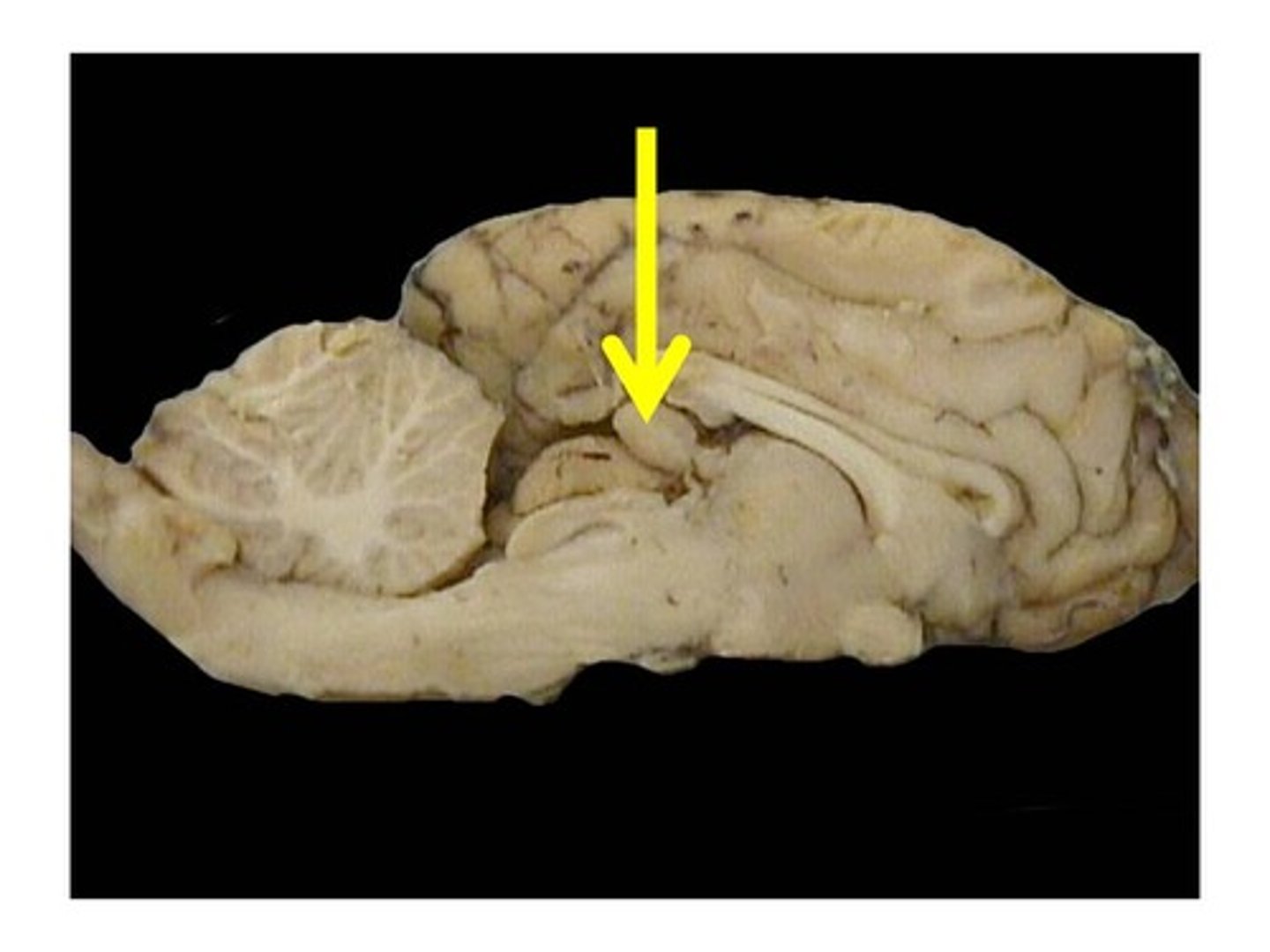
thalamus
directs messages to the sensory receiving areas in the cortex and transmits replies to the cerebellum and medulla; filters out excess stimuli; middle portion of the diencephalon
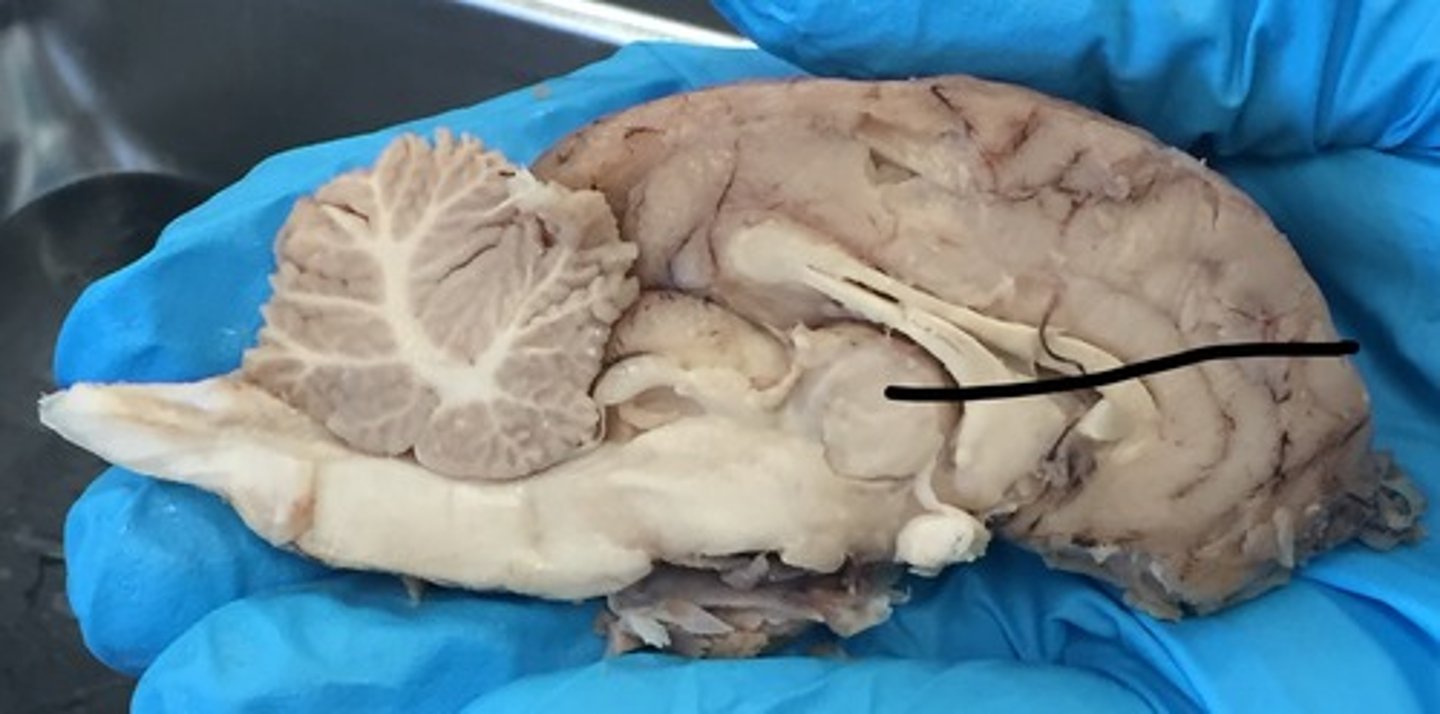
corpus callosum
connection of the two brain hemispheres; syncs right and left sides
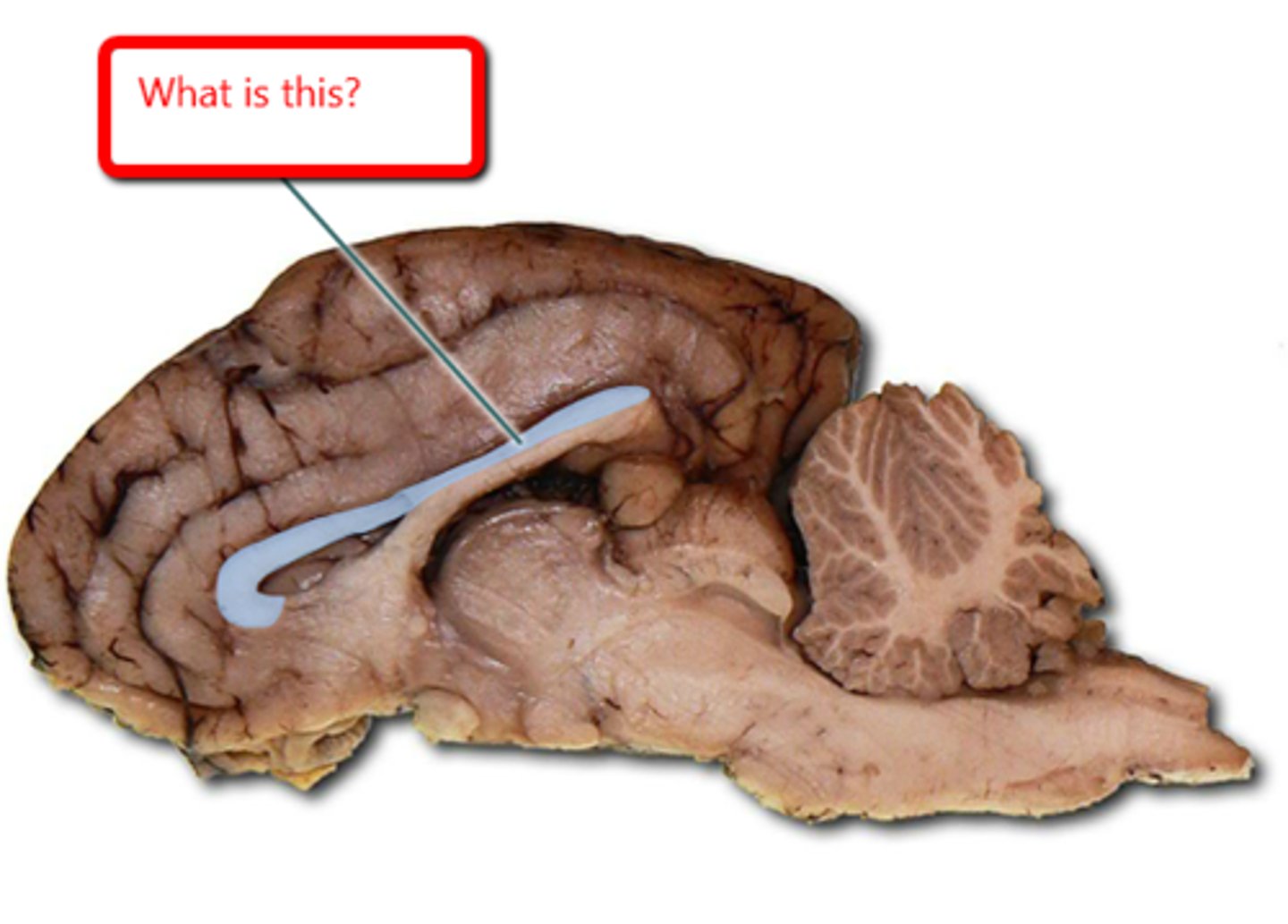
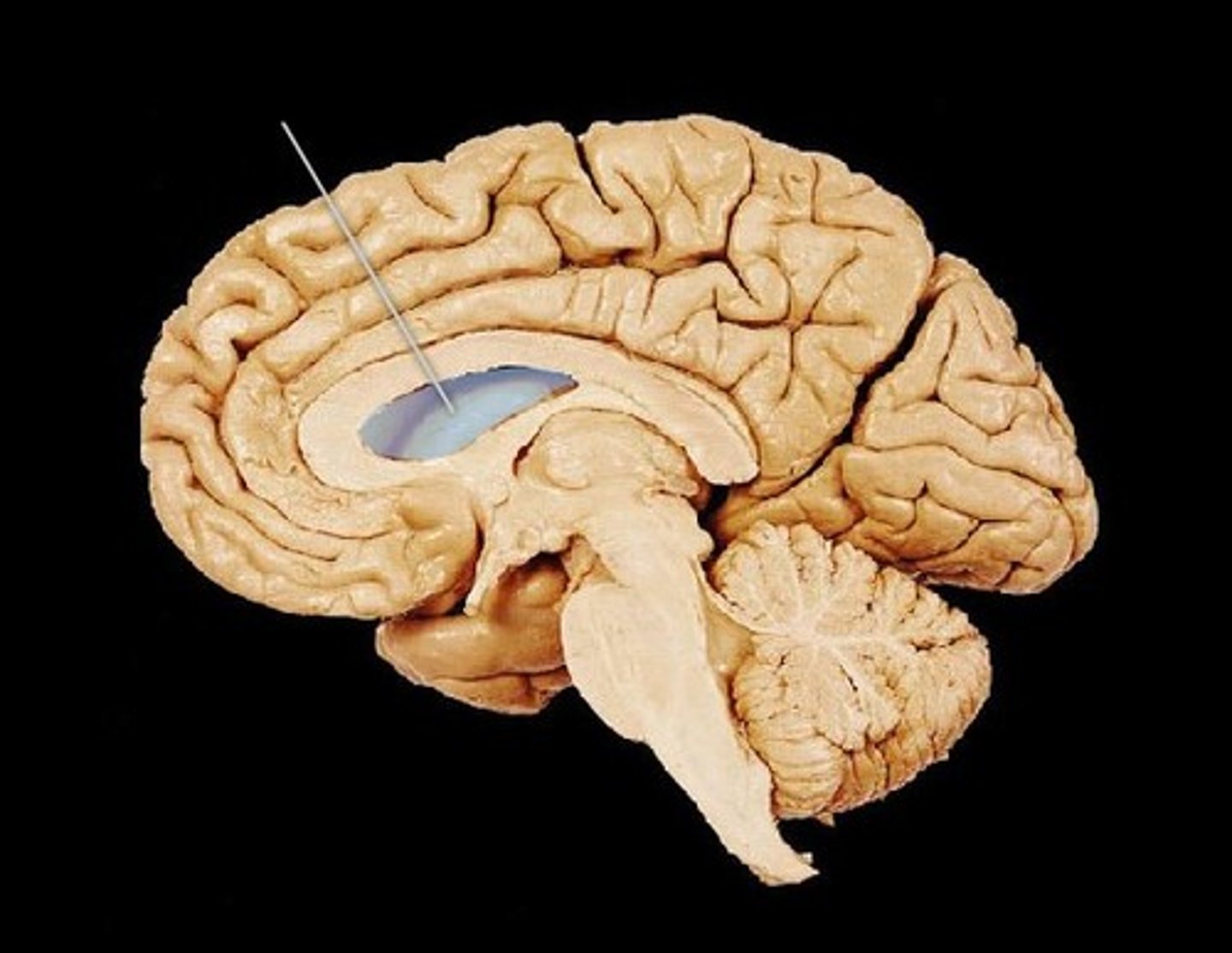
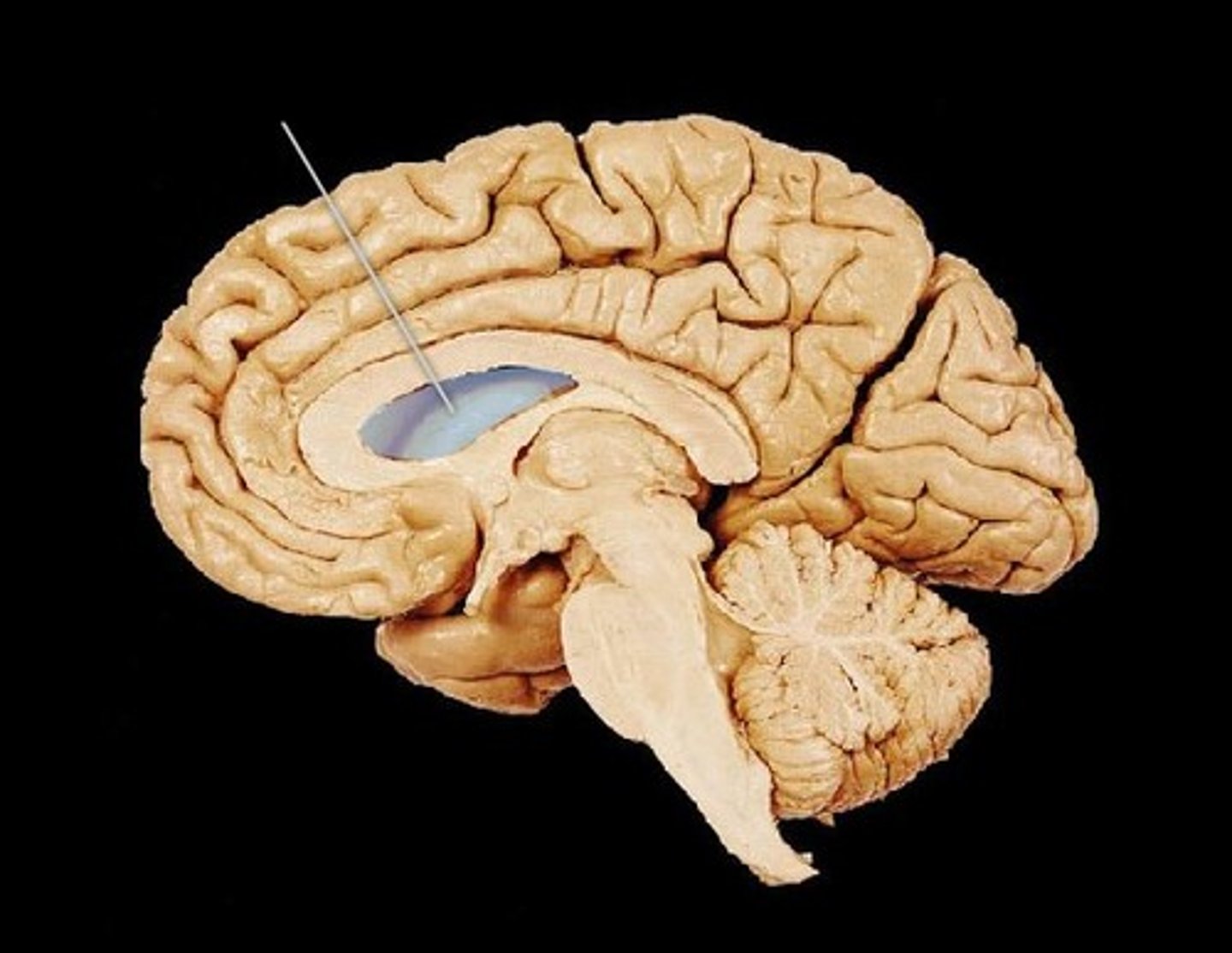
lateral ventricle
largest chamber within the cerebrum that holds the cerebrospinal fluid (CSF) and provides the passage for its circulation
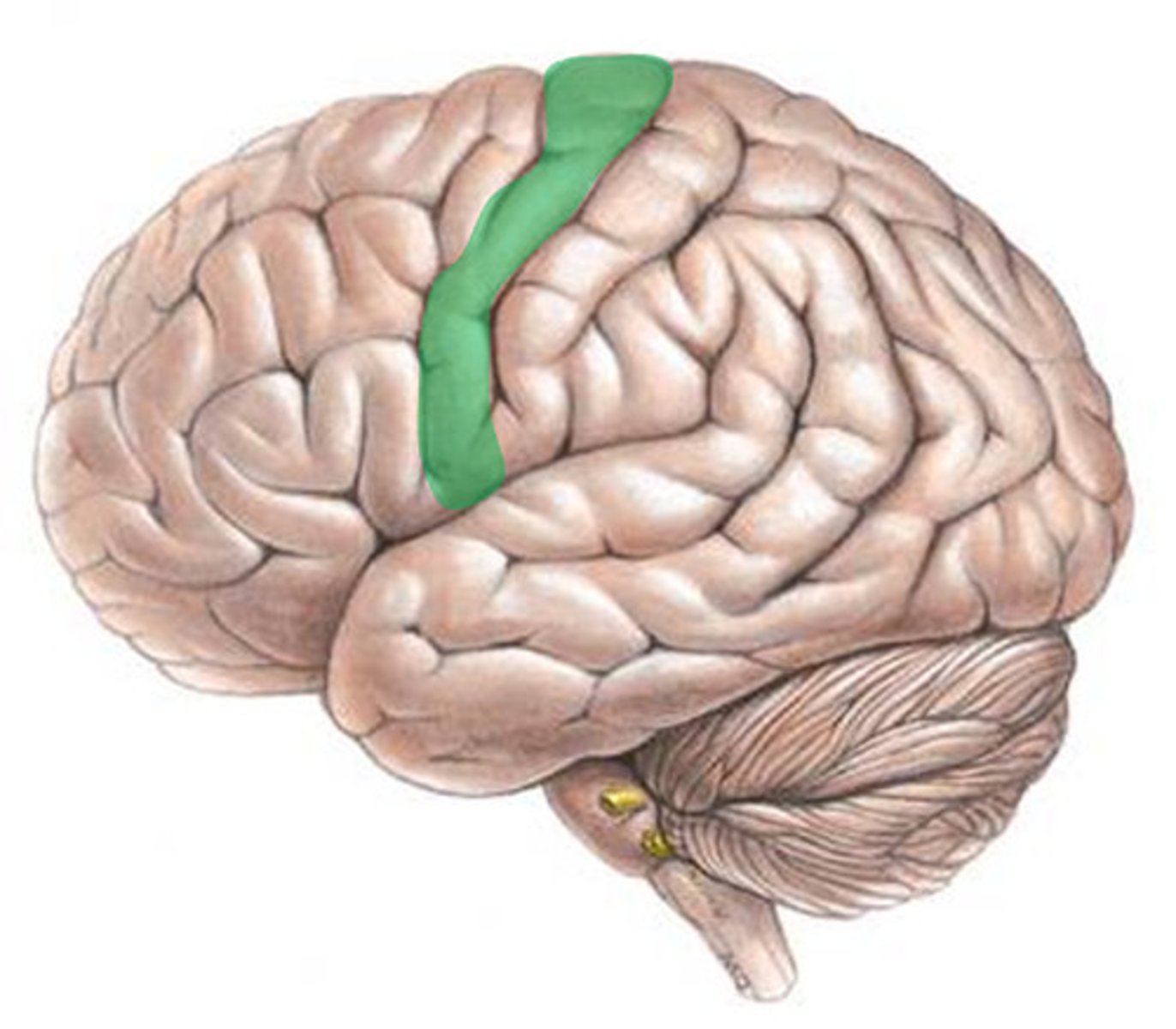
motor cortex
the area of the brain (posterior of the frontal lobe) that controls skeletal muscle movements - the only part of the brain that controls VOLUNTARY (somatic) action
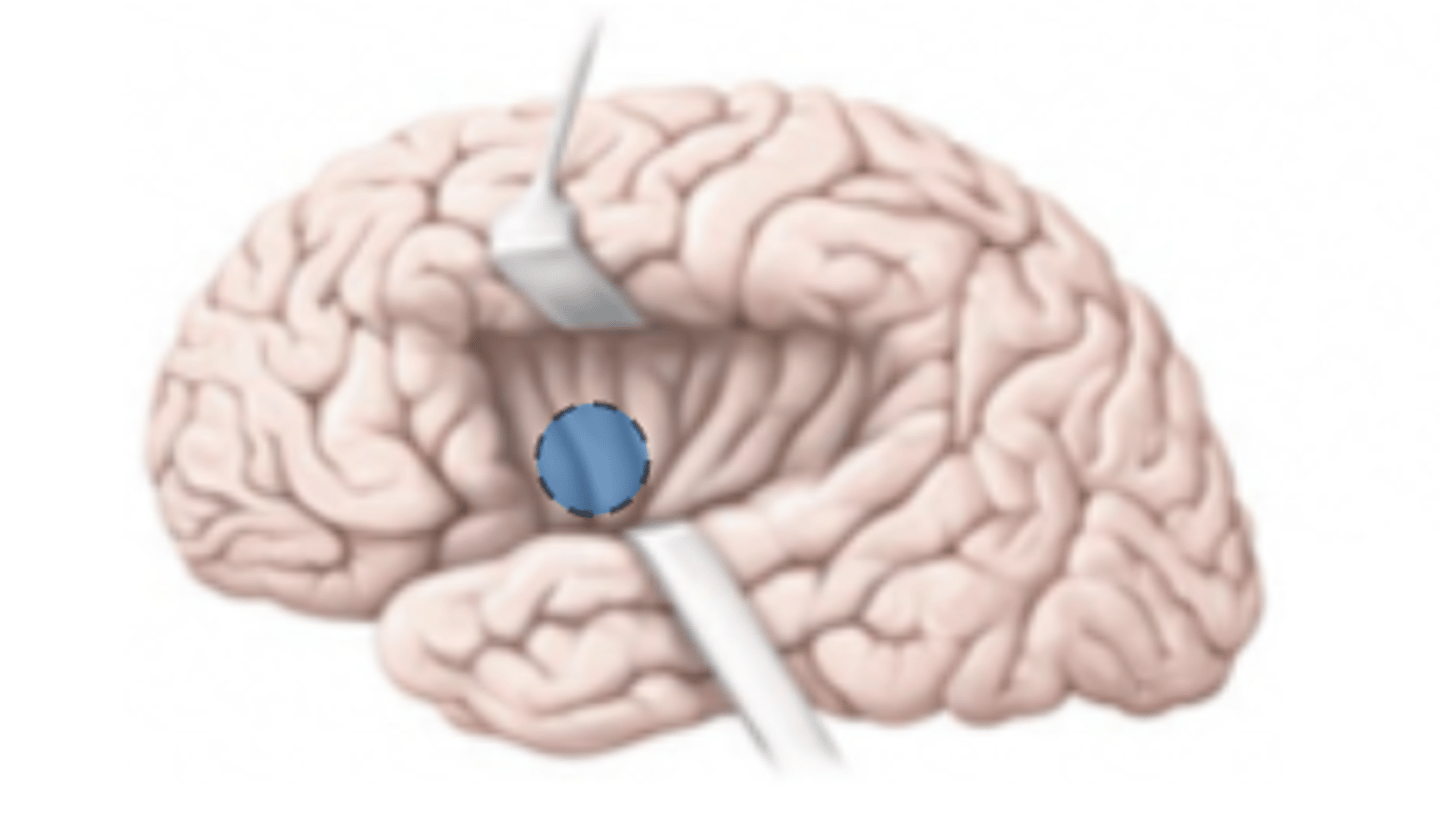
gustatory
cortex of the brain that receives and interprets tastes from the tongue
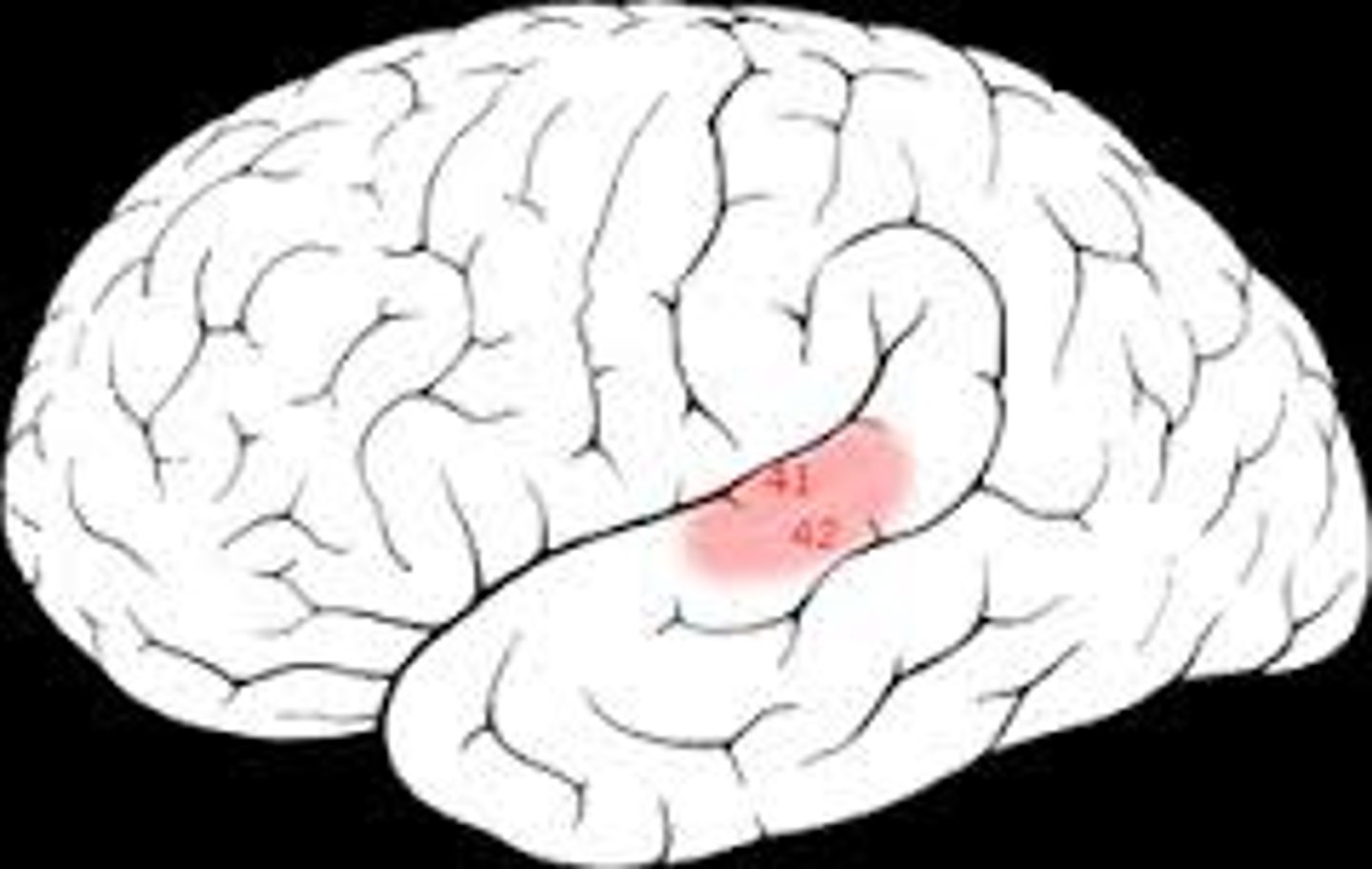
auditory
cortex of the temporal lobe responsible for processing sound information
visual
The sight processing areas of cortex in the occipital and temporal lobes.
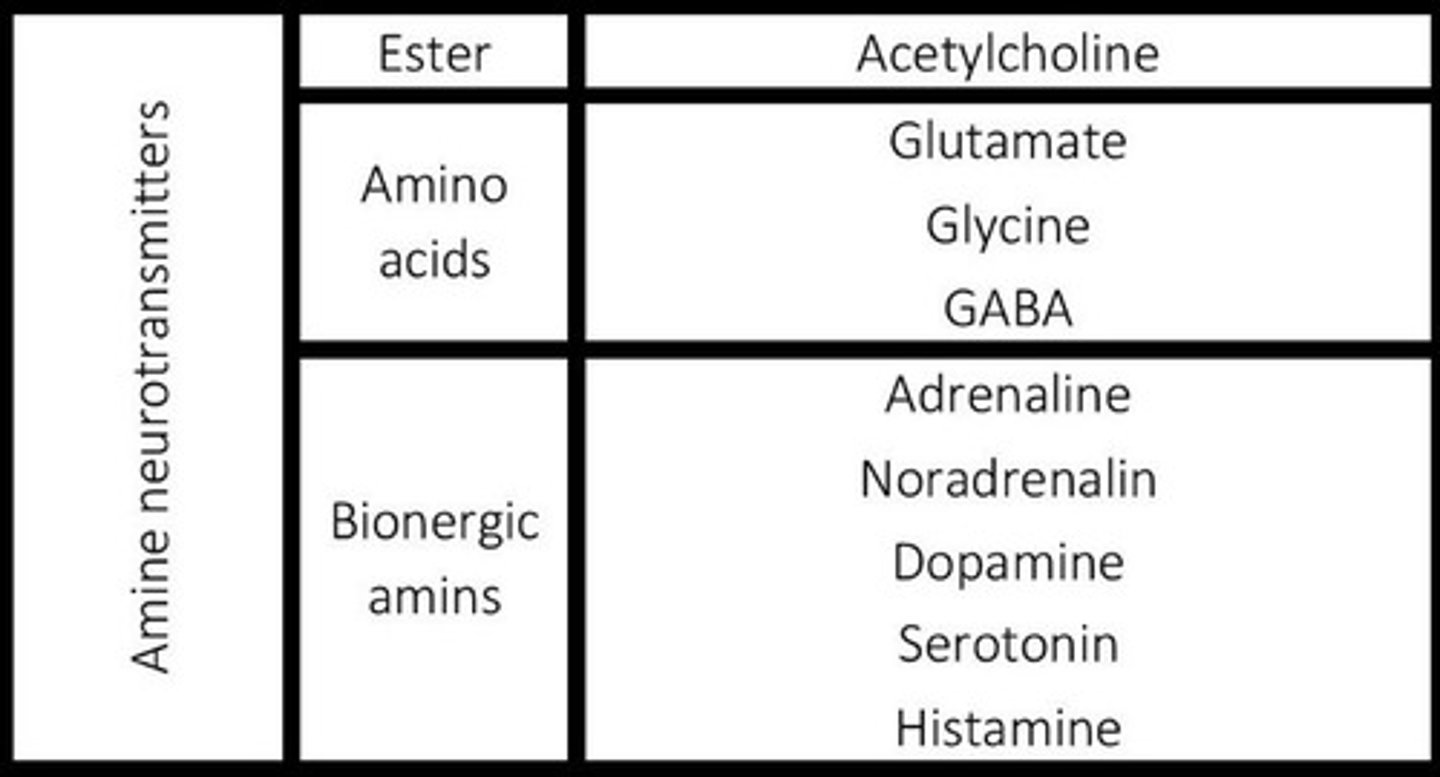
Neurotransmitters
Chemicals that transmit information from one neuron to another ie. dopamine, seratonin, melatonin, etc...
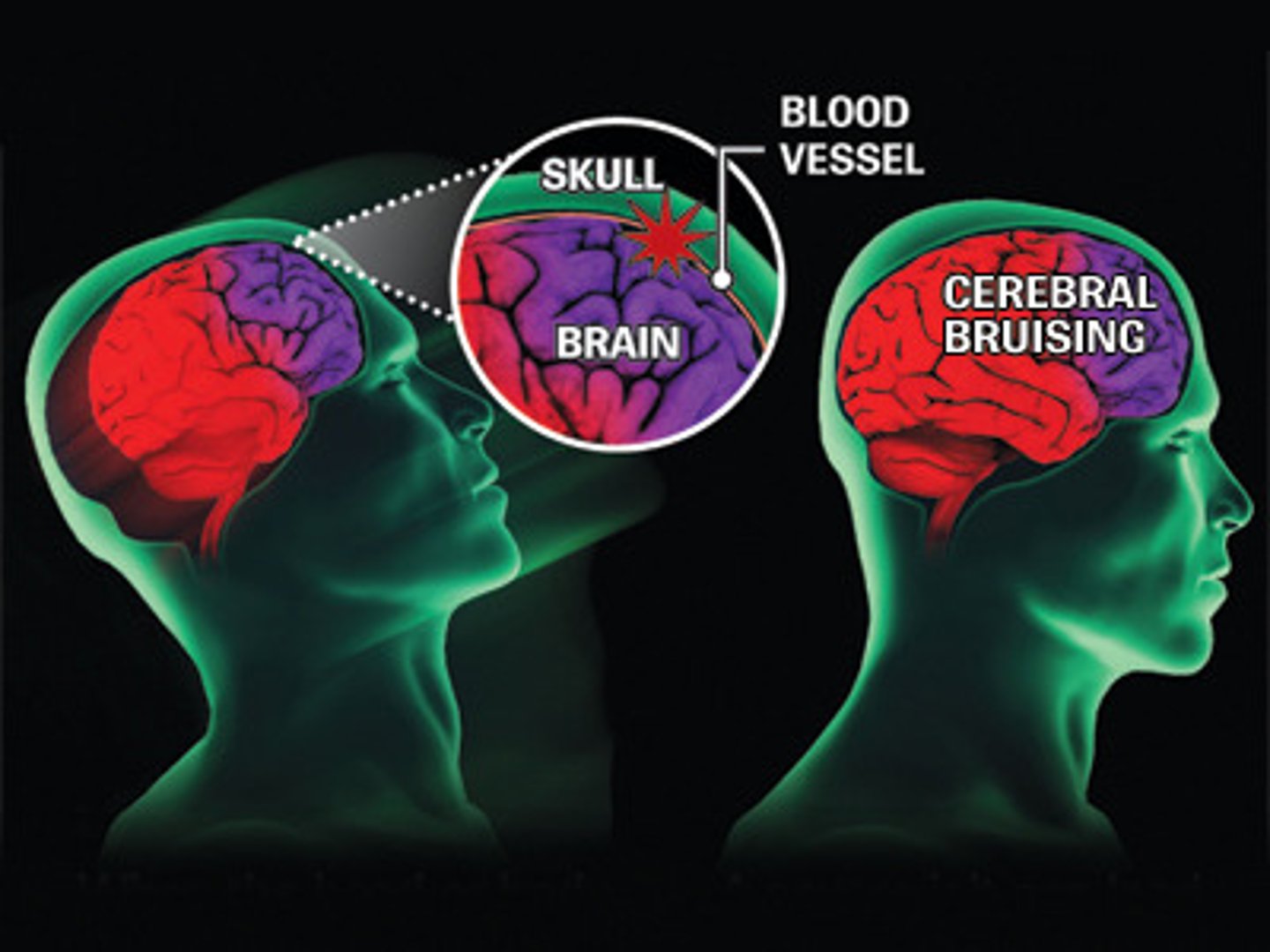
concussion
most common type of injury to the brain caused by a blow
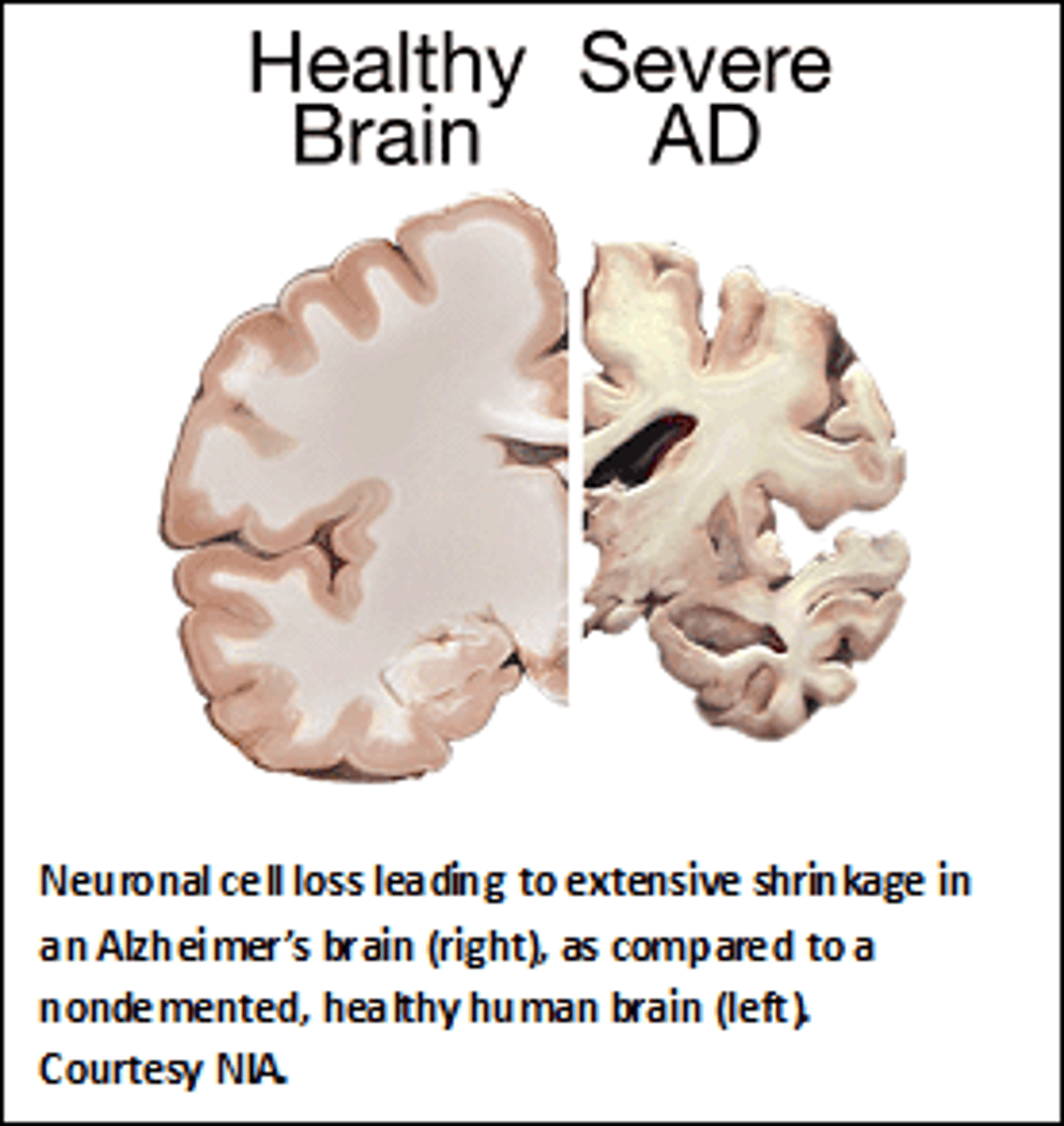
Alzheimer's
A progressive type of dimentia causing the brain to shrink which destroys memory and other important mental functions.
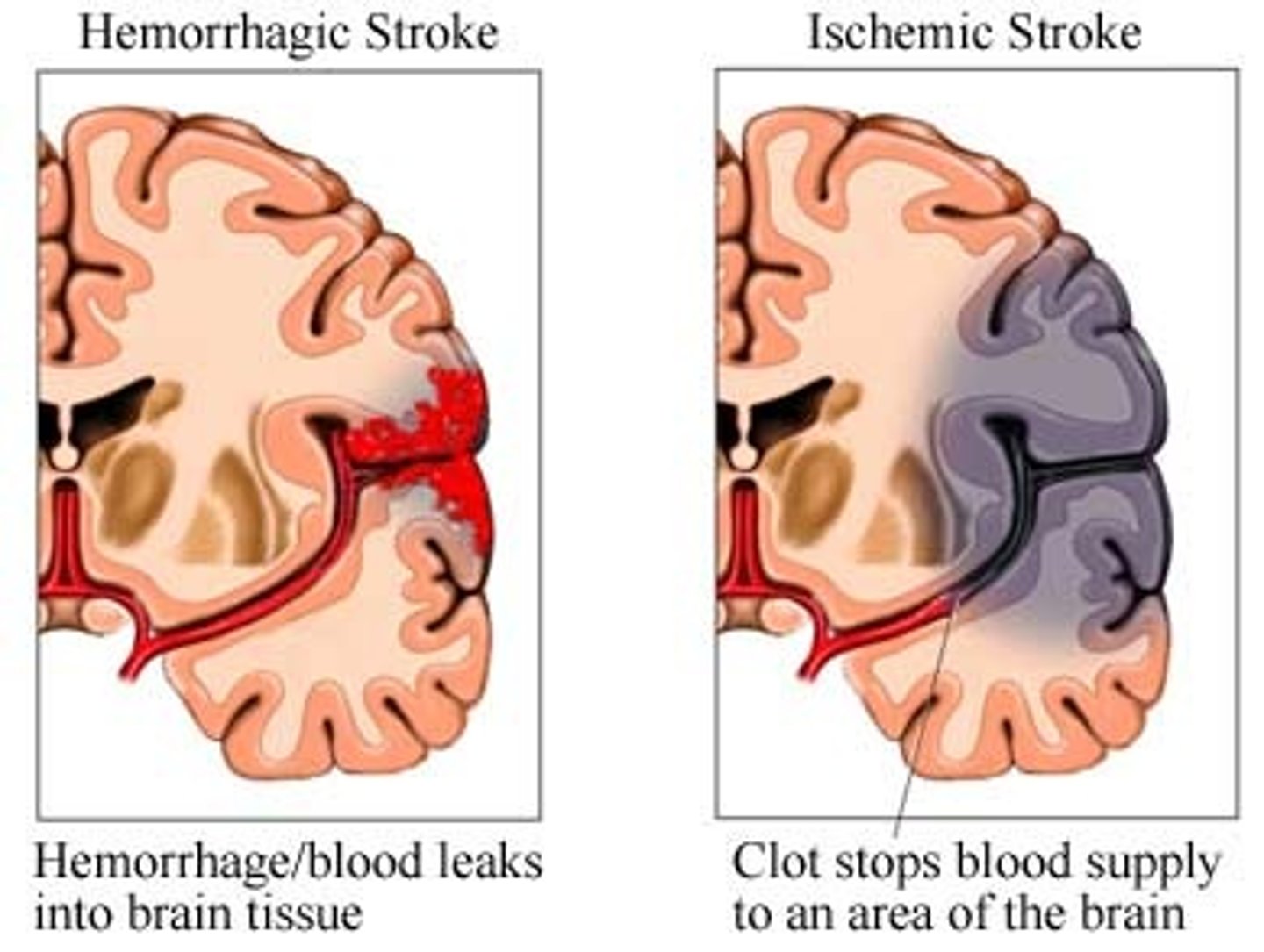
stroke
Cerebral Vascular Accident (CVA) - caused by interruption in blood flow to the brain due to a blockage or bleeding in a cerebral artery usually near the LEFT temporal lobe
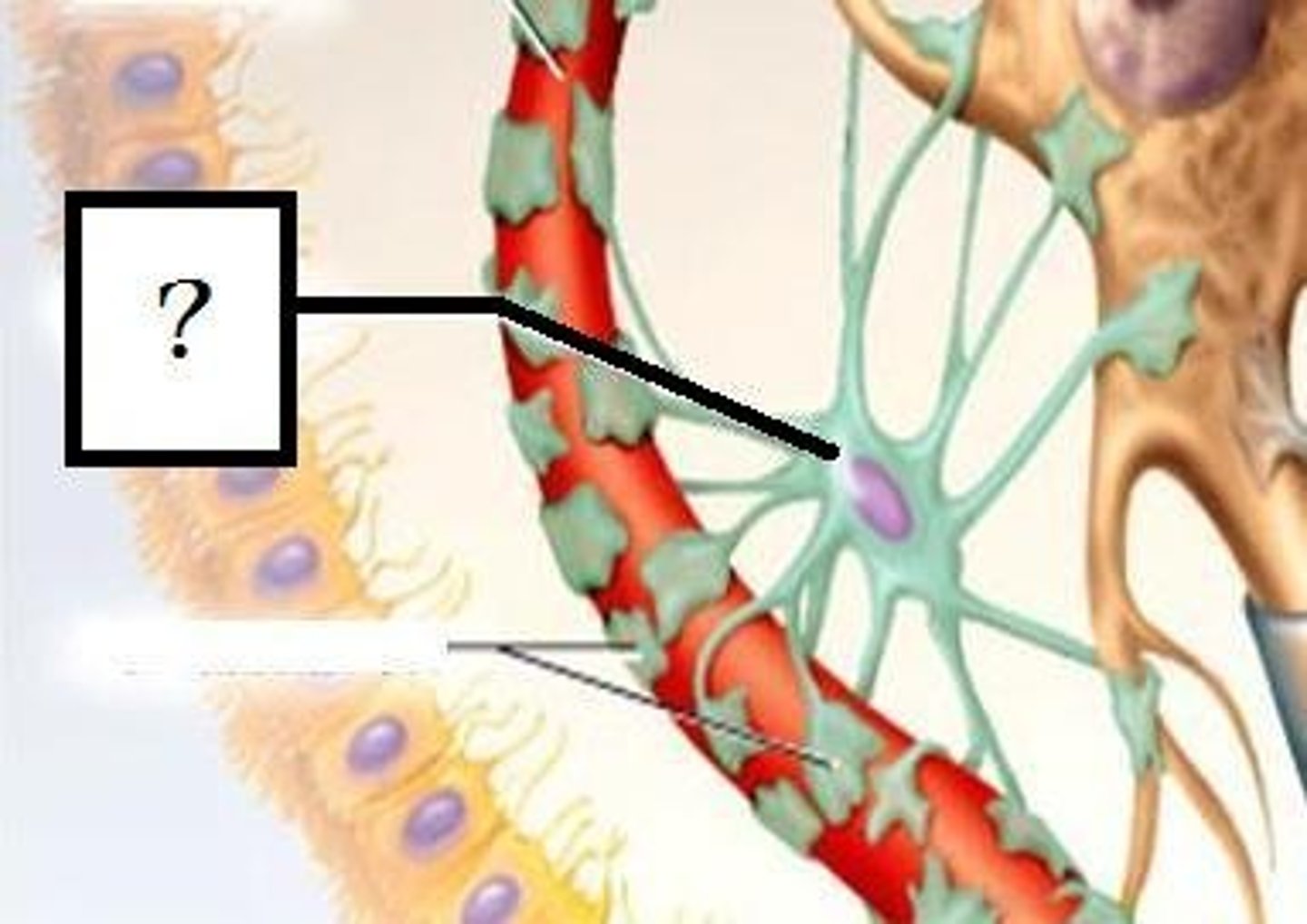
astrocytes
a type of star-shaped neuroglia cell that forms blood brain barrier
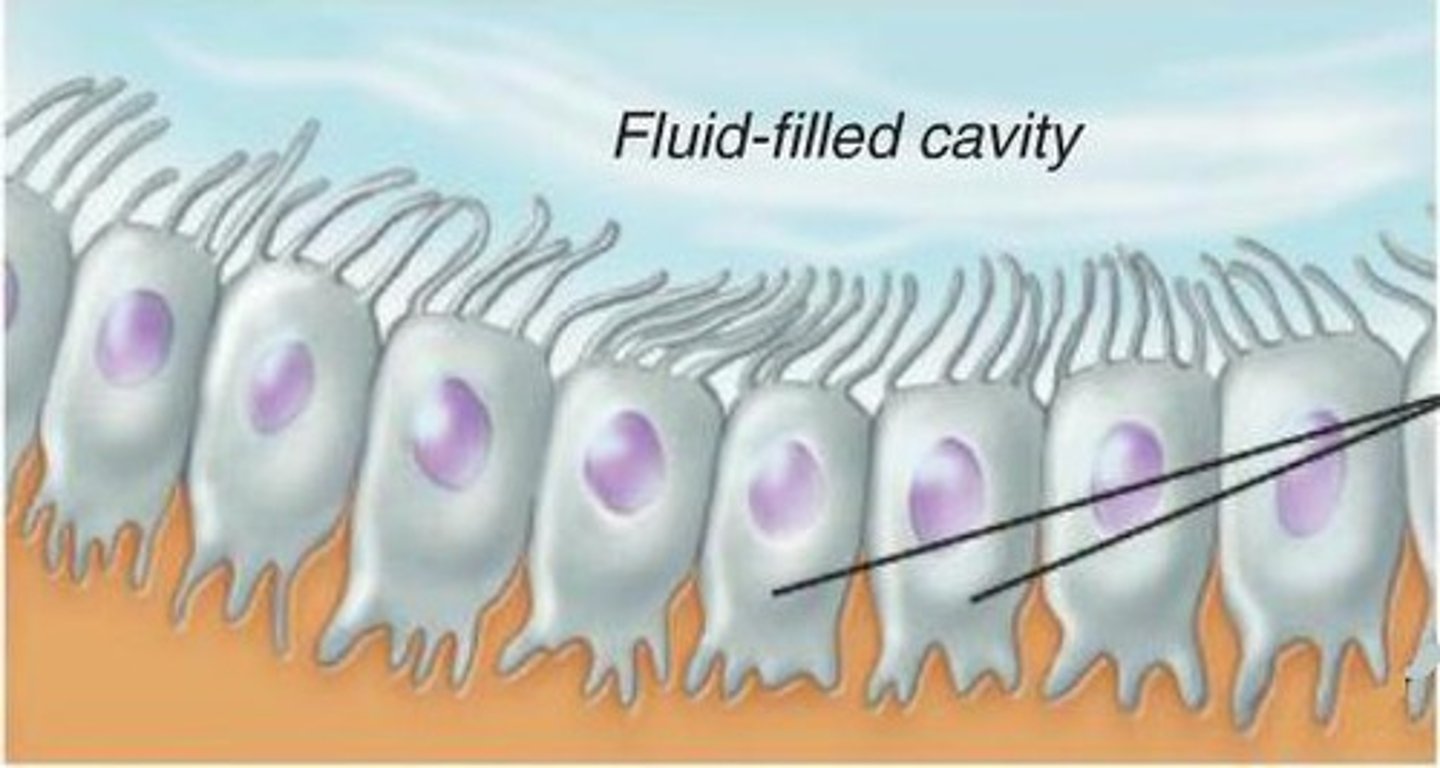
ependymal cells
line cavities of the brain and spinal cord (CNS), circulate cerebrospinal fluid
microglia
phagocytic neuroglia cells that ingest and break down waste products and pathogens in the CNS
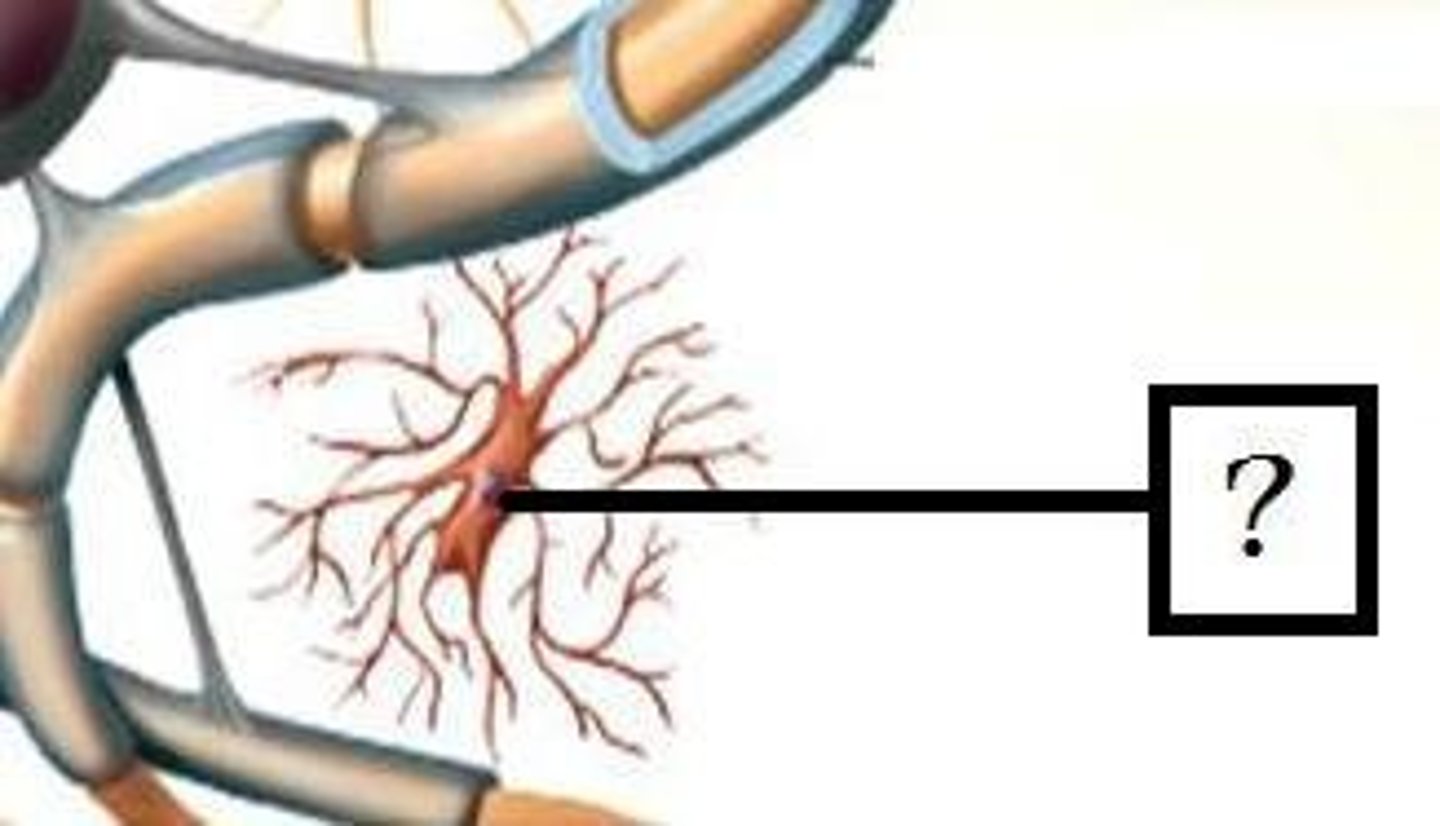
oligodendrocytes
Type of glial cell in the CNS that wrap axons in a myelin sheath.
satellite cells
CNS neuroglia that protect neuron cell bodies
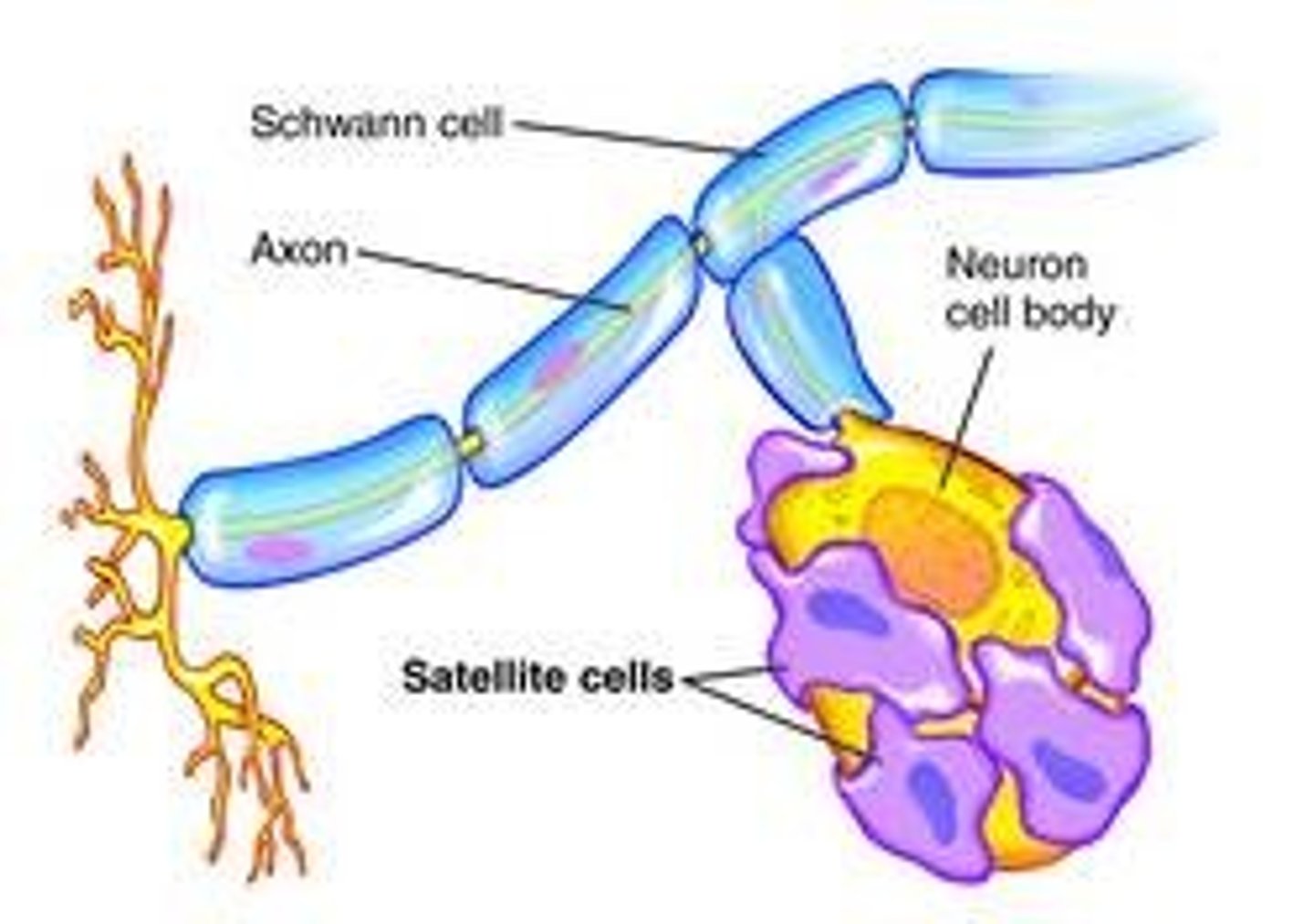
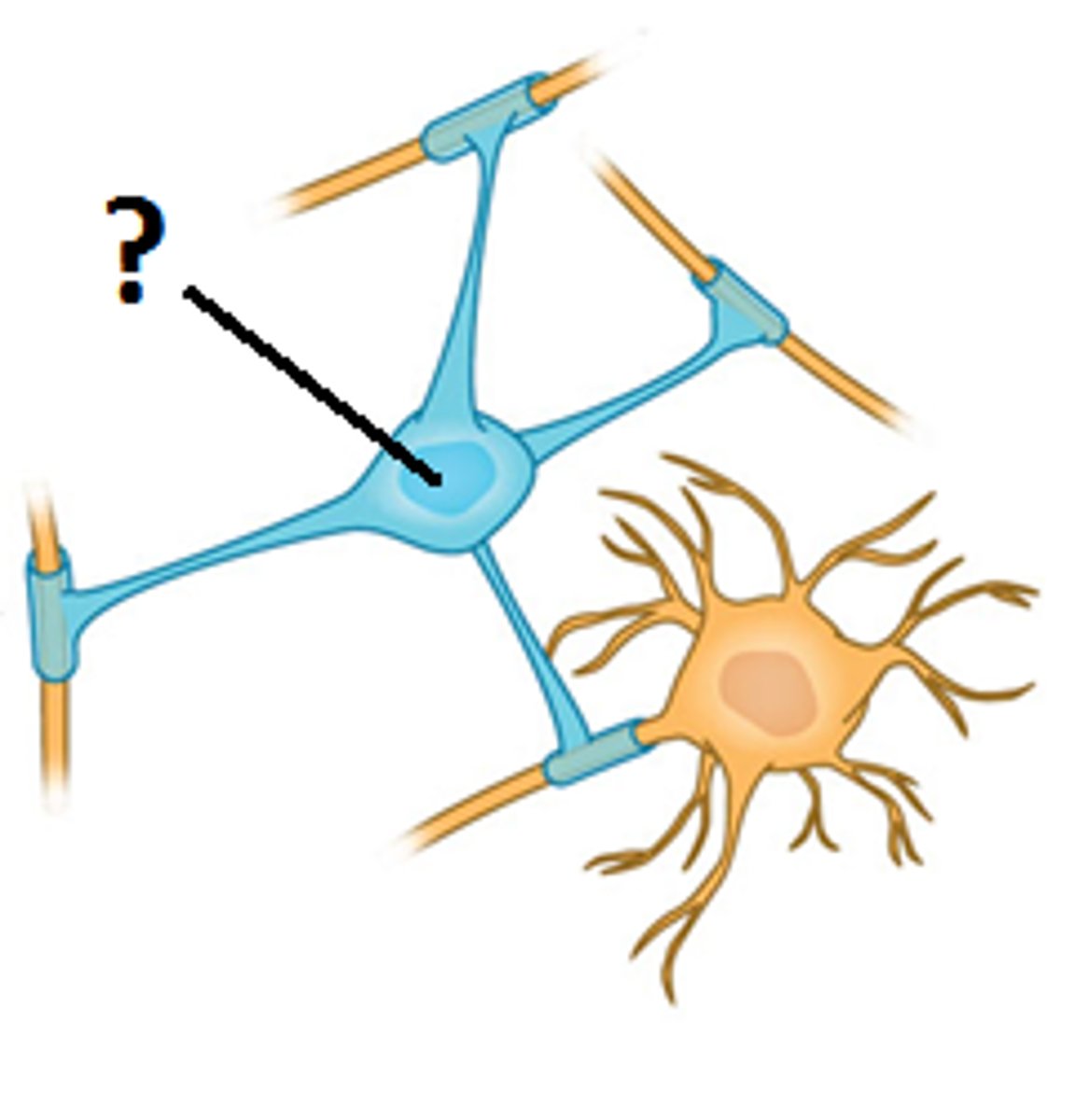
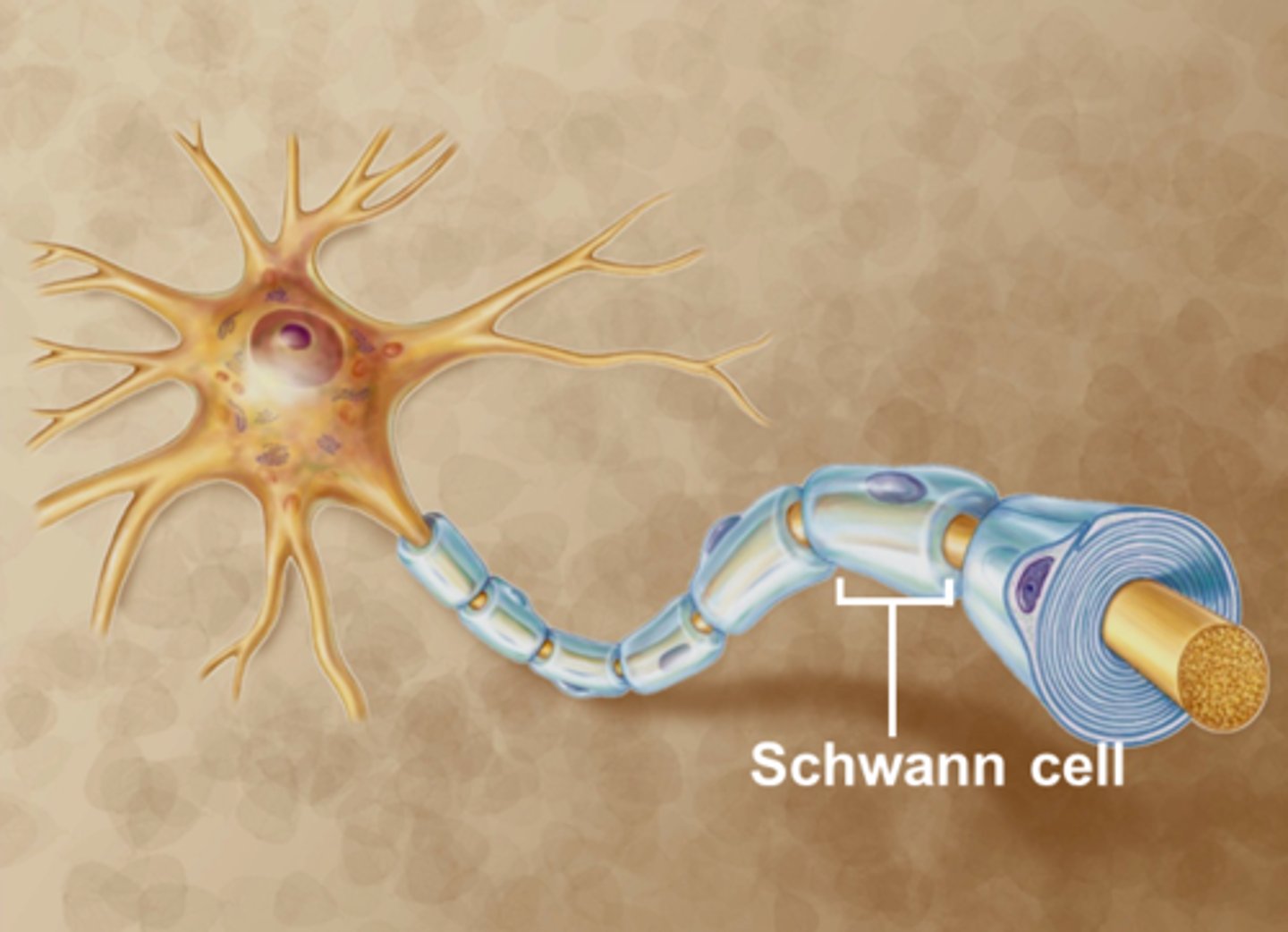
Schwann cells
neuroglia that provides myelin sheathing for the axons of neurons in both the PNS and CNS
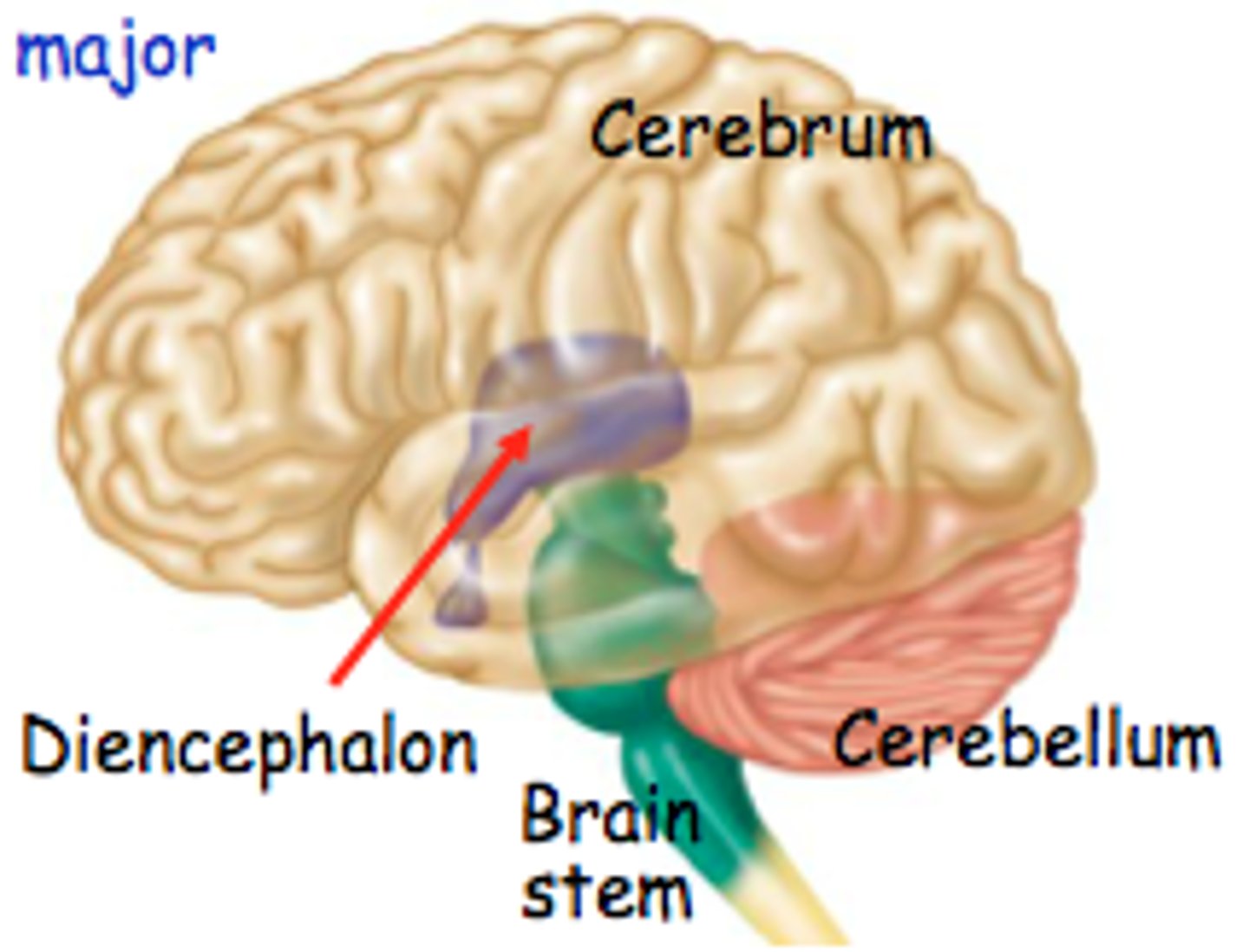
brain
cerebrum, cerebellum, brainstem, and diencephalon
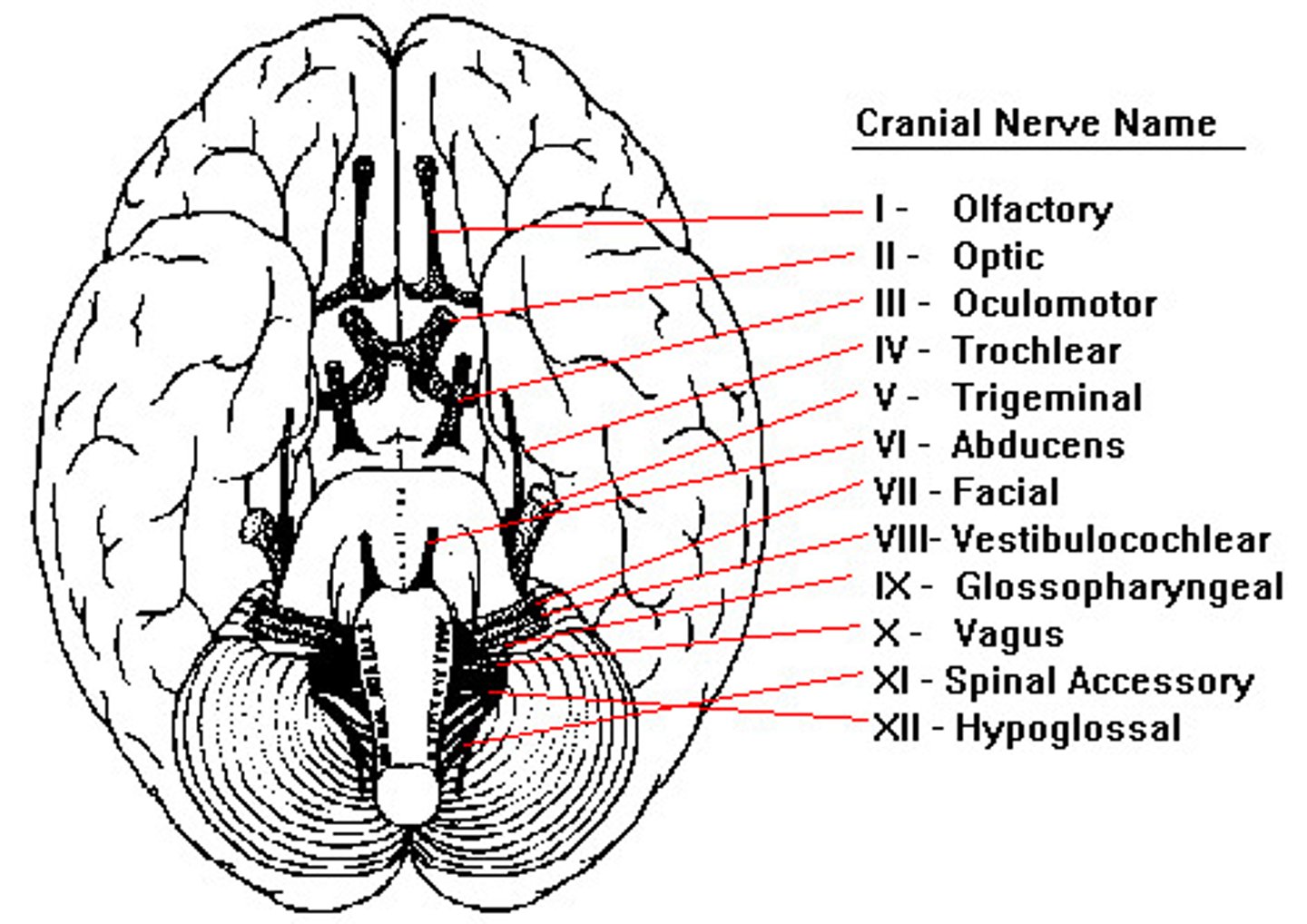
cranial nerves
12 pairs of nerves that carry messages to and from the brain; "Oh, Oh, Oh, to touch and feel very good velvet--ah" or "On, on, on, they traveled and found Voldemort guarding very ancient horcruxes"
cerebrospinal fluid
the fluid in the ventricles and around the brain and spinal cord; abbreviated as CSF
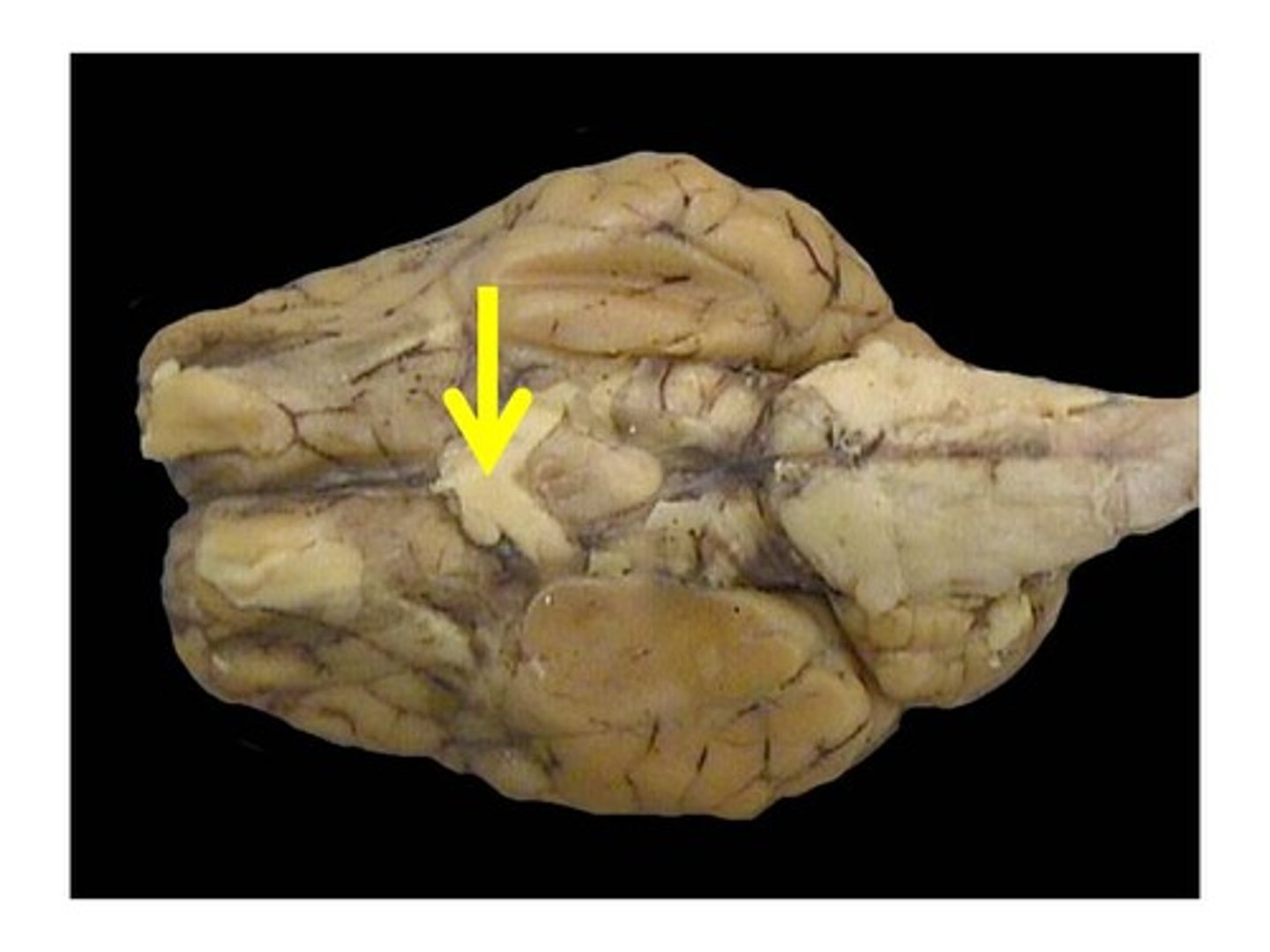
optic chiasma
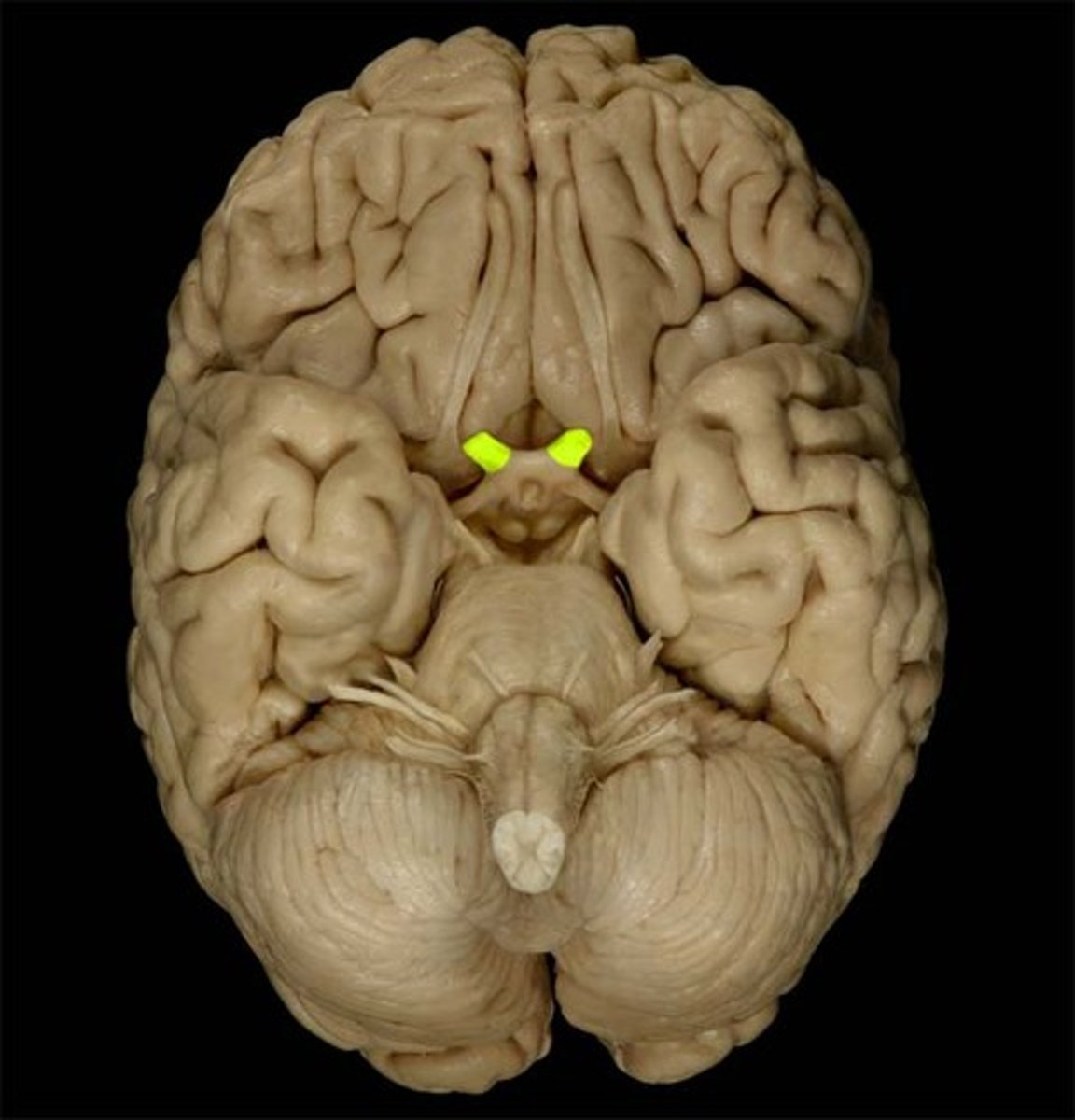
the X-shaped structure formed at the point below the brain where the two nerves connecting the eyes cross over each other
optic nerve
the nerve that carries neural impulses from the eye to the chiasma, then brain; Cranial Nerve II