Biology - Organisation
 Call Kai
 Learn
Learn Practice Test
 Spaced Repetition
 Match
Match Flashcards
 Knowt Play
1/198

There's no tags or description
Looks like no tags are added yet.
Name | Mastery | Learn | Test | Matching | Spaced | Call with Kai | Chat |
|---|
No analytics yet
Send a link to your students to track their progress
199 Terms
What is the digestive system?
a group of organs that work together to break down food
What are the stages of digestion?
1. ingestion
2. digestion
3. absorption
4. egestion
What is ingestion?
taking food into the mouth
What is digestion?
mechanical and chemical breakdown of food
What is absorption?
Taking digested food into the blood stream
What is egestion?
removal of undigested waste
what are enzymes?
Biological catalysts that speed up reactions.
They are protein molecules
What does amylase break down?
starch into maltose or glucose
What does protease break down?
Proteins into amino acids
What does lipase break down?
Lipids into fatty acids and glycerol
What are the organs in the digestives system?
1. mouth
2. oesophagus
3. stomach
4. small intestine
5. large intestine
6. rectum and anus
What happens at the mouth?
Food is crushed and mixed with saliva. the saliva contains the enzyme amylase which breaks down carbohydrates into glucose
What happens at the oesophagus?
Peristalsis - muscle contractions move food from the mouth to the stomach
What happens at the stomach?
Food is churned with hydrochloric acid.
Why is food churned in the stomach?
To increase the surface area for enzymes to digest
Why is there hydrochloric acid in the stomach?
To kill pathogens and to provide the optimum temperature and pH for the enzyme pepsin (protease)
What is pepsin?
A type of protease
What happens at the small intestine?
-The walls of the small intestine release enzymes to continue the digestive process.
-Nutrients are absorbed into the blood by the villi.
What are the adaptations of the villi?
To increase the rate of diffusion, it has:
- large surface area
- thin (one cell thick)
- good blood supply
Why are villi thin?
to provide a short diffusion distance
Why do villi have a large surface area?
To absorb soluble food molecules by diffusion and active transport
Why do villi have a good blood supply?
the capillaries quickly carries absorbed nutrients away, which maintains a steep concentration gradient, allowing a faster rate diffusion
How are nutrients absorbed into the blood?
diffusion and active transport
What happens at the large intestine?
-The muscular walls of the small intestine squeeze the undigested food into the large intestine
- te large intestine absorbs the water left in the undigested food and it turns into faeces
What happens at the rectum?
Faeces are stored before they are released out through the anus
What happens at the anus?
Faeces leave the body
What is faeces?
Undigested food that forms a waste material.
What is the function of the liver in the digestive system?
it produces bile
Where is bile stored?
In the gall bladder before it's released into the small intestine
What does bile do
- it neutralises stomach acid in the small intestine to create the right alkaline pH for enzymes
- it emulsifies fats, breaking large fat globules into tiny droplets, which increases their surface area for lipase enzymes to digest them more efficiently
What is the function of the pancreas in the digestive system?
- it produces enzymes like lipase, protease, and amylase and releases them into the small intestine to mix with food and bile
-It also secretes bicarbonate to neutralise stomach acid, allowing these enzymes to work effectively
Where is amylase made?
- salivary glands
- pancreas
- small amounts in the small intestine
Where does amylase work?
mouth and small intestine
Where is protease made?
Stomach, pancreas, small intestine
Where does protease work?
stomach and small intestine
Where is lipase made?
Pancreas and small intestine
Where does lipase work?
small intestine
What enzymes does the pancreas make?
protease, amylase, lipase
What enzymes does the small intestine make?
protease, lipase and amylase
What are the two types of enzymes?
catabolic and anabolic
What are catabolic enzymes?
enzymes that break down large molecules into smaller ones
What are anabolic enzymes?
enzymes that build up small molecules to form larger ones
How do enzymes work?
1. Each enzyme has a specific active site to the substrate
2. The substrate fits into the active site
3. The active site binds to the substrate, forming an enzyme-substrate complex
4. The enzyme breaks down and builds up the substrate into a product
5. The enzyme remains unchanged and can be reused
What is the substrate?
The reactant that an enzyme acts on
What type of enzymes are digestive enzymes?
catabolic
What factors affect enzyme activity?
-Temperature
-pH
-substrate concentration
-enzyme concentration
How does temperature affect enzyme activity?
- Enzymes work best at their optimum temperature
- as the temperature increases, the molecules have more kinetic energy, so collisions are more frequent and, so enzyme activity increases
What happens if enzymes get too hot?
They denature and the substrate can no longer fit the active site
What happens if enzymes get too cold?
the rate of reaction is low
What is the optimum temperature for enzymes in humans?
37 degrees
How does pH affect enzyme activity?
- Each enzyme has an optimum pH range
-If it is the wrong pH, the enzyme denatures
What pH does amylase work best at?
pH 7
What pH does pepsin work best at?
pH 2
What pH does lipase work best at?
pH 8
How does substrate concentration affect enzyme activity?
-As substrate concentration increases, enzyme activity also increases because more substrate molecules collide with enzyme active sites
- eventually plateaus when all active sites are saturated, meaning the enzymes are working at full capacity
What does it mean for enzymes to become saturated?
-All the enzyme's active sites are occupied by substrate molecules, reaching the maximum reaction rate and further substrate won't speed things up.
- enzyme concentration the limiting factor.
How does enzyme concentration affect enzyme activity?
-Increasing enzyme concentration increases enzyme activity by providing more active sites for substrate binding, leading to more frequent collisions and faster product formation
-This effect plateaus when all substrate molecules are bound
-making substrate concentration the new limiting factor
-more enzymes mean a faster reaction up to the point where they outnumber the available substrate.
What are carbohydrates?
sugars and polymers of sugars
What are simple sugars?
the most basic carbohydrates, made of one or two sugar units
What are the simplest sugars?
glucose, fructose
What are double sugars?
sugars made of two single sugars like glucose
sucrose, lactose, maltose
What are complex carbohydrates?
long chains of simple sugar units bonded
What are examples of complex carbohydrates?
starch, glycogen, cellulose
What are lipids?
fats and oils
they are the most efficient store of energy in the body
What are lipids used for?
-energy storage
-insulation
-protecting organs
-forming cell membranes
-making hormones
Are lipids soluble in water?
No, they are hydrophobic
What are lipids made from?
-Three molecules of fatty acids joined to a molecule of glycerol
-The glycerol is always the same, but the fatty acids vary
What are proteins?
polymers of amino acids
What are proteins used for?
-repairing cells
-building muscle and bone
-making hormones and enzymes
-boosting your immune system
-supporting organ function
What atoms are carbohydrates made from?
carbon, hydrogen, oxygen
What atoms are lipids made from?
carbon, hydrogen, oxygen
What atoms are proteins made from?
carbon, hydrogen, oxygen, nitrogen
What is blood?
fluid connective tissue
What are the components of blood?
-plasma
-red blood cells
-white blood cells
-platelets
What is the function of red blood cells?
transport oxygen and carbon dioxide
What is haemoglobin?
A large protein that carries oxygen around the body in the red blood cells
What are the adaptations of red blood cells?
- thin membrane
- small and flexible
- biconcave shape
- no nucleus
Why do red blood cells have a thin membrane?
for rapid oxygen diffusion
Why are red blood cells small and flexible?
to navigate narrow capillaries
Why do red blood cells have a biconcave shape?
increase surface area for gas absorption
increase flexibility for fitting through small capillaries
Why do red blood cells have no nucleus?
There is space to contain more haemoglobin molecules.
What are the function of white blood cells?
To fight off pathogens
What are platelets?
fragments of cells that start blood clotting when you get a cut, forming a plug (scab) to stop bleeding and prevent pathogens (germs) from entering the wound
What is plasma?
liquid portion of blood that transports all the blood cells and nutrients, hormones, waste and heat
What are the proportions of blood components
55% is plasma, 45% is RBCs, less than 1% are WBCs and platelets
What are blood vessels?
tubes that carry blood around the body
What are the three types of blood vessels?
arteries, veins, capillaries
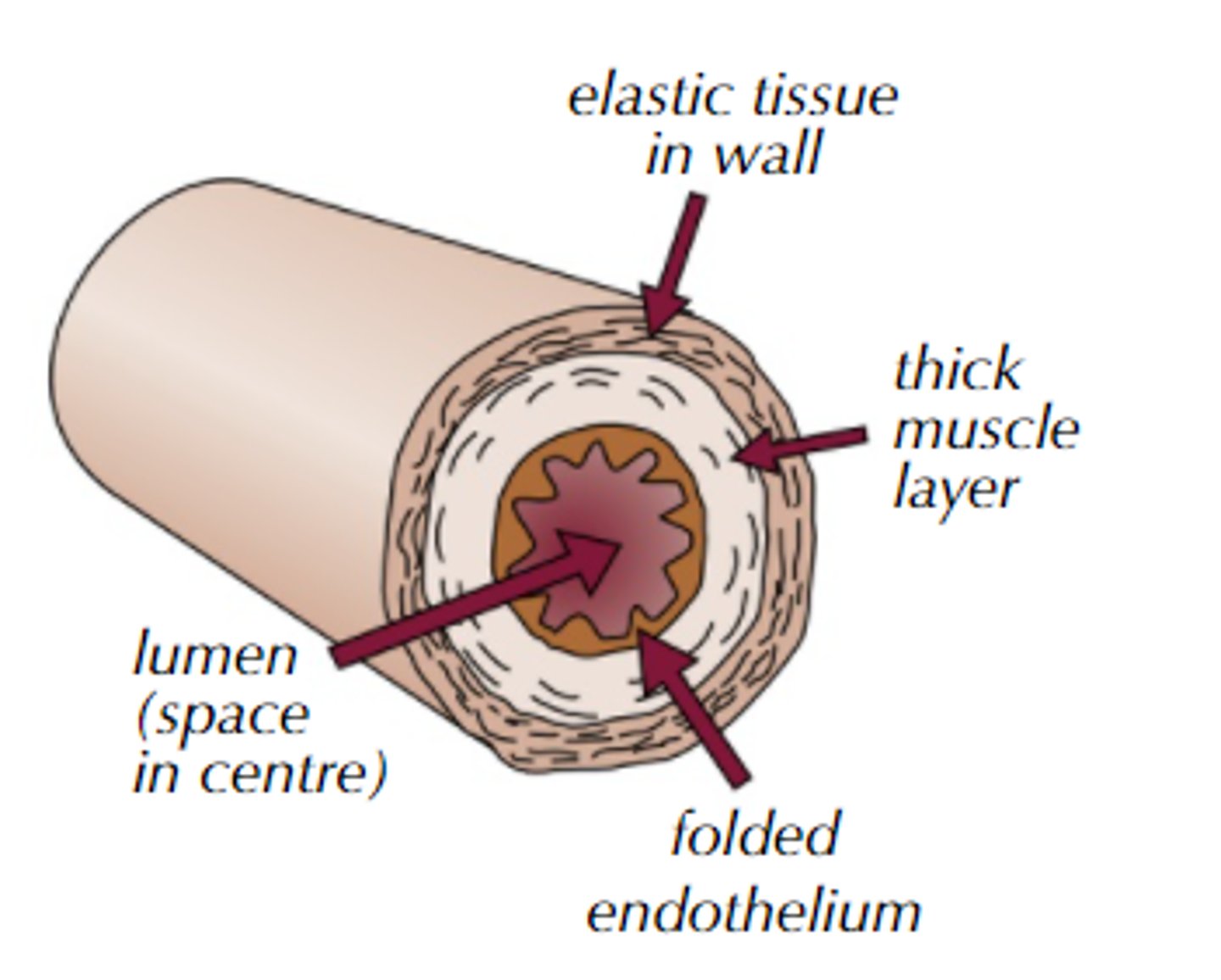
What are arteries?
Blood vessels that carry blood away from the heart
What are the key features of arteries?
- thick muscular wall to handle high pressure from the heart
- narrow lumen to keep the pressure high
- no valves (blood is pushed forward by the heart's pumping action
What type of blood do arteries carry?
usually oxygenated blood (except for the pulmonary artery)
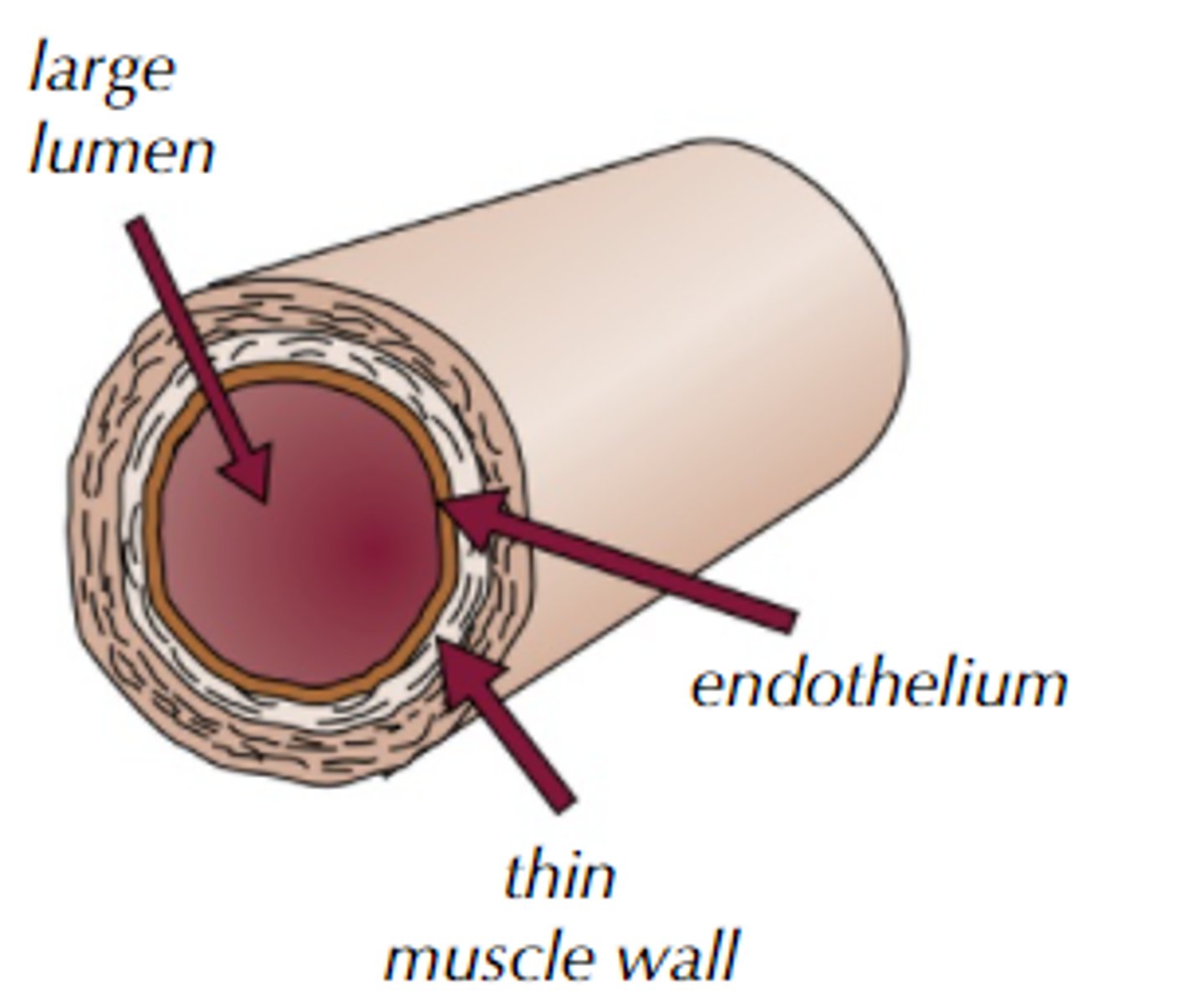
What are veins?
Blood vessels that carry blood back to the heart
What are the key features of veins?
- thin walls because the pressure is low
- large lumen allows a large volume of blood to flow back to the heart
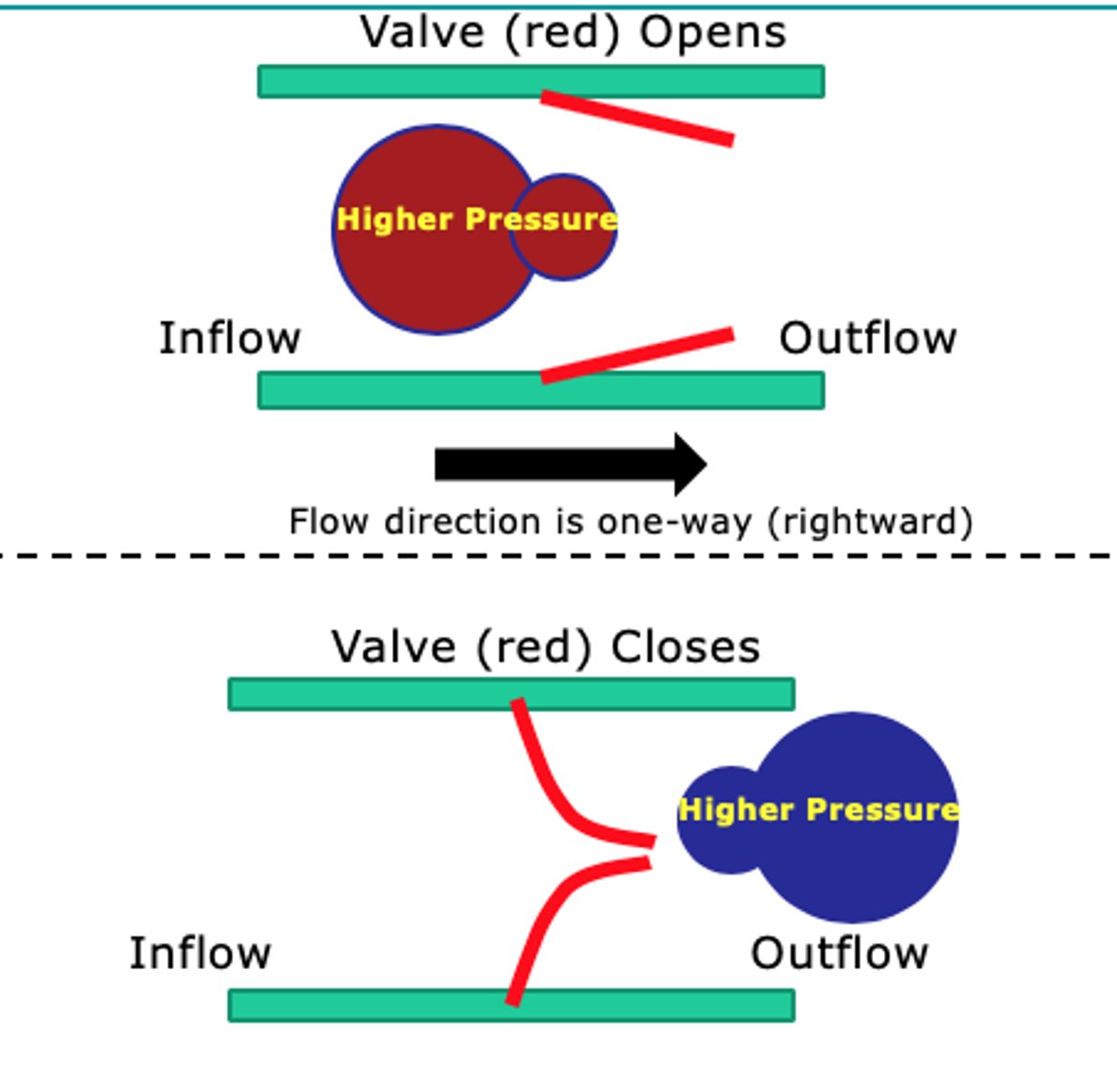
-valves to stop blood from flowing backwards
What are valves?
structures that keep blood from flowing backwards
What type of blood do veins carry?
Deoxygenated blood, except the Pulmonary vein
What are capillaries?
tiny blood vessels that connect arteries and veins
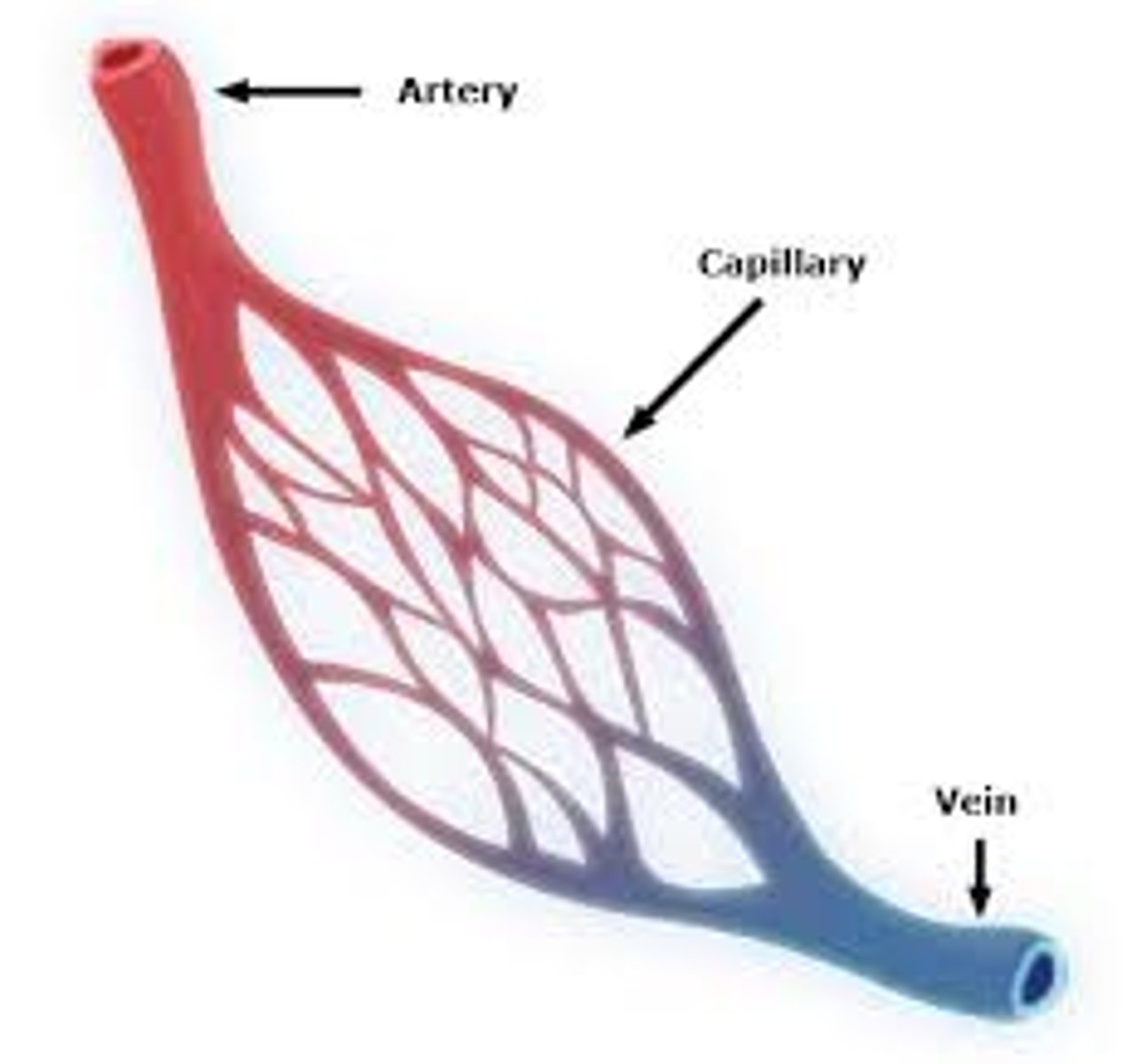
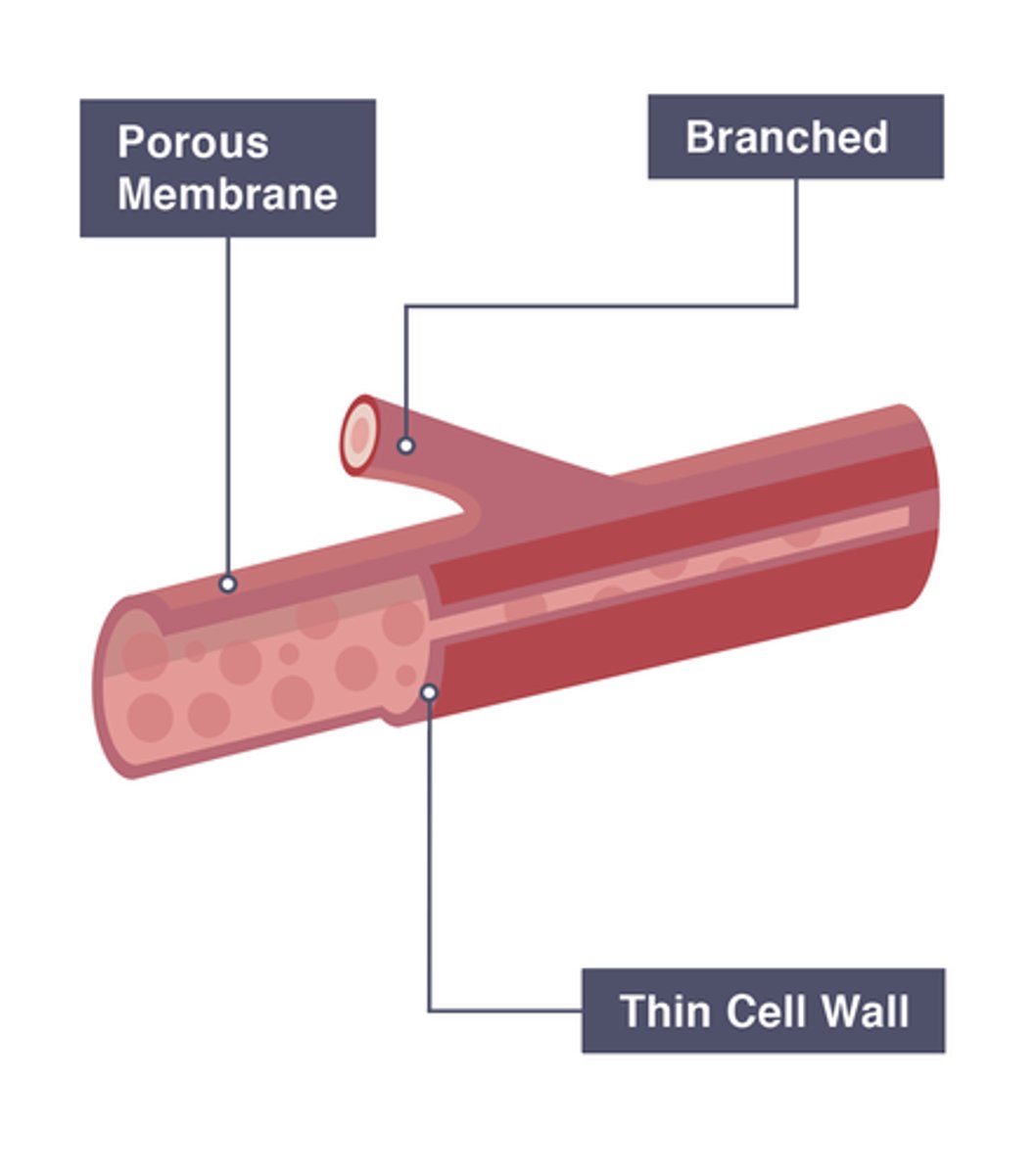
What are the key features of capillaries?
- very thin walls (one cell thick) allows for quick diffusion
- narrow lumen so that red blood cells pass in a single file, maximising contact with the thin walls for better exchange.
- permeable walls that let small molecules like glucose, oxygen, and waste pass through.
- branching creates a large SA of material transfer
Where are capillaries found?
near almost every cell in the body
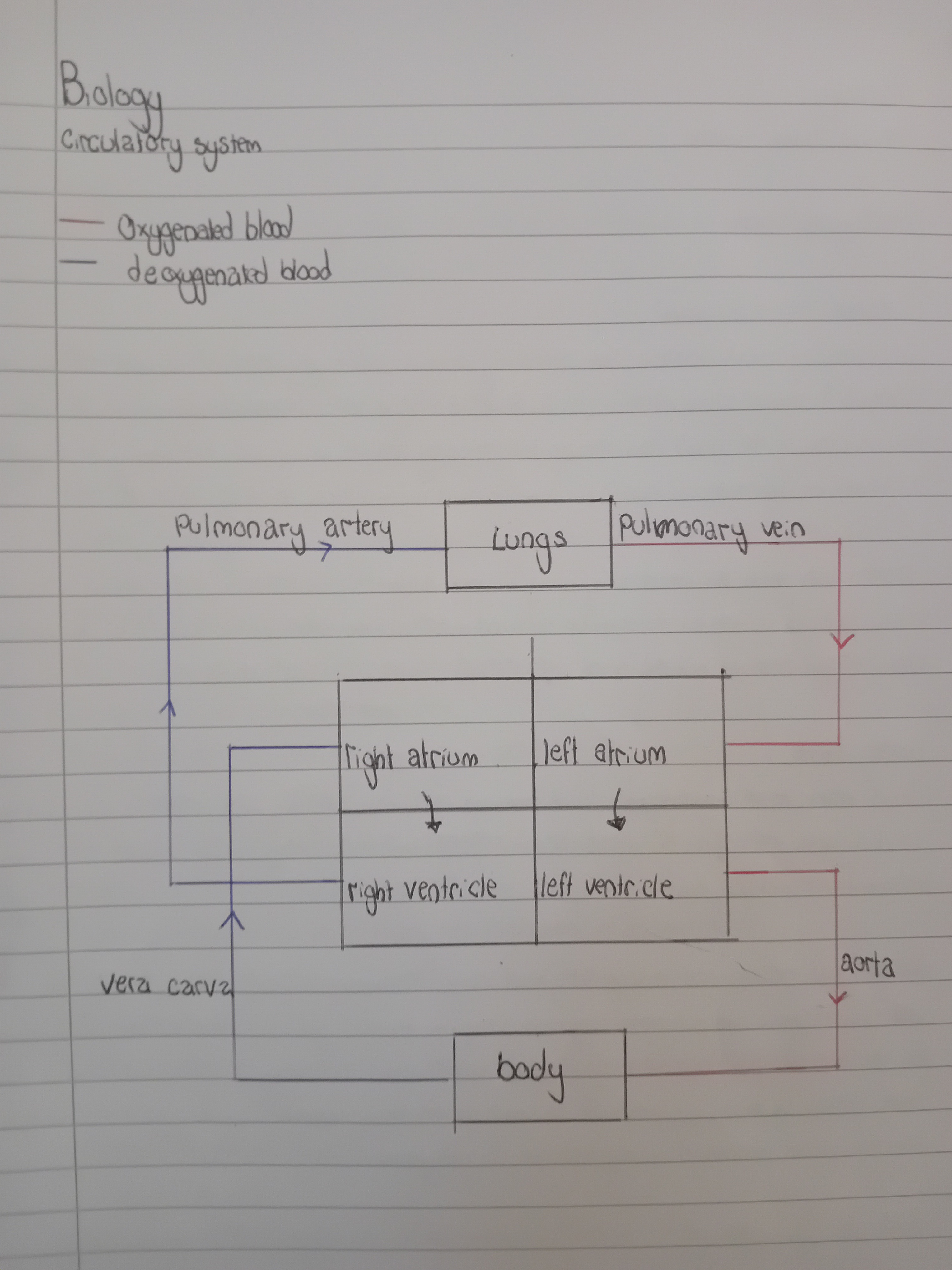
What is the circulatory system?
The body's blood-transporting system
Summary of the circulatory system
Heart pumps blood through large blood vessels called arteries which branch into smaller and smaller vessels. Smallest vessels are called capillaries. Here blood exchanges substances with surrounding tissues. Blood then flows into larger vessels, called veins, eventually returning to heart.
How does blood flow in the body?
1. lungs
2. left atrium
3. left ventricle
4. the body
5. right atrium
6. right ventricle
7. lungs