13- Mitral valve stenosis. Diagnosis of mitral valve insufficiency.
 Call Kai
 Learn
Learn Practice Test
 Spaced Repetition
 Match
Match Flashcards
 Knowt Play
1/29

There's no tags or description
Looks like no tags are added yet.
Name | Mastery | Learn | Test | Matching | Spaced | Call with Kai |
|---|
No analytics yet
Send a link to your students to track their progress
30 Terms
what is the etiology of mitral stenosis
rheumatic fever
non rheumatic
congenital valve deformity
degenerative calcification
what is the pathomechanism of MS
decreased MVA → LA pressure increase → LA dilation
a fib
pulmonary HT
LA thrombus formation
slow progression- asymptomatic for decades
what happens in untreated MS
irreversible PH
RV dysfunction
low CO
what are the symptoms of MS
dyspnea
haemoptysis
cerebral embolization
what are “mitral facies”
bilateral cyanotic or dusky pink discolouration over the upper cheek
due to arteriovenous anastomoses and vascular stasis
describe the murmur in MS
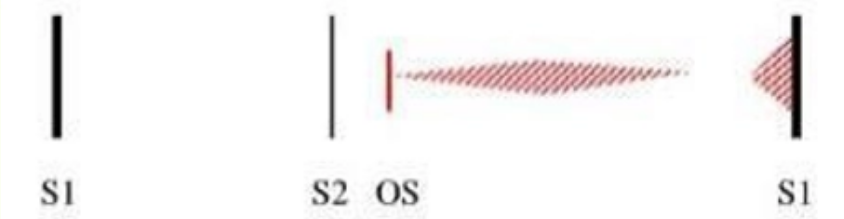
mi diastolic murmur
opening snap after S2
forceful opening of mitral valve
low pitched mid diastolic rumbling murmur- best heard at apex
presystolic accentuation
if in sinu srhythm
S1- short, sharp, accentuated
functional pulmonary regurgitation
Graham- steel murmur- pulmonary HT
what is seen on a CXR in MS
small heart, enlarged atria
calcified mitral valve
PHT, pulmonary oedema
what is seen on an ECG in MS
a fib
P mitrale- bifib
RV hypertrophy
right axis eviation, tall R wave in V1
what is seen on an echo in MS
mitral valve area <1.5cm^2
what is the treatment of asymptomatic MS
high risk of HD decompensation
APSP >50mmHg, needs major cardiac surgery, desire for pregnancy
high risk for thromboembolism
history of systemic embolisation, LA thrombus, SEC, a fib
what is the treatment of symptomatic MS
percutaneous transvenous mitral commissurotomy
surgery
what is the etiology of mitral regurgitation
leaflet abnormality
anatomical abnormality ( organic)
subvalvular apparatus
LV/ LA/ annulus dilation
structurally normal abnormality (functional)
other- eg haemodynamic cause
what is the course of development of MR
chronic
acute
what are the causes of leaflet abnormalities in MR
endocarditis
acute + organic
fenestration, prosthetic valve PVL
rheumatic
chronic, organic
degenerative, mitral valve prolapse
organic
what are the causes of subvalvular apparatus in MR
chordal rupture
acute + organic
haemodynamic, ischemic
papillary muscle rupture
acute + organic
AMI
papillary muscle remodelling/ dysfunction
chronic + functional
IHD
what are the causes of LV/ LA/ annulus dilation in MR
primary/ secondary DCM
chronic + functional
A fib, atrial remodeling
chronic + functional
what are the leading causes of MR
IHD
MV proapse
cardiomyopathies
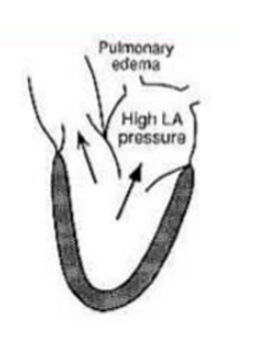
define acute mitral regurgitation
no time for adaptation
LV, LA dilation → acute pulmonary oedema, cardiogenic shock
what are the causes of acute MR
endocarditis
chordal/ PM rupture
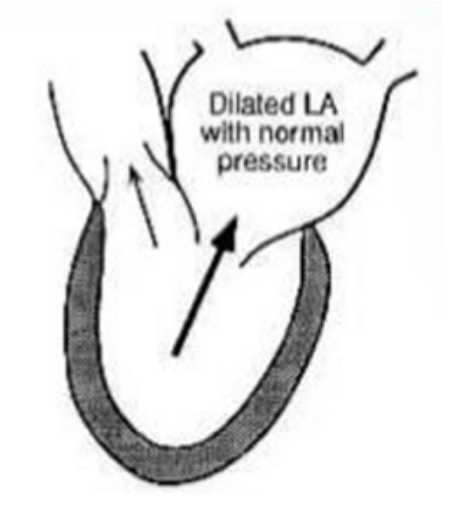
what is the mechanism of chronic MR
LV volume load (increased preload) → LV eccentric hypertrophy, LV dilation
until LA pressure normal + CO normal= asymptomatic
decreased LV compliance→ increased LVEDP, LAP- backward failure
decreased LV contractility → decreased CO, forward failure
these 2 ⇒ symptoms
untreated cases= pulmonary pressure increase → RV failure
how can you diagnose MR
murmur
ECG
CXR
Echo
what is the MR murmur
S1 usually absent, soft
S2- wide splitting in severe MR
high pitched soft blowing holosystolic murmur
p.m- apex, radiation to axilla
what is seen on an ECG in MR
left axis deviation
P mitrale
what is seen on a CXR in MR
cardiac enlargement LA + LV
pulmonary oedema
what can an echo tell us about MR
grade of MR
etiology + mechanism of MR
degree of LV and LA dilation
LV function
pulmonary hypertension
can show central or not central jet
if non central then its due to ischemic heart disease that causes restriction on posterior valve movement
what are the signs of severe MR in an echo
ERO >0.4cm^2
regurgitation volume >60ml
regurgitation fraction >50%
what are the treatment options for organic MR
mitral valve repair
surgical
percutaneous-
mitraclip
cardioband
neochord
mitral valve replacement
xenograft
mechanical valve
what are the percutanous solutions of MR
mitraclip- transcatheter, edge to edge repair
cardioband- transcath. mitral annuloplasty
neochord- transapical implantation of artificial chords
transcatheter mitral valve implantation
TENDTNE device transapical
SATURN device transapical
what are the treatment options in functaional MR
surgery
HF treatment
percutaneous repair
what are the indications for intervention
symptoms
LV EF <60%
L ESD >40mm
pulmonary HT- APSP >50mmHg
LAVi >60ml/m^2
new onset of atrial fibrillatio