Exam 4 Phylogenetics
 Call Kai
 Learn
Learn Practice Test
 Spaced Repetition
 Match
Match Flashcards
 Knowt Play
1/33

There's no tags or description
Looks like no tags are added yet.
Name | Mastery | Learn | Test | Matching | Spaced | Call with Kai |
|---|
No analytics yet
Send a link to your students to track their progress
34 Terms
Phylogenetics
the study of evolutionary relationships among species`
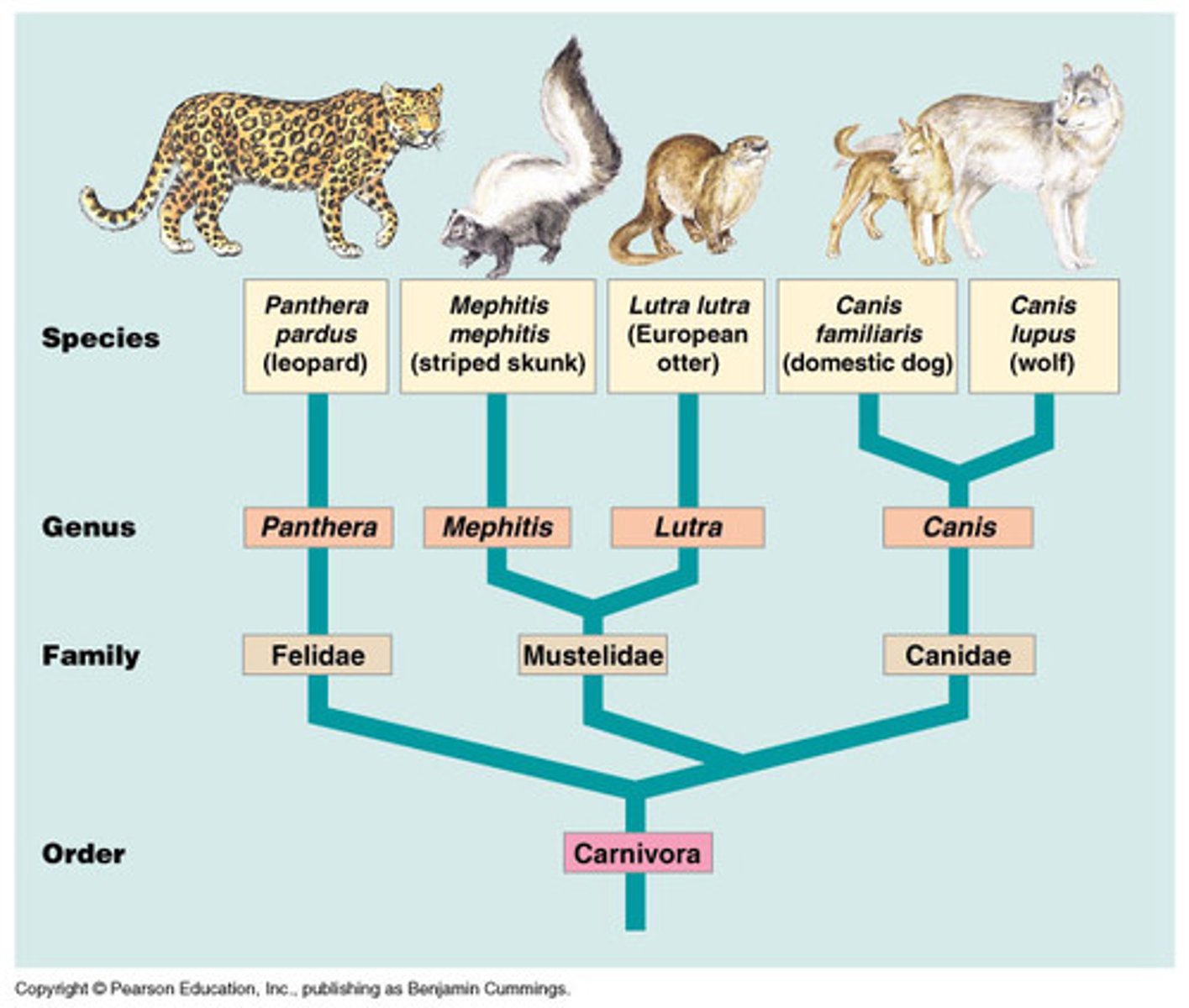
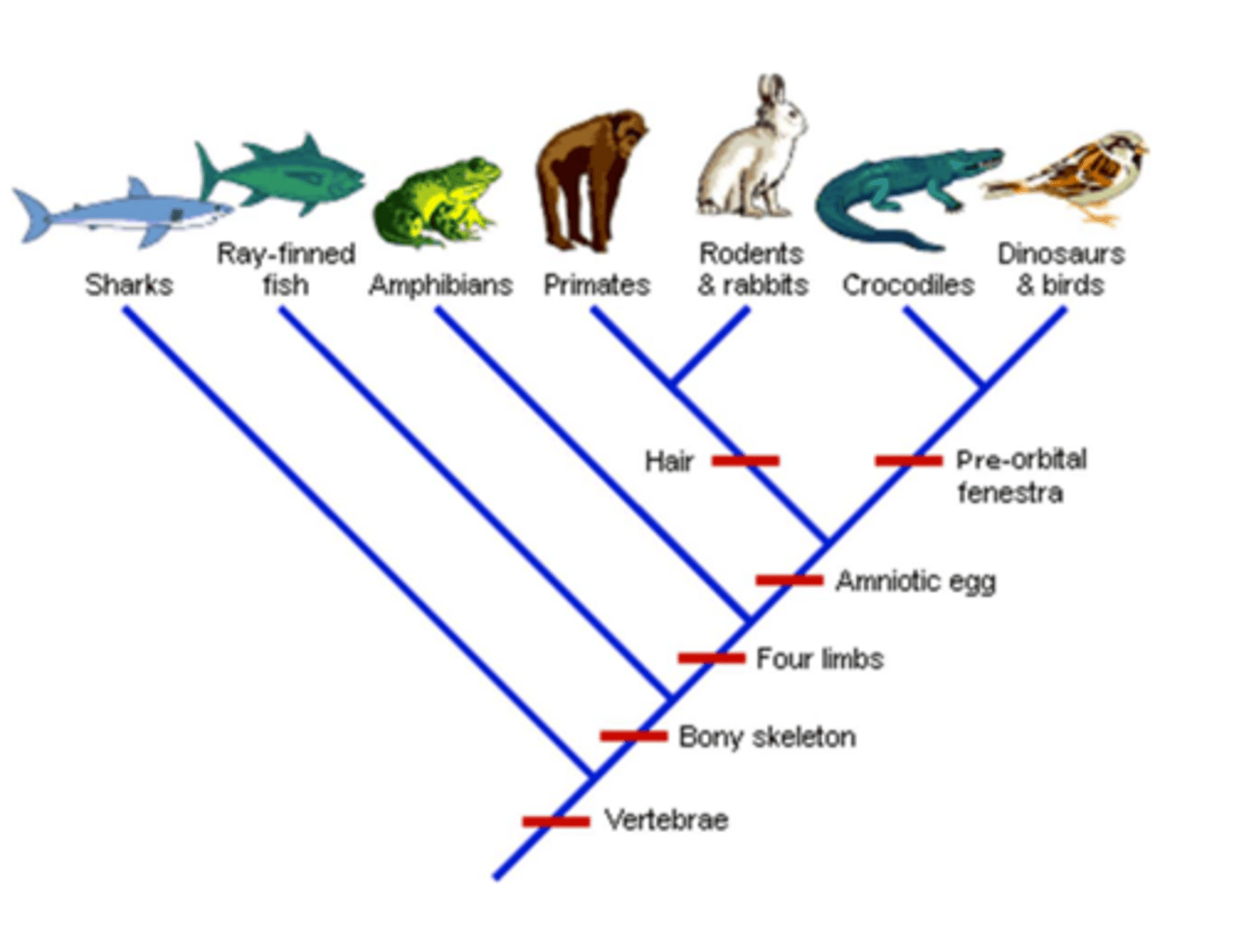
Cladistics
a way of organizing information according to similarities, in biology it is used to assess what organisms are more similar to one another (we then assume this correlates with ancestry)
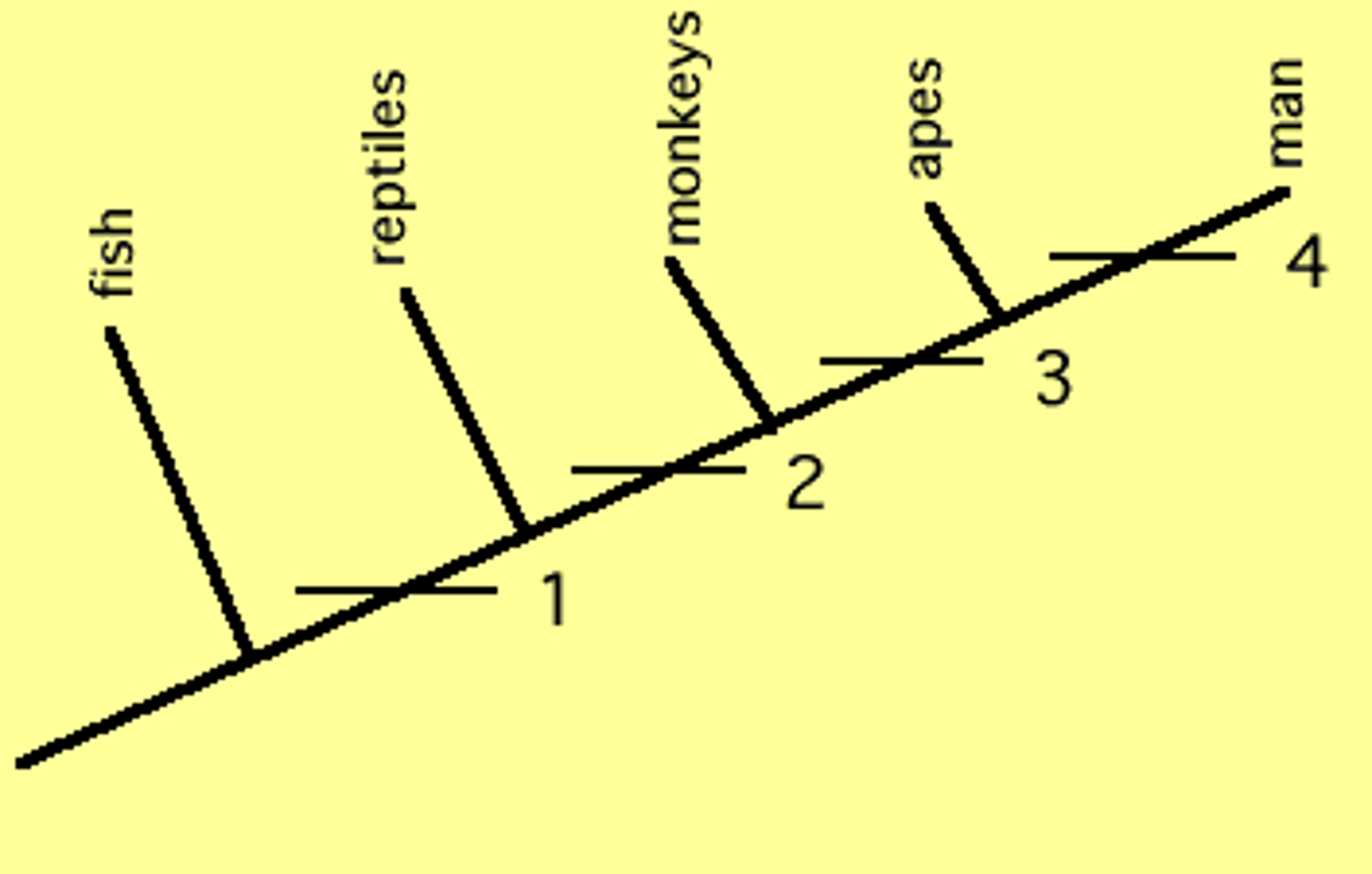
How are evolutionary relationships determined in the absence of DNA?
morphology - outward appearance (shape, structure, color, pattern) of an organism or taxon and its component parts
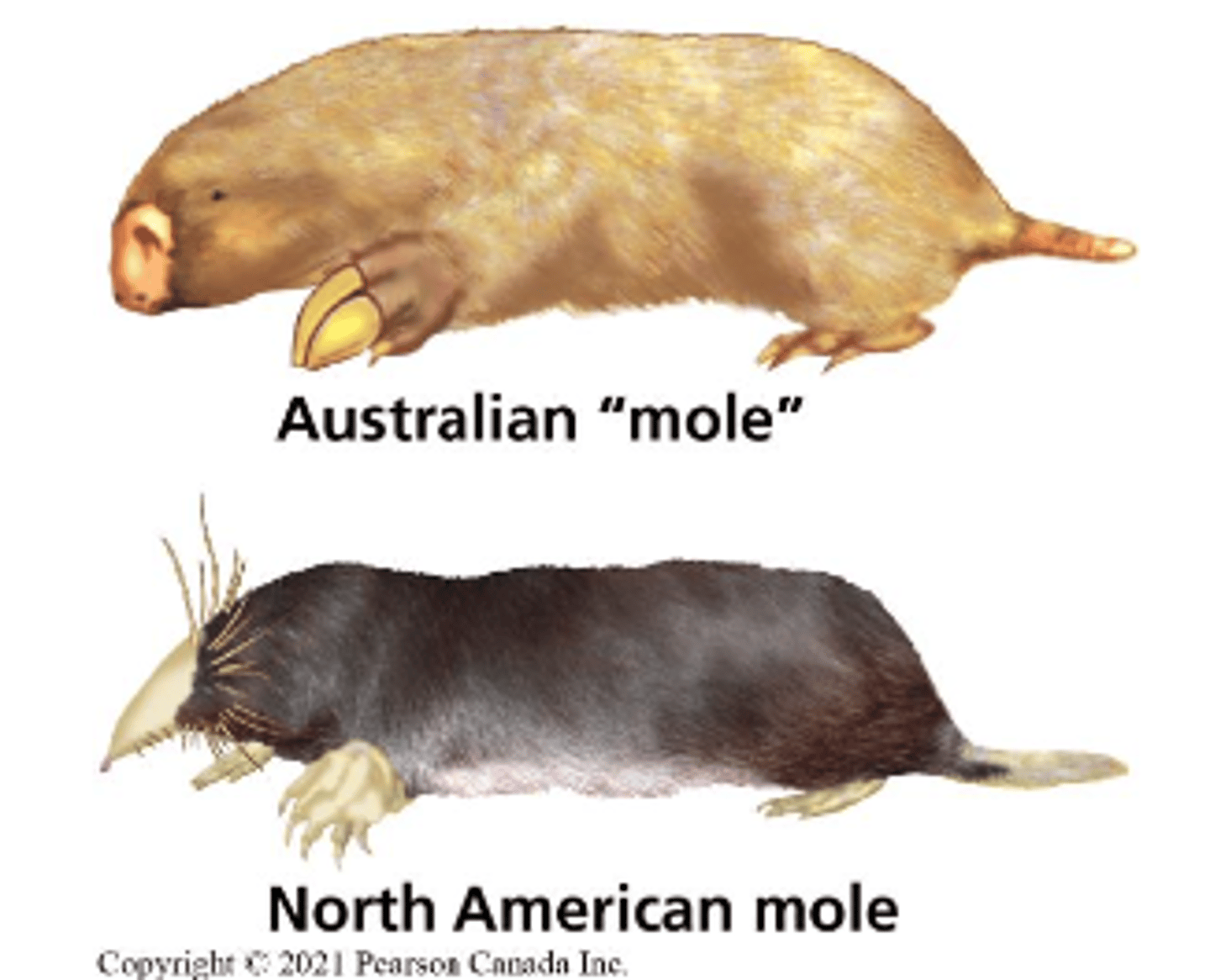
convergent evolution
Process by which unrelated organisms independently evolve similarities when adapting to similar environments
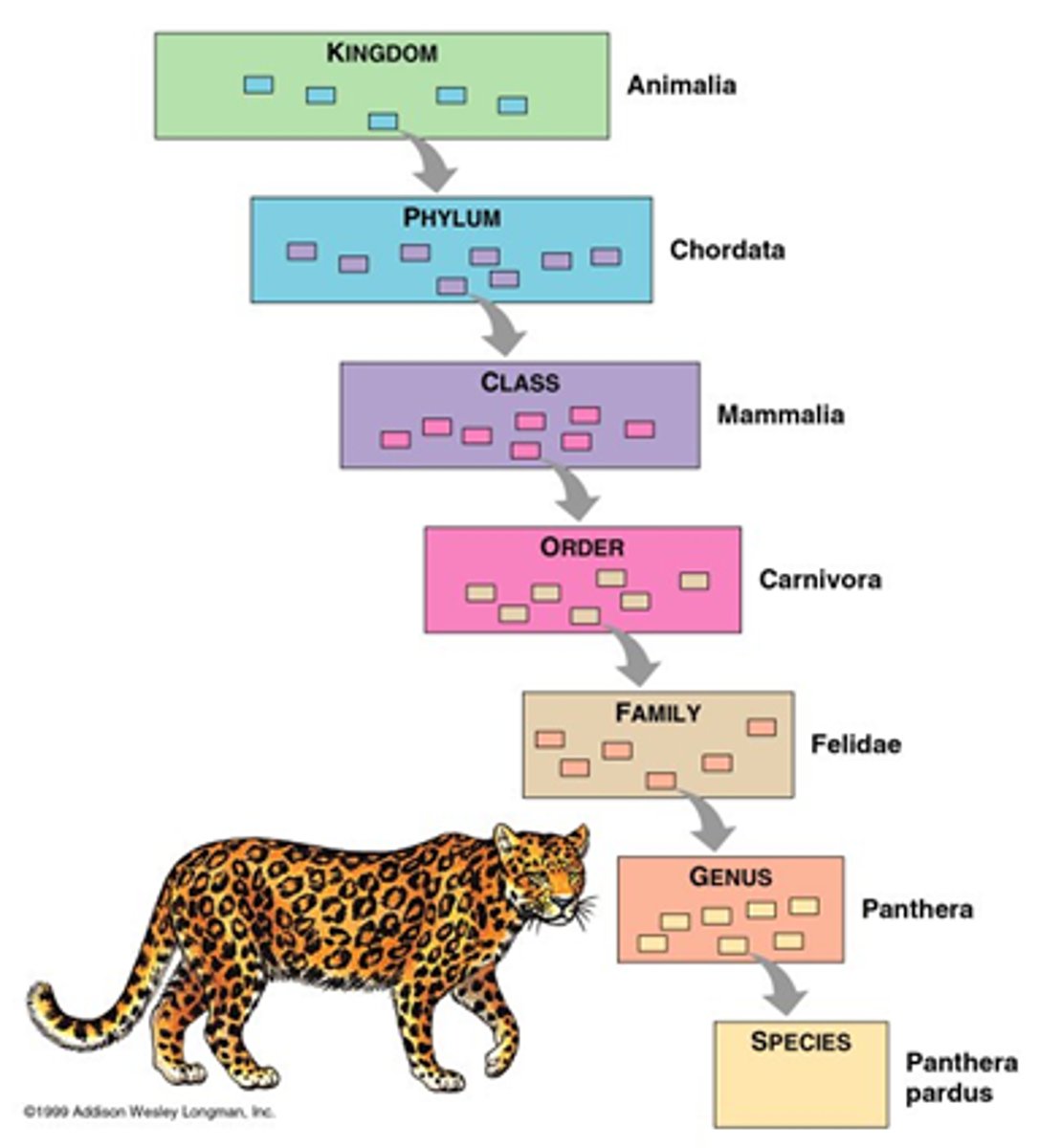
Hierarchal classification
the organization of objects into classes and subclasses on the basis of similarities and differences
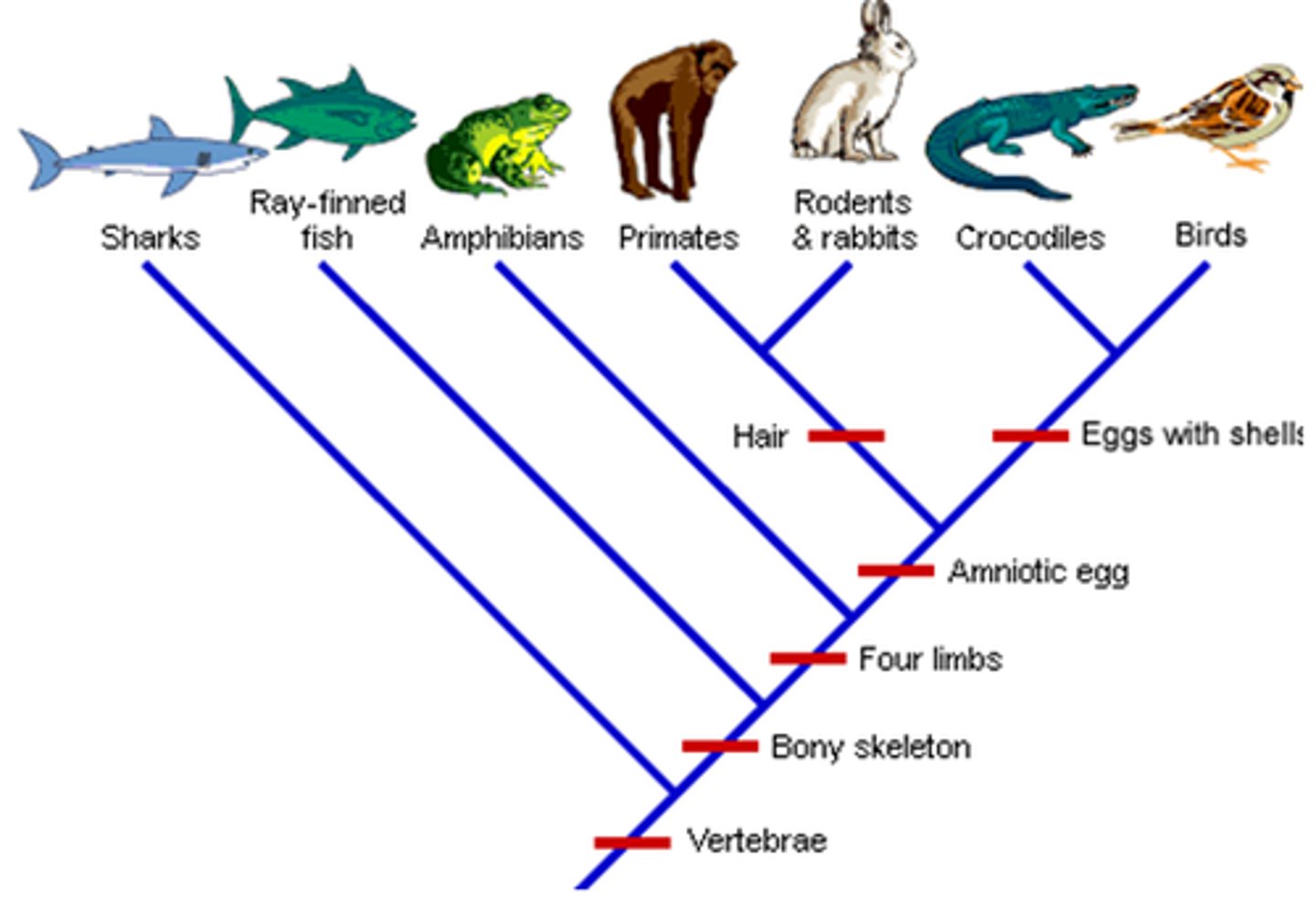
What is a phylogenetic tree?
- A phylogenetic tree is the mathematical structure used to depict the evolutionary history of a group of organisms or genes
- Phylogenetic trees show historical relationships, not similarities
- The discipline that focuses on inferring the phylogenetic relationships of organisms and creating classifications based on their evolutionary histories is systematics
What is the discipline that focuses on inferring the phylogenetic relationships of organisms and creating classifications based on their evolutionary histories?
systematics
Components of phylogenetic tree
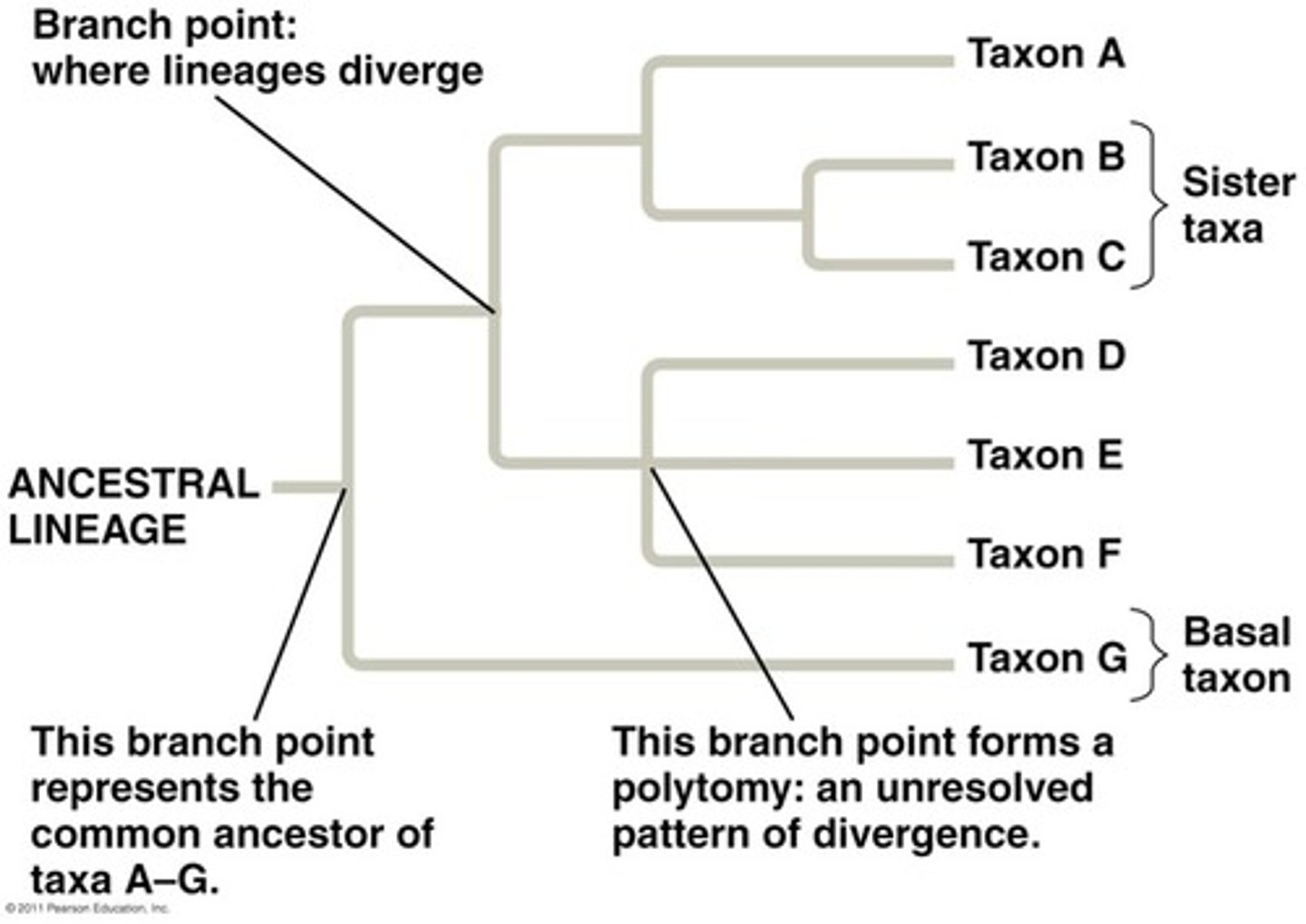
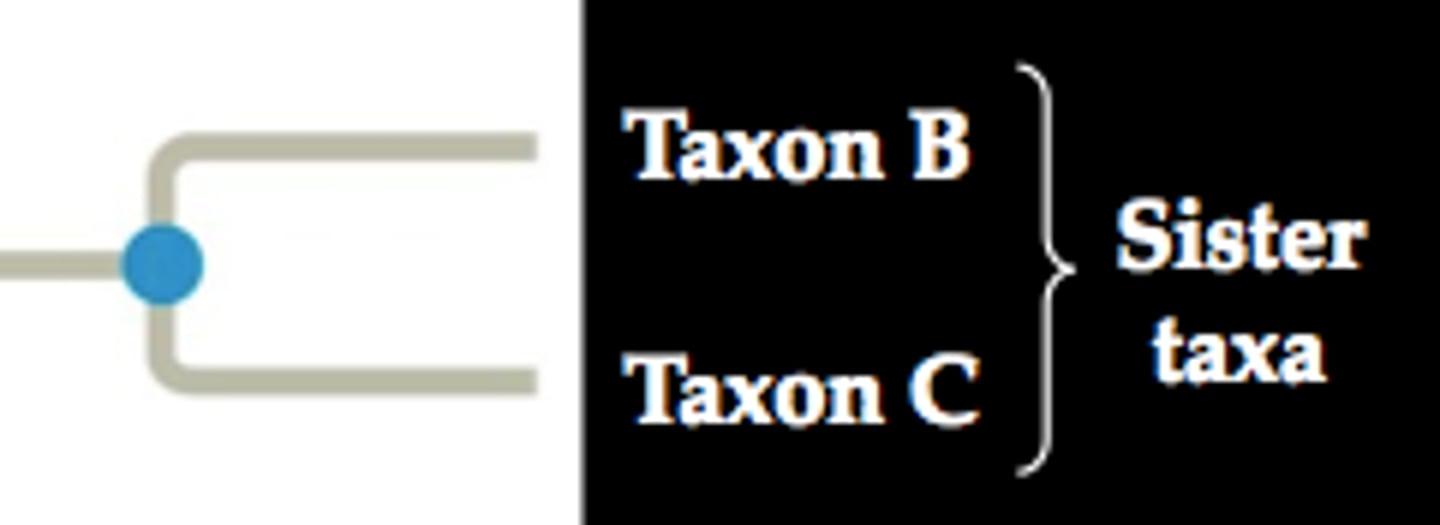
sister taxa
Groups of organisms that share an immediate common ancestor and hence are each other's closest relatives.
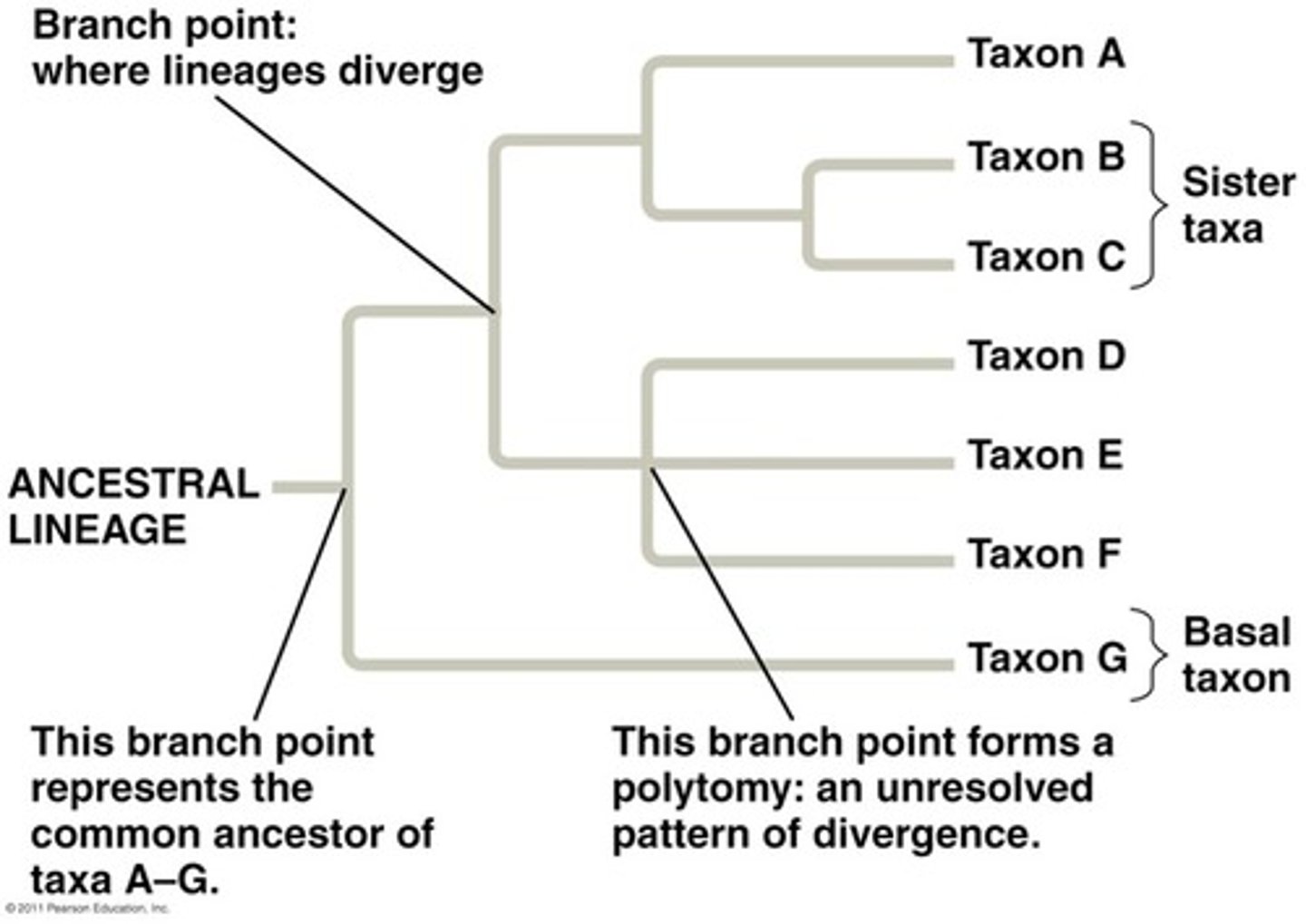
basal taxon
In a specified group of organisms, a taxon whose evolutionary lineage diverged early in the history of the group.
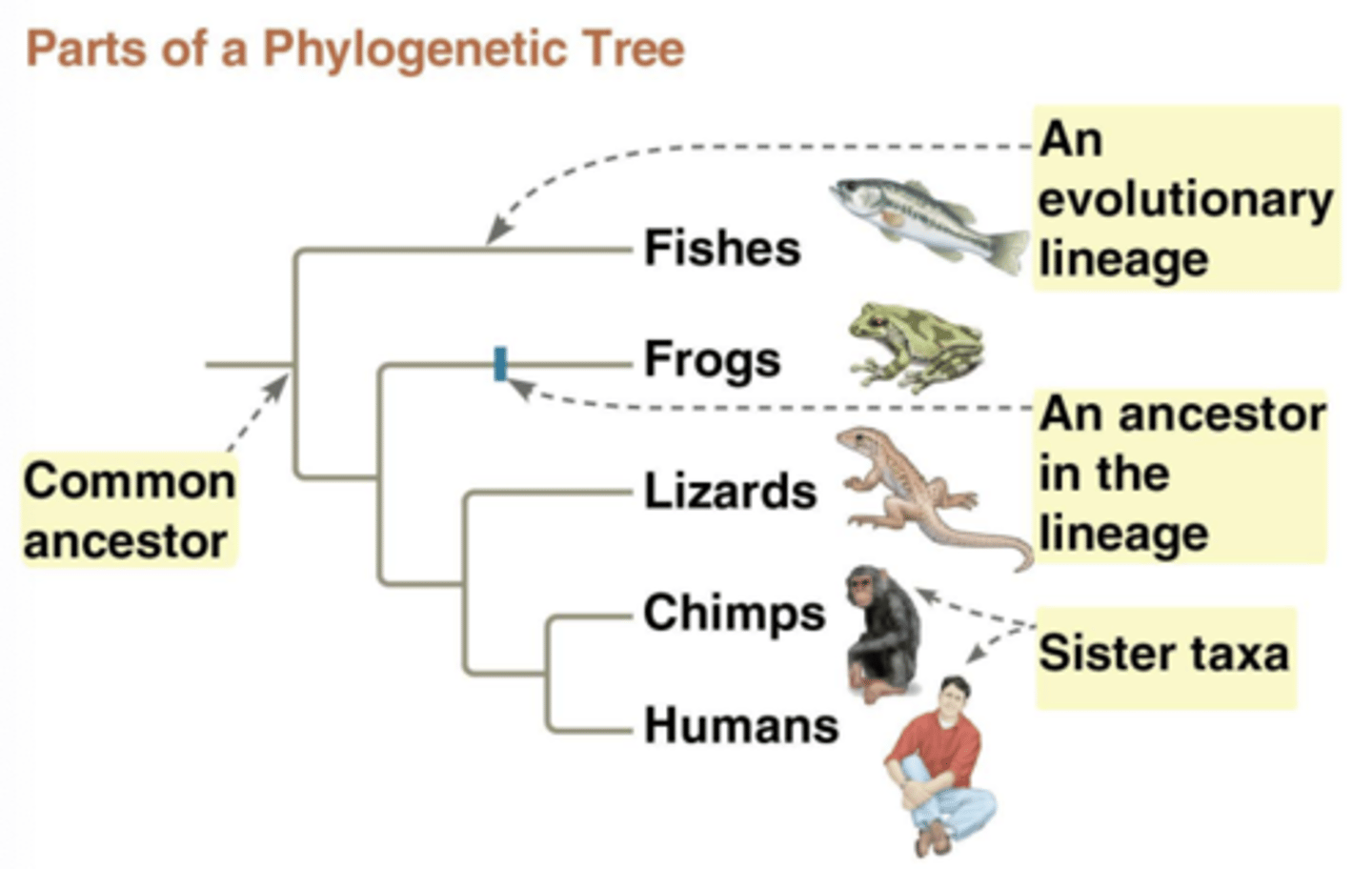
Where an evolutionary lineage and ancestor in lineage show in phylogenetic tree
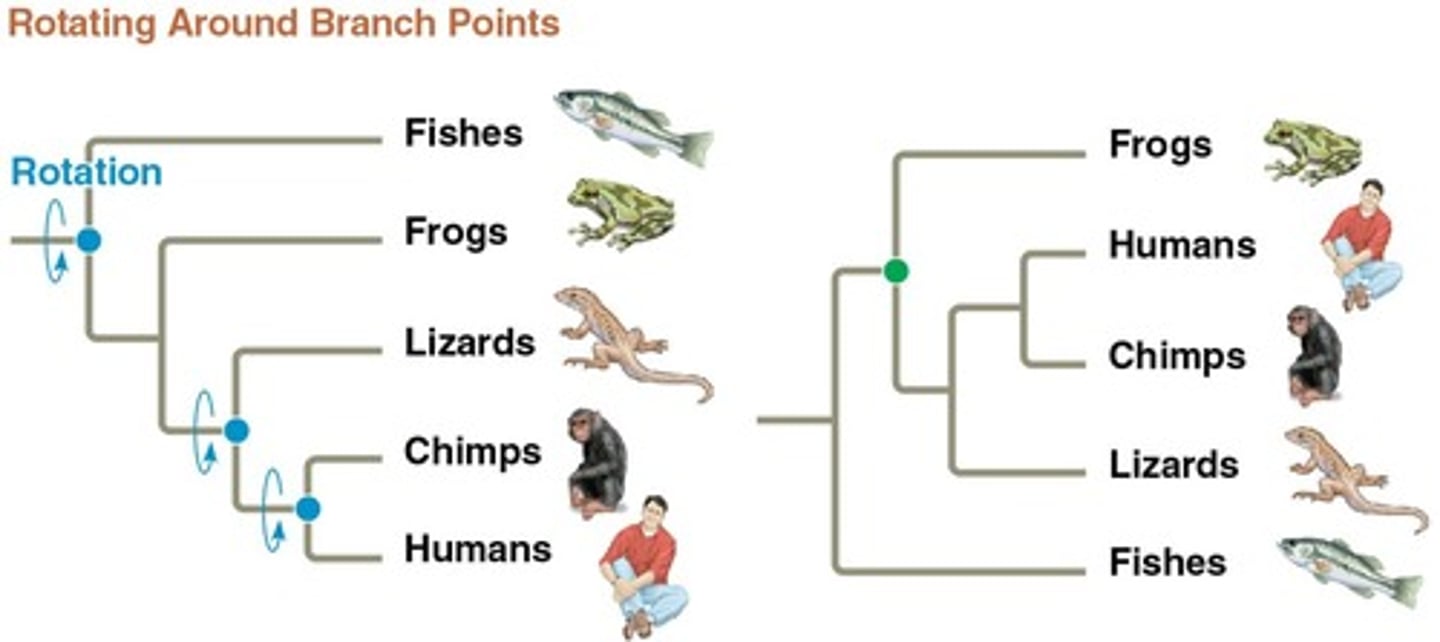
Rotating around branch points
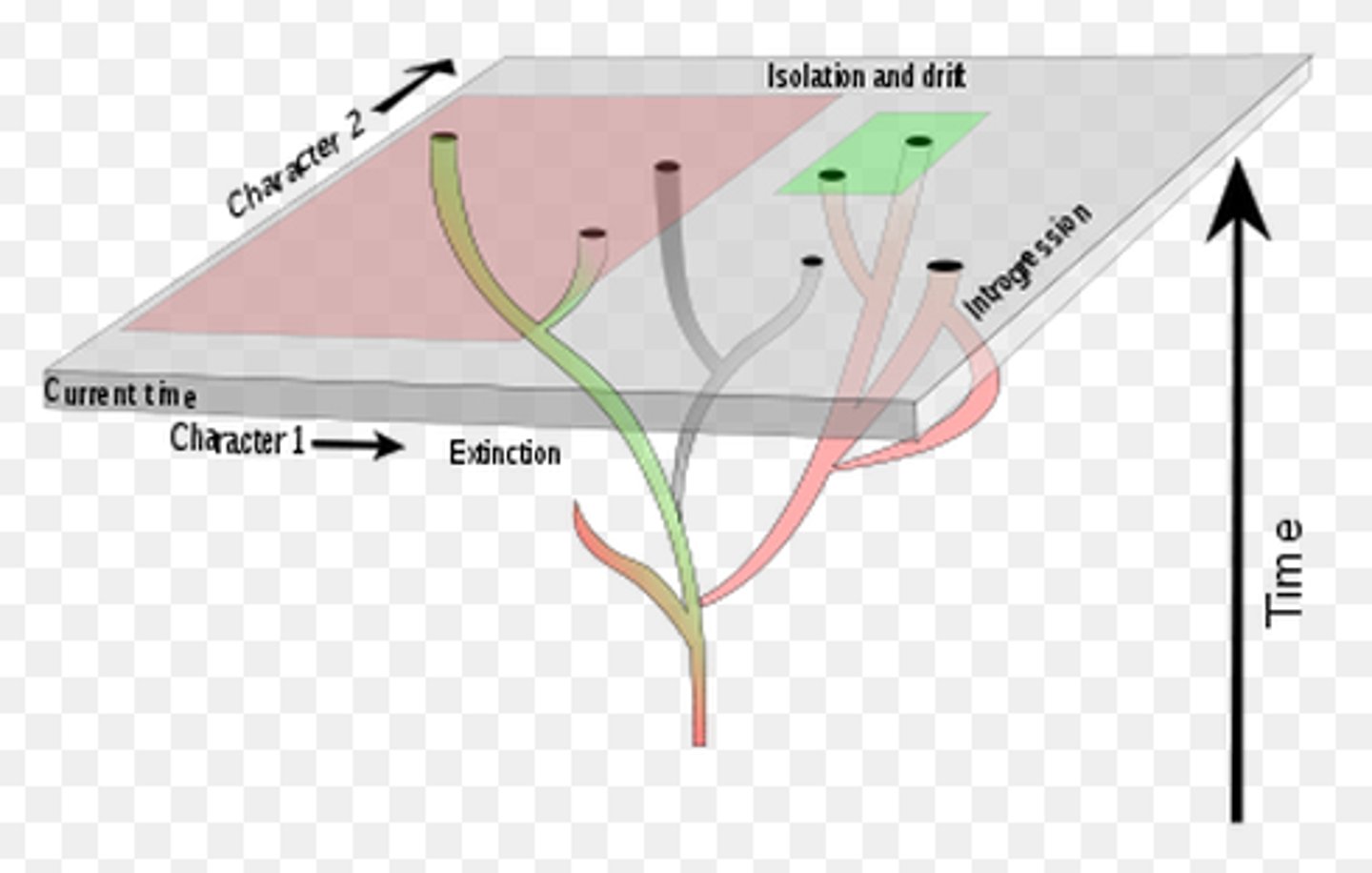
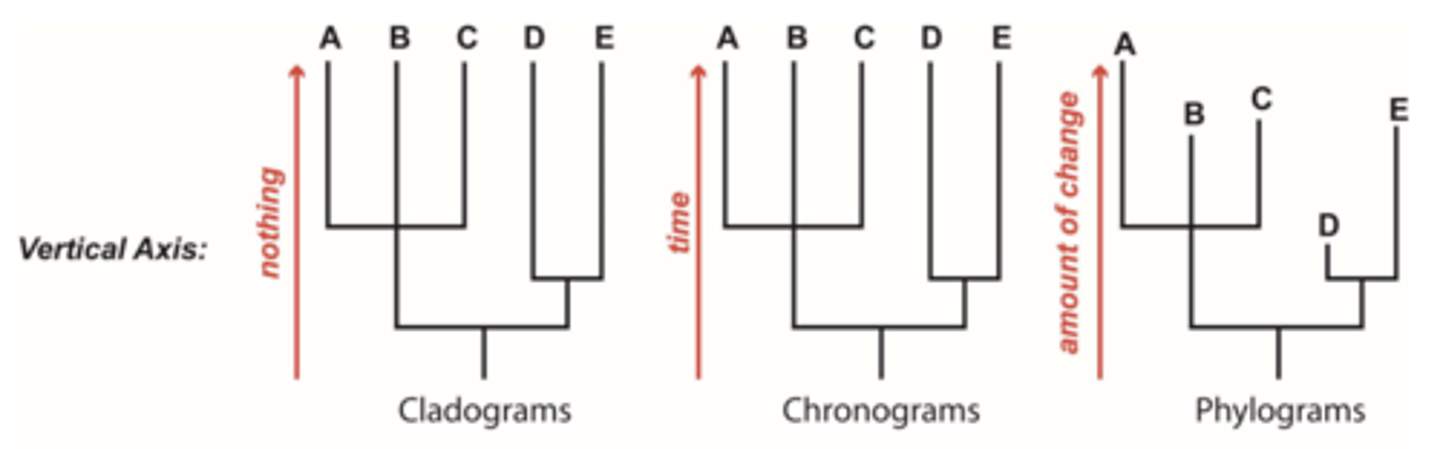
What can a phylogenetic tree represent along a vertical axis?
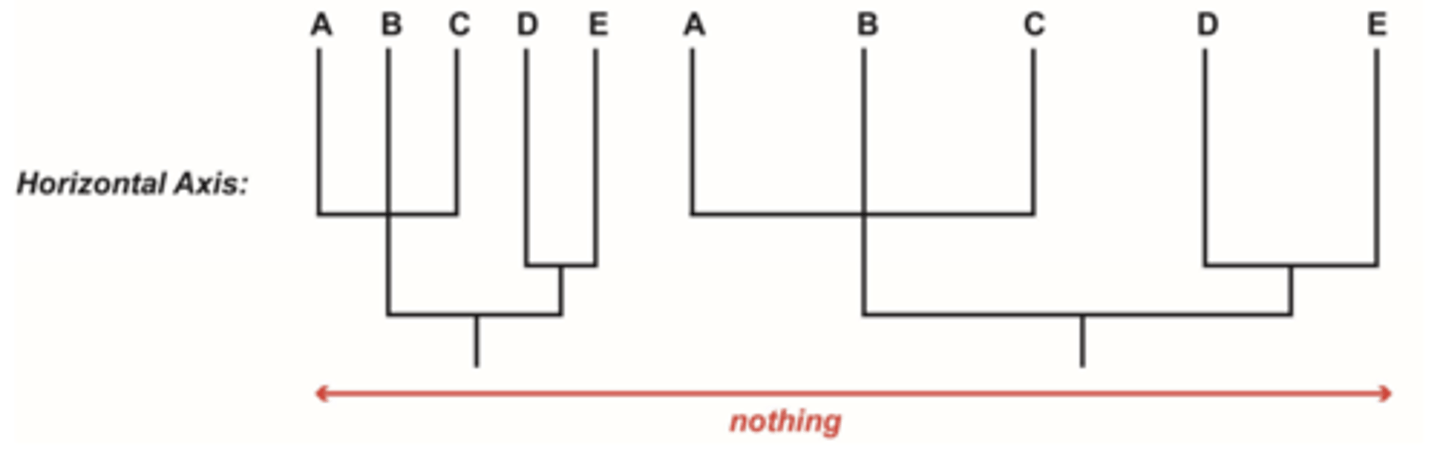
What can a phylogenetic tree represent along a horizontal axis?
nothing
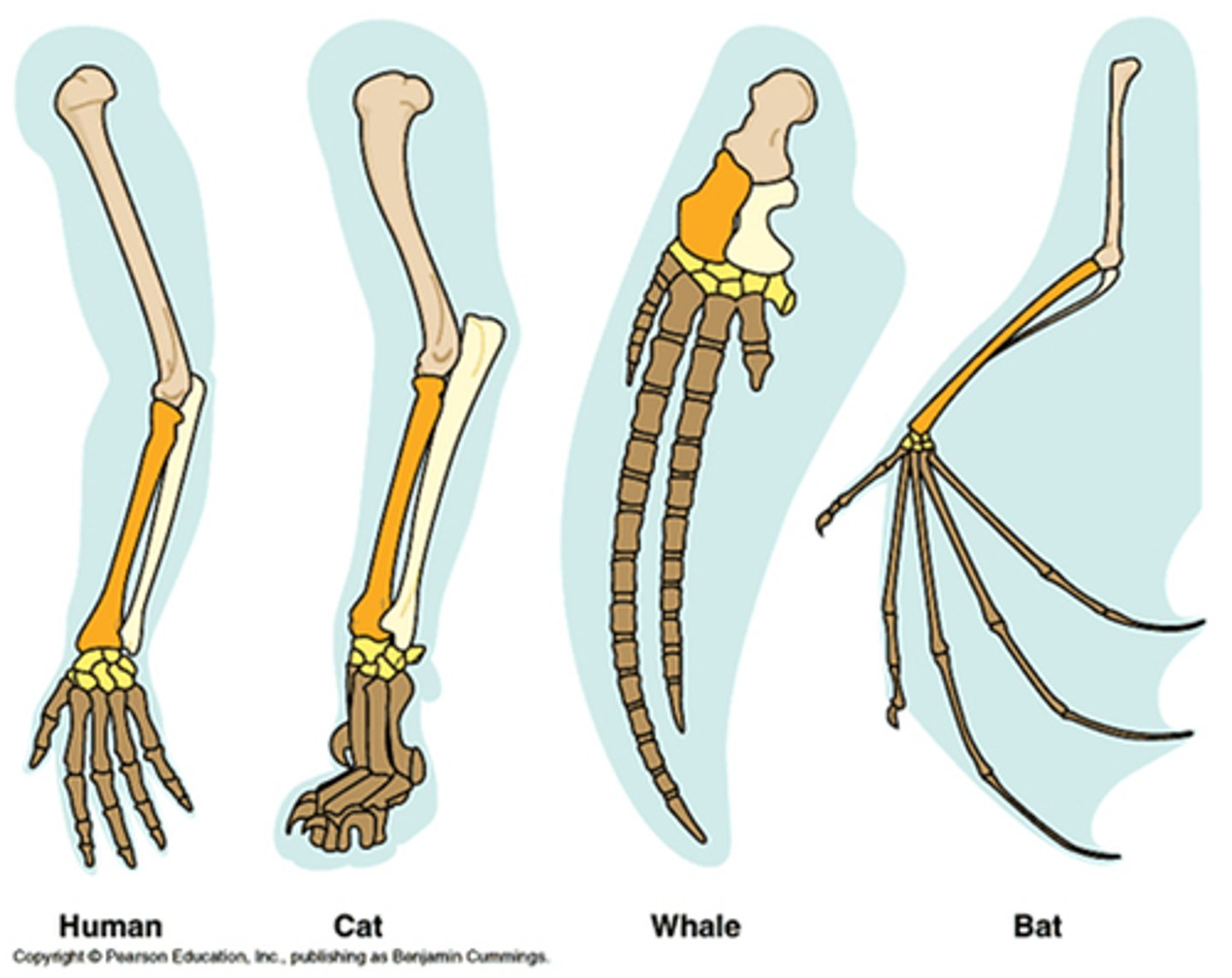
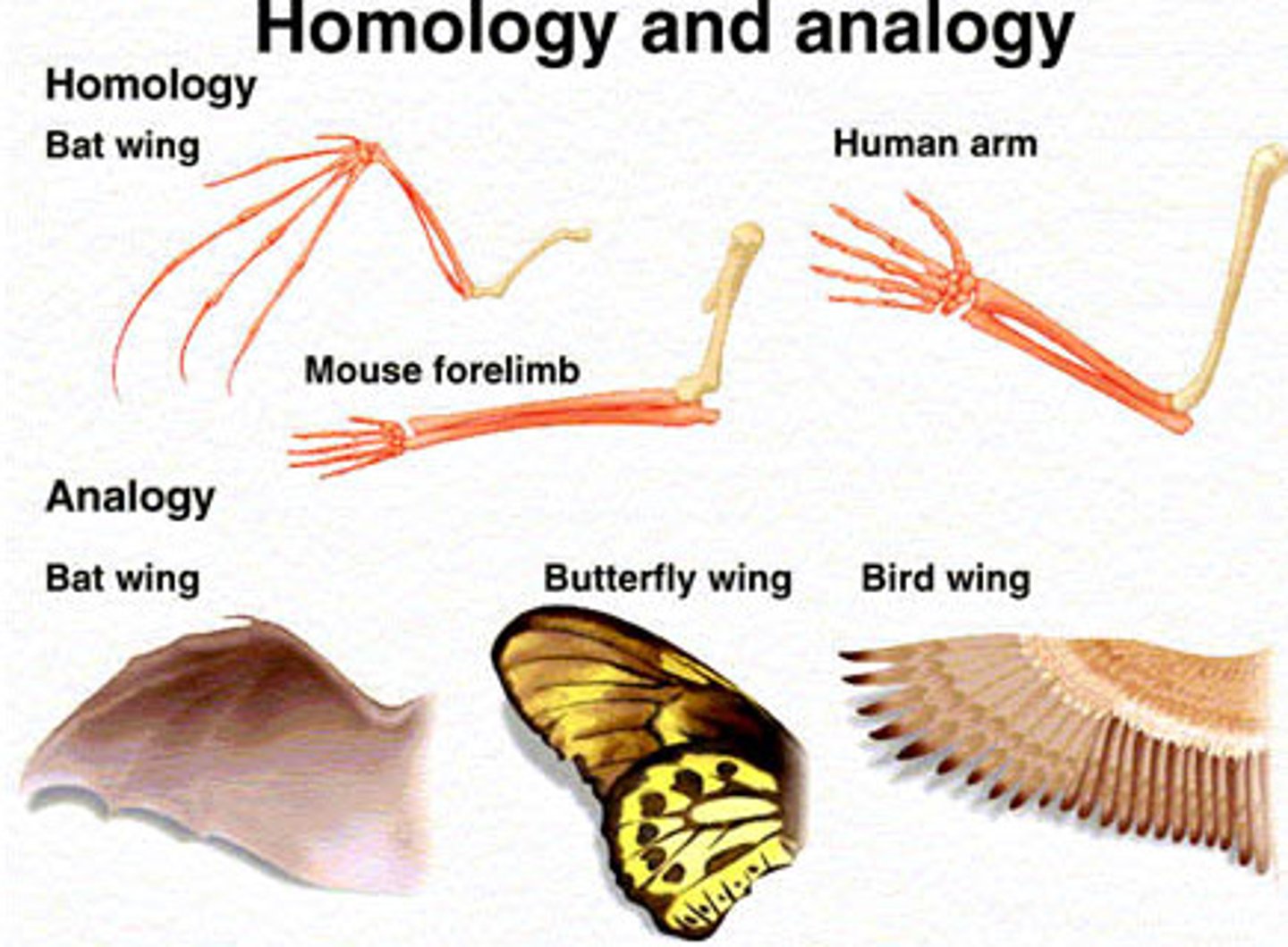
Homology
similarity resulting from common ancestry
Homology vs. Convergence
Homology: Common ancestor, form and function may or may not be the same
Convergence: Similar form and function, similarity is not due to common ancestry
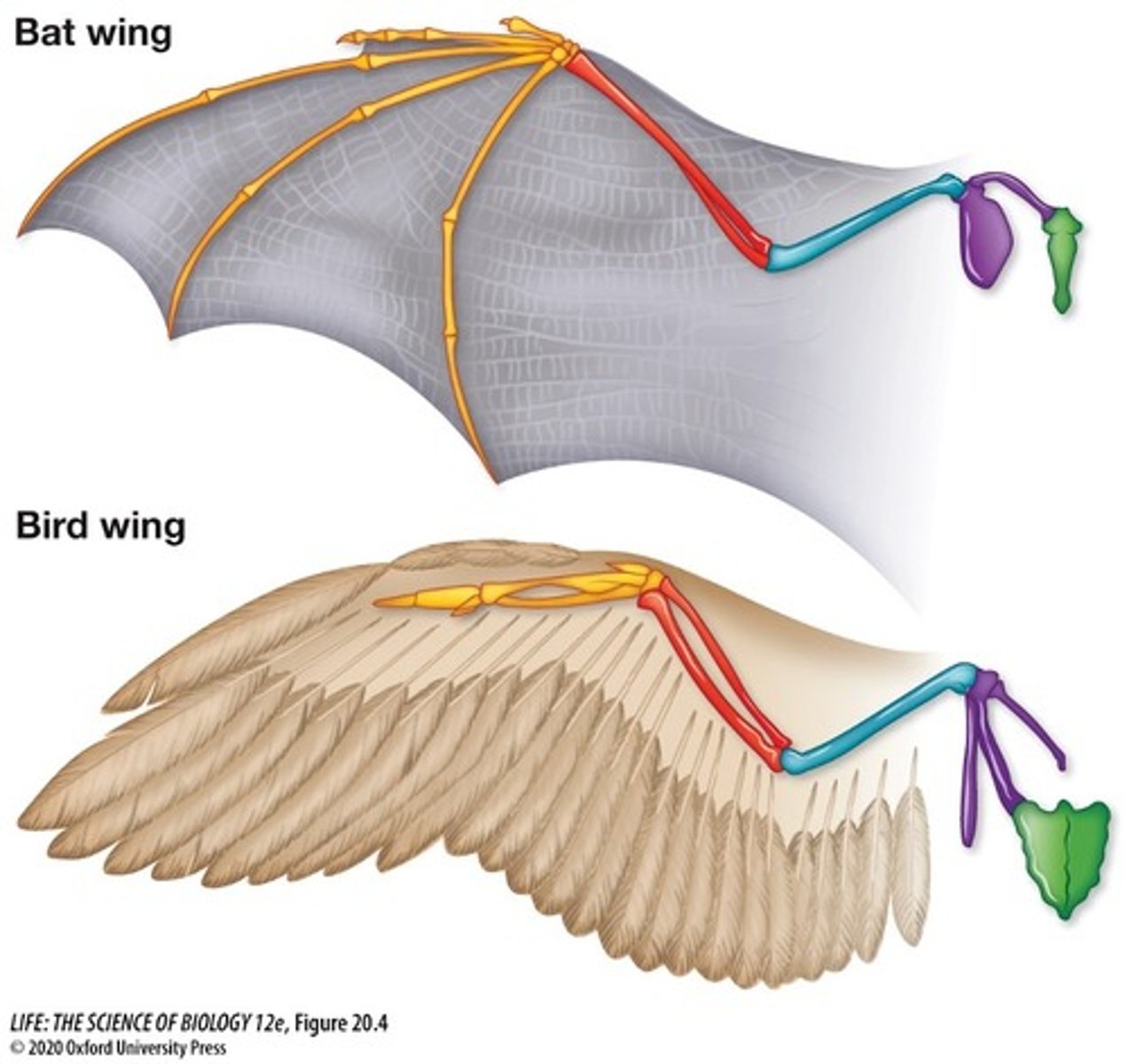
Homology vs. Analogy
Homologous characters are characters present in a group of species due to shared ancestry. Analogous or homoplastic characters are characters present in certain species that have evolved independently (convergent evolution)
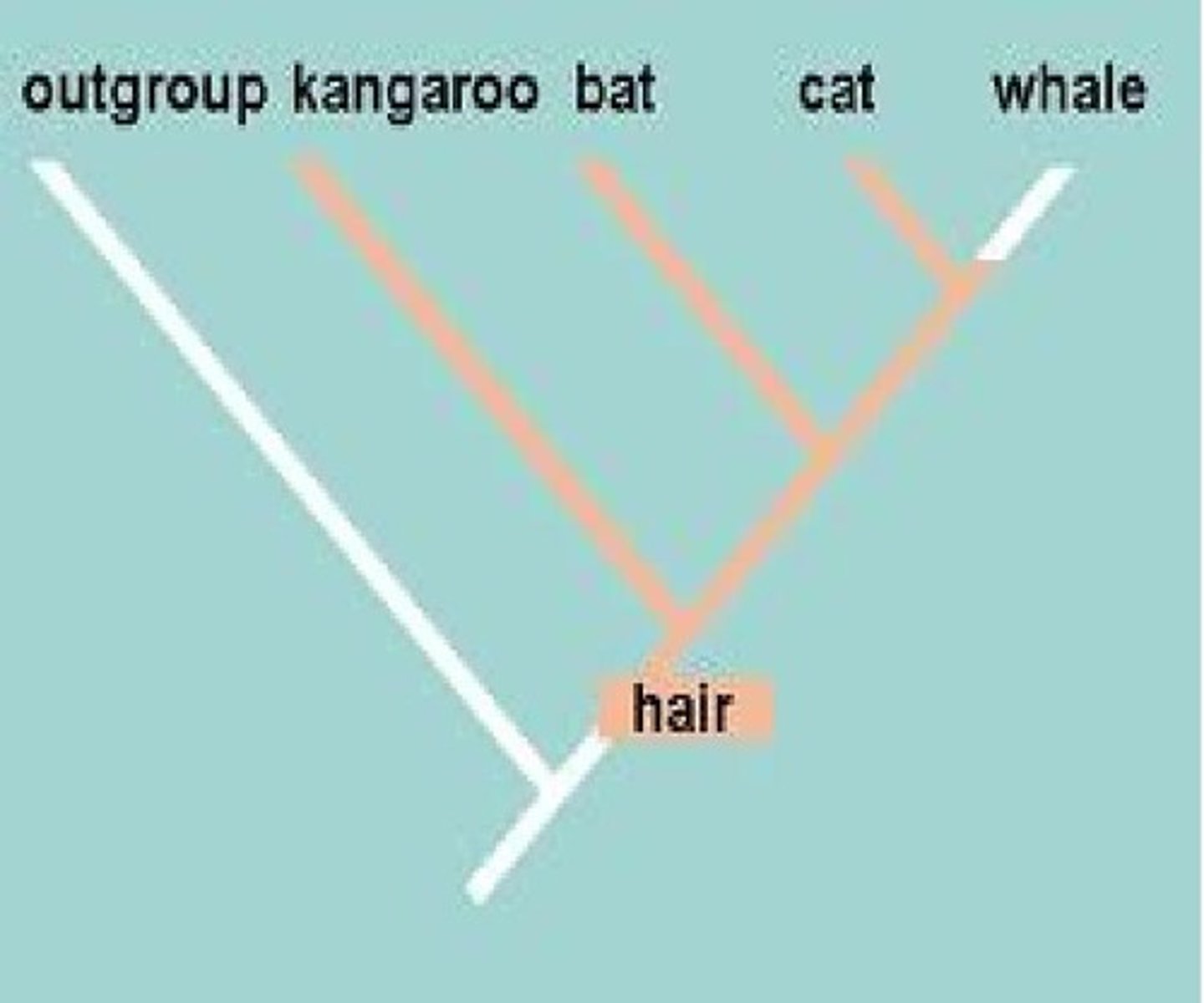
Shared ancestral characteristics
are characters shared beyond the taxon we are trying to define
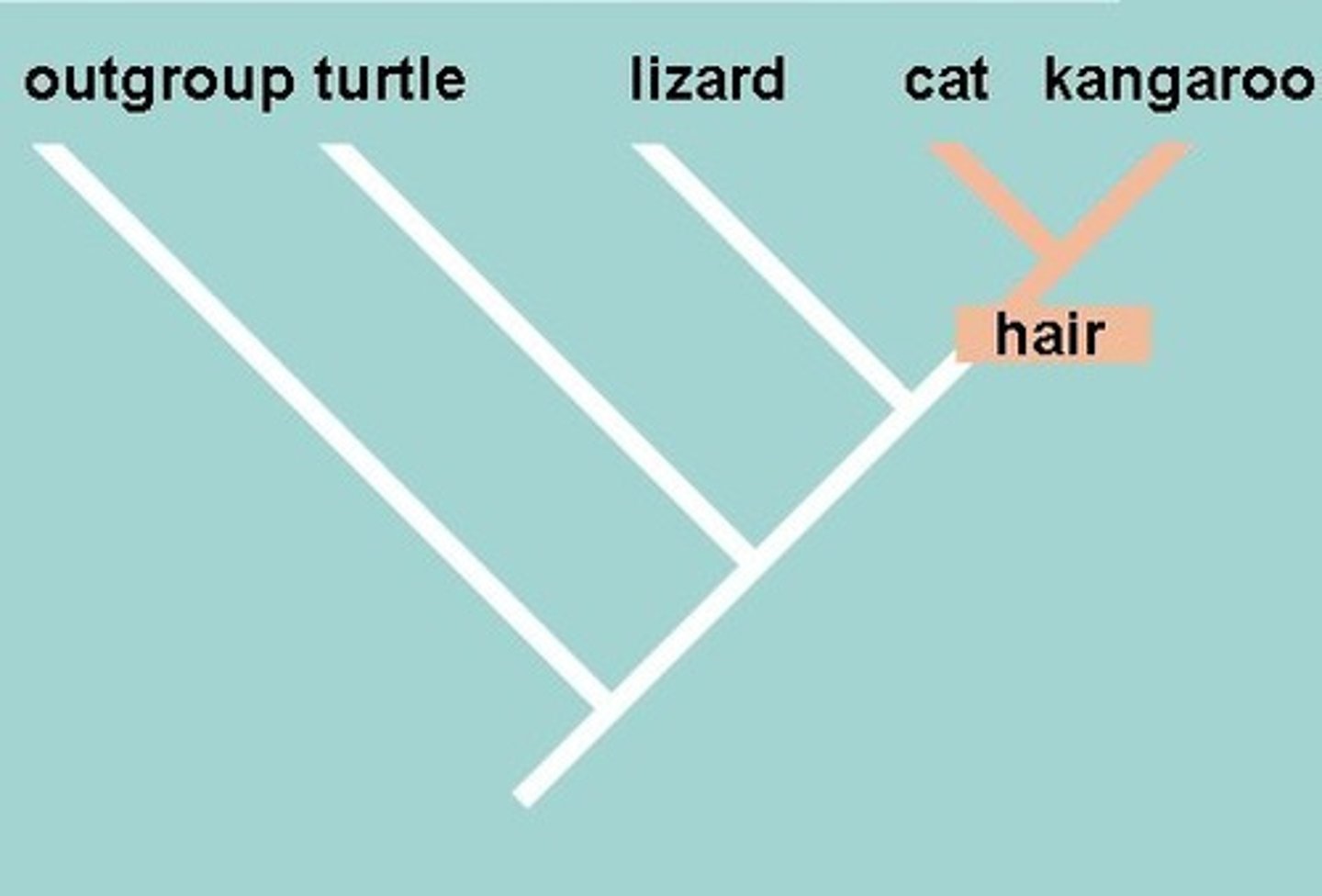
Shared derived characteristics
are evolutionary novelties unique to a particular clade (Common ancestor + all its descendants.)
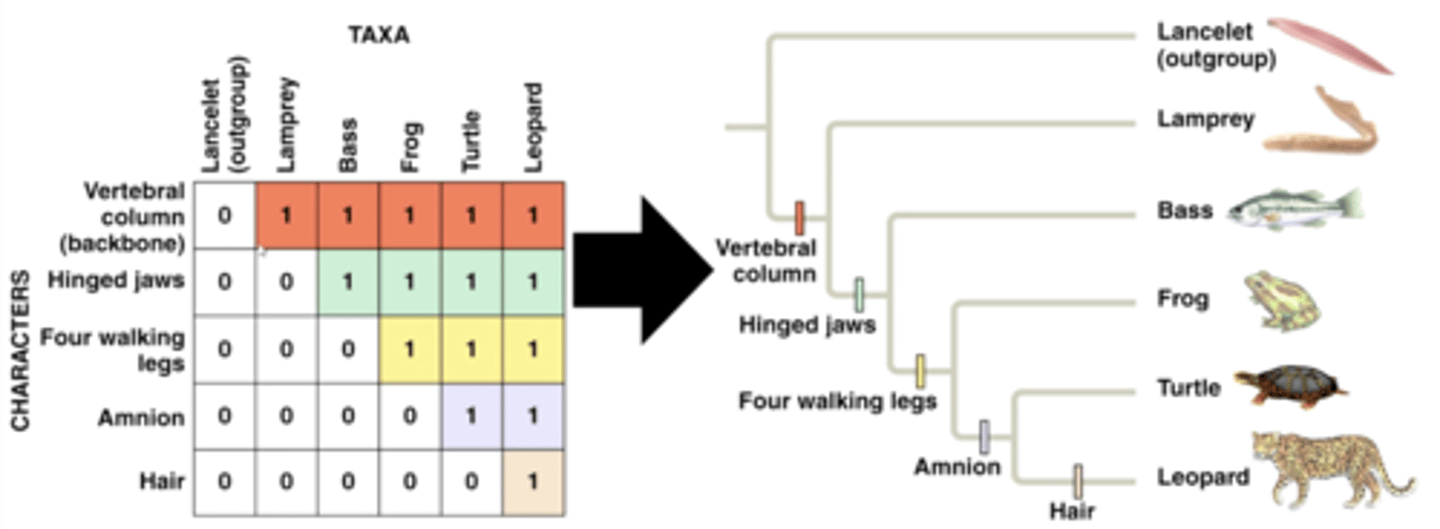
What are phylogenetic trees built from?
Phylogenetic trees are built from characters (or sites); can be morphological, behavioral, physiological, or molecular
Two important assumptions about phylogenetic characters
they are homologous and they are evolving independently from each other
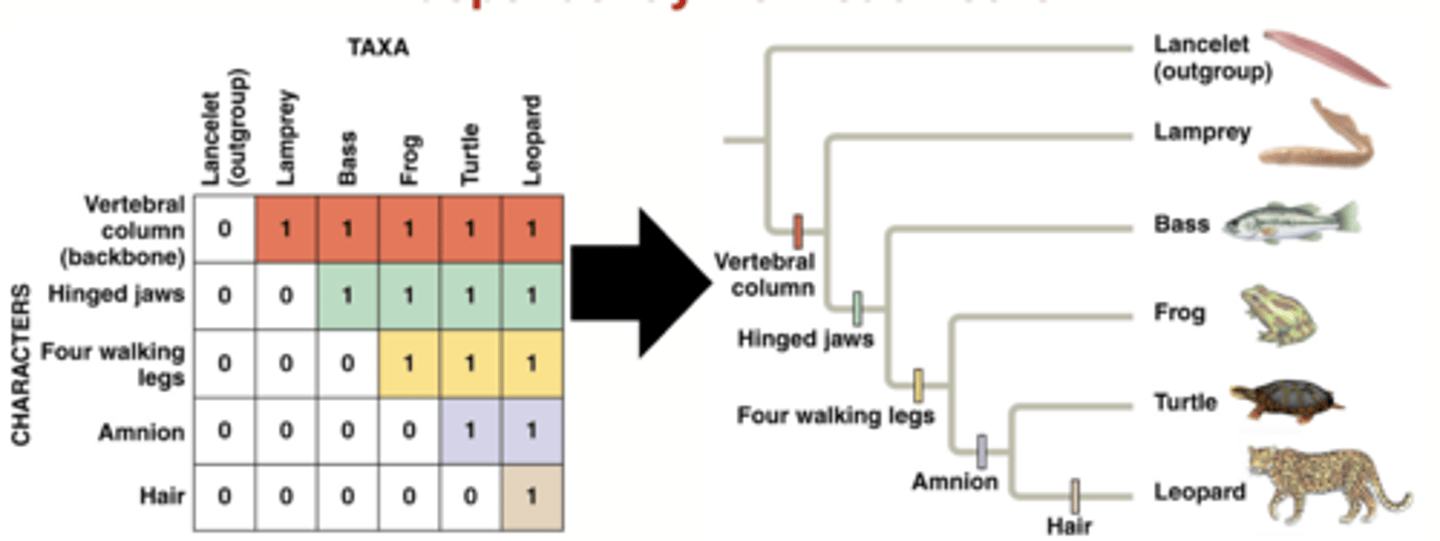
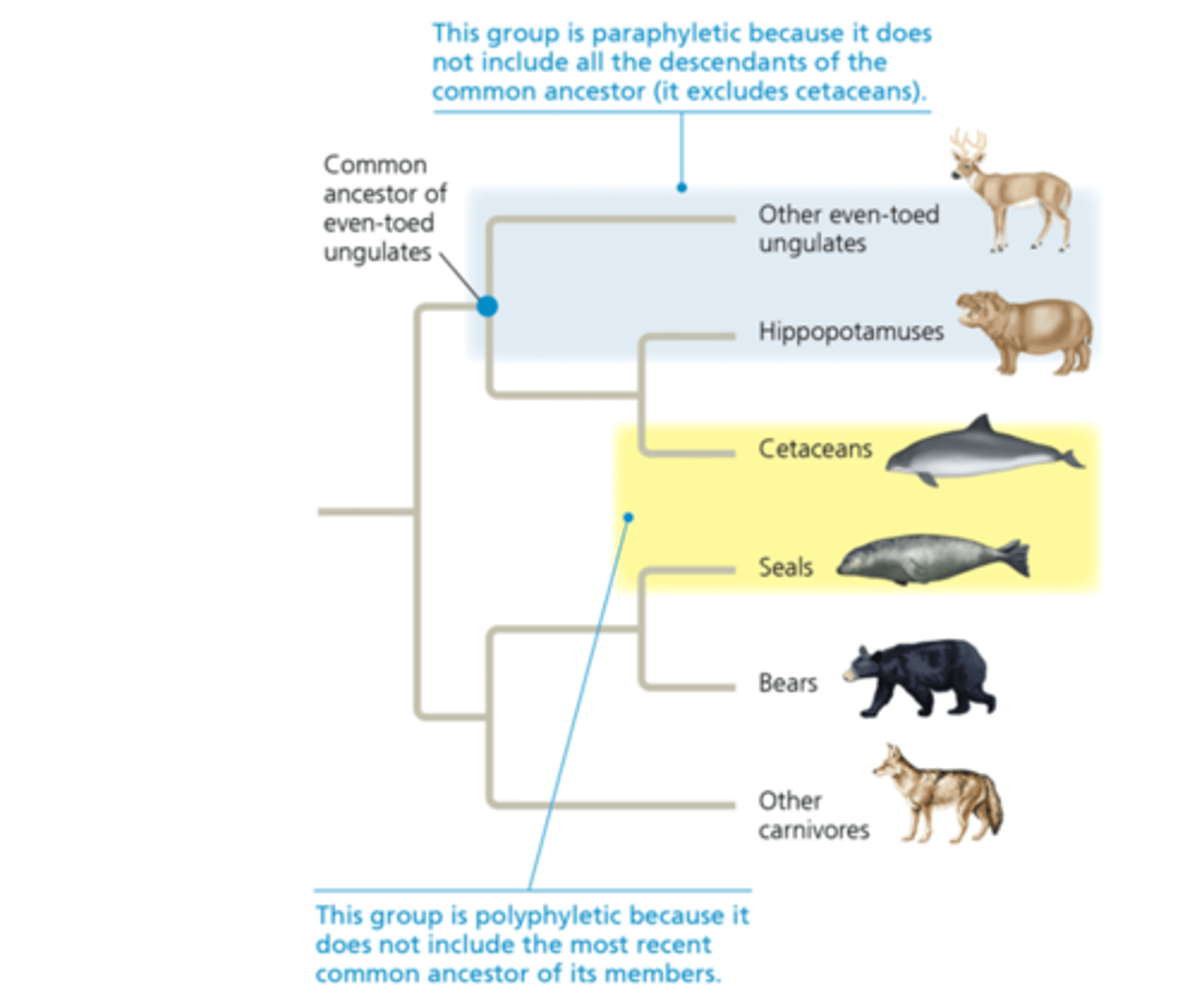
Monophyletic group of phylogenetic tree
Consists of an ancestral species and all of its descendants
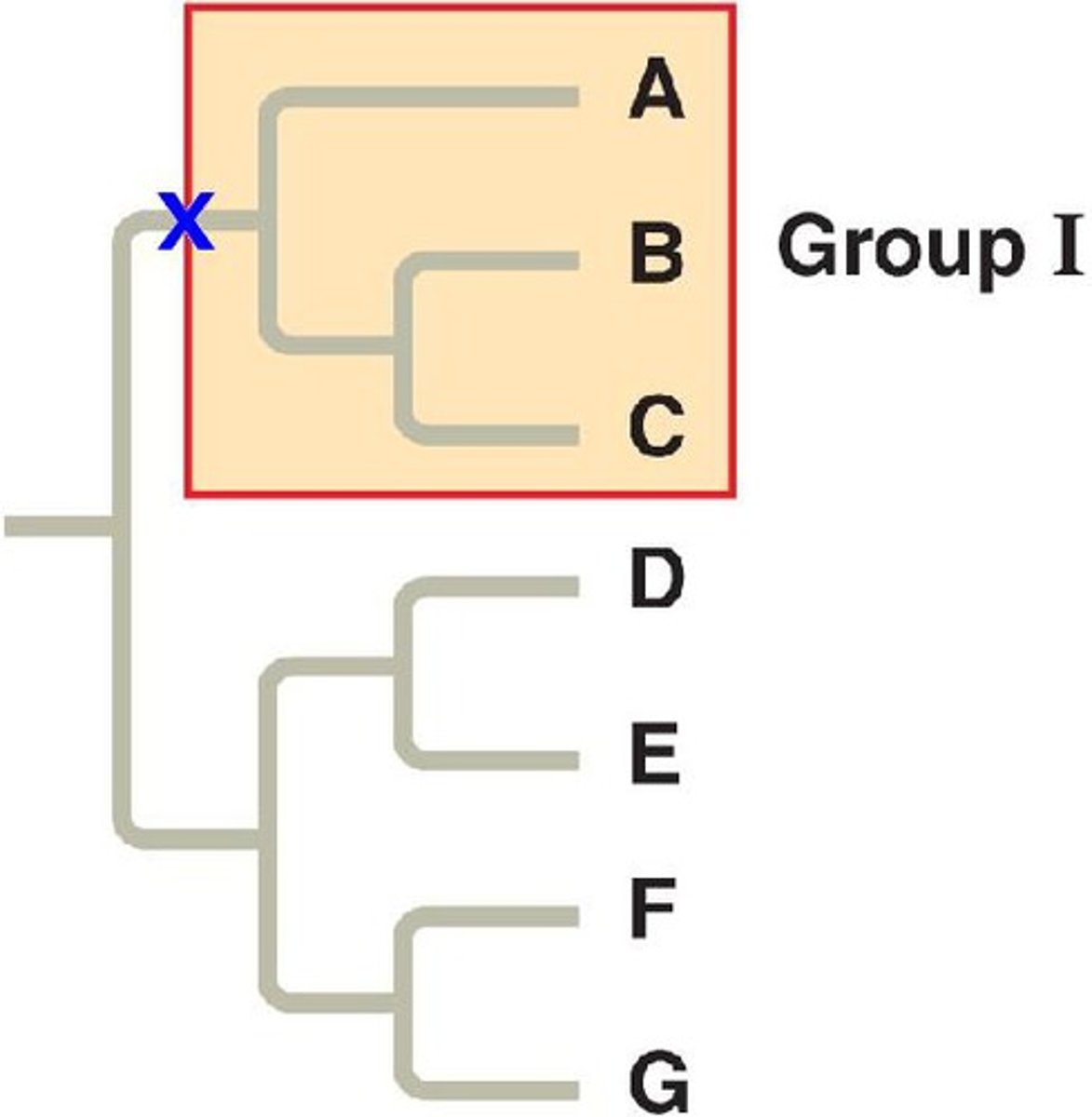
Paraphyletic group of phylogenetic tree
Consists of an ancestral species and some of its descendants
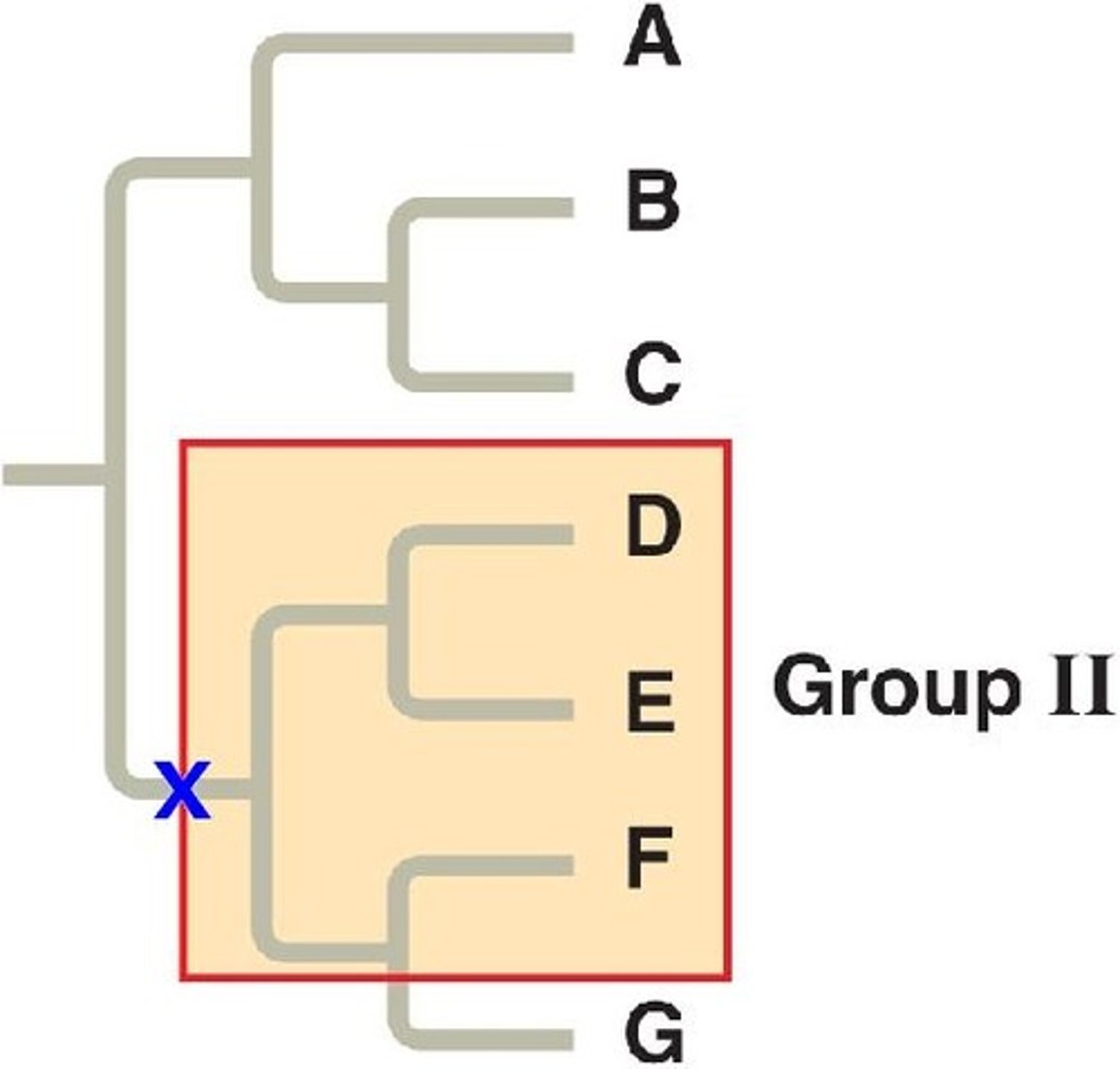
Polyphyletic group of phylogenetic tree
Consists of a group of species that does not include their common ancestor
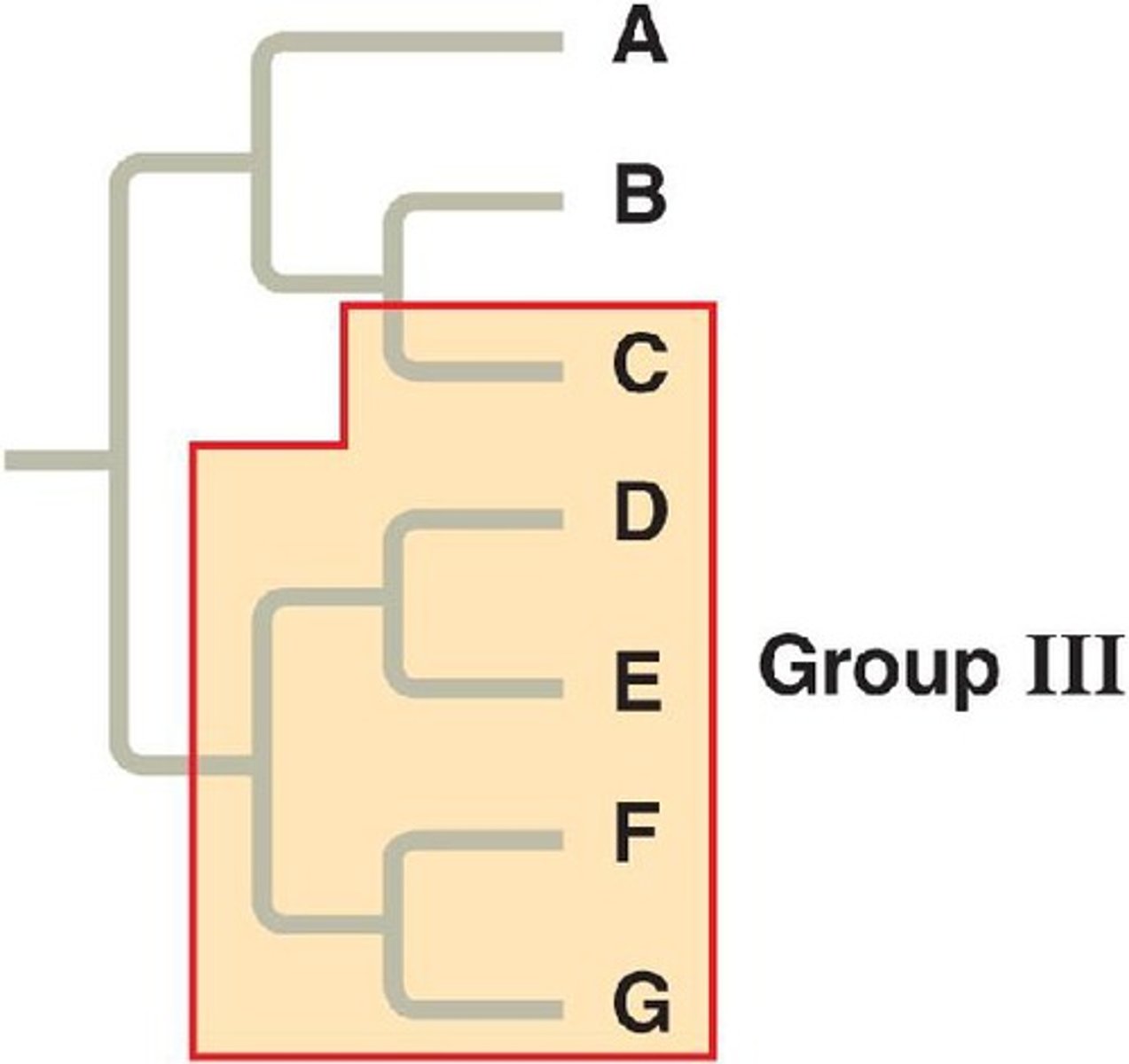
Example of paraphyletic and polyphyletic groups
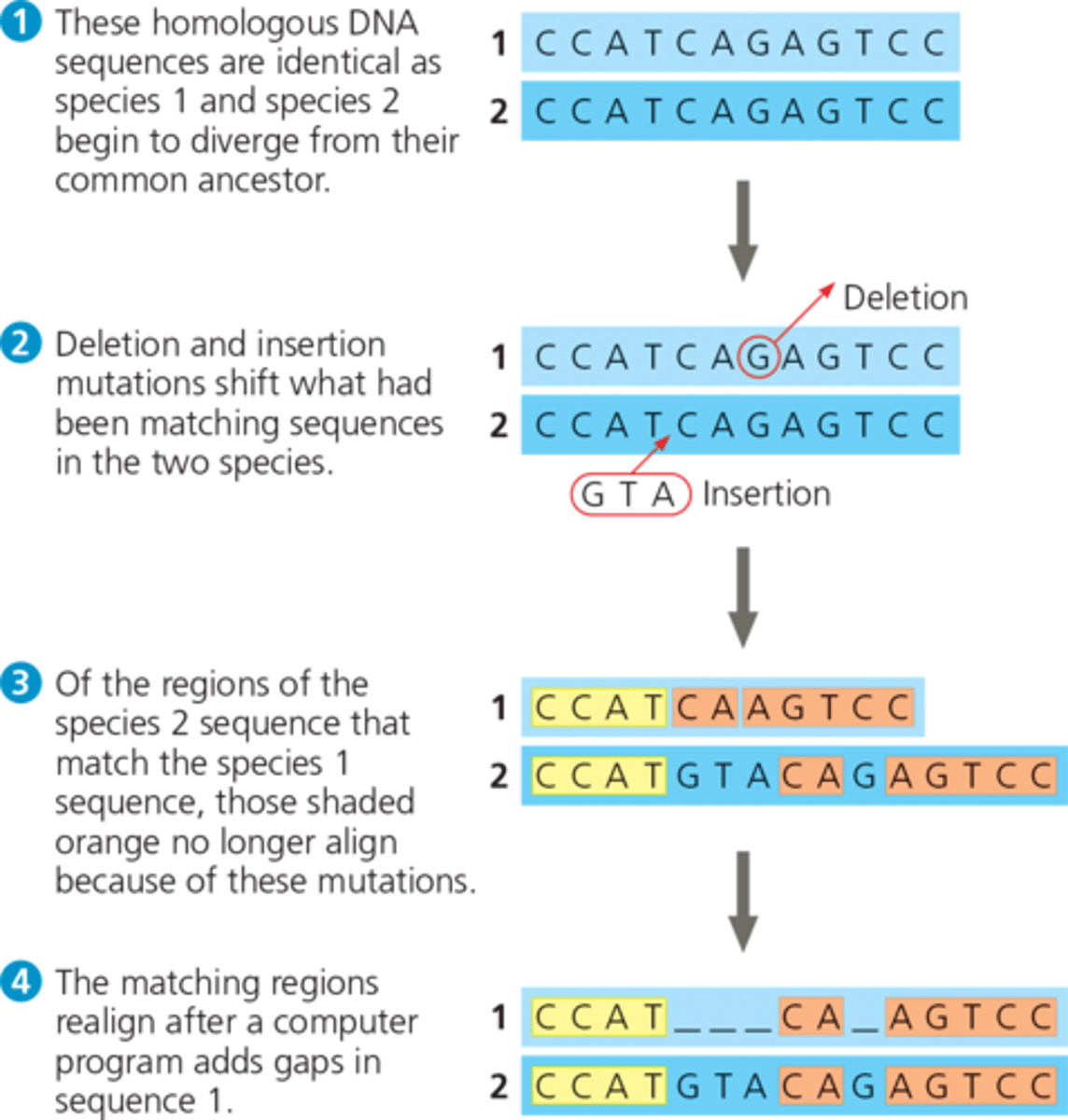
Aligning segments of DNA
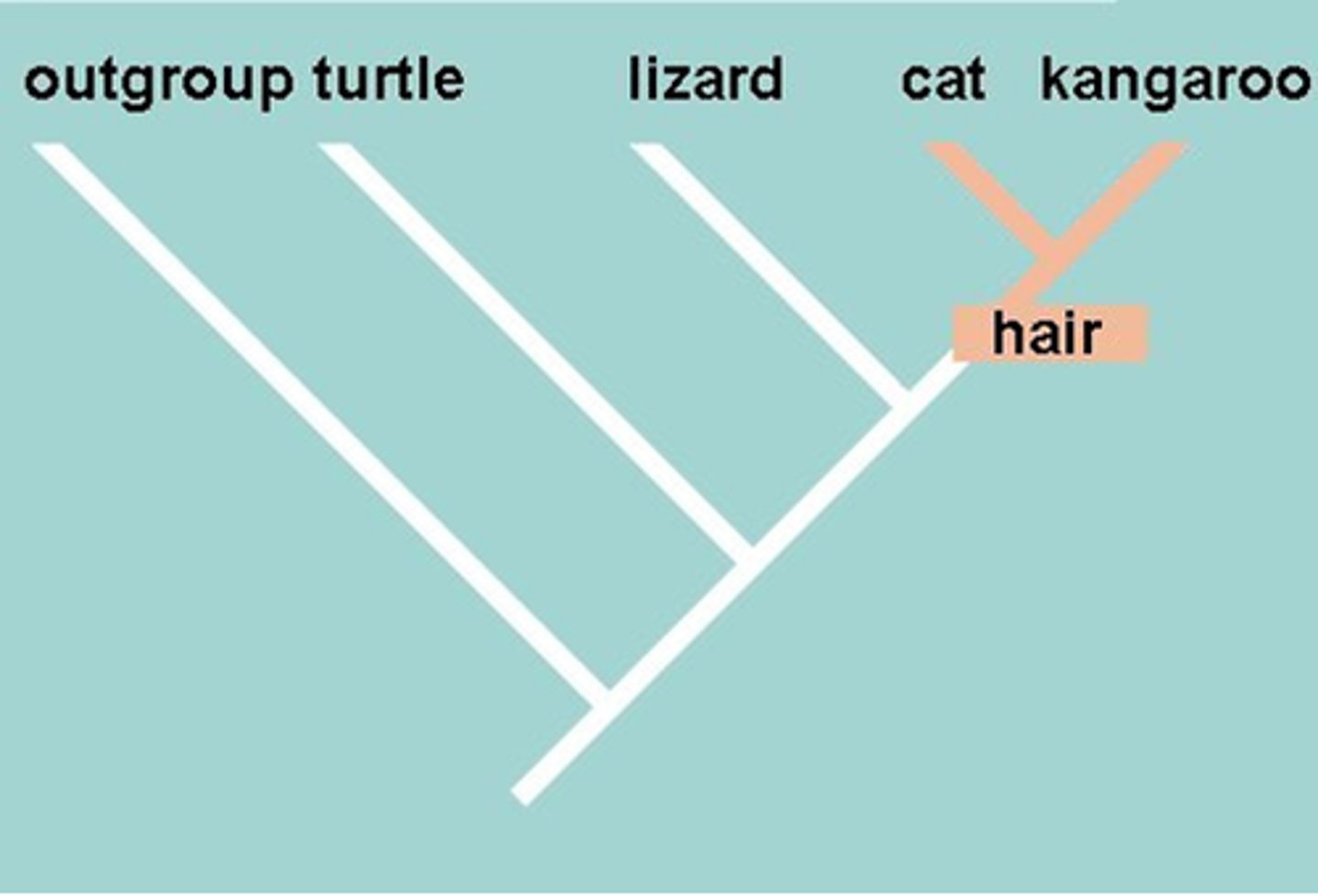
ancestral state
state found in common ancestor
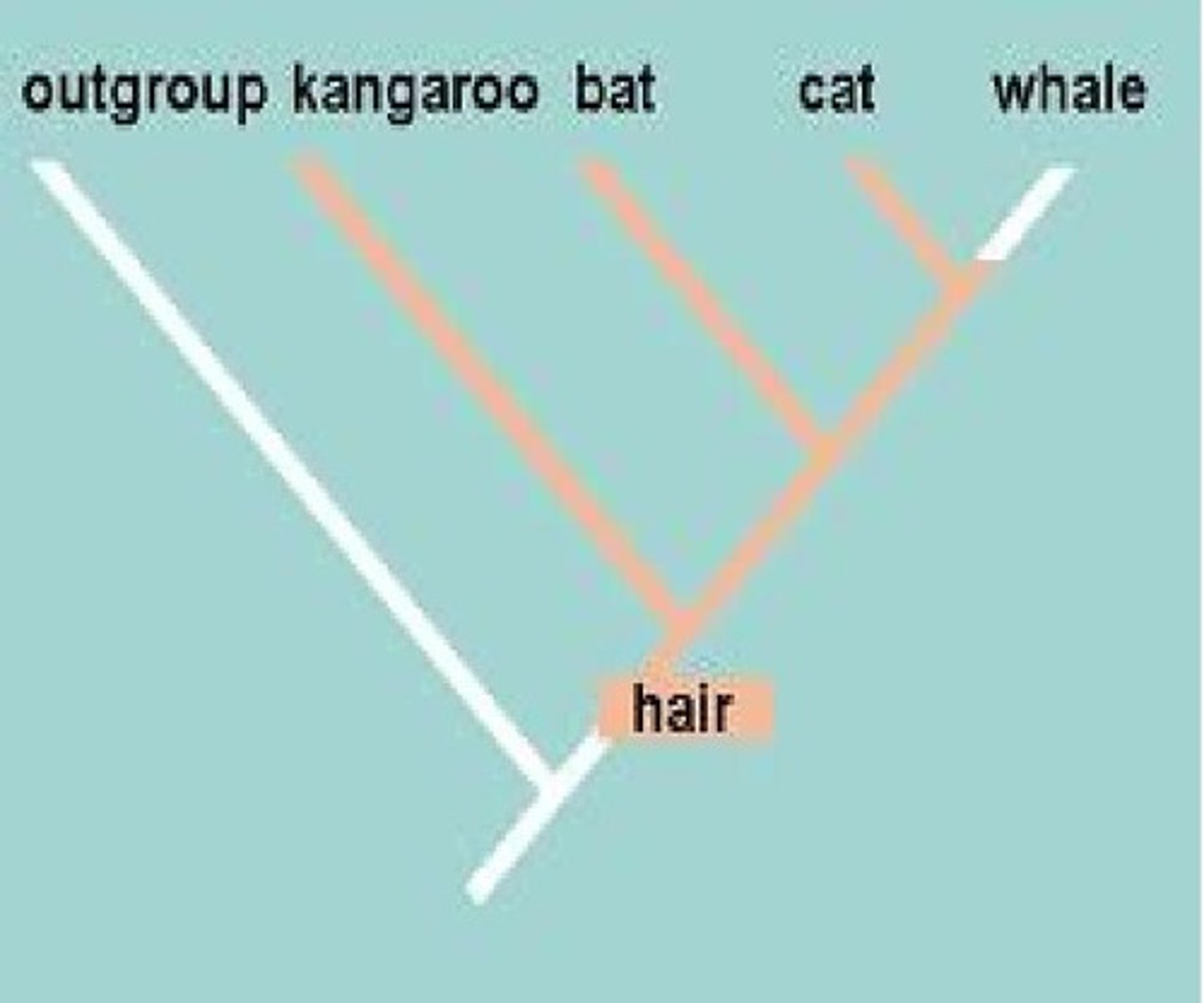
derived state
state that has evolved from the ancestral state
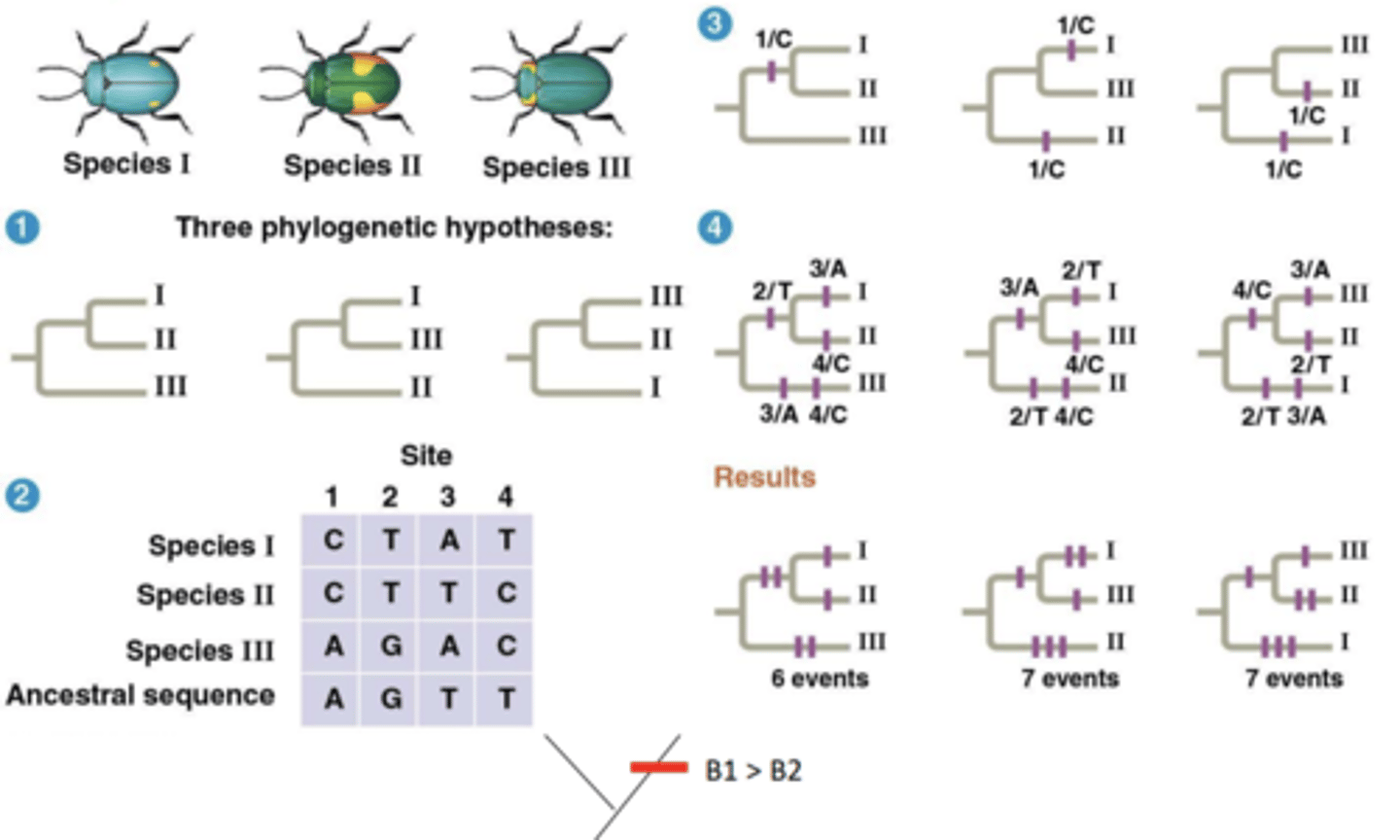
Principles of Parsimony
states that the preferred hypothesis is the one that is the simplest for all the characters and their states
Using principles of parsimony for simplest explanation of phylogenetics
By principle of parsimony the one with the least events is the most likely evolution
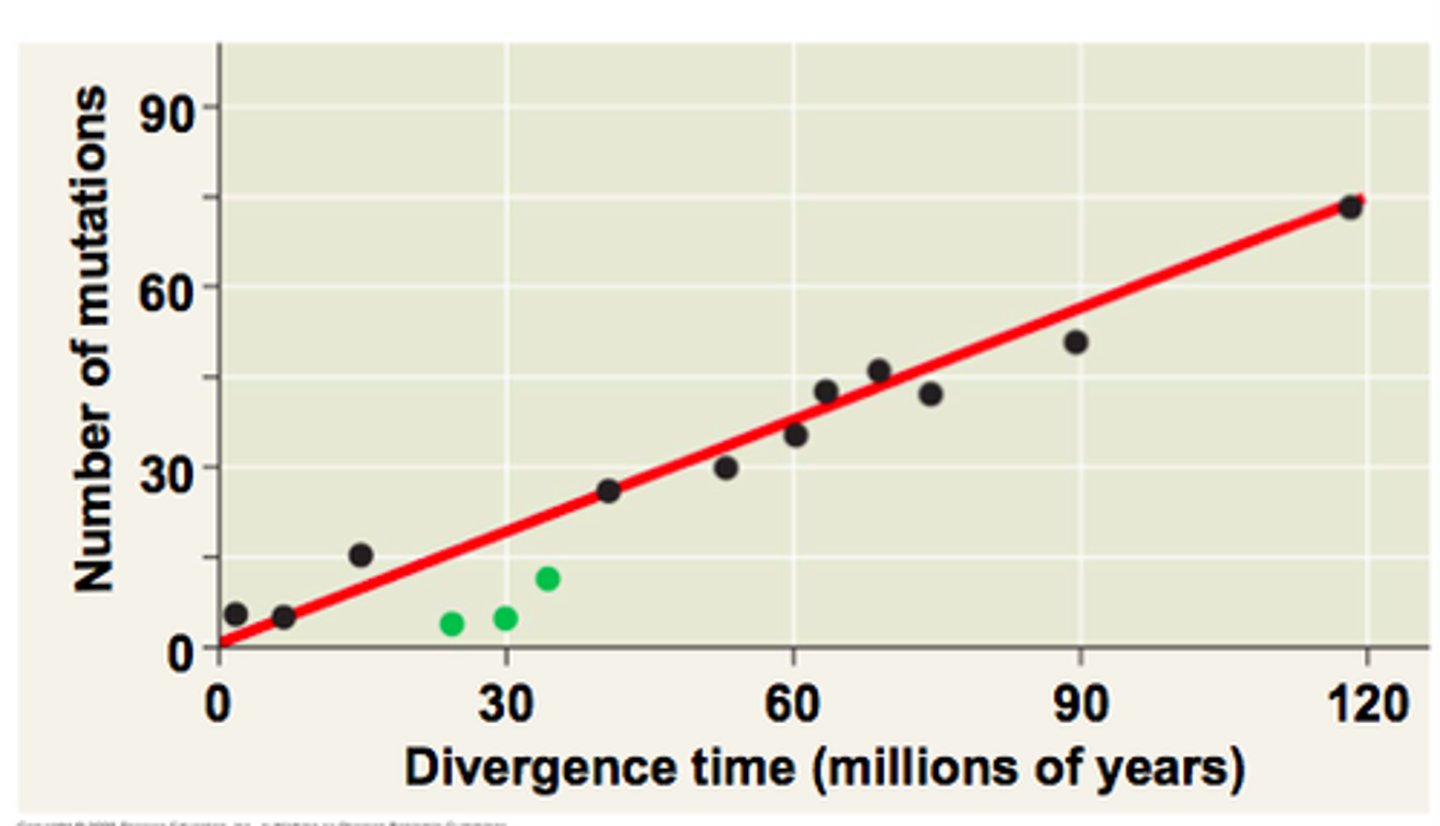
Molecular clock for mammals
We can use molecular clock to estimate the total amount of time between different evolutionary changes
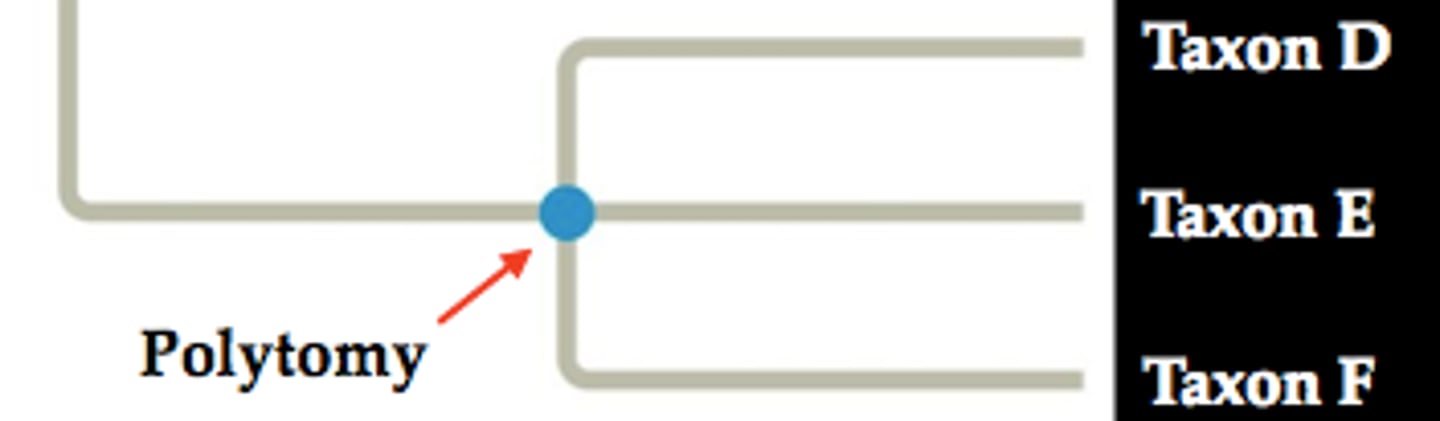
polytomy
a branch point from which more than two descendant groups emerge
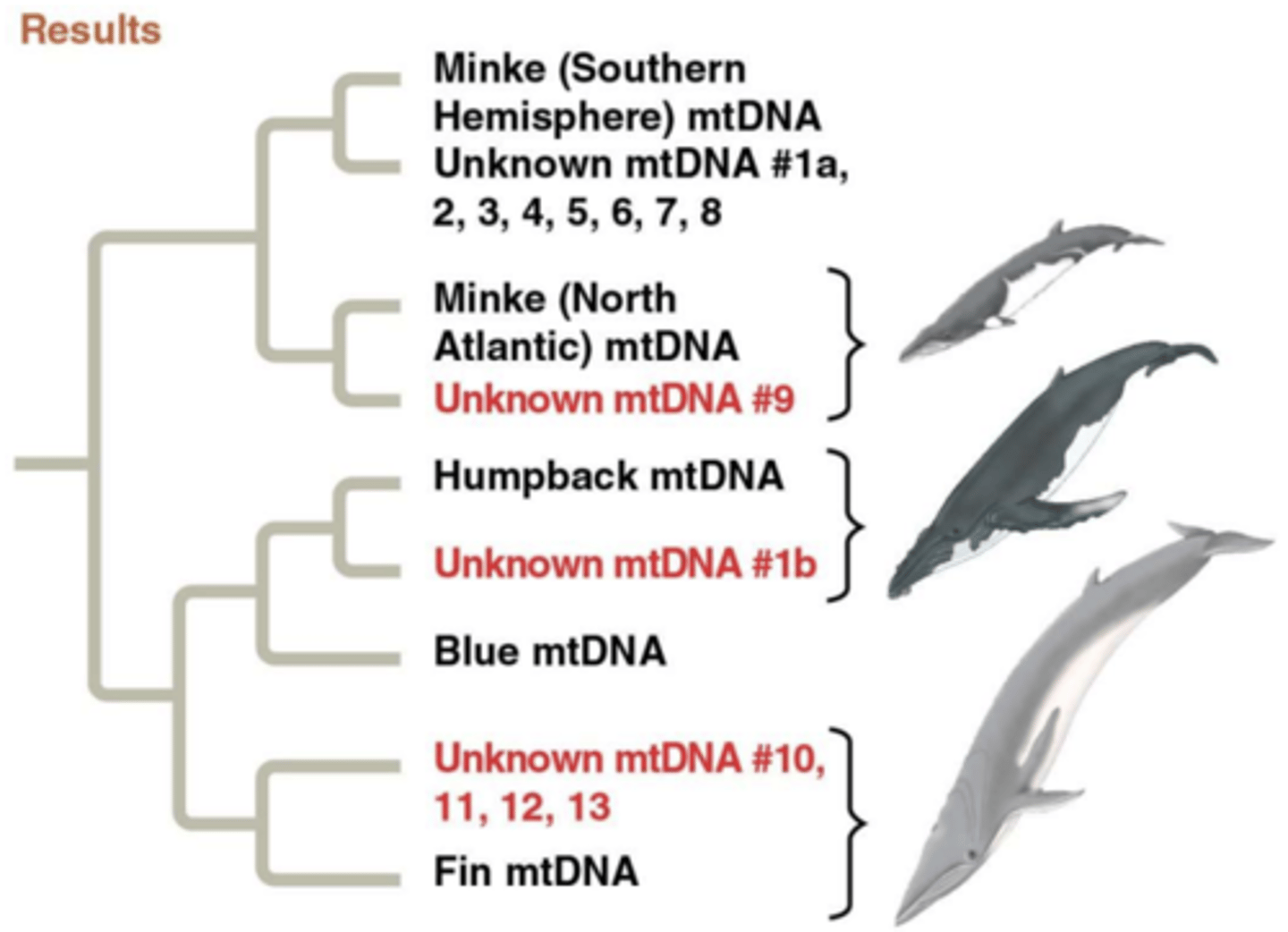
Using phylogenetics along with DNA to solve issues
Using phylogenetics along with DNA to determine where different samples of whale meat were from
Challenges for Phylogenetic Inference
- phylogenies are hypotheses about a gene/ organism relationships that are constantly updated with new data
- genes can be transferred horizontally from one organism to an unrelated one
- genes undergoing selection can be rapidly evolving and contain many convergently evolving sites
- different sites/characters may be evolving at different rates
- re-arrangements of genetic material can lead to false conclusions
- ancient relationships via DNA can be very challenging, but less so with morphology