semester one exam- endocrine system, disease, reproduction
 Call Kai
 Learn
Learn Practice Test
 Spaced Repetition
 Match
Match Flashcards
 Knowt Play
1/23

Earn XP
Name | Mastery | Learn | Test | Matching | Spaced | Call with Kai |
|---|
No analytics yet
Send a link to your students to track their progress
24 Terms
what is the endocrine system?
a collection of glands that secrete hormones that achieve homeostasis
def of hormones, target cells, glands
hormones- a chemical messenger that travel through the blood cells to target cells
target cells- a cell that has a receptor to match a specific hormone
glands- an organ that secretes subsances
6 types of glands and where they r in the body
pituitary gland (inside brain)
thyroid gland (inside throat)
adrenal glands (on top of kidneys)
pancreas (behind the stomach)
ovaries (inside female pelvis)
testes (inside male scrotum)
what each 6 glands do
pituitary- keeps hormone levels in check (master gland)
thyroid- controls metabolism rate
adrenal- adrenaline in times of stress
pancreas- regulates blood sugar levels (insulin)
ovaries- produce oestrogen and progesterone (female sex hormone)
testes- produce testosterone (male sex hormone)
diffenrence between endocrine system and exocrine system
internal (ovary)
external (sweat, saliva)
what happens in a fight or flight situation and why? (responce from adrenaline)
hyperventalating bc lungs think it needs more oxygen
blood pumps faster to muscles to prepare muscels to fight
sweat to avoid over heating bc blood causes heat
brain scans memories to see if this has ever happened before and the outcome
pupils dilate to take in more light for better vision.
how to fight/prevent disease (4)
bacteria- antibiotics
virus- vaccine
fungi- topical cream
parasite- manual removal, cream, medication
imunocompromised
ppl who arent at their healthiest (cancer, pregnant, etc)
3 lines of defence and if its general or specific
skin, ear wax, tears, mucus (G)
white blood cells, blood clotting, inflamation, fever (G)
B cells, antibodies, T cells (S)
what do each of the lines of defence do?
skin- thick layer to protect body and waterproof. earwax- catches pathogen. tears- washes pathogens out. mucus- chemical barrier that catch patogens
white blood cells- fight pathogens. blood clotting- stops more pathogens from entering wound. inflamation- increase number of white blood cells. fever- some pathogens cant survive the heat
B cells- creates antibodies to match the same antigen on the pathogen. Antibodies- clumps pathogens together. T cells- attacks
phagocytosis
process of digesting pathogens by white blood cells.
3 types of asexual reproduction, what they each r and an example
fragmentation- an organism become 2 after it being cut off (worm, starfish)
binary fission- copies DNA and splits (bacteria)
vegetative propagation- one parent plant produces many off springs (strawberries)
4 types of sexual reproduction and explain what they each r
fertilisation- one one sperm cell unites with an egg cell to form a zygote.
identical twins- within the first 12 days of fertilisation, the zygote splits in 2
fraternal twins- two separate egg cells are fertilized by two different sperm cells
hermaphrodite- have both female and male organs but still reproduce with a partner. has the potential of reproducing asexually
pathogenesis
natural form of sexual reproduction, an off spring is created without fertilisation (happens in captivity)
5 types of fertilisation, explain and example (3- explain and example)
external- almost happens in water (frogs)
internal- involves one partner inserting their gametes into another (humans)
male hold the off spring (seahorses)
r-strategists- organisms that live in unstable environments and produce many offspring to ensure some survive (mice)
K-strategists- organisms that live in a stable environment and produce fewer offspring, providing more care (whales)
5 parts of female sex organ and their function
ovaries- matures eggs for fertilisation and when its released the process is called ovulation. releases progesterone and oestrogen
fallopian tube- allows egg to travel from ovaries to uterus. it travels for 2-3 days
uterus- uterine lining sheds, where the egg is fertilised, stretches as baby grows
cervix- narrow end of the uterus and connects the uterus to vagina, widen when giving birth
vagina- delivers menstrual blood outside body, intercourse, childbirth
4 stages of menstrual cycle, explain and how many days each
menstrual phase- (day 1-5) endometrium sheds
follicular phase- (day 1-13) the egg starts the maturing and once bleeding stops, endometrium starts building up again
ovulation (day 14) egg is released
luteal (day 15-28) the egg stays in uterus if it hasn’t been fertilised and period starts again
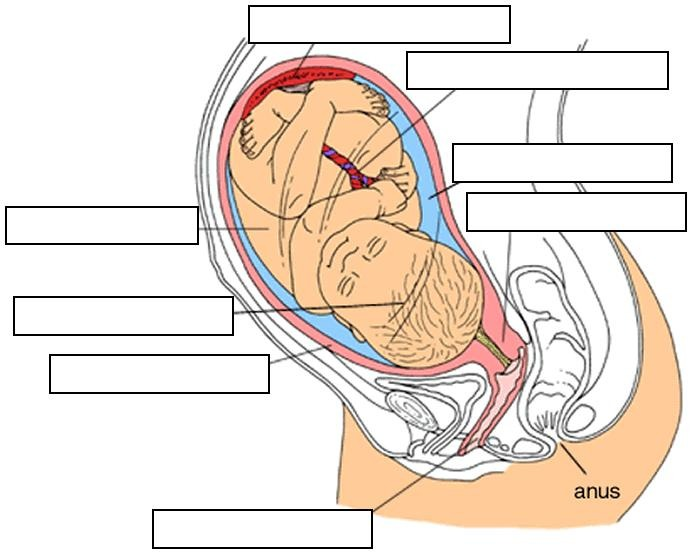
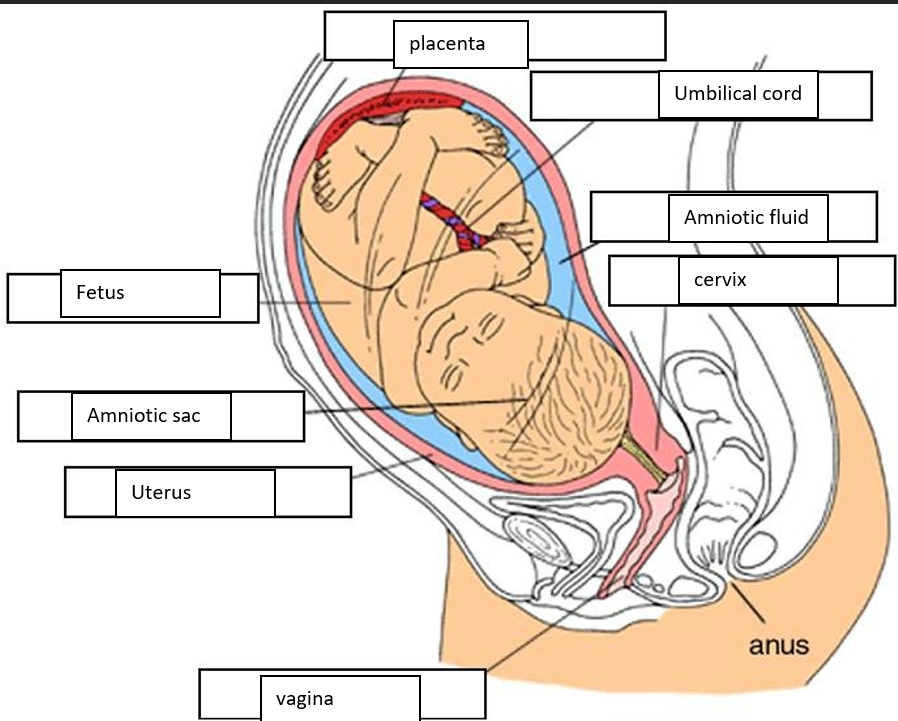
label
what is the placenta?
what is the function of the umbilical cord?
what comes out when the baby delivered?
what does it mean when the ‘waters break’?
an organ the develops in the uterus once pregnant
provides O2 and nutrition
the placenta
the amniotic fluid
giving birth: 3 stages
baby’s head pushes against cervix which forces it to expand
cervix dilates to 10cm
the baby comes out with the umbilical attached and the placenta is delivered afterward.