Immunohematology + Transfusion Medicine
 Call Kai
 Learn
Learn Practice Test
 Spaced Repetition
 Match
Match Flashcards
 Knowt Play
1/47

There's no tags or description
Looks like no tags are added yet.
Name | Mastery | Learn | Test | Matching | Spaced | Call with Kai | Chat |
|---|
No analytics yet
Send a link to your students to track their progress
48 Terms
benefits/reasons for transfusion
maintaining oxygen carrying capacity
restoring blood volume
replacing coagulation factors
restoring leukocyte functions
whole blood, blood components, and derivatives for transfusion
packed RBCs
irradiated RBC
frozen RBC
fresh frozen plasma
cryoprecipitate
blood donation: donors, collection, storage, and processing
donor selection and identification
collection of RBCs
anticoagulants
labeling
storage of blood
standard ISBT 128 End Label Format
blood group
expiry date
special testing/characteristics (optional)
routine blood screening tests for blood processing
syphilis
hepatitis
HIV/AIDS
Human T-Cell Lymphotropic Virus
West Nile
Trypanosoma cruzi
autologous transfusions
directed transfusions
other types of blood donations
antigen
a foreign (different from self) substance that, when introduced into the body of a person lacking the antigen, results in an immune response —> formation of a corresponding antibody
antibody
a protein found in plasma that is formed as a result of antigenic stimulation and is specific for an antigen
isoantibodies
naturally occurring ABO antibodies
unexpected/immune antibodies
result from specific antigenic stimulation from RBCs
anti-sera
a highly purified solution of antibody, and is named based on the antibody it contains
agglutination
clumping of RBCs caused by the reaction of a specific antibody and antigen on the cells
means of detecting antigen-antibody reactions
antisera
agglutination
hemolysis
hemolysis
destruction of RBCs by activation of complement
a reagent used in blood banks
all samples must be free of this when tested
blood banking techniques
gel technology
traditional tube method
positive reaction for solid-phase RBC adherence methods
well coated with red cell stroma + serum containing antibodies —> antibody in serum bound to red cell stroma + indicator red cells coated with anti-IgM —> indicator red cells bound to antibodies —> ? (red cells dispersed throughout the wall)
negative reaction for solid phase RBC adherence methods
well coated with red cell stroma + serum containing no antibodies —> antibodies and therefore indicator red cells not bound —> ? (red cells buttom at the bottom of the well)
type A
Anti-A serum —> agglutination
anti-B serum —> none
type B
anti-A serum → none
anti-B serum —> agglutination ty
type AB
agglutination in both anti-A and anti-B serum
type O
no agglutination occurs in neither anti-A or anti-B serum
Landsteiner’s Rule
reciprocal antibodies are consistently and predictably present in the sera of normal people whose RBCs lack the corresponding antigens
type O
approximately 45% of the population
No A or B antigens are present
these individuals form potent anti-A and anti-B antibodies which circulate in the blood plasma at all times
type A
approximately 40% of the population
no B antigens present
these individuals form potent anti-B antibodies that circulate in the blood plasma at all times
type B
approximately 11% of the population
no antigens present
these individuals form potent anti-A antibodies that circulate in the blood plasma at all times
type AB
approximately 4% of the population
both A and B antigens present
these individuals possess no ABO antibodies
Rh (D) antigen
blood group system with many antigens
prefers to the presence or absence of D antigen on the RBC
individuals who lack this antigen do not naturally make it
agglutination (hemagglutination)
RBCs have antigens that combine with serum antibodies (either patient or reagent) —> antibody bridges from with antigens on adjacent cells —> ?
4+
one large aggregate
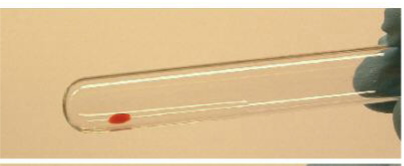
3+
a few medium to large aggregates
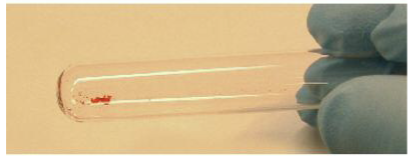
2+
several medium sized aggregates
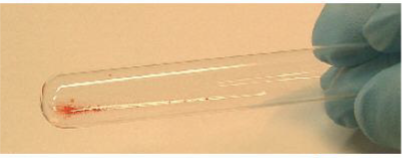
1+
many small aggregates
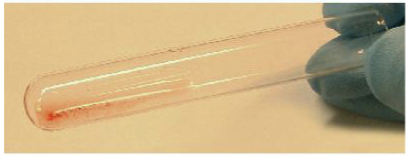
0
no visible agglutination
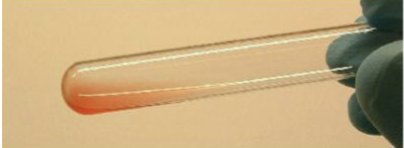
front type
testing for the presence of antigens on RBCs using anti-sera and patient cells
type A
anti-A sera = positive (3-4+)
anti-B sera = negative (0) t
type B
anti-A sera = negative (0)
anti-B sera = positive (3-4+)
type O
anti-A sera = negative (0)
anti-B sera = negative (0)
type AB
anti-A sera = positive (3-4+)
anti-B sera = positive (3-4+)
back type
testing for the presence of antibodies in plasma using reverse group cells and patient plasma
type A
reagent A cells = negative (0)
reagent B cells = positive (3-4+)
type B
reagent A cells = positive (3-4+)
reagent B cells = negative (0)
type O
reagent A cells = positive (3-4+)
reagent B cells = positive (3-4+)
type AB
reagent A cells = negative (0)
reagent B cells = negative (0)
Rh+
presence of D antigen
Rh-
absence of Rh antigen
Rh+
anti-D sera = positive (3-4+)
Rh-
anti-D sera = negative (0)