HOA 3 - THAILAND ARCHITECTURE
 Call Kai
 Learn
Learn Practice Test
 Spaced Repetition
 Match
Match Flashcards
 Knowt Play
1/51

There's no tags or description
Looks like no tags are added yet.
Name | Mastery | Learn | Test | Matching | Spaced | Call with Kai |
|---|
No analytics yet
Send a link to your students to track their progress
52 Terms
Meaning of “Thailand”
Land of the Free
Buddhist temples in thailand are characterized by
Tall Golden Stupas
Intruduced to Thailand by the Christians
Printing Press
The first Sikh who arrived
Ladha Singh
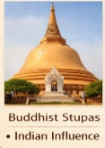
Bell Shaped Stupas
Dvaravati Period
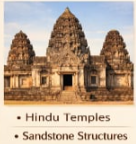
Sandstone temples with tall central tower
Khmer Lopburi Period
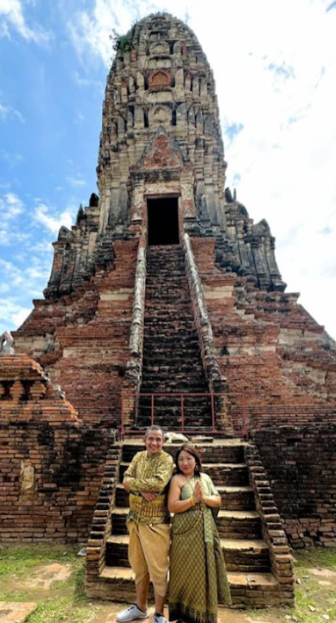
Foundation of Thai Civilization
Sukhothai Period
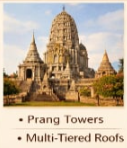
Towering prangs and multi layered Roofs (Reflects Royal power)
Ayutthaya Period
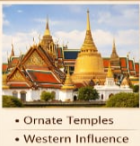
Gilded temples, mirrored mosaics, and elaborate rooflines
Rattanakosin Period
One of the oldest, largest STUPAS in Thailand
Wat Phra Pathom Chedi
Plinths
Made of bricks and stone mouldings and had granite bases with holes for pillars to support timber structures.
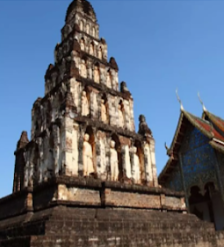
Wat Kukut
Represents the Last phase of Dvaravati Period
Introduced the used of stone instead of traditional bricks
Khmer Lopburi Period
Who became the first king of sukhothai
Pho Khun Sri Indraditya
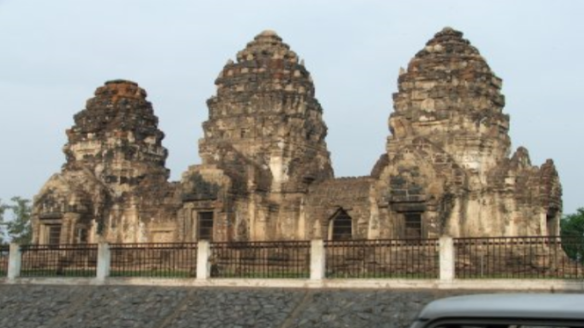
Prang
The Thai version of Khmer Temple Towers
Also known as a Stupa
Chedi
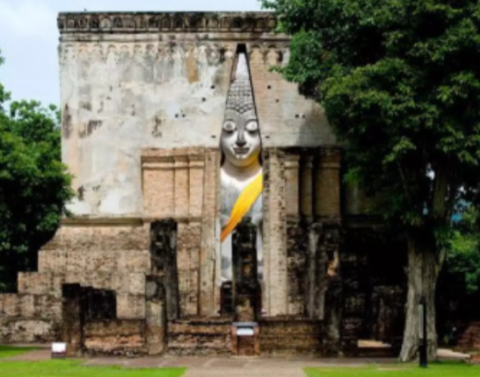
Largest, most puzzling and HISTORICALLY IMPORANT TEMPLE of SUKHOTHAI PERIOD
Wat Si Cham
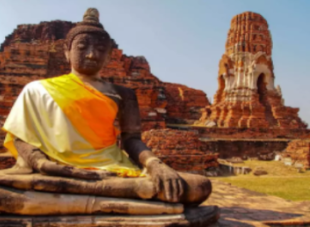
Founded by king Ramathibodi. Mostr prosperous empire back then.
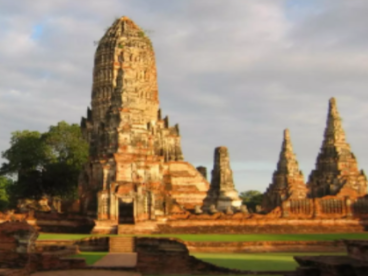
Designed to display might and riches. Dominant feature: Sunlight Shine into building.
Wat Chaiwatthanaram
Occupied by the principal king
Wang Luan - Royal Palace
Built for the Second King
Wang Na - Front Palace
Occupied by the Princes
Wang Lang - Rear Palace
The former capital of Siam
Ayutthaya
Sukhothai is also known as
The Dawn of Happiness
Changmai Period
Emphasizes on the enormous size of shrines
This style came when King Rama ascended the throne
Rattanakosin / Bangkok Style
Roof With traditional gable ends
“IN”
Gable ends were bricks and stuccos
“OUT”
Hornlike Finials on the rofof ridges. Represent the head of Garuda.
Chofas
Elevated on round posts and has steep roofs
Central Plains Houses
Ngao
Roof gable
Walls lean outward and has small windows.
Northern Houses
Sala
An open pavilion
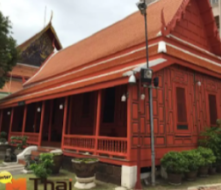
Built by King Rama as house for one of his queens
Tamnak Daeng
Wat
Group of religious buildings generally enclosed by a wall
Phra chedi
Stupa
Phra Prang
A new form of Stupa
Phra Sat
A sacred sactuary
Mondop
Enshrines holy objects
Kuti
Small house of the monks
Sala Kan Parian
A large open hall where people can hear sermon
Hor Trai
Temple Library
Philospohy Pitaka
Ahbidhamma Pitaka
Sayings Basket Pitaka
Sutta Pitaka
Diciplne Basket
Vinaya Pitaka
Ubosot
Where monks perform ceremonies
Luk Nimit
large spheres buried under temple boundaries
Viharn
Teaching Hall
Mandala
Symbol of the universe
Kuti
Monks’ living quarters
Singha
Guardian Lion