Missed questions (pGRE)
 Call Kai
 Learn
Learn Practice Test
 Spaced Repetition
 Match
Match Flashcards
 Knowt Play
1/174

There's no tags or description
Looks like no tags are added yet.
Name | Mastery | Learn | Test | Matching | Spaced | Call with Kai |
|---|
No analytics yet
Send a link to your students to track their progress
175 Terms
cyclotron motion, velocity and applied field, velocity MULTIPLE components —> path of particle?
helix
rope swinging in circle/half circle, with mass at end —> tension?
conservation of energy —> velocity —> centripetal force
hydrogen atom transitions n1 —> n2, wavelength of photon?
Bohr formula (E = -E0/n², E0=13.6eV) —> deltaE of photon —> then photon relation E = hc/lambda
hermitian observables —> operators must be —
hermitian
net force on object is zero —> ?
acceleration is zero
ions (+) or (-) —> electronic configuration?
remember to add or subtract from neutral version
LC circuit —> time to peak magnitude of current
use resonant freq w = 1/rt(LC) —> assume initially charged —> Q = Qosin(wt) —> derivative —> find time to max I
PV diagram for engine —> amt of work done?
take area of curve, handedness matters
during adiabatic process, PV^y = — ? y = ?
const, Cp/Cv
adiabatic process → given P,V values → how to find out mono-, di- etc
PV^y, ideally where V = 1, solve for y
monoatomic gas, y = -; diatomic gass, y = -
5/3; 7/5
splitting of spectral lines due to electric field perturbation?
Stark effect
given a type of image and magnification and that it’s a mirror → concavity and radius?
m = -s’/s → use optics equation 1/f = 1/s + 1/s’ to find focal pt → R = 2f in general
particle in electric field → travels to different point → find potential energy
pot energy U = qV —> change E to V using line integral
given relativistic particle → asked about energy, momentum, rest mass, etc
E² = p²c² + m²c^4 → go from there
Velocity ratio at apogee vs perigee in an elliptical orbit (given distances from focus)
r_pv_p = r_av_a
given perturbation and unperturbed eigenfunctions —> new eigenenergies/functions
1st order perturbation theory
charges placed on infinite plane and asked for forces or fields
method of images → pay attention to lengths and interactions between charges on the same side as well
blackbody → asking for T or lambda
use Wien’s: T = 3×10^-3 * lambda
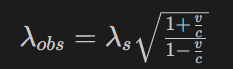
redshift
Doppler shift approx → swap signs if blueshift
if hamiltonian commutes with operator
share eigenfunctions
rotating platform with an initial frame and final frame → finding any observable from that?
use conservation of angular momentum L = Iw, Li = Lf
Compton scattering — photon hits electron → wavelength shift
A photon scatters off a (usually free) electron → wavelength increases (energy decreases): Δλ=λ′−λ=(h/mc)(1−cosθ) -→ also can take limiting theta → 0, should be no change then, because the photon is continuing with no deflection
binding energy of any ion?
E_bind = 13.6(Z/n)²
Energy conservation in thermodynamics
deltaU = Q - W;
Q and W, and deltaU values for an isolated system
Q = 0, W = 0 , deltaU = 0
Q and W, and deltaU values for an cyclic system
Q = W, deltaU = 0
Q and W, and deltaU values for an adiabatic system
Q = 0 → deltaU = -W
what is deltaS for a perfectly reversible process
0
deltaS of the universe must always
be greater than or equal to 0
behavior of system as temperature reaches absolute zero?
S →0 as T→0 given a perfect crystal which represents a single microstate; real substances may have residual entropy
efficiency of heat engine
e = W_out/Qh = 1 - Qc/Qh
Maximum possible efficiency between two temperatures
e = 1 - Tc/Th (carnot eff) → only possible for reversible engines
coefficient of performance
refridgerator: Qc/W; heat pump: Qh/W
max cop for ideal fridge
Tc/(Th-Tc); but slow process at this cop
reversible adiabatic process, what happens to entropy
deltaS = 0 (isentropic
irreversible adiabatic, what happens to entropy
deltaS > 0; i.e. free expansion
expectation value of observable
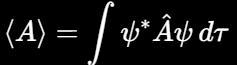
if the state is an eigenstate and asked to find expectation value

asked for expectation value → if the integrand is odd over symmetric limits
<A> = 0
expectation value Lx, Ly, Lz given spherical harmonic eigenfunctions
0; 0; mh_bar
expectation value L² given spherical harmonic eigenfunctions
l(l+1)h_bar²
expectation value Sx, Sy, Sz given spin-1/2 system
0, 0, ±h_bar/2
if operator acting on given wavefunction yields imaginary num → expectation value?
0
derivative form of momentum operator
-ih_bar d/dx
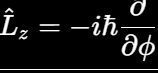
derivative form of Lz operator
double slit relation
dsintheta = mlambda
given a spinor, how to find the expectation values of Sx, Sy, or Sz
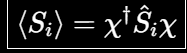
pauli matrix forms
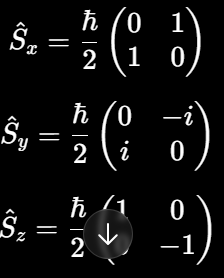
for any normalized spinor that is spin-1/2, <S²> is
3/4(h_bar)²
total angular momentum J
J = L + S
For any angular momentum A=(Ax,Ay,Az), the commutation relations with each other are:
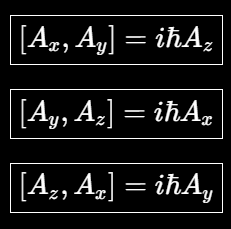
commutation relation for any angular momentum operator A², A_i
A² and A_i can be measured together

Bernoulli equation given two points

continuity equation (fluids) given two points
v1A1 = v2A2, v → fluid velocity
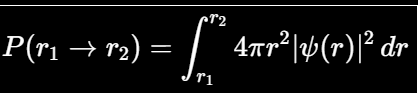
calculating probability of spherically symmetric wavefunction
(remove angular part if assumed to be normalized
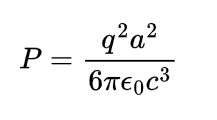
Larmor formula describes power radiated by dipole in oscillating field
a is accel of charge
time average of cos²(wt) or sin²(wt) = ?
1/2
velocity of gas particles following the Maxwell distribution for ideal gases
v = rt(2kT/m)
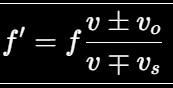
Doppler shift for sound waves
the speed of a photon in any inertial reference frame is
c
mesons are the bound states of ?
a quark and an antiquarkt
total energy stored in a capacitor
E = 1/2CV² = Qo²/2C
given heat capacity and change in temp of a system, what is the change in heat?
deltaQ = mCpdeltaT
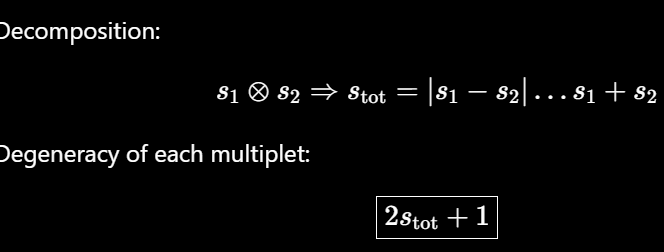
Find degeneracy of ground state from spin Hamiltonian
in case of heisenberg coupling, rewrite using total spin, for two spins, s = |s1 - s2| → pick s that minimizes E ~ s(s+1) → degen = 2s + 1
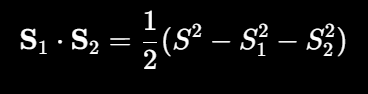
How do you determine degeneracy quickly?
degen = # of states related by sym that leaves H unchanged
degen of spherically sym Ham
if [H, J] = 0, degen = 2j + 1
hydrogen atom degen
degen = n²
effect of magnetic field on degen
degen in m is lifted
degen of two identical spins (i.e. two spin-1/2)
principal decay mode rule for hydrogen
delta(l) = ± 1, and note that decay means going down
radioactive decays follow which distribution
poisson, variance N
fractional error of poisson dist
sigma/N = rt(N)/N
rayleigh criterion
sin(theta) = 1.22lambda/D, D = diameter of observation
time constant of RC circuit
RC
self inductance formula
LI = fluxe
free electron laser
synchrotron radiation due to sinusoidal path of electrons; does not require electronic transitions in atoms
scaling for radio waves
mm to kmscal
scaling for visible light
400-700 nm
scaling of x-rays
0.01 to 10 nm
Euler lagrange equations are valid for systems with —>
time dependent potentials, with or without rotational symmetry, or acted on by conservative forces
order of magnitude of difference kind of fine structure corrections
hyperfine < Lamb shift < fine-structure
hyperfine structure
interaction of nuclear dipole moment with magnetic field from orbit of electrons
fine structure
from spin-orbit coupling, relativistic effects, and Darwin term
Lamb shift
interactions between e and vacuum that cause shift in s and p orbital energies for n = 2
when asked for the uncertainty of a given function
(deltaf(x,y))² = (df/dx)²(deltax)² + (df/dy)²(deltay)²
bandpass filter only allows signals to propagate that are
between two frequencies
inductors
suppress high freq signals
capacitors
suppress low frequency signals
resistors
restrain signals from “full strength”
time dilation (in terms of gamma)
t_new = gamma*t0, where t0 is in the moving frame
length contraction
L = L0/gamma, L0 measured in moving frame
when asked for total orbital angular momentum L
calculate L² if possible and take the sqrt
resonant frequency of something like an LC or RLC circuit is defined as
the frequency where the imaginary part of the total impedance vanishes
given an open/closed pipe question
take lambda to be something in terms of the length of the pipe (think distance between nodes). if asked for frequency, use f = c/lambda
when asked for torque produced by magnetic field
N = m x B
acceleration due to centrifugal force
Omega²R
potential in a conductor is
constant
potential inside a dielectric sphere that is solid and uniform in density
~ r
cyclotron radius
mv/qB