Lung Collapse and Pleural Disorders
 Call Kai
 Learn
Learn Practice Test
 Spaced Repetition
 Match
Match Flashcards
 Knowt Play
1/8

There's no tags or description
Looks like no tags are added yet.
Name | Mastery | Learn | Test | Matching | Spaced | Call with Kai |
|---|
No analytics yet
Send a link to your students to track their progress
9 Terms
What is the primary pathophysiology of atelectasis?
Nonaeration or collapse of lung tissue leading to airless alveoli, decreased gas exchange, and hypoxia.
What is the #1 most common cause of atelectasis?
Postoperative status.
List three nursing interventions to prevent postoperative atelectasis.
Incentive spirometry, deep breathing and coughing exercises, and early ambulation/frequent repositioning.
What clinical signs indicate a potential pneumothorax post-thoracentesis?
Sudden dyspnea, tachypnea, chest pain, absent breath sounds on the affected side, and crepitus.
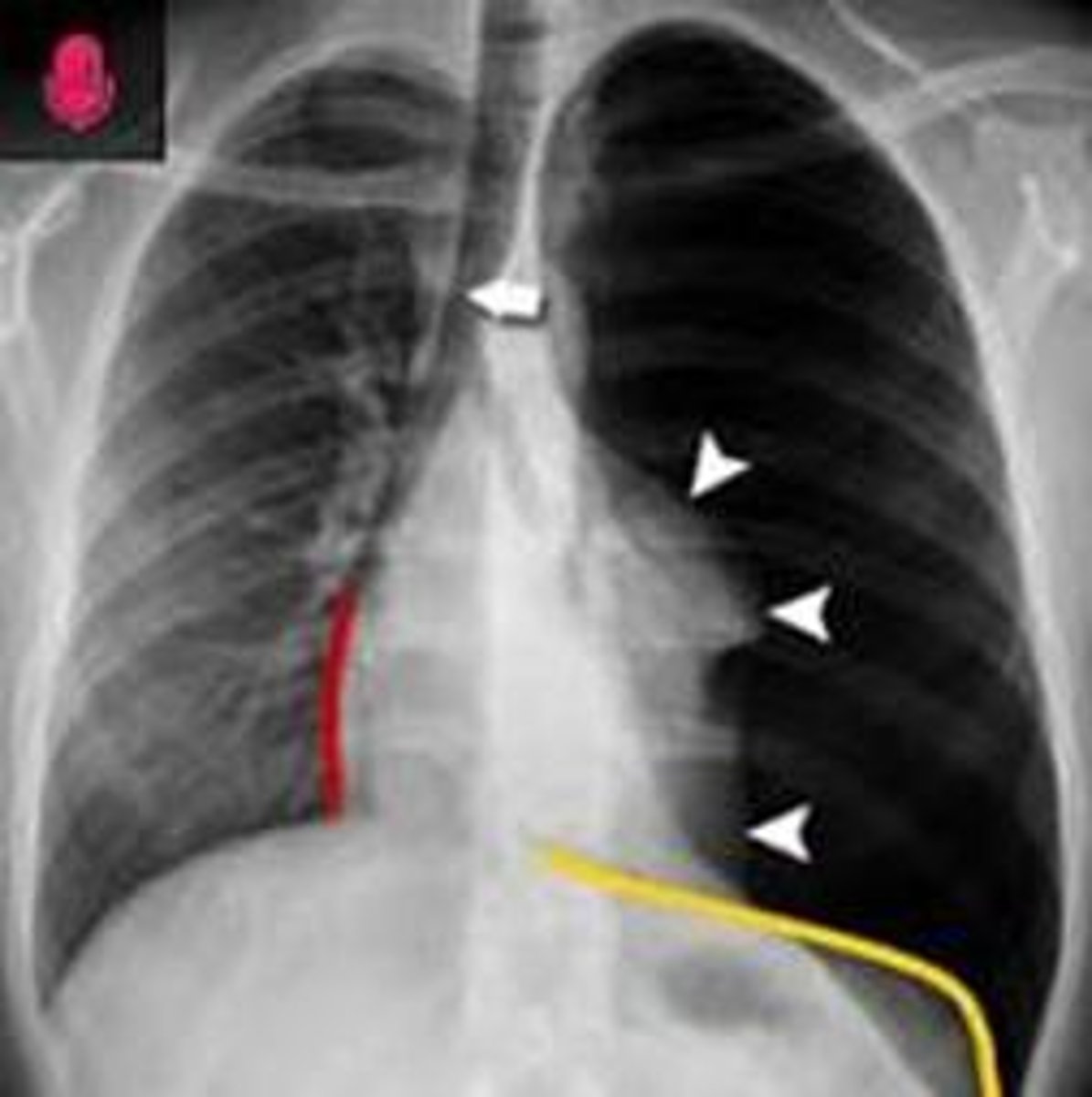
What is a tension pneumothorax and why is it a medical emergency?
A one-way valve effect traps air in the pleural space, increasing pressure, shifting the mediastinum, and causing obstructive shock.
What are the hallmark clinical signs of a tension pneumothorax?
Tracheal deviation, JVD, severe hypotension, and absent breath sounds.
What is the immediate treatment for a tension pneumothorax?
Immediate needle decompression at the 2nd intercostal space, midclavicular line.
What does 'tidaling' in a chest tube water-seal chamber indicate?
Normal functioning, where fluid levels rise and fall with the patient's respirations.
What does continuous bubbling in the water-seal chamber indicate?
An air leak in the system.