5/29 - Disturbance & Ecological Succession
 Call Kai
 Learn
Learn Practice Test
 Spaced Repetition
 Match
Match Flashcards
 Knowt Play
1/5

Earn XP
Description and Tags
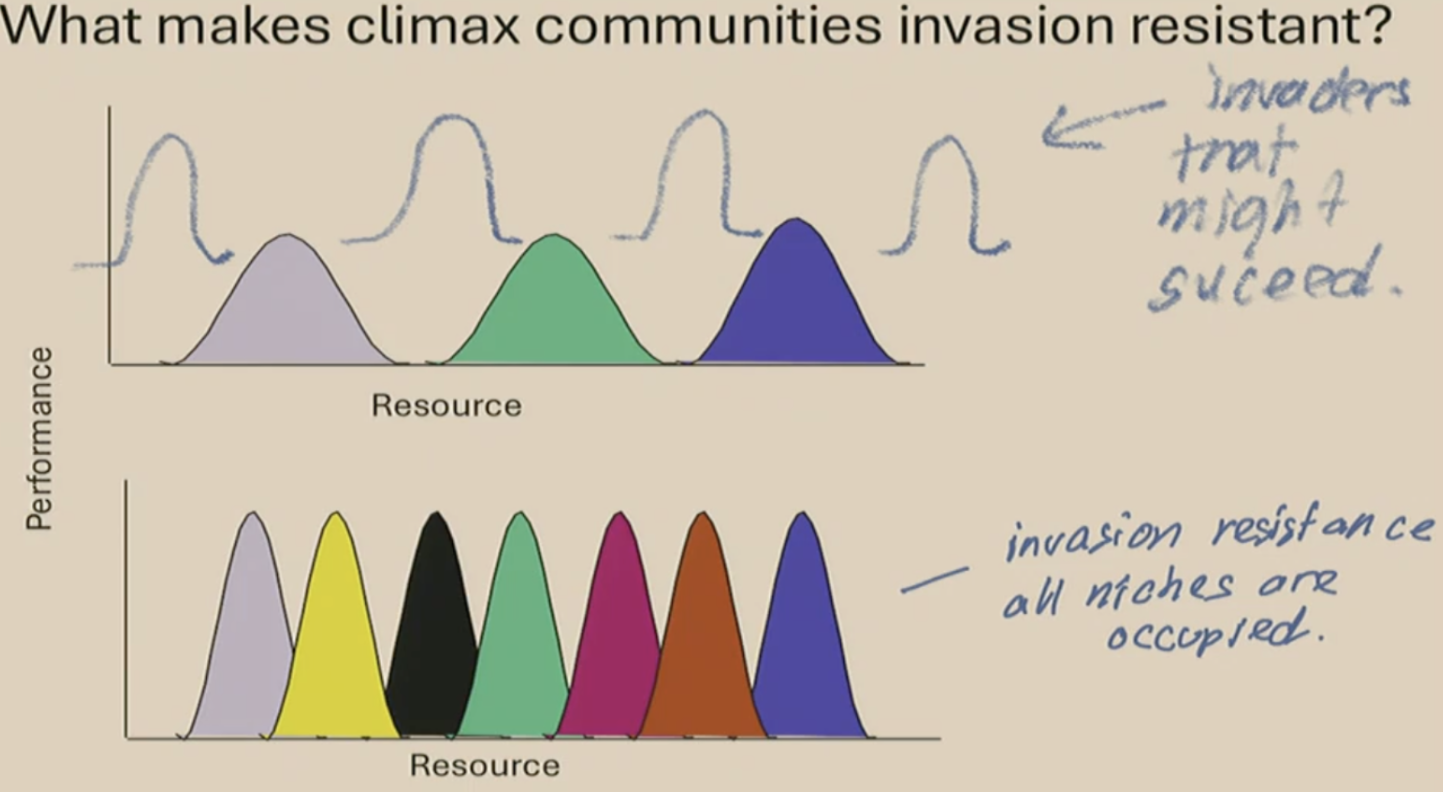
week 9: be able to distinguish Primary & Secondary Succession & explain how Facilitation & Inhibition shape Successional Trajectories; Connect early & late Successional species to the r/K continuum & describe how diversity changes across successional stages, apply the Intermediate Disturbance hypothesis to explain patterns of diversity, use Niche Utilization curves to explain why Climax Communities resist Invasion
Name | Mastery | Learn | Test | Matching | Spaced | Call with Kai |
|---|
No analytics yet
Send a link to your students to track their progress
6 Terms
Species Succession
- the pattern of changing species composition as a result of colonization & species interactions after a disturbance
both facilitation & inhibition influence primary & secondary succession
ecological facilitation - positive interaction where at least 1 species benefits from the presence of another, & neither is harmed (commensalism(only 1 benefits), mutualism(both benefit))
ecological inhibition - process where early colonizing species actively prevent or slow down the establishment of later species
Primary Succession
- the gradual process of life colonizing an already completely barren, lifeless environments
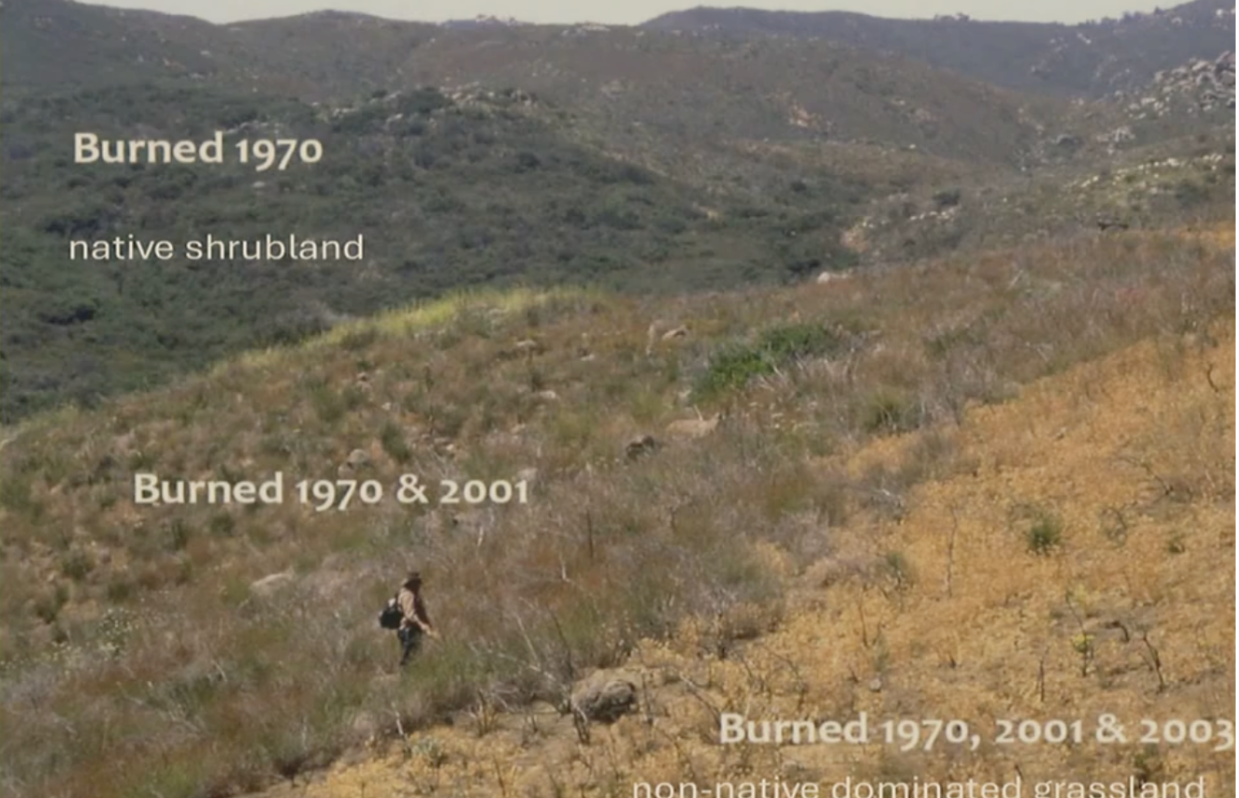
Secondary Succession
- the process by which an ecosystem reorganizes & repopulates after a severe disturbance (ex: wildfire, floor, deforestation); clearing existing vegetation but leaving the nutrient-rich soil & partially intact seed bank undisturbed
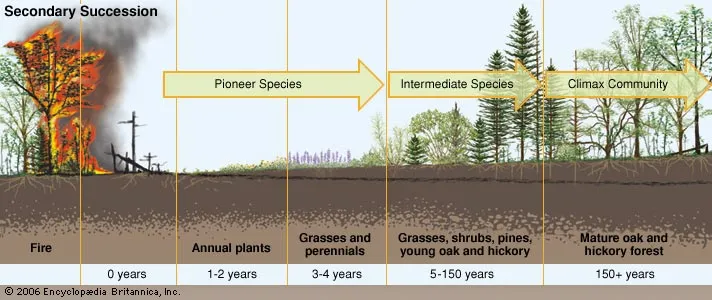
Characteristics of Colonist species: Pioneer Species
- the first organism to colonize barren environments or recently disturbed ecosystems
do best only when other species are absent
occupation by pioneer species usually means that additional pioneer colonization will be inhibited
usually common initially then decrease in frequency
r-selected species:
mature quickly but shorter lifespan
small
semelparous (reproduce once in lifetime) but produce greater # of offspring
tolerant to harsh environment
less competitive
EX: grasses & ferns, lichens & mosses, Nitrogen-Fixing plants
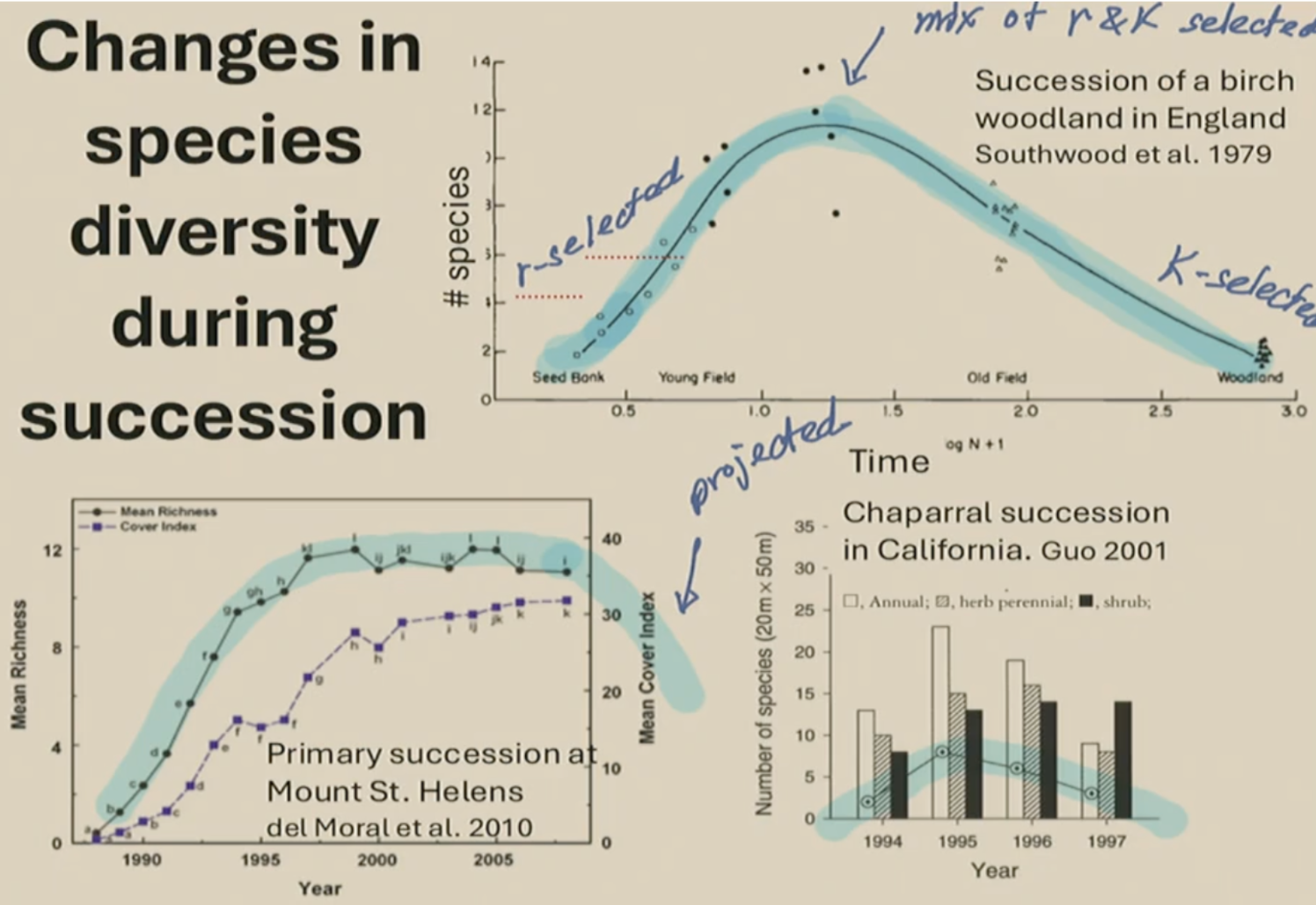
Characteristics of Colonist species: Late-Successional/Climax species
- organisms that dominate an ecosystem once it reaches a stable state of maturity
later successional species may be facilitated, inhibited, or simply tolerate early successional species & often inhibit other species from establishing
less common initially then increase in frequency
better competitors than r-selected/pioneer species
k-selected species:
longer lifespan but delayed maturity
higher parental investment
few offspring but iteroparous (reproduce multiple times throughout lifespan)
larger body size
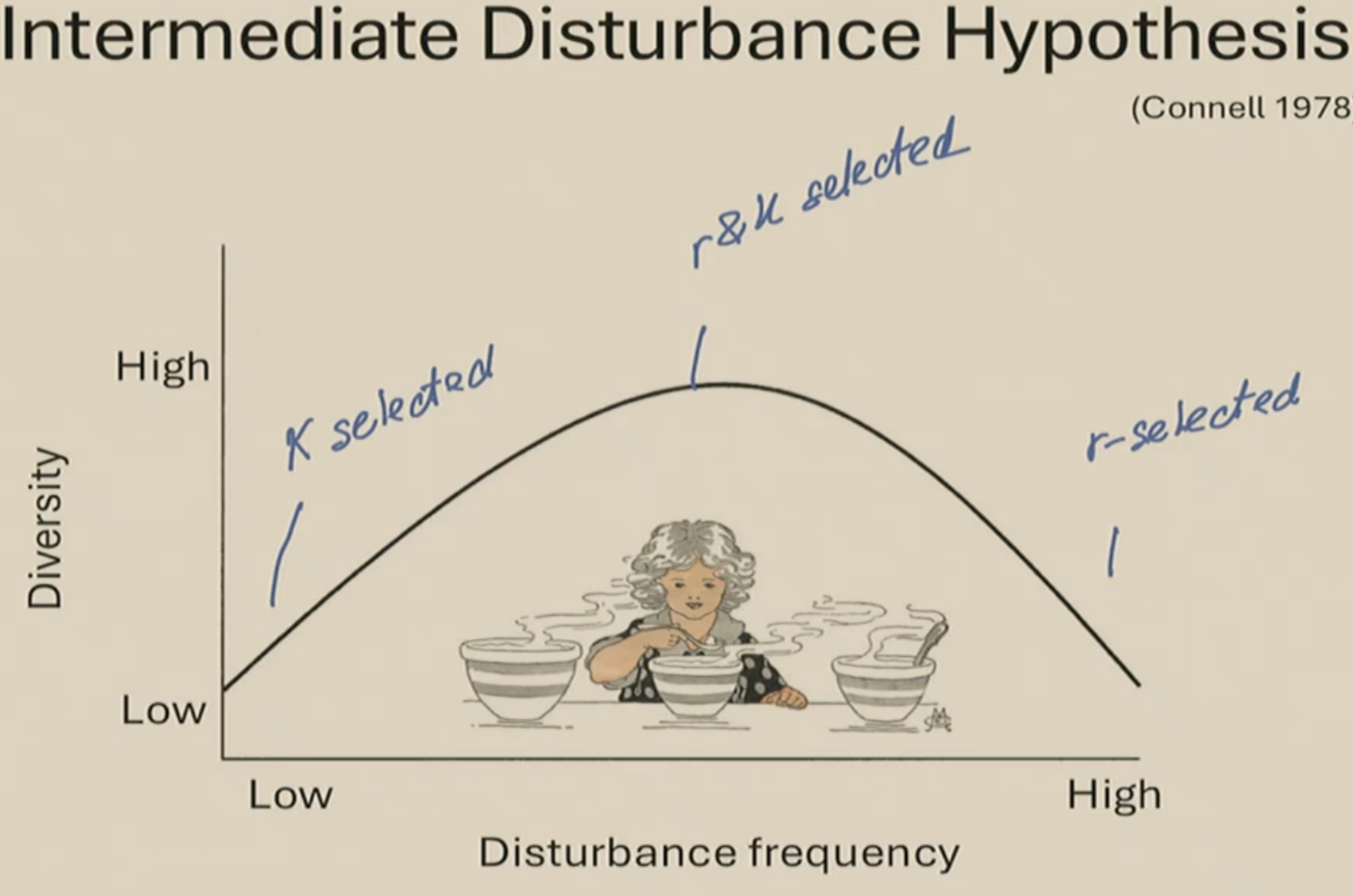
Climax Communities
- the final mature stage of ecological succession. A balanced & diverse ecosystem of plants, animals, & fungi reaches equilibrium w/ local climate & environment remaining relatively stable
dominated by k-selected species
invasion resistance as all niches are occupied thus preventing possibility of invaders from establishing
- > negative relationship btwn # of resident species & survival of invader
- > the greater # of resident species the less survival rate of invader