Cell Cycle and Mitosis
 Call Kai
 Learn
Learn Practice Test
 Spaced Repetition
 Match
Match Flashcards
 Knowt Play
1/9

There's no tags or description
Looks like no tags are added yet.
Name | Mastery | Learn | Test | Matching | Spaced | Call with Kai |
|---|
No analytics yet
Send a link to your students to track their progress
10 Terms
What are the three main stages of the cell cycle?
Interphase (which itself consists of G₁, S and G₂ phases), mitosis (M phase), and cytokinesis (division of the cytoplasm).
What happens during each phase of interphase?
During G₁ (first growth phase) the cell grows in size, organelles are duplicated, proteins are synthesised, and the cell prepares for DNA replication. During S phase (synthesis phase) DNA replication occurs — every chromosome is copied so the cell now has two identical copies of each chromosome (sister chromatids joined at the centromere). During G₂ (second growth phase) the cell continues to grow, checks that DNA replication was accurate, and produces the proteins needed for mitosis such as tubulin for spindle fibres.

What are the cell cycle checkpoints and why are they important?
Checkpoints are control points in the cell cycle where the cell checks whether conditions are right to proceed. The G₁ checkpoint checks cell size, nutrient availability, growth factor signals and DNA damage before allowing entry into S phase.
The G₂ checkpoint checks that DNA replication is complete and DNA is undamaged before entry into mitosis.
The spindle checkpoint (during mitosis/metaphase checkpoint) checks that all chromosomes are correctly attached to spindle fibres before division proceeds. These checkpoints prevent cells with damaged or incompletely replicated DNA from dividing, reducing the risk of mutations being passed on — failure of these checkpoints is associated with cancer.
What is mitosis and what are its functions?
Mitosis is a type of nuclear division that produces two genetically identical daughter nuclei, each with the same number of chromosomes as the parent cell. It is used for growth of the organism, replacement of old or damaged cells, and asexual reproduction.
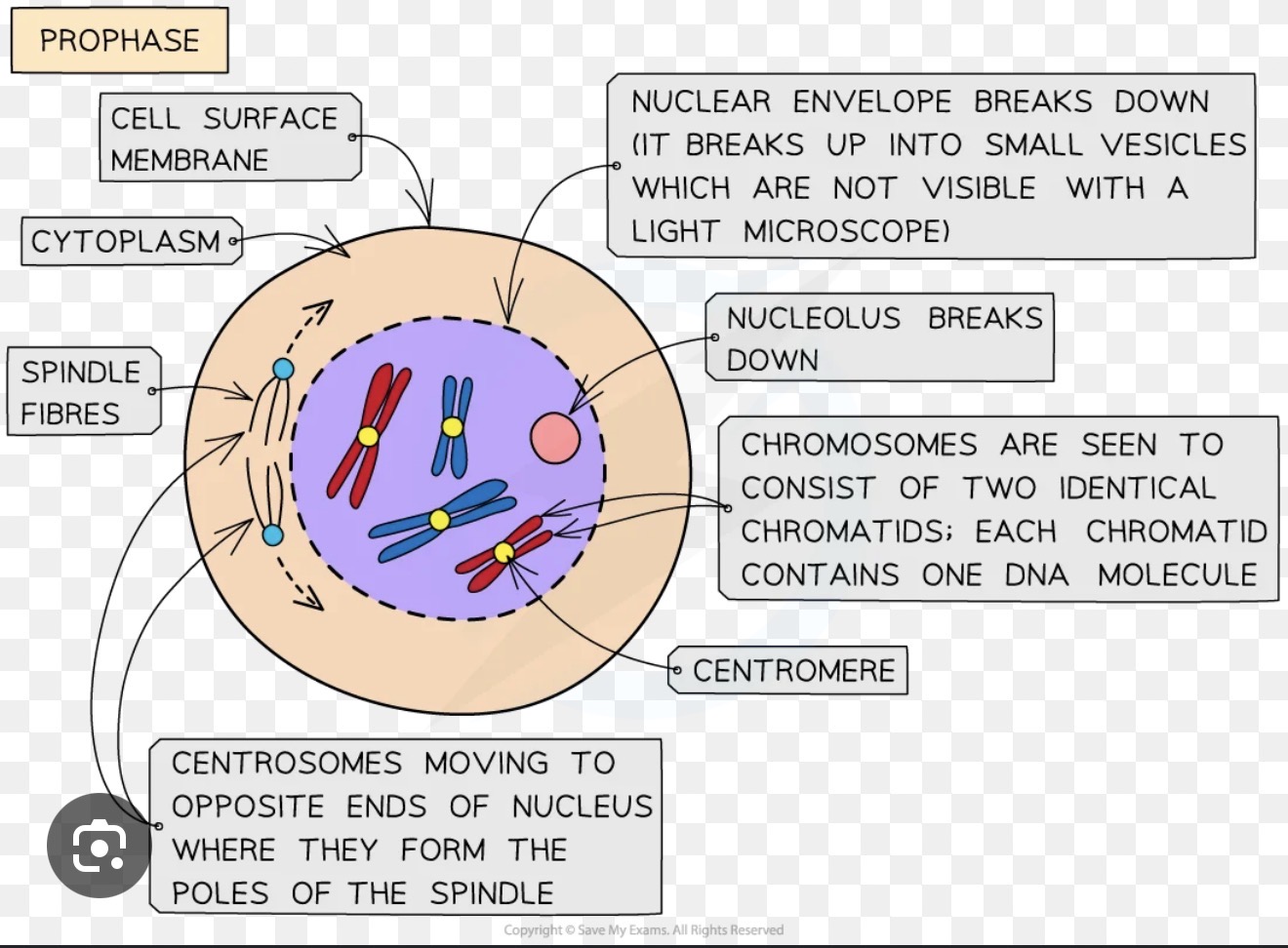
What is Prophase (1st stage of mitosis)
Prophase — chromosomes condense and become visible when stained under the light microscope. The nuclear envelope breaks down. Spindle fibres begin to form from centrioles (in animal cells). 2 Centrioles start moving to opposite poles of the cell (help in the formation of spindle)
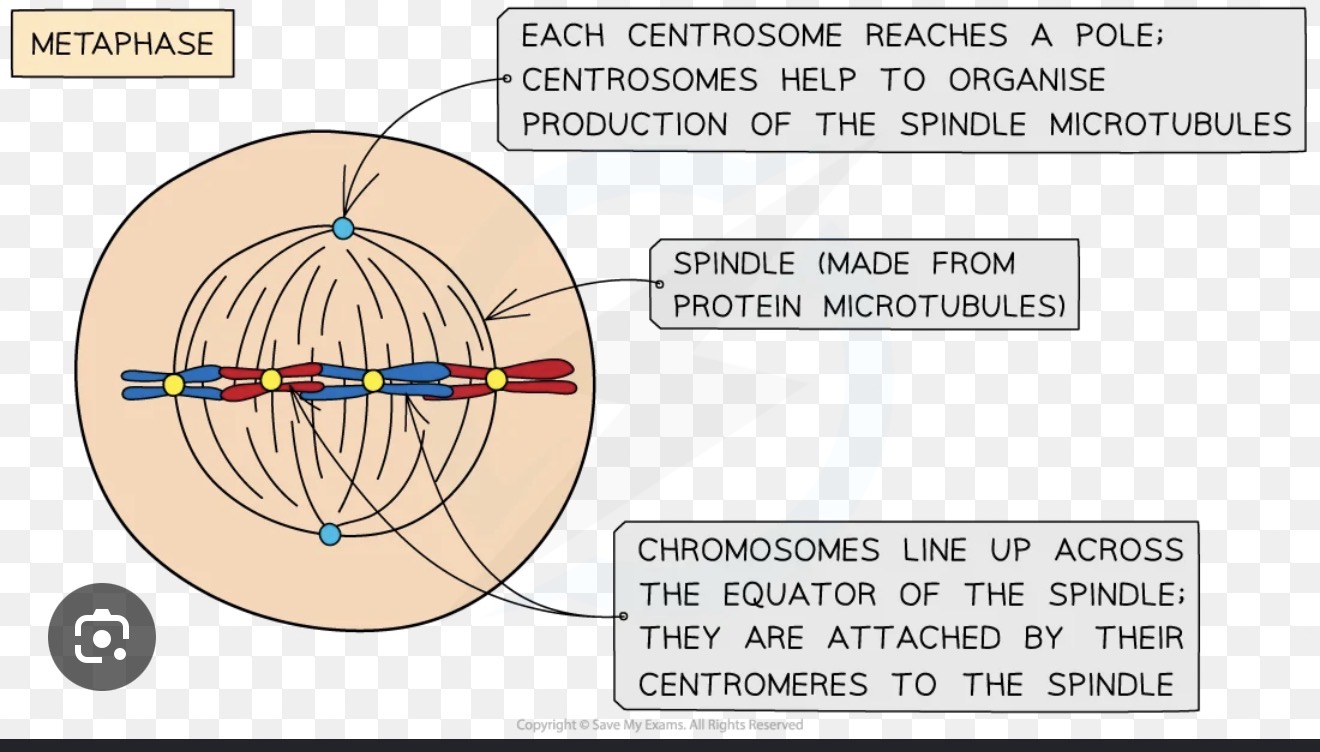
What is metaphase (2nd stage of mitosis)
Metaphase — chromosomes line up at the cell equator (metaphase plate) and , each attached to spindle fibres at their centromere from both poles. This is the stage at which chromosomes are most visible and easiest to count.
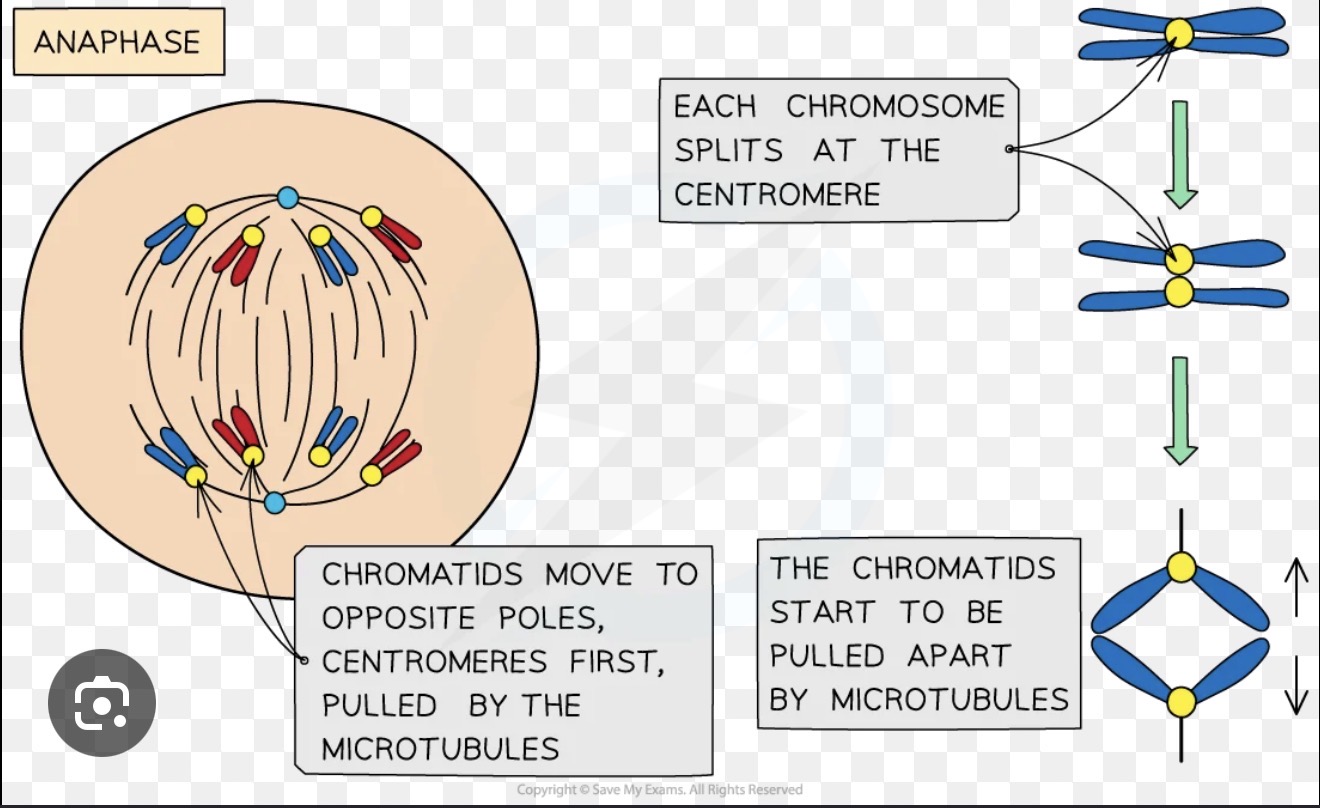
What is anaphase (3rd stage of mitosis)
Anaphase — sister chromatids are pulled apart as spindle fibres shorten, moving one chromatid from each chromosome to opposite poles of the cell. Each pole now has a complete set of chromosomes.
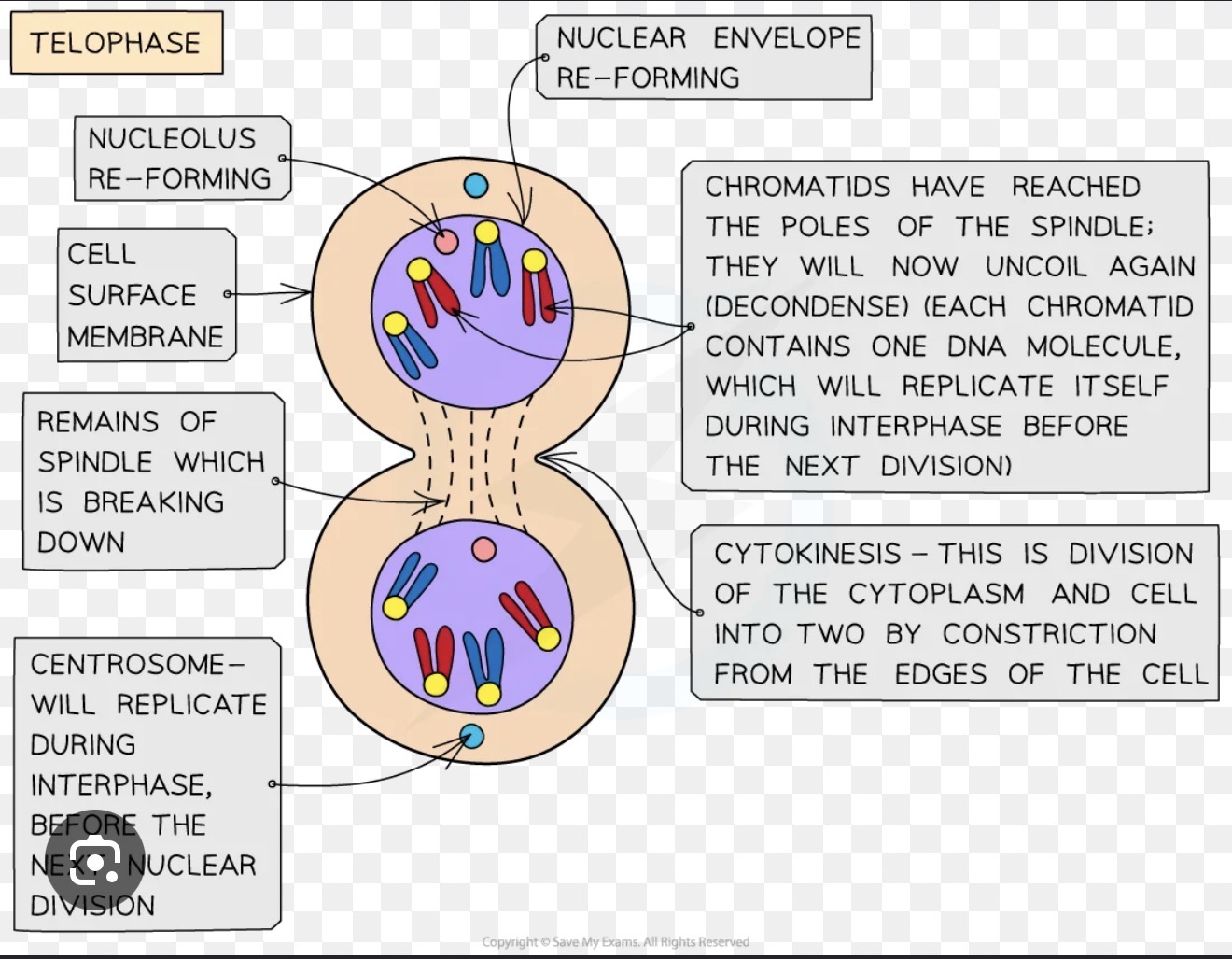
What is telophase (4rth stage of mitosis)
Telophase — chromosomes arrive at the poles and decondense and spindle fibres break down. A nuclear envelope reforms around each set of chromosomes, producing two nuclei.Cytokinesis begins
What is cytokinesis and how does it differ between animal and plant cells?
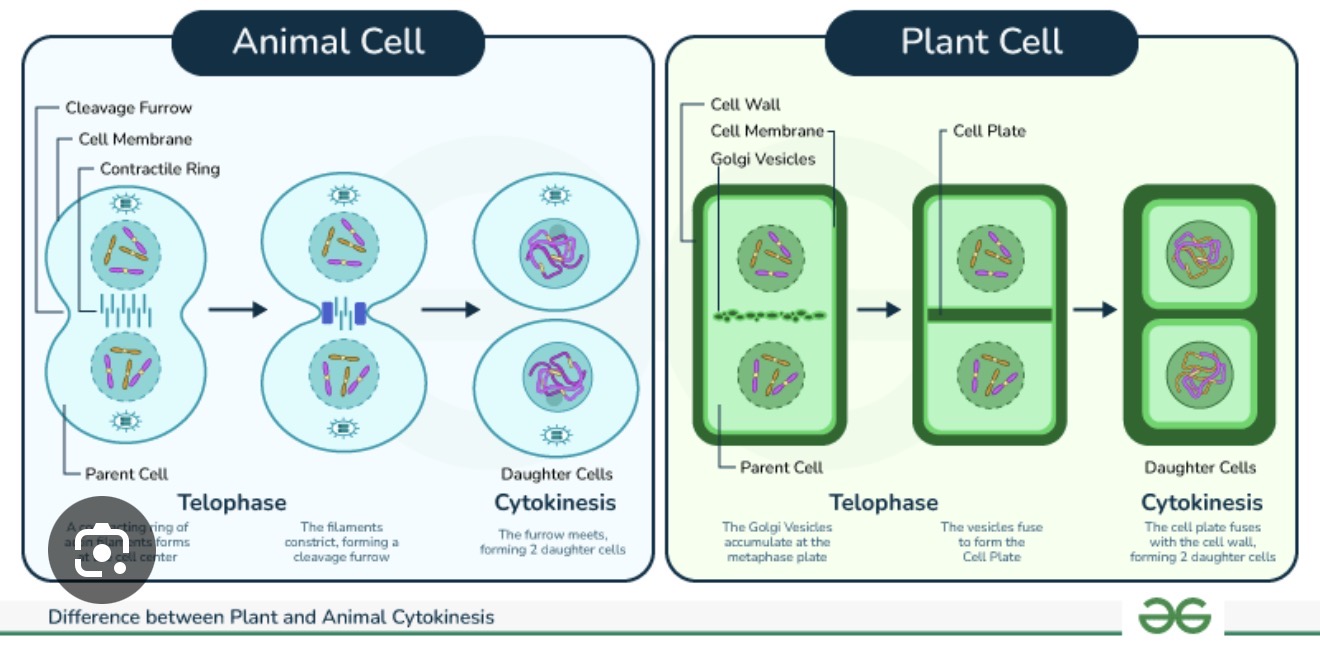
Cytokinesis is the division of the cytoplasm following mitosis, producing two separate daughter cells. In animal cells, the cell membrane is pinched inward by the cytoskeleton (cleavage furrow) until the cell splits in two. In plant cells, a cell plate forms along the middle of the cell from Golgi-derived vesicles containing cell wall materials. The cell plate grows outward until it fuses with the existing cell wall, dividing the cell.
What is the significance of mitosis
-Growth of multicellular organisms
The two daughter cells produced are genetically identical to one another (clones) and have the same number of chromosomes as the parent cell
This enables unicellular zygotes (as the zygote divides by mitosis) to grow into multicellular organisms
-Replacement of cells and repair of tissues
Damaged tissues can be repaired by mitosis followed by cell division
As cells are constantly dying they need to be continually replaced by genetically identical cells
-Asexual reproduction
For unicellular organisms such as Amoeba, cell division results in the reproduction of a genetically identical offspring
For multicellular organisms, new individuals grow from the parent organism (by cell division) and then detach (‘bud off’) from the parent in different ways