NTRN 201 | Ch. 5 - Lipids: Fats, Oils, Phospholipids, + Sterols
 Call Kai
 Learn
Learn Practice Test
 Spaced Repetition
 Match
Match Flashcards
 Knowt Play
1/108

Earn XP
Description and Tags
• LO 5.1 Describe the usefulness of lipids in the body and in food. • LO 5.2 Compare the physical and chemical properties and functions of the three categories of lipids. • LO 5.3 Describe the processes of digestion, absorption, and transportation of lipids in the body. • LO 5.4 Describe how fats are stored and used by the body. • LO 5.5 State the significance of blood lipoproteins and dietary fats to health. • LO 5.6 Summarize the functions of essential fatty acids. • LO 5.7 Outline the process of hydrogenation and its effects on health. • LO 5.8 Identify sources of fats among the food groups. • LO 5.9 Describe ways to reduce saturated fats in an average diet. • LO 5.10 Discuss both sides of the scientific debate about current lipid guidelines.
Name | Mastery | Learn | Test | Matching | Spaced | Call with Kai |
|---|
No analytics yet
Send a link to your students to track their progress
109 Terms
Lipids
a family of compounds that contain C, H, + O and don’t dissolve in water; includes triglycerides, phospholipids, + sterols
AMDR for fats
20-35% of total cal/day
triglycerides
the most common type of lipid in food + in the body
what’re the uses of fats in the body?
energy fuel (provides 80-90% of resting body’s energy + energy to fuel muscles)
energy stores
emergency reserve
padding (protects internal organs)
insulation
cell membranes
raw materials (converted to hormones, bile, vitamin D, etc)
signaling
what’re the uses of fats in food?
nutrients (has essential fatty acids, fat-soluble vitamins, + other needed compounds)
transport (carries fat-soluble vitamin A, D, E, K + phytochemicals)
energy
sensory appeal (contributes to aroma, flavor, + physical sensation)
appetite stimulation
texture (crisp + tender)
satiety (fullness)
basic structure of a fatty acid
long chains of carbon atoms linked together, surrounded by hydrogen atoms
how can carbon chains vary?
in number of carbons, extent of saturation w/ hydrogen, shape (straight or bent)
long-chain fatty acids
12+ carbons; in beef, pork, lamb, most plant oils
medium-chain fatty acids
6-10 carbons; coconut + palm oils
short-chain fatty acids
fewer than 6 carbons; 3% of fat in butter
saturated fatty acid
all bonds between carbons r single; filled w/ hydrogen
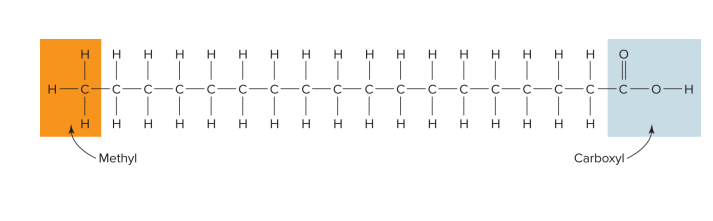
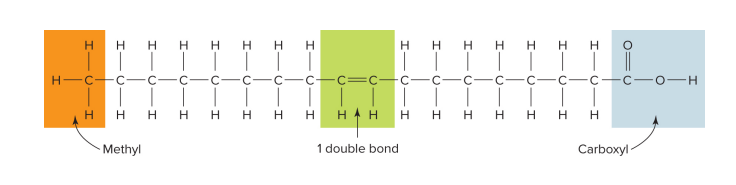
monosaturated fatty acid
one double bond is found in the chain; missing 2 hydrogens in the chain
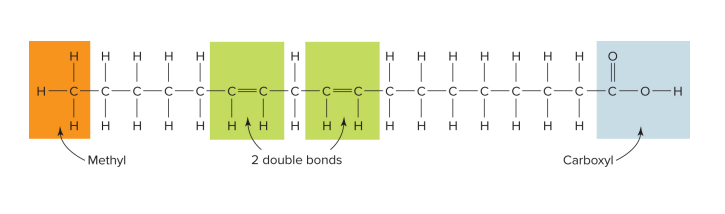
polyunsaturated fatty acid
at least 2 double bonds in the chain; hydrogens missing at these double bonds
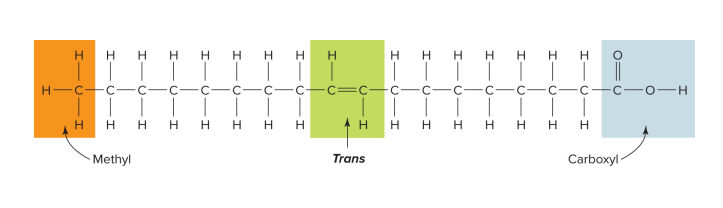
monosaturated fatty acid (trans double bond)
one double bond is found in the chain; the hydrogens are found on opposite sides of the carbon chain
saturated and trans fatty acids have ___ chains
straight
unsaturated cis fatty acids have a ___ chain
bent
unsaturated cis fatty acids
hydrogens found on same side of carbon chain; oils from nuts + seeds
hydrogenation
the process that adds hydrogen to carbon chain of unsaturated fats, making the chain more saturated, solid, + straight; creates trans fatty acids
what are the two systems of naming fatty acids based on?
the number of carbons + the location of double bonds
omega system
one of the naming systems for fatty acids where the first double bond closest to the methyl end occurs
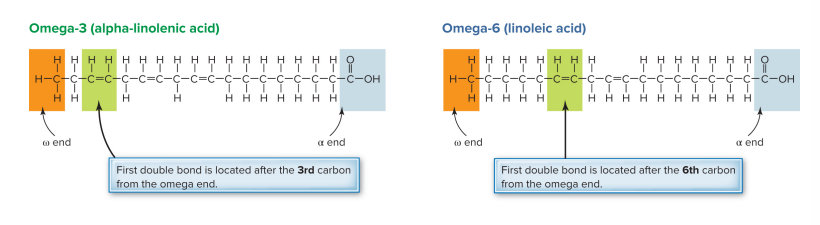
delta system
one of the naming systems for fatty acids where the first double bond closest to the carboxyl end occurs
essential fatty acids (EFAs)
cannot be made by the body
alpha-linolenic acid (Omega 3) —> make EPA + DHA
linoleic acid (Omega-6) —> make ARA
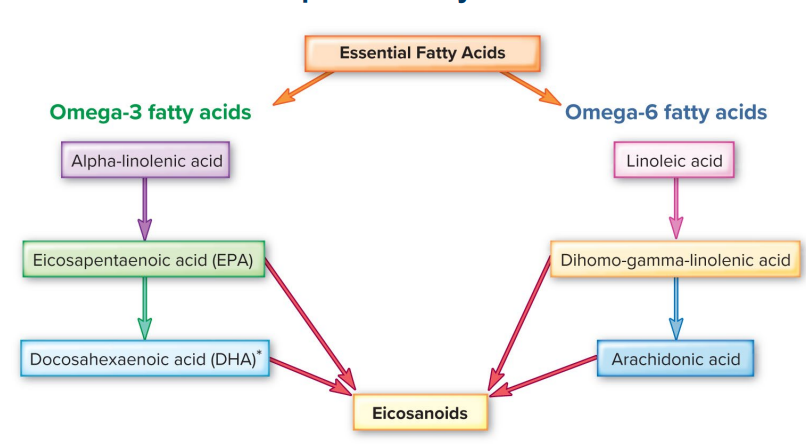
eicosanoids
prostaglandins, prostacyclins, thromboxanes, leukotrienes, lipoxins; made from the essential fatty acids
triglycerides
3 fatty acids attached to a glycerol backbone
fatty acids can be the same or different
esterification
the process of attaching fatty acids to glycerol; in the process, releasing 1 water molecule
hydrolysis
the reaction that releases fatty acids from glycerol called free fatty acids
diglyceride
triglyceride that lost a fatty acid
monoglyceride
triglyceride that lost 2 fatty acids
re-esterification
process of reattaching a fatty acid to glycerol
food sources of triglycerides (most food)
animal + vegetable fat
bakery items, snack foods, dairy desserts
olive oil (monounsaturated fat)
foods w/ little or no fat
fat-free milk + yogurt, breakfast cereal, + yeast breads
fruits + vegetables (excepted coconuts + avocados)
functions of triglycerides
essential for optimal health
concentrated source of energy
insulates + cushions organs
helps transport nutrients
True or False: high intakes, especially of saturated + trans fat, + imbalances of essential fatty acids can cause health issues
True
Triglycerids provide _ kcals/g
9
True or False: Triglycerides are the main fuel source for all cells, especially the nervous system + red blood cells
False; It’s the main fuel source for all cells except nervous system and red blood cells. When at rest or during light activity, 30-70% of energy is supplied by triglycerides.
Excess calories from ___, ___, ___, and ___ can be converted
to triglycerides.
carbohydrates, fat, protein, and alcohol
Triglycerides are:
• ___ ___, delivering more energy
• Expandable to ____ their normal size
• Some ___ ___ ___ are essential, having too much or too little can pose
health risks
Calorie dense
2 to 3 times
body fat stores
Where can subcutaneous fat be found + what’s its function?
Just below the skin; keeps the body at a constant temperature
Visceral fat is found ___ ___
• Cushion ____
• Protects organs from ___
around organs
organs
injury
Dietary fats:
• Carry fat-soluble vitamins to the ___ ___
• Aid in the ___ of these ___
• ___ ___ are transported in the ___ with dietary fats
small intestine
absorption, vitamins
Fat-soluble vitamins, bloodstream
Essential Fatty Acid Functions
Important structural components of cells
Keep cell membranes fluid and flexible
DHA
Needed during fetal life and infancy for normal development of vision and the nervous system and throughout life for regulation of nerve transmission and communication
Eicosanoids
have several ___ ___
from ___, influence blood vessels to constrict and ___ blood pressure
• ___ eicosanoids dilate blood vessels and ___ blood pressure
regulatory functions
omega-6 fats; raise
Omega-3; decrease
phospholipids
has a structure like triglycerides, except 1 fatty acid is replaced w/ a phosphate molecule
allows it to function in watery solution
Phosphate head is ___; fatty acid tail is ___.
When placed in water, phosphate head will ___ water and fatty acid tail will ___ ___ from water
hydrophilic, hydrophobic
face; extend away
phospholipid functions
cell membrane component
the double-layered outer covering of cell that corrals cells contents + regulates substance movement
emulsifier
forms a shell around fat droplets + suspends them in a watery solution
essential for fat digestion + transportation
bile + lecithin
phospholipid functions in foods
emulsifier
lecithin in egg yolks suspends fat in muffin batter
phospholipids in egg yolks + mustard emulsify oil in vinegar to make mayonnaise
what’re the sources of phospholipids?
synthesized by the body
in food (egg yolks, wheat germ, peanuts)
what can high doses of phospholipids cause?
gas, diarrhea, weight gain
sterols
carbons arranged in multi-ringed structures
cholesterol
a type of sterol used to make sex hormones, active form of vit D, adrenal hormones, bile, cell membranes, shell-covering chylomicrons
sources of sterols?
foods of animal origin (meat, fish, poultry, eggs, dairy products)
synthesized in the body
plants (which also make stanols + sitostanols)
ergostanol (active form of vit D)
beta sitostanol (added to some margarine, can help reduce bile + cholesterol absorption)
Digestion begins in the ___
__ __ : Active during infancy, minor role in adults
Continues in the ___, aided by ___ ___
Occurs mostly in the ___ ___; fat in this organ triggers release of ___, which causes release of bile from ___ and lipase and colipase from ___
mouth
Lingual lipase
stomach; gastric lipase
small intestine; cholecystokinin; gallbladder; pancreas
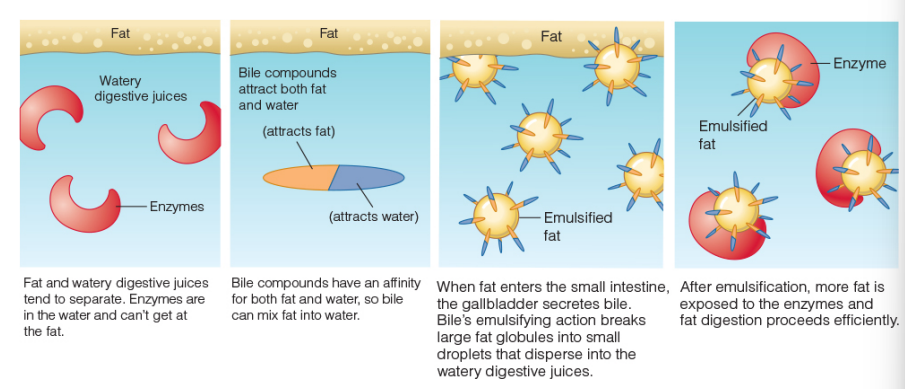
Bile ___ fat
• Breaks down fat into ___
• Increases the ___ ___ of lipids and allows pancreatic lipase to ___ ___ triglycerides to free fatty acids and monoglycerides
emulsifies
micelles
surface area; break down
Lipid Transportation, Storage, and Usage
Lipoproteins (transport)
Chylomicrons
Body fat storage (storage)
Subcutaneous
Dismantling of fat stores
Complete fat breakdown requires carbohydrates
Ketosis occurs when there is insufficient carbohydrates (usage)
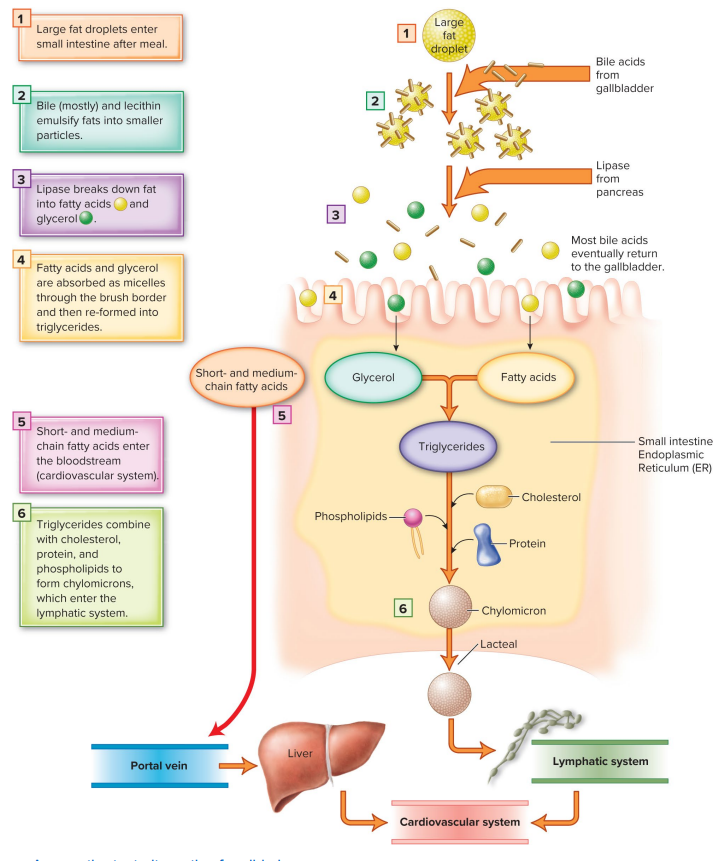
Absorption occurs by the ___ ___ of the absorptive cells
brush border
Carbon chain length determines which system fatty acids are absorbed by
Vascular system:
___-chain and ___-chain fatty acids
Portal vein → Liver
Lymphatic system:
• ___-chain fatty acids
• Re-esterified into triglycerides
Short, medium
Long
Lipids are transported in blood as ____
lipoproteins
ex: chylomicrons, VLDL, LDL, HDL, intermediate-density lipoproteins
lipoproteins
composed of a core of lipids
covered with a shell of proteins, phospholipids, + cholesterol
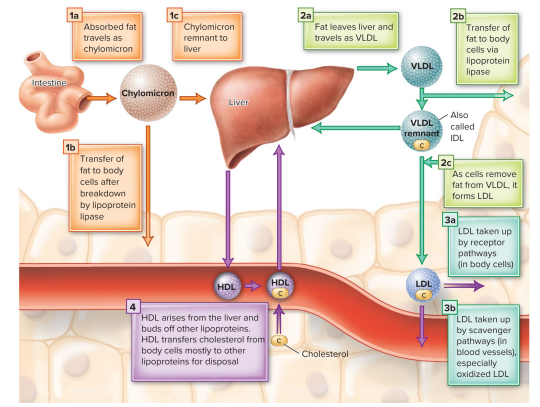
chylomicron
primary component: triglyceride
carries dietary fat from the small intestine to cells
very-low-density lipoproteins (VLDL)
primary component: triglyceride
carries lipids both taken up + made by the liver to cells
low-density lipoproteins (LDL)
primary component: cholesterol
carries cholesterol made by the liver + from other sources to cells
high-density lipoproteins (HDL)
primary component: protein
helps remove cholesterol from cells + excrete cholesterol from the body in turn
chylomicrons
made up of dietary triglycerides reformed in absorptive cells that combine with either cholesterol, phospholipids, or protein
Apolipoprotein
found in protein portion of shell
turn on lipid transfer enzymes
assist in binding lipoprotein to receptor
assist enzymes
HDL (high-density lipoprotein)
highest proportion of protein
produced by liver and intestine
roams bloodstream, picking up cholesterol from dying cells/other sources
donates cholesterol to other lipoproteins for transport back to liver for excretion
helps block oxidation of LDL
slows development of cardiovascular disease
high polyunsaturated fat intake
can increase amount of cholesterol deposited in arteries and impair immune system
omega-3 fatty acid intake
can impair immune system, allow uncontrolled bleeding, cause hemorrhagic stroke
imbalances in omega-3 and omega-6 fatty acids
can worsen inflammatory diseases
oxidated fats
contain peroxides and aldehydes that can damage cells
double bonds of polyunsaturated fats are easily destroyed
rancidity prevented by hydrogenation, airtight packages, antioxidants+other additives
diets high in trans fat
can raise blood cholesterol levels (inc risk of cardiovascular disease), lower HDL levels, increase inflammation
avoiding high fat intake
when eating out, avoid fried food, pastries, flaky bread products, cookies
sub at home with veggie oils, softer tub/squeeze margarine and applesauce/fruit purees
diets high in total fat
inc risk of obesity, cardiovascular disease, some cancers (colon, prostate, breast)
fat intake
there is no RDA (recommended dietary intake)
infant fat intake
adequate intake (AI) is 31 g/day for 0-6 months and 30 g/day for 6-12 month
fat intake for other age groups
based on acceptable macronutrient distribution range (AMDR) - % of tot cal
AMDR: 20-35% of total calories (sat fat, trans fat, chol as low as possible) – if fat >30%, extra shld b monounsaturated
cholesterol limited to 300 mg/day
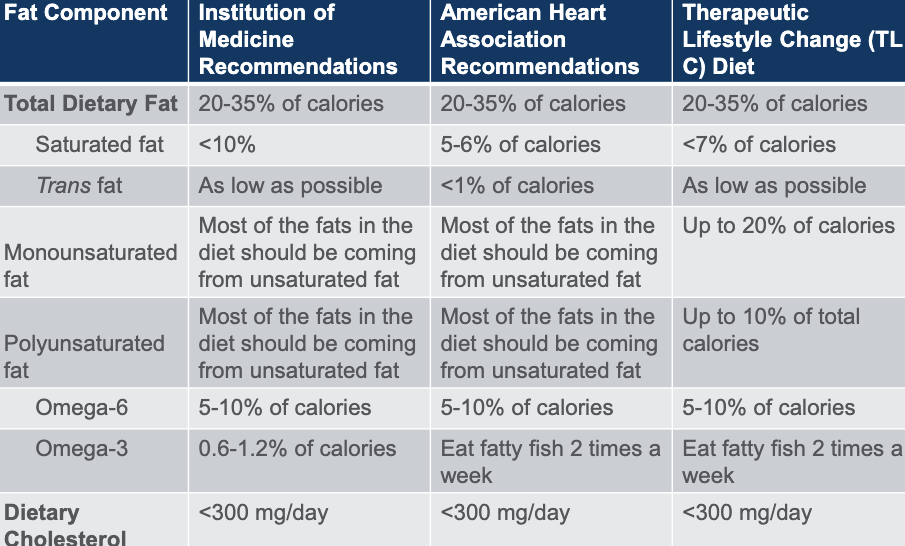
fat intakes for those at risk of heart disease
american heart association recommends lower amts: fat no more than 20%, sat fat no more than 7%, chol no more than 200 mg/day
2025 DGA recommendation for fat
2020 and 2025 DGAs both recommend less than 10% of energy from sat fat
2025 mention butter and beef tallow as options for cooking w fats
2025 have proteins higher in sat fat placed prominently in inverted pyramid graphic
Mediterranean Diet
up to 40% cals from fat (most monounsaturated)
olive oil main fat, abundant fruit+veggie+whole grain+beans+nuts+seeds
minimally processed + seasonally fresh local foods
small amt of cheese + yogurt daily
low-moderate fish intake weekly
limit eggs/red meat
exercise
moderate wine intake
essential fatty acid reqs
2-4 tbsp daily
deficiency can cause: diarrhea, slowed growth, delayed healing, flaky/itcy skin
american fat intake
many north americans consume too much sat fat, too little mono/polyunsaturated, good amt of omega-6, too little omega-3
sat fat sources
dairy, beef, chicken, mayo, margarine
trans fat sources
margarine, baked goods
omega-3 sources
omega-3 from: cold-water fish, walnut, flaxseed, chia seed, canola/soybean/flaxseed oils
omega-6 sources
nuts and seeds, poultry fat, veggie oils and margarines made from veggie oils
hidden fats
not visible, found in: whole milk, cheese, pastries, cookies, cake, hot dog, cracker, fries, ice cream
reading nutr facts label helps
effects of processing of fats
hydrogenation, nutrient losses, trans fat health effects
hydrogenation
make fats resistant to oxidation (longer shelf life, not good for body)
hydrogenated oils have higher smoke point and easier to spread
nutrient losses
loss of unsaturated characteristics and health benefits
decrease in vit K activity
health effects of trans fats
raise LDL cholesterol, lower HDL cholesterol, inc inflammation, inc risk of heart disease + stroke
alt to hydrogenation
can use naturally stable fats (butter, lard, coconut oil), interesterified fats (alter structure without making trans fats), blends of oils, high-oleic oils ← all from chat so idk if we needa know ts
fat replacements
lowers fat in food by replacing with water, protein (dairy-lo), starch derivatives (nu-trim), fiber (avicel, stellar, oatrim), gums (salatrim (benefat))
us vs mediterranean diet fat intake
us: provide 35% of tot cals, 12% sat
med: abt 40% fat, low red meat, extra-virgin olive oil
lipid intake
20-35% total fat
less than 10% sat fat (5-6% for heart risks)
trans fat as low as possible
polyunsaturated fat: linoleic acid 5-10% of cals (17 g/day men, 12 women), linolenic acid 0.6-1.2% (1.6 g/day men, 1.1 women)
limit cholesterol
types of lipoproteins
chylomicron, VLDL (very low density), LDL (low density), HDL (high density)
LDL
larger, lighter, richer in chol
deliver chol to tissues
high levels = inflammation + heart disease
HDL
smaller, denser, packaged w more protein
scavenge excess chol and other lipids
high levels oppose heart disease and vice versa
food cholesterol impact on blood cholesterol
little effect
most sat/trans fats raise bad blood chol
high LDL = CVD risk
food lipids associated w raising LDL chol (sat and trans in excess amts)
CVD
cardiovascular disease is the major killer in NA, high fat diets (esp sat/trans) inc risk of CVD, symptoms develop over multiple yrs
start of CVD
initial: damaged blood vessel
causes: smoking, diabetes, hypertension, homocysteine, LDL, viral/bacterial infection, blood-vessel inflammation