FLVS Art History and Criticism Segment 1
 Call Kai
 Learn
Learn Practice Test
 Spaced Repetition
 Match
Match Flashcards
 Knowt Play
1/171

There's no tags or description
Looks like no tags are added yet.
Name | Mastery | Learn | Test | Matching | Spaced | Call with Kai |
|---|
No analytics yet
Send a link to your students to track their progress
172 Terms
What site of Paleolithic cave paintings caused scholars to re-evaluate long held assumptions about prehistoric art?
Chauvet
What is NOT an element of prehistoric cave paintings?
Backgrounds
The Venus of Willendorf is a
Paleolithic Sculpture
Scholars believe that the "negative" handprints in prehistoric cave paintings were most likely
Signatures
All prehistoric paintings have been found in
The deep recesses of the cave
Twisted perspective is
Descriptive
Which is the oldest site for town planning?
Catal Huyuk
Which is the oldest work?
Felines and Rhinos Chauvet
Which is true regarding the Neolithic period?
Dwellings Constructed
The heel stone at Stonehenge gives credence to the theory that the ancient structure was a/an
Solar Calendar
Which settlement had no streets?
Catal Huyuk
The Votive Statuettes from Eshnunna were most likely
Perceptual Worship Icons
The material used in the creation of the Venus of Willendorf was
Stone
The Ziggurat at Ur was a
Temple Platform
What were the most common themes in Assyrian art?
Warfare and Hunting
he two sides of the Standard of Ur shows scenes of
War and Peace
What ethnic group is credited with the first system of writing known to man?
Sumerians
The Lamassu sculptures were recovered from where?
Sargon's Palace
Which work has a king approaching the god Shamash?
Stele of Hammurabi
What color is lapis lazuli?
Aqua
Which leader has a portrait which illustrates his devotion and piety to his god?
Gudea
What does NOT characterize Sumerian human figure compositions?
Shoulders in Profile
What is NOT true of the Victory Stele of Naram-Sin?
Demonstrates Piety of the King
Which of the following statements is false?
Ancient Near Eastern ethnic groups left extensive architectural remains.
hich statement correctly characterizes Assyrian art?
Great Emotion in Animal Figures
Which Mesopotamian ethnic group began the tradition of extending loyalty to an individual leader rather than to the state itself?
Akkadians
Which statement is false regarding Assyrian palaces?
Symbolized the Assyrian proclivity for agriculture
Which king is known for his code of laws?
Hammurabi
Which is the youngest work?
Stonehenge
Which is the oldest work?
Head of Akkadian Ruler
Which building is Ionic?
Temple of Nike, Athens
The Dipylon vase is from which period?
Geometric
Black-figure vases were most prominent during which period?
Archaic
A Greek statue of a young female is known as a
Kore
Which vase was most often used as a drinking vessel?
Kylix
Which vase type was most often used a container for perfumed oil?
Lekythos
Which scene was not depicited in the Parthenon?
Zeus and Herakles
The asymmetrical plan of the Erechtheion was most probably due to the fact that the structure
had to incorporate existing shrines
Who was the sculptor of the Aphrodite of Knidos?
Praxiteles
Who was the sculptor of Weary Herakles?
Lysippos
A Greek town was built around a/an
Agora
Which of the following is not true for the Temple of Apollo at Didyma?
Twisted Pedimental Sculptures
What was the Treasury of Atreus?
A beehive tomb
Which is not true for Minoan painting?
Monochromatic
The Lion Gate is found at which complex?
Palace of Mycenae
What is the name of the heavily columned area of an Egyptian temple?
Hypostyle Hall
The unification of Upper and Lower Egypt is pictured on the
Palette of Narmer
How does Persian relief figure sculpture differ from Mesopotamian relief figure sculpture?
Sculptural Quality
Which work has inlaid decoration?
Standard of Ur
Which animal is rare in cave paintings?
Bear
Which is not true for Middle Byzantine architecture?
Larger, Wider Naives
Which is not true for Middle Byzantine painting?
Volumetric
he Byzantine portrayal of Christ differs from the Early Christian portrayal in all of the following ways except
A Younger Persona
The emperor portrayed in San Vitale is
Justinian
The dome of Hagia Sophia is supported by
Pendentives
The earliest well-preserved illuminated manuscript containing scenes from the Bible (the Vienna Genesis) dates from the
6th Century CE
Which is not a basilica-plan structure?
Santa Costanza
Which of the structures below contains an ambulatory?
Santa Costanza
Which was NOT a scene on the sarcophagus of Junius Bassus?
The Annunciation
The shelves on which the dead were placed in Early Christian catacombs were called
Loculi
Roman Second Style painting is characterized by
Illusionistic Depth
The emperor Augustus commissioned which of the following?
Ara Pacis
The Roman work known as the Pont-du-Gard is a/an
Aqueduct
Etruscan temples differ from Greek in which of the following?
Three Cellas
Which is the correct chronological order for Greek vase painting types?
Geometric, Black Figure, Bilingual, Red Figure
Based on their art works, which society had a warrior culture?
Mycenaean
The iconographic symbol for Saint Matthew is a/an
Angel
The iconographic symbol for Saint Mark is a/an
Lion
The iconographic symbol for Saint Luke is a/an
Ox
The iconographic symbol for Saint John (the Evangelist) is a/an
Eagle
With the addition of flying buttresses, Gothic architects eliminated which of the following from the Gothic elevation? (2.0 points)
Gallery
Which cathedral has architectural statuary demonstrating the S-shaped curve of the so-called "courtly" style?
Reims Cathedral
The illumination of "Christ as the Architect of the Universe" comes from the/a
Moralized Bible
The western "Sedes Sapientiae" (Throne of Wisdom) is equivalent to the eastern
Byzantine Theotokos
Which is not true for Romanesque sculpture?
Curvilinear Movement
The Bayeux Tapestry depicts a/the
Norman Victory at the Battle of Hastings
Carpet pages in manuscript illuminations are characteristic of
Hiberno-Saxon Art
Which one of the works below did not exhibit the so-called animal style?
Torhalle of the Lorsch Monastery
Which is the greatest achievement of Hiberno-Saxon art?
Book of Kells
Which of the following structures were built over the spot from where Muhammad is believed to have ascended into heaven?
Dome of Rock, Jerusalem
What does a squinch support?
Dome
Which structure contains the portraits of Justinian and Theodora?
San Vitale
The Rossano Gospels are recognized as the earliest illuminated manuscript containing the
New Testament
Strikingly realistic portraiture is characteristic of
Roman Republican Art
The Emperor Trajan commissioned a/the
Triumphal Column
Which emperor's commissions reflect the influence of Classical Greek art?
Augustus
Hellenistic sculpture differs from Classical in all of the following except
Idealization
The Snake Goddess sculpture belongs to which culture?
Minoan
The influence of the Amarna period is evident in the work done for which Pharaoh?
Tutankhamen
Bull-headed capitals were created by which culture?
Persian
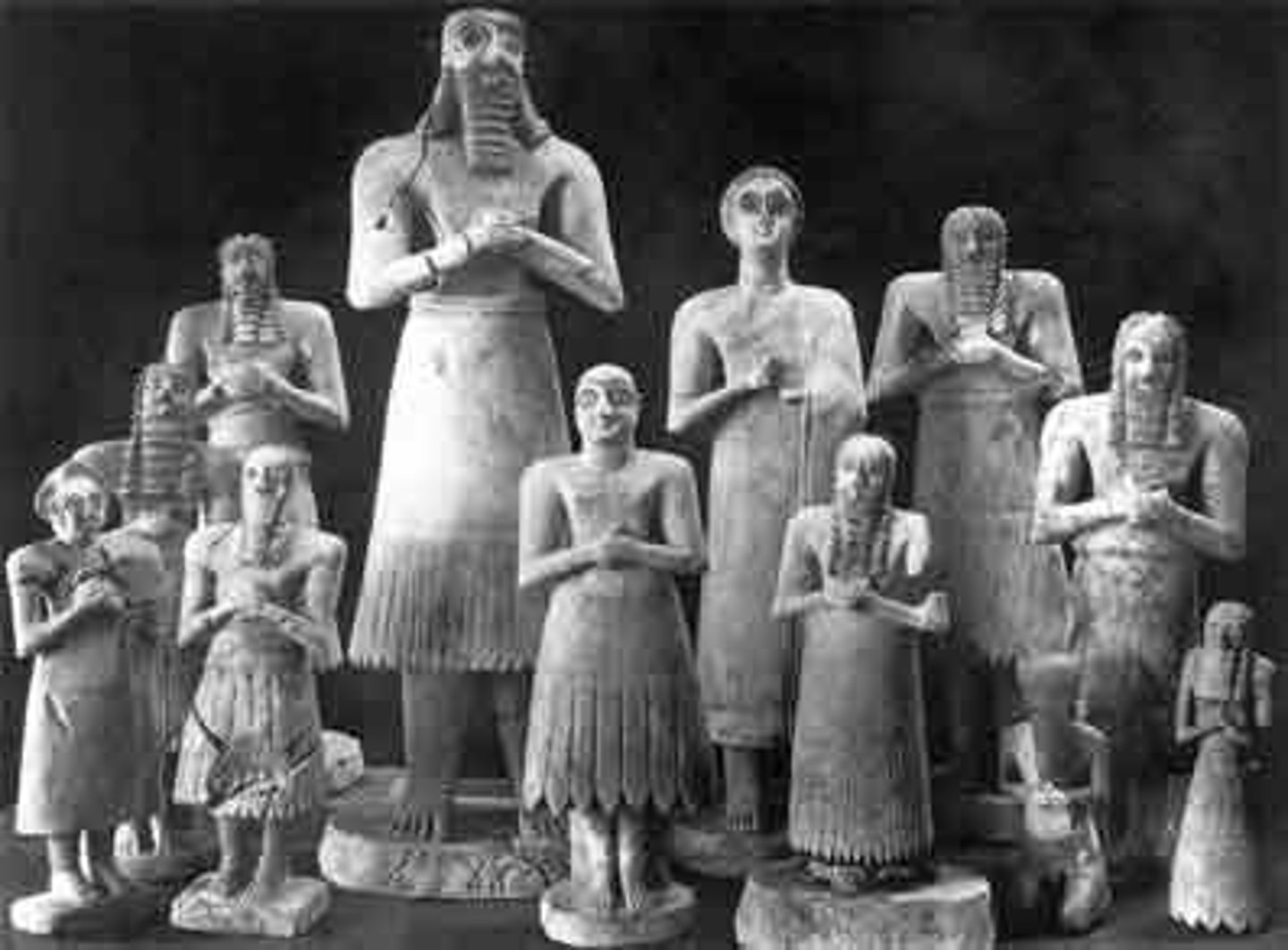
Tell Asmar Statues
c. 2700 BCE
Culture: Sumerian
Employs hierarchal portrayal, figures represent mortals, placed in a temple and praying: votive figures
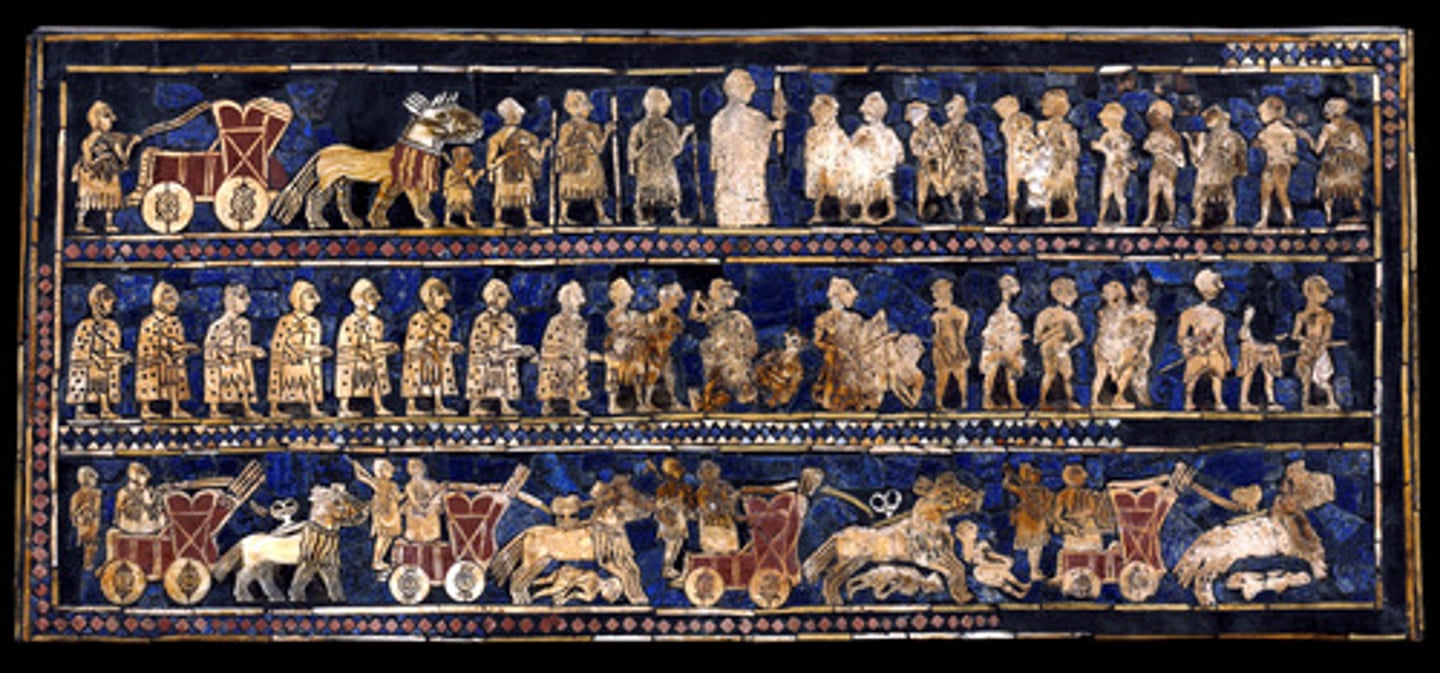
Standard of Ur
c. 2600 BCE
Culture: Sumerian
Has two sides: war side and peace side, uses register to tell a narrative. Employs hierarchal portrayal.
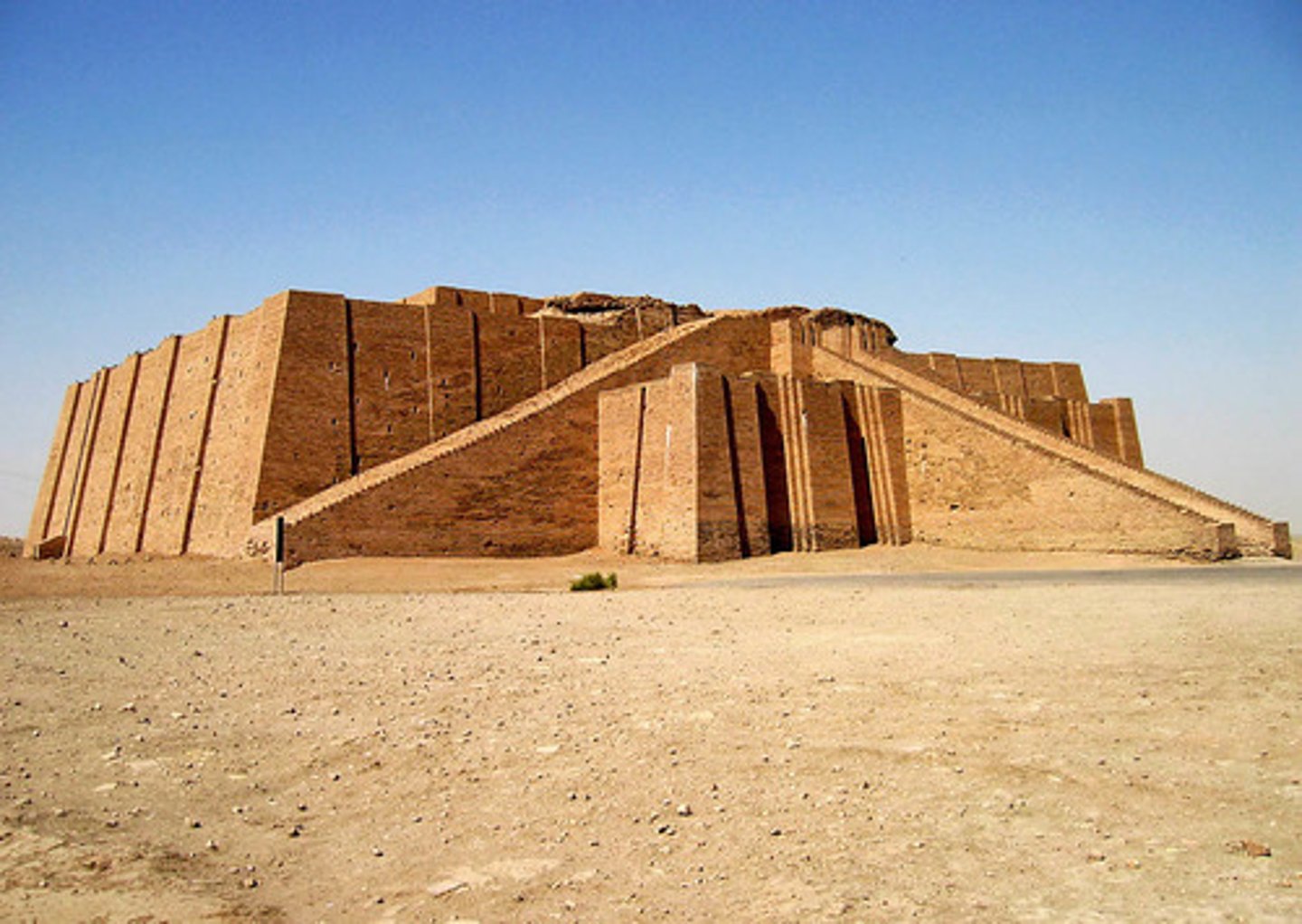
Great Ziggurat of Ur
c. 2100 BCE
Culture: Sumerian
The temple was on top of the tall pyramid like sculpture. Made of mud brick, not as strong as Egyptian pyramids. Used to be whitewashed to hide mud-like appearance. Four corners are oriented to compass. Dedicated to moon god Nanna
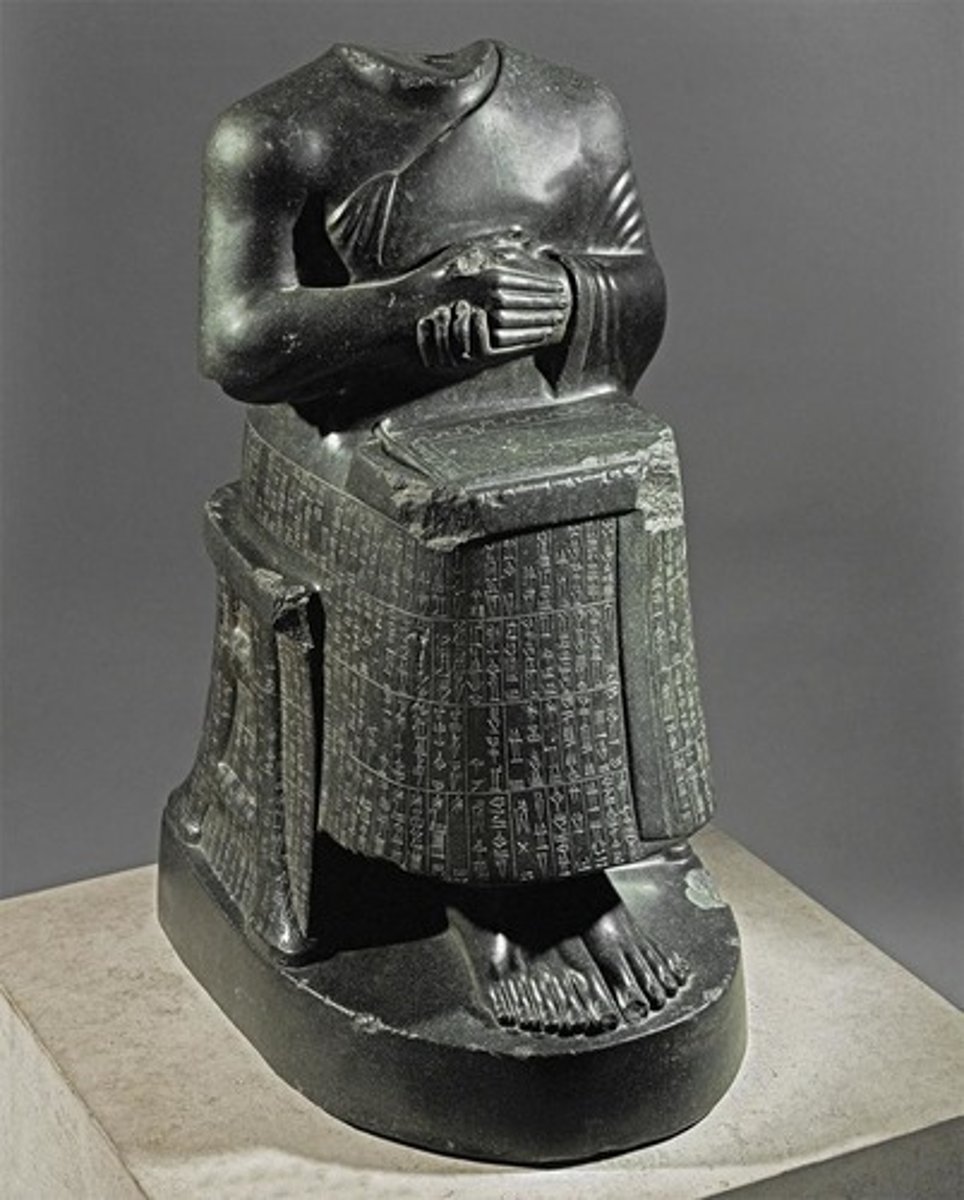
Seated Statue of Gudea
c. 2100 BCE
Culture: Sumer
The diorite used to show the wealth of the owner. Gudea was the ruler of Lagash.
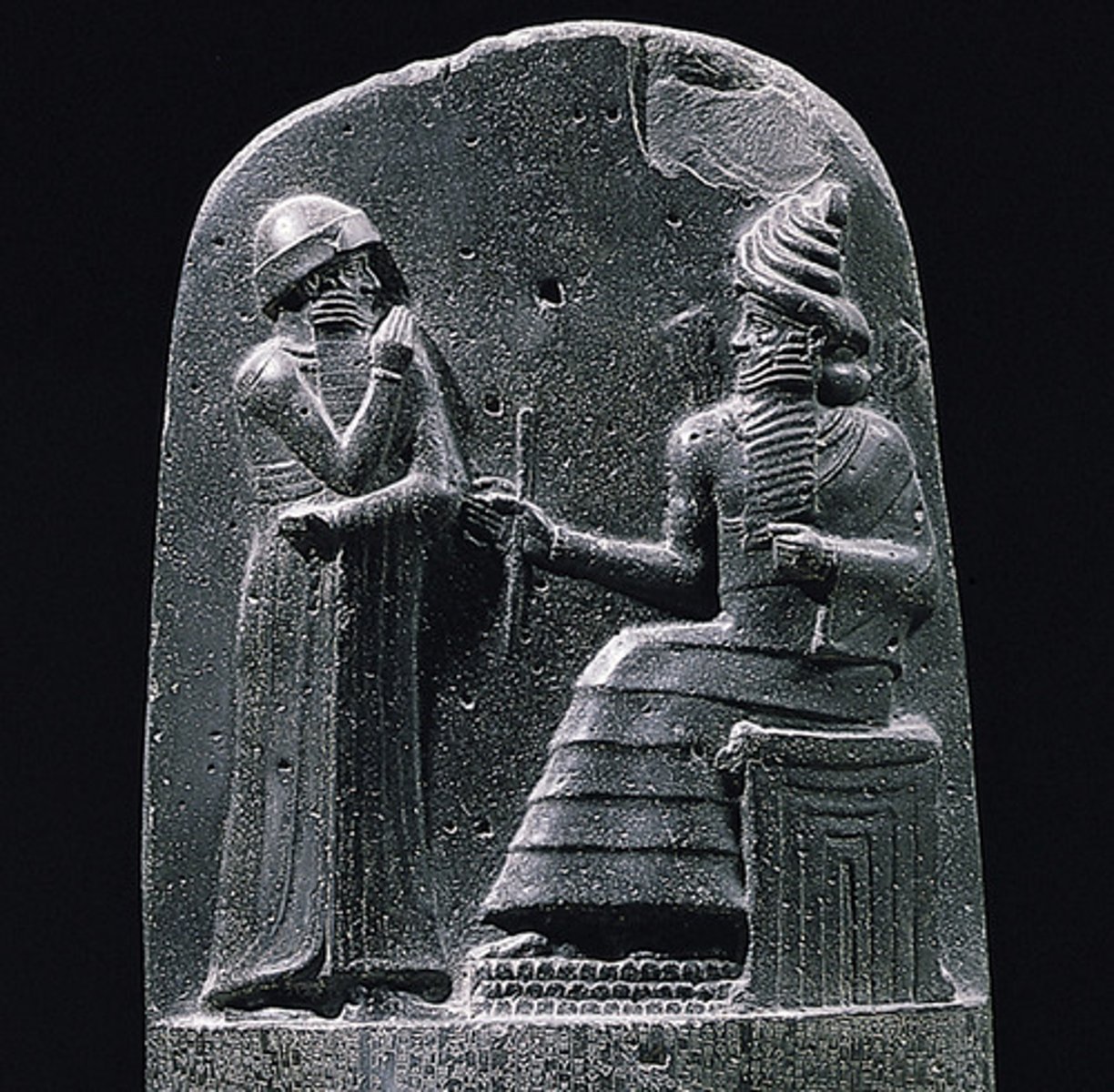
Stele of Hammurabi (Code of Hammurabi)
c. 1780 BCE
Culture: Babylon
Has one of the earliest law codes. The sun god, Shamash, hands Hammurabi a rope, a ring, and a rod of kingship. The beard of Shamash is fuller than Hammurabi's to show the importance of Shamash over Hammurabi. God sitting shows he is higher up than Hammurabi, but they are eye to eye which shows the importance of Hammurabi.
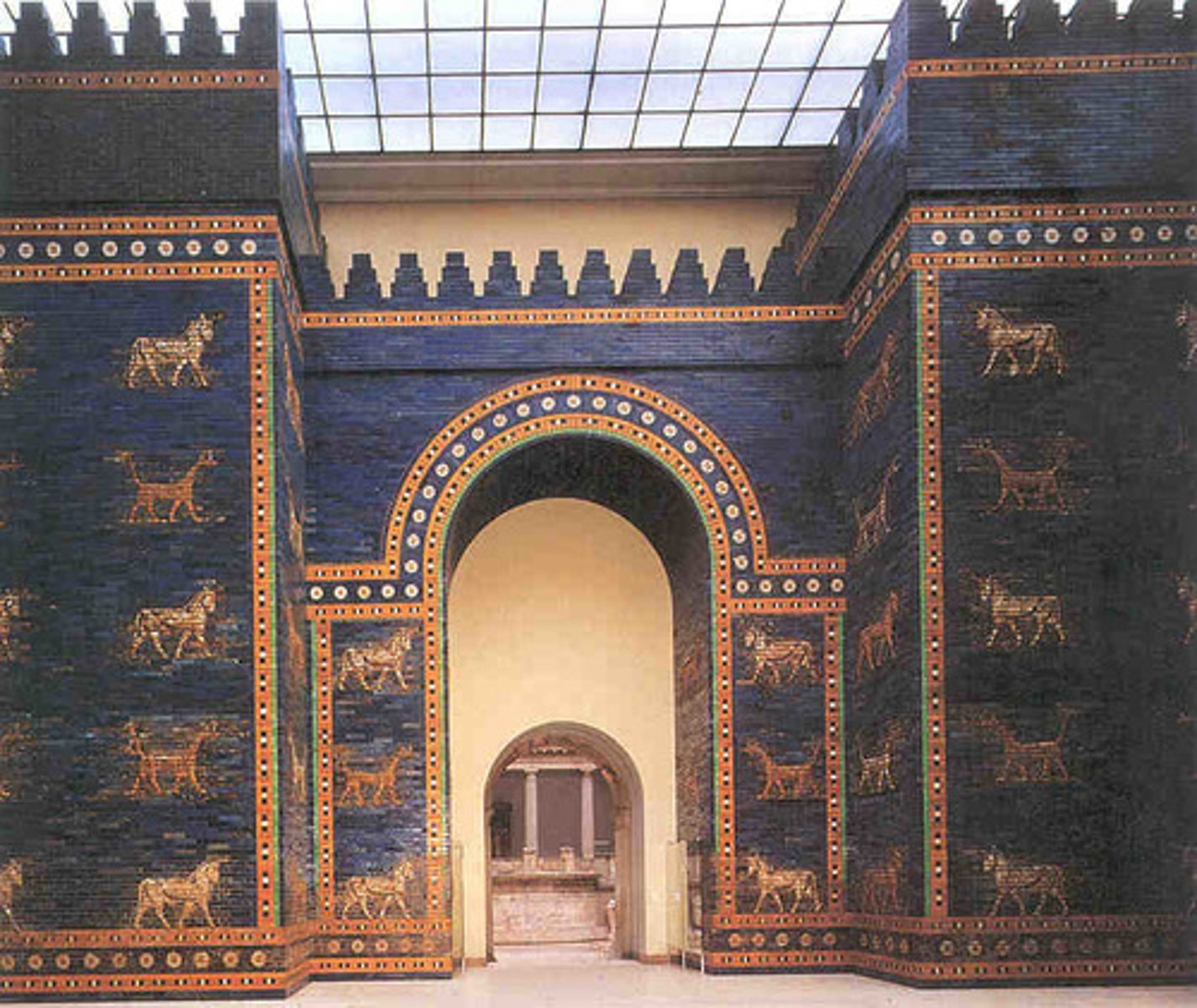
Ishtar Gate
c. 575 BCE
Culture: Babylon
Glazed brick covers mud walls. Reconstructed in Berlin. Lions sacred to goddess Ishtar; dragons sacred to the gods Marduk and Nabu, bulls sacred to the god Adad.
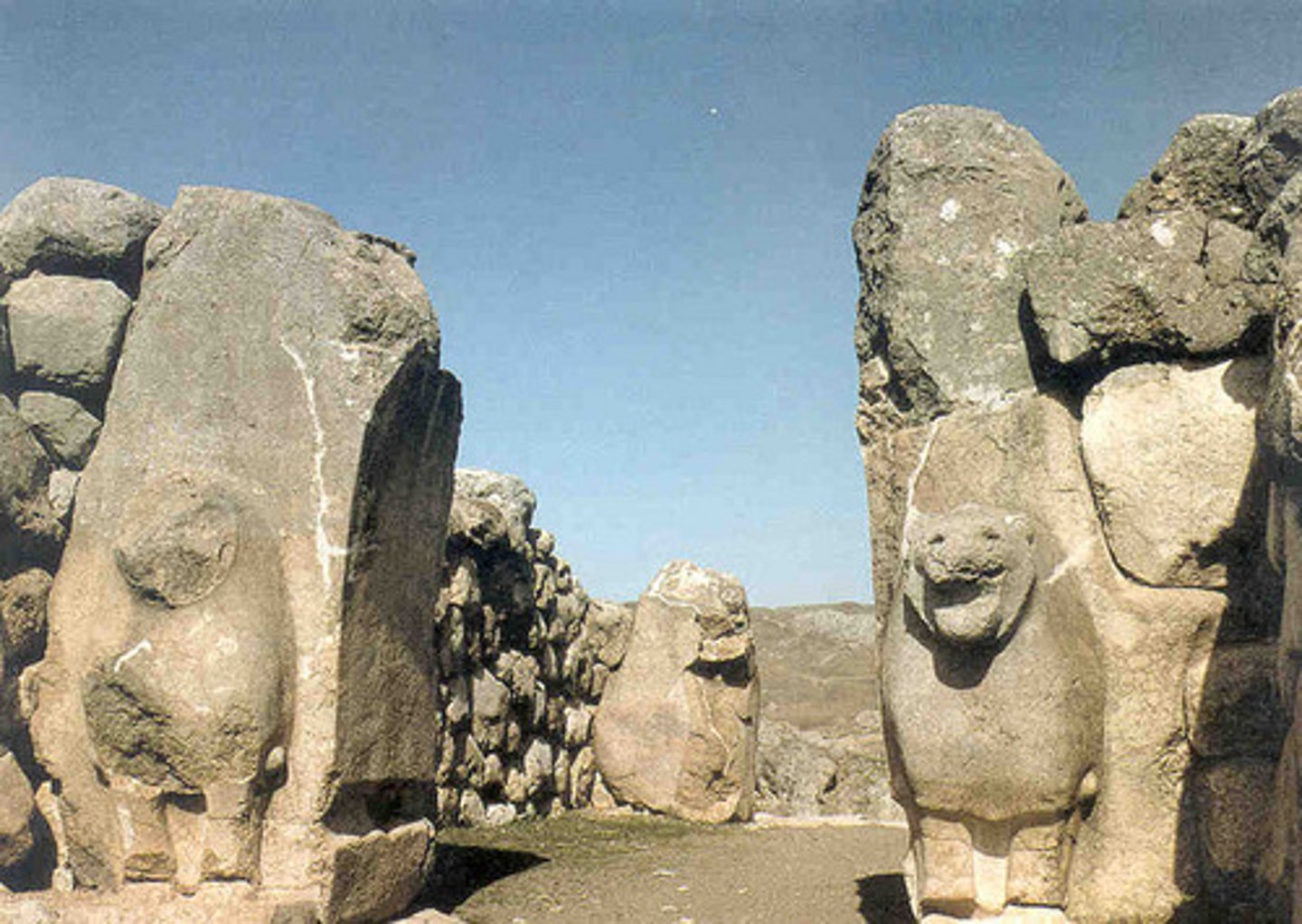
Lion Gate
c. 1400 BCE
Culture: Hittite
Gates to the city, the lions were guardians.
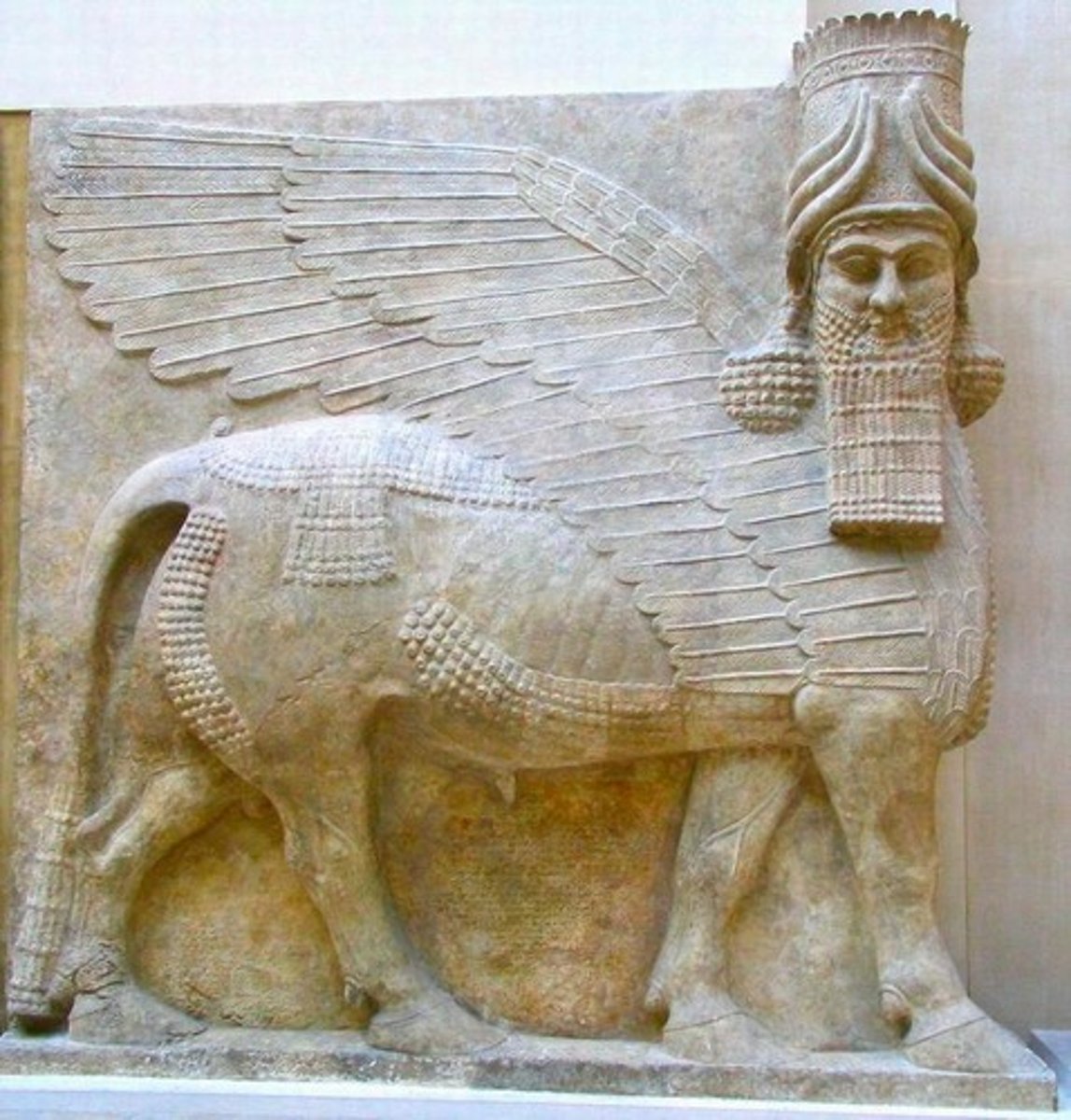
Lamassu (pronounced Llama-sue)
c. 700 BCE
Culture: Assyrian
5 legs: when seen from front seems to be standing at attention; when seen from side it looks like its walking. Meant to ward of enemies both visible and invisible.
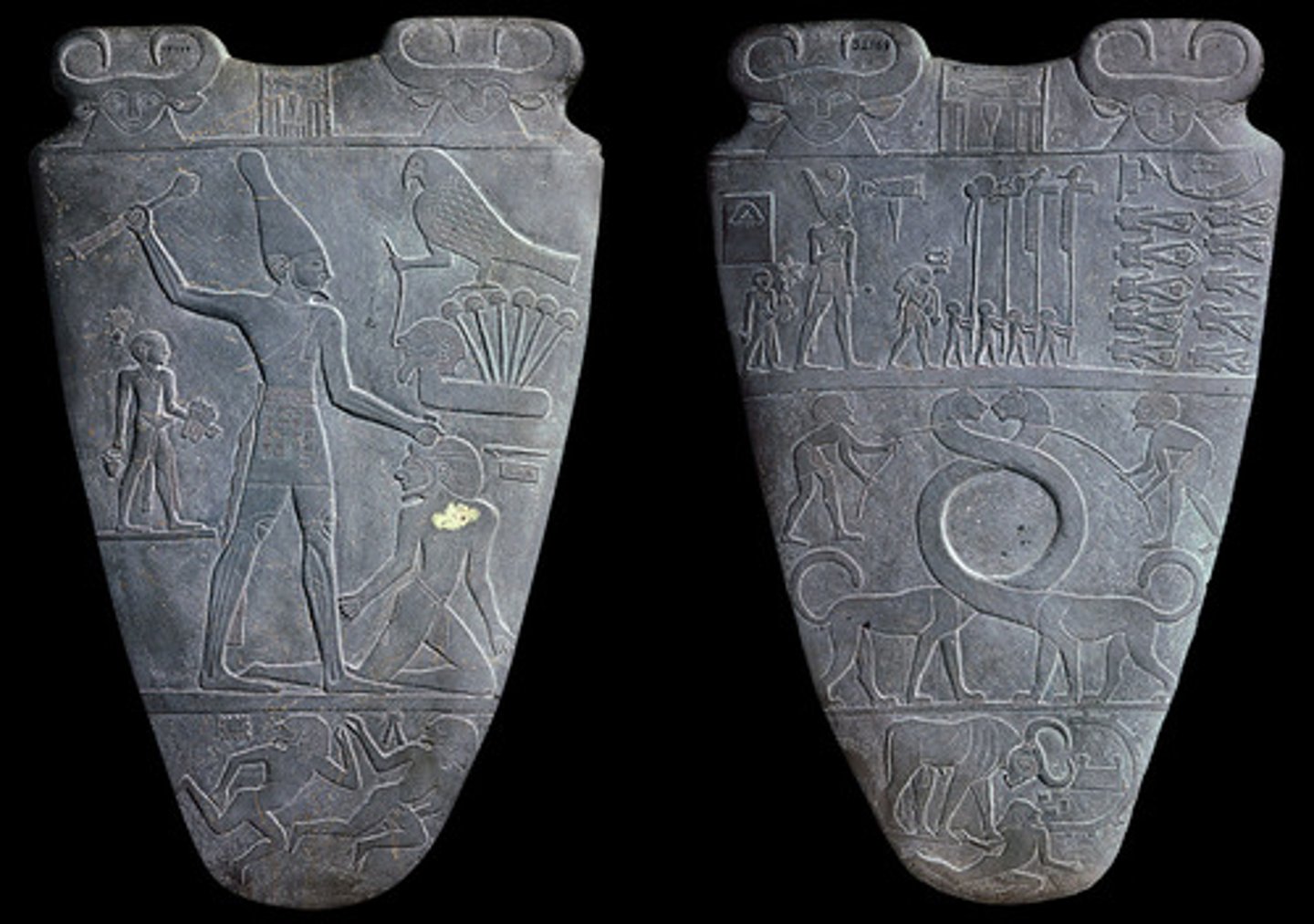
Palette of Narmer
c. 3000-2920 BCE
Culture: Egyptian;Early Dynastic Period
A narrative, uses hierarchal portrayal. Things used to show power: bull knocking down city, hierarchal portrayal, beheaded enemies. Narmer, wears the cobra crown of lower Egypt, preceded by four standard bearers and a priest and followed by his foot washer. Hathor, a god as a cow with a woman's face. Used to hold eye makeup. Horus, hawk god, holds a rope around a man's head and a papyrus plant, symbols of lower Egypt.
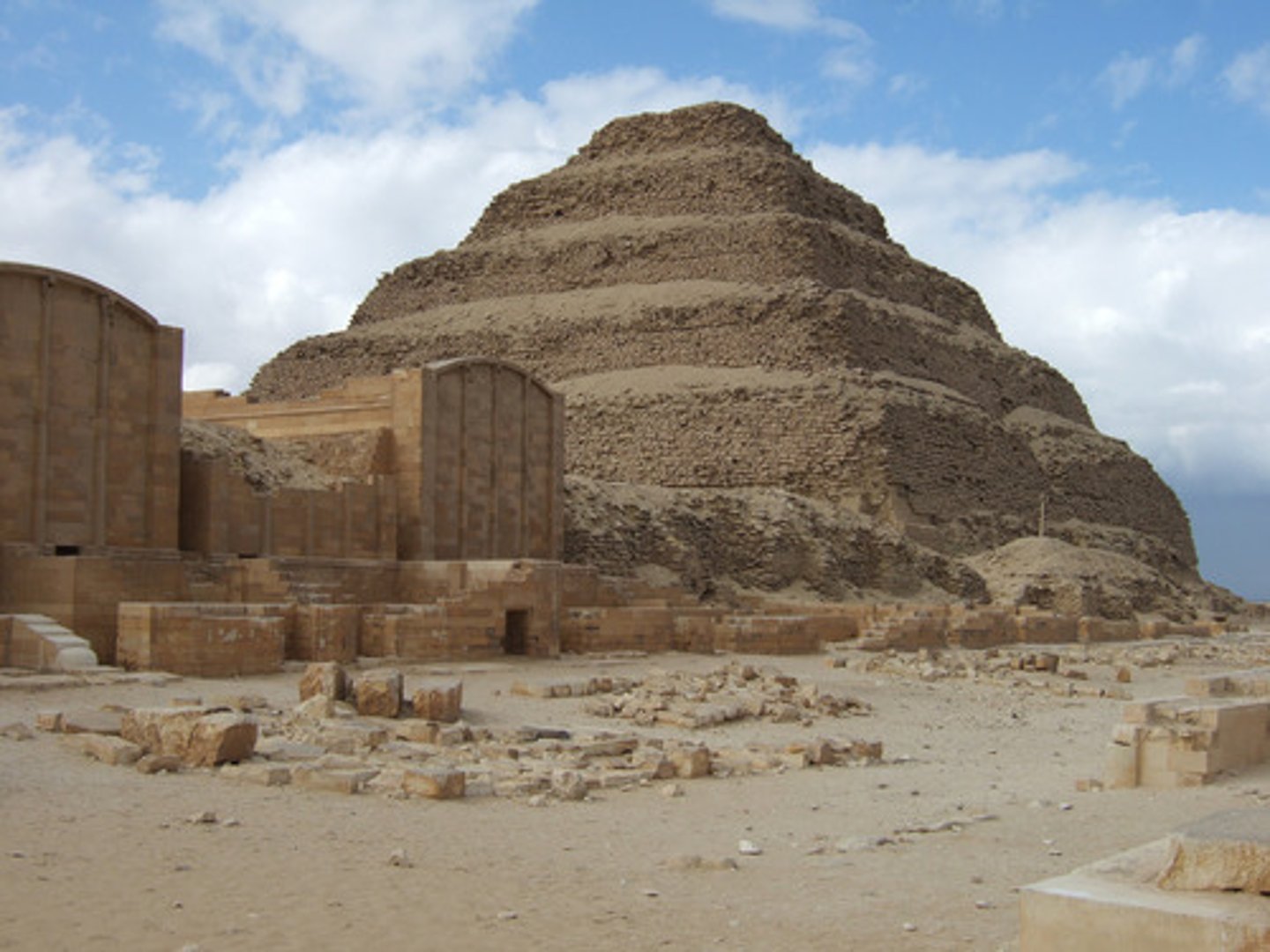
Stepped Pyramid of King Djoser
c. 2630 BCE; Old Kingdom
Artist: Imhotep
Culture: Egypt
First known artist in history. Just a bunch of mastabas stacked on top of each other. Part of a complex called a necropolis (city of the dead). Pyramid is completely solid, with burial underground. Located in Saqqara, Egypt.