bio topic 2
 Call Kai
 Learn
Learn Practice Test
 Spaced Repetition
 Match
Match Flashcards
 Knowt Play
1/53

There's no tags or description
Looks like no tags are added yet.
Name | Mastery | Learn | Test | Matching | Spaced | Call with Kai |
|---|
No analytics yet
Send a link to your students to track their progress
54 Terms
structure of eukaryotic cells
algae cell wall
cellulose
fungi cell wall
chitin
prokaryotic cell structure
always
cell wall - murein
cell surface membrane
circular DNA
cytoplasm
70s ribosomes
sometimes
capsule - prevent drying eat and attack from host organism cells
flagellum
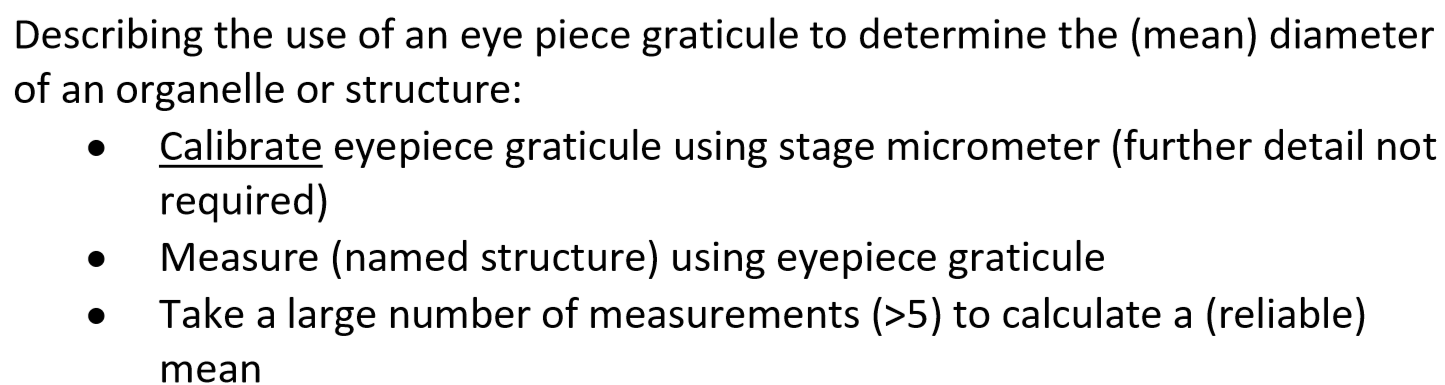
how to use eyepiece graticule
TEM
beam of e- shorter wavelength = > reso
🙂
> reso
can observe internal structures (organelles)
☹
specimens must be very thin
dead organisms
lengthy preparation time → artefacts
B&W
How to use microscope to observe x in cells using optical microscope
Add drop of water to glass side
Obtain thin section of plant tissue and place on slide
Stain with iodine in KI
Lower cover slip using mounted needle
SEM
🙂
can produce 3D images
can be used on thick/ 3D specimens
allow external 3D structure of specimens to be observed
☹
<reso
cannot observe live specimen
B&W
cell fractionation + ultracentrifugation
A) homogenisation using cold, isotonic, buffered solution
= breaking up cells
ice cold: prevent enzyme activity
isotonic: prevent lysis
buffer: prevent denaturing enzyme/ protein
B) filtration
C) ultracentrifugation
centrifuge at low speed and remove supernatant
centrifuge at higher speed
pellet settles at bottom, supernatant = solution
measuring cells
epg and micrometre
interphase
G1:growth
cells make RNA, enzymes and proteins for growth
S: DNA in nucleus replicates
each chromosome = 2 sister chromatids
DNA synthesis
G2: cell continues to grow, check and repair errors
mitosis
*after interphase, before prophase, human cell nucleus contains 92 DNA molecules
prophase
chromosomes condense and now visible when stained
nuclear envelope breaks down
metaphase
chromosomes line up on equator
spindle fibres reach to chromosomes and attach to centromeres
anaphase
sister chromatids separate at centromere and pulled to opp poles by spindle fibres
spindle fibres shorten
telophase
chromosomes arrive at opp poles and begin to decondense
nuclear envelope and nucleolus begin to reform
spindle fibres break down
cytokinesis
(cell plate)/ (cleavage furrow)
binary fission
single, circular DNA replicates
plasmids replicate
parent cell divides into 2 cells, with cytoplasm roughly halved between 2 daughter cells
2 daughter cells each contain single copy of circular DNA and variable no. of plasmids
new cell walls formed
fluid mosaic model
fluid = phospholipids and proteins can move
phospholipids mainly move sideways, within own layer
mosaic = various proteins embedded
purpose of phospholipid bilayer
compartmentalisation for metabolic reactions (diff conditions)
permeability
phospholipids
hydrophilic/ polar phosphate heads
attracted to water
orientate outwards
hydrophobic/ non-polar fatty acid tails
repelled from water
orientate towards interior
Water present inside and outside cell
intrinsic/ integral proteins
span entire membrane
protein channels = water-filled tubes to allow water-soluble ions to diffuse across membrane
carrier proteins
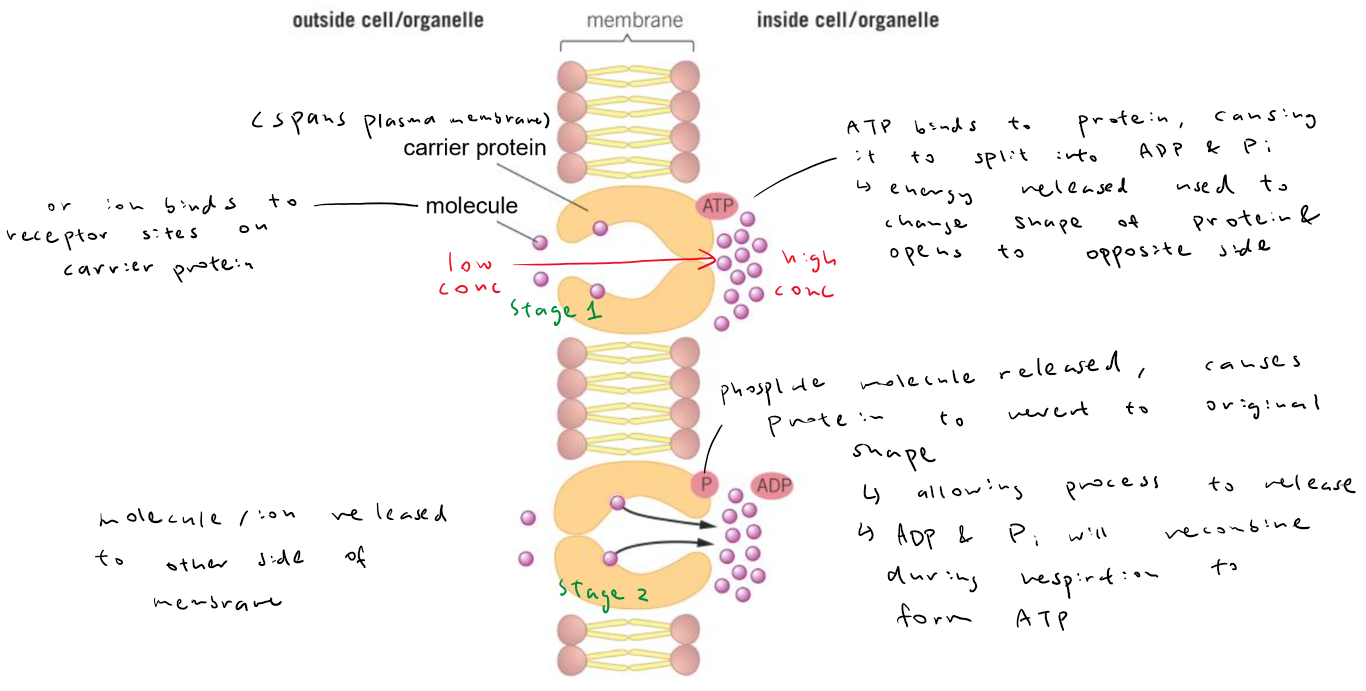
bind ions/ molecules and change shape to move molecules across membrane
extrinsic proteins
mechanical support
or in conjunction with glycolipids and act as cell receptors
(proteins help cells adhere to each other)
cholesterol
stabilise membrane
rigidity
restricts movement of fatty acid tails
< mov = < permeable = < leakage
glycoproteins and glycolipids
cell surface receptors
cell-to-cell recognition
receptors in cell adhesion and stabilisation
RP4 factors affecting membrane fluidity
ethanol → dissolves phospholipid bilayer
acid → alter membrane proteins
high temp → denature membrane proteins
diffusion
passive
dynamic equilibrium
no net mov
small, non-polar substances
factors affecting diffusion rate
conc grad
temp
SA
diffusion distance
properties of molecules/ ions
facilitated diffusion
for charged, large, polar molecules
passive
channel proteins
carrier proteins
proteins limiting
osmosis
no net mov
dynamic equilibrium
hypertonic, isotonic, hypotonic
animal: cell crenation, cell lysis
plant: cell plasmolysis, turgid
active transport
molecules and ions using ATP and carrier proteins
ATP + H2O → ADP + Pi + energy
reversible
condensation/ hydrolysis
ATP hydrolase or ATP synthase (phosphorylation)
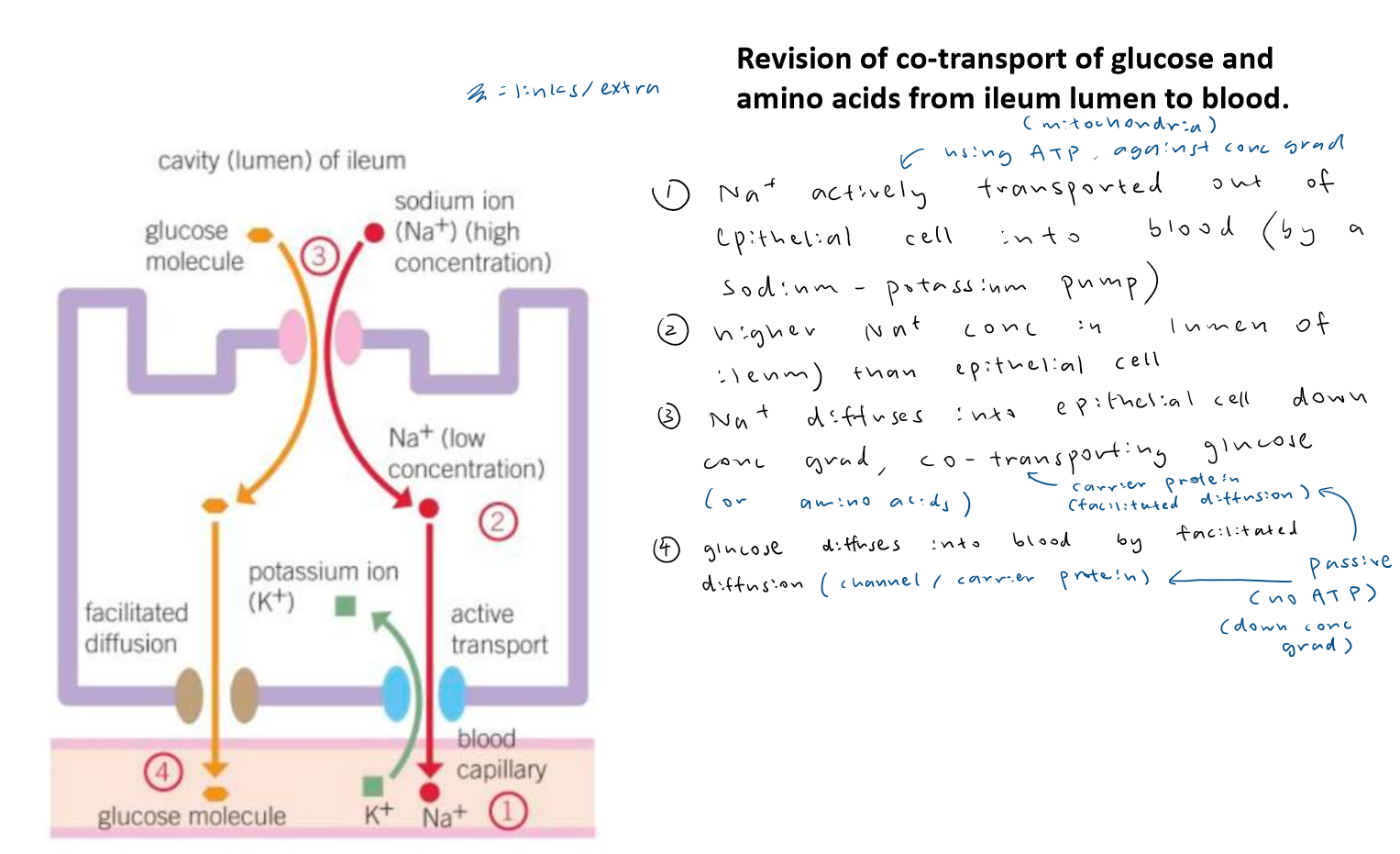
co-transport
Types of cells that stimulate immune response (presence of antigens)
cells from other organism of same species
Abnormal body cells
pathogens
Toxins
antigen
Foreign protein molecule on surface that stimulates an immune response
Allows cell recognition
phagocytosis
Phagocyte (has specific surface cell receptor) attaches themselves to surface of pathogen
Phagocyte engulfs the pathogen to form phagosome
Lysosome moves towards and fuses with the phagosome
Lysosome releases lysosomes which digest/destroy the pathogen
Soluble products from breakdown of pathogen absorbed into cytoplasm of phagocyte
Antigens from bacteria presented/displayed on phagocyte cell surface membrane
antibody
Protein that is specific to the antigen and is secreted by plasma cells/ produced by B cells
mAB
Same tertiary structure
AB produced from identical plasma cells
antigen variability
Mutation in viral DNA
Altered tertiary structure of attachment protein
Allows attachment protein to bind to different receptors
purpose of disulfide bridge
join 2 diff polypeptides
How can determining the genome of the viruses allow scientists to develop a vaccine
Scientists could identify proteins that derive from the genetic code
And so identify potential antigens to use in the vaccine
How vaccination leads to protection against disease
Humoral response etc. or:
Vaccine contains antigen from pathogen
Phagocyte APC on surface
TH cell complementary receptor protein binds to antigen
TH cell stimulates B cell (with complementary AB on surface)
B cell divides to form clones all secreting same AB (large amounts)
active immunity
Memory cells
Produce AB by plasma cells
Long term as AB produced in response to antigen
Take time to develop
passive immunity
No memory cells
AB introduced form external source e.g. vaccine
Short term as AB given is broken down
Fast acting
Why percentage of population vaccinated doesn't need to be 100% to be effective in preventing spread of disease
More People immune
Unvaccinated less likely to contact infected
OTHERS
Why use > 1 antibiotic (using knowledge of evolution of antibiotic resistance in bacteria)
Some bacteria resistant to new/ old bacteria
Resistant bacteria will reproduce to produce > resistant bacteria
Use of both = one antibiotic will kill bacteria resistant to other antibiotic
Unlikely that bacteria resistant to both new and old antibiotic
Use of both antibiotics likely to kill all/ most bacteria
secondary immune response
When encounter same pathogen
Faster and > production of ABs
Memory cells divide quickly to form plasma cells
B cell humoral response
B cell ABs bind to viral complementary antigens
B cell presents antigens on cell surface membrane
TH cells stimulate B cells to divide by mitosis to produce clones
Differentiate into B plasma cells and B memory cells
Plasma cells secrete ABs which bind to antigen
Memory cells involved in secondary immune response
why T cells effective against viruses
Destroy virus infected cells
Viruses need living cells to reproduce
T cell mediated response
Phagocytosis
Phagocyte engulfs pathogen and presents antigens on cell surface membrane
TH cell with complementary receptors bind to antigens, activating TH cell to divide rapidly by mitosis and form clones (clonal expansion)
Cloned T cells either
Stimulate B cells to divide and secrete their AB
Stimulate phagocytes to carry out phagocytosis
Develop into T memory cells
Cytotoxic T cells (release perforins which punch holes into cell surface membranes, cell becomes freely permeable and dies
ELISA
Antigens bound to bottom of reaction vessel
Blood sample of patient added, AB present bind to antigen (primary AB)
Washed out (so that no excess AB's are left to cause false positive?)
Secondary ABs added + enzyme
Washed out to prevent false positives
Solution added with substrate
Substrate reacts with enzyme and colour changes = positive test
Role of AB in stimulating phagocytosis
Agglutination (clumping) so more easily located and engulfed by phagocytes as less spread out in blood
Act as markers for phagocytes
How HIV affects production of AB when AIDS develops
HIV destroys TH cells
So can't stimulate cell division of B cells to produce clones
So less ABs produced
Why virus can be described as inactive
No more cells infected
Virus not replicating
replication of HIV
Attachment proteins on HIV binds to CD4 protein on TH cells
Capsid fuses to cell membrane, RNA inserted into cell
Reverse transcriptase converts RNA to DNA
DNA inserted into TH cell DNA
TH produces mRNA and viral protein (DNA transcribed into mRNA, mRNA translated into viral protein)
Viral proteins assemble to form new virus particles
Viral particles released from cell, producing lipid envelope from cell membrane
antibody structure
variable region
4 polypeptide chains joined by disulfide bridge
constant region
2 binding sites so can bind to >1 bacterium/ virus at same time
heavy chain and light chain
function of golgi apparatus
Modify/ package/ transport proteins
Make/ transport glycoproteins
Modify/ package/ transport lipids
Make/ transport glycolipids
Forms/ release vesicles
why antibiotics not effective against viruses
No enzymes
No metabolic processes
No cell wall/ murein