Marine processes
 Call Kai
 Learn
Learn Practice Test
 Spaced Repetition
 Match
Match Flashcards
 Knowt Play
1/10

There's no tags or description
Looks like no tags are added yet.
Name | Mastery | Learn | Test | Matching | Spaced | Call with Kai |
|---|
No analytics yet
Send a link to your students to track their progress
11 Terms
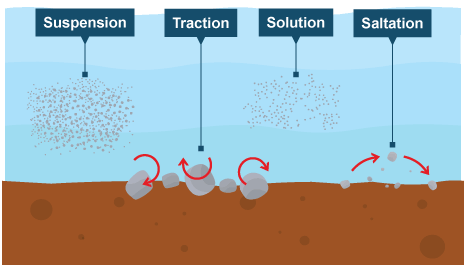
What are the 4 ways sediment is transported in water
Traction- large boulders pushed along sea bed by force of water
Suspension- small particles carried along in the water
Saltation- pebble sized particles bounced along sea bed
Solution- soluble materials dissolved in water and carried along
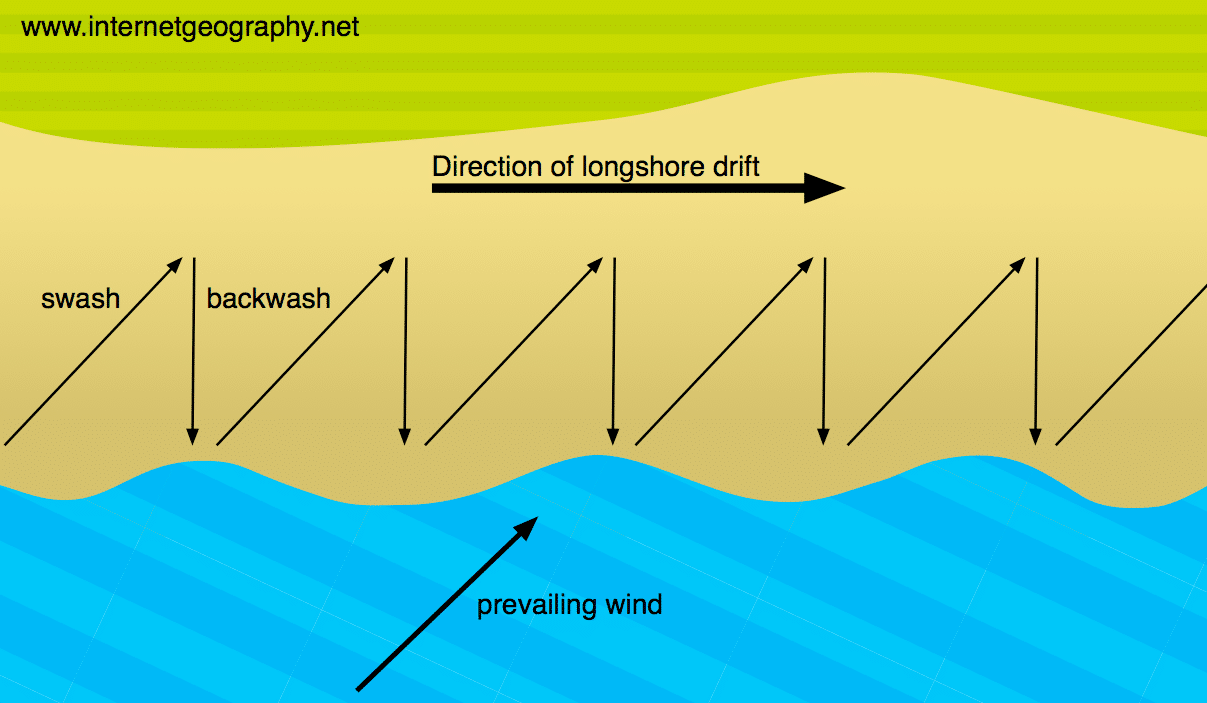
What is longshore drift
Occurs when waves approach chore at an angle, it is the zig-zag movement of sediment within coastal system. Material pushed up in same direction but backwash drags material back perpendicular to wave.
What are some causes for deposition
Energy source altering
Wave type
Increased friction
Interruption to flow
How does geology affect rate of erosion
Rock type- Soft rock erodes faster than hard rock, and rocks which are well jointed are easily penetrated by sea
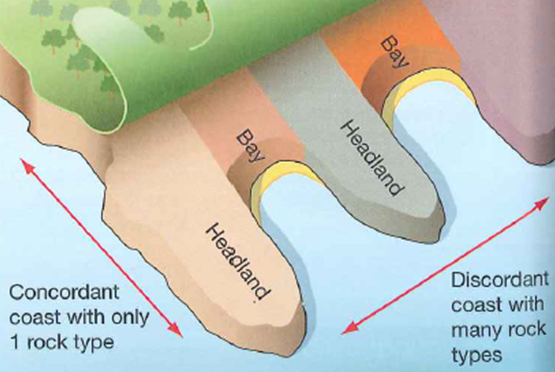
Structure of the rock- Concordant coastline rock layers run parallel to coastline usually has hard rock on outside and soft rock inside. Discordant coastline rock layers run perpendicular to coastline, alternating bands of hard and soft rock
What are the main marine processes
Hydraulic action
Wave quarrying
Abrasion
Solution
Attrition
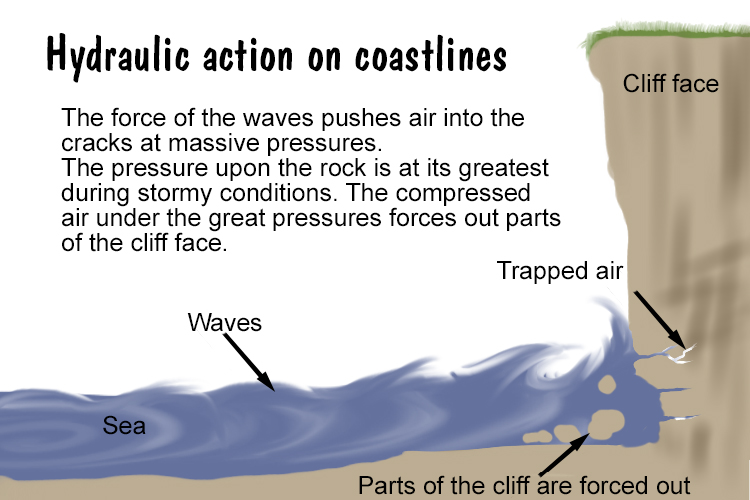
What is hydraulic action
Waves force air into cracks in the rock; pressure builds and is released as waves retreat, weakening and breaking the rock over repeated action leading to cliff retreat
What is wave quarrying
Waves breaking against unconsolidated material scooping it out
What is abrasion
Sediment dragged by waves are hurled at coastline and act as like sandpaper scraping and wearing away the rock surface
Over time this causes wave cut notch to form and rock becomes unstable and eventually collapses so cliff retreats
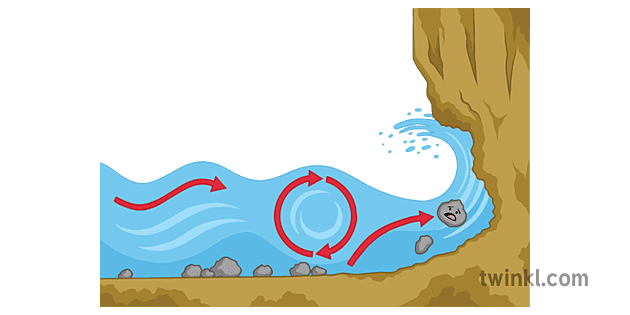
What is solution
Weak acids in seawater dissolve alkaline rock
What is attrition
Rock particles collide and break down, becoming smaller, smoother, and more rounded.
How does a presence of a beach affect rate of erosion
Beaches help absorb impact of water if a beach is absent cliff may be more vulnerable to erosion