ne102 4/22 lecture: protein transport: how can proteins reach their final destination in a cell
 Call Kai
 Learn
Learn Practice Test
 Spaced Repetition
 Match
Match Flashcards
 Knowt Play
1/11

There's no tags or description
Looks like no tags are added yet.
Name | Mastery | Learn | Test | Matching | Spaced | Call with Kai |
|---|
No analytics yet
Send a link to your students to track their progress
12 Terms
what determines how proteins are efficiently directed to the specific organelle/cellular compartment where they’re needed?
proteins include sequences of AAs that determine where they’re transported after translation
all proteins translated in ribosomes, but some will remain cytosolic, while others can move to ER membrane to complete translation there; depends on specific sequence of AA in protein
all proteins translated in ER are transported in the cell through vesicle transport
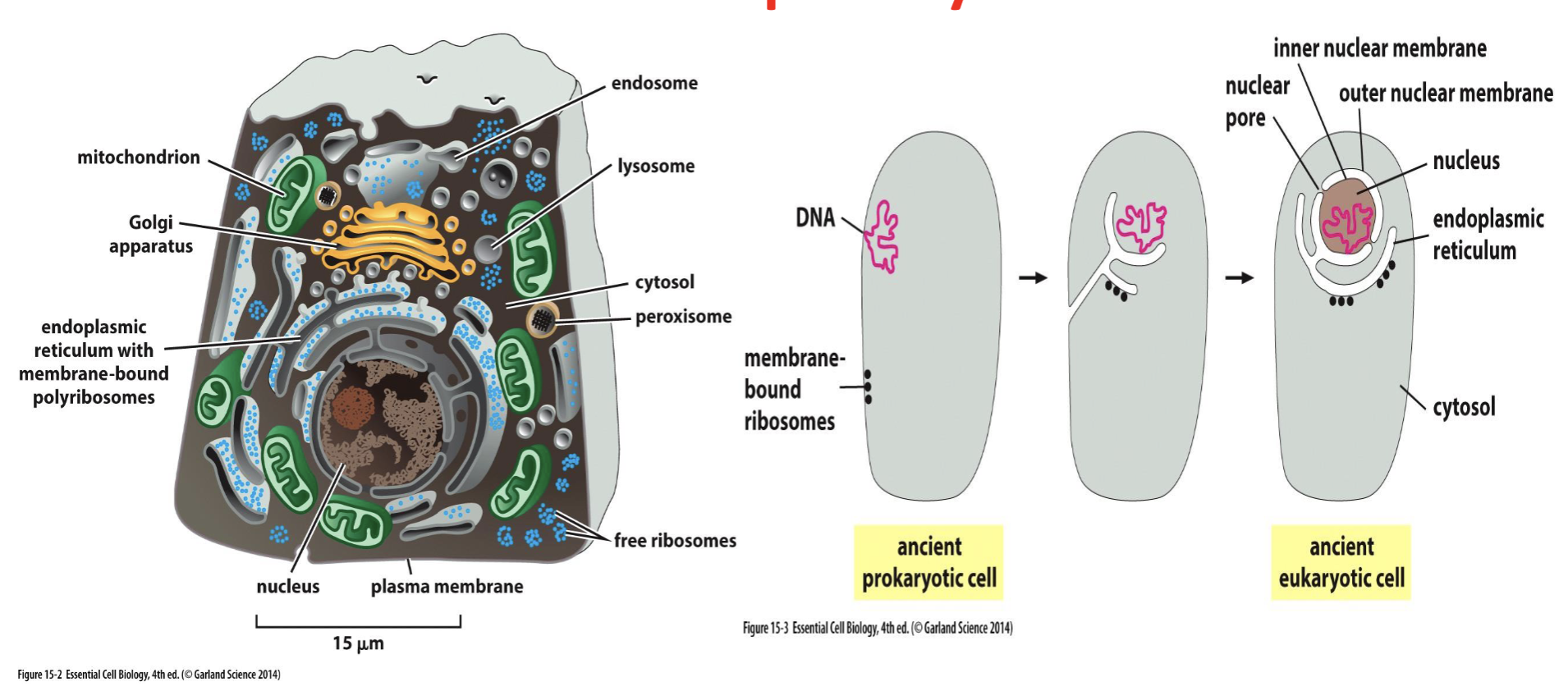
nuclear membrane + ER may have evolved from?
prokaryotic cells
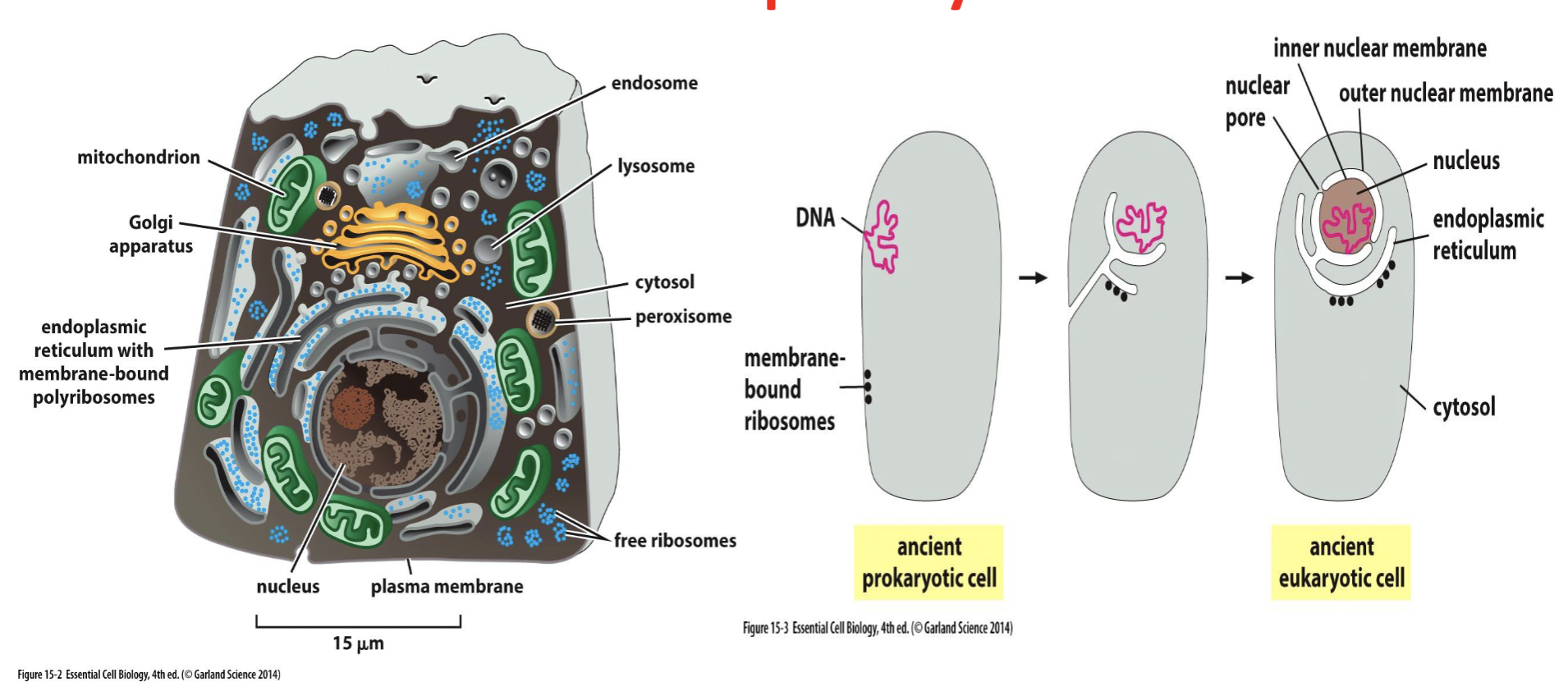
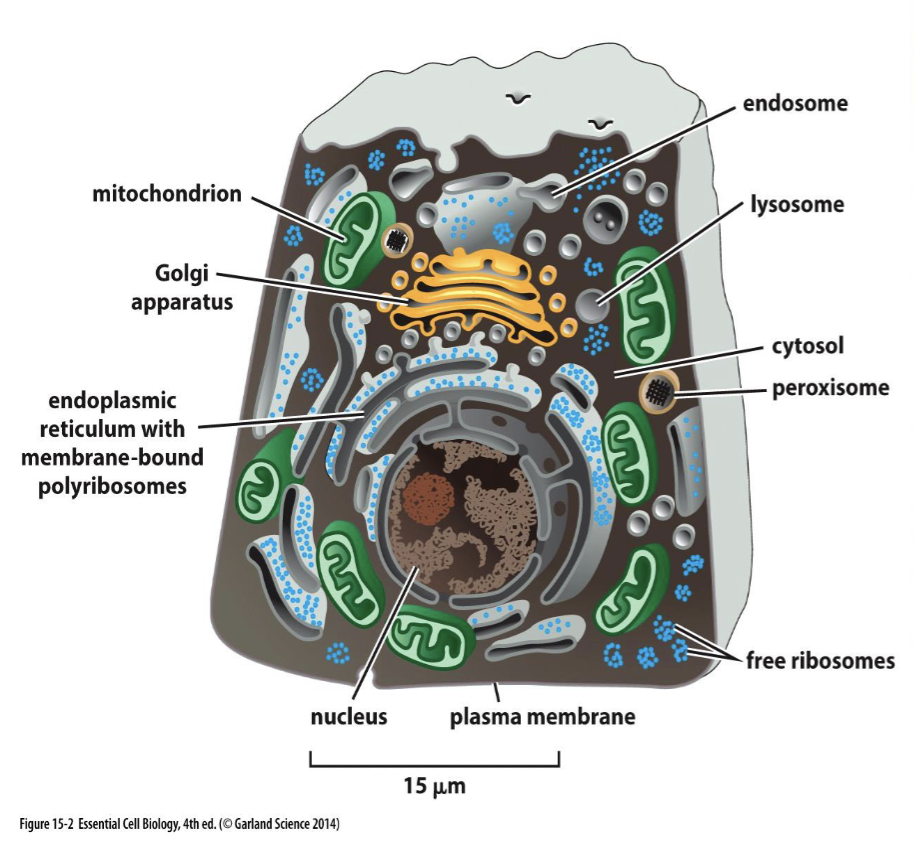
intracellular membrane-enclosed organelles
cytosol, nucleus, ER, golgi apparatus, lysosomes, endosomes, mitochondria, chloroplasts (plant cells), peroxisomes
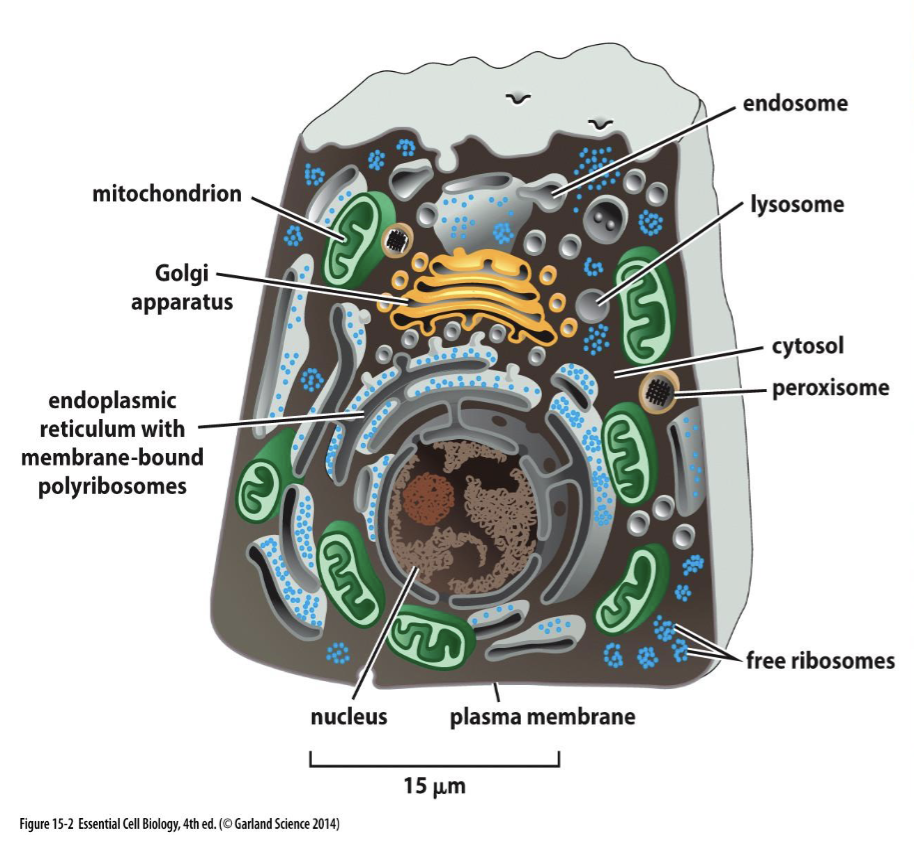
how is it possible for organelles + membranes to function?
specialized proteins that are translated by ribosomes either at the level of ER or free in cytosol
how can proteins make it to target organelle?
transport: each protein contains a short AA sequence that acts as a targeting signal, like a molecular pass that directs protein to correct organelle/membrane
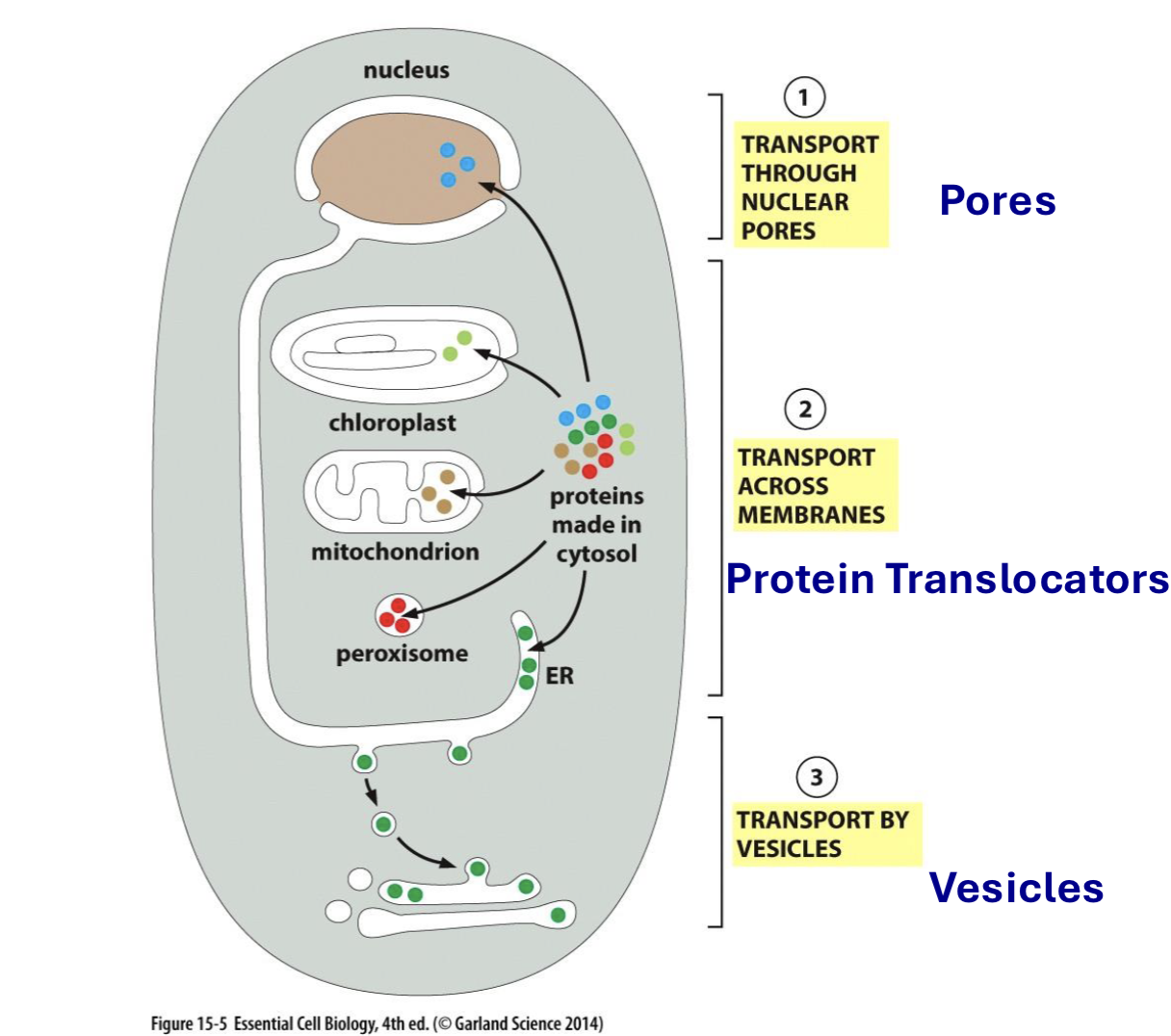
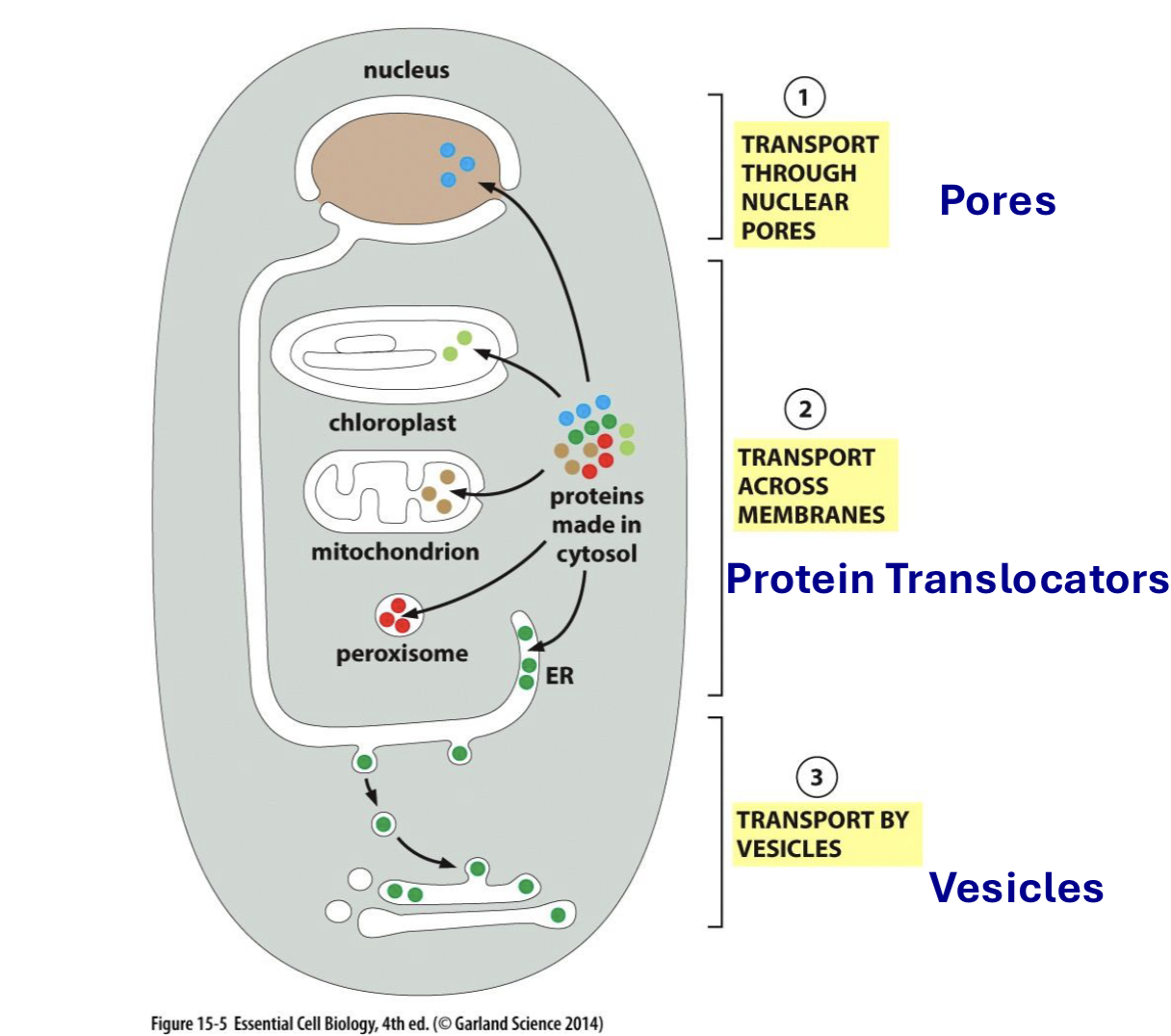
3 ways of protein transport
through nuclear pores
across membranes via protein translocators
by vesicles
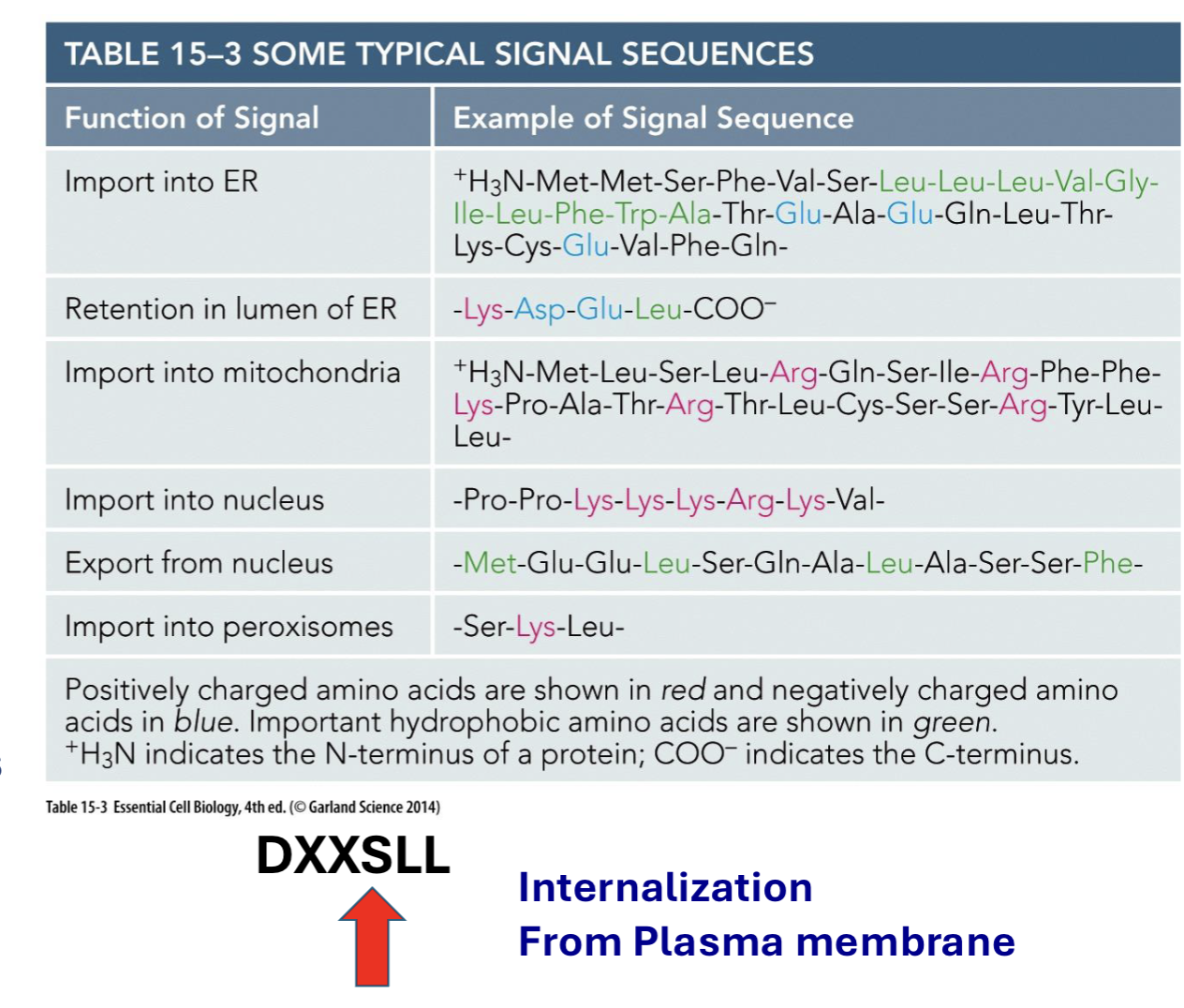
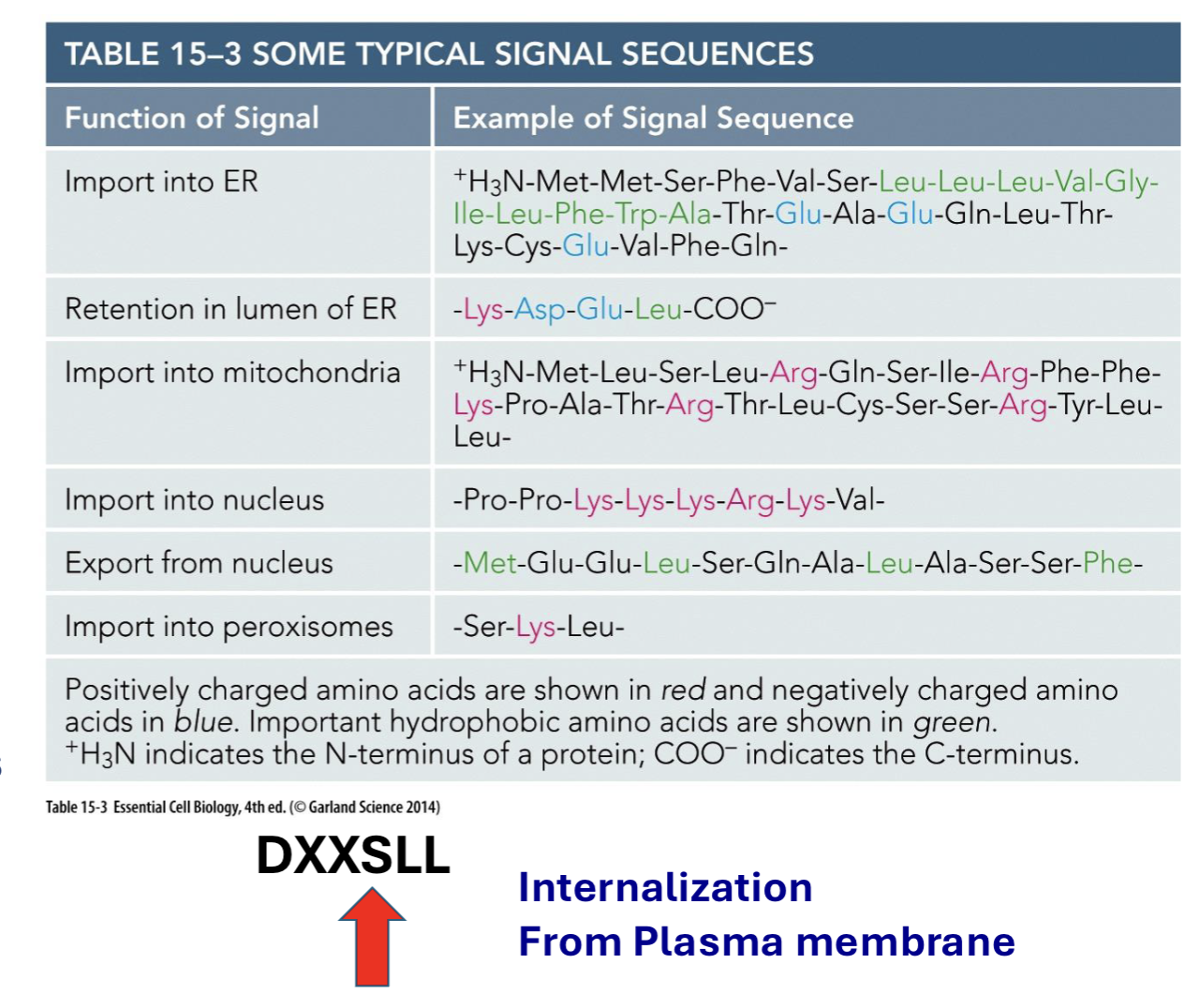
signal sequences
AA segment that acts as a target signal → directs protein to correct organelle/membrane; ex: DXXSLL internalization from plasma membrane, BACE LL/AA = bace accumulation at PM
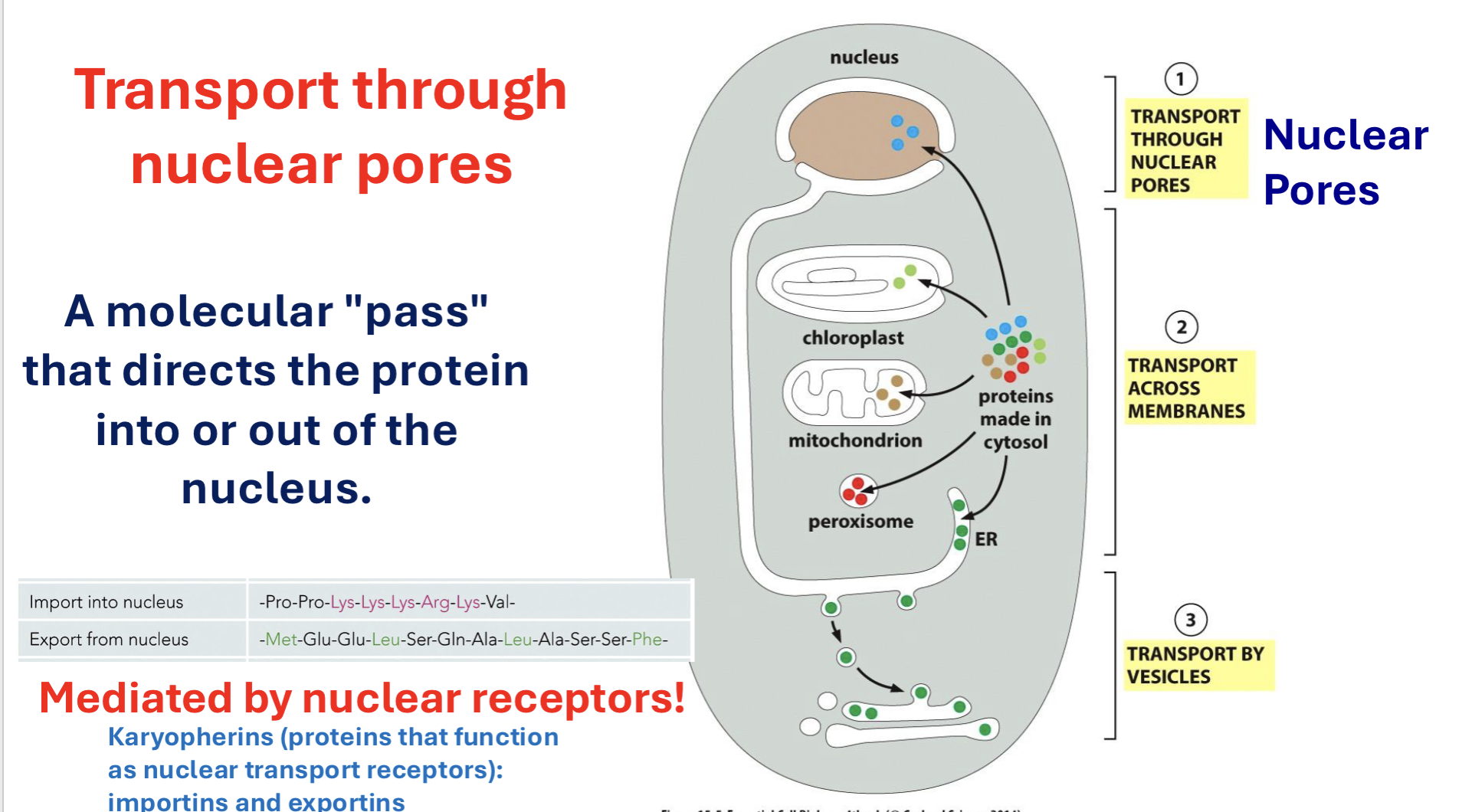
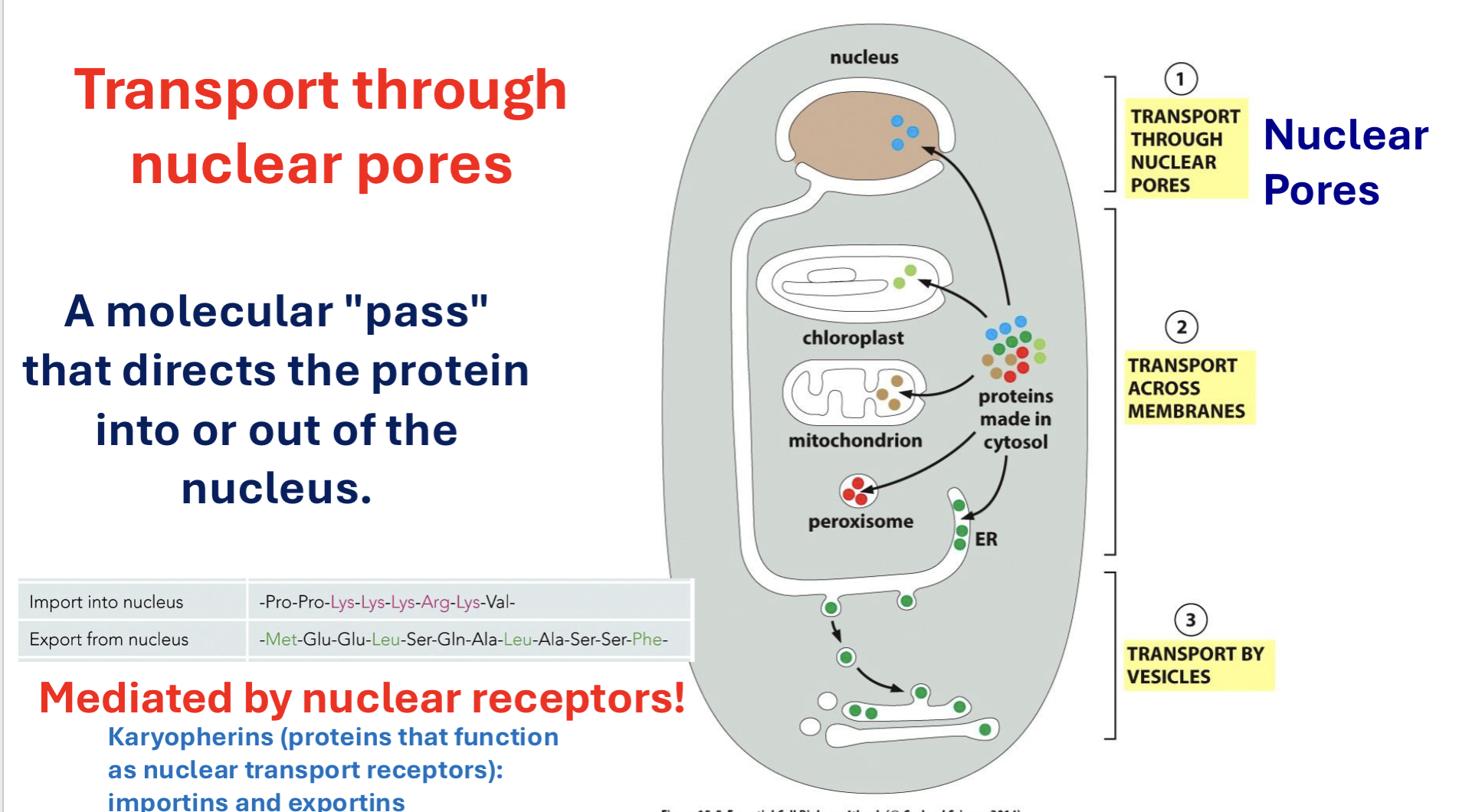
transport through nuclear pores
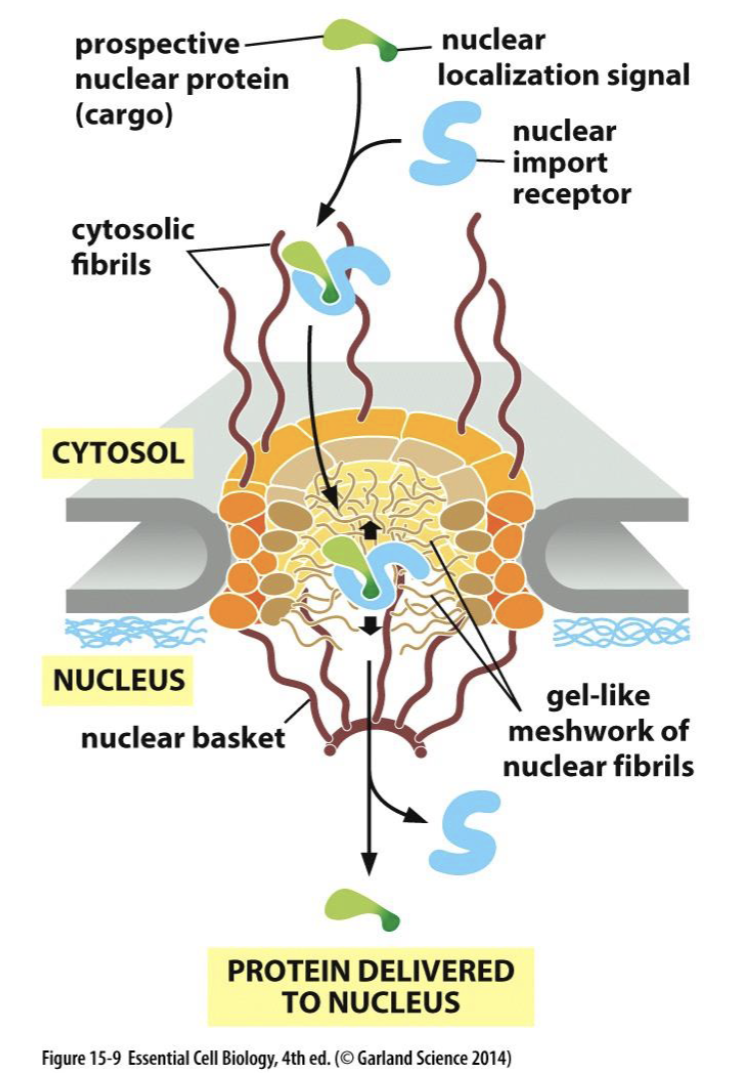
pore = molecular pass that directs protein in/out of nucleus; mediated by nuclear receptors, karyopherins are importins + exportins
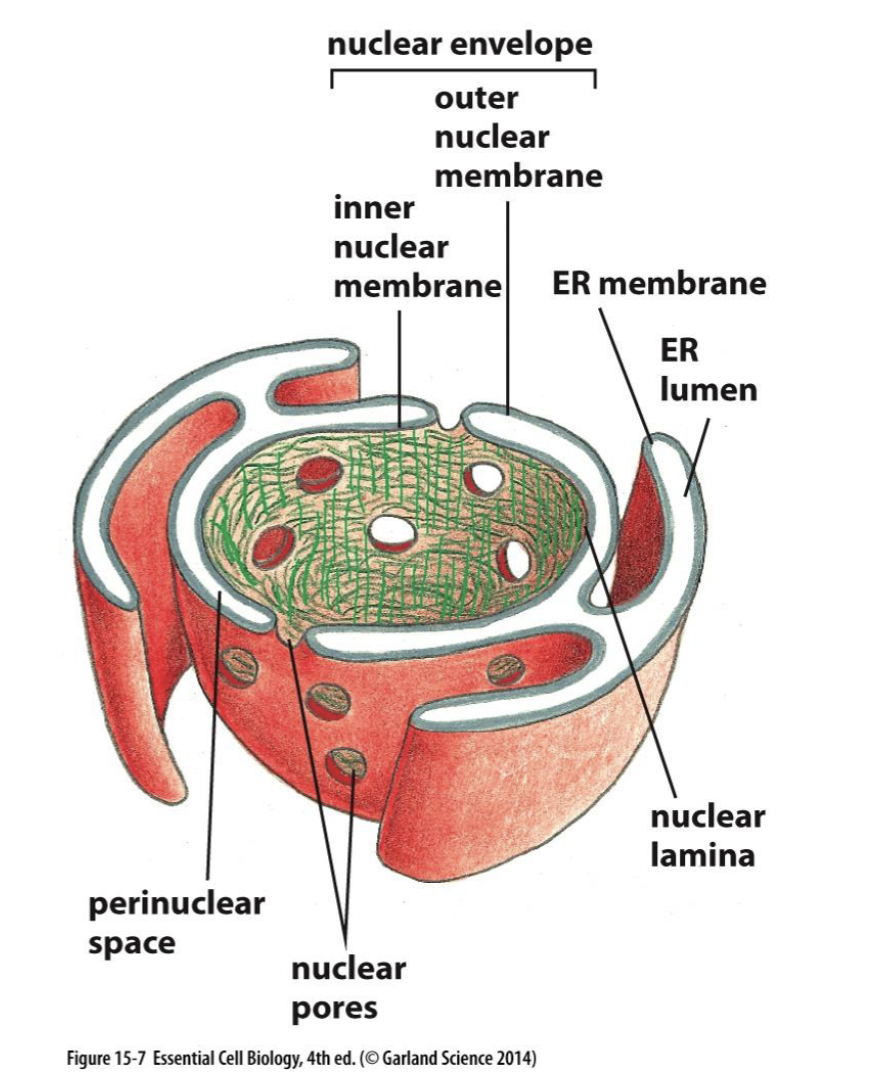
outer nuclear membrane
ts continuous w/ the ER, the most extensive membrane system in the cell
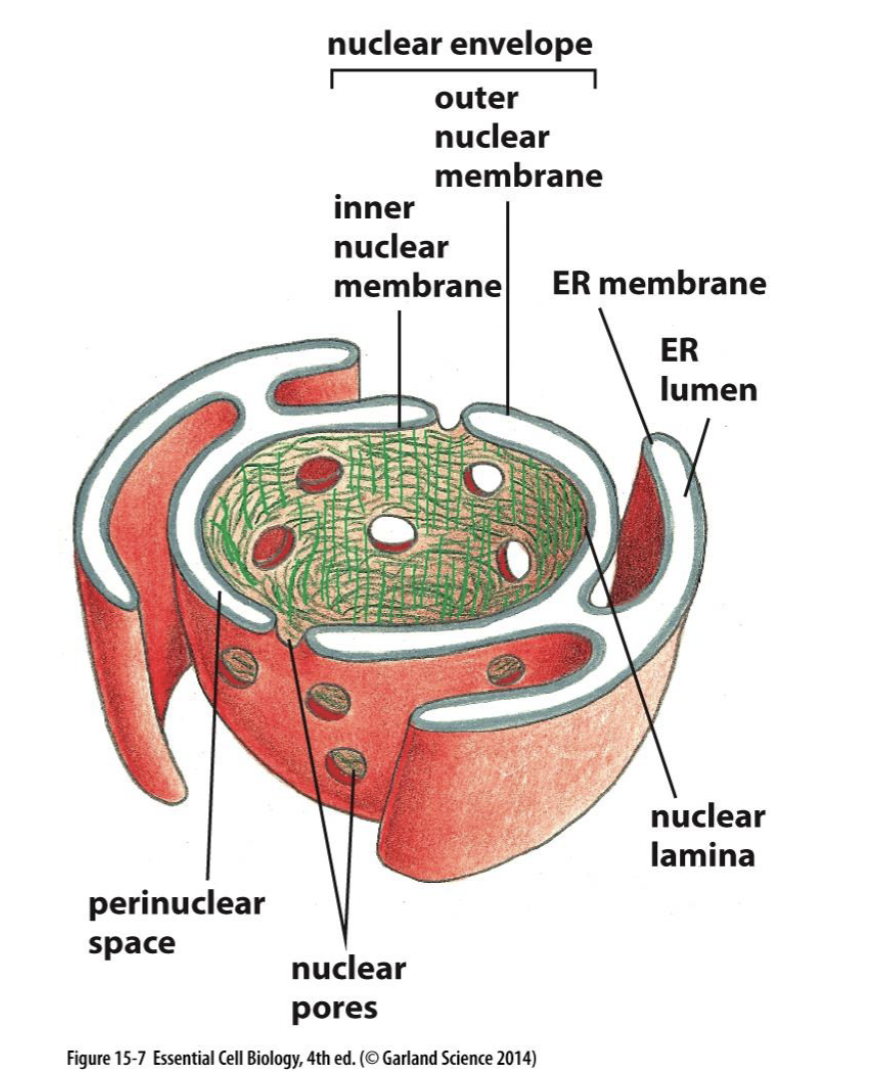
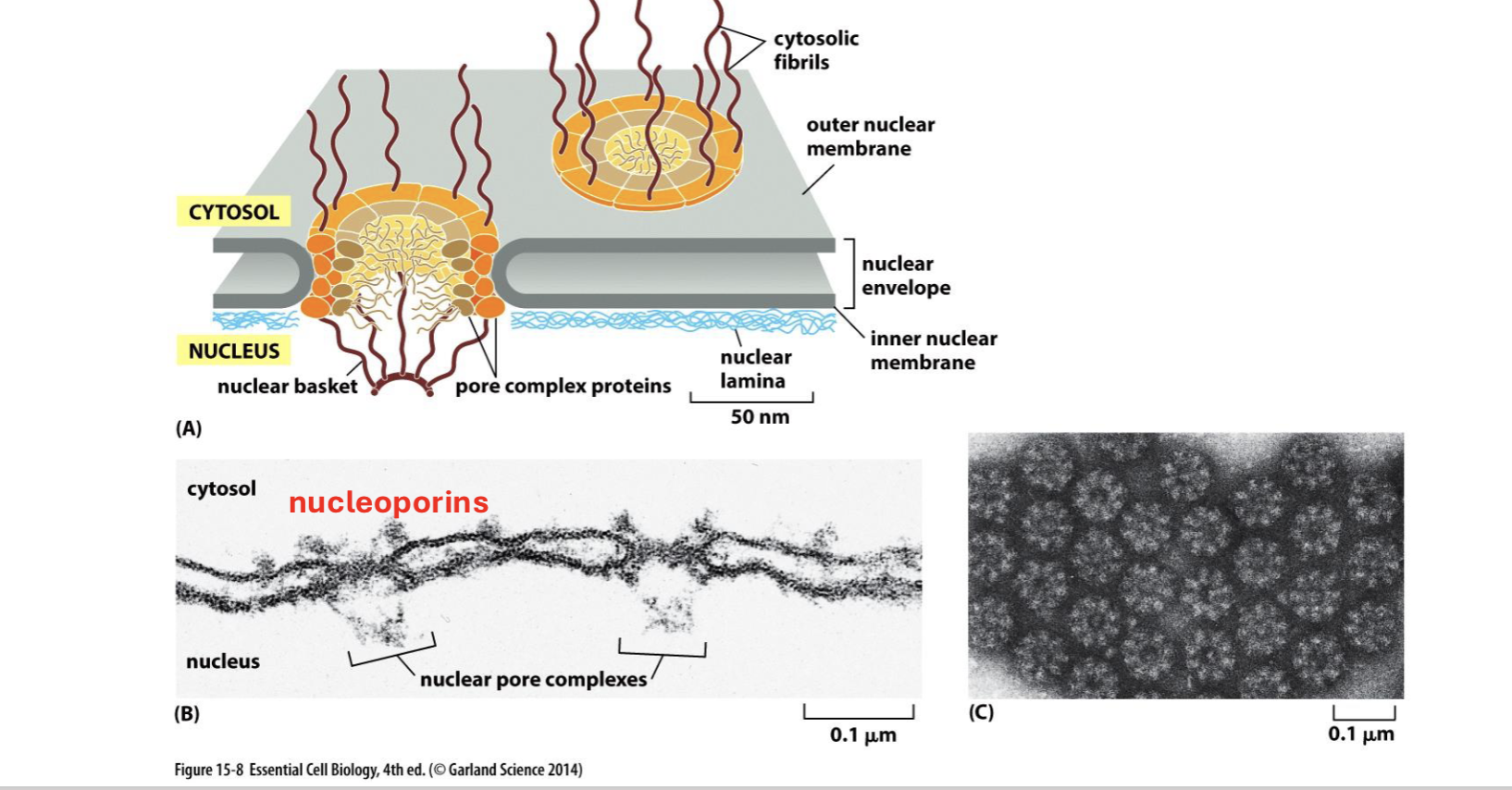
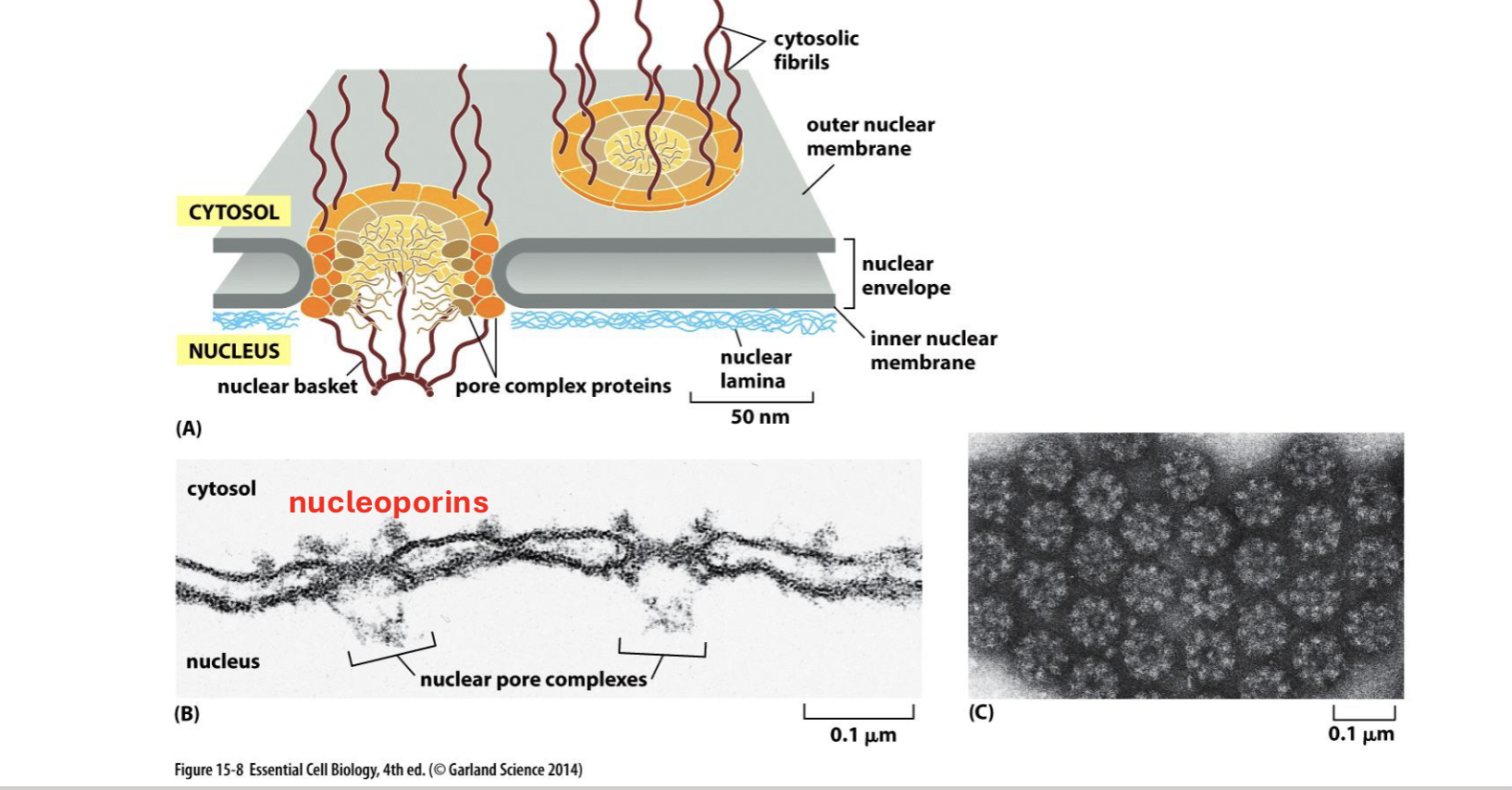
nuclear pore complex
a gate for the passage of proteins, made of nucleoporins
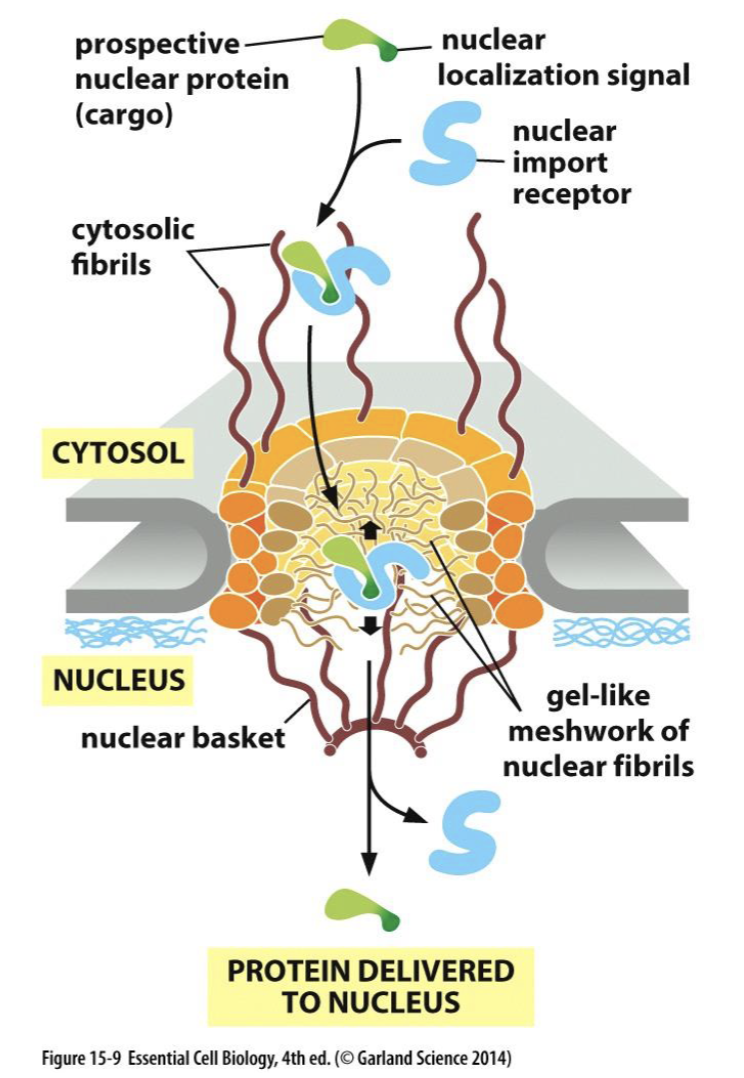
pore transport process
cargo + signal bind to receptor (karyopherin) → go through cytosolic fibrils → go through nuclear fibrils + basket → protein imported + delivered to nucleus
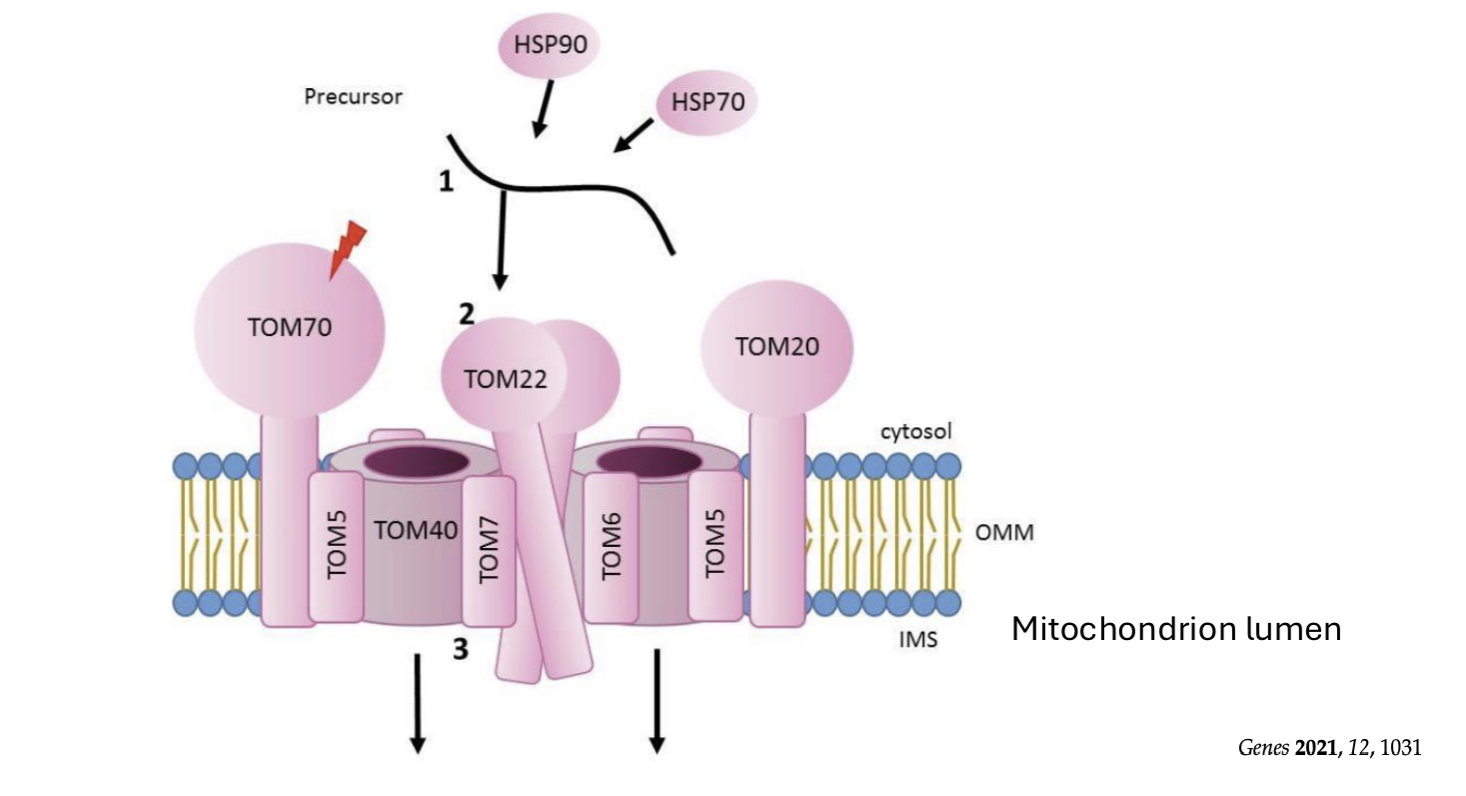
transport across membrane via protein translocators
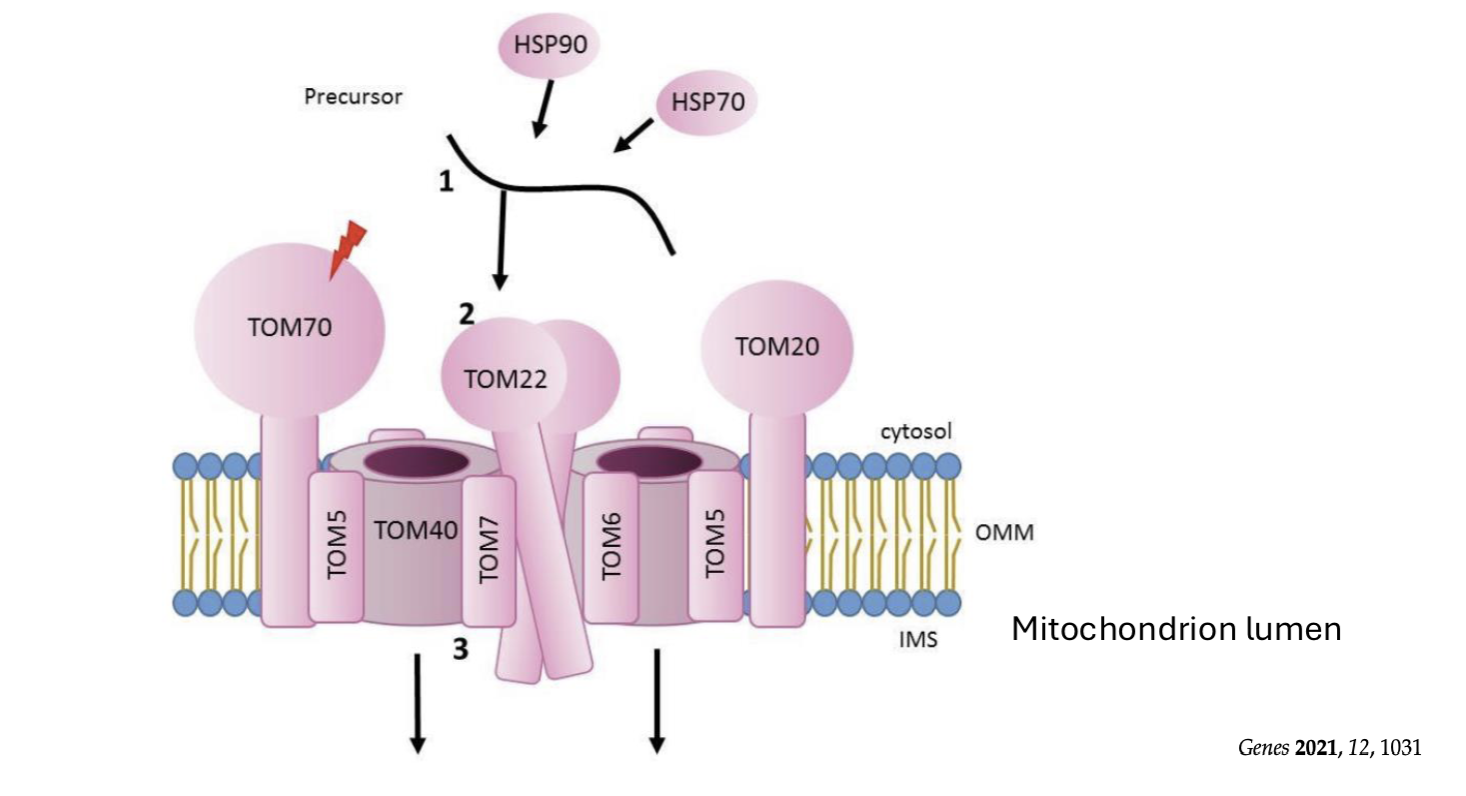
ex: mitrochondrial translocators regulate import of cytosol-translated proteins that are essential for mitrochondrial function (TOMs + TIMs)