AH Biology - Unit 1 - KA3(b) - Ion Transport Pumps and Generation of Ion Gradient
 Call Kai
 Learn
Learn Practice Test
 Spaced Repetition
 Match
Match Flashcards
 Knowt Play
1/23

There's no tags or description
Looks like no tags are added yet.
Name | Mastery | Learn | Test | Matching | Spaced | Call with Kai |
|---|
No analytics yet
Send a link to your students to track their progress
24 Terms
What can solutes (ions) carry, and what can this allow for?
Solutes (ions) can carry a net charge, they have a positive or negative charge. This can allow for an electrochemical gradient to be formed. The electrochemical gradient is the concentration gradient and the electrical potential difference combined. This difference is the difference in charge from one area to another. It is this electrochemical gradient that determines the transport of the solute.
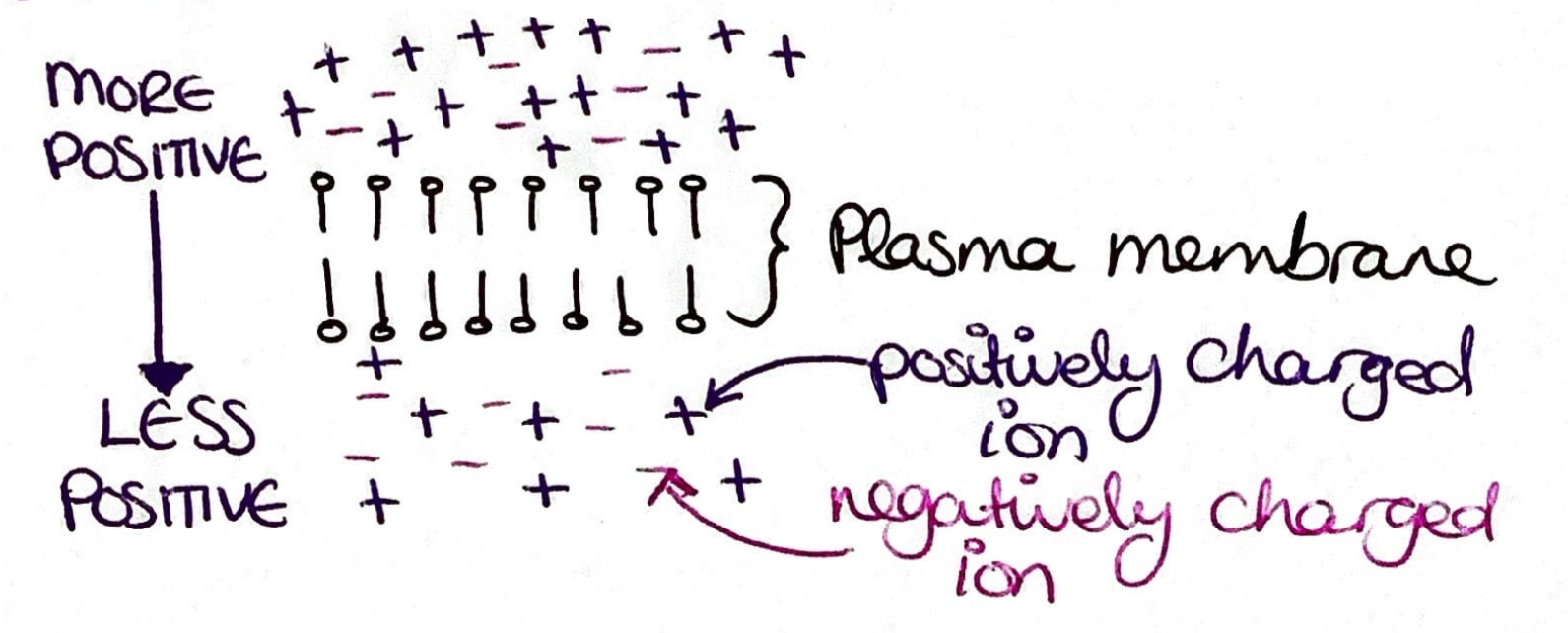
What is the membrane potential, and how is this created?
The membrane potential is the electric potential difference across a membrane, from one side to the other. This is created when there is a difference in electrical charge on the two sides of the membrane.
What do ion pumps use energy from the hydrolysis of ATP to do?
Ion pumps use energy from the hydrolysis of ATP to establish and maintain ion gradients. For example, the sodium potassium pump.
What does the sodium potassium pump do, and what does this establish?
The sodium potassium pump transports ions against a steep concentration gradient using energy directly from ATP hydrolysis. It actively transports 3 sodium ions out and 2 potassium ions in for each ATP hydrolysed. This establishes both a concentration gradient and an electrical gradient, an electrochemical gradient.
What are the stages of the sodium potassium pump?
The stages of the sodium potassium pump are:
Dephosphorylated pump has a high affinity for sodium ions inside the cell.
Three sodium ion binds to their binding sites.
ATP phosphorylates the pump.
This brings about a conformational change to the pump.
The pumps affinity for sodium ions decreases.
Sodium ions are released outside the cell.
Phosphorylated pump has a high affinity for potassium ions outside the cell.
Two potassium ions bind to their binding sites outside the cell.
The pump is dephosphorylated.
This brings about a conformational change to the pump.
The pumps affinity for potassium ions decreases
The potassium ions are taken into the cell. The pump is now back to the start.
What is stage 1 of the sodium potassium pump?
Stage 1 of the sodium potassium pump is “Dephosphorylated pump has a high affinity for sodium ions inside the cell.”
What is stage 2 of the sodium potassium pump?
Stage 2 of the sodium potassium pump is “Three sodium ion binds to their binding sites.”
What is stage 3 of the sodium potassium pump?
Stage 3 of the sodium potassium pump is “ATP phosphorylates the pump.”
What is stage 4 of the sodium potassium pump?
Stage 4 of the sodium potassium pump is “This brings about a conformational change to the pump.”
What is stage 5 of the sodium potassium pump?
Stage 5 of the sodium potassium pump is “The pumps affinity for sodium ions decreases.”
What is stage 6 of the sodium potassium pump?
Stage 6 of the sodium potassium pump is “Sodium ions are released outside the cell.”
What is stage 7 of the sodium potassium pump?
Stage 7 of the sodium potassium pump is “Phosphorylated pump has a high affinity for potassium ions outside the cell”
What is stage 8 of the sodium potassium pump?
Stage 8 of the sodium potassium pump is “Two potassium ions bind to their binding sites outside the cell.
What is stage 9 of the sodium potassium pump?
Stage 9 of the sodium potassium pump is “The pump is dephosphorylated.”
What is stage 10 of the sodium potassium pump?
Stage 10 of the sodium potassium pump is “This brings about a conformational change to the pump.”
What is stage 11 of the sodium potassium pump?
Stage 11 of the sodium potassium pump is “The pumps affinity for potassium ions decreases”
What is stage 12 of the sodium potassium pump?
Stage 12 of the sodium potassium pump is “The potassium ions are taken into the cell. The pump is now back to the start.”
Where is the sodium potassium pump found, and what does it account for?
The sodium potassium pump is found in most animal cells and accounts for a high proportion of the basal metabolic rate in many organisms.
In the small intestine, what do the sodium potassium pumps generate?
In the small intestine, the sodium potassium pumps generate a sodium ion gradient across the plasma membrane of the epethelial cells lining the inside of the small intestine. This sodium ion gradient drives the active transport of glucose out of the intestine. The active transport of glucose takes place through a glucose transporter pump in a process called glucose symport.
What happens during glucose symport?
During glucose symport, both glucose molecules and sodium ions enter the cell at the same time and in the same direction.
Sodium ions enter the cell down their concentration gradient.
Glucose is pumped into the cell against its concentration gradient.
What are the stages of glucose symport?
The stages of glucose symport are:
Sodium potassium pump pumps sodium ions out of the cell against it’s concentration gradient.
Sodium ions pass back through into the cell through glucose transporter protein, down the concentration gradient.
At the same time, glucose enters the cell, being pumped against its concentration gradient by the glucose transporter protein.
What was stage 1 of glucose symport?
Stage 1 of glucose symport is “Sodium potassium pump pumps sodium ions out of the cell against it’s concentration gradient.”
What is stage 2 of glucose symport?
Stage 2 of glucose symport is “Sodium ions pass back through into the cell through glucose transporter protein, down the concentration gradient.”
What is stage 3 of glucose symport?
Stage 3 of glucose symport is “At the same time, glucose enters the cell, being pumped against its concentration gradient by the glucose transporter protein.”