Lecture 12 (part 2): Pyrimidine Synthesis
 Call Kai
 Learn
Learn Practice Test
 Spaced Repetition
 Match
Match Flashcards
 Knowt Play
1/109

There's no tags or description
Looks like no tags are added yet.
Name | Mastery | Learn | Test | Matching | Spaced | Call with Kai |
|---|
No analytics yet
Send a link to your students to track their progress
110 Terms
in pyrimidine synthesis; the ring is build _______ then _______ to ribose
first; attached
what molecule make up the pyrimidine ring?
Gln; HCO3-; Asp
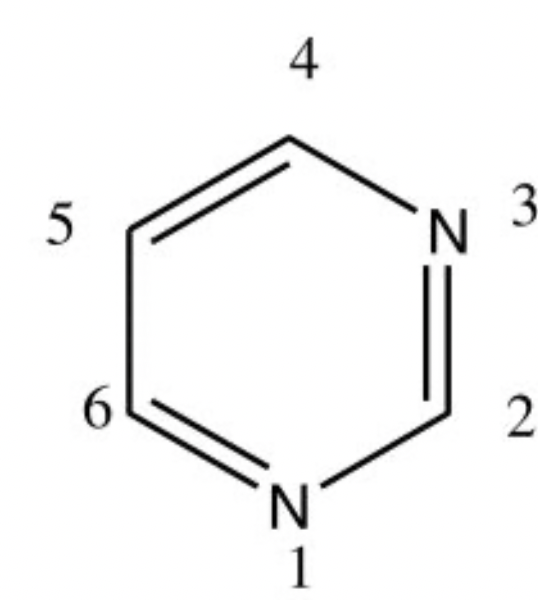
what molecule do carbons 5, 6 and nitrogen 1 come from?
aspartate
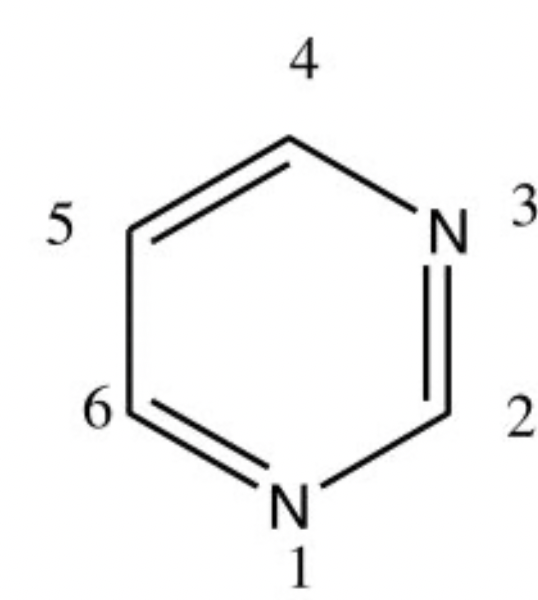
what molecule does nitrogen 3 come from?
glutamine amide
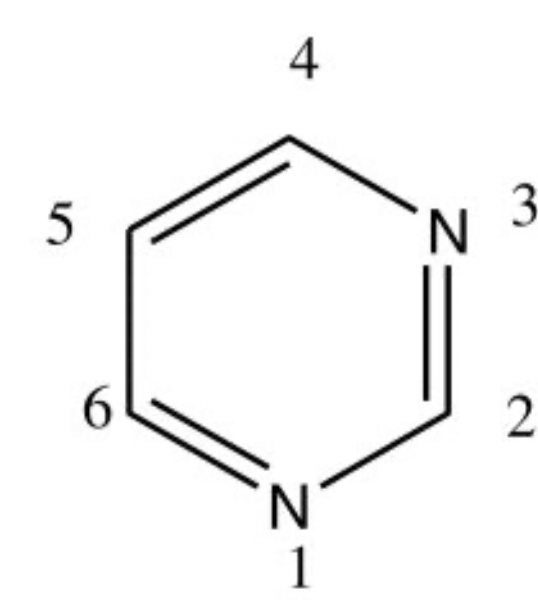
what molecule does carbon 2 come from?
HCO3-
what enzyme catalyzes the first step of pyrimidine synthesis? (to form the ring)
CPS II
CPS-II combines _______ and ________ to form __________
HCO3; Gln amide; carbamoyl-phosphate
in the second step of pyrimidine synthesis; carbamoyl phosphate reacts with _________ to form _________
aspartate; carbamoyl-aspartate
what enzyme forms carbamoyl aspartate?
aspartate transcarbamylase
what happens to carbamoyl aspartate in pyrimidine synthesis?
ring closes
what molecule forms from carbamoyl aspartate ring closing?
dihydroorotate
what does dihydroorotate form?
orotate
what is the difference in structure between orotate and dihydroorotate?
double bond in the ring
once orotate is formed, it reacts with _________ to form ________
PRPP; OMP
what does OMP stand for?
orotine monophosphate
what molecule forms when OMP undergoes a decarboxylation?
UMP
what is the reaction pathway for pyrimidines? (not a specific base)
HCO3 + Gln = carbamoyl-phosphate + aspartate = carbamoyl aspartate → dihydroorotate → orotate → OMP → UMP
UMP is first converted into _______ and then ______
UTP; CTP
what enzyme converts UMP to UDP?
UMP kinase
is NDK base specific?
no, works on all bases
is UMP kinase base specific?
yes, each base has their own kinase
what does NMP kinase do?
add a second phosphate
what does NDK do?
add a third phosphate
what enzyme converts UTP to CTP?
CTP synthase
UTP is converted into CTP using a molecule of _______. The enzyme ________ replaces the ______ group with a ________ group
glutamine; CTP syntheses ketone; amino
does synthesizing CTP from UTP require an ATP?
yes, 1 ATP
what enzymes are CAD made up of? (3)
CPSII; ATCase; DHOase
what is DHOase?
dihydrooritase (oxidizes)
what 2 functions does UMP synthase do?
make OMP, decarboxylate to UMP
what 2 molecules activate CAD activity?
PRPP and ATP
ATP and PRPP activating CAD is an example of
substrate activation
what 3 molecule inhibit CAD?
UDP, UTP, CTP
UDP, UTP and CTP inhibiting CAD is an example of _________
product inhibition
CTP synthase is activated by ________ and inhibited by _______
GTP; CTP
what is the first step of nuceloside Triphosphate synthesis?
base specific kinases generate NDPs
what is the second step of nucleoside Triphospahte synthesis?
NDK generate NTPs
base specific kinases generate _______
NDPs
NDKs generate _______
NTPs
what enzyme converts GMP to GDP?
GMP kinase
what enzyme converts AMP to ADP?
adenylate kinase
what enzyme converts UMP to UDP?
UMP/CMP kinase
what drives the reaction of NMPs to NDPs?
ATP hydrolysis (and high [ATP])
most of the carbon flux in nucleotide metabolism generates _______(NTPs or dNTPs)
NTPs
most cells have much more __________ than _________
RNA; DNA
what are the only 2 purposes of dNTPs?
DNA synthesis and repair
the main difference between dNTPs and NTPs are a missing __________ at the ________ carbon
hydroxyl; 2’
what base is ONLY found as a dNTP?
Thymine
does the cell synthesize dUTP?
yes, but rapidly converted to dTTP
what enzyme synthesize dNTPs?
RNR
what does the enzyme RNR do?
remove hydroxyl group from NTPs (synthesizes dNTPs)
how many phosphates do the nucleotides have when they are used for making deoxygenated nucleotides by RNR?
2 (NDPs)
After RNR removes a hydroxyl group, the dNDPs undergo addition of a ____________ to form _________ by the enzyme ________
phosphate; dNTPs; NDK
what type of mechanism is used by RNR?
free radial mechanism
what could happen if a proper balance of dNTPs are maintained in the cell
increase mutations; lethal
how many subunits does RNR have?
4
RNR stand for?
ribonuclotide reductase
RNR has 2 ______ subunits and 2 ______ subunits
alpha; beta
the beta subunit of RNR is the ___________ protein
radical generating
the alpha subunit of RNR is the ________ protein
nucleotide-binding
EACH alpha-subunit has ______ catalytic site; and _______ allosteric site
1; 2
the beta subunit of RNR generates a _________ at the B site
tyrosine radical
the free radical generated by the B subunit of RNR is then used at the ______________ site
alpha-active
RNR balances the synthesis of dNTPs via __________ binding of _______ at the _________ site
sequential; dNTPs; specificity
what binds at the specificity site of RNR?
dNTPs
what binds to the active site of RNR?
ATP and dATP
when ATP is bound to RNRs active site, the enzyme is _________
ON
when dATP is bound to RNRs active site, the enzyme is _________
OFF
RNR uses _______ catalysis
sequential
when first turning on RNR, _______ binds to the active site, and ______ binds to the specificity site
ATP; ATP also
what binds to the catalytic site?
NDP substrate
once RNR forms the product, they _______ the enzyme and are converted into the _______ form, which will regulate RNR at the ________ site
leave; dNTP; specificity
what molecules regulate RNR (general)
dNTPs
how do the products of RNR regulate the enzyme’s activity?
they bind to specificity site
increasing concentrations of dATP will ________ ATP in the activity site and turn the enzyme ________
replace; OFF
what is the order of synthesis dNDP synthesis for RNR?
dUDP/dCDP, dGDP, dATP
starting from UMP, we need _____ enzymes to synthesize dTTP
5
what enzyme converts UMP to UDP?
ribonucleotide kinase (UMP kinase)
what converts UDP to dUDP?
RNR
what converts dUDP to dUTP?
NDK
what is dUTP immediately converted to?
dUMP
why is dUTP immediately converted into dUMP instead of dTTP?
very reactive, want to get rid of it quickly to prevent buildup
what enzyme converts dUTP to dUMP?
dUTP phosphatase (dUTPase)
if the concentration of dUTP is too high, it could be:
incorporated into DNA
what enzyme is used to convert dUMP to dTMP?
thymidylate synthase
what enzyme converts dTMP to dTDP?
thymidylate kinase
what enzyme converts dTDP into dTTP?
NDK
why does dUTP → dUMP occur so quickly?
hydrolysis of PP (very energetically favorable)
how does thymidylate synthase convert dUMP to dTMP?
adds a methyl group
what cofactor is used by thymidylate synthase?
THF
where does the methyl group in dTMP come from?
N5,N10-methylene THF
the synthesis of dTMP is connected to _________ metabolism and ________
amino acid; one carbon metabolism
what enzyme is used to regenerate THF after donating a methyl group to dTMP?
dihydrofolate reductase
nucleoside bases are degraded to _______ and _______
uric acid; urea
nucleic acids are decomposed into oligonucleotides by ________
endonuclease
oligonucleotides are decomposed into NMPs by _________
exonuclease
NMPs are converted into nucleosides (remove phosphate) by _________
nucleotidases
what enzyme removes the ribose group from nucleosides?
nucleoside phosphorylase
purine bases are degraded into _________
uric acid
pyrimidine bases are degraded into _______
urea
endonuclease convert _________ into _________
nucleic acids; oligonucleotides