Fetal Pig Anatomy and Organ Functions: A Study Guide
 Call Kai
 Learn
Learn Practice Test
 Spaced Repetition
 Match
Match Flashcards
 Knowt Play
1/86

There's no tags or description
Looks like no tags are added yet.
Name | Mastery | Learn | Test | Matching | Spaced | Call with Kai |
|---|
No analytics yet
Send a link to your students to track their progress
87 Terms
Abdomen
The part of the body that encloses the stomach, intestines, and liver.
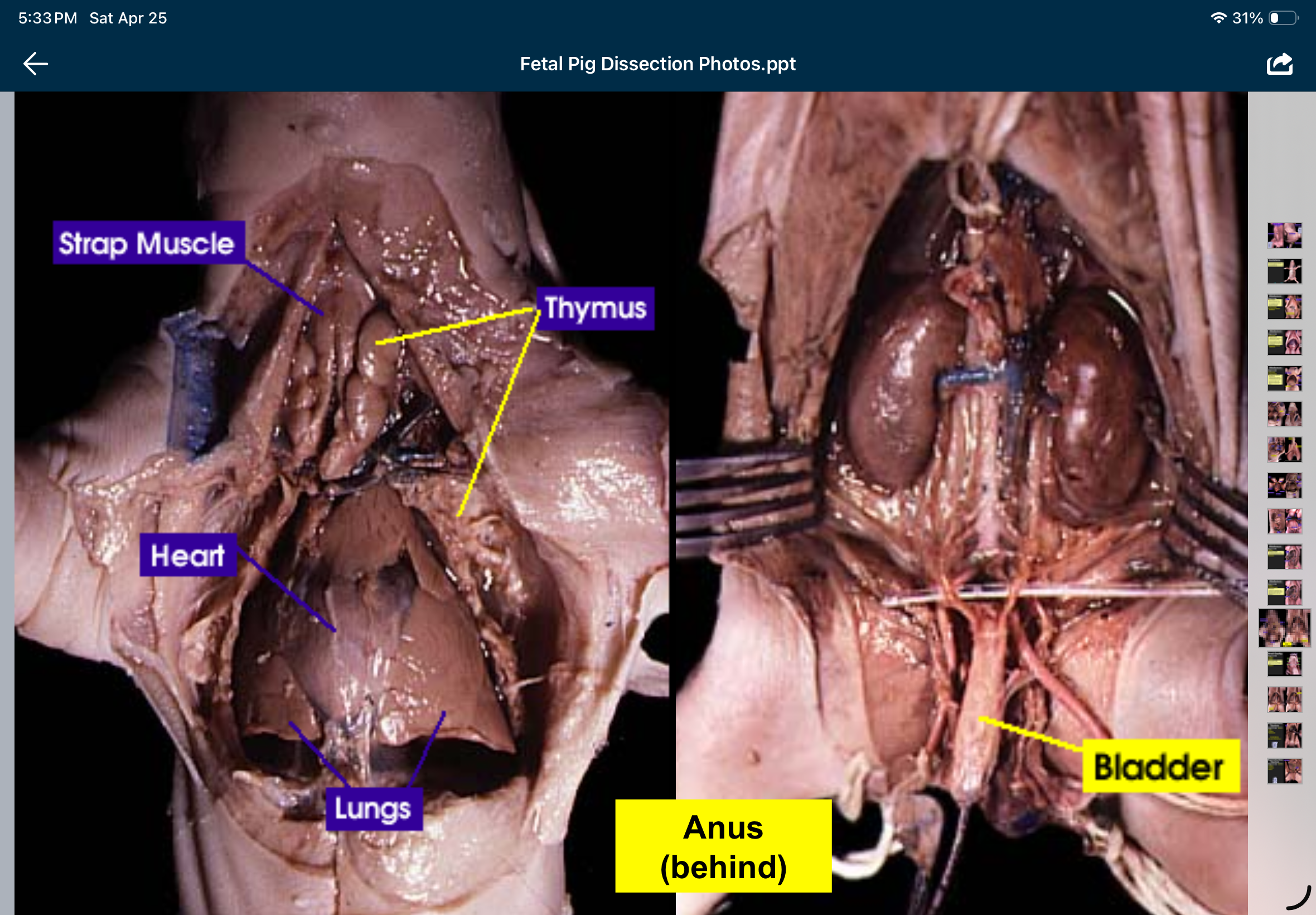
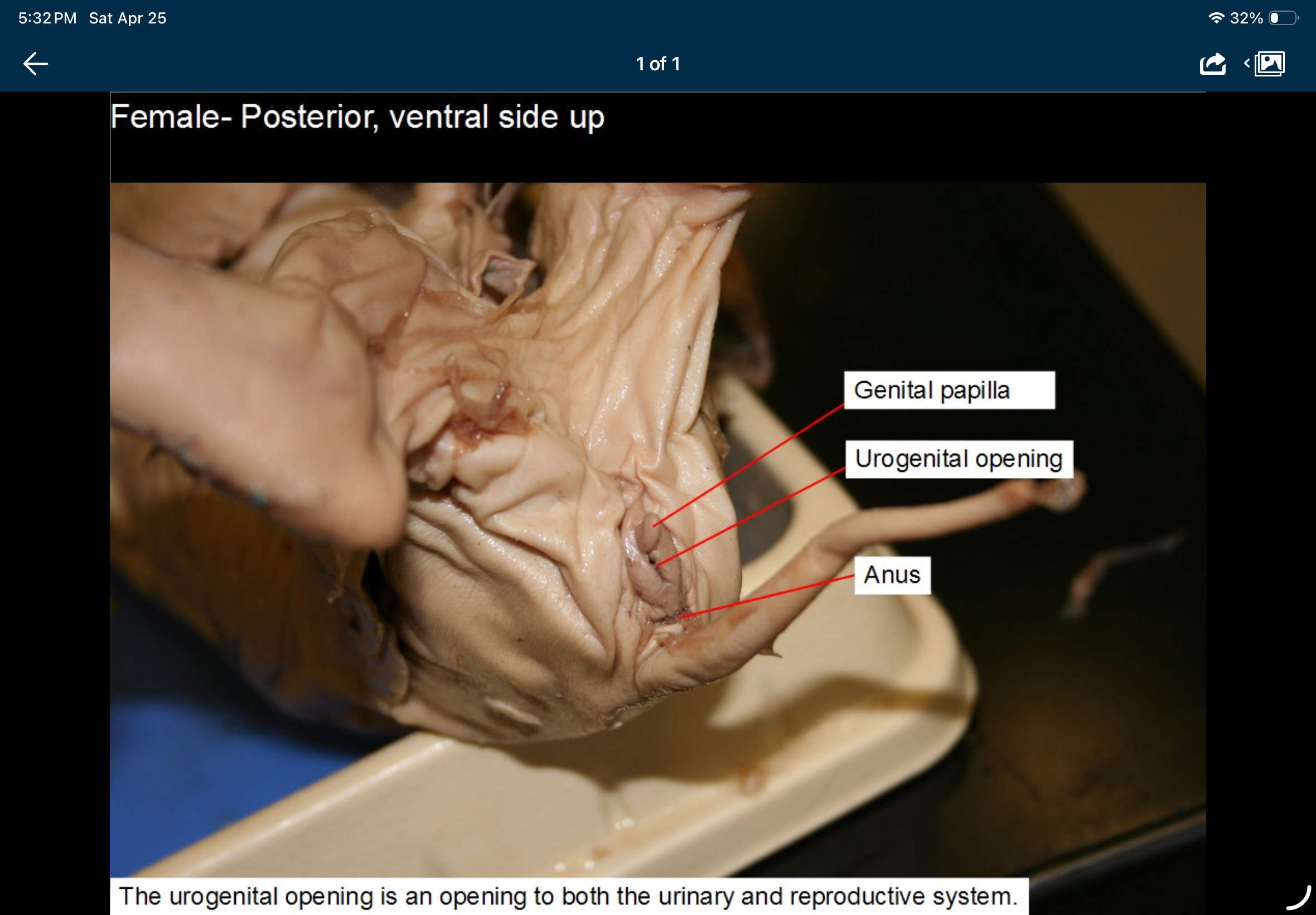
Anus
The opening at the end of the digestive system from which feces (waste) exits the body.
Bronchial tubes
Branching tubes that carry oxygen from the nose and mouth into the lungs.
Cerebrum
The large, rounded structure of the brain.
Coronary vein
Any one of the veins that drains blood from the heart.
Cranium
The portion of the skull enclosing the brain; the braincase.
Diaphragm
A muscle that separates the abdominal and thoracic cavities and functioning in respiration.
Epiglottis
The structure that prevents food and liquid from entering the trachea during swallowing.
Esophagus
The tube for the passage of food to the stomach.
Gallbladder
A digestive organ that stores and releases digestive chemicals into the small intestine.
Heart
Pumps blood throughout the organism.
Kidneys
Organs that maintain proper water and electrolyte balance, regulate acid-base concentration, and filter the blood of wastes, which are then excreted as urine.
Large intestine
Absorbs water and transports waste.
Larynx
The part of the respiratory tract that contains the vocal cords.
Liver
A large organ that filters toxins from the blood.
Lung
Transports oxygen into the bloodstream.
Mouth
The first part of the digestive system, where food enters the body.
Ovary
Produces eggs in the female.
Pancreas
A long, irregularly shaped gland that secretes digestive enzymes. produces insulin and glucagon to regulate glucose levels in the bloodstream and secretes digestive enzymes
Pulmonary artery
An artery that carries venous blood from the right ventricle of the heart to the lungs.
Rectum
The lower part of the large intestine, where feces are stored before they are excreted.
Salivary glands
Glands located in the mouth that produce saliva to break down carbohydrates.
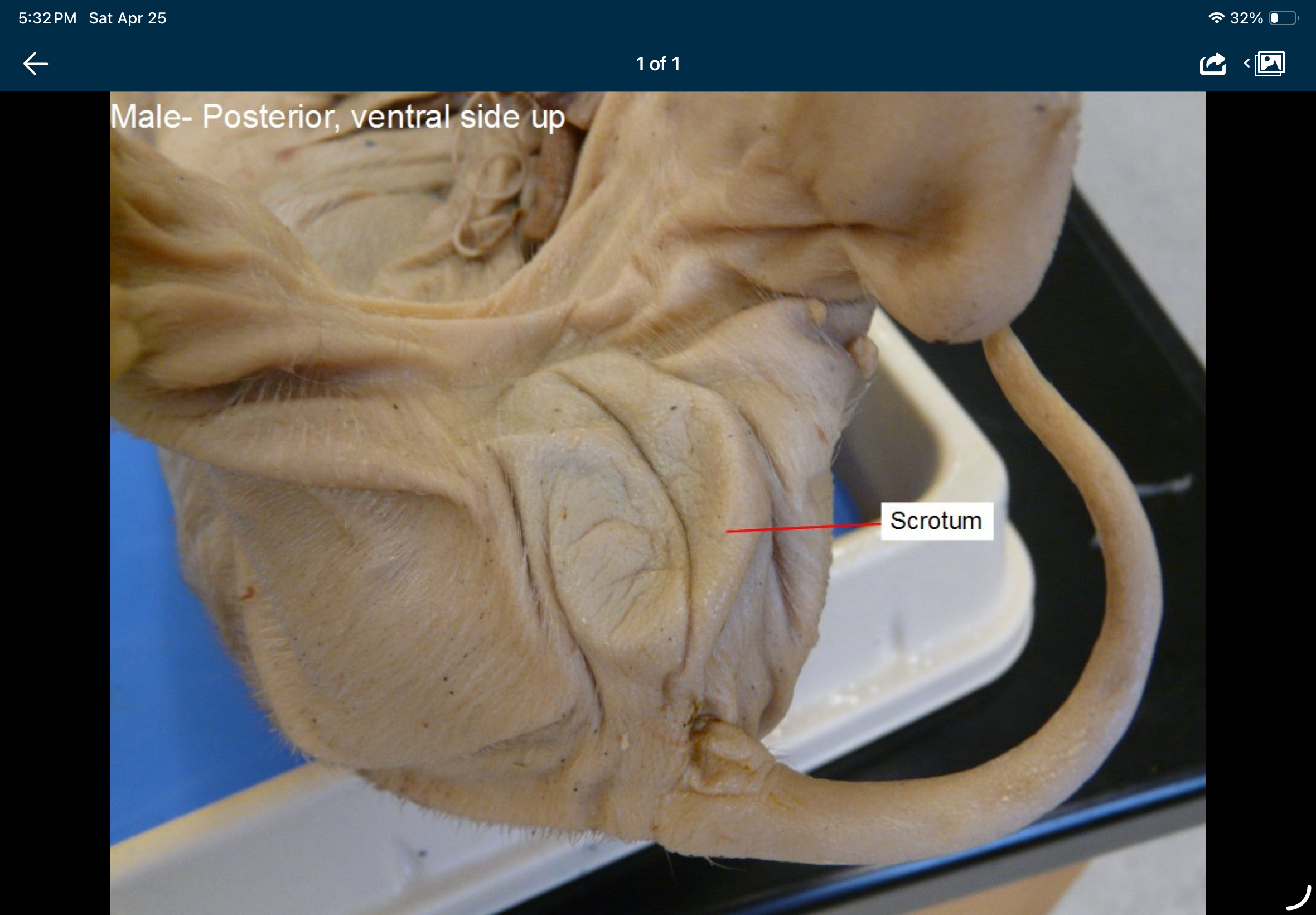
Scrotum
Contains testicles in the male.
Small intestine
Where most digestion and absorption of food takes place.
Spleen
Stores blood, destroys old blood cells, and filters foreign substances from the blood.
Stomach
An organ that is attached to the esophagus for chemical and mechanical digestion.
Thoracic cavity
Chest cavity including the heart, lungs, and trachea.
Thyroid gland
A gland that produces various hormones, such as triiodothyronine and calcitonin.
Trachea
A thin-walled tube of tissue that carries air to the lungs. Also called windpipe.
Umbilical cord
The flexible structure connecting a fetus with the placenta for food and waste removal.
Ureter
Tubes that transport urine from the kidney to the bladder.
Urethra
Tube that connects the bladder to outside the body.
Urinary bladder
Organ that collects and stores urine.
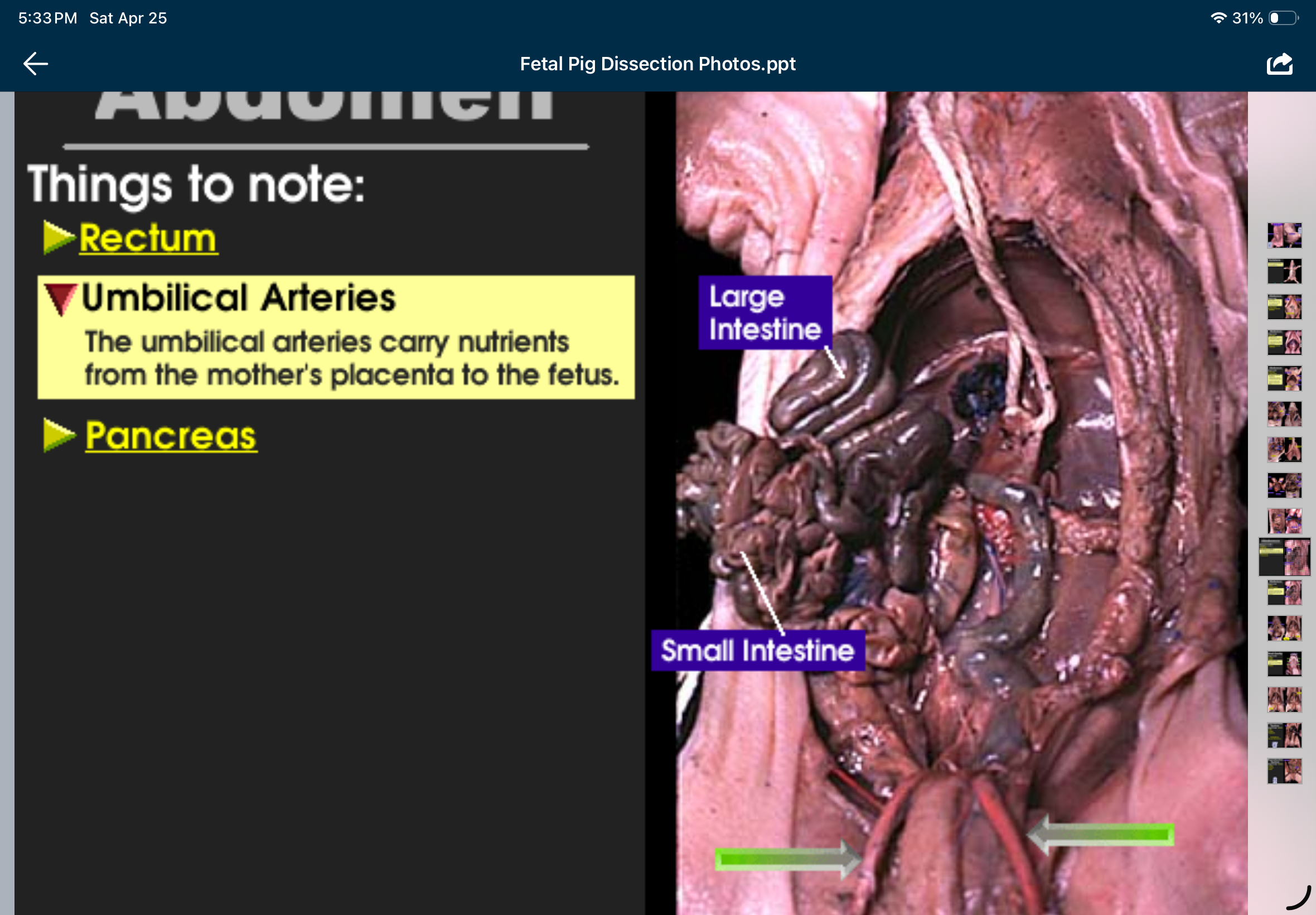
Umbilical arteries
carry deoxygenated blood from the fetus to the placenta
umbilical vein
delivers oxygenated blood from the placenta to the fetus
scrotal sac (male)
contains testes
Genital Papilla (female)
A patch of skin covering the opening of the vagina.
stomach
large muscular sac that continues the mechanical and chemical digestion of food
cardiac sphincter
A circular muscle located between the esophagus and the stomach
pyloric sphincter
Controls passage of food from stomach to small intestine
Villi
Tiny finger-shaped structures that cover the inner surface of the small intestine and provide a large surface area through which digested food is absorbed
pericardium
Double-layered membrane surrounding the heart.
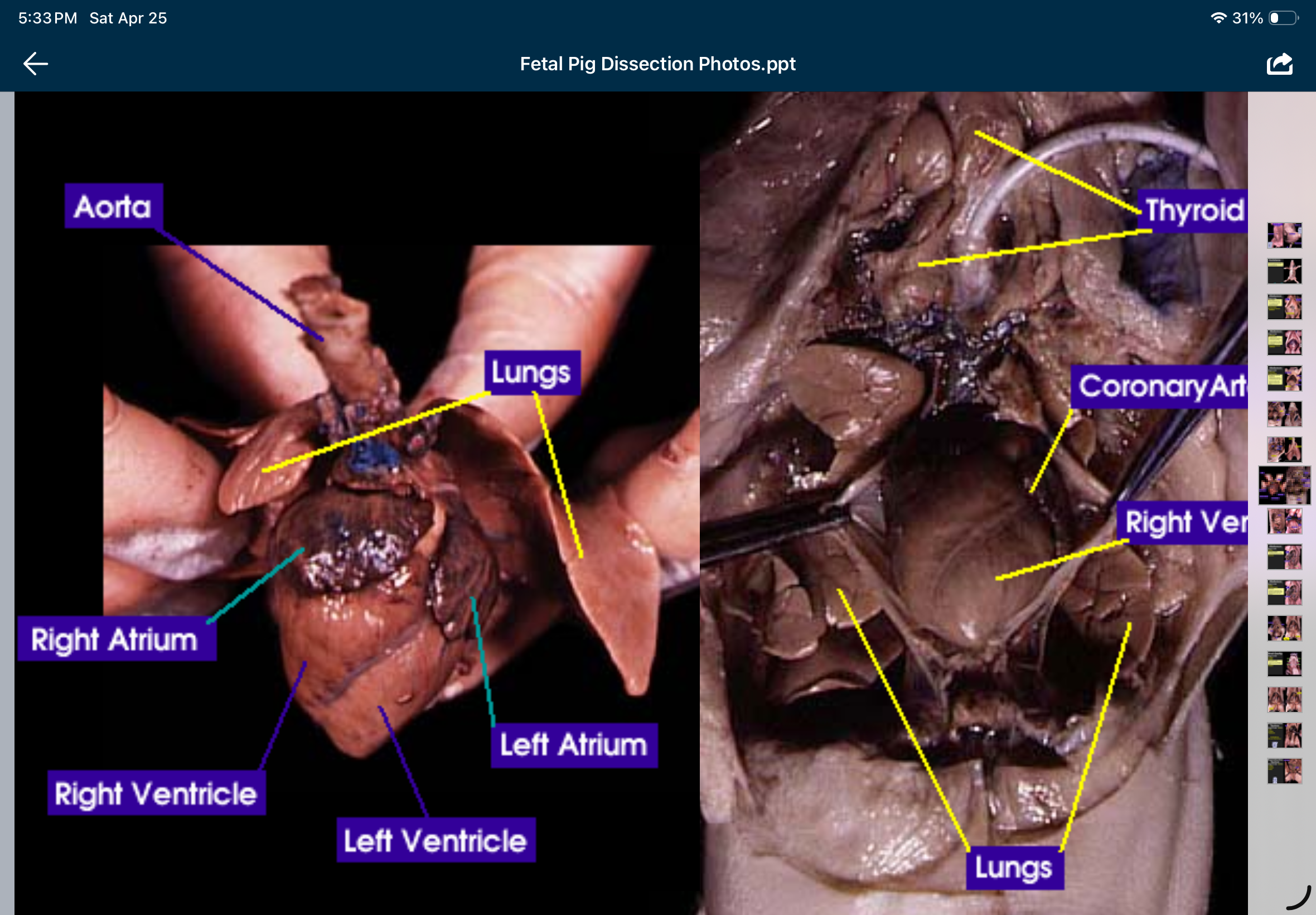
Atria (left and right)
anterior heart chambers (upper)
right atrium holds deoxygenated blood
left atrium holds oxygenated blood
Ventricles (left and rigtht)
the two lower chambers of the heart
thymus glands
large elongated masses extending from the throat region down over the cranial portion of the heart
vena cava (superior and inferior)
These two major veins return blood from the body to the right atrium
carotid arteries
the major arteries that carry blood upward to the head
hard palate in pigs
roof of the mouth
soft plate
Forms a partition between the mouth and nasopharynx; posterior (further back in roof mouth)
glottis
Opening between vocal cords
Tongue
manipulates food for chewing and swallowing; a taste organ
salivary glands
Glands of the mouth that produce saliva, a digestive secretion
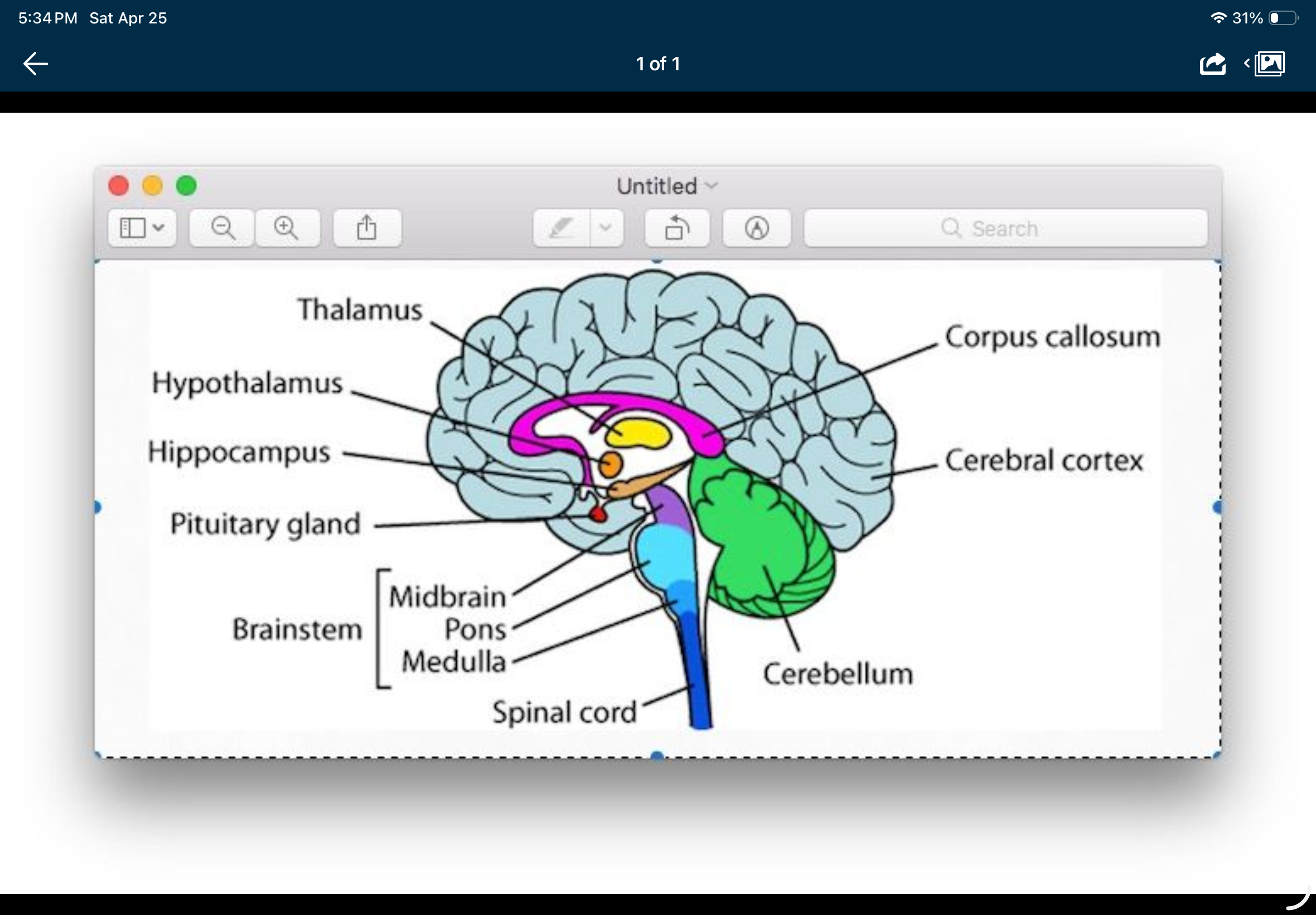
brain
an organ of soft nervous tissue contained in the skull of vertebrates, functioning as the coordinating center of sensation and intellectual and nervous activity.
Female posterior lqb
pic
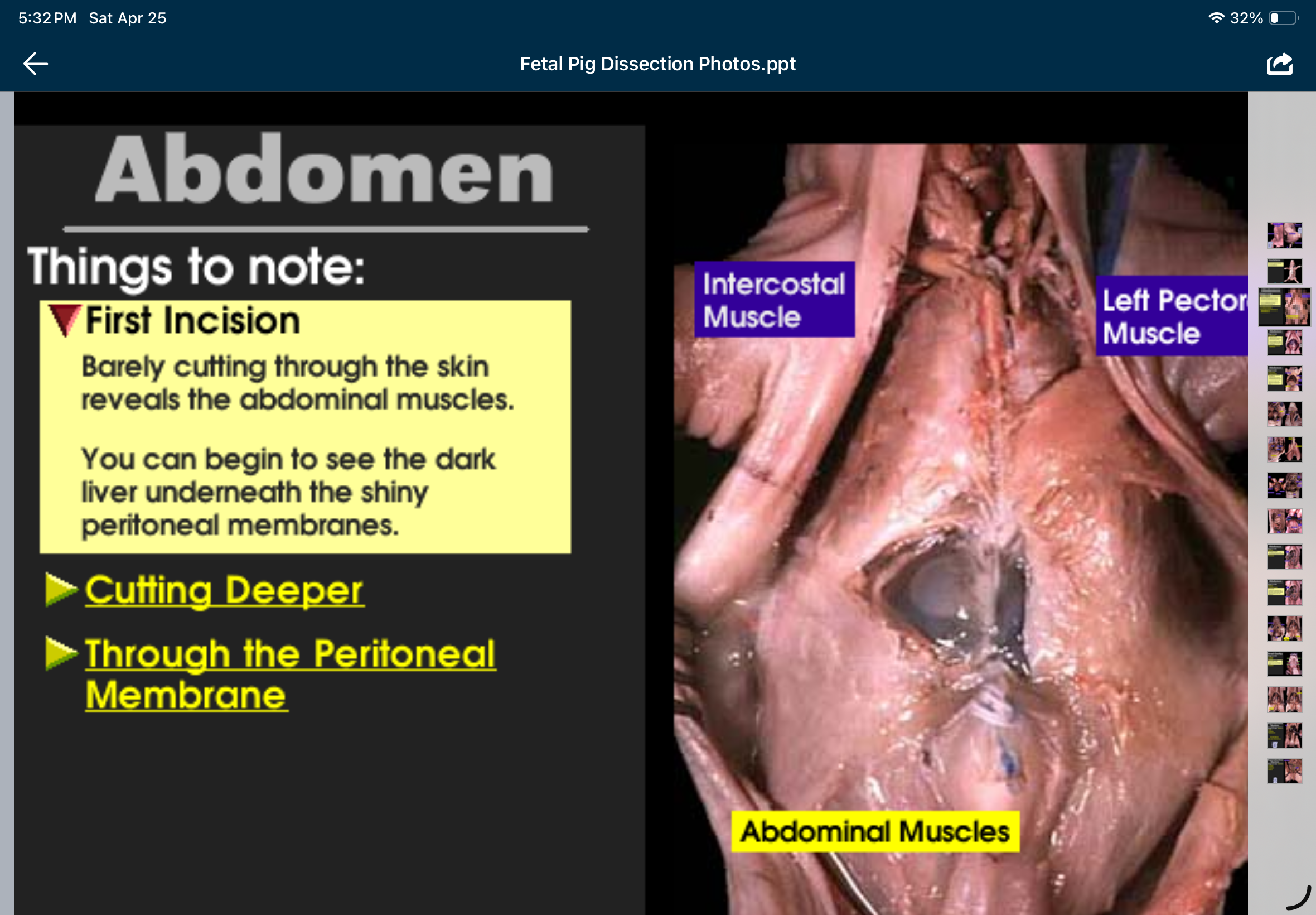
abdomen labeling
pic
male posterior
pic
ventral labeling
pic
incisions
pic
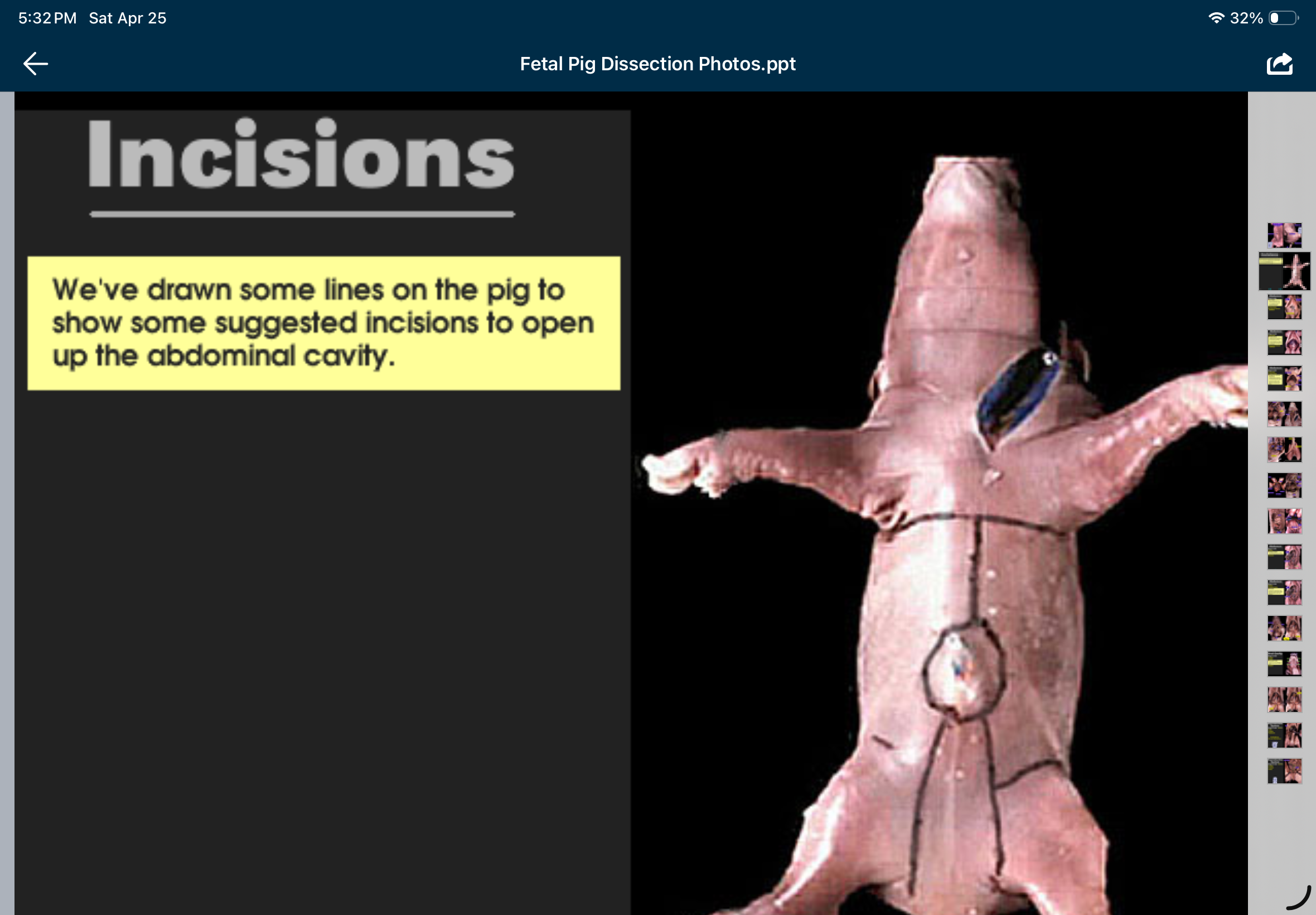
full organ labeling
pic
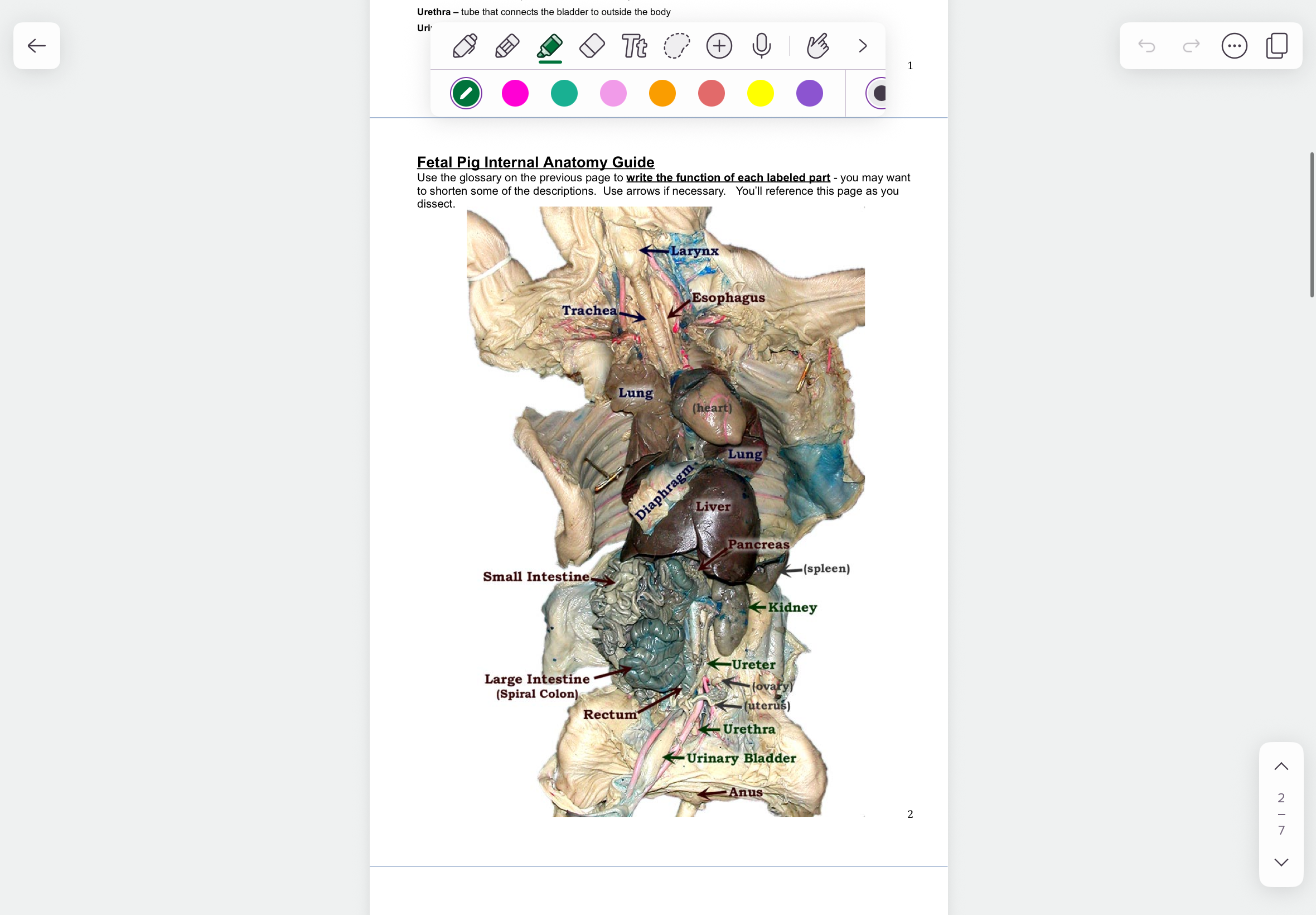
vental labeling
pic
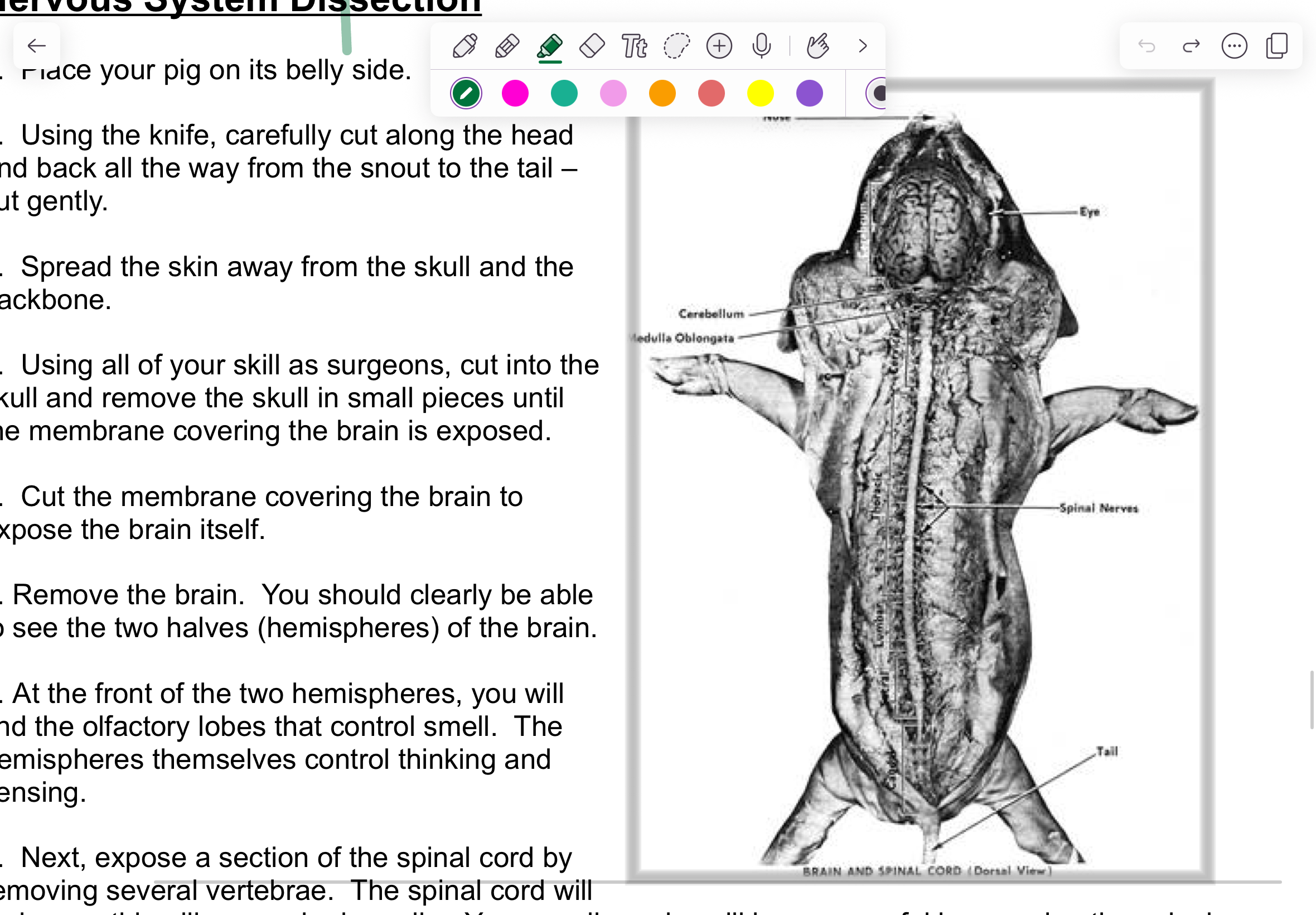
Mensentery
a fused double layer of the parietal peritoneum that attaches parts of the intestine to the interior abdominal wall
Abdominal aorta
lower descending aorta, takes blood to lower trunk and legs
inferior vena cava
A vein that is the largest vein in the human body and returns blood to the right atrium of the heart from bodily parts below the diaphragm.
adrenal gland
tissue located on top of the kidneys that releases adrenaline and cortisol during states of emotional arousal
testis
male reproductive organ that produces sperm and hormones
Cerebrum
Area of the brain responsible for all voluntary activities of the body
Cerebellum
A large structure of the hindbrain that controls fine motor skills.
Medulla
the base of the brainstem; controls heartbeat and breathing
spinal cord
Nerves that run up and down the length of the back and transmit most messages between the body and brain
vertebrate in pig
An animal with a backbone; composed of 27 or more vertebrae,
Teeth
develop a set of deciduous teeth (baby teeth)( 8) while in the uterus, with many erupting or close to eruption near birth. While they develop a full set of28 deciduous teeth,
toes
Pigs have four toes on each foot, totaling 16 toes
inside stomach
liquid nutrients
spleen shape
flat
How many kidneys
2
Heart of pig
pic
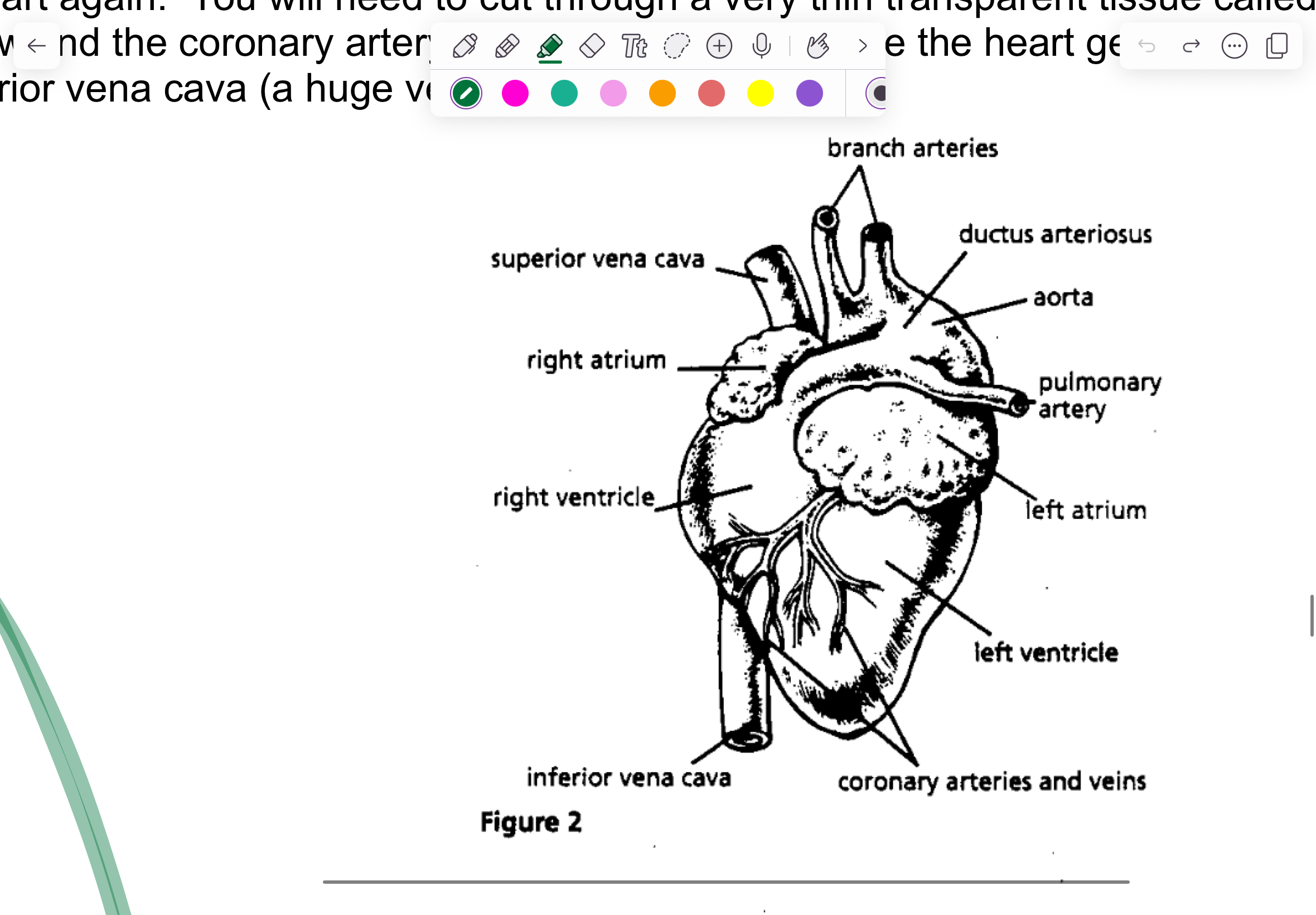
Brain labeling
abdomen flashcards
things near heart and heart labeling
under heart and through labeling
(vena cava comes off heart
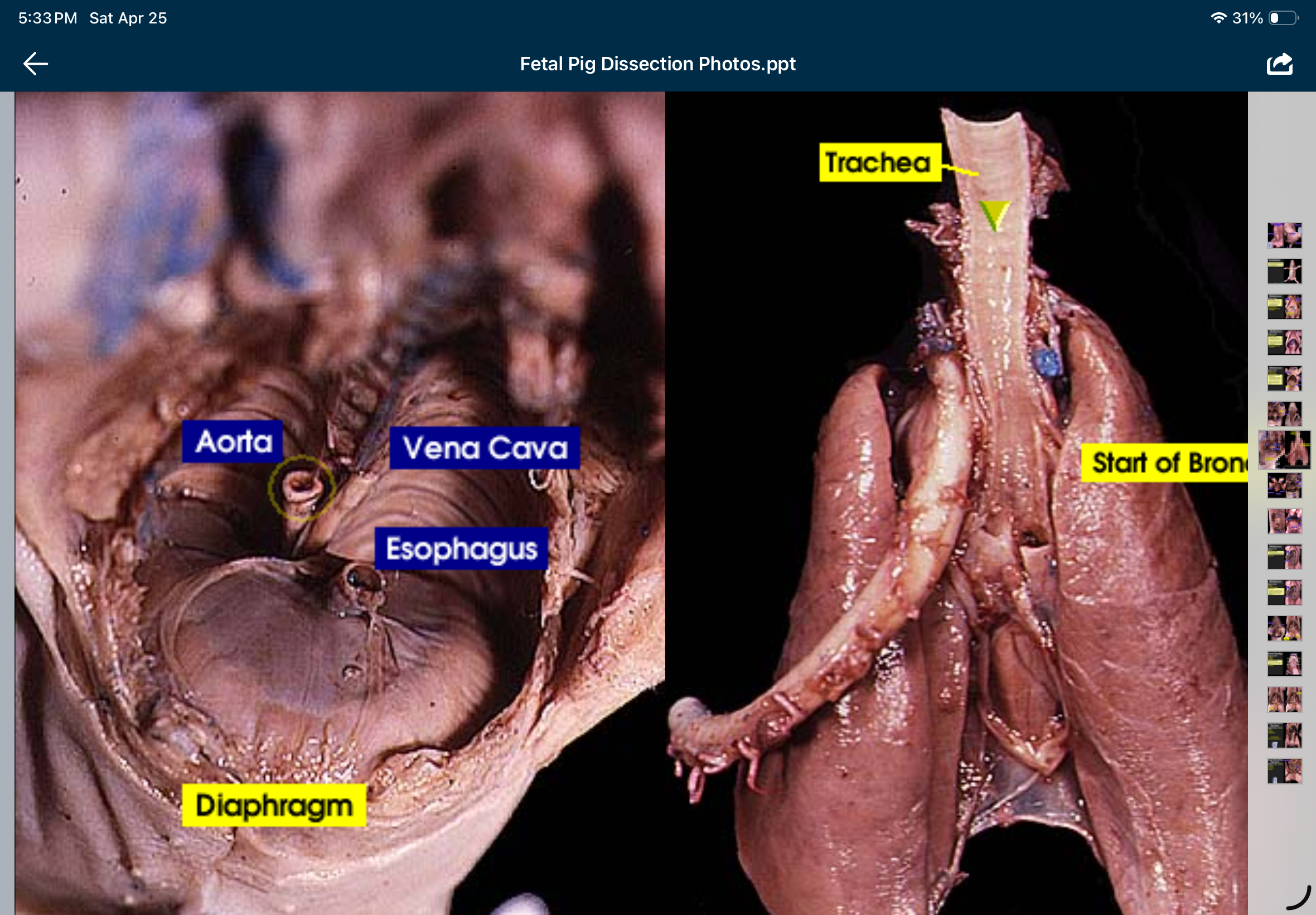
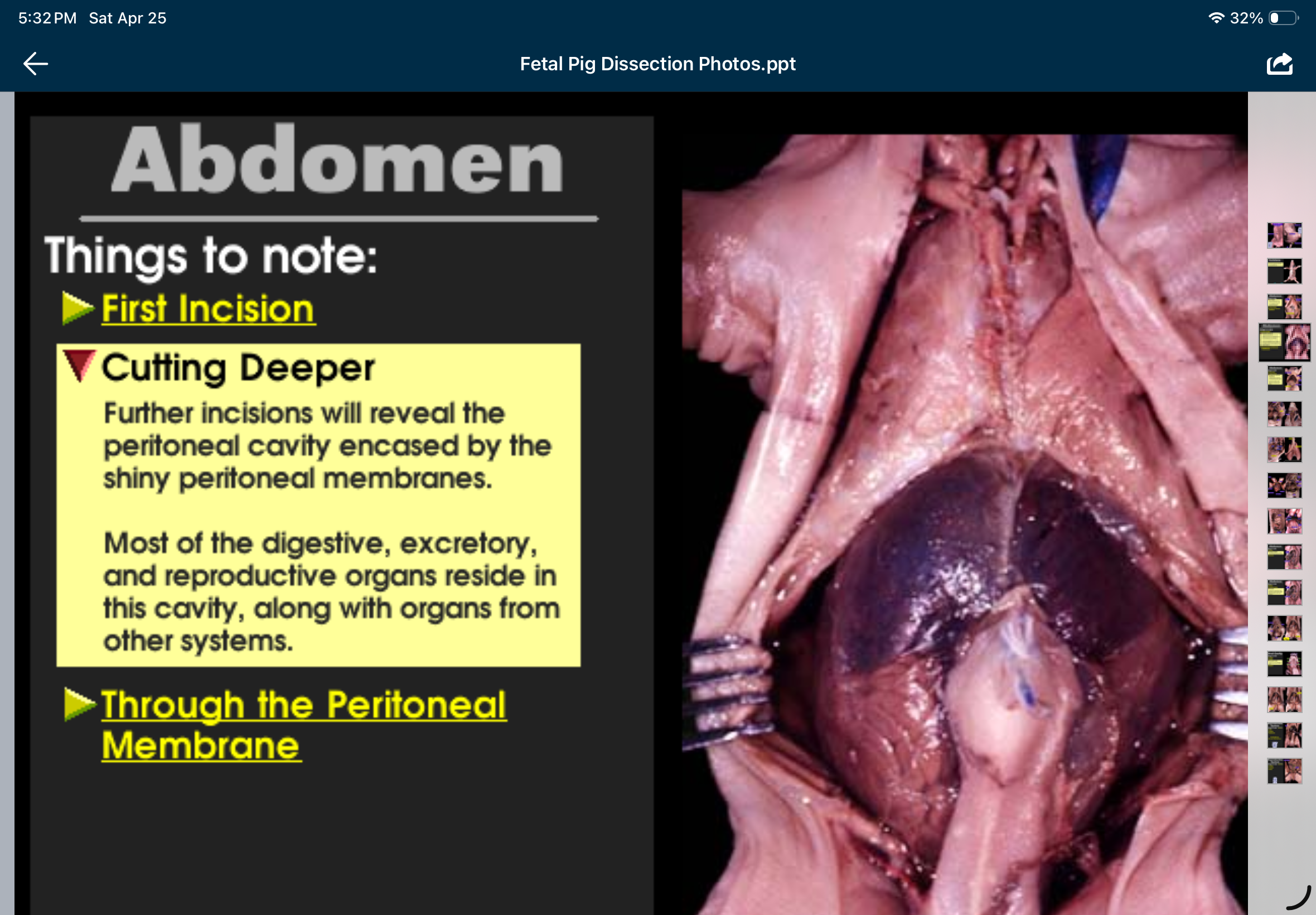
abdomen #1 labeling
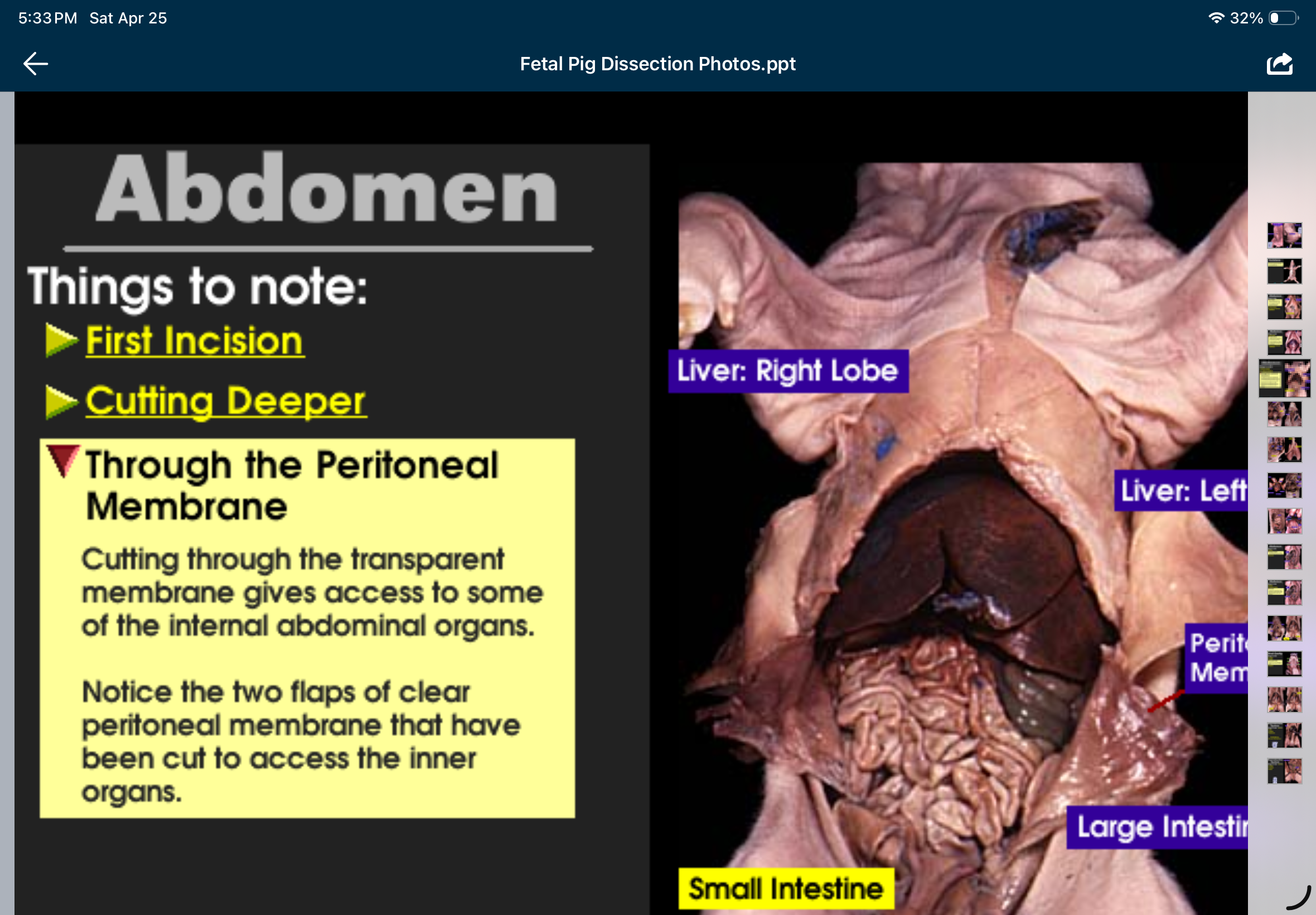
abdoment #2
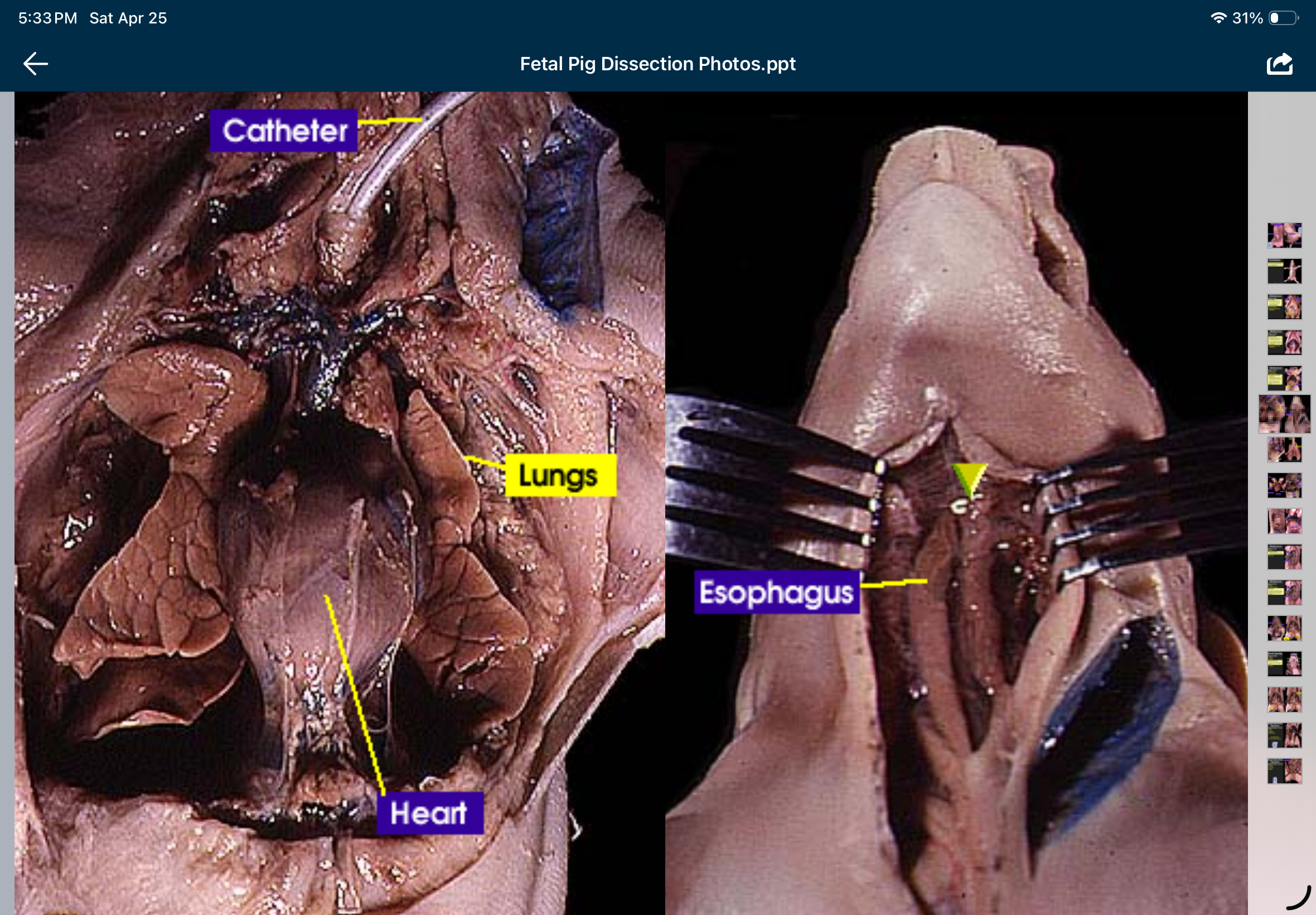
throat and heart #2
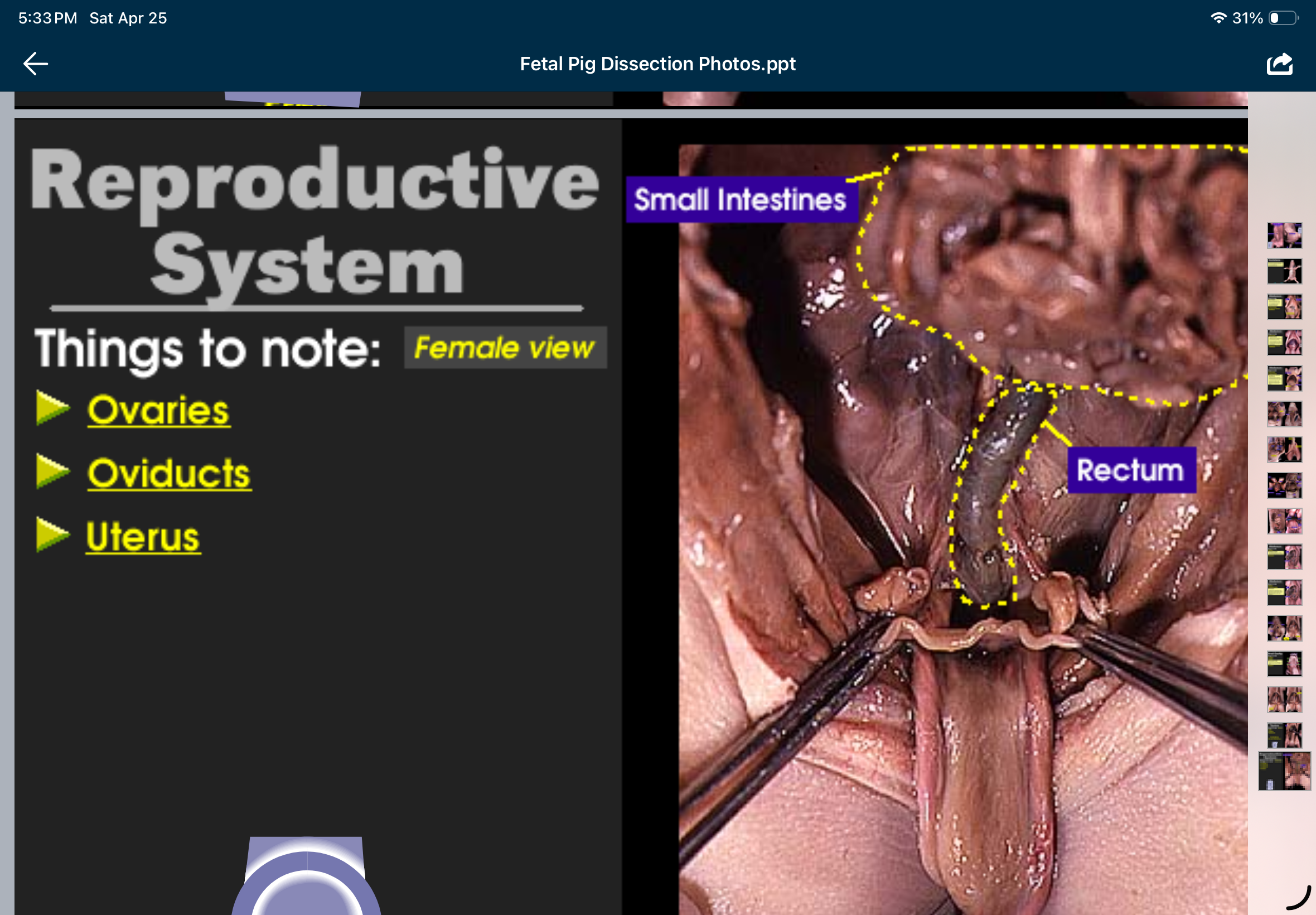
reproductive system labeling
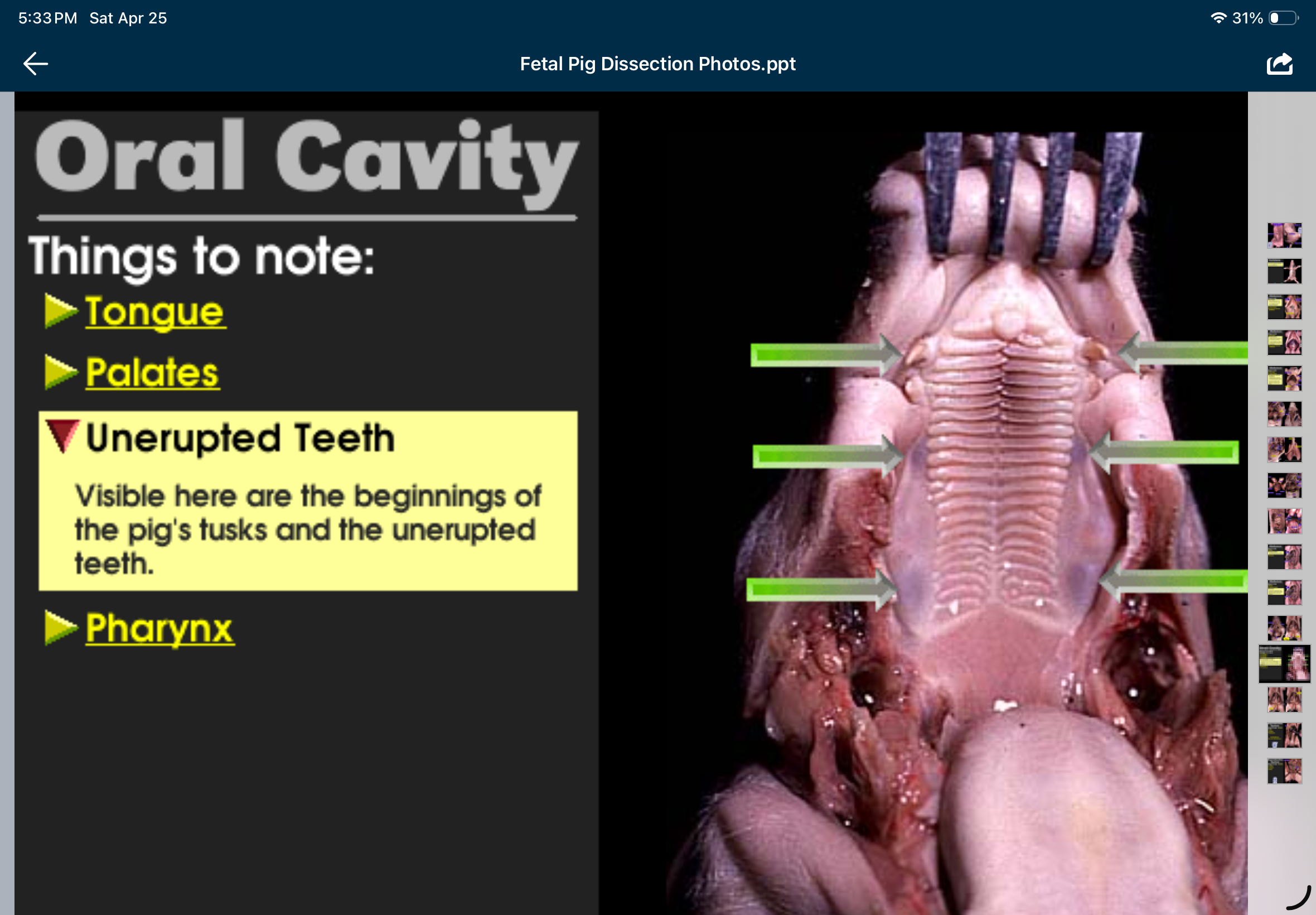
oral cavity
abdomen # 3 labeling
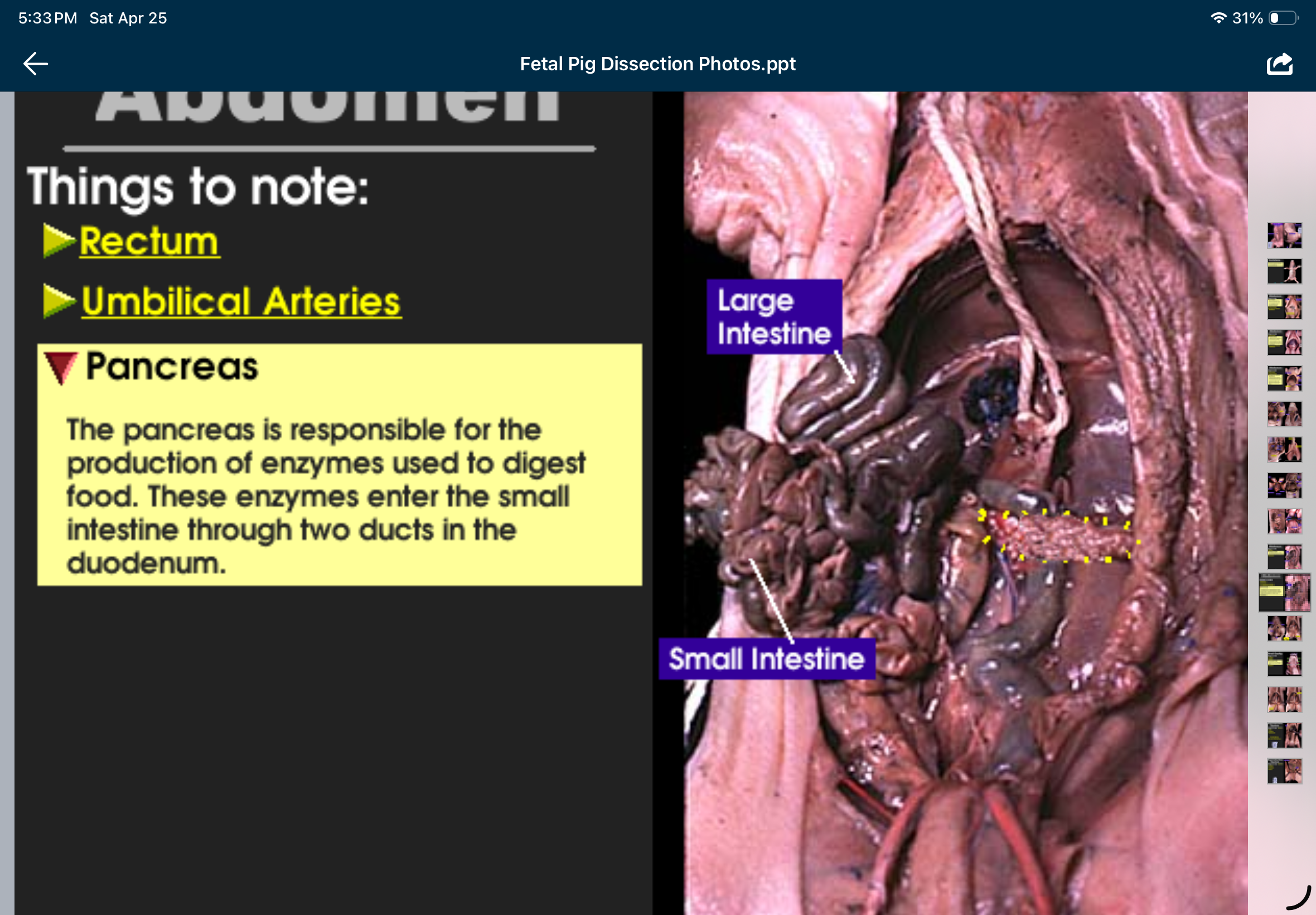
large organ labeling