Chapter 46: Animal Hormones
 Call Kai
 Learn
Learn Practice Test
 Spaced Repetition
 Match
Match Flashcards
 Knowt Play
1/29

There's no tags or description
Looks like no tags are added yet.
Name | Mastery | Learn | Test | Matching | Spaced | Call with Kai |
|---|
No analytics yet
Send a link to your students to track their progress
30 Terms
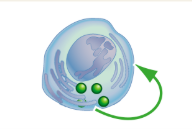
What is an autocrine signal?
Act on the same cell that secretes them, often amplifying the cell’s response to a stimulus
Ex: cytokines released by immune cells can stimulate their own activity
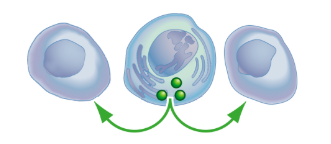
What is a paracrine signal?
Diffuse locally and act on nearby cells, allowing coordinated responses in small groups of cells
Typically short-lived and rapidly degraded.
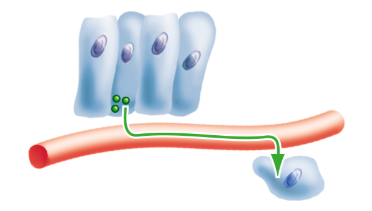
What is an endocrine signal?
Hormones released into the bloodstream and transported to distant target cells
Produce slower but longer-lasting effects compared to local signaling.
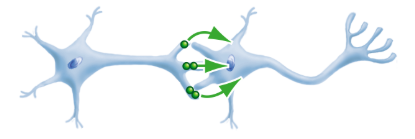
What is a neural signal?
Involve neurotransmitters released across synapses between neurons
Enables rapid and highly specific communication.
Act over very short distances.
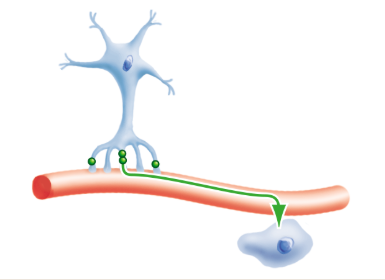
What is a neuroendocrine signal?
Hormones released by neurons into the bloodstream, combining features of neural and endocrine signaling
Can affect distant target tissues
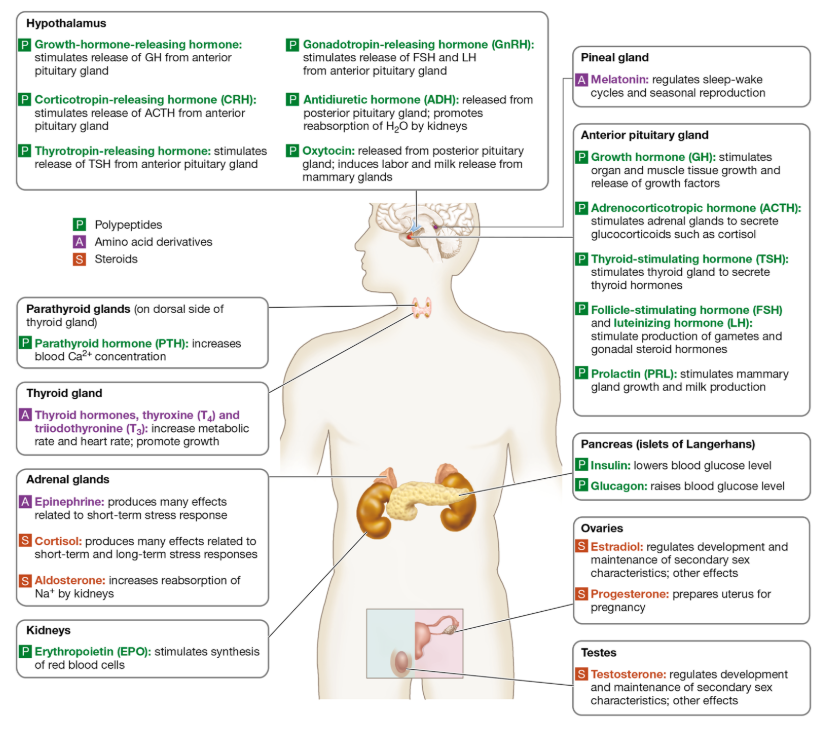
What is the endocrine system?
A collection of glands and tissues that produce hormones and release them into the bloodstream to regulate physiological processes. It works closely with the nervous system to maintain homeostasis. Organs include:
Pineal gland
Hypothalamus
Pituitary gland
Thyroid
Parathyroid
Adrenal glands
Pancreas
Ovaries
Testes
Why are hormones effective at low concentrations?
Signal transduction pathways amplify their effects within target cells.
One hormone-receptor interaction activates many downstream molecules in a cascade increasing magnitude of response
A single hormone molecule can trigger large intracellular responses
How do target cells respond specifically to hormones?
Only cells with the appropriate receptors for a hormone can respond to it, ensuring specificity of signaling
Different cell types can produce different responses to the same hormone based on receptor type and signaling pathways
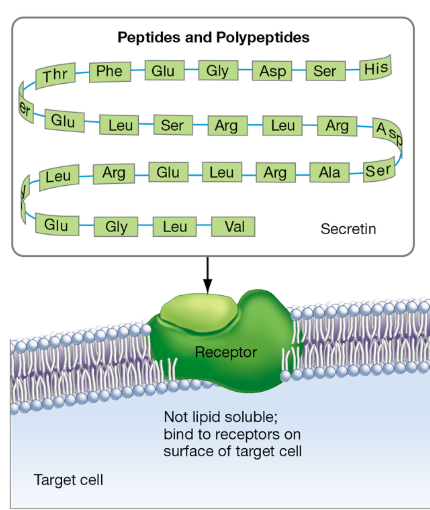
Overview of peptide hormones
Structure: chains of amino acids (anywhere from 3 to 200 AA’s linked together)
Solubility: water soluble
Synthesis and storage: made in rough ER, stored in vesicles
Secretion: exocytosis
Transport: dissolved in plasma
Half-life: decay in minutes
Receptors: on the cell-surface
Water-soluble so they can’t cross the plasma membrane
Actions: stimulate/activate an internal secondary messenger
Result: modifies enzymatic activity
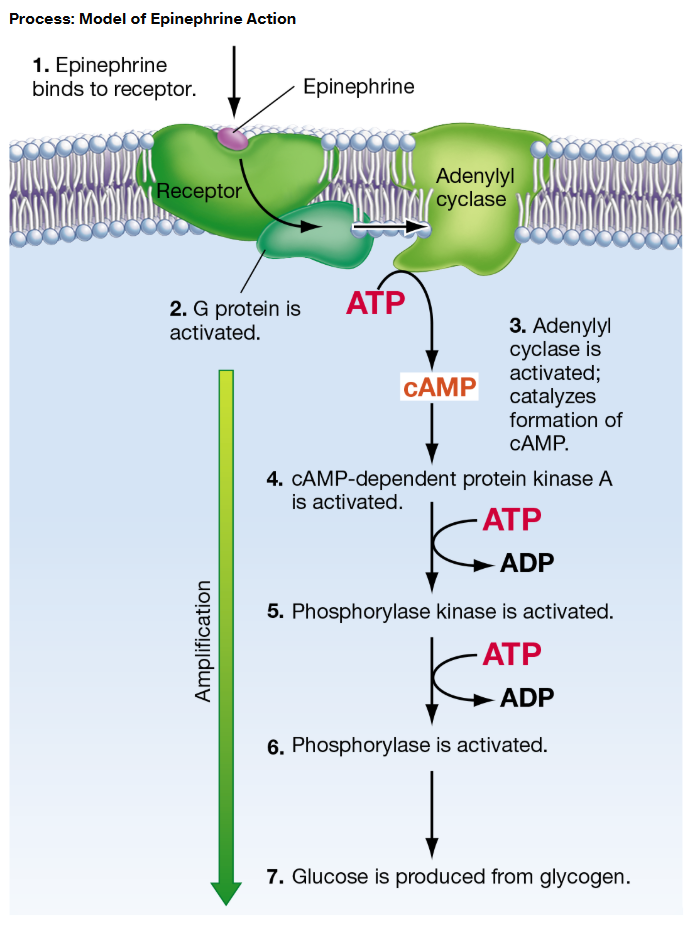
Step-by-step: how do peptide hormones affect target cells?
A peptide hormone binds to a membrane receptor
That activates a G protein that stimulates enzymes such as adenylyl cyclase to produce second messengers like cAMP
Uses ATP to activate cAMP-dependent protein kinase A, then more ATP to active phosphorylase kinases. These phosphorylation cascades amplify the signal
Enzymes are rapidly modified to then go on to cause changes in cellular activity
How are steroid hormones made?
Steroid hormones are all derived from cholesterol. To make a specific steroid hormone, cholesterol is modified in a variety of ways via enzymes. The main enzymes that cause big changes between the steroid hormone classes are:
Cholesterol side-chain cleavage enzyme
2,1-hydroxylase
Aromatase
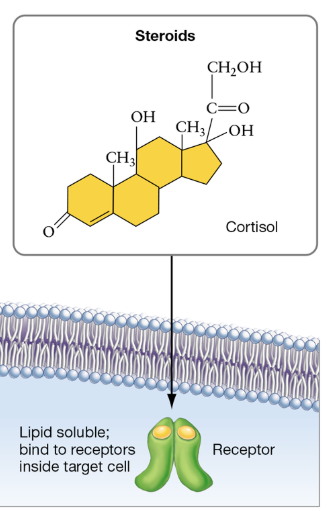
Overview of steroid hormones
Structure: derived from cholesterol
Solubility: lipid-soluble
Synthesis and storage: made on-demand, are not stored
Secretion: diffusion
Transport: carrier protein
Half-life: lasts for hours or more
Receptors: located intracellularly (can diffuse through plasma membrane)
Actions: transcription modification by acting on DNA
Result: change type of enzymes
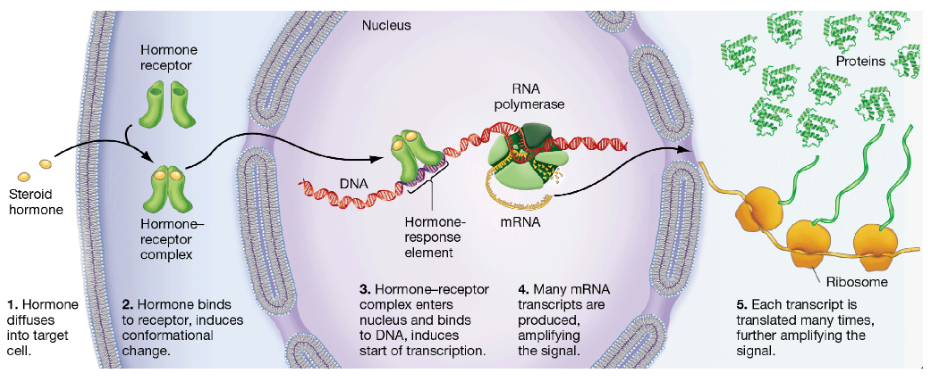
Step-by-step: how do steroid hormones affect target cells?
Steroid hormones diffuse through the membrane and bind intracellular receptors
Binding forms a hormone-receptor complex that can enter the nucleus
This complex binds DNA at hormone-response elements, altering gene transcription and creating mRNA which amplifies the signal
Each transcript is translated multiple times, further amplifying the signal and producing long-lasting changes in protein expression
These proteins (like enzymes, structural proteins, receptors, etc.) go on to alter cellular function, growth, and metabolism
What are biogenic amines?
Derivatives of individual amino acids that include tyrosine and tryptophan
Tyrosine is a precursor for two different chains.
(1) L-DOPA, dopamine, norepinephrine, and epinephrine.
(2) Thyroid hormones: T3 and T4
Tryptophan is a precursor for serotonin and melatonin
Only certain endocrine cells can produce these hormones due to enzymatic differences
Overview of catecholamines
Structure: derived from tyrosine
Solubility: water soluble
Synthesis and storage: made in cytoplasm, stored in vesicles
Secretion: exocytosis
Transport: dissolved in plasma
Half-life: decay seconds to minutes
Receptors: on the cell-surface (plasma membrane)
Actions: stimulate/activate an internal secondary messenger
Result: modifies enzymatic activity
Overview of thyroid hormones
Structure: derived from tyrosine and iodine
Solubility: lipid-soluble
Synthesis and storage: stored in the thyroid
Secretion: diffusion
Transport: carrier protein
Half-life: lasts for days
Receptors: located intracellularly (can diffuse through plasma membrane)
Actions: transcription modification by acting on DNA
Result: change type of enzymes
What is the hypothalamus and its role in the endocrine system?
Region of the brain that links the nervous and endocrine systems by producing hormones that regulate the pituitary gland
It controls many physiological processes through this connection (“master regulator”)
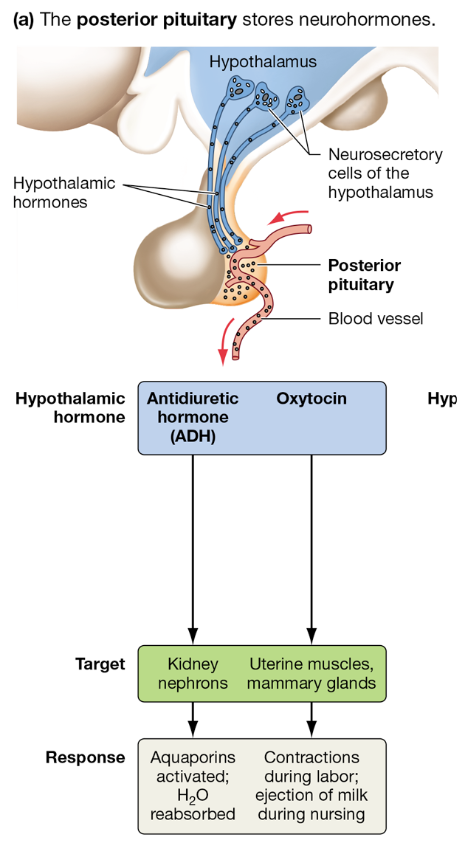
How is the hypothalamus connected to the posterior pituitary?
Posterior pituitary is an extension of the hypothalamus (made of nervous tissue)
Neurosecretory cells release hypothalamic hormones such as ADH and oxytocin directly into the posterior pituitary where they are stored and can be released
Release is controlled by an actional potential from the hypothalamus
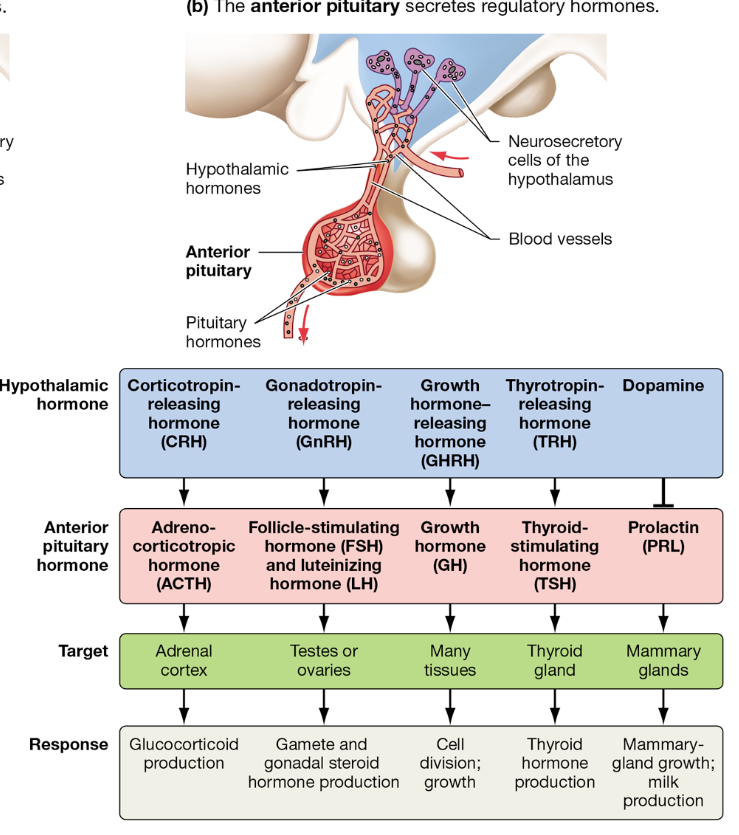
How is the hypothalamus connected to the anterior pituitary?
Hypothalamus communicates with the anterior pituitary (make of endocrine tissue) through a portal blood system
Releasing hormones travel through blood vessels to regulate pituitary hormone secretion
Allows for extremely localized delivery
Step-by-step: what is the hypothalamic-pituitary cascade?
Process is regulated by negative feedback
The hypothalamus increases the release of a tropic hormone (the releasing hormone)
Increases the concentration of that tropic hormone in portal circulation
The anterior pituitary increases secretion of the pituitary hormone (this is the target cells for hypothalamic hormone)
Increases concentration of the pituitary hormone in general circulation
Endocrine gland increases secretion of the 3rd hormone (this is the target cells for the pituitary hormone)
Increases plasma levels of the 3rd hormone
Causes/increases hormone binding at target cells
Step-by-step: how does the HPA axis regulate stress?
Stress stimulates the hypothalamus to release corticotropin-releasing hormone (CRH)
This triggers the anterior pituitary to release adrenocorticotropic hormone (ACTH)
This stimulates the adrenal cortex to release cortisol
Cortisol then inhibits CRH and ACTH release through negative feedback, regulating the stress response.
What hormones are produced by the hypothalamus?
Dopamine
Neurohormones
ADH
Oxytocin
Releasing hormones (regulate anterior pituitary)
Corticotropin-releasing hormone (CRH)
Gonadotropin-releasing hormone (GnRH)
Growth hormone releasing hormone (GHRH)
Thyroid releasing hormone (TSH)
What hormones are produced by the anterior pituitary?
Hormones that regulate growth, metabolism, stress, and reproduction and act on other adrenal glands
Growth hormone (GH)
Adrenocorticotropic hormone (ACTH)
Thyroid stimulating hormone (TSH)
Follicle-stimulating hormone (FSH)
Luteinizing hormone (LH)
Prolactin (PRL),
What hormones are produced by the thyroid gland?
Thyroid produces T3 and T4
Increase metabolic rate and energy use in cells/regulate overall metabolism.
What hormones are produced by the adrenal glands?
Produce epinephrine for rapid stress responses
Steroid hormones such as cortisol and aldosterone
Regulate stress, metabolism, and ion balance
What hormones are produced by the pancreas?
Produces insulin and glucagon
Regulate blood glucose levels
Insulin lowers glucose
Glucagon raises it
What is endocrine disruption?
Occurs when external chemicals interfere with hormone signaling by mimicking or blocking hormones or altering their levels, potentially leading to developmental and physiological abnormalities.
What are examples of endocrine disruptors?
BPA and atrazine, which can mimic or interfere with hormone signaling pathways, ultimately affecting reproduction, development, and behavior.
How was the concept of hormones first demonstrated experimentally?
Berthold’s experiment showed that transplanted testes restored male characteristics in castrated chickens
Demonstrated that a chemical signal in the blood controlled development, providing early evidence for hormones.
What are the four types of endocrine disorders?
Hyposecretion: not enough hormone is produced
Damage/disease to cells that make the hormone or a genetic mutation
Ex: Type I diabetes
Hypersecretion: too much hormone produced
Hormone producing tumor
Hyporesponsiveness: cells do not respond as much as they should
Downregulation of receptors
Ex: Type II diabetes
Hyperresponsiveness: cells overreact to the hormone
Upregulation of receptors