Mid Term Questions
 Call Kai
 Learn
Learn Practice Test
 Spaced Repetition
 Match
Match Flashcards
 Knowt Play
1/158

There's no tags or description
Looks like no tags are added yet.
Name | Mastery | Learn | Test | Matching | Spaced | Call with Kai |
|---|
No analytics yet
Send a link to your students to track their progress
159 Terms
What is the difference between endocrine and exocrine glands?
endocrine glands are ductless, exocrine glands release secretions into ducts or at the surface of the body
How do steroid hormones exert their actions?
They enter the cell by passive diffusion and binding to intracellular receptors
What is the ability of a specific tissue or organ to respond to the presence of a hormone dependent on?
The presence of appropriate receptors on the cells of the target tissue or organ
Which anterior pituitary hormone does not target another endocrine gland?
Growth hormone (GH)
Where is thymosin produced?
thymus
Which gland is not controlled by the hypothalamus - anterior pituitary hormones?
pineal gland
What are three differences between the nervous and endocrine systems?
Endocrine system: chemical signals, uses blood to travel, slow speed
Nervous system: electrical signals, uses nerves to travel, fast speed
What two major categories do hormones fall into based on their chemical nature?
Proteins/peptides/amines and steroid hormones
When the pancreas releases insulin in direct response to blood glucose, this is an example of BLANK stimulation
Humoral
Blood levels of hormones are kept within very narrow ranges by BLANK mechanisms
negative feedback
What hormones are released from the posterior pituitary gland and what are their functions?
Oxytocin and Anti Diuretic Hormone. Oxytocin causes contraction of the uterus to expel a fetus and contraction of the breast muscle tissues to eject milk. ADH causes less peeing by increasing water reabsorption in the kidney.
What hormones are released from the anterior pituitary gland and what are their functions?
Follicle Stimulating Hormone (FSH), Adrenocorticotropic Hormone (ACTH), Thyroid Stimulating Hormone (TSH), Prolactin, Growth Hormone (GH), and Lutenizing Hormone (LH). FSH stimulates the ovaries to produce estrogen which develops primary and secondary sex characteristics, progesterone which develops breast tissue for milk production, and the testes to produce sperm and testes growth. ACTH stimulates the adrenal cortex to produce glucocorticoids. TSH stimulates the thyroid to secrete thyroxin which regulates metabolic rate, protein synthesis, carb and fat anabolism. Prolactin stimulates the mammary glands to produce milk. Growth Hormone is sent to the liver to promote growth in all body tissues. LH stimulates the gonads to secrete testosterone and promote ovulation.
What hormone is produced by the thyroid and what are its functions?
Calcitonin and its secreted independtly depending on the calcium levels in blood. Calcitonin decreases calcium levels by putting back calcium in bones.
What hormone is produced by the parathyroid and what are its functions?
Parathormone which increases calcium and phosphate levels.
What hormone(s) is produced by the pancreas and what are its functions?
Glucagon and Insulin. Glucagon is made from alpha cells and is secreted when glucose levels are low. Insulin is made from beta cells is secreted when glucose levels are high.
What hormone(s) is produced by the pineal and what are its functions?
Melatonin which promotes tiredness.
What hormone(s) is produced by the stomach and what are its functions?
Gastrin which creates hydrochloric acid which breaks down food.
What hormone(s) is produced by the duodenum and what are its functions?
Secretes secretin which stimulates the pancreas to make pancreatic juice. It is stimulated by acidic chyme entering the duodenum. Pancreatic juice contains bicarbonate ions, decreasing the acidity of chyme.
What hormone(s) is produced by the zona glomurlosa and what are its functions?
Secretes aldosterone which breaks down potassium and hydrogen by urine secretion and promotes sodium and water reabsorption.
What hormone(s) is produced by the zona fascilita and what are its functions?
Glucocorticoids, mainly cortisol which regulates stress, which is released almost all the time. It produces glucose because glucose needs to be high during stressful situations.
What hormone(s) is produced by the zona reticulara and what are its functions?
Androgens which are sex hormones before puberty.
What hormone(s) is produced by the medulla and what are its functions?
Epinephrine and norepinephrine. Epinephrine causes blood flow to the heart and muscles in response to immediate stress. Norepinephrine disengages blood flow to irrelevant systems like skin during stressful situations. They are stimulated by the hypothalamus with neurons.
What are the types of hormone stimuli?
Humoral: Hormone released in response to change in body fluid (Ex. Calcitonin)
Neural: Hormone released in response to neuron (Ex. Epinephrine and norepinephrine)
Hormonal: Hormone released in response to another hormone (Ex. FSH)
Where are the glands located?
Pancreas: Behind the stomach
Thymus: Thorax; deep in the sternum
Parathyroid: embedded in the posterior thyroid gland
Thyroid: In the anterior neck
Adrenal glands: on top of kidneys
Pituitary gland: suspended by a stem called the infundibulum
Ovaries: Near the uterus in pelvic cavity
Testes: In the scrotum
Hypothalamus: Below the thalamus in the brain
Pineal gland: Hanging in the third ventricle of the brain
What hormones are produced by the hypothalamus?
Adrenocorticotropin releasing hormone (ACTHRH), Thyroid stimulating hormone releasing factor (TRH), Gonadotropin releasing hormone (GnRH), Growth hormone releasing hormone (GHRH), Prolactin releasing hormone (PRH), Growth hormone inhibiting hormone (GHIH), Prolactin inhibiting hormone (PIH), Oxytocin, and ADH.
Which body activity would be most affected if a patient lacked an adequate number of erythrocytes (anemia) and why?
Oxygen transport because erythrocytes carry oxygen and CO2
With a patient that is adminstered an injection of erythropoietin you would expect to see what?
increased hematocrit due to production of erythrocytes
A BLANK is the cell that gives rise to the platelets
Megakaryocyte
What cells are WBCs?
Basophils, Eosinophils, Neutrophils, and Monocytes
What is the scientifici name for WBCs?
Leucocytes
What are the WBCs responsible for?
Neutrophils are responsible for defending against bacteria infections, Lymphocytes protect against viral infections, Monocytes protect against chronic infections, Eosinophils protect against parasitic infections, Basophils protect against allergies.
What is leucocytosis and leucopenia?
Leucocytosis is an abnormally high number of leukocytes and leocopenia is an abnormally low number of leukocytes.
What do all blood cells derive from?
Pluripotent stem cells
Where are lymphocytes from?
Lymphoid stem cells
Where are formed elements from?
Myeloid stem cells
What is the meaning of formed elements?
Leukocytes, erythrocytes, and platetes. Named this because platelets arent cells.
What does Vitamin K do?
Stimulates the liver to produce prothrombin to form faster clots
What does the hematocrit test measure?
Volume of RBC relative to the total blood volume including plasma and buffy coat
What is hemoglobin?
A protein carried by RBCs
What factors limit normal clot growth to the site of injury?
Anticoagulants like antithrombin or heparin
What are the two main clotting pathways and their differences?
Extrinsic and Intrinsic pathway. Extrinsic pathway is a tissue damage with bleeding, causing rapid clot formation. Intrinsic pathway is damage to the inside of the blood vessel, causing slow clot formation.
What is the process of healing a cut?
Vascular spasm occurs, causing smooth muscles to contract. Platelet plug formation then occurs, causing other platelets to become sticky and stick to the damaged vessel. Next, coagulation occurs. Damaged tissues and platelets collect at the wound site and thromboplastin is released into blood. Thromboplastin converts factor x, a plasma protein, into calcium which produces prothrombinase. Prothrombinase is an enzyme which converts prothrombin into thrombin. Prothrombinase acts on prothrombin, an inactive enzyme in plasma. Vitamin K produces more prothrombin during this which means more thrombin is produced. Thrombin converts fibrinogen, a soluble clotting protein, into fibrin, an insoluble thread like protein to form a net structure across the wound. Clot retraction occurs as fibrin tightens, repairing the site.
What enzyme is required to dissolve the clot as healing occurs?
Plasmin
What are the disorders of Haemostasis?
Thrombus, embolus, haemophilia. Thrombus is the formation of a blood clot in an unbroken blood vessel. Embolus is a blood clot roaming in the blood stream. Haemophilia is a genetic deficiency in the production of clotting factors.
What does the nmemonic LAB RAT stand for?
Left Atrium Bicuspid Valve and Right Atrium Tricuspid Valve.
In what order does deoxygenated blood enter the heart and become oxygenated blood, and enter the heart?
dexoygenated blood enters from the superior and inferior vena, entering the right atrium, passing through the tricuspid valve when contracted into the right ventricle. Chordae tendinae becomes slack and then tenses to close valves. the ventricles contract, opening the pulmonary semilunar valve, allowing blood to leave through the pulmonary trunk and pulmonary artery, to the lungs. Blood returns back to the heart through the pulmonary veins, entering the left atrium. The bicuspid valve opens and blood enters the left ventricle. The ventricle contracts and opens the aortic semilunar valve, allowing blood to enter the aortic arch and aorta.
Which heart wall is thicker and why?
The left ventricular wall is thicker to pump blood with greater pressure.
How does the heart recieve its own supply of blood?
Through two major arteries, left and right coronary arteries.
How is autonomic regulation of heart rate controlled?
By the cardiac centres in the medulla oblongota
In the correct sequence, what are the components of the conduction system in the heart?
SABAP: SA Node, AV Node, bundle of His, AV branches, Purkinje fibres
What are the layers of the heart wall?
The outer most layer is fibrous layer, then the parietal layer, visceral layer (epicardium), pericardial cavity, myocardium, and finally the endocardium.
Whats the relationship between ECG tracing and polarization?
When the SA node fires and causes atrial depolarization, it causes the P wave. With atrial depolarization complete, the impulse is delayed at the AV node. Then ventricular depolarization begins, causing the QRS complex and atrial repolarization. Ventricular depolarization is complete, but repolarization then occurs at the apex causing the T wave. Repolarization is complete at the end of the ECG.
What do veins have that arteries do not?
Valves to prevent back flow of blood.
What is blood pressure?
The pressure exerted on the arterial walls due to contraction of the ventricles.
What is a pulse?
The expansion and elastic recoil of an artery when the ventricles contract
If a SA node is not functioning, an ECG will show what?
No P wave
What are the differences between innate non specific resistance and adaptive specific resistance?
Innate are protective mechanisms everyone has to protect against all potential invaders, is the first line of defense, and are immediately available. Adaptive are protective mechanisms directed and tailored to a specific threat, involving the immune system, comprises the third line of defense, and is a slower response because body has to produce antibodies.
What are the two proteins involved in Innate Resistance?
Interferon and Complement. Interferon causes non infected cells to produce substances that interfere with viral replication, preventing infection from spreading. Complement is produced by the liver and found in plasma. They bind to bacterial cells, attracting phagocytes, and causing holes in bacteria walls which causes rupturing.
What is phagocytosis?
WBCs engulfing foreign substances. These WBCs are neutrophils, macrophages, and dendritic cells.
What are B lymphocytes?
cells that attack invaders outside the cells, mature in bone marrow, causes humoral immunity, and become plasma cells that will then produce antibodies.
What are T lymphocytes?
Cells that attack specific pathogen, do not produce antibodies, mature in the thymus gland, divide into cytotoxic t-cell, helper t-cell, and memory t-cell, best for cell-to-cell interaction.
What does inflammation do?
Brings more leukocytes to the site of infection, causes blood vessels to dilate to bring more blood to the site of injury, phagocyte migration to the site to ingest microbes, lymphatic drainage removing dissolved poisonous substances.
what can a mismatch of blood types during transfusion cause?
preformed antibodies in the recipient’s blood will bind and clump the donated blood.
What is immunocompetence and immunotolerance?
Functions of T-cells. Immunocompetence is the ability to distinguish self from non-self and immunotolerance is the ability to not attack self cells.
When does hemolytic disease occur?
When father is Rh+ and mother is Rh-, and mother doesn’t take anti-Rh antibodies after 1st birth.
What are antigens?
Particles that stick to pathogens, signalling that theyre bad. They can be carbs or proteins and activate the adaptive immune system.
What is the criteria for a blood donor and recipient?
A blood donor can only donate to people without the antibody that will agglutinate with their antigen. A recipient can only receive blood from a donor that doesnt have the antigens that will agglutinate with their blood.
How does blood pH change breathing?
low blood pH, meaning blood becoming acidic, will cause a higher breathing rate. High blood pH, meaning blood becoming more neutral, will caue a slower breathing rate.
How is oxygen transported into cells?
Oxygen is breathed in, from the alveoli the oxygen will enter blood by diffusion, the oxygen will be transported in the capillaries and enter cells through diffusion.
How is CO2 transported out of cells?
Most CO2 will become bicarbonate and dissolve into water, 23 percent will combine with hemoglobin and enter the blood stream through diffusion, 7 percent will dissolve in plasma.
What is the conducting zone and respiratory zone?
Conducting zone is nose to tertiary bronchi, respiratory zone is respiratory bronchioles to alveoli.
What 3 mechanisms help with CO2 transportation in the body?
Hemoglobin, bicarbonate, dissolved in plasma.
What can cause hyperventilation?
Anxiety, asthma, emphysema
What is tidal volume?
The volume breathed in or out at rest
Pathway for air inhalation?
Nose, pharynx, trachea, primary bronchus, secondary bronchus, tertiary bronchus, bronchioles, alveolar ducts, alveolar sacs
What is different between males and females sex production?
Males produce testosterone and sperm, females produce oocytes
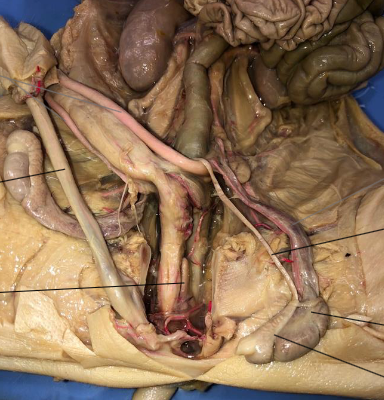
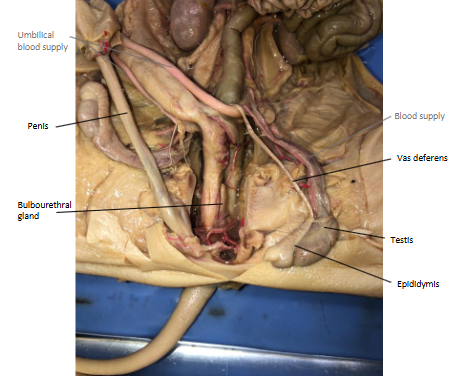
Identify the testes and its function
The testes are located in the scrotum, attached to the epididymis. This is where sperm and testosterone is produced.
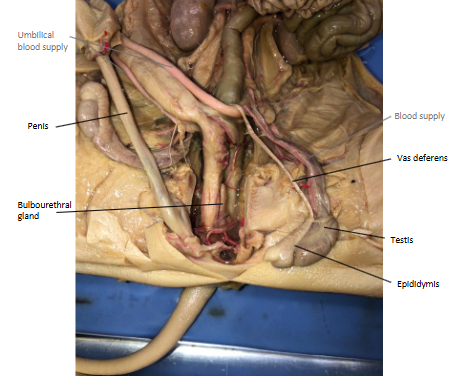
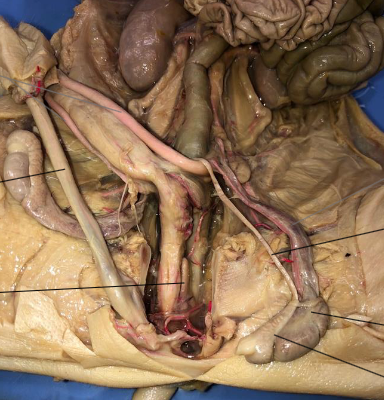
Identify the epididymis and its function
The epididymis is attached to the surface of the testes. This is where sperm matures and stored until ejaculation.
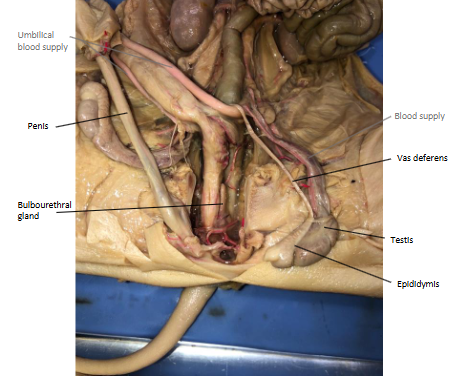
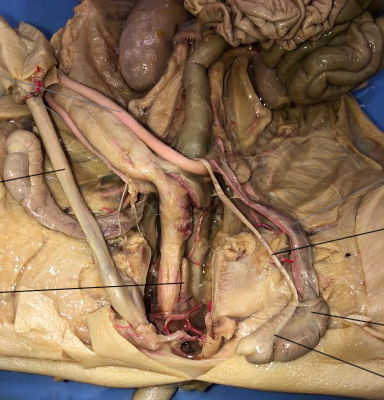
Identify the vas deferens and its function
The vas deferens is the thinner tube attached to the epididymis. It transports sperm from the epididymis to the ejaculatory duct then to the urethra and stores sperm
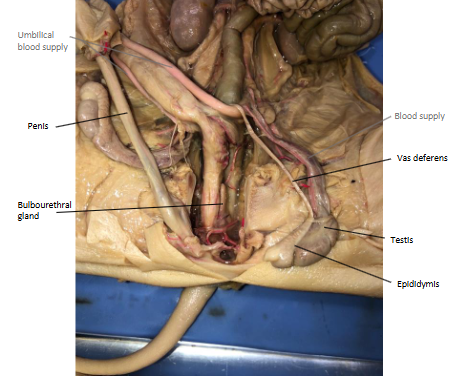
Where is the ejaculatory duct and what is its function?
the ejaculatory duct is where sperm from the vas deferens and fluid from the seminal vesicles merge. It is where semen is created by merging sperm and fluids together, which is then ejected into the prostatic urethra.
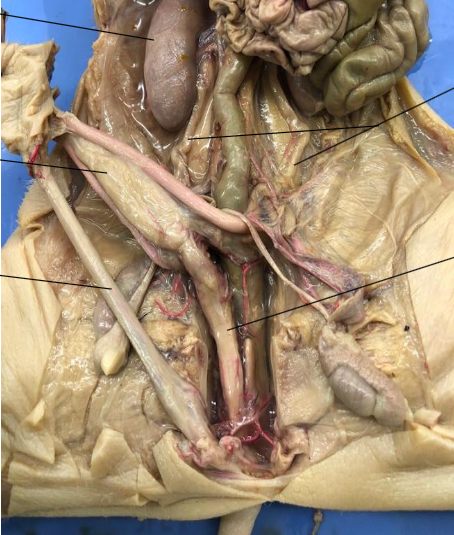
Where is the urethra and what is it’s function
The urethra is located anterior (in front) of the penis, but posterior of the urinary bladder. Simply put, it is the deeper in the body c It is the last duct that passes through the prostate gland and carries semen out of the penis. It has three regions: prostatic which is nearest to the prostate, intermediate (membranous), and spongy, which is inside the penis. It also carries urine outside of the body, through the penis.
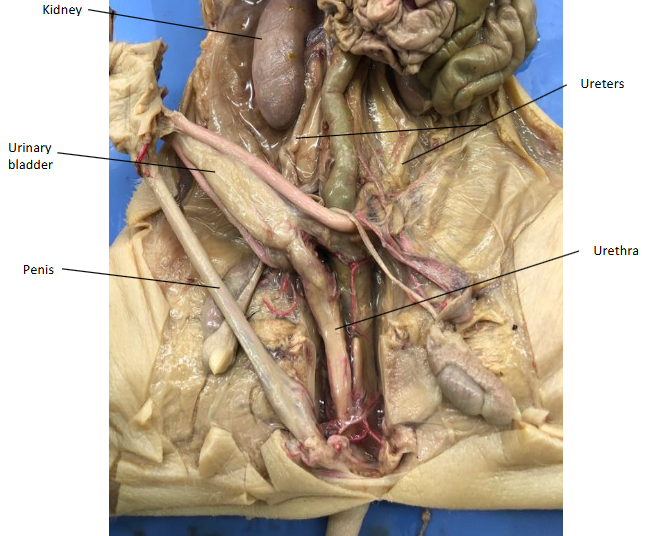
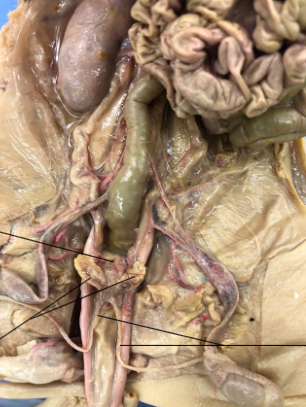
Where are the seminal vesicles and what do they do?
Located under the urinary bladder, they secrete an alkaline viscous fluid that is needed to neutralize the acidic female environment. The fluid is high in fructose to supply sperm with ATP
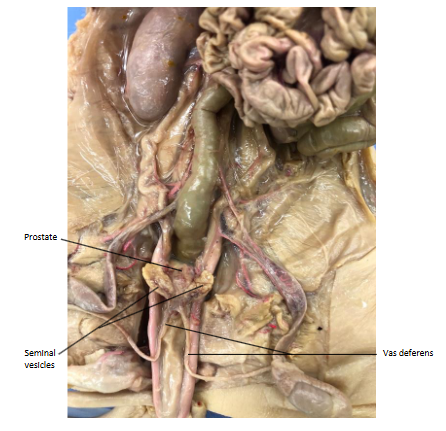
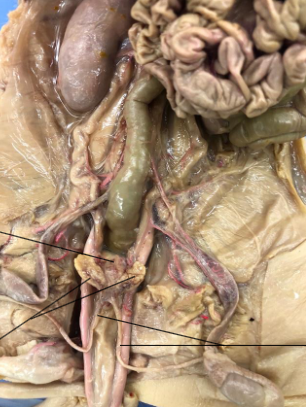
Where is the prostate and what is it’s function?
The prostate is located in between the seminal vesicles and is where a milky acidic substances that contains citric acid for ATP, enzymes and prostaglandins for sperm mobility are produced
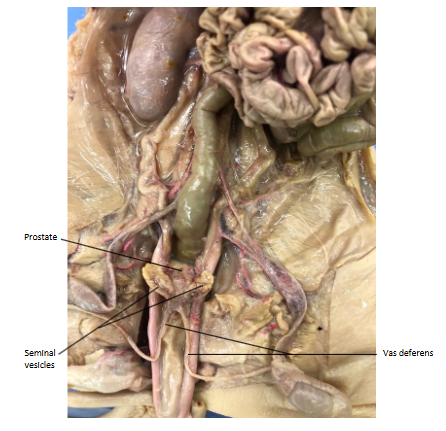
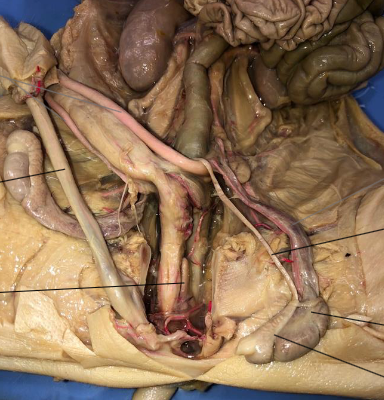
Where is the bulbourethral (cowpers) gland and what is its function?
The bulbourethral gland is located on either side of the urethra and it secretes an alkaline mucous for lubrication
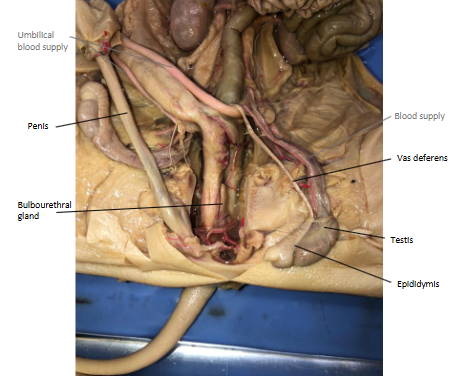
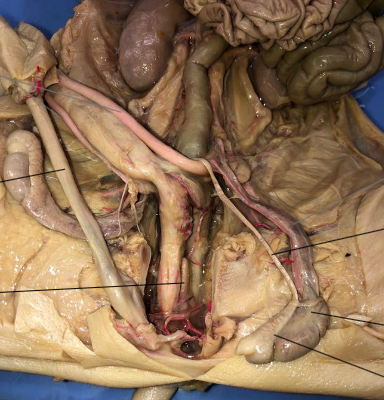
Where is the penis and what does it do?
The penis is located inferior to the urinary bladder. When erect, it introduces sperm into the female genital tract
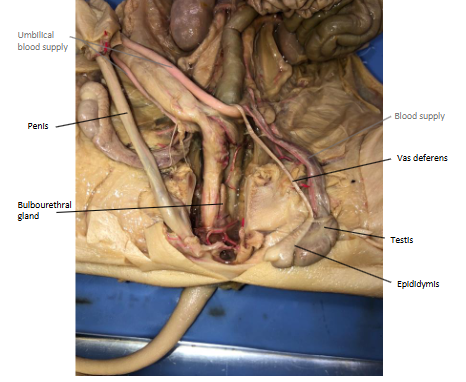
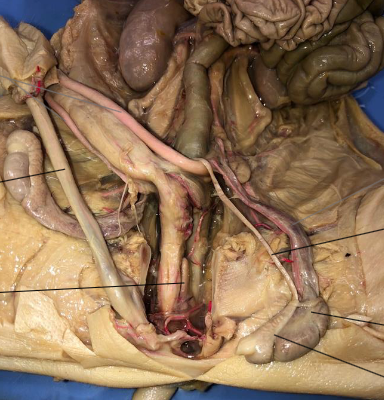
Where is the urinary bladder and what does it do?
The urinary bladder is located anterior of the penis, attached to the urethra, and holds urine
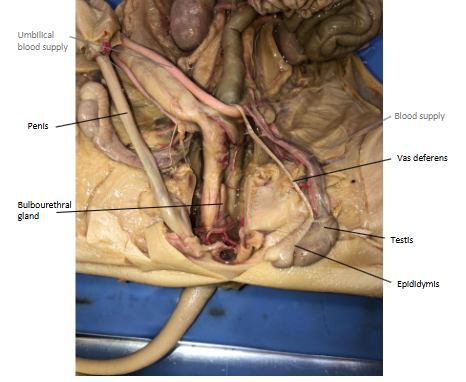
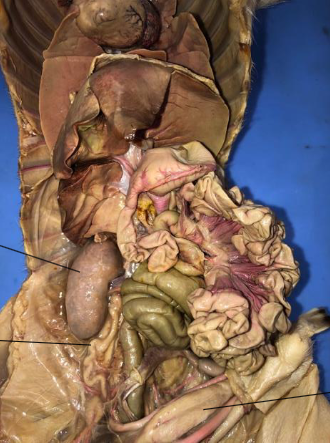
Where are the ureters and what do they do
the ureters are thin tubes attached to the kidneys, they carry urine to the urinary bladder
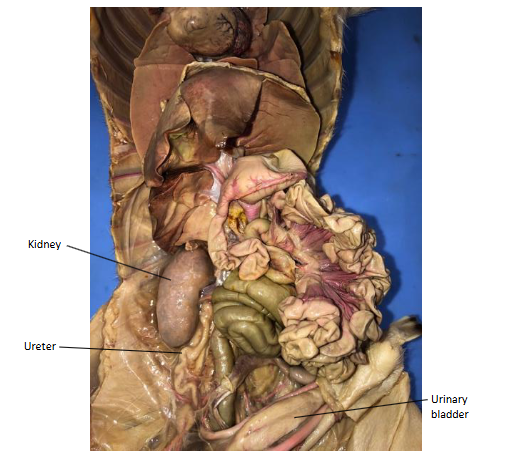
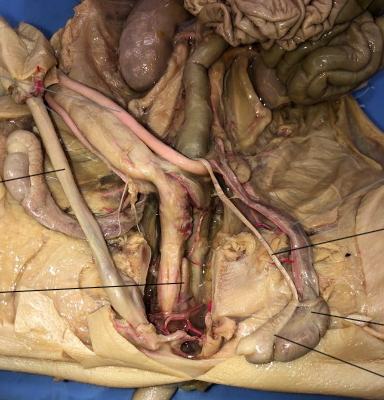
Where is the umbilical blood supply and what does it do?
The umbilical cord supply is located next to the urinary bladder and it connects to the placenta to get rid of deoxygenated blood and waste
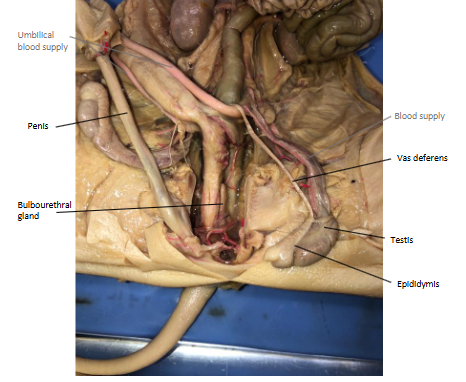
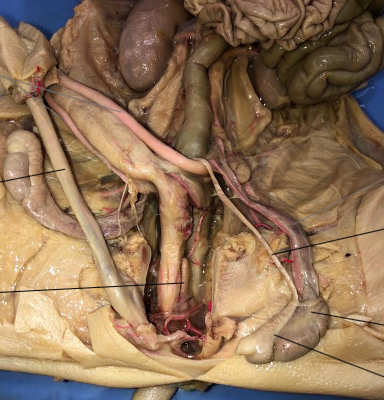
Where are the testes blood supply
tube like structure coming from the testes
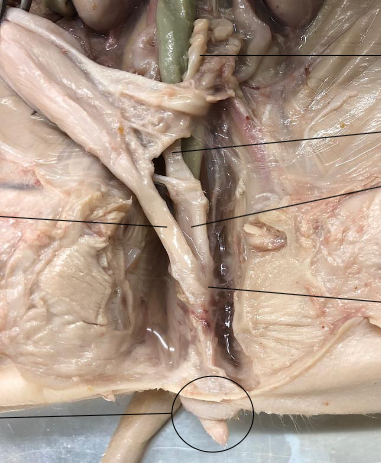
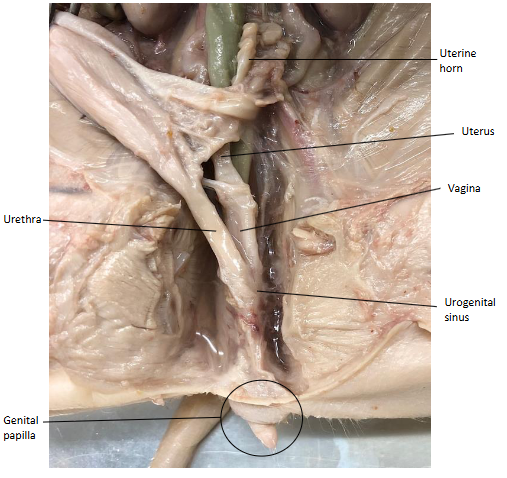
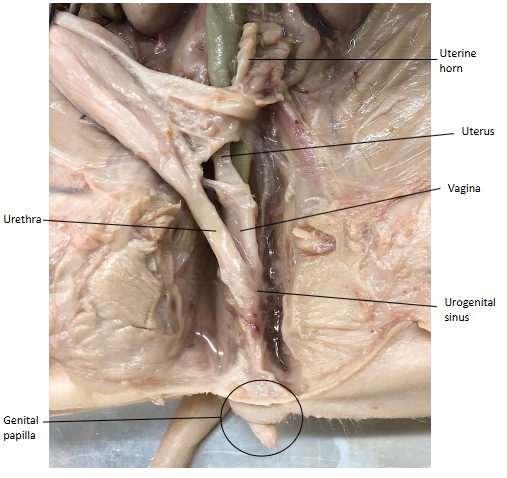
Is this a female or male pig? How can you tell?
This is a female pig because it has a genital papilla, which is an external structure. It also has a urogenital sinus, that is formed by the vagina fusing with the urethra.
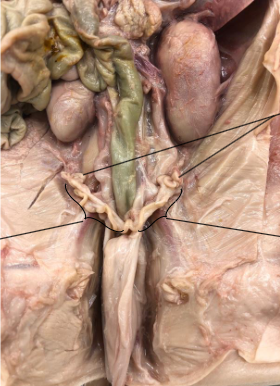
Where are the ovaries and what do they do?
The ovaries are connected to the uterus and found inferior to the kidneys. They produce oocytes
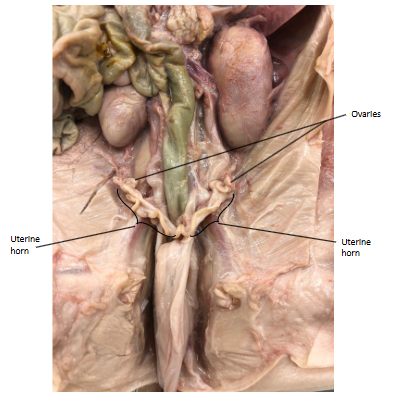
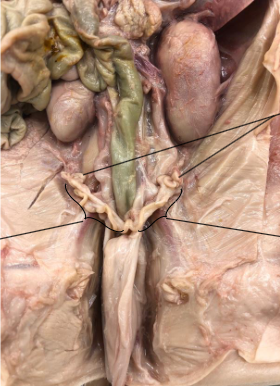
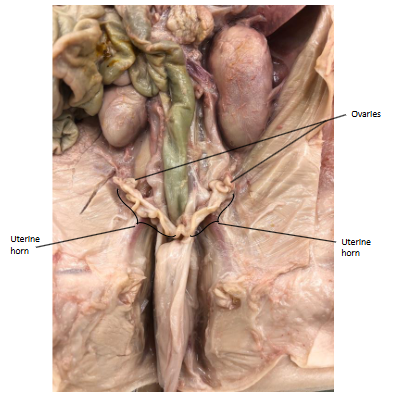
Where are the uterine horns and what do they do?
The uterine horns are curly branches from the uterus, they are an adaptation to facilitate simultaneous development of several embryos since pigs produce many babies.
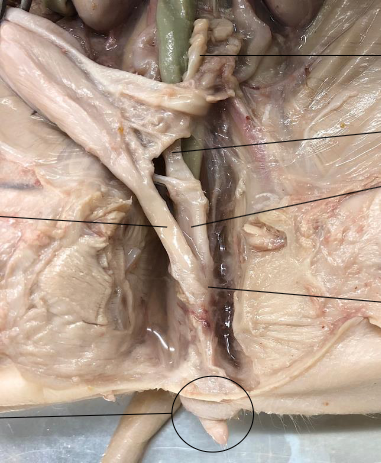
Where is the uterus and what does it do
The uterus is formed by the uterine horns and is behind the urethra when the bladder is pulled up. It stores developing embryos and facilitates implantation
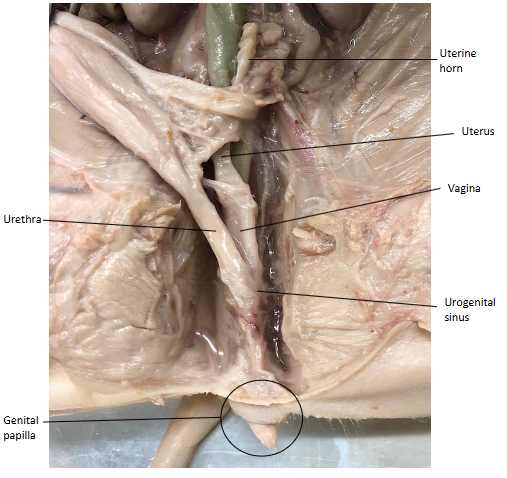
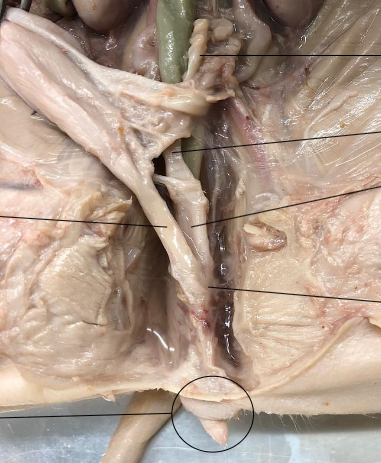
Where is the vagina and what does it do?
The vagina is located inferior to the uterus and receives the penis during copulation, as well as the birth canal
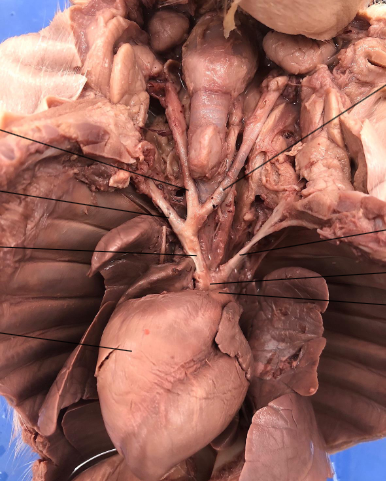
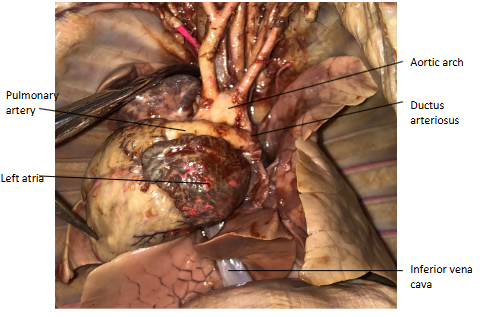
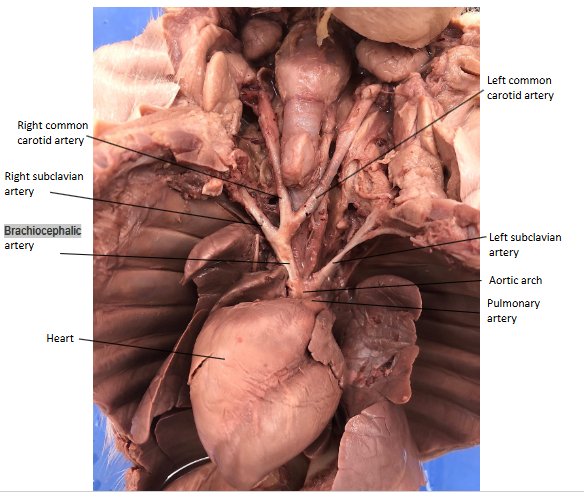
Where is the pulmonary artery and what does it do?
Exits on the superior side of the heart, supplies deoxygenated blood to the lungs
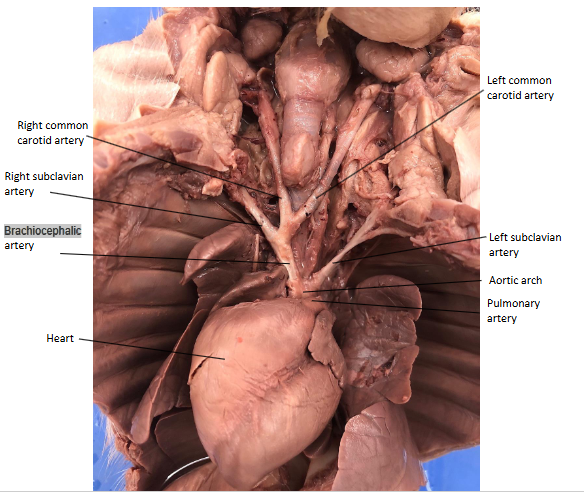
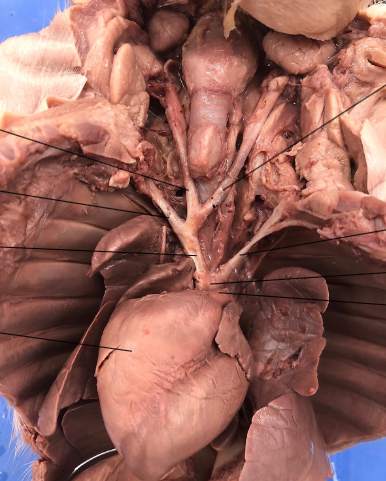
Where is the aortic arch?
Exits the superior side of the heart
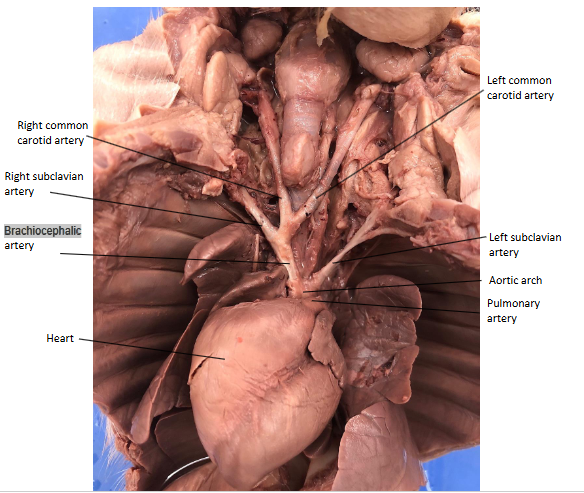
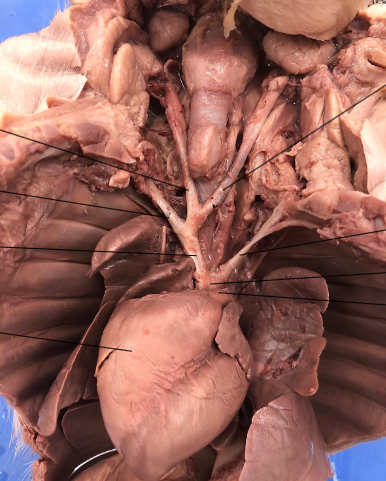
Where is the Brachiocephalic artery and what does it do? What arteries branch off from it?
is the first branch of the aortic arch and supplies blood to the brain, right arm, neck. Right subclavian and right and left common carotid artery
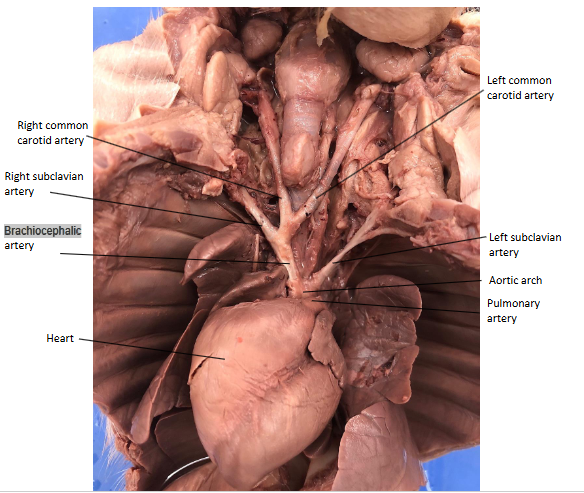
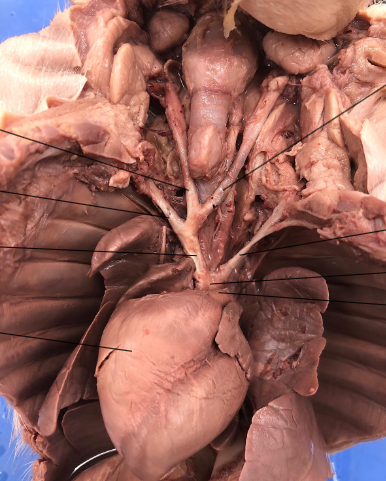
Where are the right subclavian, right common carotid and left common carotid arteries? What do they do precisely?
Right subclavian artery supplies blood to the right arm, neck, and brain. Right common carotid artery supplies blood to the right side of the head and neck, while the left common carotid does the opposite
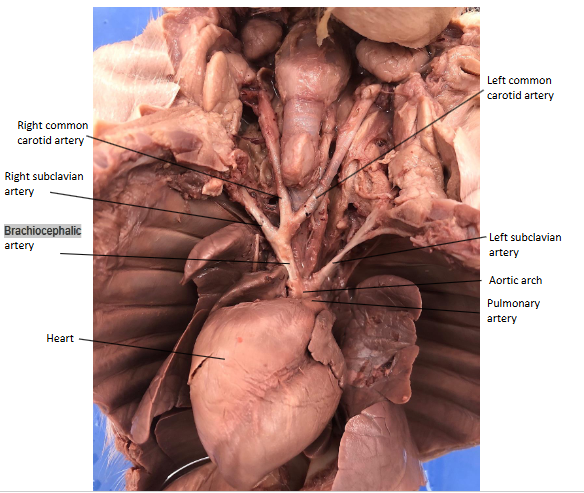
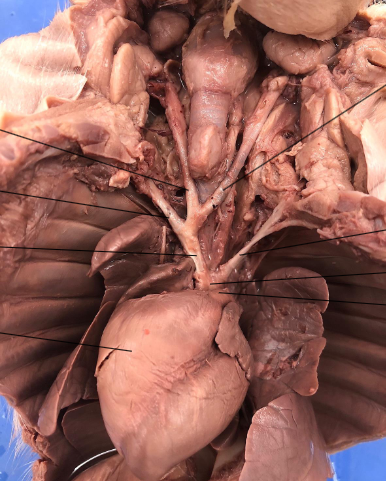
Where is the left subclavian artery and what does it do?
The left subclavian artery is the second major branch from the aortic arch and supplies blood to the left arm, neck, and head
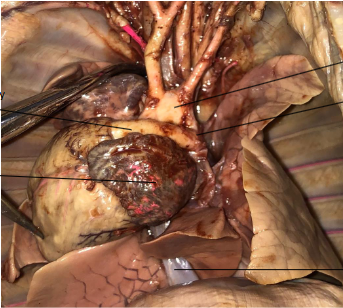
What vessel is present in fetal animals but not in adult babies? Why?
The ductus arteriosus because since the lungs in a fetal animal are non-functional, mothers provides oxygenated blood via the umbilical vein which then empties into the inferior vena cava. The ductus arteriosus shunts blood away from the lungs and back into the blood.