chem231 - ch.5 - stereochemistry

0.0(0)
Studied by 0 people
call kaiCall Kai
learnLearn
examPractice Test
spaced repetitionSpaced Repetition
heart puzzleMatch
flashcardsFlashcards
GameKnowt Play
Card Sorting

1/33

encourage image

There's no tags or description

Looks like no tags are added yet.

Last updated 3:31 AM on 3/30/26
Name
Mastery
Learn
Test
Matching
Spaced
Call with Kai

No analytics yet

Send a link to your students to track their progress

34 Terms

1
New cards

constitutional isomers

same molecular formula, different atom connectivity
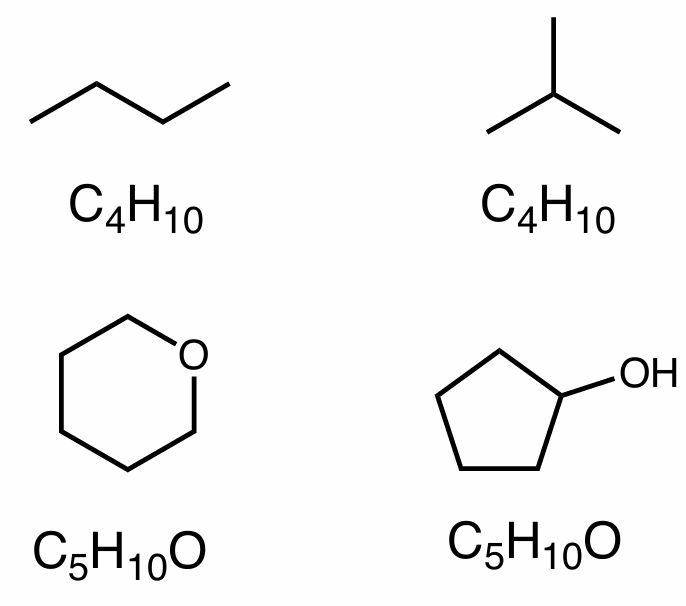
<p><strong>same</strong> molecular formula, <strong>different</strong> atom connectivity </p>
2
New cards

isomer

different compounds of the same molecular formula

3
New cards

stereoisomers

same molecular formula, different orientation in space
4
New cards
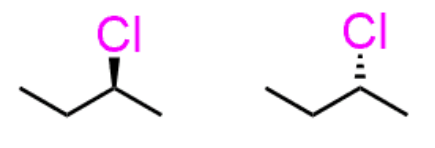
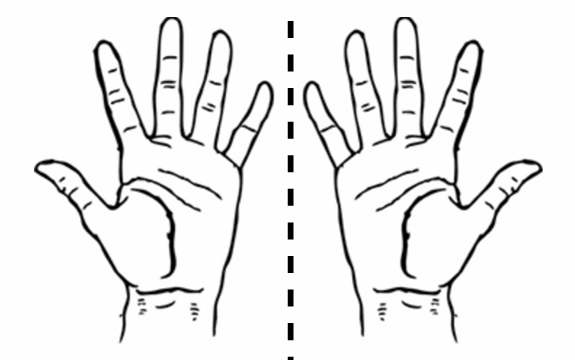
<p>enantiomers</p>

enantiomers

non-superimposable mirror images (mirror images)

  • exist in pairs

  • is chiral

    • ex. hands

  • can’t move which C it’s on

<p>non-superimposable mirror images (mirror images)</p><ul><li><p>exist in pairs</p></li><li><p>is chiral</p><ul><li><p>ex. hands</p></li></ul></li><li><p>can’t move which C it’s on</p></li></ul><p></p>
5
New cards

chiral

a chiral object (molecule) is chiral if it has an enantiomer

  • has:

    • chiral center

    • no plane of symmetry

    • axial chirality, planar chirality, inherent chirality

6
New cards

achiral

not chiral

  • identical, superimposable

  • no chiral center

7
New cards

chirality

the phenomenon where objects are non-superimposable mirror images

8
New cards

diastereomers

stereoisomers that are not enantiomers

  • may/may not be chiral

  • not mirror images

<p>stereoisomers that are <strong>not</strong> enantiomers</p><ul><li><p>may/may not be chiral</p></li><li><p>not mirror images</p></li></ul><p></p>
9
New cards

stereocenter

a point where switching 2 groups would lead to a different molecule

  • many diff types, we focus on chiral centers

10
New cards

chiral center

an atom (usually C) bearing four different groups

  • chiral centers are stereocenters

  • sp2 carbons NEVER chiral centers

  • if any 2 substituents have switched → opposite configurations

11
New cards

enantiomer methods

  1. same molecule, switched dash & wedge

  2. mirror images

  3. R/S configuration

  • when a bond is dash/wedge, assume hydrogen (if there) is the opposite wedge/dash

12
New cards

enantiomers: method 1

molecules are exact same, but all wedges & dashes switched
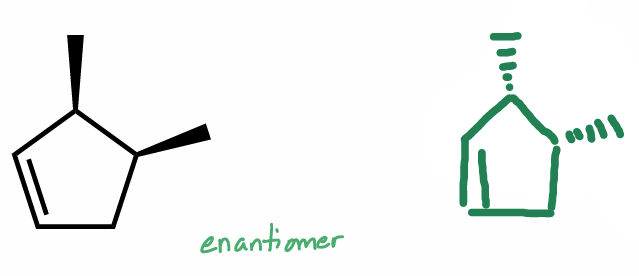
<p>molecules are <strong>exact</strong> same, but all wedges &amp; dashes switched </p>
13
New cards

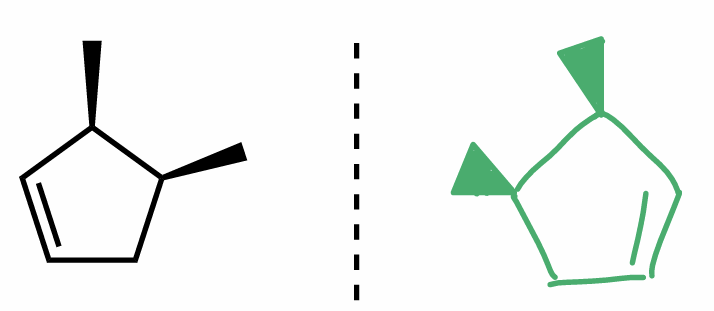
enantiomers: method 2

molecule are mirror images

  • not flipped

    • if flipped, wedge → dash, vice versa

<p>molecule are <strong>mirror</strong> images </p><ul><li><p>not flipped </p><ul><li><p>if flipped, wedge → dash, vice versa </p></li></ul></li></ul><p></p>
14
New cards

enantiomers: method 3

all chiral centers have opposite R/S configuration
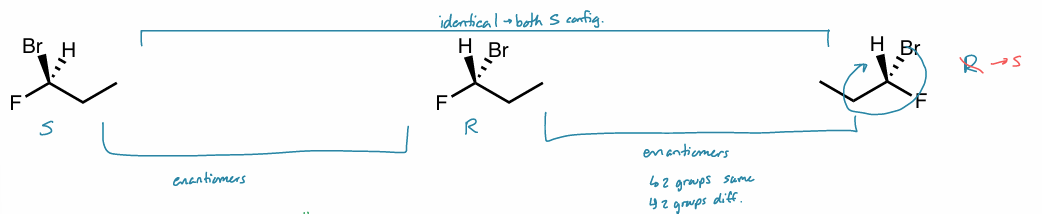
<p>all chiral centers have <strong>opposite</strong> R/S configuration </p><p></p>
15
New cards

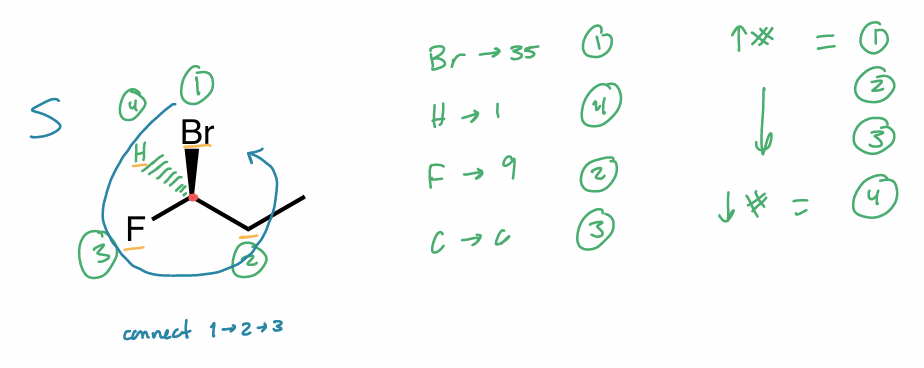
R/S steps

  • assign Cahn-Ingold-Prelog priorities of all atoms directly bonded to chiral center according to atom #

    • 1 high → 4 low

  • lowest priority substituent (H) in back & connect 1 → 2 → 3

    • if in front, do it normal but switch R & S

    • if in plane, consider 3D orientation

  • label chiral center R or S

    • R = clockwise

    • S - counterclockwise

<ul><li><p>assign Cahn-Ingold-Prelog priorities of all atoms <strong>directly </strong>bonded to chiral center according to <strong>atom #</strong></p><ul><li><p>1 high → 4 low</p></li></ul></li><li><p>lowest priority substituent (H) in <strong>back</strong> &amp; connect 1 → 2 → 3</p><ul><li><p>if in <u>front</u>, do it normal but <u>switch</u> R &amp; S</p></li><li><p>if in <u>plane</u>, consider 3D orientation </p></li></ul></li><li><p>label chiral center R or S</p><ul><li><p>R = clockwise</p></li><li><p>S - counterclockwise</p></li></ul></li></ul><p></p>
16
New cards

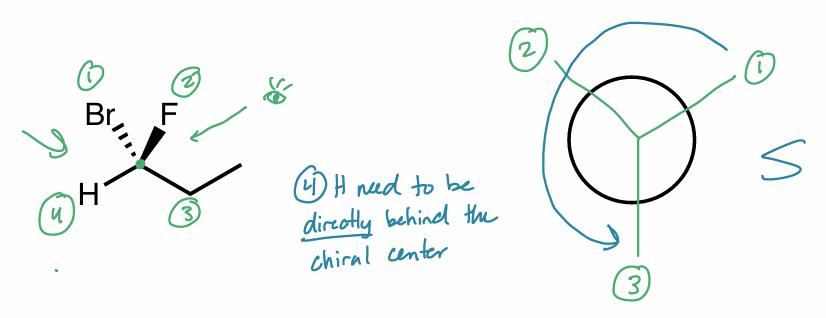
R/S 4th sub in plane

consider 3D orientation

  • look down bond from C w/ H behind it (NP)

  • rotate bond

  • “switch” method

17
New cards

R/S: method 1

look down bond from C w/ H directly behind chiral center

  • like Newman projection

<p>look down bond from C w/ H <strong>directly </strong>behind chiral center</p><ul><li><p>like Newman projection </p></li></ul><p></p>
18
New cards

R/S: method 2

rotate bond so 4th priority subst. (H) isn’t in plane anymore
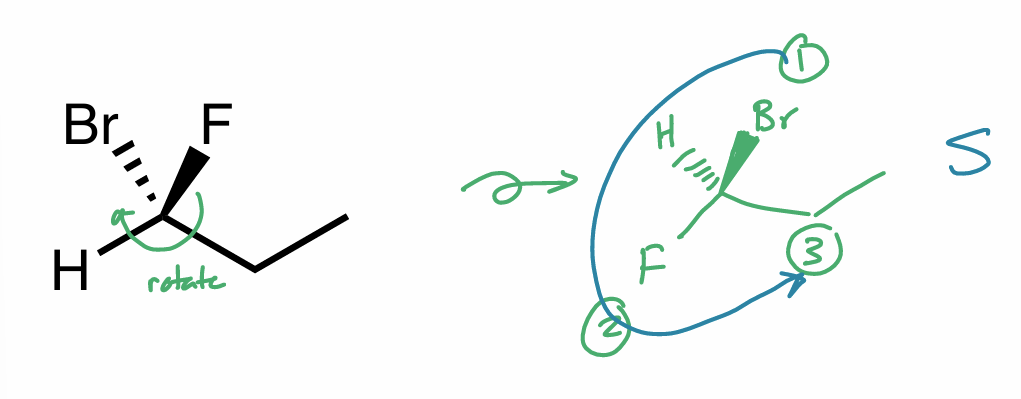
<p>rotate bond so 4th priority subst. (H) isn’t in plane anymore </p>
19
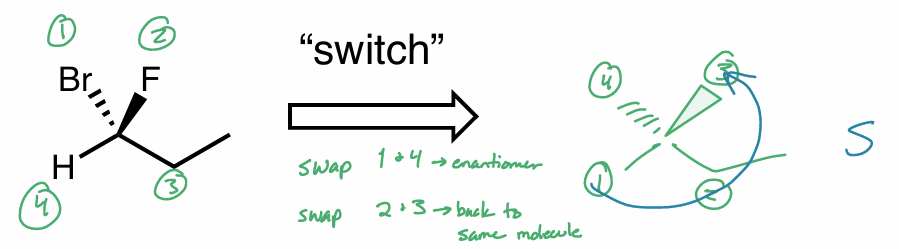
New cards

R/S: method 3

“switch” method

  • assign priorities

  • switch 2 substituents & switch other 2 substituents

    • any 2 groups

    • want H in back (dash)

  • assign R/S as usual

<p>“switch” method </p><ul><li><p>assign priorities</p></li><li><p>switch 2 substituents &amp; switch other 2 substituents </p><ul><li><p>any 2 groups </p></li><li><p>want H in back (dash) </p></li></ul></li><li><p> assign R/S as usual </p></li></ul><p></p>
20
New cards

racemic mixture

when there are no wedges or dashes drawn, molecule represents racemic mixture (50:50) of enantiomers

  • half R

  • half S

<p>when there are no wedges or dashes drawn, molecule represents racemic mixture (50:50) of enantiomers </p><ul><li><p>half R</p></li><li><p>half S</p></li></ul><p></p>
21
New cards
<p>R/S 2 same atom</p>

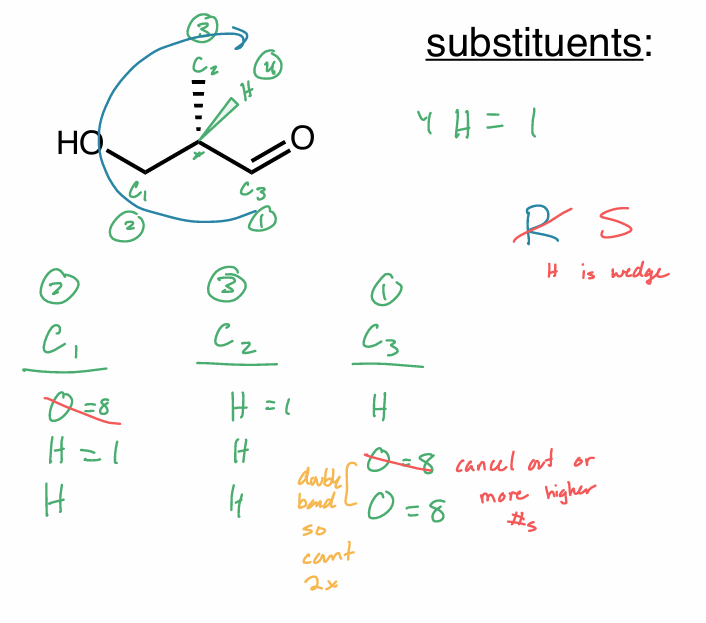
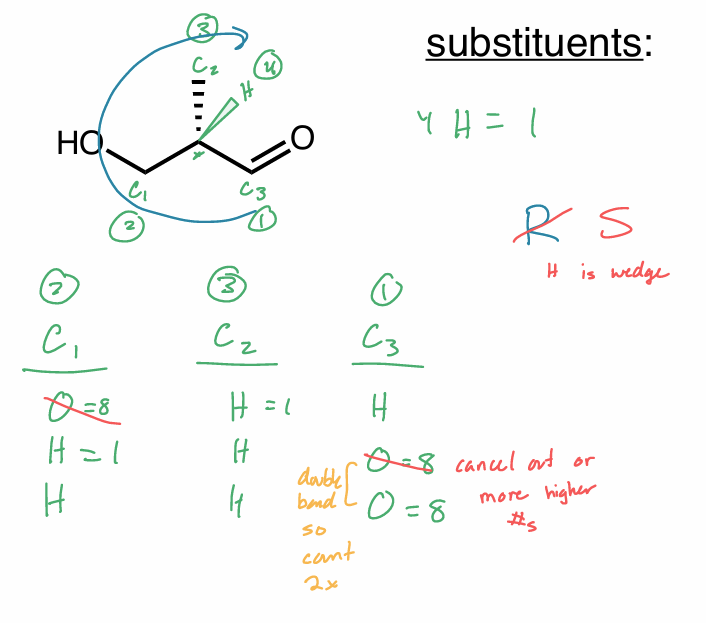
R/S 2 same atom

continue along the chain until you get a point of difference

  • double bonds count twice

  • triple bonds count thrice

<p>continue along the chain until you get a point of difference </p><ul><li><p>double bonds count twice</p></li><li><p>triple bonds count thrice </p></li></ul><p></p>
22
New cards

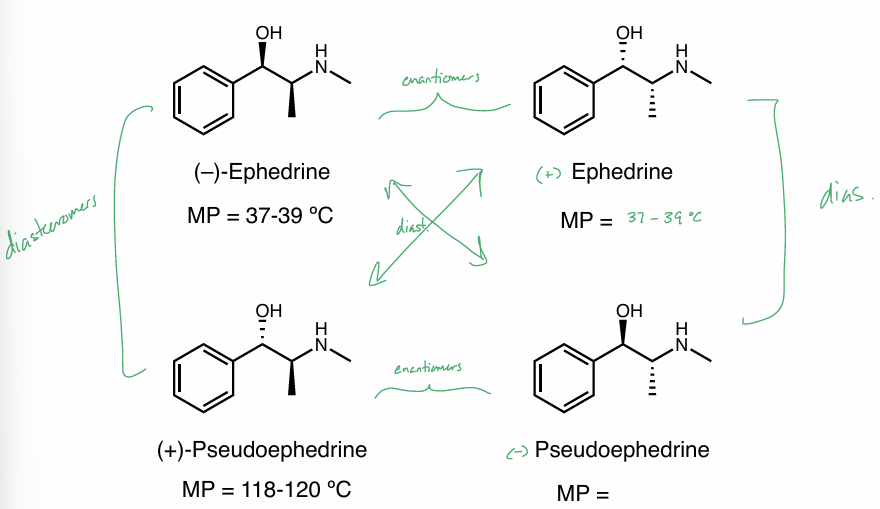
diastereomers

a stereoisomer that is not an enantiomer

  • must have multiple chiral centers OR

  • an alkene

<p>a stereoisomer that is <strong>not</strong> an enantiomer </p><ul><li><p>must have <strong>multiple </strong>chiral centers OR </p></li><li><p>an <strong>alkene </strong></p></li></ul><p></p>
23
New cards

diastereomers: multiple chiral centers

  • identical → same configurations

  • enantiomer → opposite at chiral centers (dash/wedge)

  • diastereomer → at least 1, but not all chiral centers opposite (dash/wedge)
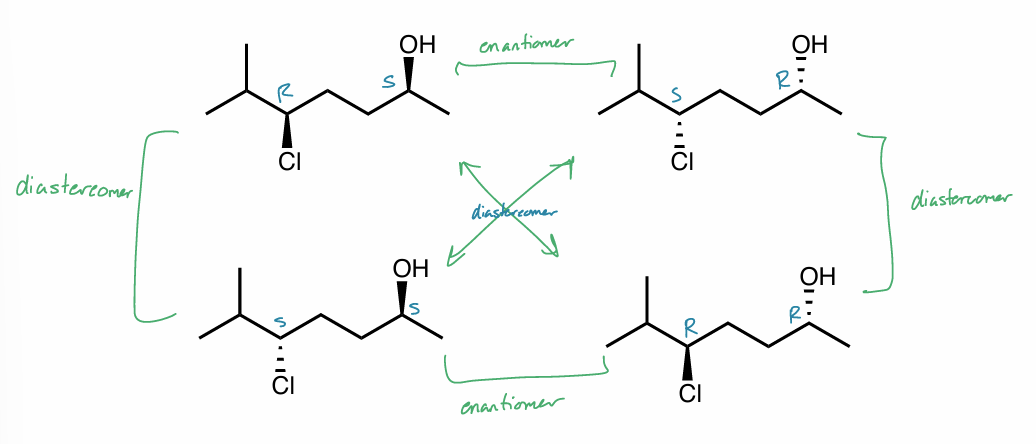
<ul><li><p>identical → same configurations </p></li><li><p>enantiomer → opposite at chiral centers (dash/wedge)</p></li><li><p>diastereomer → at least 1, but not all chiral centers opposite (dash/wedge)</p></li></ul><p></p>
24
New cards

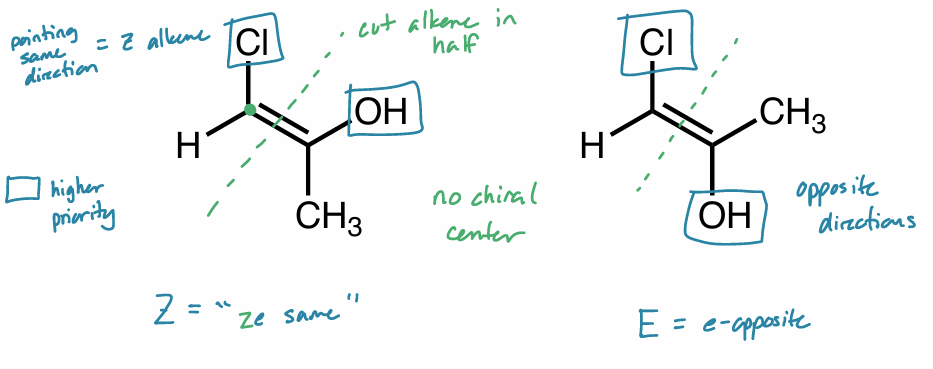
diastereomers: alkene

designate as E, Z or neither

  • Z → same “ze same”

  • E → opposite “e-opposite”

<p>designate as E, Z or neither </p><ul><li><p>Z → same “<strong>z</strong>e same”</p></li><li><p>E → opposite “<strong>e</strong>-opposite” </p></li></ul><p></p>
25
New cards
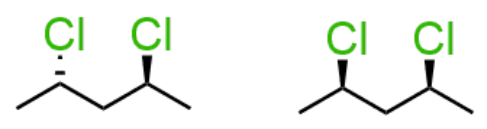
<p>meso compound</p>

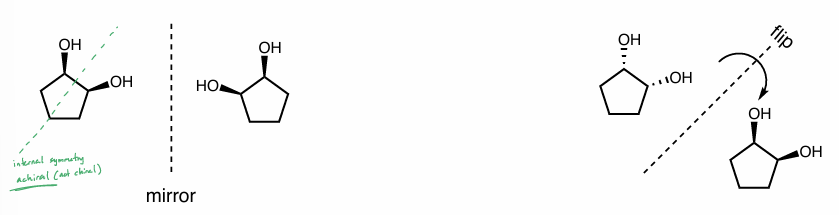
meso compound

has a superimposable mirror image & are achiral

  • has

    • chiral center (but not chiral)

    • plane of symmetry

  • 2 chiral centers, but molecule itself is not chiral b/c internal plane of symmetry
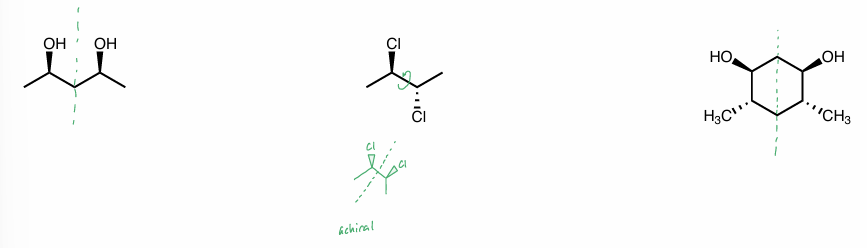
<p>has a superimposable mirror image &amp; are <strong>achiral</strong></p><ul><li><p>has </p><ul><li><p>chiral center (but not chiral)</p></li><li><p>plane of symmetry </p></li></ul></li><li><p>2 chiral centers, but molecule <strong>itself </strong>is not chiral b/c internal plane of symmetry </p></li></ul><p></p>
26
New cards

enantiomer properties

  • identical physical & chemical properties except they rotate plane polarized light in opposite directions (optical rotation)

  • behave differently in chiral environments (enzymes)

27
New cards

diastereomer properties

  • different physical properties (similar / drastically different)

  • utilize these diff physical properties to separate diastereomers

    • boiling point

    • melting point

    • solubility

    • etc

<ul><li><p>different physical properties (similar / drastically different)</p></li><li><p>utilize these diff physical properties to separate diastereomers </p><ul><li><p>boiling point</p></li><li><p>melting point</p></li><li><p>solubility </p></li><li><p>etc</p></li></ul></li></ul><p></p>
28
New cards

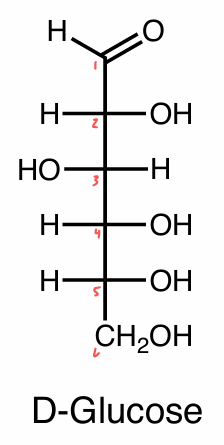
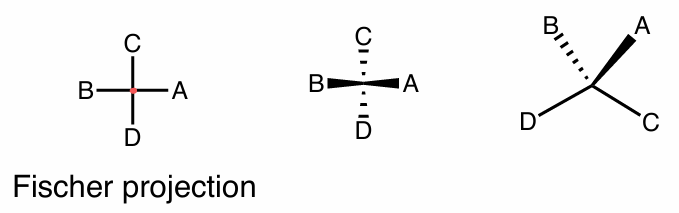
Fischer projections

Emil Fischer (1902)

  • a way to look at carbohydrates/sugars in the highest E conformation

    • skeletal → lowest E conformation

<p>Emil Fischer (1902)</p><ul><li><p>a way to look at carbohydrates/sugars in the <strong>highest</strong> E conformation </p><ul><li><p>skeletal → lowest E conformation </p></li></ul></li></ul><p></p>
29
New cards

reading FP

  • | horizontal → wedge

  • — vertical → dash

<ul><li><p>| horizontal → wedge</p></li><li><p>— vertical → dash </p></li></ul><p></p>
30
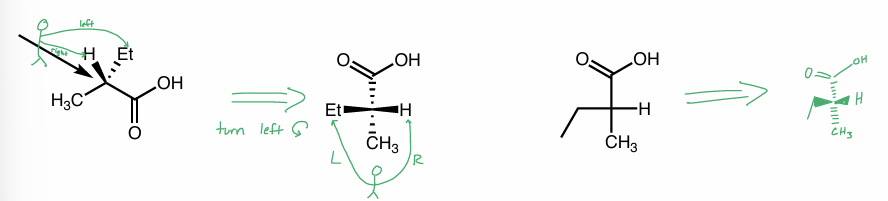
New cards

converting FP

  • turn counterclockwise

<ul><li><p>turn counterclockwise </p></li></ul><p></p>
31
New cards

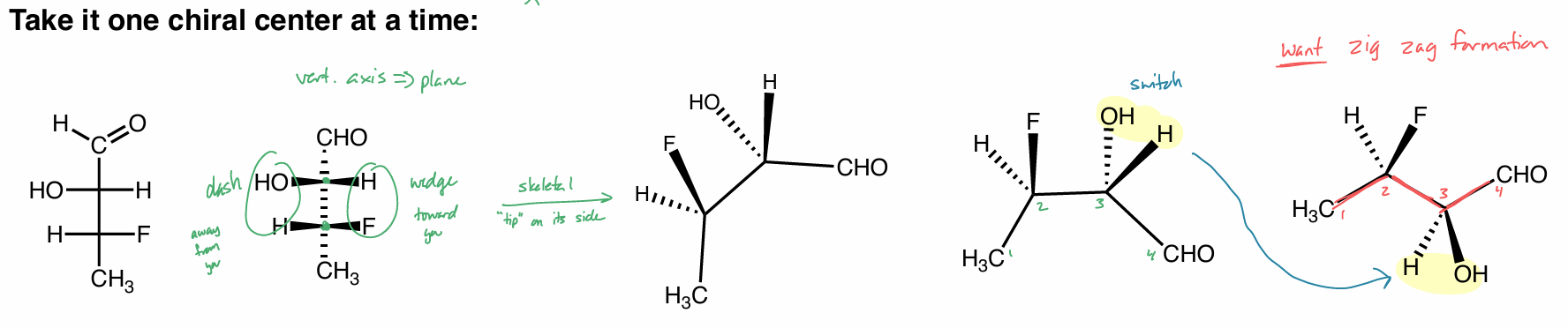
converting FP to skeletal

to skeletal

  • vertical axis → plane (solid line)

  • 1 side is dashed, the other is wedged

  • “tip” on its side

  • want carbons in zig zag formation

<p>to skeletal </p><ul><li><p>vertical axis → plane (solid line) </p></li><li><p>1 side is dashed, the other is wedged </p></li><li><p>“tip” on its side </p></li><li><p>want carbons in <strong>zig zag</strong> formation </p></li></ul><p></p>
32
New cards

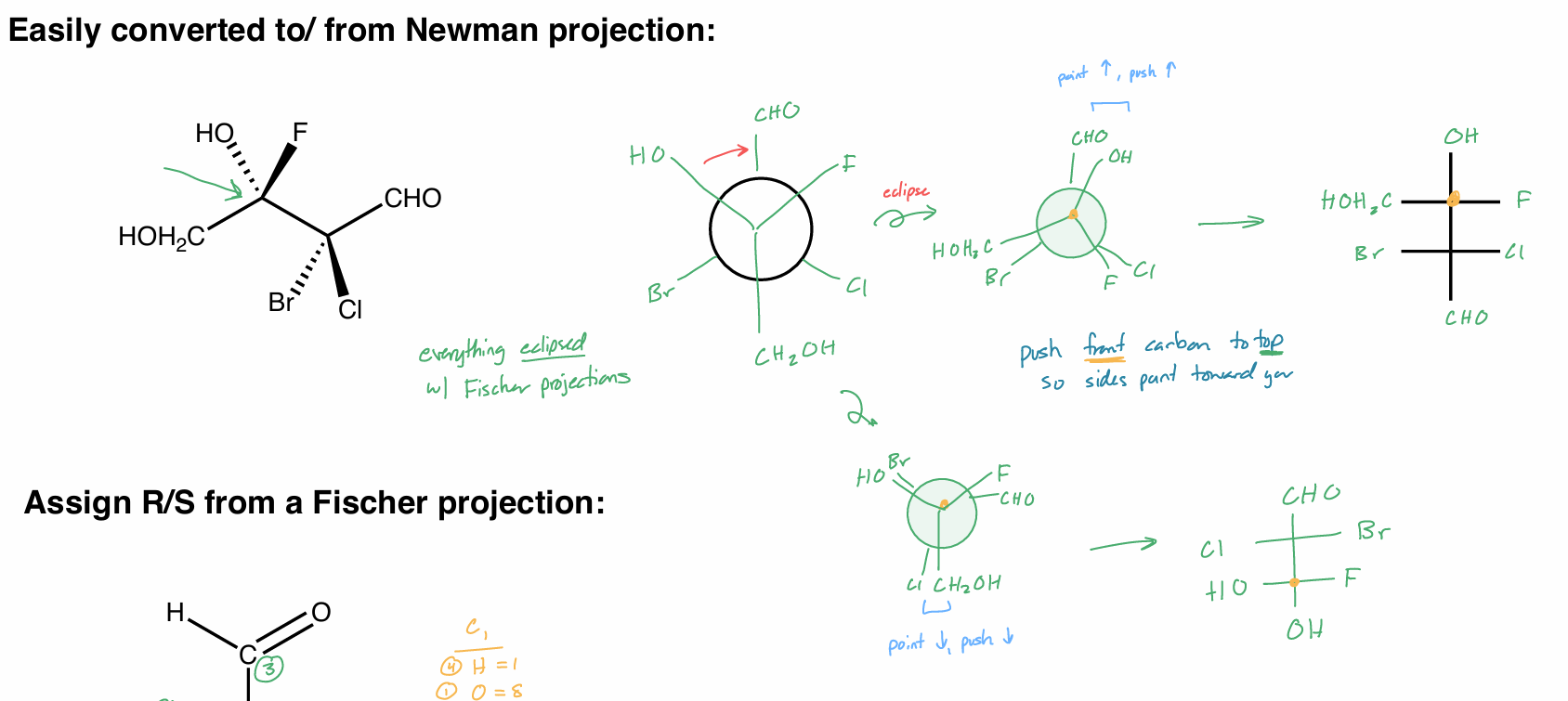
converting NP to FP

  • make everything eclipsed w/ FP

  • push from/back carbon to top/bottom so sides point towards you

    • point ↑ → push ↑

    • point ↓ → push ↓

<ul><li><p>make everything <strong>eclipsed</strong> w/ FP </p></li><li><p>push from/back carbon to top/bottom so sides point towards you </p><ul><li><p>point ↑ → push ↑</p></li><li><p>point ↓ → push ↓</p></li></ul></li><li><p></p></li></ul><p></p>
33
New cards

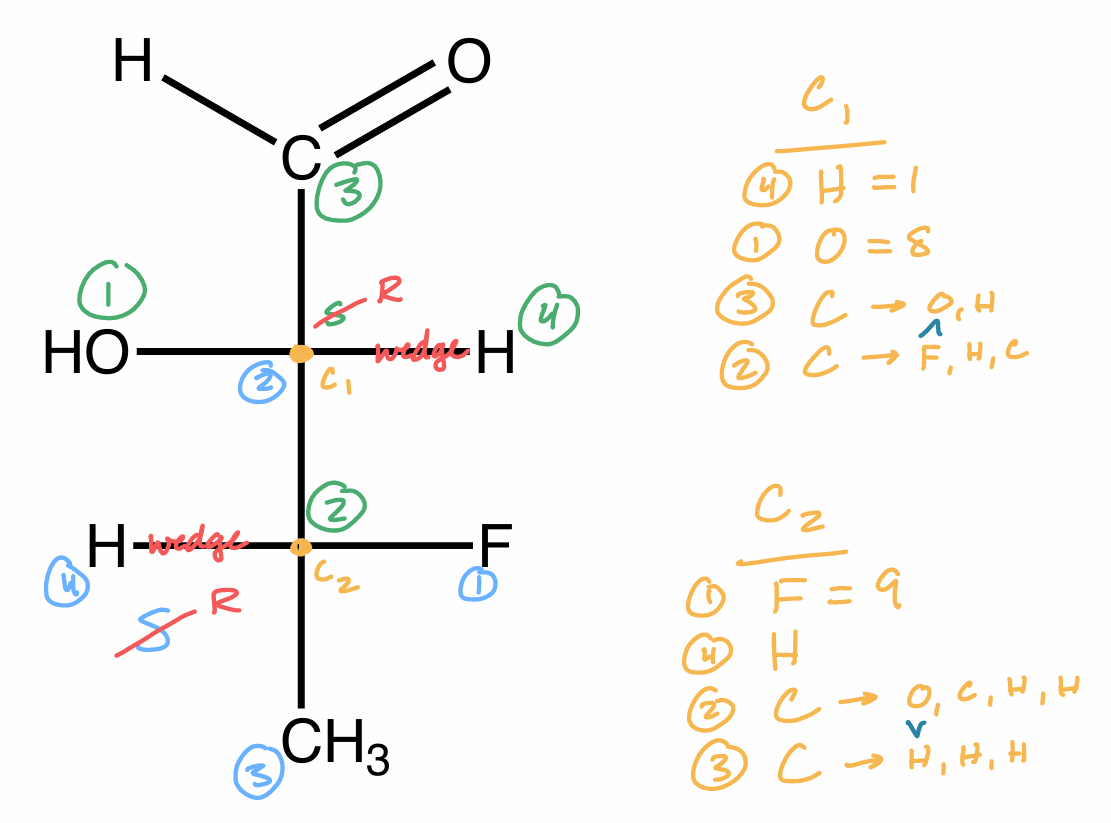
FP R/S

knowt flashcard image
34
New cards

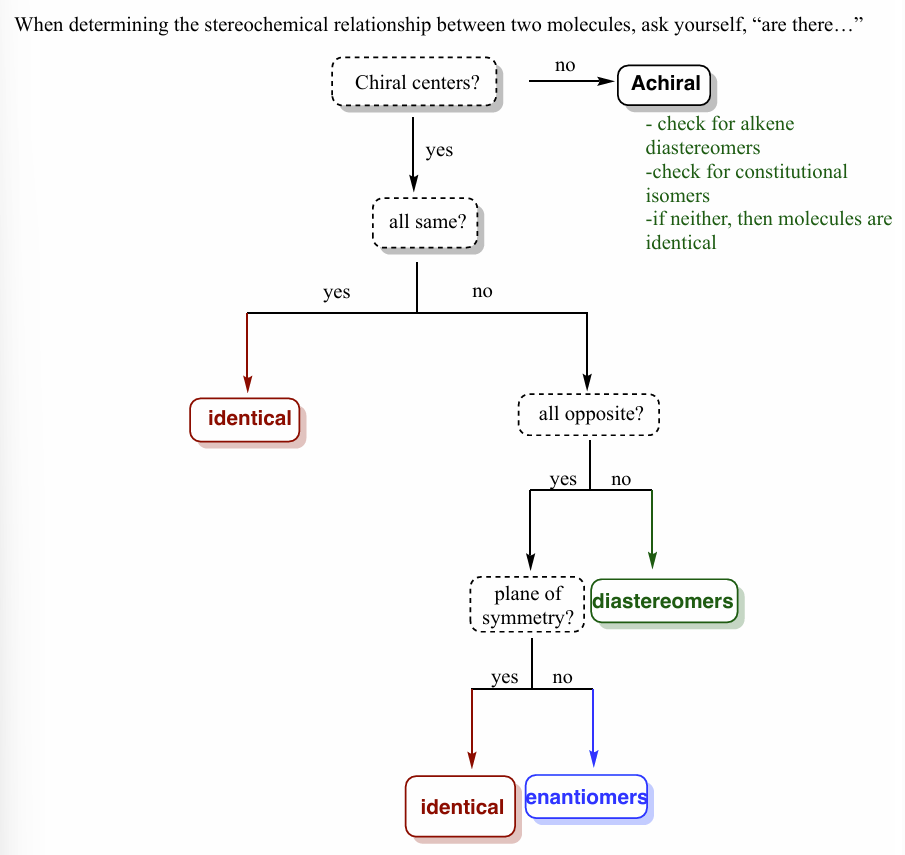
stereochemistry flow chart

knowt flashcard image