Early Childhood Social, Emotional, and Identity Development
 Call Kai
 Learn
Learn Practice Test
 Spaced Repetition
 Match
Match Flashcards
 Knowt Play
1/25

There's no tags or description
Looks like no tags are added yet.
Name | Mastery | Learn | Test | Matching | Spaced | Call with Kai |
|---|
No analytics yet
Send a link to your students to track their progress
26 Terms
Self-concept
The awareness of certain characteristics, abilities, and preferences that define a child as a unique individual.
Self-esteem in young children
Young children lack the cognitive maturity for an overall sense of self-esteem, often influenced by a positivity bias.
Positivity bias
A tendency in children to remember positive experiences more than negative ones, motivating them to try new tasks despite failures.
Role of parents in self-concept
prompting them to recall activity details and evaluate their performance.
Gender stereotypes awareness
Children become aware of gender stereotypes as early as 2 to 3 years old, with rigidity peaking around ages 5 to 7.
Race
Physical characteristics that distinguish one group from another, such as skin color and facial features.
Ethnicity
Social characteristics that distinguish one group from another, including cultural background, nationality, and language.
Development of ethnic-racial identity
Children can sort pictures and label themselves by age 3 but do not develop racial consistency until ages 6 or 7.
Racial stereotypes and prejudice
Outright bias typically develops between ages 3 to 5 and can be both implicit and explicit.
Emotional competence
Includes three aspects: emotional expressivity, emotional understanding, and emotion regulation.
Advantages of emotional understanding
Children begin to grasp complex emotions around ages 7 to 8, aided by language skills and cultural influences.
Emotion regulation
The ability to modulate one's emotional arousal, influenced by biological, cognitive, behavioral, and experiential factors.
Effective strategies for emotion regulation
Include attention refocusing, cognitive reframing, and providing physical affection or positive statements.
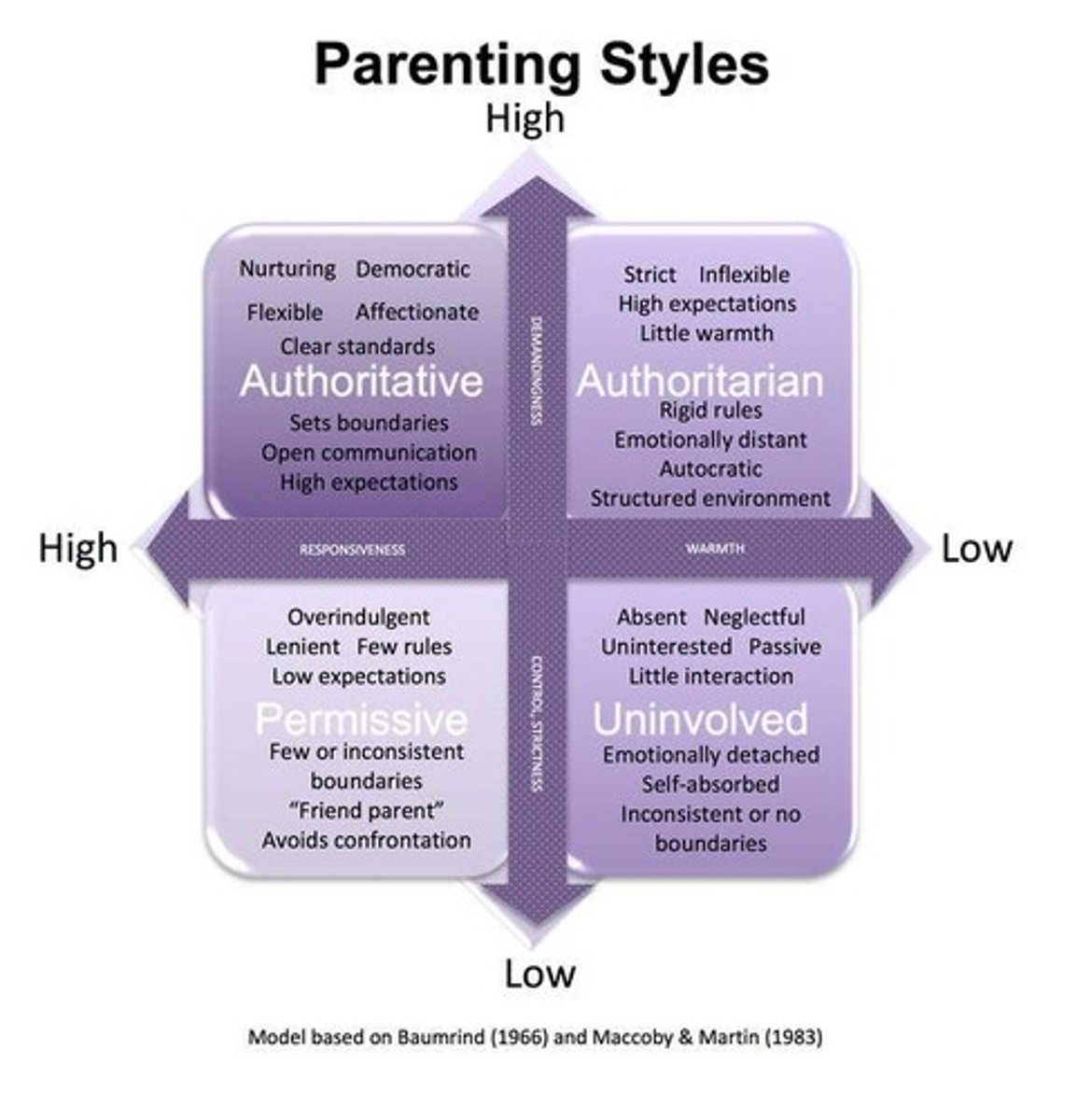
Baumrind's parenting styles
Authoritative parents raise independent and cheerful children, while authoritarian parents may lead to higher internalizing and externalizing behaviors.
Childcare experiences
Can correlate with misbehavior, especially with over 20 hours of non-parental care, but can also promote social competence.
Play with peers
Allows children to form and maintain relationships, negotiate play subjects, and take on different roles.
Instrumental aggression
A type of aggression seen in early childhood where children use force to achieve a goal.
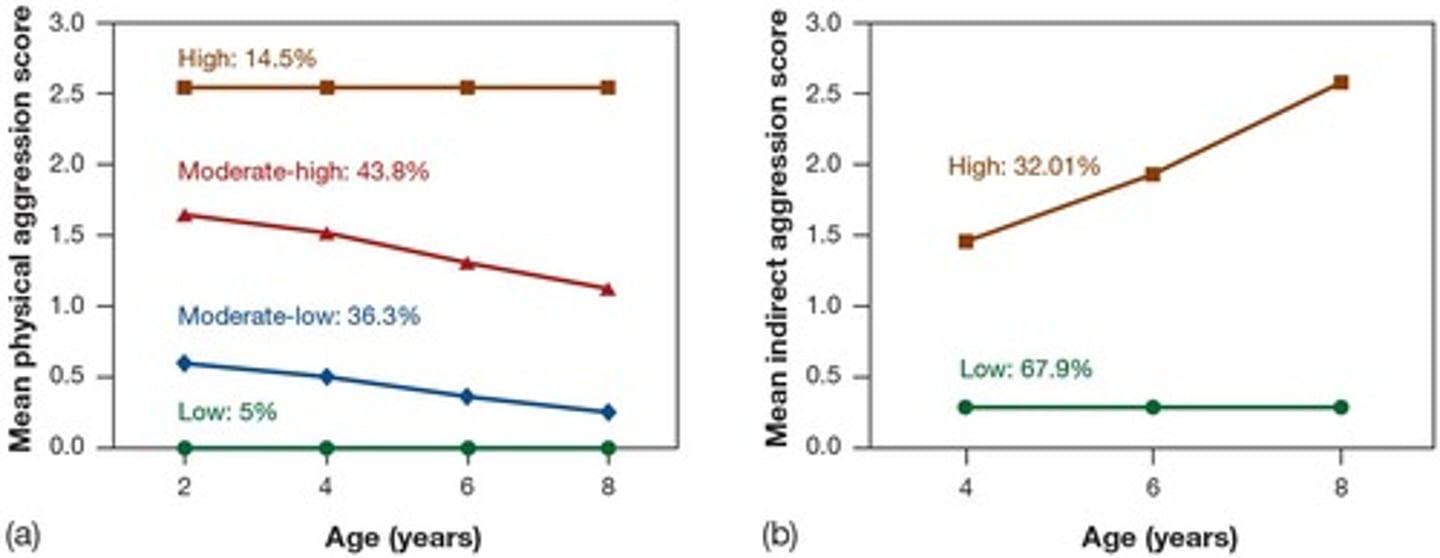
Reactive aggression
Hostile aggression that emerges later in childhood, often as a response to perceived threats.
Peer relationships
Develop through play and interaction, which are crucial for social skills and emotional development.
Emotional expressivity
The ability to express emotions, which develops significantly during early childhood.
Learning objectives in emotional development
Include describing advances in emotional expressivity and understanding, as well as influences on emotion regulation.
Understanding emotions
Parents can help children understand their emotions by labeling and providing explanations for feelings.
Sociodramatic play
A form of play where children plan and assign roles, acting out scenarios, which fosters social skills.
Aggression regulation
Children can learn to regulate aggression through activities like rough-and-tumble play.
Implicit biases in friendships
Children may show preferences for friends based on implicit biases related to team colors or group identity.
Child's self-description at ages 3-4
Children typically describe themselves using their name, family, physical attributes, and preferences, avoiding psychological descriptors.