biomg 3300 unit 13
 Call Kai
 Learn
Learn Practice Test
 Spaced Repetition
 Match
Match Flashcards
 Knowt Play
1/53

There's no tags or description
Looks like no tags are added yet.
Name | Mastery | Learn | Test | Matching | Spaced | Call with Kai |
|---|
No analytics yet
Send a link to your students to track their progress
54 Terms
What is the function of glycogen in mammals? In what tissues does it occur (pp. 556 - 557)?
glycogen: storage of glucose in animals. occurs in liver and muscle
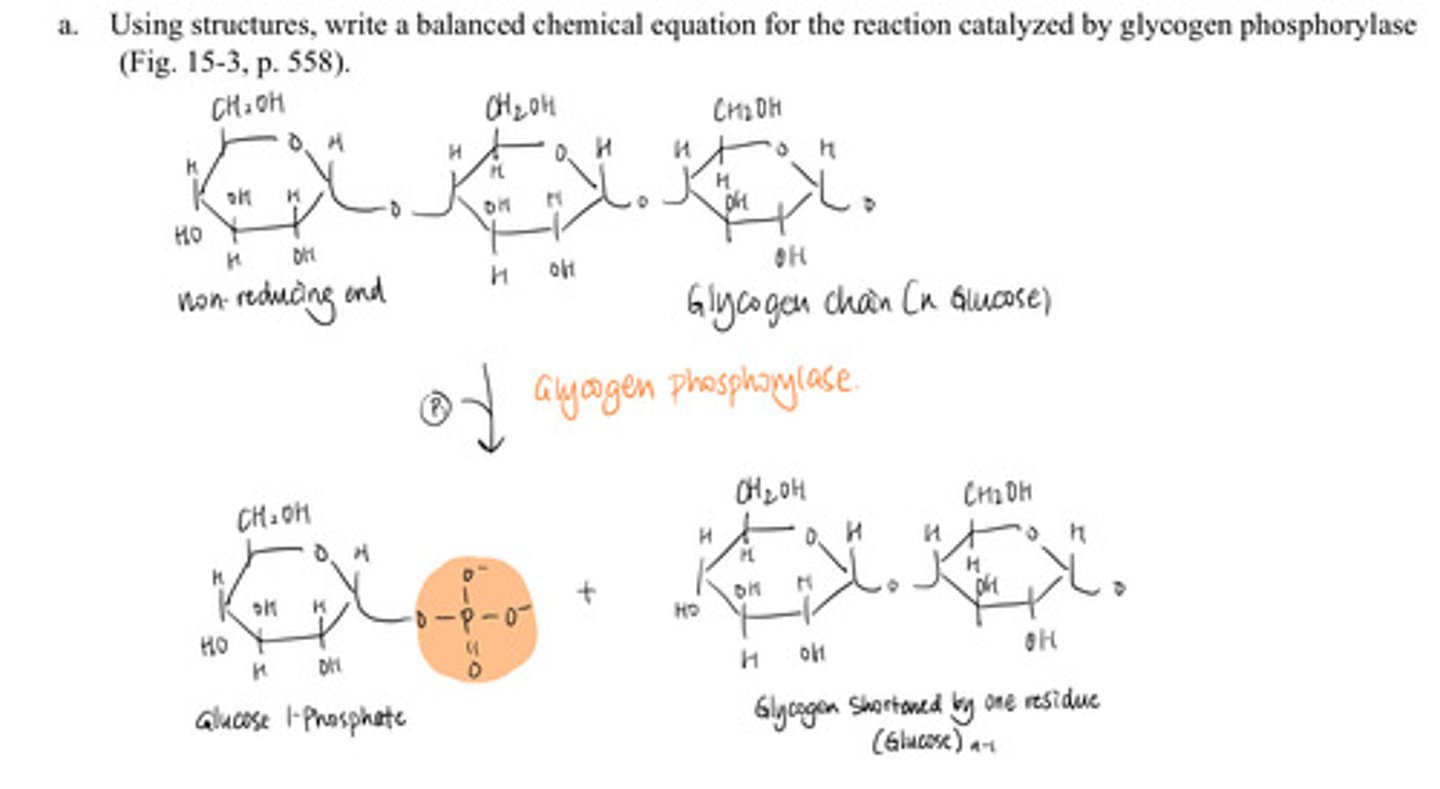
Using structures, write a balanced chemical equation for the reaction catalyzed by glycogen phosphorylase (Fig. 15-3, p. 558).
use glycogen phosphorylase to catalyze cleavage of glycogen w/ n residues
forms glucose 1-phosphate + glycogen with n-1 residues
Explain why glycogen phosphorolysis is energetically more efficient than hydrolysis (that occurs during digestion in the intestine; pp. 558 - 559. Think about this in terms of the product of glycogen phosphorolysis and what would be required to produce a similar molecule using glycolysis).
phosphorylysis: energy stored in formation of phosphate ester
hydrolysis: energy released as heat
List several reasons why sugar nucleotides are suitable substrates for biosynthetic reactions (pp. 560 - 561).
1. formation of sugars is metabolically irreversible
2. nucleotides can undergo non-covalent interactions w enzymes
3. nucleotidyl group (UDP/ADP) is a good leaving group
4. cells can tag hexose with nucleotidyl groups + designate for another purpose
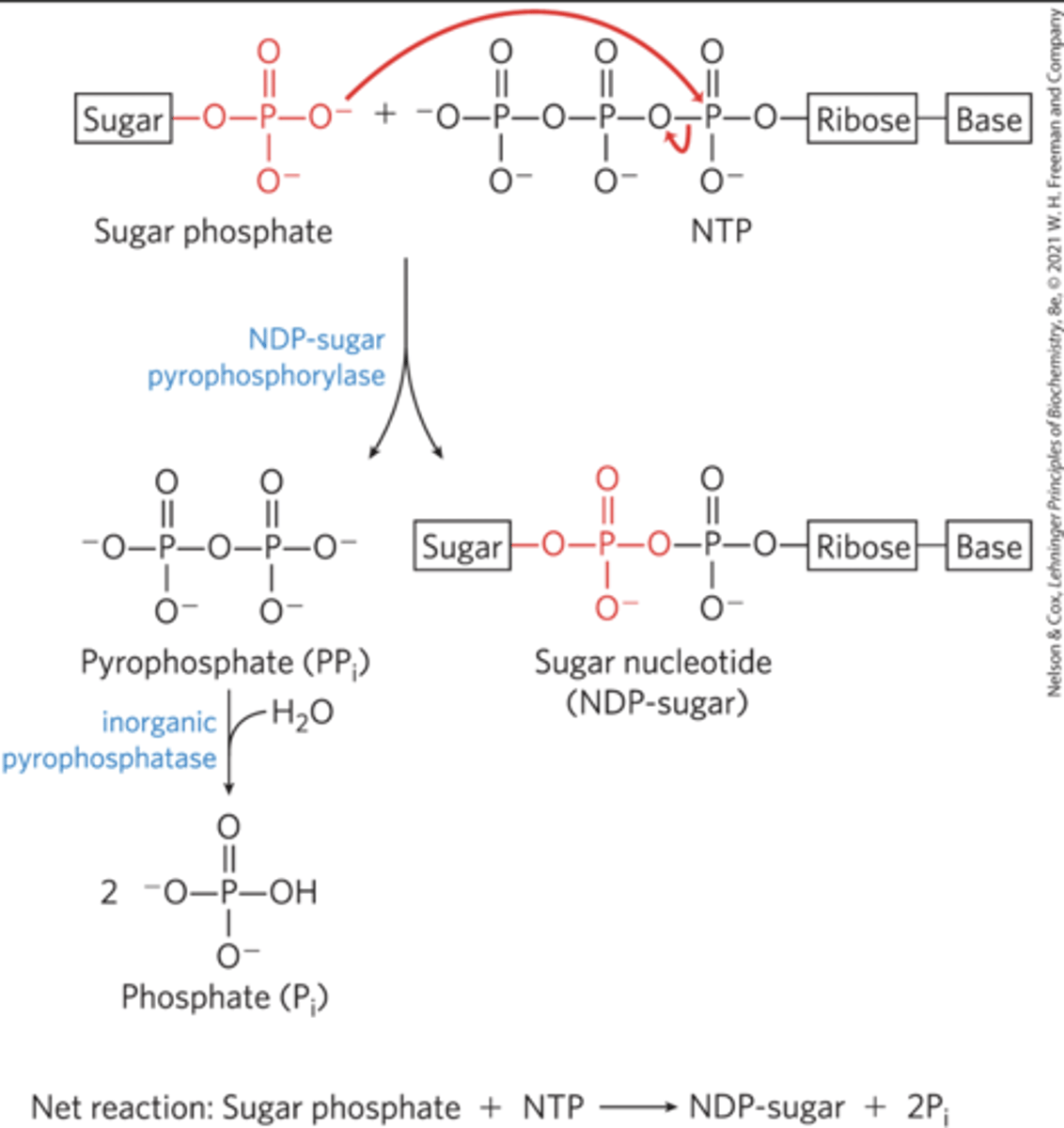
Using structures, write a balanced chemical equation for the reaction that generates a sugar nucleotide (Fig. 15-7, p. 563). Name the other product of the reaction and discuss why it is important
(Although this Figure is general for polysaccharide synthesis, the sugar nucleotide that is specifically used in the formation of glycogen is UDP-glucose.)
net reaction: Sugar phosphate + NTP -> NDP-Sugar + 2Pi
products: NDP-sugar + Pyrophosphate
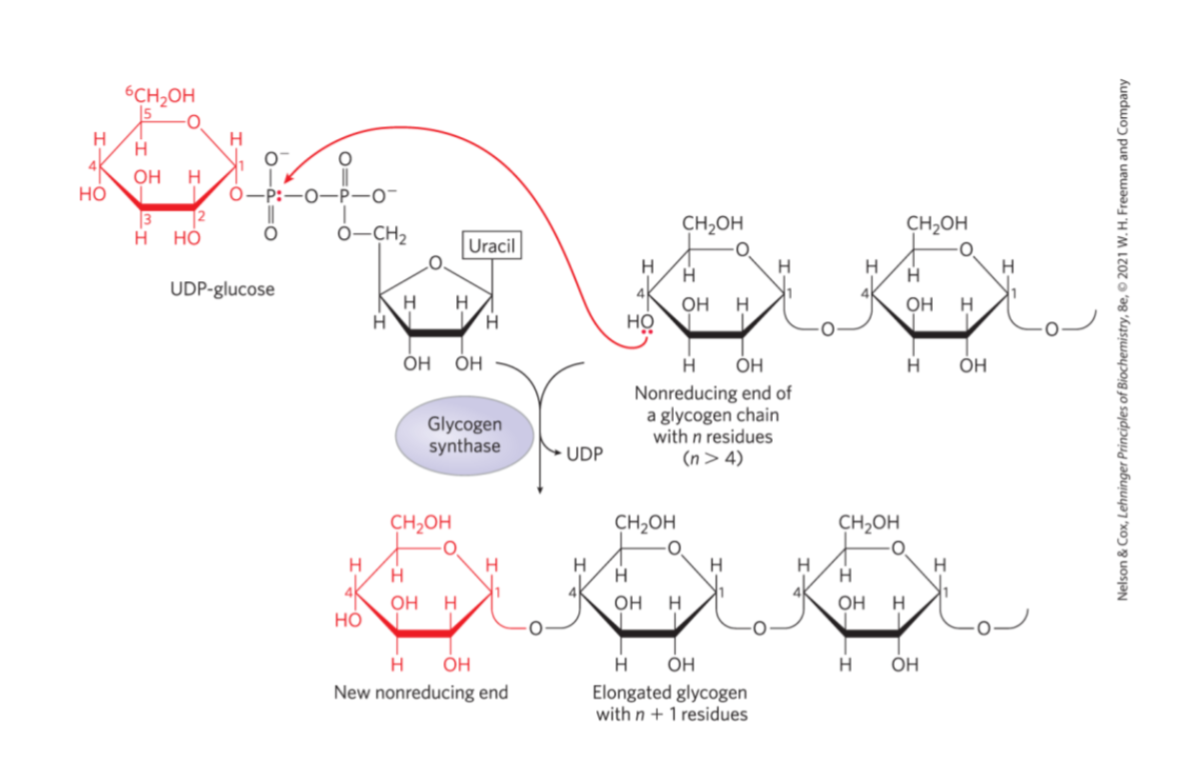
Using structures, write a balanced chemical equation for the reaction catalyzed by glycogen synthase (Fig. 15-8, p. 563).
net reaction: UDP-Glucose + (non-reducing end of) glycogen chain w/ n residues -> elongated glycogen chain w/ n+1 residues
All polysaccharide synthesis follows the same general pattern: conversion of a monosaccharide 1-P to a nucleoside diphosphate sugar (NDP - sugar) followed by transfer of the sugar to the growing end of a polysaccharide chain.
Discuss the biological significance of the branched structure in glycogen (p. 563).
branching increases the number of non-reducing ends -> more sites that enzymes such as glycogen phosphorylase + glycogen synthase can act on
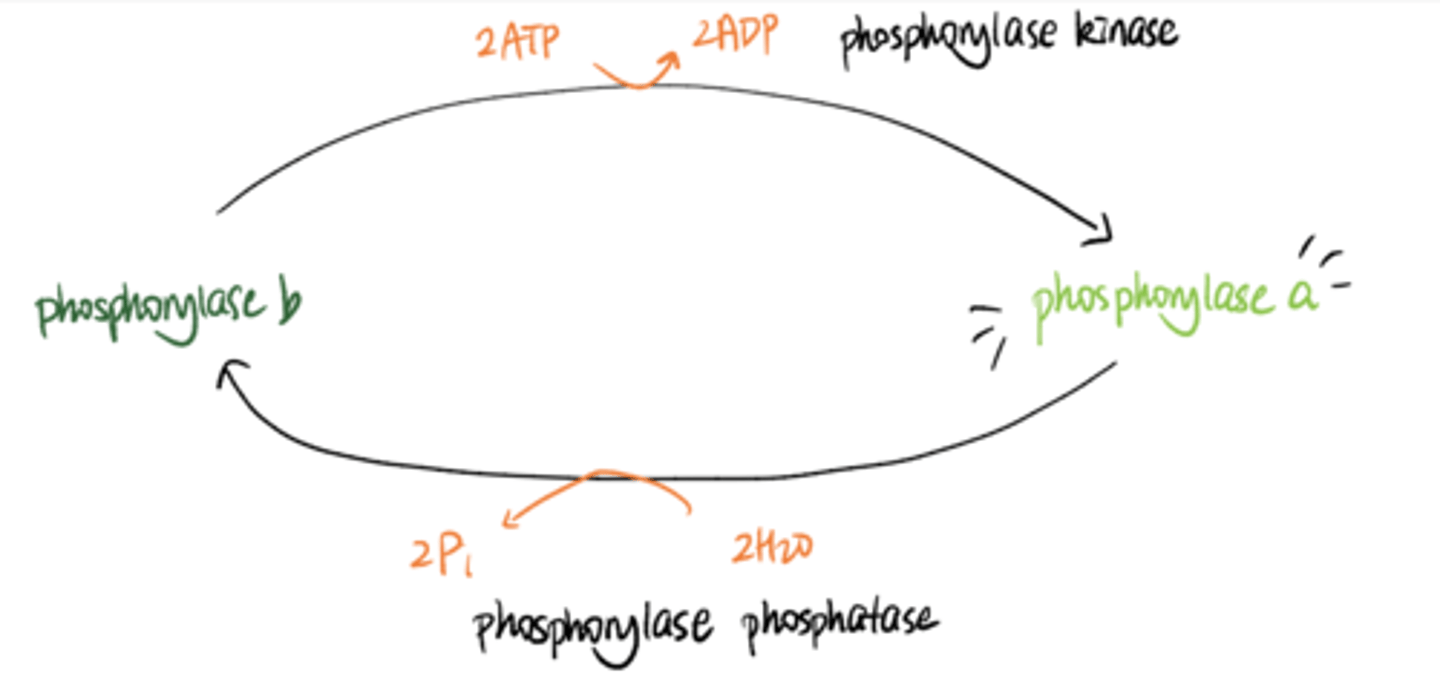
Glycogen metabolism is regulated by covalent modification (review pp. 216 - 218).
a. Write a balanced equation for the reaction catalyzed by a kinase (pp. 217 - 218).
enzyme + ATP -> enzyme-phosphate + ADP
Write a balanced equation for the reaction catalyzed by a phosphatase (p. 218).
Enzyme-phosphate + H2O -> Enzyme + Pi
Discuss how phosphate addition / removal causes conformational changes that alter enzyme activity (p. 217).
phosphorylation introduces a bulky negatively charged group
- oxygen can H-bond w functional grps such as amides on peptide backbone
- negative charges on phosphate can repel negative residues (Asp or Glu)
Discuss the epinephrine signal transduction pathway including the role of each of the following (Fig. 12-4, p. 414)
1) G protein-coupled receptor
2) Adenylyl cyclase
3) Protein Kinase A (PKA)
4) Target enzymes (glycogen phosphorylase and glycogen synthase)
1) GPCRs: cycle between active (GTP-bound) and inactive (GDP-bound) state
2) Adenylyl Cyclase: stimulated by active GTP-bound G protein -> makes cAMP from ATP
3) PKA: activated allosterically by cAMP -> phosphorylates Ser and Thr residues. phosphorylates phosphorylase + synthase (?)
4) glycogen phosphorylase: active when phosphorylated (a) and inactive when dephosphorylated (b)
glycogen synthase: active when not phosphorylated (a), inactive when phosphorylated (b)
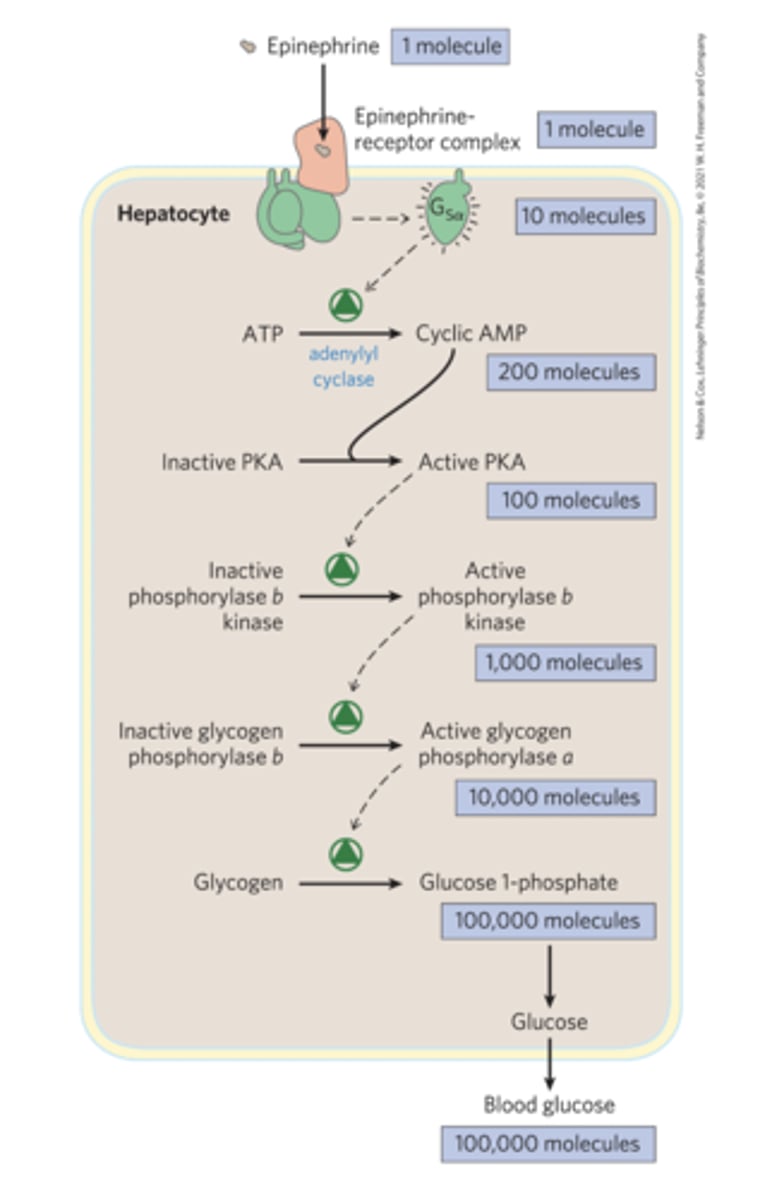
Use Fig. 12-7 (p. 418) to illustrate the principle of amplification within the signal transduction cascade. Point out each step that results in signal amplification.
each enzyme in each step can activate multiple molecules of the compound created in the next step -> repeats
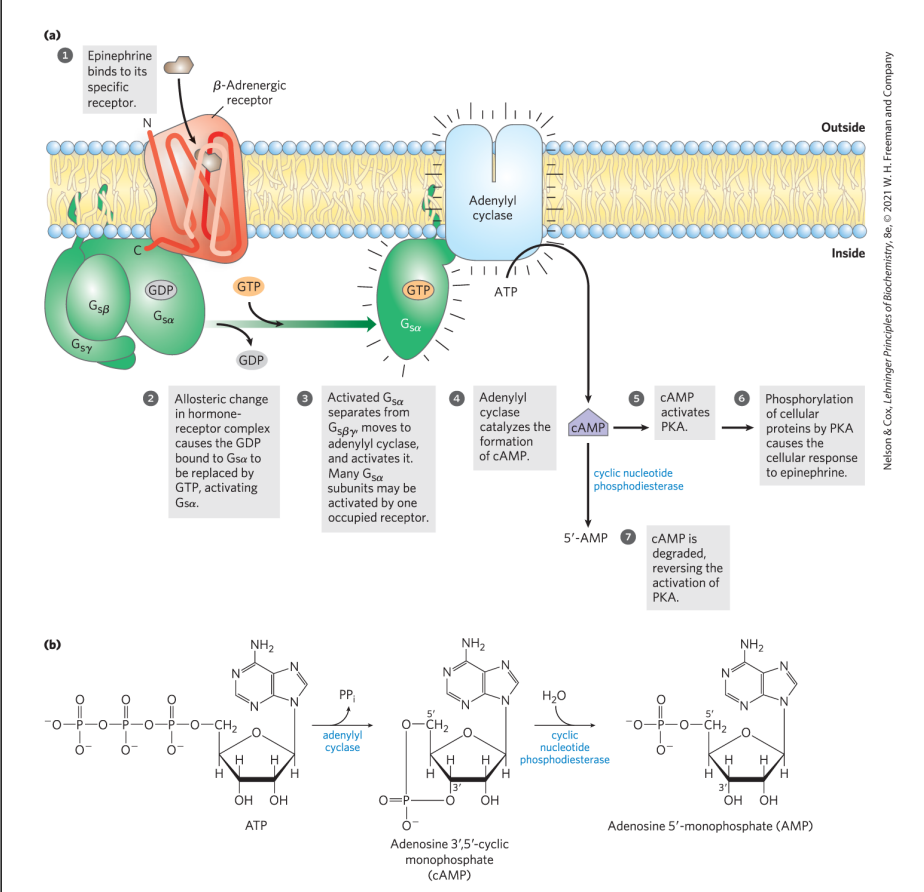
Control of glycogen metabolism by Epinephrine (overview)
- epinephrine binds to β-adrenergic receptor (GPCR)
- alpha subunit loses GDP, picks up GTP -> activated
- alpha leaves rest of G protein and moves towards adenylyl cyclase (activates it)
- adenylyl cyclase converts ATP to cAMP -> 2 cAMPs can activate PKA (cAMP binds to regulatory subunit -> regulatory subunit dissociates from catalytic subunit -> Ser, Thr, Tyr residues phosphorylated)
- pka phosphorylates other proteins, including glycogen phosphorylase b kinase: (controls amount of phosphorylase a)
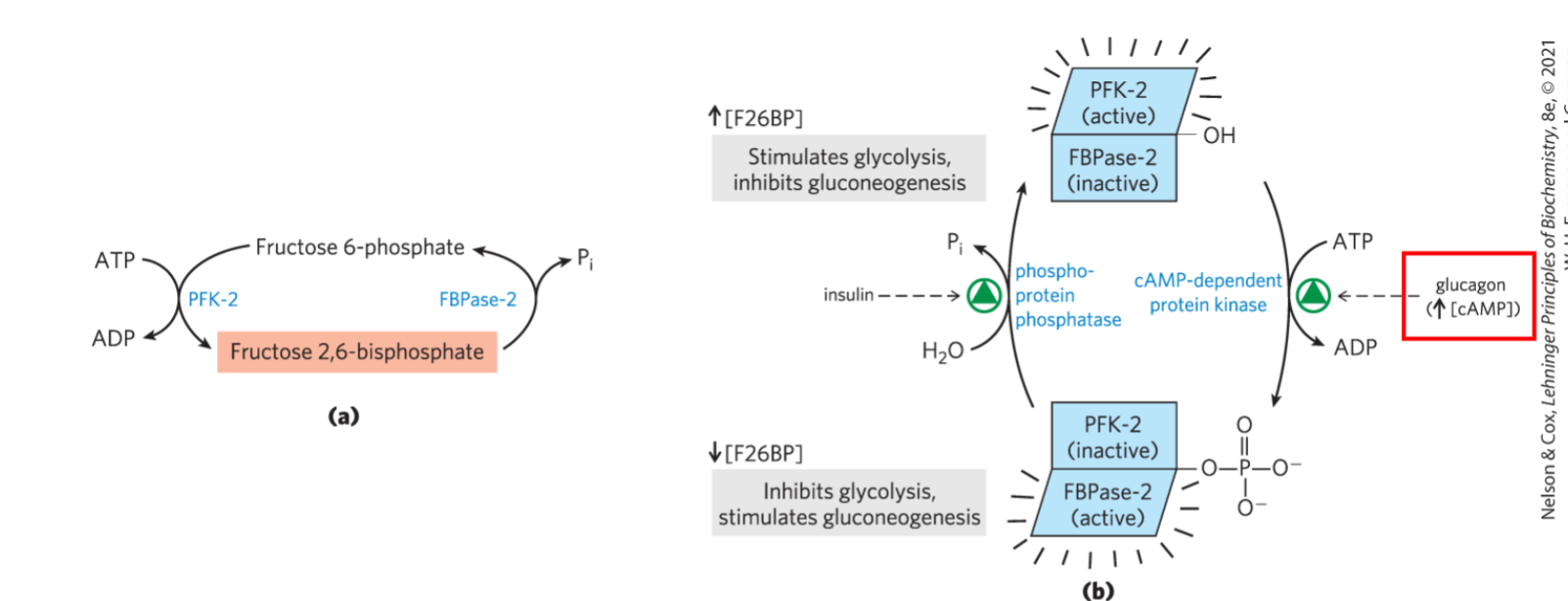
PKA effect on fructose 2,6-bisphosphate
A: PKA phosphorylates the enzyme → ↓ fructose 2,6-bisphosphate
Why it matters:
Less F2,6-BP → ↓ glycolysis + ↑ gluconeogenesis
Memory tip:
PKA = “Produce glucose Again” → lowers F2,6-BP so the liver makes glucose
PKA phosphorylates PFK2/FBPase-2 -> activate FBPase 2, inactivate PFK 2 -> more fructose 6-phosphate, less F 2,6-BP -> more gluconeogenesis
makes sense bc more epinephrine -> need more sugar in the blood to use
(review unit 11)
After hormone stimulation ceases, discuss how the pathway inactivates (pp. 416 - 419).
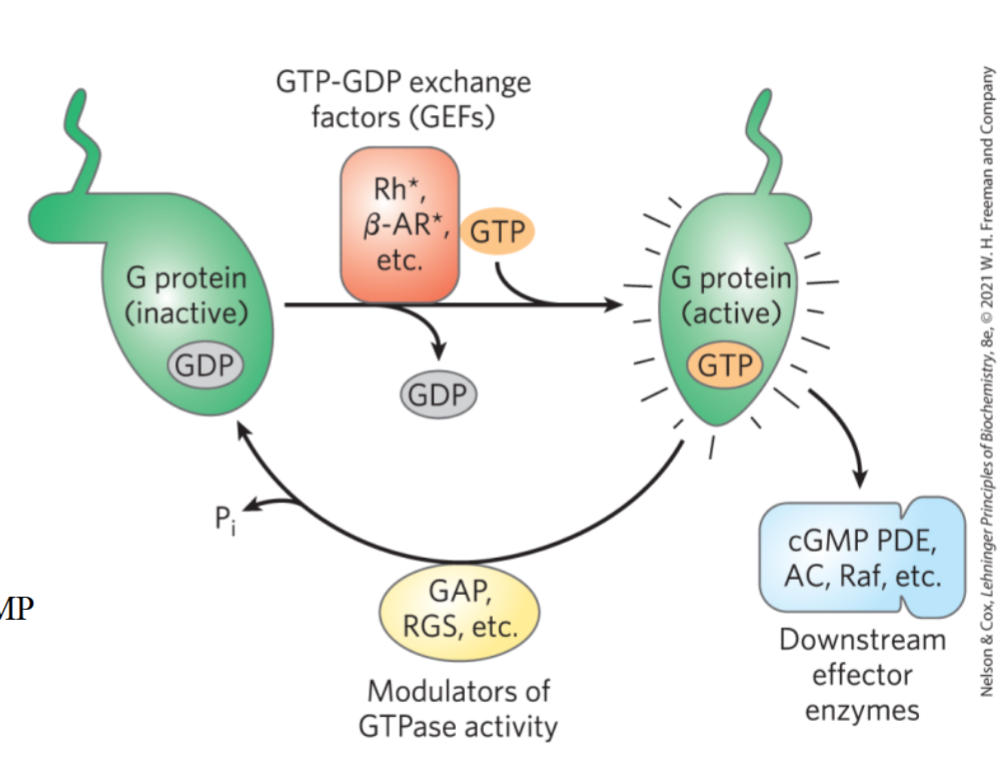
How does the G protein inactivate (Fig. 12-8, p. 418)?
β-adrenergic system
G-proteins have intrinsic GTPase activity; a subunit hydrolyzes its own GTP and inactivates itself + re-associates w/ rest of receptor. no longer activates adenylyl cyclase
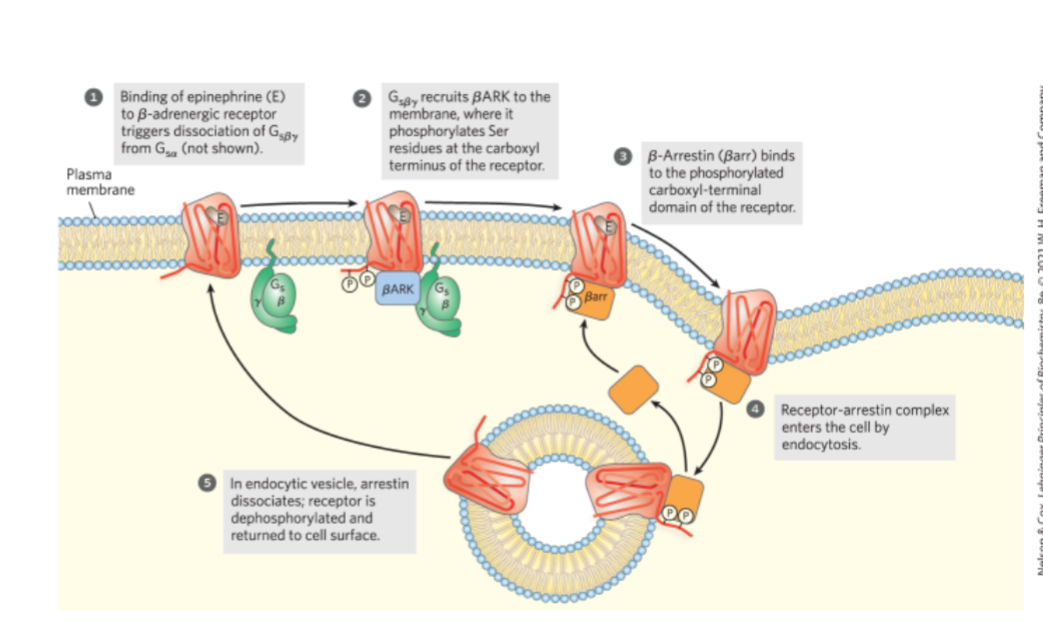
How is the receptor protein desensitized (pp. 418 - 419, especially Fig. 12-9)?
- beta and gamma subunits recruits βARK
- βARK phosphorylates C terminus of β receptor
- β-arrestin binds to phosphorylated C terminus
- endocytosis of receptor complex -> no longer exposed to outside of cell
How is adenylyl cyclase inactivated (p. 417)?
inactivating g protein inactivates adenylyl cyclase (requires GTP-bound g protein to be active)
Name the enzyme that degrades residual cAMP in the cell
cyclic nucleotide phosphodiesterase
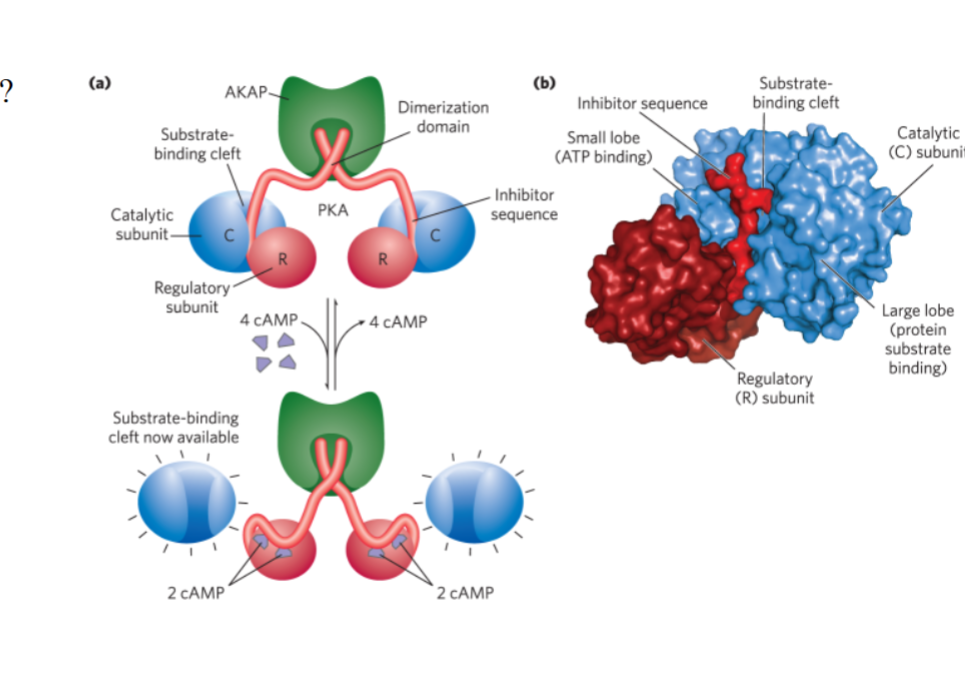
How is PKA inactivated (Fig. 12-6, p. 415)?
less cAMP (all of it became AMP) -> less PKA activation.
How is the activity of the target enzymes reversed (pp. 417 - 418)?
phosphatases that were already present in the cell can reverse effects of PKA and inactivate kinases that were activated by PKA.
phosphoprotein phosphatases can hydrolyze Tyr, Thr, Ser residues + release Pi
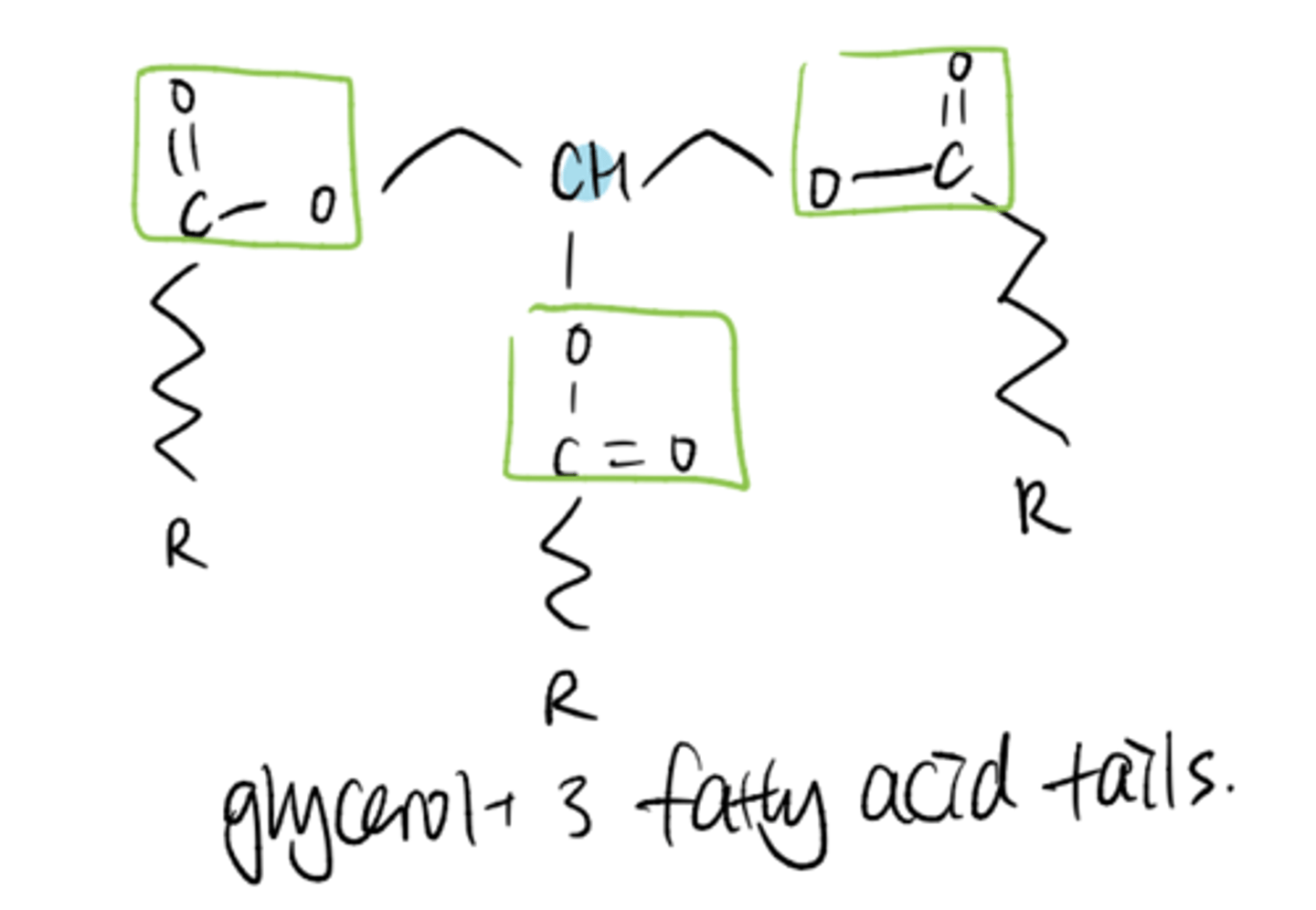
Fatty acids are stored in adipose cells as triacylglycerol. Draw the structure of triacylglycerol using R to represent the long chain fatty acid tail
three fatty acid tails + glycerol group
Use Fig. 17-2 (p. 604) to illustrate the following points:
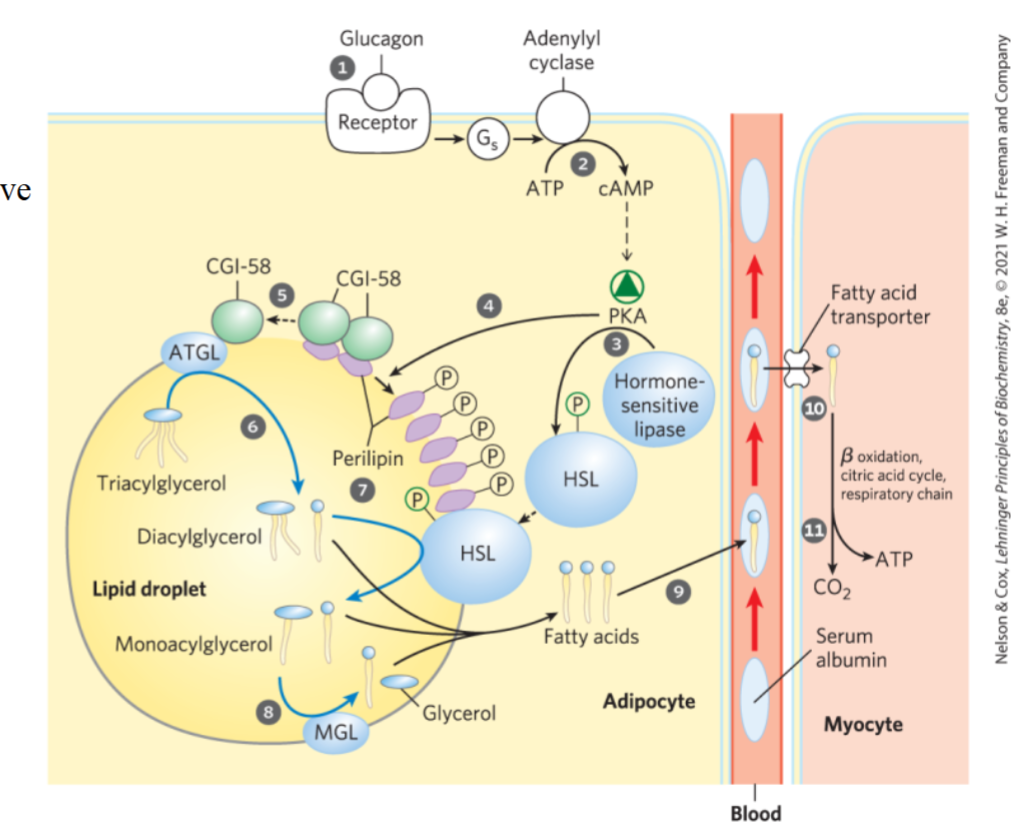
Activation of lipase in adipocytes through hormone sensitive amplification.
glucagon -> adenylyl cyclase -> cAMP -> PKA -> phosphorylates hormone sensitive lipase and perilipin -> converts triacylglycerols to glycerol + 3 fatty acids
___
glycerol -> dihydroxyacetone phosphate -> (glycolysis/gluconeogenesis)
fatty acids -> bloodstream via binding to serum albumin (makes fatty acids soluble in blood)
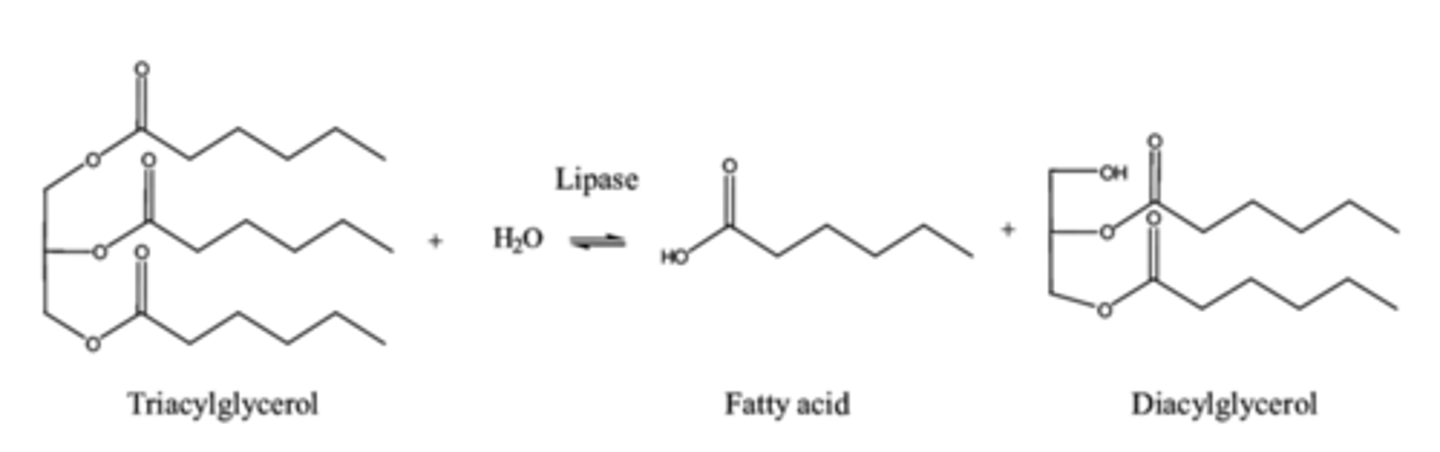
Using structures, write a balanced chemical equation for the reaction catalyzed by lipase
triacylglycerol -> diacylglycerol + fatty acid
How are the hydrophobic fatty acids stabilized in the blood as they are transported to tissues (p. 603)?
fatty acids + lipase products reconverted to triacylglycerols, packaged with dietary cholesterol/apolipoproteins -> forms chylomicrons (triacylglycerol stabilized by protein/phospholipid coat)
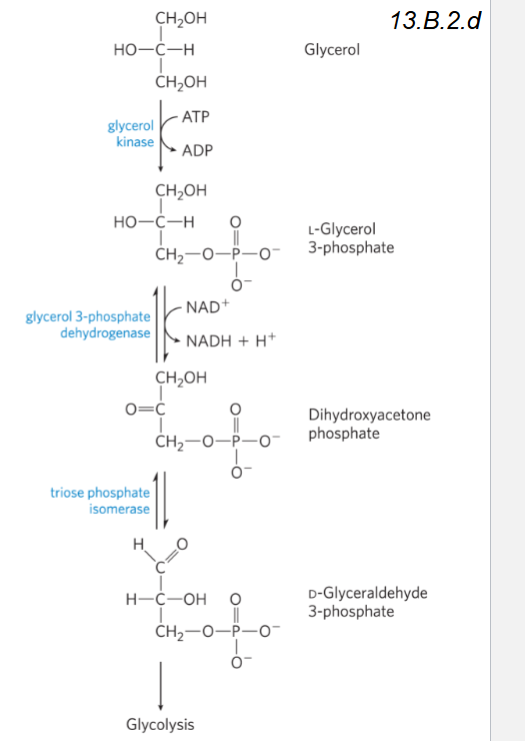
What is the fate of the glycerol backbone (p. 603 and Fig. 17-4, p. 605 - note dihydroxyacetone phosphate is common to both glycolysis and gluconeogenesis)?
glycerol converted to -> glyceraldehyde 3-P -> dihydroxyacetone phosphate (intermediate in glycolysis + gluconeogenesis)
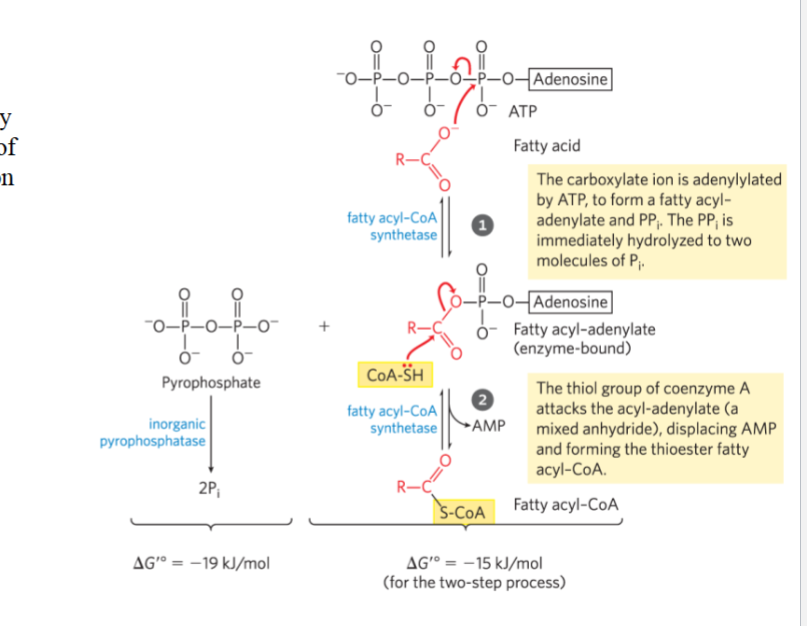
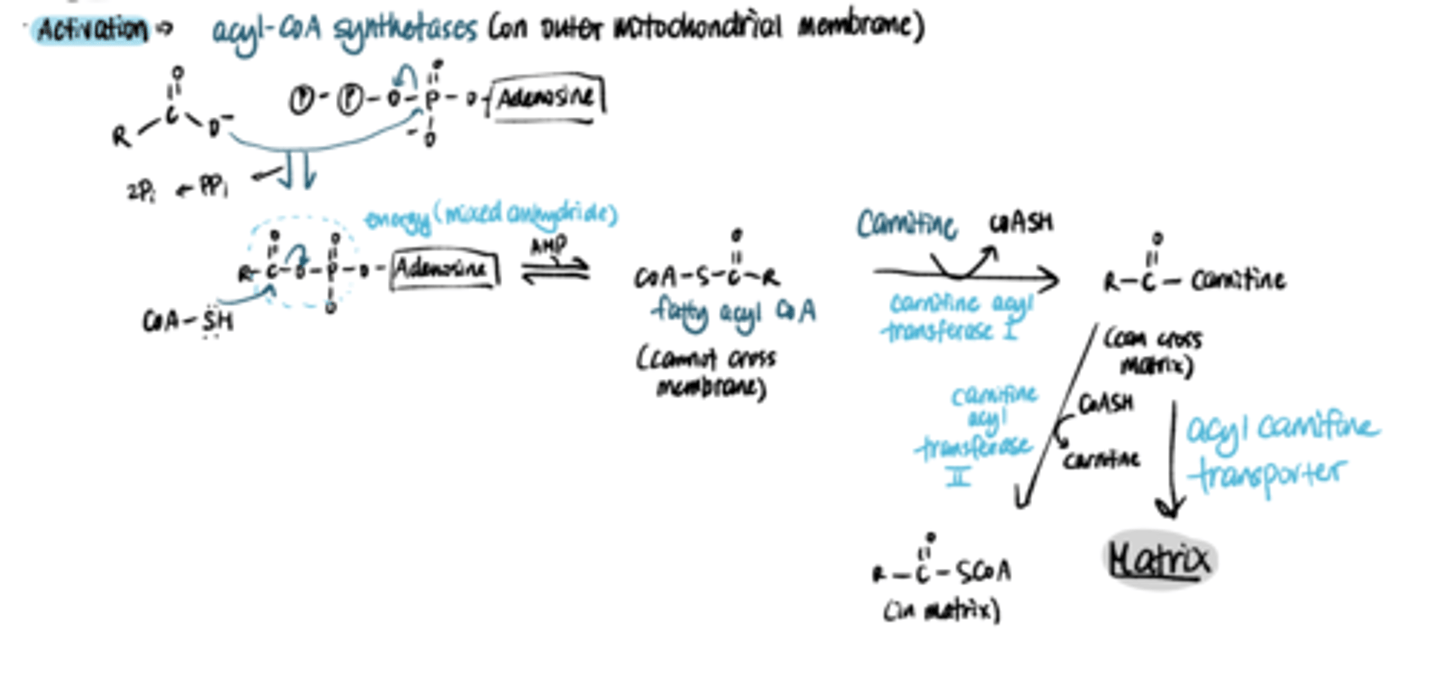
Using structures, write a balanced chemical equation for the cytoplasmic reaction that results in activation of fatty acids (Fig. 17-5, p. 605). What aspect of the activation process drives the reaction to completion (p. 604)?
fatty acid + ATP -(fatty acyl-CoA synthetase)-> fatty acyl-adenylate -(fatty acyl-Coa synthetase)-> fatty acyl-CoA + 2Pi
forms thioester when fatty acyl-CoA is synthesized -> highly negative ∆G
Where in the eukaryotic cell does fatty acid oxidation occur (p. 603)?
mitochondrial matrix
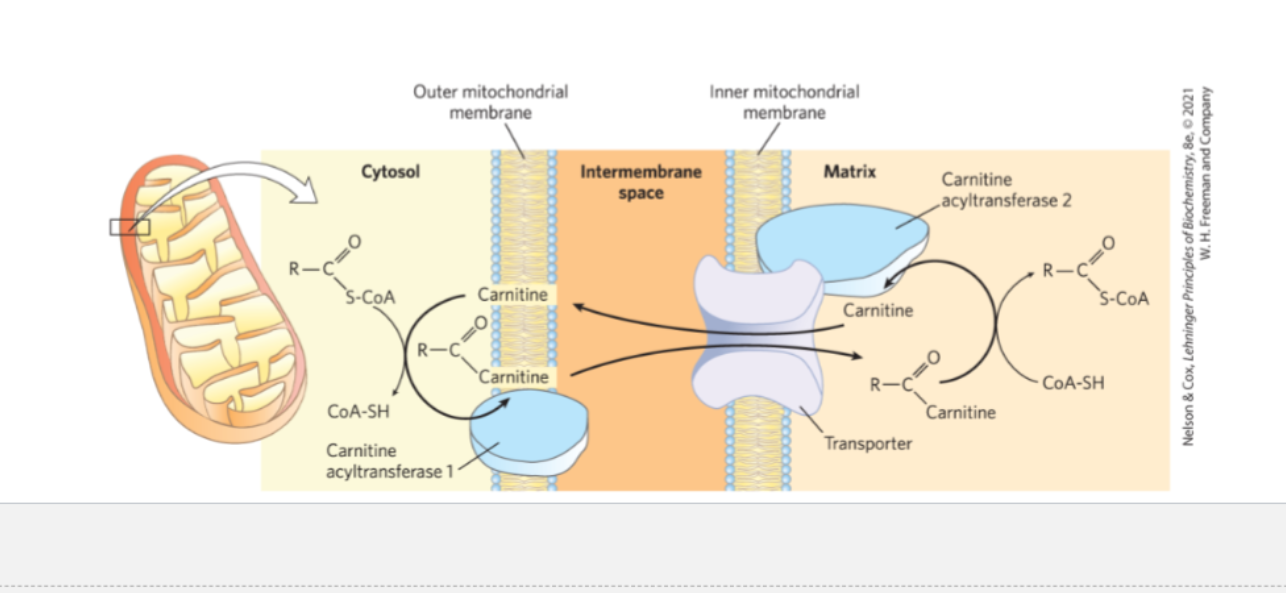
Discuss how the activated fatty acid is carried into this membrane bound compartment (pp. 603 - 606, esp. Fig. 17-6).
carnitine shuttles
fatty acyl-CoA (made on outer mitochondrial membrane) cannot cross matrix membrane) converted into carnitine acyl group by carnitine acyl transferase I (can cross matrix; antiport of acyl carnitine in and carnitine out)
- converted back to fatty acyl-Coa by carnitine acyl transferase II
Discuss the three stages through which energy is derived from fatty acid degradation (Fig. 17-7, p. 607).
1. long chain fatty acids oxidized to yield acetyl-CoA (β-oxidation)
2. acetyl CoA oxidized to CO2 in TCA cycle
3. electrons from 1) (NADH, FADH2) and 2) reduce O2 during ox-phos
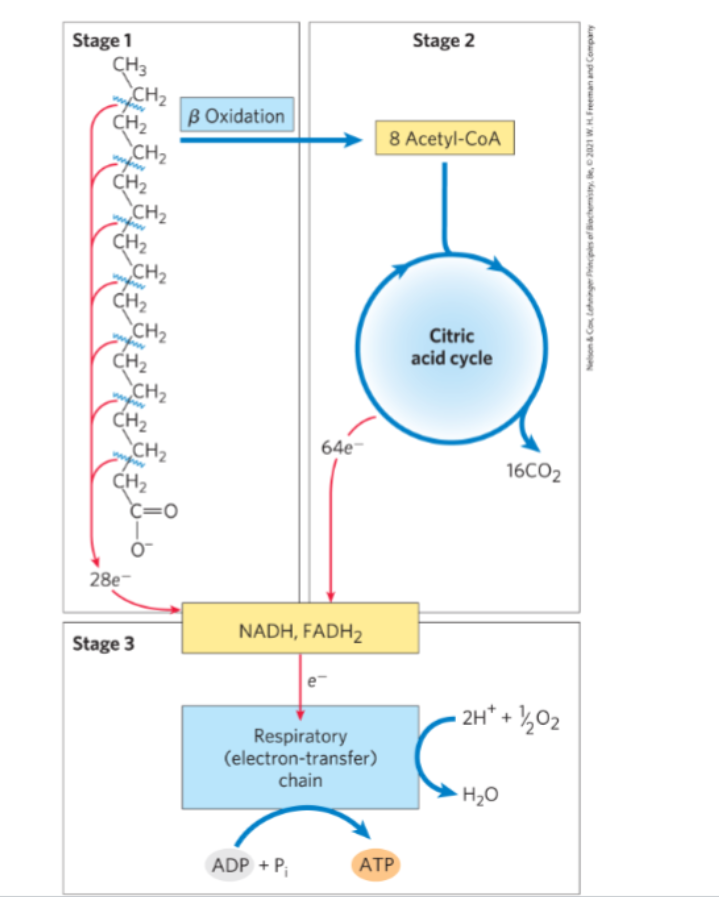
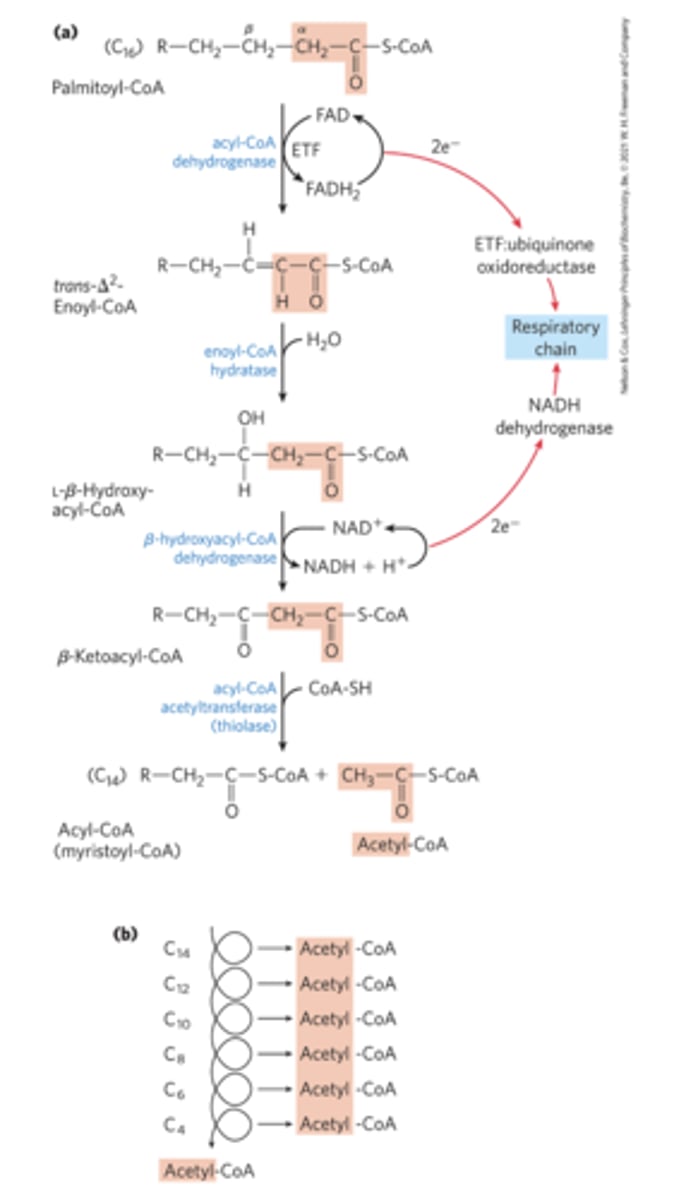
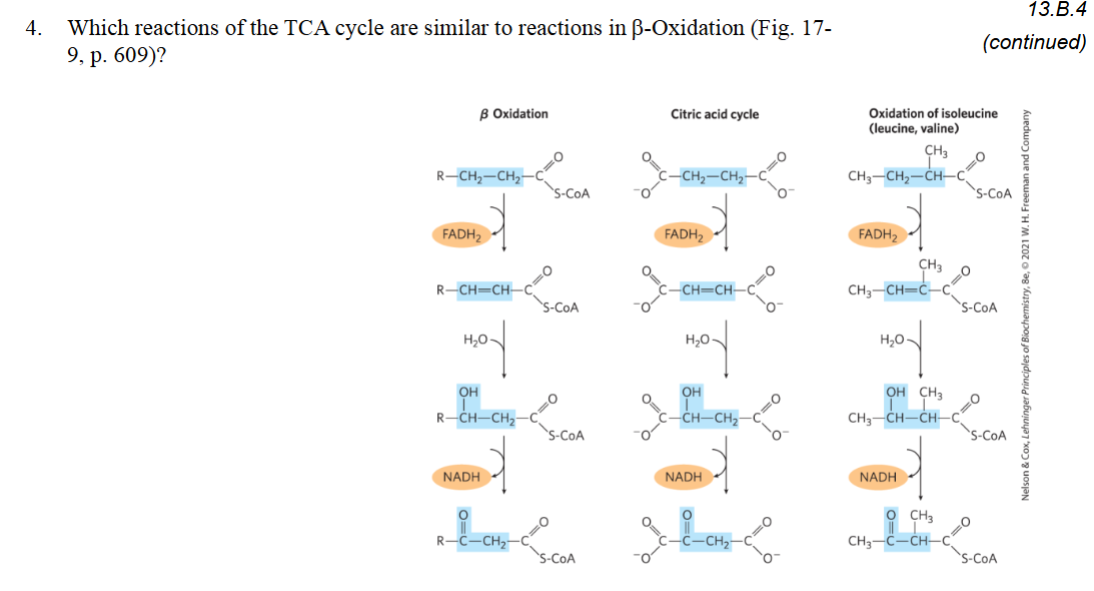
Fig. 17-8 (p. 608) shows the details of a single round of b-Oxidation. Note that you will be responsible for the types of reactions involved and the structures of the intermediates - but not the names of the compounds or the specific enzymes involved. Which reactions of the TCA cycle are similar to reactions in b-Oxidation (Fig. 17-9, p. 609)?
1. dehydrogenation: acyl CoA changes bond next to carbonyl into C double bond (similar to succinate -> fumarate in TCA cycle). releases FADH2
2. hydration: C double bond becomes C-OH on carbon farther from carbonyl (similar to fumarate -> malate). addition of H2O
3. dehydrogenation: change C-OH to C=O. (similar to malate -> oxaloacetate). releases NADH
4. Thiolysis: use CoA-SH to break apart. between the carbonyl groups -> creates acetyl CoA + fatty acid with 2 less carbons.
n acetyl-CoA created after n-1 cycles. 2 carbons lost after each cycle
Write the net reaction for the b-Oxidation of palmitoyl CoA (equation 17-3, p. 609).
palmitoyl CoA has 16 carbons = 7 cycles (2 carbons degraded every cycle)
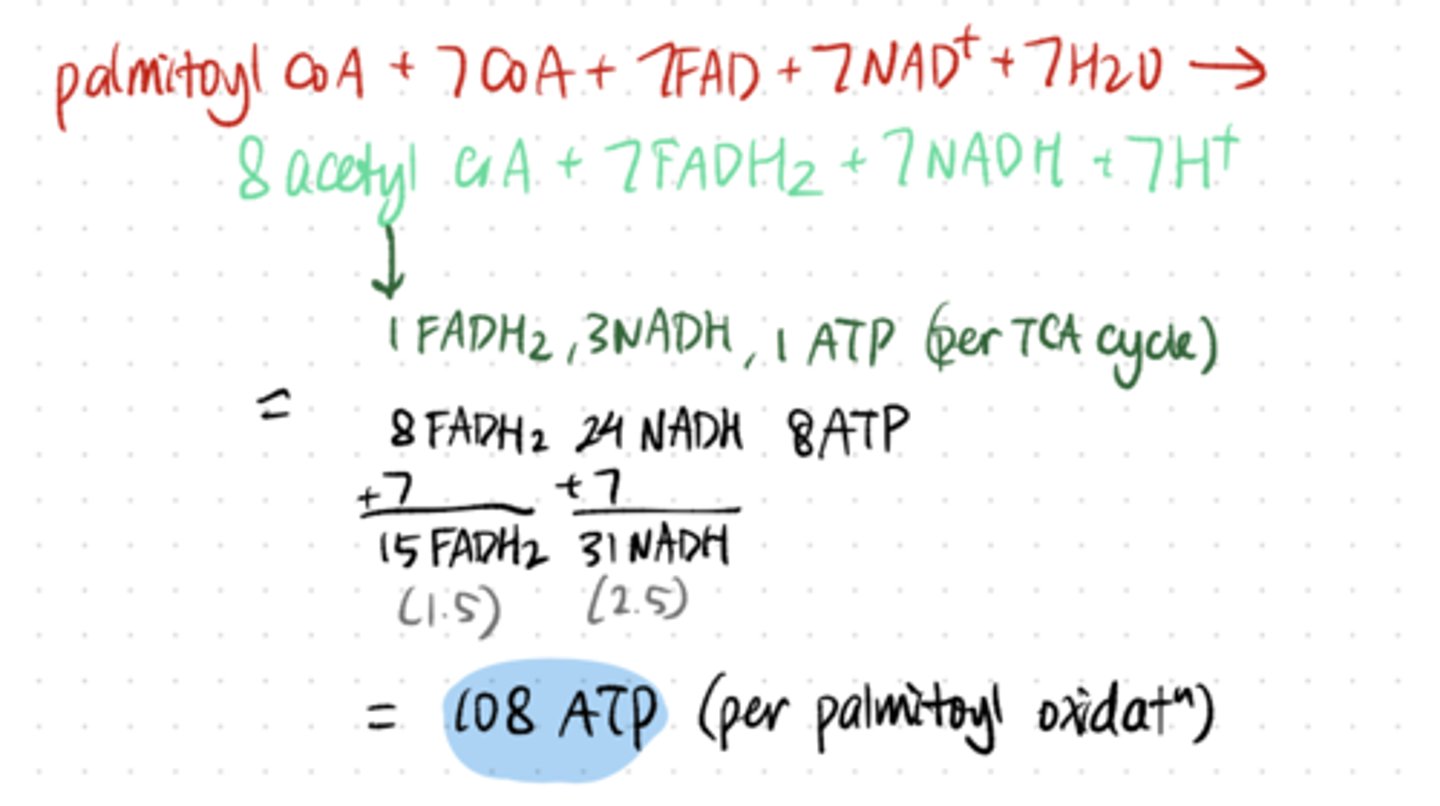
Palmitoyl CoA + 7CoA + 7FAD + 7NAD+ + 7H2O -> 8Acetyl-CoA + 7FADH2 + 7NADH + 7H+
Considering the P/O ratios for NADH and FADH2 that you learned in Unit 12, how many ATPs can be generated through subsequent oxidation of reduced flavin (FADH2) and pyridine (NADH) nucleotides? (equation 17-4, p. 609)
2.5 ATP produced per NADH
1.5 ATP produced per FADH2
(2.5 × 7 ) + (1.5 × 7 ) = 28 ATP
The acetyl CoA now enters the citric acid cycle. Review the yield of reduced cofactors and GTP from complete oxidation of acetyl CoA in the cycle. How many phosphoanhydride bonds can be made from the oxidation of acetyl CoA? (equation 17-5, p. 611)
Palomity CoA + 7 CoA + 7 FAD + 7NAD + 7 H2O —> 8 acetyl CoA + 7 FADH + 7 NADH + 7 H+
a)
7 FADH (1.5) = 10.5 ATP
7 NADH ( 2.5 = 17.5 ATP
28 ATP from B-oxidation
b)
one acetyl Coa = 1 GTP , 3 NADH , 1 FADH2
1 + 7.5 ( from 3 × 2.5) + 1.5 = 10 ATP from acetyl CoA
10 × 8 = 80 ATP / phosphoanhydride bonds
c)
28 from b oxidation + 80 from phosphoanhydride = 108 total ATP
What is the total yield of ATP formed during the oxidation of one molecule of Palmitoyl CoA (equation 17-6, p. 611)?
108 ATP
Give at least two examples of the fact that synthetic and degradative pathways are not simply reversals of one another. Why is this fact important in biological systems?
1. fatty acid degradation/synthesis
2. gluconeogenesis/glycolysis
important not to have 2 processes that are reversals of e/o going on at the same time in order to not waste energy
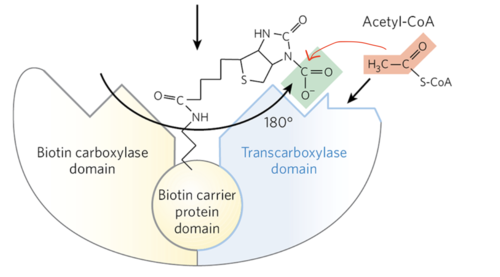
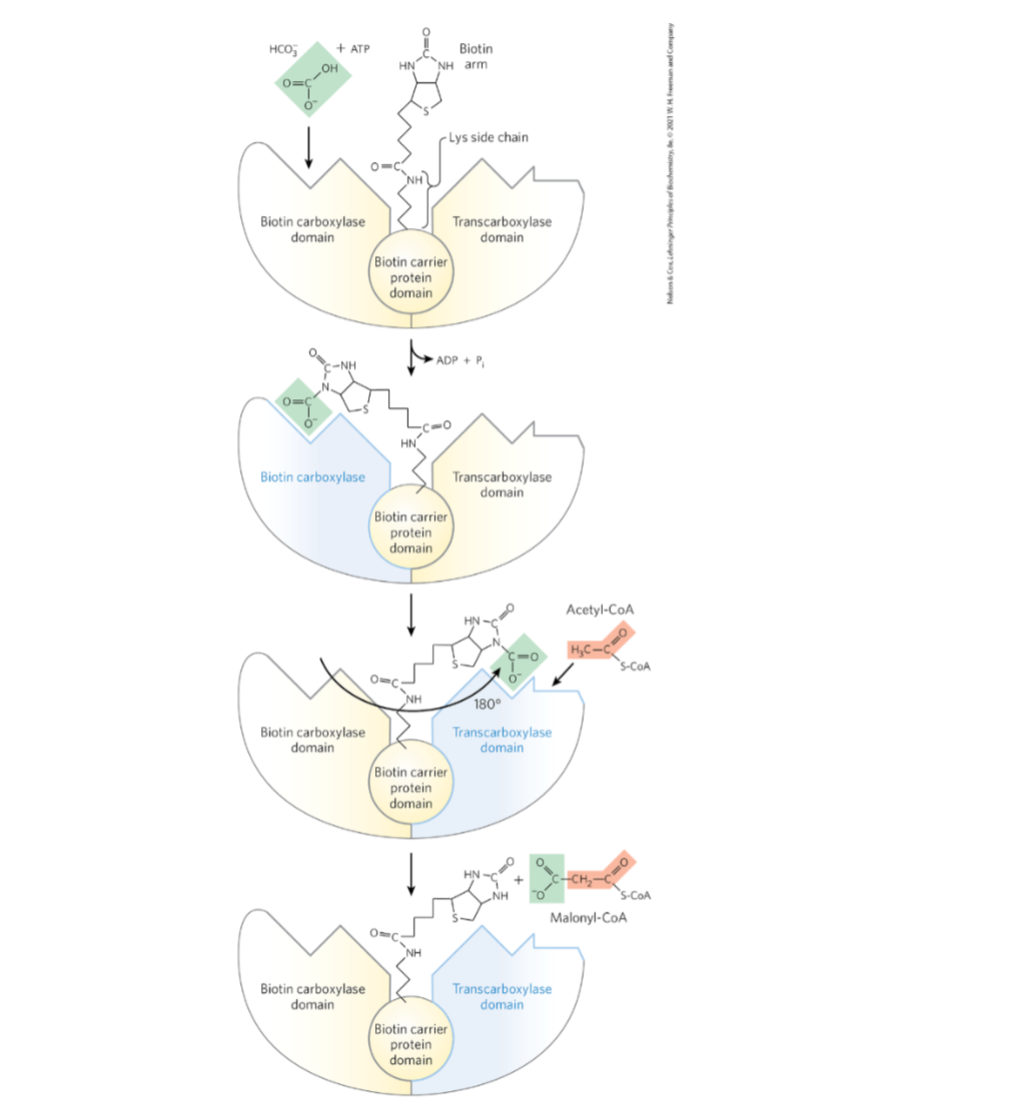
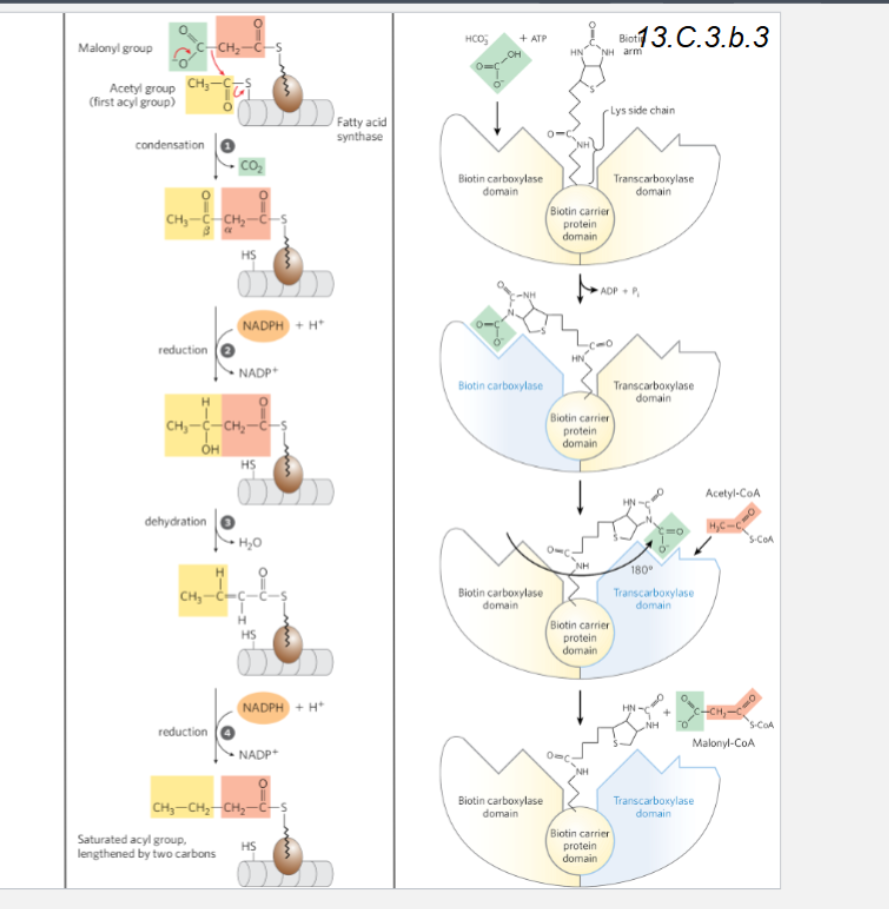
The formation of malonyl CoA from acetyl CoA and bicarbonate is the rate-limiting step in fatty acid biosynthesis (Fig. 21-1, p. 745).
Write, with structures, the reaction which represents the activation of acetyl CoA. Draw a line connecting the two carbon atoms that are joined in this reaction.
CO2 -(biotin carboxylase + acetyl-CoA carboxylase)-> acetyl-CoA -(transcarboxylase)-> malonyl CoA
Acetyl CoA + HCO₃⁻ + ATP → Malonyl CoA + ADP + Pᵢ + H₂O
![<p>CO2 -(biotin carboxylase + acetyl-CoA carboxylase)-> acetyl-CoA -(transcarboxylase)-> malonyl CoA</p><p></p><figure data-type="blockquoteFigure"><div><blockquote><p class="font-claude-response-body break-words whitespace-normal leading-[1.7]">Acetyl CoA + HCO₃⁻ + ATP → Malonyl CoA + ADP + Pᵢ + H₂O</p></blockquote><figcaption></figcaption></div></figure><p class="font-claude-response-body break-words whitespace-normal leading-[1.7]"></p>](https://assets.knowt.com/user-attachments/a0fc288f-f66a-400e-a24f-8f4be3b266ff.png)
Name the enzyme that catalyzes the conversion of acetyl CoA to malonyl CoA (Fig. 21-1, p. 745).
acetyl-CoA carboxylase
What prosthetic group is involved in this reaction (p. 745)? Discuss the role of the prosthetic group (p. 745; note its role is the same as in pyruvate carboxylase, Fig. 14-17, p. 535). What compound is required before the carboxyl group from HCO3- can be transferred to biotin (p. 745)?
biotin : activates HCO3- -> CO2 (requires ATP)
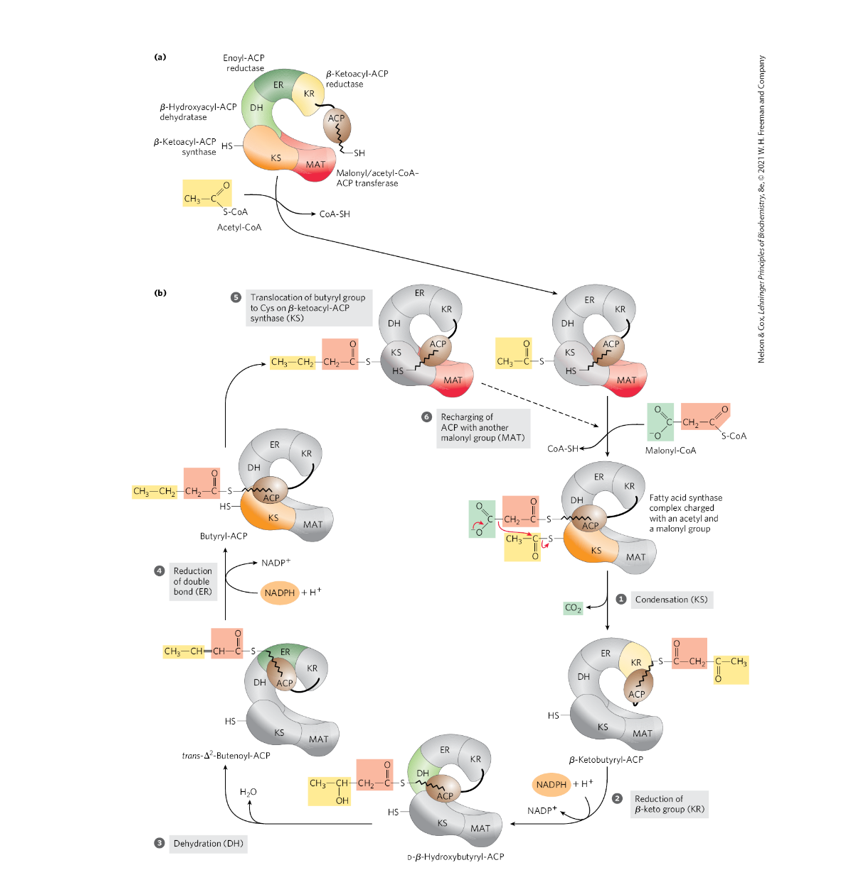
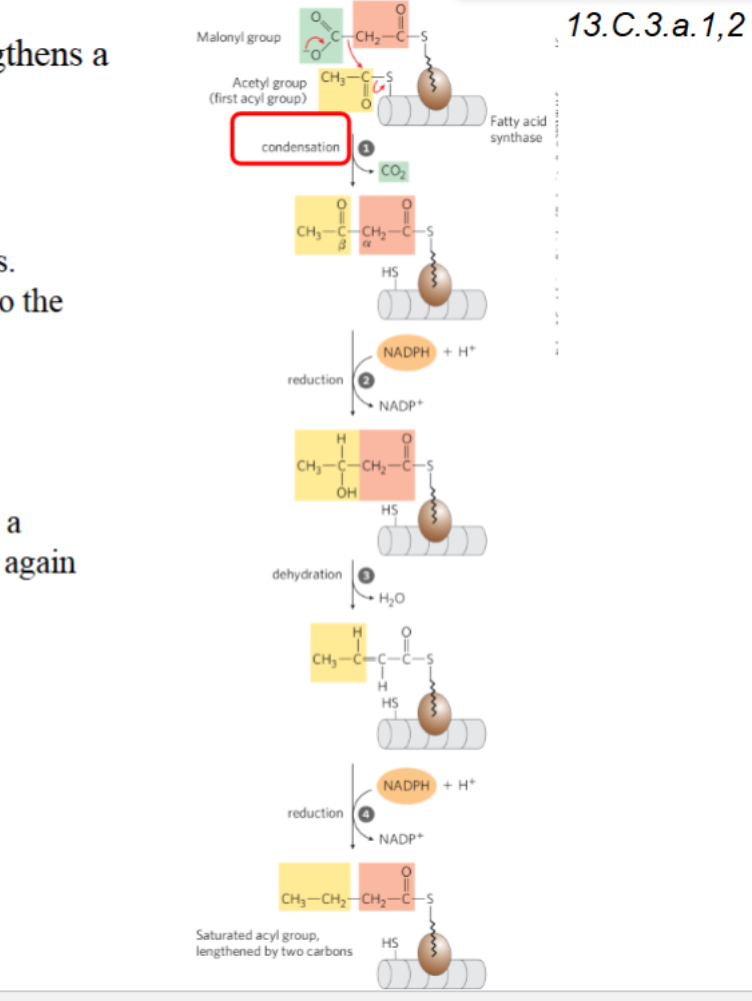
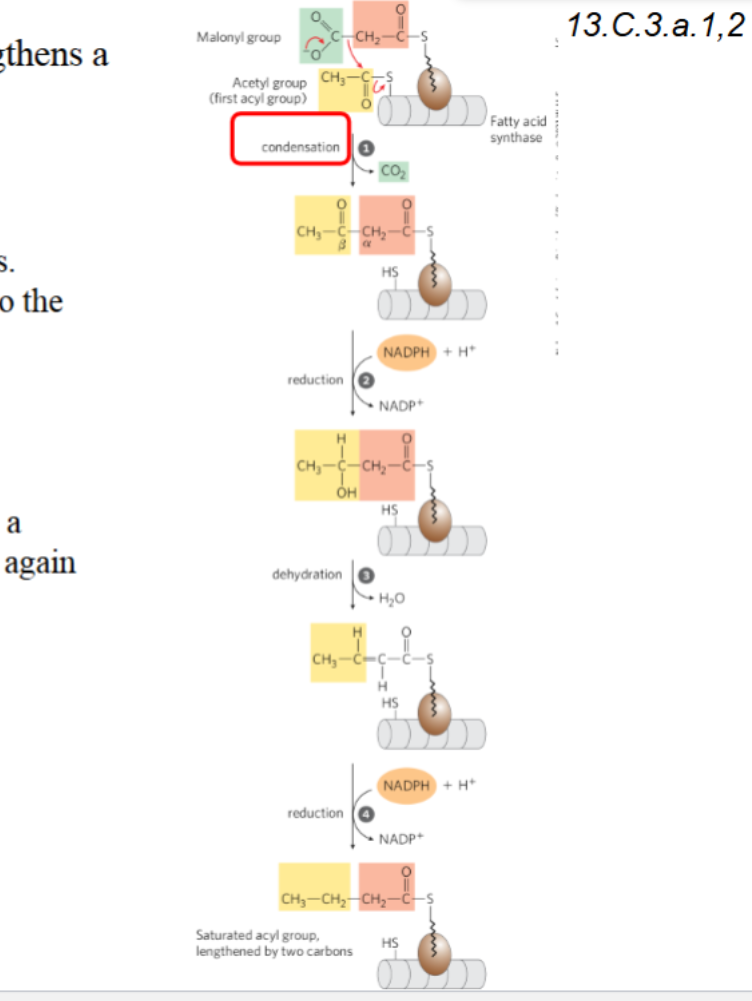
Use Fig. 21-2 (p. 746) to show the four-step sequence that lengthens a growing fatty acyl chain by two carbons.
a. Point out the condensation step in this pathway.
HCO3- is an important player in fatty acid biosynthesis. Does the carbon from HCO3- become incorporated into the fatty acid backbone (pp. 746 - 748)?
no, the carbon from HCO3 is not incorporated into the backbone **KNOW MECHANISM
CO2 is released in condensation step, during nucleophilic attack on thioester by malonyl group
Why do cells go to the trouble of adding CO2 to make a malonyl group from an acetyl group, only to lose CO2 again during the formation of fatty acids (p. 748)?
activated malonyl groups make reaction more thermodynamically favorable. also, methylene carbon is a good nucleophile
Write balanced chemical equations for a similar carboxylation / decarboxylation sequence in gluconeogenesis
HCO3- + pyruvate + ATP -(pyruvate carboxylase)-> oxaloacetate + ADP + Pi + CO2
oxaloacetate + GTP -(PEP carboxylase)-> phosphoenolpyruvate + GDP + Pi + CO2
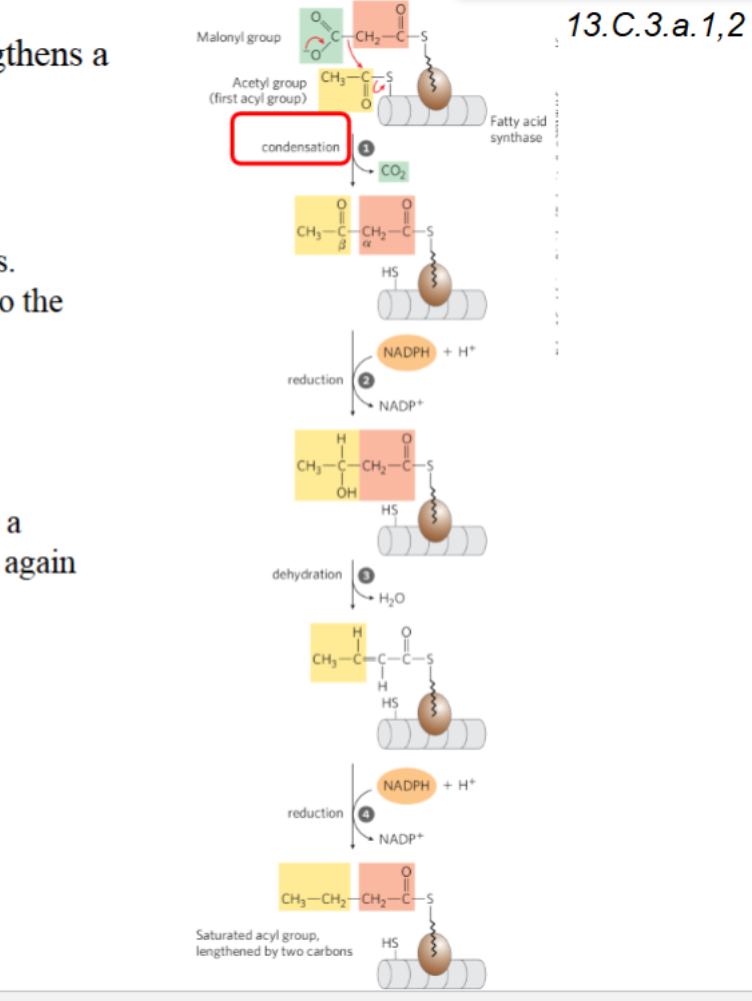
What type of reaction is involved in each of the subsequent steps (Fig. 21-2, p. 746)?
1. Condensation
2. Reduction with NADPH
3. Dehydration
4. Reduction with NADPH
(reactions are basically reverse of beta oxidation, but catalyzed with diff enzymes)
An important generalization in metabolism is that NADH is generated in degradative reactions and NADPH is utilized in biosynthetic reactions.
Does this generalization hold true for fatty acid degradation and synthesis?
Yes, since fatty acid synthesis = anabolism
both reduction steps require NADPH
In general, degradative pathways generate ATP and
biosynthetic pathways consume ATP. In which step(s) in fatty acid synthesis is (are) ATP utilized (Fig. 21-1, p. 745)?
ATP is required to convert activated malonyl-CoA -> acetyl-CoA
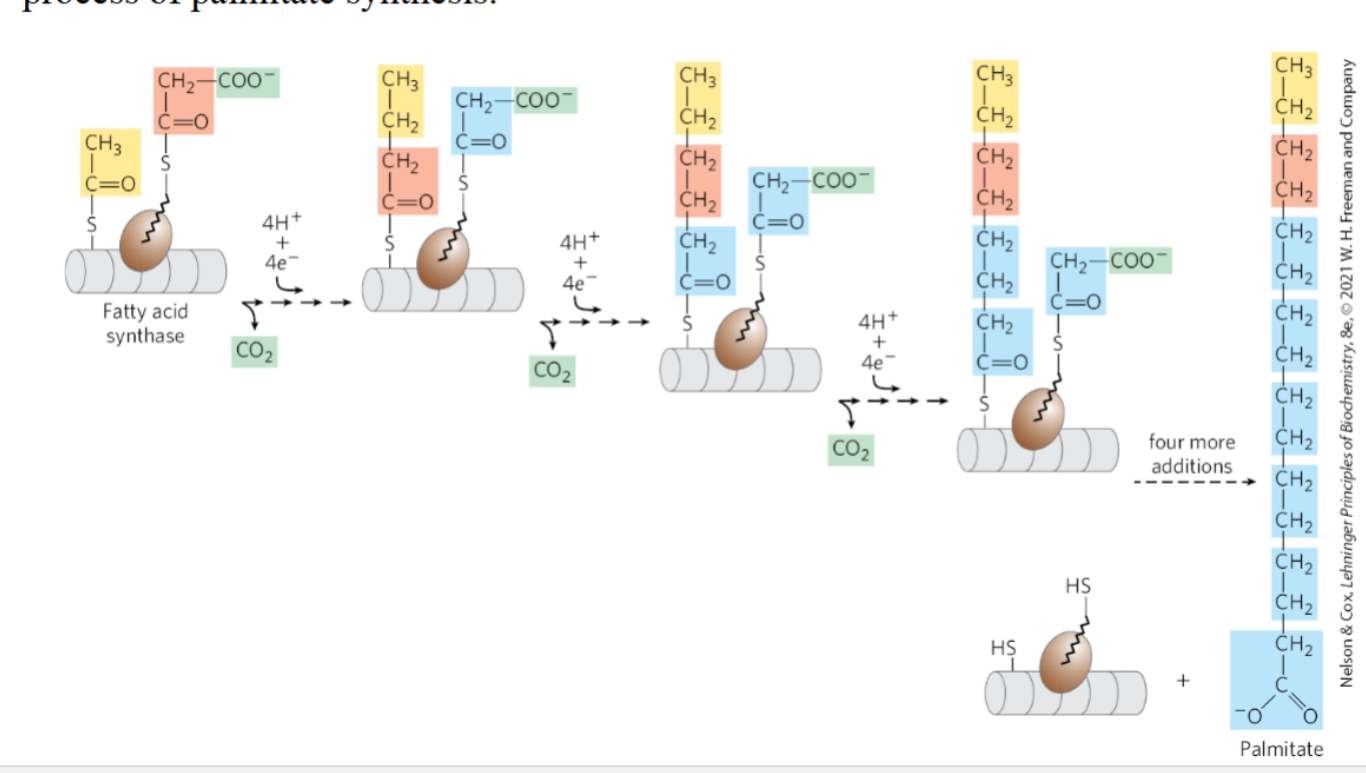
Use Figs. 21-4 (p. 747), 21-6 (p. 749), and 21-7 (p. 750) to describe the overall process of palmitate synthesis.
How many molecules of malonyl CoA are required to synthesize a 16 carbon fatty acid chain (equation 21-2, p. 750)?
How many NADPHs are required for the synthesis of the palmitate (equation 21-2, p. 750)?
palmitate (16-carbons): 7 cycles: 7 malonyl CoA
Acetyl-CoA + 7malonyl CoA + 14NADPH + 14H+ -> palmitate + 7CO2 + 8CoA + 14NADP+ + 6H2O
Write a balanced equation for the net reaction for palmitate synthesis from acetyl CoA (equation 21-3, p. 750; Note there are only six waters in the net reaction because one of the seven is used to cleave the completed fatty acid product from the enzyme).
8 Acetyl Coa + 7 ATP + 14NADPH + 14H+ -> palmitate + 8CoA + 7 ADP + 7 Pi + 14NADP+ + 6H2O
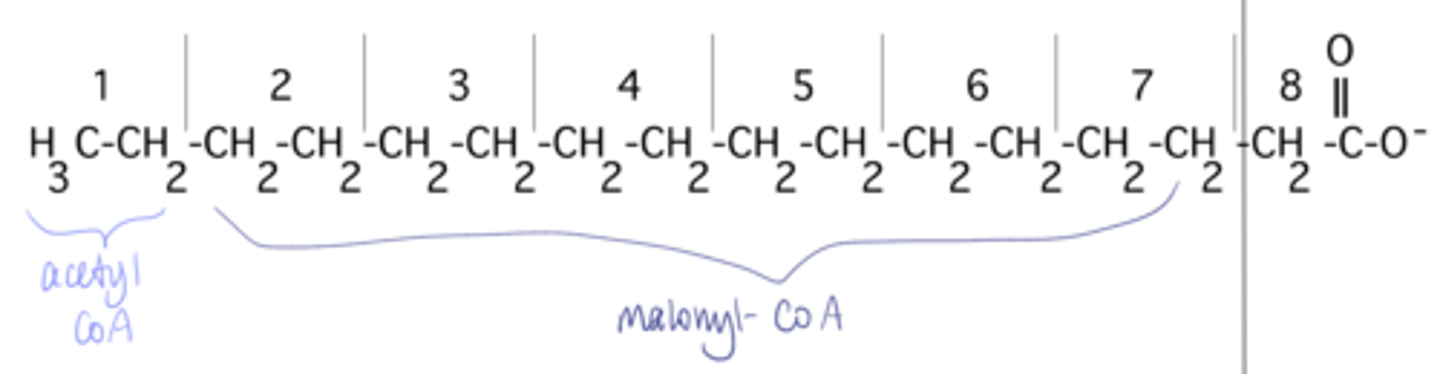
What two- or three-carbon compound gives rise to each numbered section shown in the palmitate molecule below?
group 1 is from acetyl CoA, groups 2-8 are from malonyl CoA
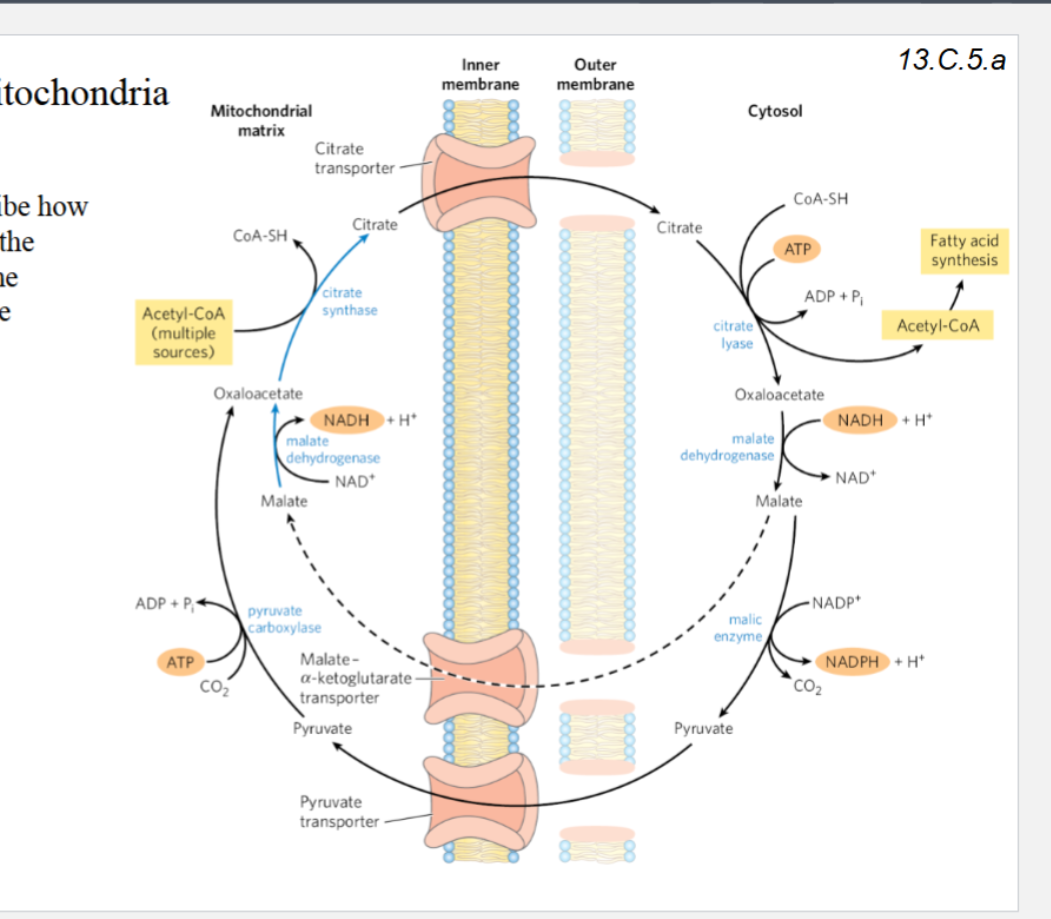
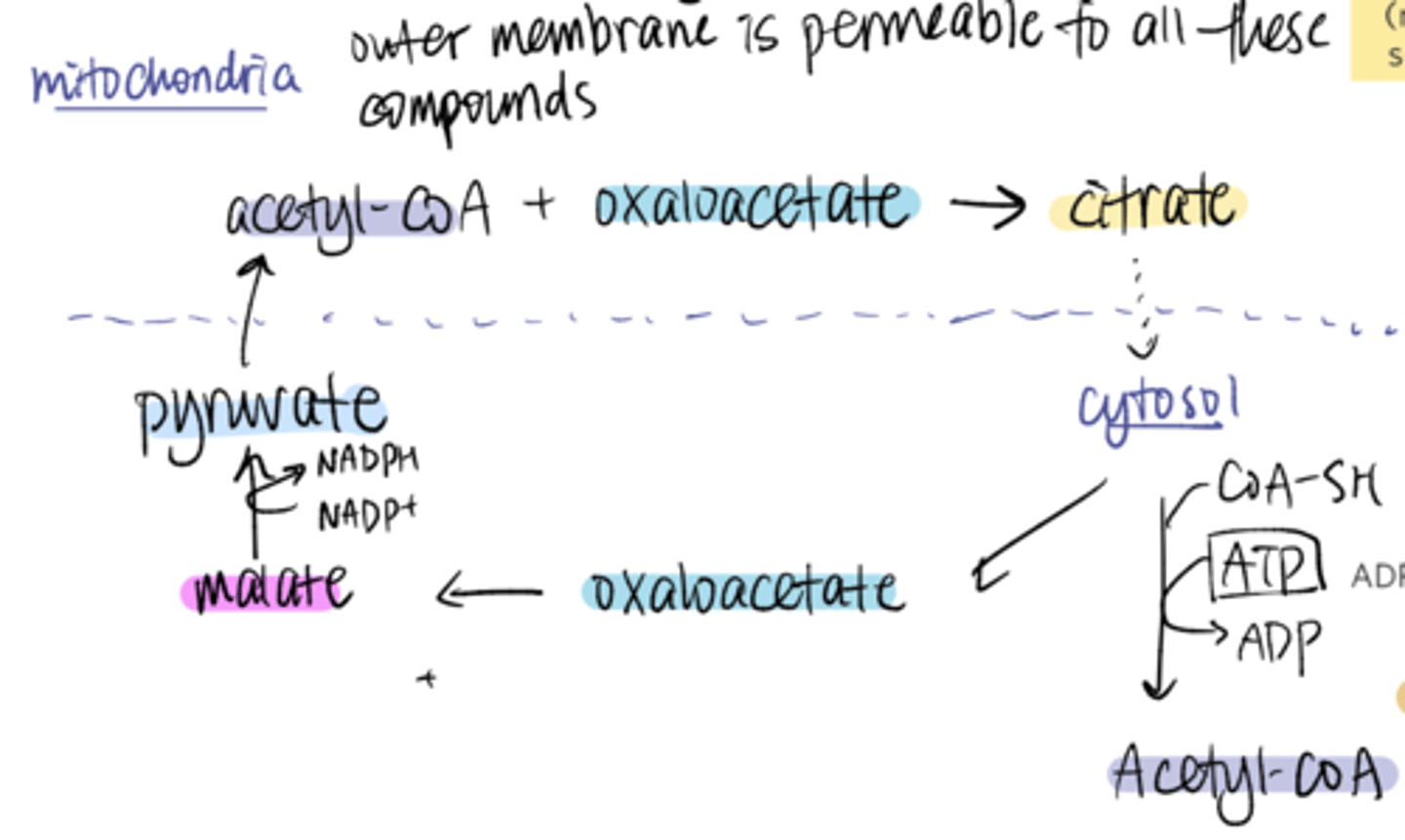
Use Fig. 21-10 (p. 752) to describe how acetyl CoA is translocated from the inside of the mitochondrion to the cytosol, and how NADPH can be generated in the process.
How many NADPH can be generated as a result of this transport cycle (Fig. 21-10, p. 752)?
mitochondria
acetyl CoA + oxaloacetate -> citrate
cytosol
1. citrate -> acetyl CoA (CoA-SH, ATP -> ADP)
2. citrate -> oxaloacetate -> malate -(NADP -> NADPH)-> pyruvate
1 NADH
Does the NADPH generated in this cycle suffice for fatty acid synthesis? If not, from which pathway does the remainder come (Fig. 21-8, p. 751)?
no
rest of NADPH comes from pentose phosphate pathway
Fatty acid synthesis regulation
What enzyme in fatty acid synthesis is the rate- limiting step and is therefore an important site of regulation (p. 752)?
acetyl-CoA carboxylase
In vertebrates, what compound acts as an allosteric feedback inhibitor? What compound is an allosteric activator?
Discuss how this enzyme is also regulated by hormone-regulated covalent modification
allosteric inhibitors of acetyl-CoA carboxylase: palmitoyl-CoA (fatty acid synthesis product)
covalent inhibitors of acetyl-CoA carboxylase: glucagon, high [AMP], epinephrine (all trigger dephosphorylation)
activators: citrate
Discuss the role of fructose 2,6-bisphosphate accumulation in allowing excess carbohydrate to be converted to fat (Figs. 14-24 [p. 543] and 14-25 [p. 543]). To answer this question, think about the regulation of glycolysis in terms of cellular energy and the need to run through glycolysis to convert excess carbohydrate to fatty acid.
more F 2,6-BP -> stimulates glycolysis -> more pyruvate -> more acetyl-CoA
= more fatty acid synthesis!
Which reactions of the TCA cycle are similar to reactions in B-Oxidation
TCA Cycle reactions similar to β-Oxidation:
FAD-dependent oxidation → creates a C=C double bond (produces FADH₂)
Hydration → H₂O added across the double bond
NAD-dependent oxidation → alcohol oxidized to a ketone (produces NADH)
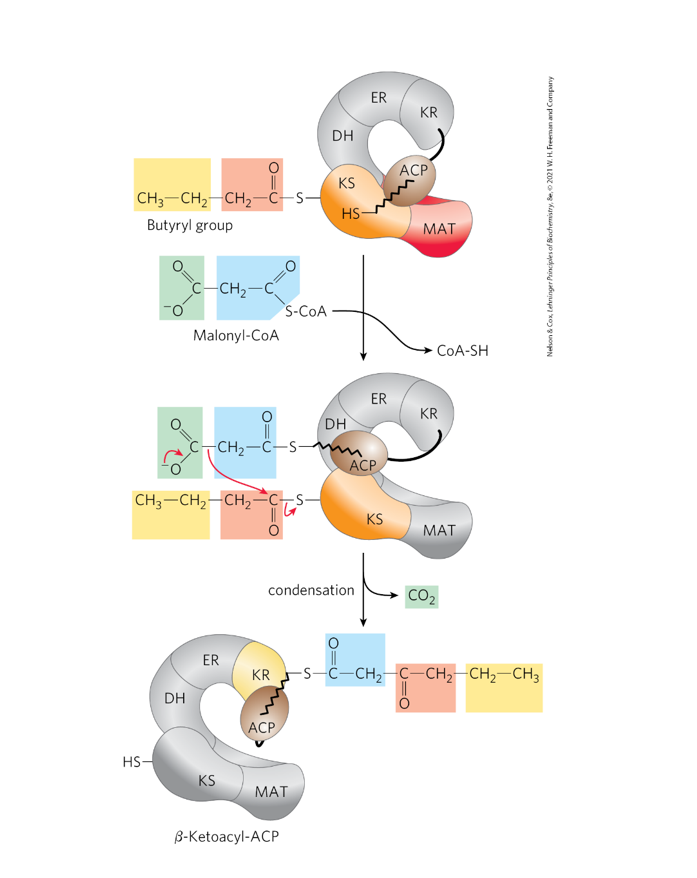
describe the overall process of
palmitate synthesis.