Ch. 9 ~ Intelligence & Language
 Call Kai
 Learn
Learn Practice Test
 Spaced Repetition
 Match
Match Flashcards
 Knowt Play
1/51

There's no tags or description
Looks like no tags are added yet.
Name | Mastery | Learn | Test | Matching | Spaced | Call with Kai |
|---|
No analytics yet
Send a link to your students to track their progress
52 Terms
How do we define and measure intelligence?
comparing humans to other humans and to other animals
Who invented the thought of family trees through genetics?
Francis Galton
He also was interested in anthropometrics meaning he believed it could be define and measure
Measured the trees of families around him based on success
What was Alfred Binet’s definition of Binet?
the ability to think, understand, reason, and adapt to changes
What was Alfred Binet’s goal in his study?
to identify those students who performed well below the norm
Looked into special education and applying his belief through school settings
What is the Stanford-Binet Intelligence Test?
“mental” age compared to others in the same age group across the population
measures IQ (score)
Standardize
**It couldn’t include other languages and cultures so it limited smart people from other countries
What was factor analysis?
by Spearman’s G factor and examined correlations among intelligence test items
What was the Spearman’s G Factor made up of?
general intelligence
math
writing
problem solving
drawing
What was the G factor?
a summary of what Spearman thought
the G stands for general intelligence as he thought most test items clustered in one
What was the Wechsler Adult Intelligence Scale (WAIS)?
includes different types of performance scores such as logical reasoning and spatial scores
valid across languages and cultures
What are savants?
have impaired intellectual ability in most areas but show exceptional ability in others
*so what is the real definition of intelligence?
What was Howard Gardener’s Multiple intelligence thought?
thinks of the intelligences as skills and talents
includes those who are weak in one part and smart in another
What was the problem with Gardner’s thoughts?
not easily tested, not a lot of empirical support
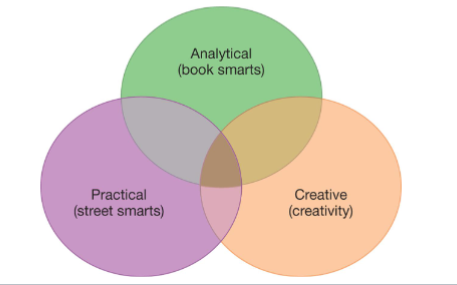
What was the Sternberg’s Triarchic Theory?
based on the idea that intelligence is not JUST measured by academic performance
he included analytical intelligence and called it book smarts
Practical; they draw from experience, can adapt to diff situations (street smarts)
Creative; they see things from a unique perspective
What is fluid Intelligence?
ability to think on the moment + attention span
taking in a lot of info on the spot, analyze and come up with solutions
e.g.
escape room
What are two examples of how fluid intelligence is integrated in tests?
The LSAT
The GREP
What is crystallized intelligence?
knowledge they already know they they draw on
All the knowledge someone has accumulated
Gets higher with age, but fluid goes down with age
How does genetic factors play a part?
intelligence is difficult to determine but it’s believed that it is connected and highly dependent
Done so by twin studies
identical twins grown apart still show a high correlation
How do environmental factors play in intelligence?
prenatal; the lower weight the less IQ later on in life
Income level
Social Class
Family stability
What are the three properties that language systems include?
Symbolic; can be broken down into individual symbols, sounds, letters…
Generative; from a limited number of symbols (alphabet) there are an unlimited number of ideas, sentences, words can be generated
Structured; needs to follow rules, letters can’t just be randomly placed neither can words in a sentence, all members that speak language must follow the rules
What are phonemes?
the individual letter sounds of a language; also connected letters like CH, TH
determined by movements of the articulators
What is speech production?
most complex motor activity that humans do because of how much control we have of it
requires precise manipulation of vocal tract
What is place of articulation?
part of vocal tract where the sound is emitted
Sometimes at front (pah)
or at the back “hey”
What is manner of articulation
relates to how you’re producing the sound
with “pah” you place lips together
with “hey” its from the back of your throat
What are some examples of articulators in our speech?
Lips
Tongue
Teeth
What are pragmatics?
the unwritten rules of a language
“Command ground” rules that everyone knows
e.g
Speaking distance
Backchannels: nodding, smiling, to encourage speaker to continue
Turn-taking in who talks when, encouraged by eye contact
What is prosodic bootstrapping?
attention to rhythms of sounds and language by listening to those around them
How do infants begin experimenting with language?
babbling during the first 6 months
What is lexical bootstrapping?
how language develops in children when they are older such as 1 or 2
They can infer meaning and structure to meaning of words they hear, can start saying some words
What two areas of the brain are associated with langauge?
Broca’s; on boundary of frontal and temporal lobe, has a lot of dense connections with Wernicke’s
production of speech
Wernicke’s
What is Broca’s Aphasia vs Wernicke’s Aphasia deficiencies?
Broca’s = words on tip of tongue but they just cannot produce the language, deficit of speech production
Wernicke’s = deficit of language comprehension
rare, results in a person being unable to understand what someone is saying to them and even what they are saying themselves
*these are only on the left hemisphere
Who was viki?
an ape they experimented with
attempted to teach her to speak
Why did research in apes switch to sign language and with who?
because they realized that the vocal tract wasn’t very flexible
they attempted with Washoe an ape and Koko a gorilla
What was cross-fostering?
animals lived among humans who were immersed in sign language
What could Kanzi the Bonobos do?
identify hundreds of symbols using a lexigram
can map individual words to specific symbols
What was concluded about communication in apes?
Could learn individual signs and a wide range of gestures but couldn’t grasp the concept of language to string many words and concepts together
What is the uniqueness about languages and dialects?
distinction between both are based on political boundaries
related languages exist on a continuum referred to as Flemish dialect: communicating with someone from a diff community using similar dialects
What is mutual intelligibility?
the degree to which two speakers of either two diff languages or dialects can understand each other
What is balanced vs unbalanced bilingualism?
they are equally proficient in all the languages they can speak in
*bilinguals are unbalanced and have one they use more often
What is a Lingua Franca?
in an area where different people live, they make one language to be the common one amongst them; for example in Singapore, it’s English
What is the heritage language?
Language in their home country
What is the societal language?
the language they’ll be using by the majority of the people in the area the immigrants will be moving to
What is codeswitching?
conducted during the second generation, switching between the two languages in an attempt to be understood
How can vocabulary size be measured?
Semantic Categorization Task
e.g name as many pieces of furniture that you can
Results show that people who are bilingual have smaller vocabulary sizes in each of the languages they speak than a comparable monolingual does in their main language
*these differences are very difficult to detect in everyday communication
What is metalinguistic Awareness?
means that people who are bilingual have a greater understanding of how language format works
this enables them to be better communicators and make themselves understood in other countries
How does bilingualism enable people to have better executive control?
because they develop selective attention and multitasking between interpreting and finding which words are best to use
What is an orthography?
the set of rules for writing the words of a language
mapping of the symbols to the sounds that they use
Can be shallow (transparent) or deep
What does it mean by orthography being deep?
the letters and letter combinations produce different phonemes depending on the context
such as the suffix '“ed” in the ending of some words in English; waded, jogged, shopped
*hard to pick up as a second language
What does reading require?
a fast conversion of visual symbols to sound and meaning
What is developmental dyslexia?
diagnosed in childhood
reading and spelling difficulties
What is phonological dyslexia?
an inability to sound out diff letter combinations
What is surface dyslexia?
can sound out the letters and combinations but can’t recognize the overall word easily
read slower because they’re sounding out the individual letters as opposed to recognizing the words outright
Which languages are dyslexia present?
in every single one
but its prevalence depends on the orthography