Nutrition Assessment
 Call Kai
 Learn
Learn Practice Test
 Spaced Repetition
 Match
Match Flashcards
 Knowt Play
1/12

There's no tags or description
Looks like no tags are added yet.
Name | Mastery | Learn | Test | Matching | Spaced | Call with Kai |
|---|
No analytics yet
Send a link to your students to track their progress
13 Terms
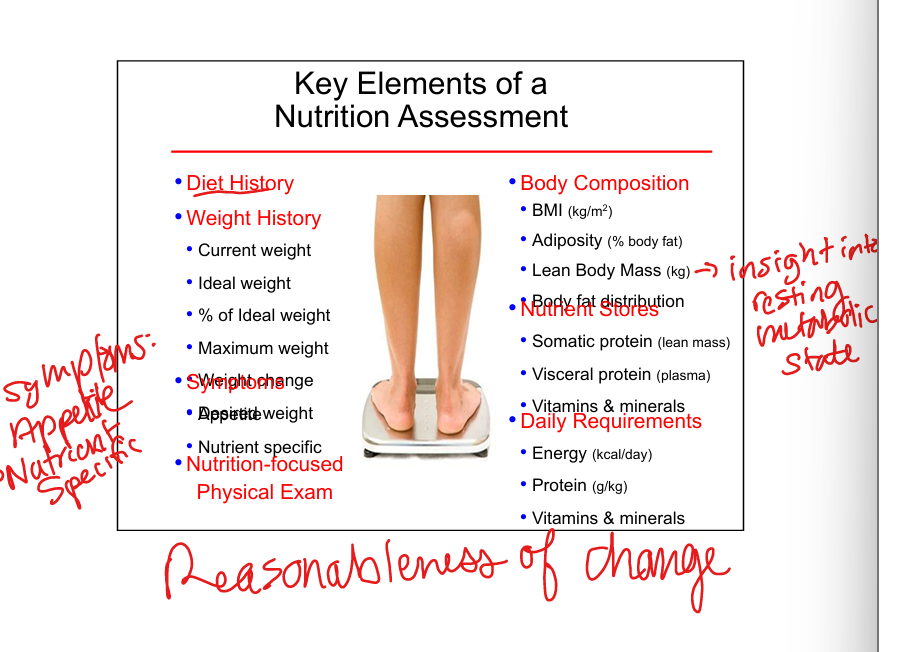
Key components of nutrition assessment
Diet history, weight history, symptoms, physical exam, body composition, nutrient stores, daily requirements
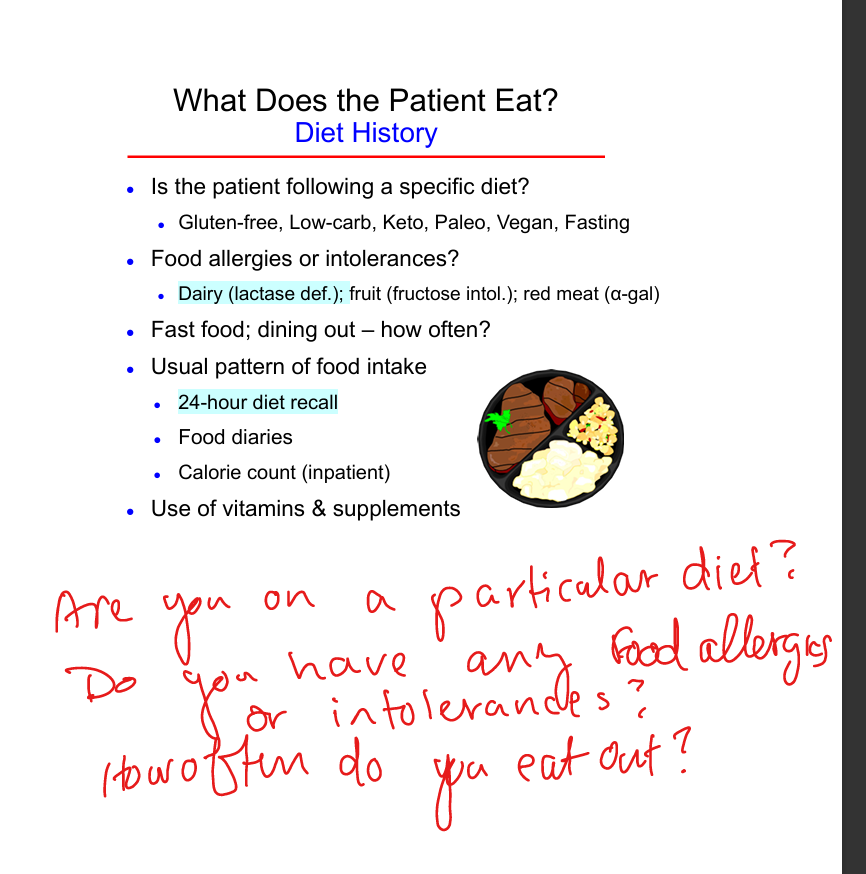
Elements of diet history
Specific diet patterns, allergies, intolerances, fast food frequency, 24‑hour recall, food diaries, supplements
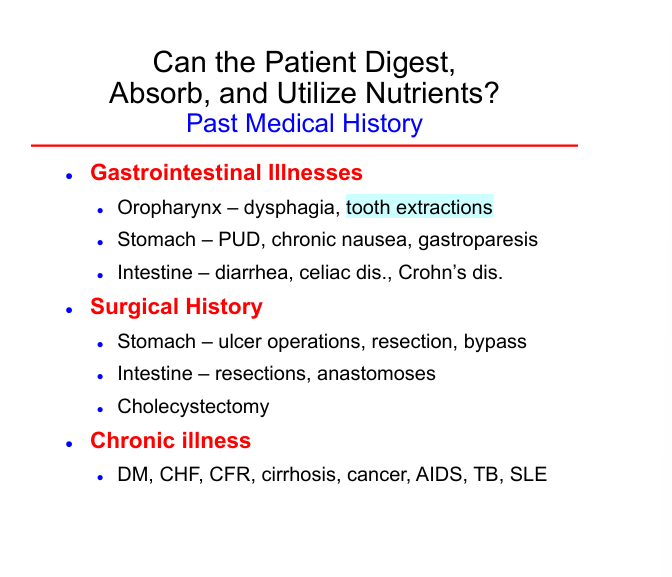
GI conditions affecting nutrition
Dysphagia, gastroparesis, PUD, chronic nausea, diarrhea, celiac disease, Crohn disease
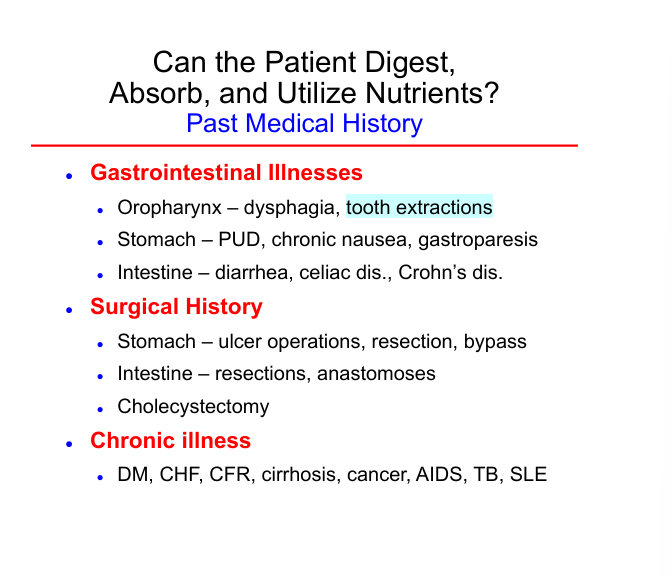
Surgical history affecting nutrition
Gastric bypass, ulcer surgery, bowel resections, cholecystectomy
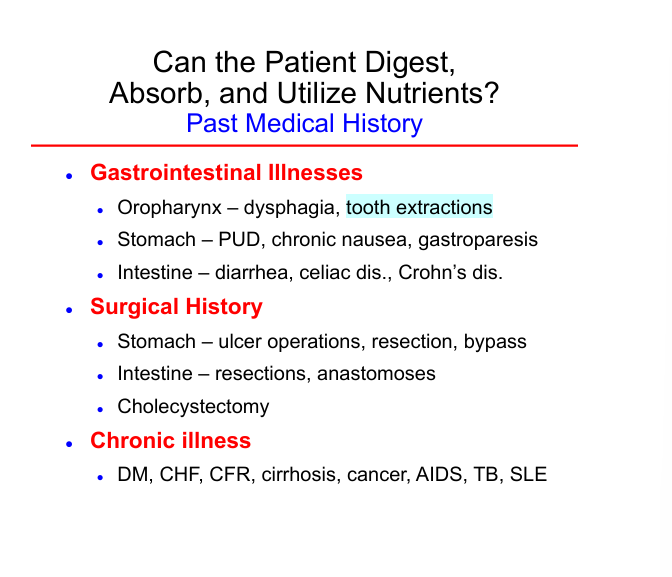
Chronic illnesses affecting nutrition
DM, CHF, CKD, cirrhosis, cancer, AIDS, TB, SLE
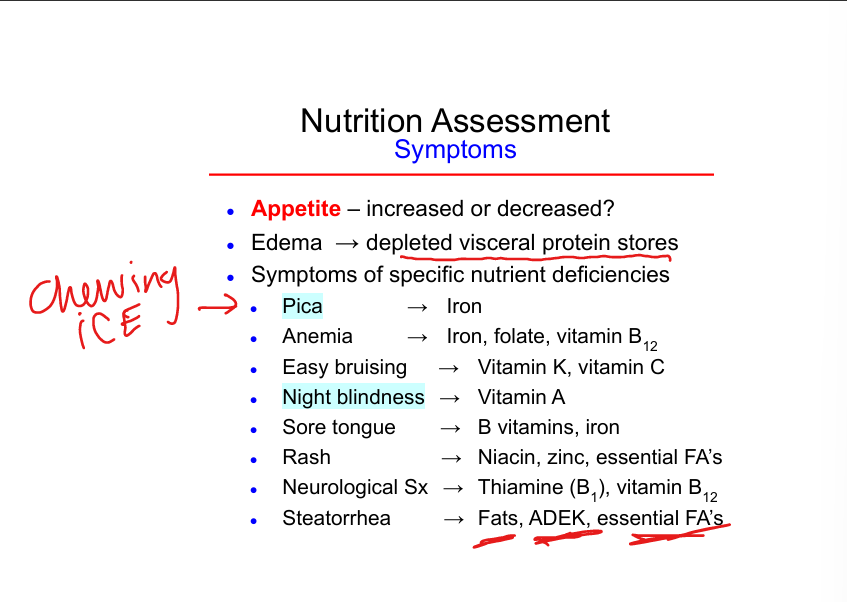
Symptoms of nutrient deficiencies
Pica (iron), anemia (iron/folate/B12), bruising (vit K/C), night blindness (vit A), sore tongue (B vitamins), rash (niacin/zinc), neuropathy (B1/B12)
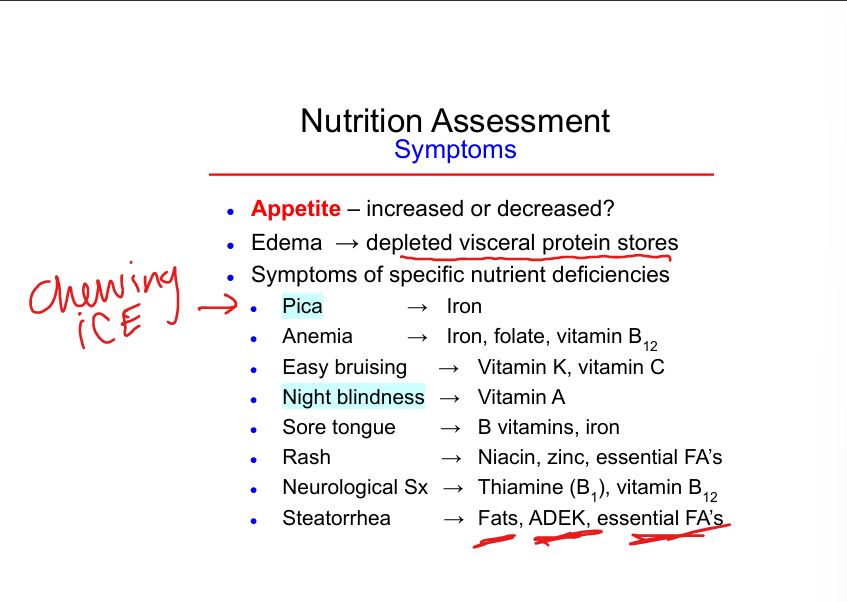
Symptoms of fat malabsorption
Steatorrhea, ADEK deficiency, essential fatty acid deficiency
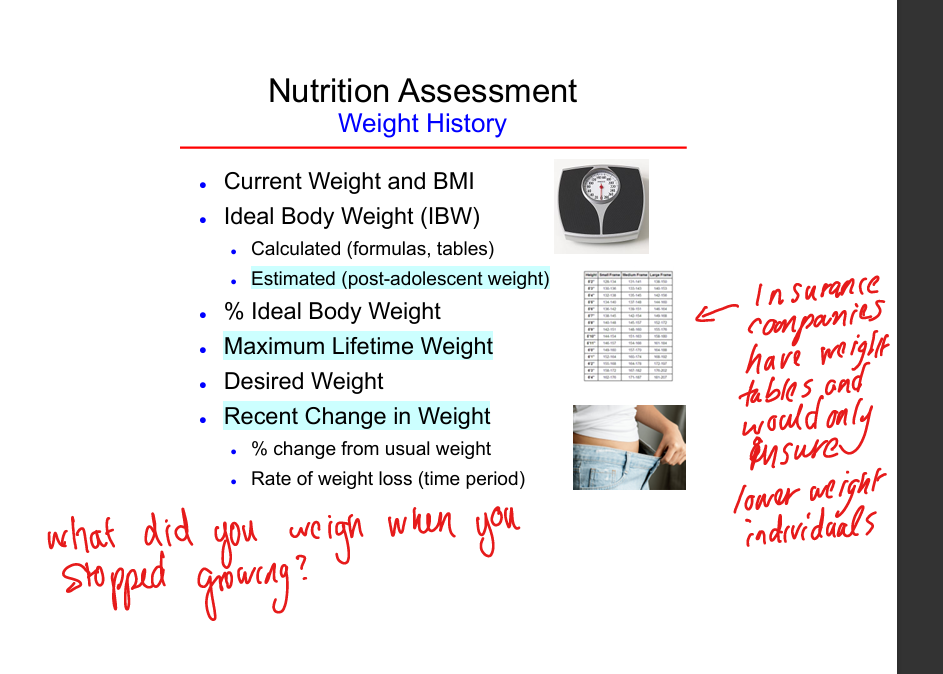
Weight history components
Current weight, ideal weight, % ideal weight, max lifetime weight, desired weight, recent weight change
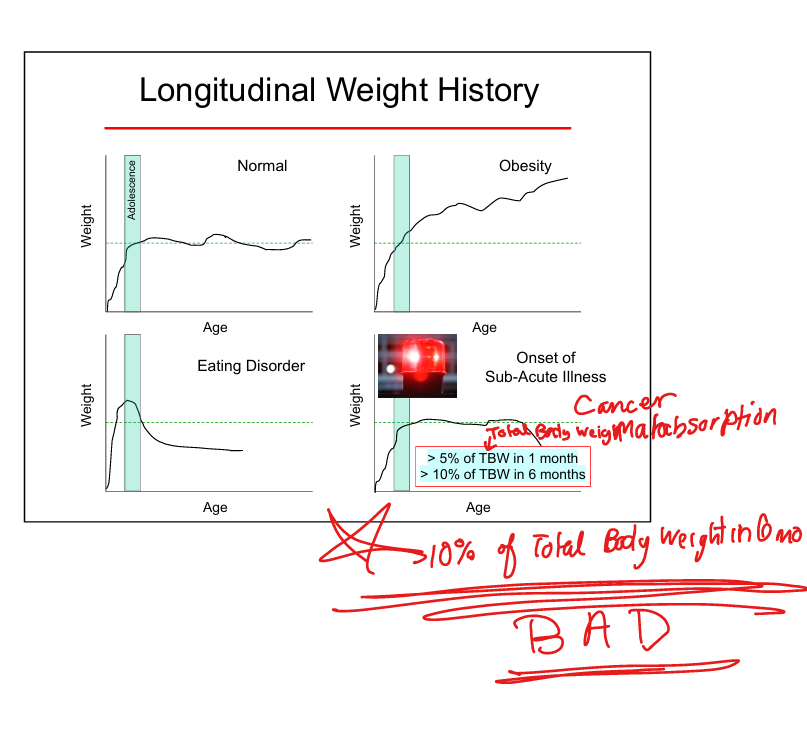
Significant weight loss thresholds
5% in 1 month or >10% in 6 months
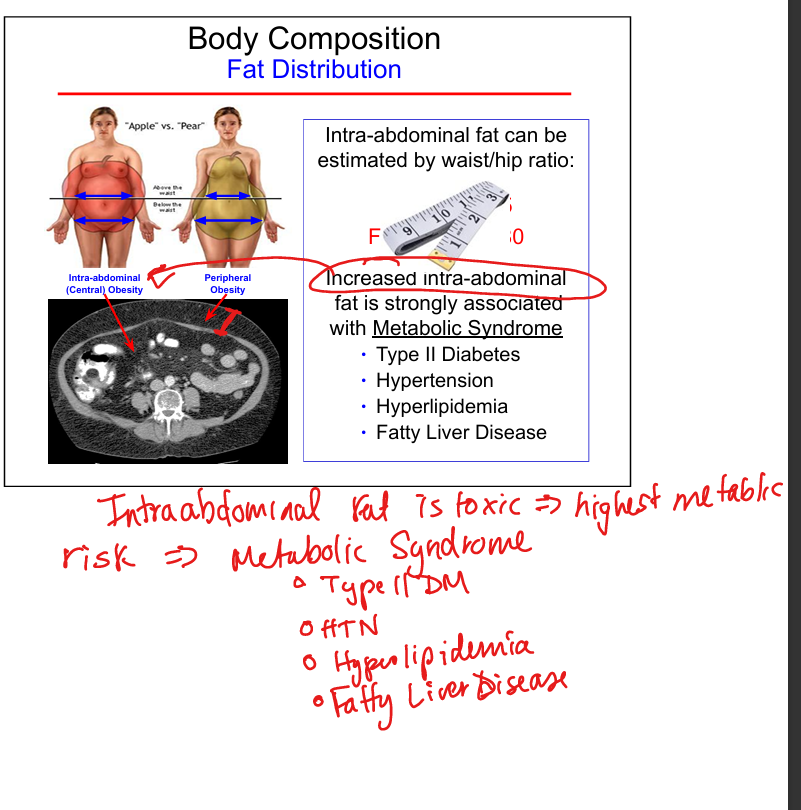
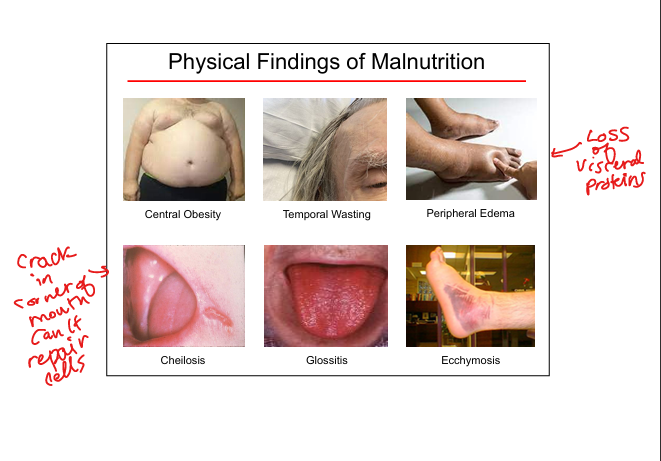
Central vs peripheral obesity
Central obesity(intraabdominal) linked to metabolic syndrome and higher cardiometabolic risk
Physical signs of malnutrition
Temporal wasting, glossitis, cheilosis, peripheral edema, ecchymoses
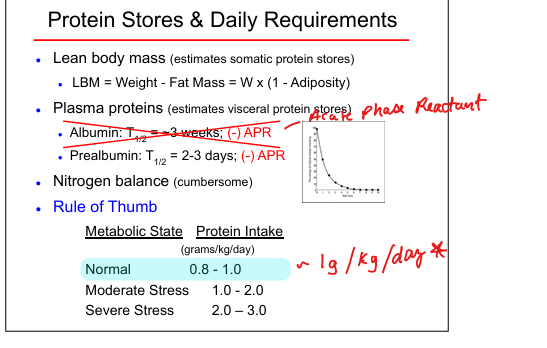
Protein requirement rule‑of‑thumb
Normal 0.8–1 g/kg/day
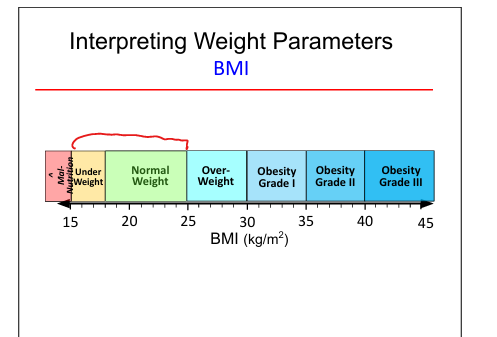
BMI Parameters
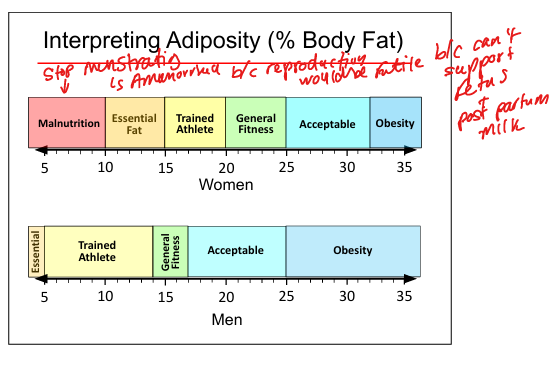
<15 manourished;15-25 Normal; 25-30=overweight; 30-35 Obesity 1; 35-40 Obestity 2; 40-45 Obesity 3