L36 - Cell Signalling: Insulin
 Call Kai
 Learn
Learn Practice Test
 Spaced Repetition
 Match
Match Flashcards
 Knowt Play
1/8

Earn XP
Description and Tags
balance for adrenalin
Name | Mastery | Learn | Test | Matching | Spaced | Call with Kai |
|---|
No analytics yet
Send a link to your students to track their progress
9 Terms
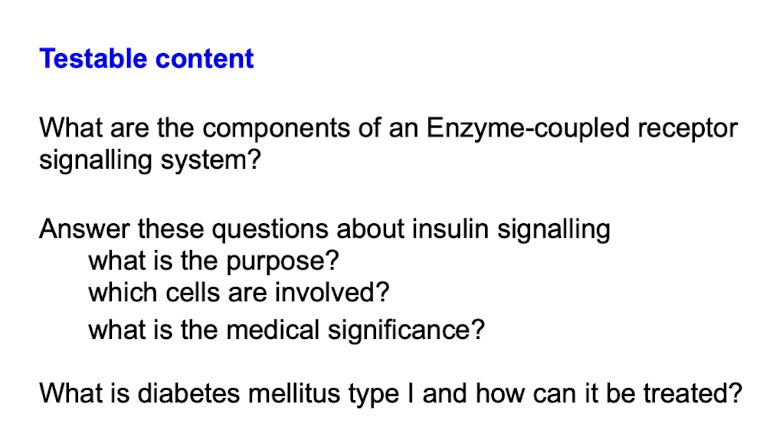
Insulin Signalling
uses:
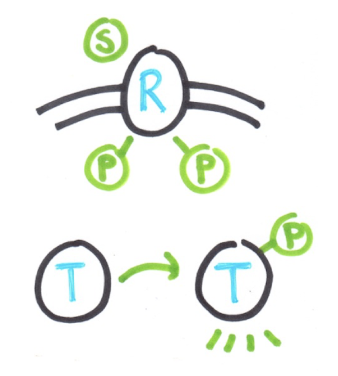
Enzyme-coupled Receptors = binding of signal molecule turns on receptors enzyme domain
→ contains receptor tyrosine kinases (RTKs) : phosphorylate the receptors own tyrosines when signal binds → phosphorylates target proteins too
Insulin Signalling: Purpose
makes digestive enzyme for gut
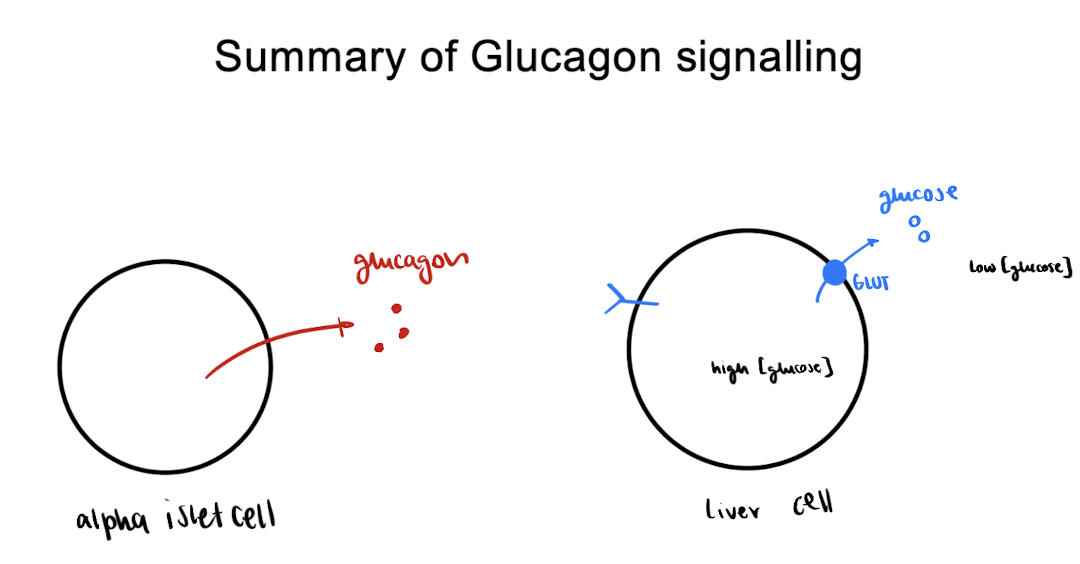
releases glucagon proteins when blood [glucose] is low
via: alpha islet cells
mech: alpha cells release glucagon → signals liver cell to release glucose into blood
releases insulin proteins when blood [glucose] is high
via: beta islet cells
mech: beta islet cells release insulin → signals fat/muscle cells to uptake glucose from blood
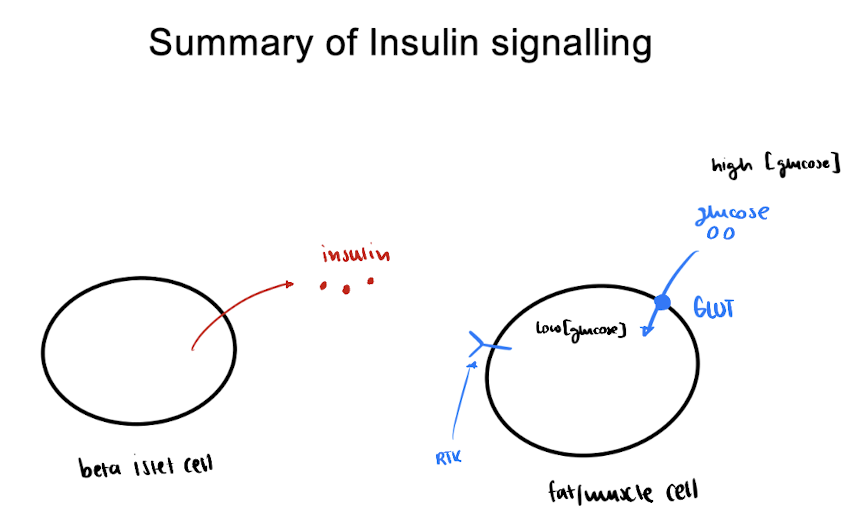
note: fat & muscle cells display insulin receptors → import glucose
which cells have the most glucagon receptors?
liver cells
Insulin Signalling: Activation
insulin is released via regulated exocytosis
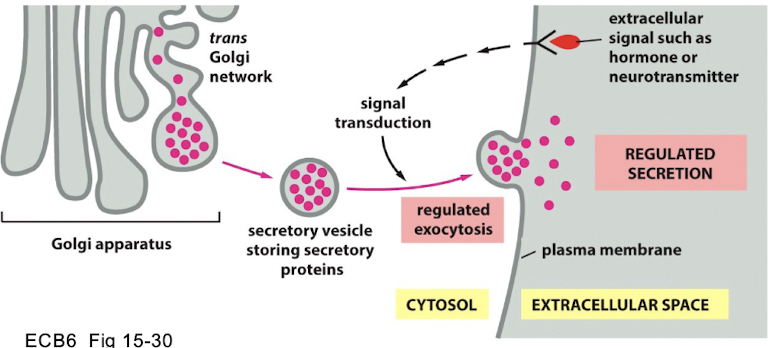
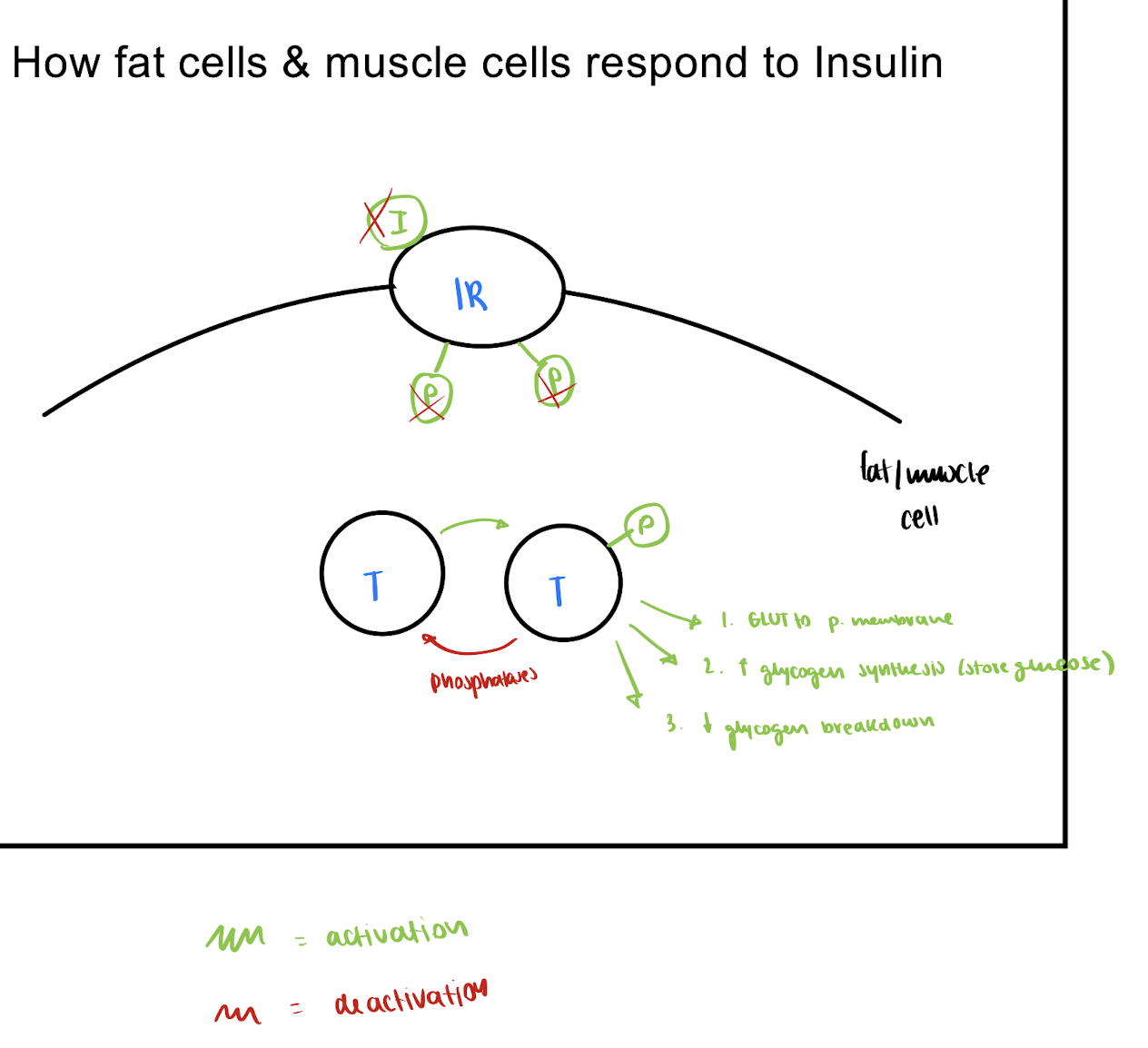
insulin binds to insulin receptors (homodimers) on fat/muscle cells
insulin receptors phosphorylate itself → results in phosphorylation of target proteins → activated
active target protein: responses
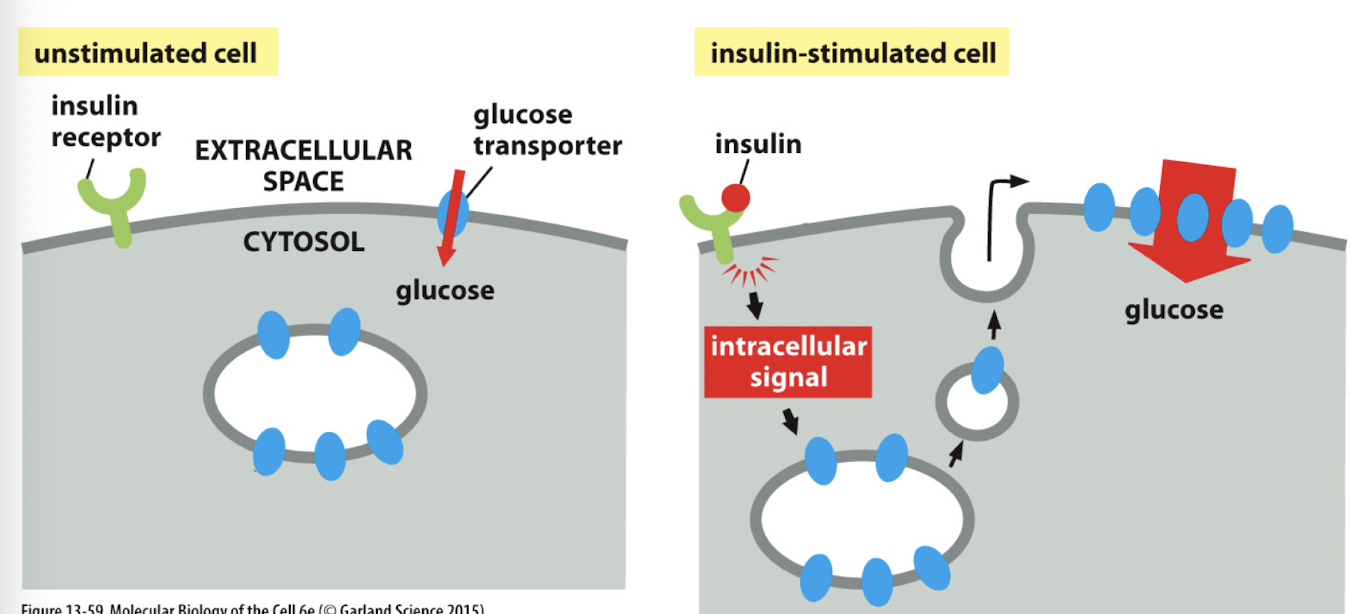
GLUT to plasma membrane
increased glycogen synthesis (store glucose)
decreased glycogen breakdown
Insulin Signalling: Responses
import glucose (brings GLUT out to plasma memb for glucose to enter cell)
via: kinase cascade
store glucose
via: activation of glycogen synthase + inhibits glycogen breakdown
Insulin Signalling: Deactivation
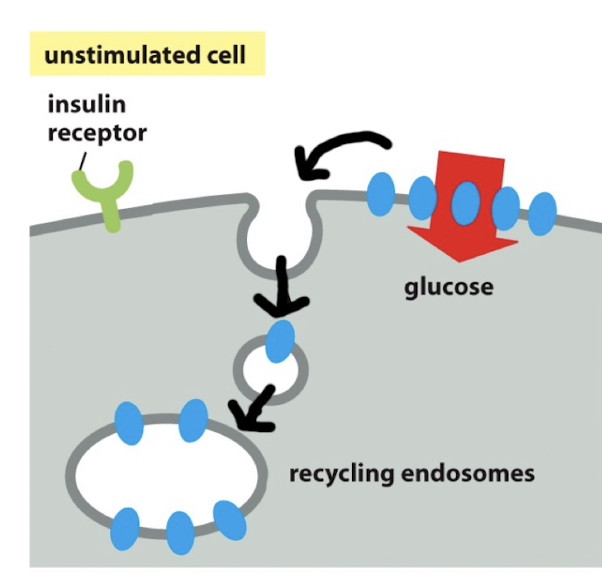
remove insulin
dephosphorylate target cells (via phosphates)
pinocytosis brings GLUTs back into cell from plasma membrane
→ thus, glucose cant enter cell
Insulin Signalling: Medical Significance
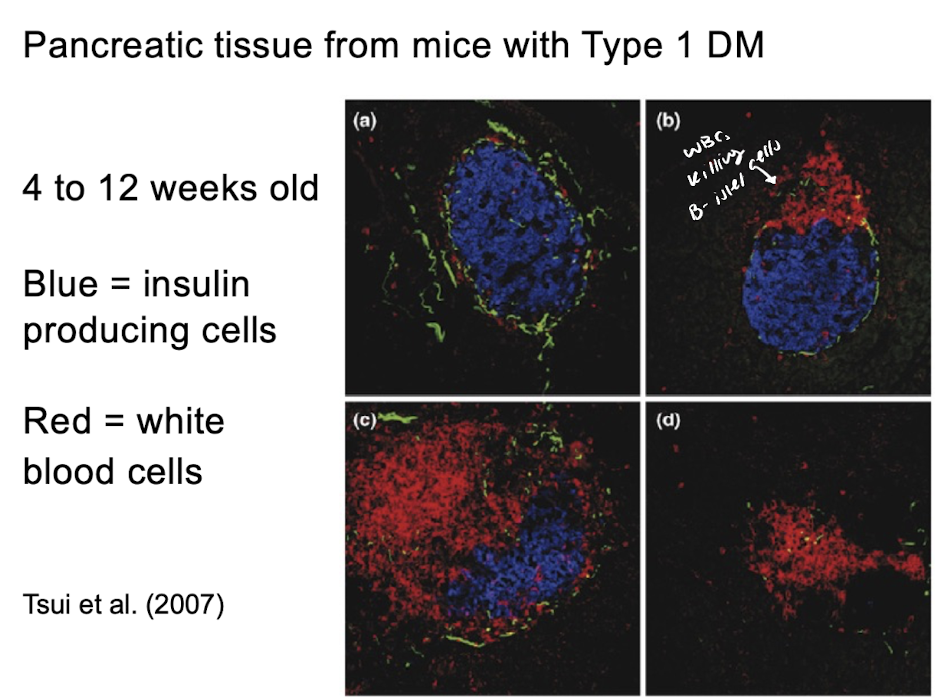
Diabetes Mellitus = inability to regulate blood glucose → high blood sugar
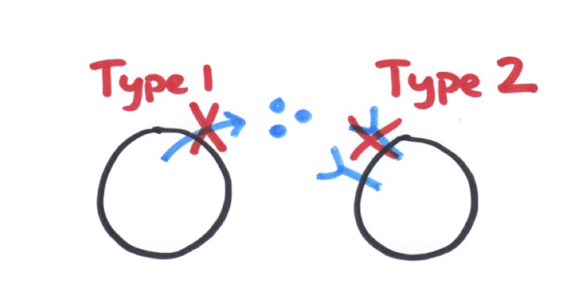
→ Type 1 = WBCs kill insulin producing beta islet cells
→ Type 2 = fat cells have fewer insulin receptors → CANT take in more glucose
from overeating
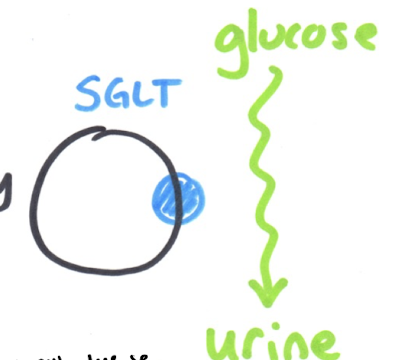
can use kidney cell SGLT to treat : acts as inhibitor to stop reuptake of glucose by kidneys → pee out extra glucose
treatments:
insulin
monitor blood glucose
healthy diet
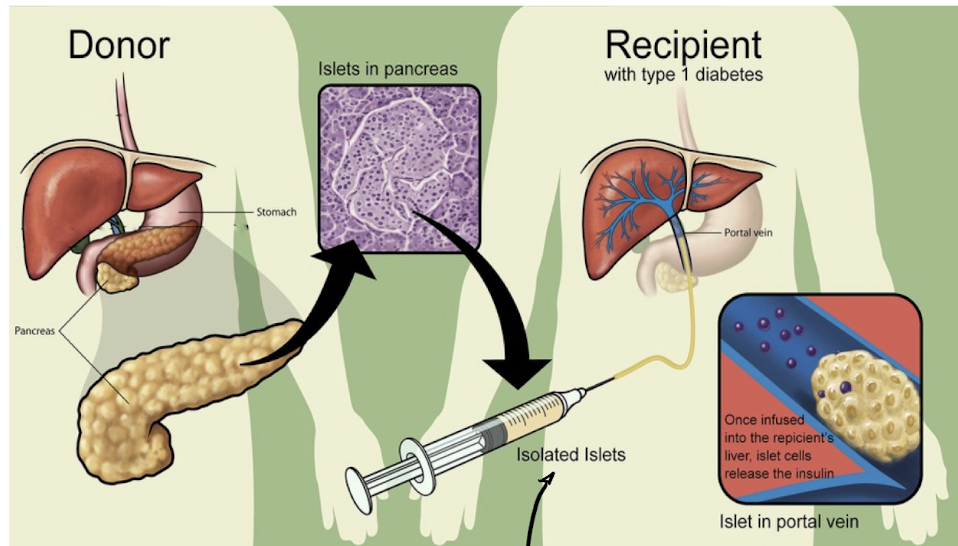
Edmonton protocol to treat DM 1
take beta islets from donor → inject into liver instead of pancreas so WBCs cant kill them
Examinable Content