megastudy HDFS 315 final
 Call Kai
 Learn
Learn Practice Test
 Spaced Repetition
 Match
Match Flashcards
 Knowt Play
1/86

There's no tags or description
Looks like no tags are added yet.
Name | Mastery | Learn | Test | Matching | Spaced | Call with Kai | Chat |
|---|
No analytics yet
Send a link to your students to track their progress
87 Terms
ABC-X Model
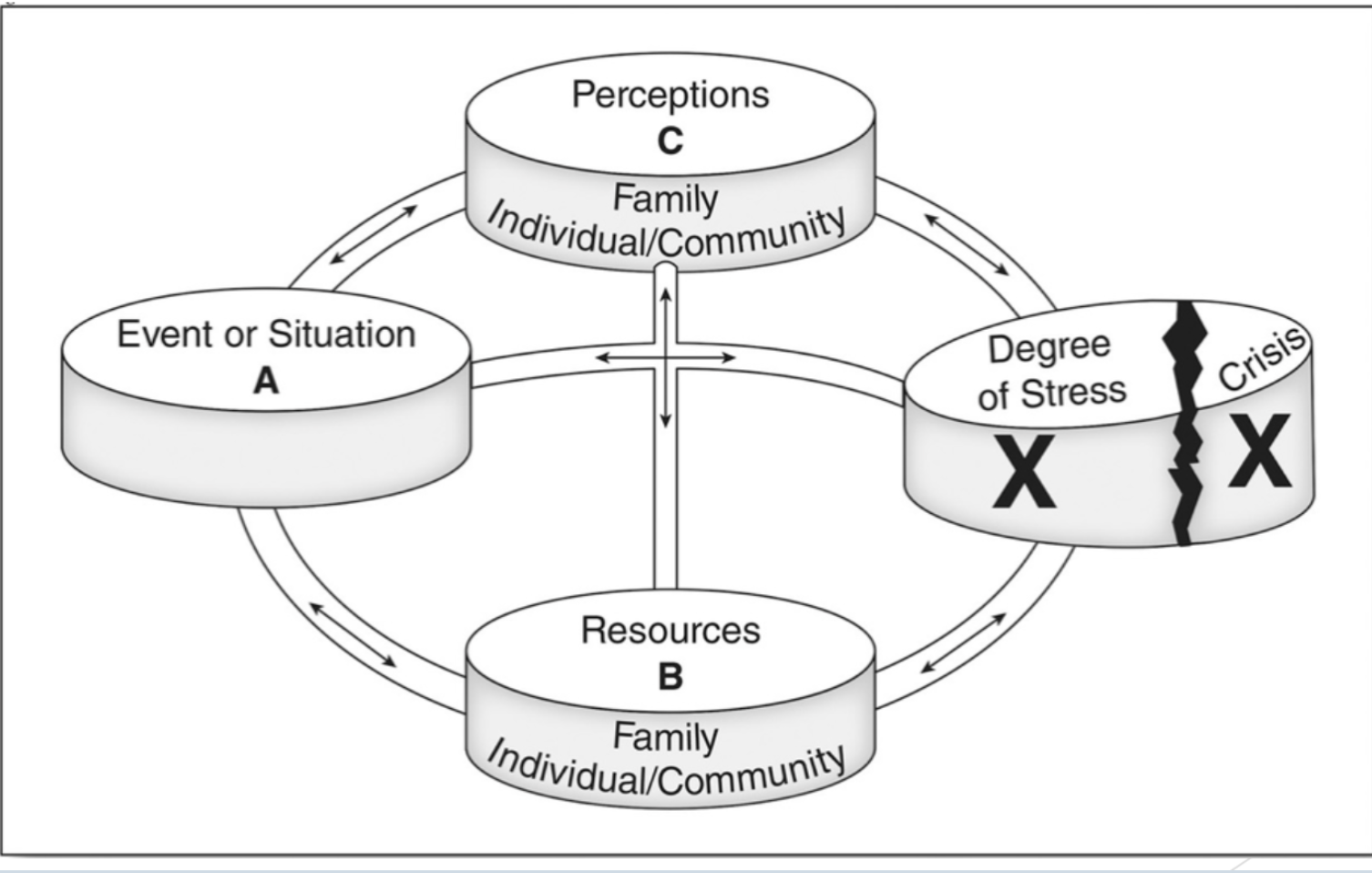
A-factor
stressor event
disruption to normal family functioning
examples: drugs, death, alcoholism, job loss
B-factor
resources
resources exist within or outside the family
social capital increases access to resources
c-factor
perceptions
family’s subjective interpretation and meaning of the stressful event
need to honor the sense they make of the experience
x-factor
outcome: coping or crisis
serious stressor events
family not able to adjust quickly
old ways of solving problems do not work
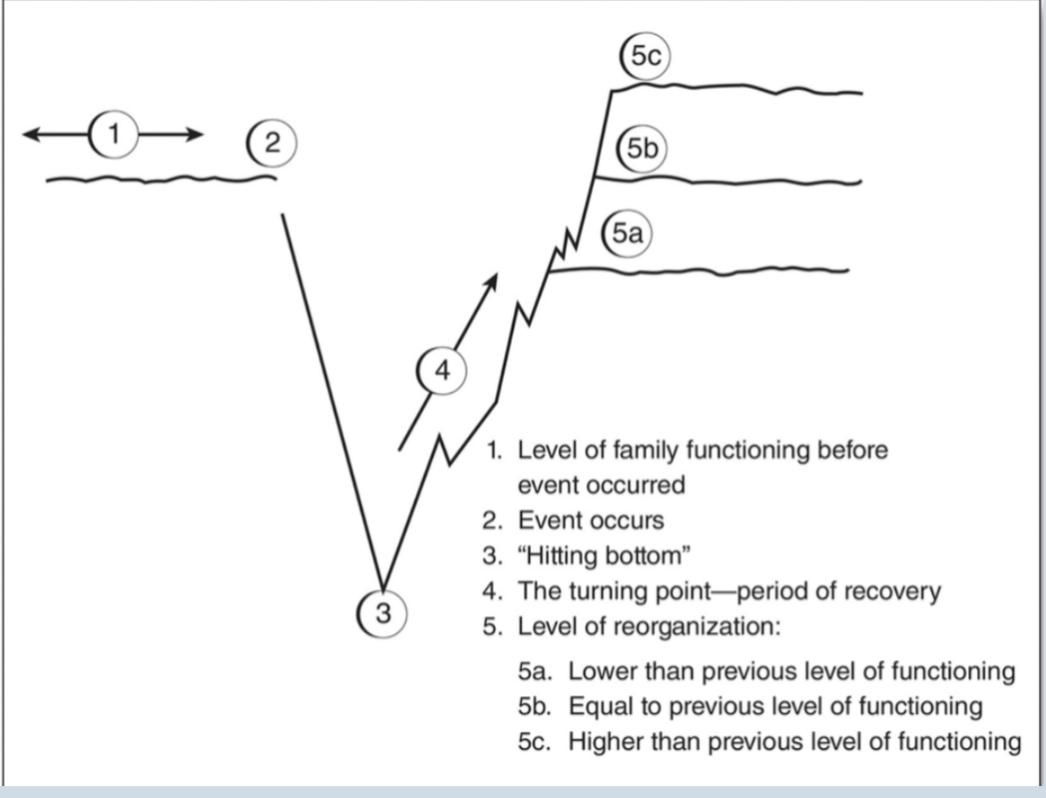
1. acute phase → roller coaster pattern
2. reorganization phase
roller coaster model of family stress
stress helps us…
grow, develop, learn, and become stronger
two kinds of coping strategies
enabling and disabling
rituals
set of symbolic/sacred actions that are different from the ordinary
routines
ordinary; often repeated on a daily basis
commonalities of rituals & routines
more than 1 family members
overt behavior/action
repetition
morphostasis/morphogenesis
What makes routines unique from rituals?
functional communication styles
little commitment or thought
can change with little fanfare
little emotion
little or no symbolism
usual ways of behaving
not as much preparation/follow-up
What makes rituals unique from routines?
communication related to identity (who we are as a family)
ideal of commitment
not easily changed
great emotion
highly symbolic
unique, unusual, extraordinary behavior
preparation, experience, reintegration
creation of rituals
cultural traditions handed down through generations
creation or inventions of new ones
rituals and developmental processes
rituals are created and evolve over time in families
new couple might ritualize celebrating different anniversaries
holidays may center on children
meeting family goals…
rituals help families acquire meaning and purpose
sense of being in control of life
provide feeling of predictability in life
create memories
goals, rituals, and routines help achieve…
healthy emotional ties
ease/facilitate membership changes
identity formation and reformation
managing rituals
not inherently healthy and facilitating
can be unhealthy or destructive if not carried out wisely by families
moderate ritualization is the balance betwee…
underritualization: few or no rituals
overritualization: incorporating too many rituals
balance and stability in change
repetition
room for change
appeal to all family members
guidelines for creating/changing rituals
goals
form
content
differentiation
“to separate and become unique”
“ability to maintain appropriate emotional distance from other family members”
individuality
overcome adversity
increase family strength
poor differentiation
lack of uniqueness
anxiety
boundary issues
intrusive
problems with poor differentiation
emotional problems
failure to thrive
low tolerance for intimacy
family fusion
patterns, rules, rule sequences, and family paradigm conspire together to negate family members’ individuality
chronic family anxiety
more common in highly fused families
family members feel they were unjustly treated
destructive emotional climate
lessened ability to cope with minor problems
successful differentiation
essential for health of family/individual
launching of offspring
transition to adulthood
strong relationships with others
fewer alcohol problems
less difficulty with peers
lower likelihood of engaging in illegal activities
fewer problems with families of origin
know the differentiation—-fusion scale
Successful
Differentiation
Children raised in
non-intrusive, non-
fused families
encouraged
to become
independent and
self- directed
Fusion
Children are expected to become part
of the collective, surrender personal
identity, think and act like parents and
other family members, conform, and
become absorbed into the family
collective
(Day, 2010)
emotional triangles
coping with fusion
genogram
resolve invisible loyalties
generate benign assumption
emotional cutoff
The most frequent activity we do with friends and family member is…
talk
overt communication
verbal; obvious
covert communication
body language, nonobvious
4 kinds of messages
small talk
competition and control talk
meta-communication
cooperative/straight talk
small talk
purpose is to build trust and establish communication
shop talk
form of small talk that occurs at or about the workplace
competitive & control talk
using force for influence and change
types of competitive & control talk
interrupting
non sequitur
correcting/lecturing
superlatives
sarcasm/cutting humor
distancing
martyring
meta-communication
talking about how we talk about things
cooperative or straight talk
straight from the heart
non-competitive in intent
tends to build relationship strength
types of cooperative or straight talk
seeking meaning
seeking clarification
reinforcing
seeking congruence
appropriate self-disclosure
gender in communication
men tend to approach life from a competitive angle, and women are more cooperative. men are solutional and women are emotional. women build connections, men build hierarchies
conflict resolution in marriage
validating style
conflict-avoiding marriage
volatile marriages
the four horseman of communication
criticism
contempt
defense
stonewalling
What is ideology?
The body or group of ideas that exist in a group, society, or social movement.
what greek word do we get the work “ideology” from?
ide
When we focus on family ideology, we are focusing on the…
cognitive or intellectual aspect of family systems that is reflected in their beliefs, thoughts, myths, symbols, ideals, aspirations, values, worldviews, philosophy of life, or doctrines
what is the continuum of abstraction?
Highly abstract (philosophy, idea, ideal, thought) ←———→ concrete (specific, measurable, tangible, observable)
What are first order processes?
not very abstract but may be indicative of complicated and fundamental ideas that underline their actions. center on patterns of daily living (problem solving, decision making, cleaning, preparing meals, transportation)
What are second order processes?
identify deeper patterns and beliefs held collectively by the family. represent at a higher level the themes that bind and unify a family, such as faith, politics, the way that patterns of daily life should go. much more abstract than first order processes and involve negotiation and subscribing to key beliefs and ideologies. second order processes inform first order processes
schemata
understanding of how things are organized, shaped and linked
build schemata about personal world
abstract ideas influence behavior
paradigm
shared by members of a given group
beyond schemata
paradigm shift
when belief systems change
family paradigms
deeply held family ideology
rarely explicit or conscious to families
increased awareness in times of stress, crisis, or transition
construction of family paradigms
assimilation and accommodation
new couples bring aspects from families of orientation into their new relationship
family paradigms can change in severe crises
role of family paradigms
manage family processes - helps or detracts from attaining family goals
provides a “North Star” to help family navigate complex world
Family’s construction used to govern itself
Types of Family Paradigms
Closed, open, random, synchronousc
closed family paradigms
stability through tradition and loyalty
key word: structure
open family paradigm
ideas and info come and go pretty freely
key word: negotiation
random family paradigm
variety through innovation and individuality
key word: flexible (or improvisational)
synchronous family paradigm
harmony through perfection and identification
key word: harmony
how does a closed family paradigm deal with stress/exaggeration principle?
“Fall in! Toe the line”
how does an open family paradigm deal with stress/exaggeration principle?
“We’ve got to work this out. We’ll talk it through again and consider it more thoroughly”
how does a random family paradigm deal with stress/exaggeration principle?
“Be more creative. Find something new”
how does a synchronous family paradigm deal with stress/exaggeration principle?
There is no real problem. As always, we are really in agreement about this.
emotional and generational processes impact…
family ideologies/paradigms
assimilation
adopting new beliefs
accomodation
reordering beliefs
what 5 things do rules do?
regulate and direct family life
emerge with little fanfare
powerful
influential for families
can change
rules as social norms
rooted in culture
communicated by people with whom we share daily interactions
range from serious to less serious
folkways
behavior directed by mores
mores
ideals
how do rules emerge?
copied, created, adapted from the culture, negotiation, emerge through trial and error
explicit rules
spoken, obvious, known
implicit rules
unspoken, implied
in a smoothly running family, rules do not often have to be ____
stated
is implicitness or explicitness desired?
implicitness
why do we care about rules?
accountability
boundaries
distance and connectedness
resources
responsibility
rule sequences
Patterns of behavior in family systems
that are repeated so regularly that
they are a governing or regulating part
of the structure of the family systems.
managing rules in family life
adaptability is key
-developmentally appropriate rules
-rule rigidity
-disabling rules
metarules
“rules about rules”
governs the creation/modification of family rules
“sometimes there are rules against seeing the rules, and hence against seeing all the issues that arise from complying with or breaking them”
usually based on authority and negotiation
how to help families (Summary)
think sequences and cycles…not causes
be adaptable… the worst thing is to increase the level of rigidity
rethink inappropriate rules and rule sequences