Important: Structures
 Call Kai
 Learn
Learn Practice Test
 Spaced Repetition
 Match
Match Flashcards
 Knowt Play
1/44

Earn XP
Description and Tags
Các Dạng structures để trả lời
Name | Mastery | Learn | Test | Matching | Spaced | Call with Kai |
|---|
No analytics yet
Send a link to your students to track their progress
45 Terms
A future wish or preference
I’d really like to
I’d rather + V
I think I’d prefer to V (Over / than)
I think I’d rather + V (Over / than)
Talking about habits
I usually …
I tend to …
I normally
I generally
I try to
Talking about past habits
I tended to
I’d normally
…… a few times a week
In the past, I used to
When I was …., I …..
Talking about recent past
I’ve been + Ving (Lately / recently / for + time)
Possible future actions
I think I will
I don’t think I will
I don’t think so
I think so
Talking about issues you have not considered before (Part 3)
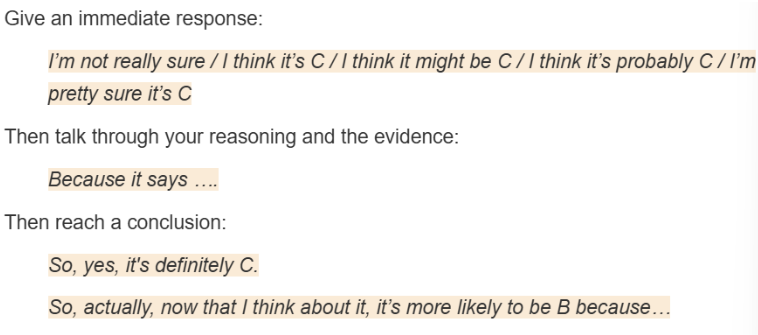
Begin cautiously → talk through reasons (your experience of it) → reach a conclusion
Giving causes
It could be down to + Ving / N
I think + S + has a lot to do with ….
Complaining about / showing appreciation for repeated actions
→ Sử dụng thì hiện tại tiếp diễn và kết hợp với từ “always”
Vd: Complaining hành động của bản thân / của người khác → I’m always losing things / He’s always losing things
Vd: Showing appreciation → She’s always helping people
Highlighting a difference with comparisons and negatives
but + S + tobe + not as + Adj + as + Noun
Vd: I love Hai Phong City, but my hometown is not as crowded as Hanoi City.
but + S + tobe nowhere near as + Adj + as + Noun (Còn lâu mới bằng)
Vd: I love Hai Phong City, but my hometown is nowhere near as crowded as Hanoi City.but + S + Much more + Adj + than + Noun
Vd: I love Hai Phong City, but Hanoi City is much more crowded than my hometown
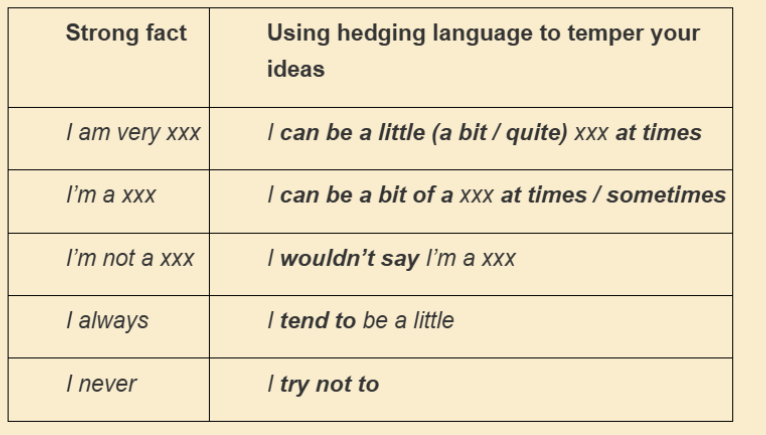
Using hedging language to show how certain you are (and to be more precise)
Speculating and Making predictions about the future
Khi dự đoán (Make a guess) → Cần sử dụng may / might / could / is likely to happen in the future → Đó là đang showing high-level language skills đó.
Khi sử dụng “will” là nói về 1 firm prediction (chắc chắn sẽ xảy ra) → Điều đó là tuyệt đối (Hơi rủi ro)
Signspost để chuyển ý (Part 3)
In terms of …
When it comes to …
As for ….
Asking and giving permission
To ask permission to do something
Give someone permission to do something
Get permission to do something
To allow someone to do something
To allow something
To be allowed to do something
To let someone do something
When I was in primary school, I had to ask permission to go to the bathroom. Some of my friends got into trouble for not asking teachers’ permission, they just went directly to the bathroom while we were studying maths.
Back in highschool, my teachers gave students who prepared for kỳ thi học sinh giỏi (Excellent Student Competition) permission to miss classes and skip homework.
Back in highschool, Students who prepared for kỳ thi học sinh giỏi (Excellent Student Competition) had to get permission to miss classes and skip homework, so they could focus entirely on their specialized subjects.
The minister of education allows students who have national prizes to skip university entrance examinations and grant them direct admission to top universities in Vietnam.
The minister of education allows skipping university entrance examinations after winning national prizes.
In speaking, we often use 'a kind of” and 'a sort of' when a word doesn't fit exactly.
For example, if your school has spaces used for playing or for assemblies you can
say, 'There was a kind of playground' or 'There was a sort of hall where we had assemblies.'
Expand your ideas (Part 1)
Cách 1: Qualifying an Idea (Explaining the limits of it)
Dùng: But only … / But it’s only …
Expand your ideas (Part 1)
Cách 2: Making a comparison
Vd: But it’s not as big as / better than / smaller than
Expand your ideas (Part 1)
Cách 3: Adding a personal opinion and explaining it.
Vd:
And I think that’s good because ….. (Personal opinion + Explanation)
…., which means that …. (Explanation)
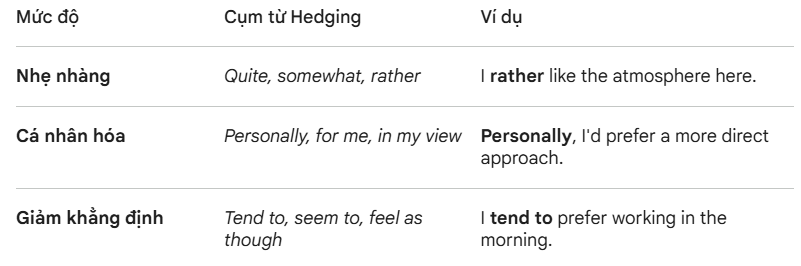
Sử dụng các từ “Like, enjoy, prefer, and be interested in”, những add thêm appropriate hedging language và add thêm reason / comment → để tăng level of responses
Vd: In the past, I much preferred reading comic books because these books illustrated characters’ action vividly.
Expressing Regrets
→ Using the same conditional tense as in the question (Type 2)
→ I would probably + V
Expressing Regrets
→ By expressing a wish about the past
(Wish + Past perfect) → Từ wish thương là rise intonation
Obligation
To make someone do something
To be made to do something
To have to do something
Tự đặt ví dụ liên quan đến Education
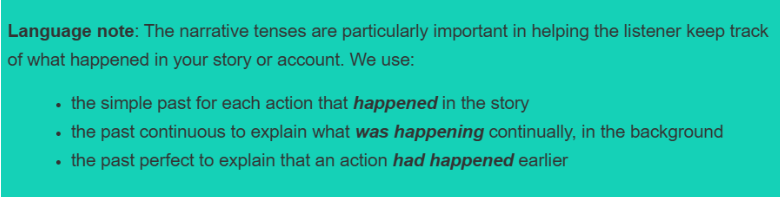
Narrative tenses - recounting what happened (Improving Coherence in Part 2)
Quá khứ để diễn tả hành động quá khứ → Có sự nối tiếp nhau
Quá khứ tiếp diễn để diễn tả những hành động đang xảy ra liên tiếp và động thời → Thường dùng để miêu tả background → Điểm thú vị là không nhất thiết phải dùng signpost và thời gian cụ thể để dùng → Đơn giản khi dùng là người nghe auto hiểu rồi.
Quá khứ hoàn thành dùng để diễn tả hành động xảy ra trước đó
Signpost:
Nói về ký ức, gợi nhớ về quá khứ
As far as I can remember, It must have been … years ago now.
One really clear memory I have is from when I + Clause.
Anyway, …
When speaking, 'anyway' is used to return to an
earlier subject, or get to the most interesting point in the story.
And, in fact, …
We can use 'in fact' to add something surprising or unexpected, or to correct an idea. Here, I used it to briefly recount something that happened at another time, and which supported my feeling that I had been
punished unfairly.
Signpost → Thường là rising intonation → Ra dấu hiệu để người nghe keep track
Model Verb (Hiện Tại): Current possibility or Abilities to do this
Can
Model Verb (Tương Lai): Possible Future Outcome (Chỉ dựa vào giả thuyết, nên khả năng là phân vân, không chắc chắn)
May / Could / May
Model Verb (Tương Lai): Expected or likely future outcome (Dựa vào bằng chứng, nên rất chắc chắn)
Would
Model Verb (Cả 3 thời điểm HT - QK - TL): Recommended course of actions
Should / ought to
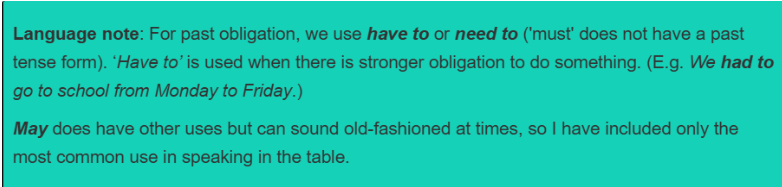
Model Verb (Cả 3 thời điểm HT - QK - TL): Obligations or strong need to do this
Have to / Need to / **MUST
Signposts: Talking about a planned future
I’ve been playing around with the idea of Ving / N
Looking ahead, I’m hoping to V
I’ve been giving some thought to [V-ing]
To refer to the occasion
For my birthday
For Christmas
When I graduated
After I’d helped someone
Talking about when
Last year / month / week
A few years ago / a few months ago / a few weeks ago / a few days ago
When I was 24
If it was longer ago and you are not exactly sure when
I must have been about 6 or 7
It must have been 10 years ago now
About ten years ago now
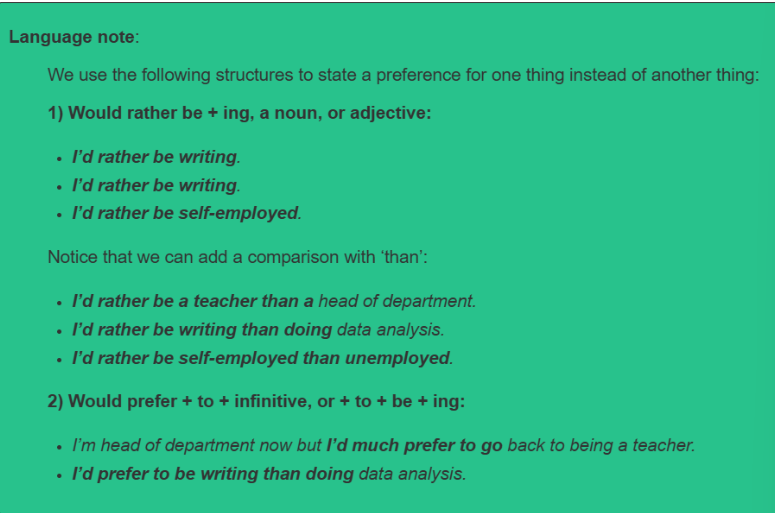
**Stating a preference
‘d rather be + ving / a noun / or adjective (+ than→ Nếu muốn so sánh)
‘d (much) prefer + to V / to be + Ving (+ than→ Nếu muốn so sánh)
**Listing tasks
,which involves + Ving, Ving and Ving.
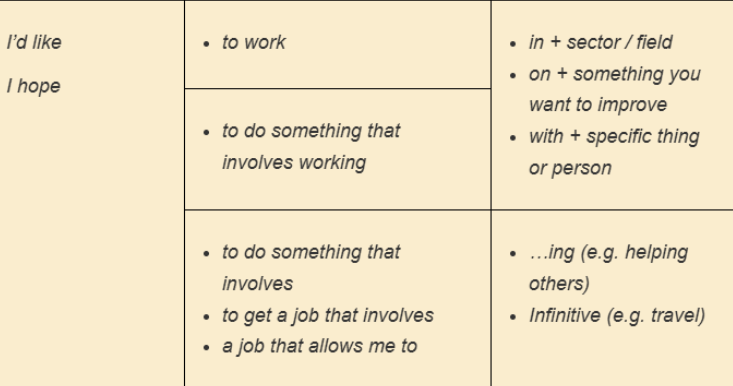
**Expressing hopes and dreams (want to do)
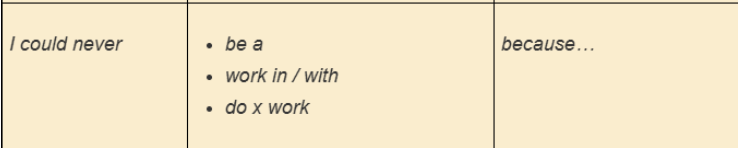
**Expressing hopes and dreams (don’t want to do)
Vd: I could never do construction type job because I don’t really have physical strength.
**Talking about your dream job
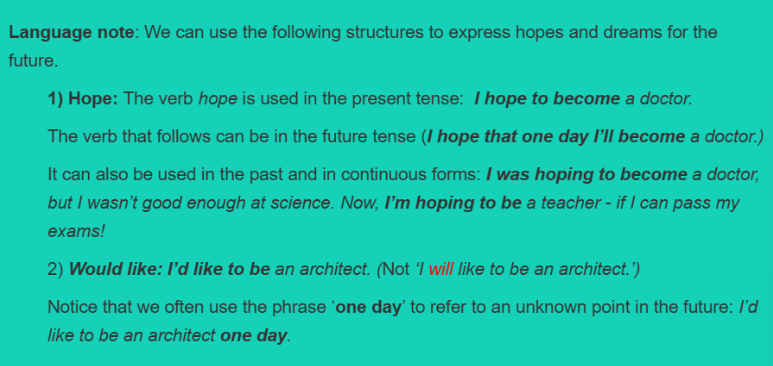
1: Hope: Sử dụng được ở thì hiện tại đơn, quá khứ tiếp diễn và verb đằng sau sẽ là “to V” hoặc “that + tương lai gần.”
2. Would like: I’d like to be + Dream job
Lưu ý: Từ “one day” refer đến unknown future và đặng vai trò như trạng ngữ.
Mẹo rising và falling intonation
Rising tone ở từ / ý mình không chắc chắn, mơ hồ có guessing → Câu nào mà không chắc chắn là rising ở từ cuối sau giấy phẩy, dấu hỏi chấm
Falling tone ở từ / ý tưởng mình chắc chắn→ Nhận các từ cuối ở câu và từ mình thấy chắc chắn, và các từ thuộc reference /substitution.
.
**Highlight the importance / difficulty / ease
It’s + adjective + to V
Vd: It’s important to look professional
**Kết luận lại quan điểm
So, (Yes / No), I think summarize lại ý
Vd: So, yes, I think clothing can be important but it varies a lot based on the workplace.
** Making suggestions and giving advice
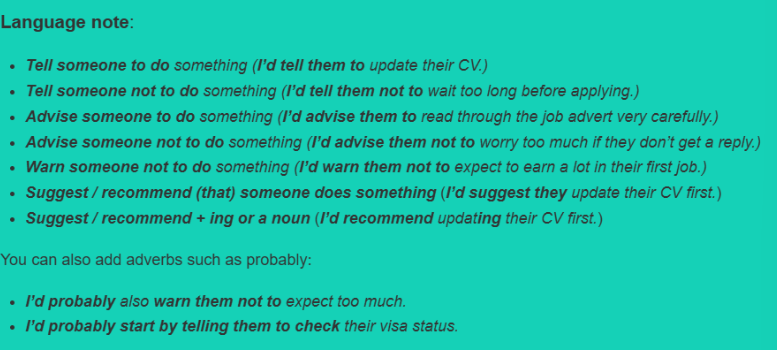
**Sử dụng Can/ Could hoặc should / need to
→ Can/ Could thường là make suggestions
→ Should / need to dùng cho STRONGER recommendations
** Sử dụng connectors để nói về quy trình, trình tự
First of all, … Then, … Next,... After that,... (They could) also …. But I’d also …