Small Animal Primary Care Final
 Call Kai
 Learn
Learn Practice Test
 Spaced Repetition
 Match
Match Flashcards
 Knowt Play
1/206

There's no tags or description
Looks like no tags are added yet.
Name | Mastery | Learn | Test | Matching | Spaced | Call with Kai |
|---|
No analytics yet
Send a link to your students to track their progress
207 Terms
How long do homemade diets last? Canned? Dry food?
fridge is 3-4d, freezer 1m
fridge 5d, room temp <30min
1-2m sealed in bag
How should you start your nutritional assessment?
start with screening evaluation
perform BCS and MCS (muscle condition score)as part of PE
How do you calculate the percent overweight?
every incremental increase >5/9 is 10% overweight
True or false: BCS and MCS are not casually related.
true: animals can be overweight with muscle wasting
what are the 4 areas that muscle condition is assessed?
skull
spine
scapulae
wings of the iliae
what is the difference between cachexia and sarcopenia?
Cachexia: loss of muscle due to a disease state
sarcopenia: loss of lean body mass associated with aging
What is the normal healthy body fat index?
20%
useful tool for patients that are >8/9 BCS
__________________-: Used to calculate ideal weight based on body length and width measurements
- Another useful tool for patients that are >8/9 BCS
morphometric assessments
How do you calculate ideal weight of an animal? (3 ways/formulas)
historical data from medical record
calculate using BCS—> if an animal is Ideal weight = Current Weight - (Current Weight * % Overweight)
Ideal weight = [Current weight * (100 - %BF)] / 0.8
What is the ideal weight for a 45kg Lab with a BCS of 8/9?
8 – 5 = 3 * 10 = 30% overweight
• 45 kg * 30% = 13.50 kg
• 45 kg – 13.5 kg = 31.5 kg
• Ideal weight for this dog = ~31.5 kg
What is the resting energy requirements (RER) formula?
=70* (ideal weight)^0.75
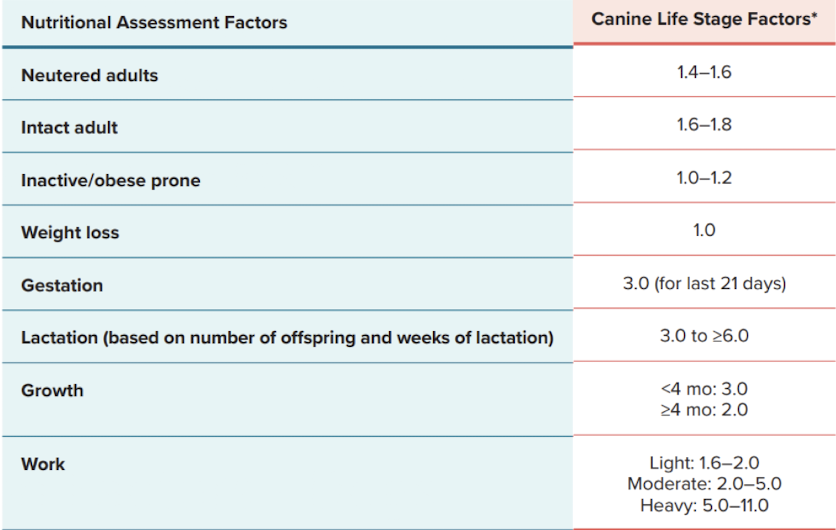
What is the formula for maintenance energy for weight loss in a feline and canine?
MER= RER *0.8
MER= RER* 1
these are based on the life stage factor charts
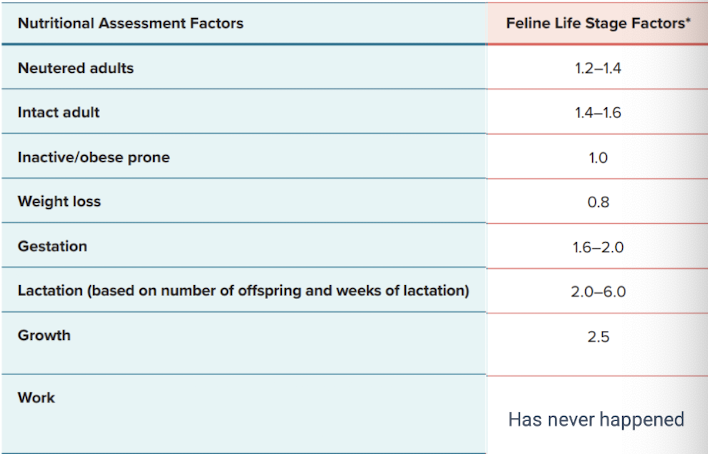
Memorize?
Cat:
Weight = 7.5 kg, BCS = 9/9, MCS = Moderate muscle loss
• Dry flaky skin with mats around tail base
• Moderate calculus and gingivitis
• Resistance on extension of hips
What is the MER?
Ideal weight = 7.5 – (7.5 X 0.4) = 4.5
• RER = (4.5)^0.75 x 70 = 216 kcal
• MER = ? x RER
• MER = 0.8 x RER = 173 kcal
how much of the MER should be treats?
<10%
3 components of the diet that should be controlled with cardiac disease? Kidney disease? Obesity?
sodium, water, EPA/DHA
phosphorus, protein, EPA/DHA
protein, fats, fibre
4 components of a diet that should be monitored with diabetes?
fibre
protein
fat
carbs (cats)
Are dogs carnivores?
no
Who is regulating the pet food industry in Canada? USA?
canada: NO ONE—> no a requirement to have an AAFCO statement, some federal roles
USA: must have AAFCO statement but they dont police. There are some state rules monitored by officials.
____% of cat and dog
owners, respectively, cited the
Internet and other media as a
primary source of information on
pet nutrition
16% and 17%
True or false: Dog owners tend to be more
mistrustful of commercial foods than
cat owners
true
Are cats carnivores?
yes—> produce only 5% of the amylase that dogs produce
_________________: something produced while making something else
By-product
Are by-products bad?
not always—> some are high quality foods like Vit E is a by-product soybean processing
Calcium level not to exceed phosphorus level by ____ times
2.2
True or false: feces, hoofs, gorns, hair, teeth and roadkill are considered low quality by-products
false—> they are NOT by products
What is meat meal?
Rendered (cooked) tissue and bone from slaughtered mammals (NOT
blood, hair, hoof, hide, manure, GIT contents)
≤ 9% of crude protein to be pepsin indigestible
How can you tell what quality of by-products in the ingredient list?
you cant
Should meat be the first ingredient in the list?
Because ingredients are listed in order of weight, and since meat’s main
component is water, having meat as the 1st ingredient does not guarantee
a high level of protein (which is usually the most expensive nutrient)
NOTE: some manufacturers will ingredient split to make meat the first ingredient
What is commonly added to pet foods to prevent spoiling (preservative)?
antioxidants
Should corn be fed in dog food? Explain.
Yes—>Corn is not a filler as a filler is defined as an ingredient providing no
nutrients. Corn is a good source of protein and amino acids (corn gluten
meal), carbohydrates, fatty acids (linoleic acid), and antioxidants (vit. E,
lutein, ß-carotene)
Corn is over 85% digestible in the dog and cat GIT when it is cooked and
ground, more digestible in fact than rice, wheat and barley, and beef and
poultry too
Is it a good thing if a pet food company has never had a recall?
no—> this generally means that they are not doing quality control
Thoughts on grain free diets?
only use if necessary due to unknown risks at this time. Taurine deficiency from this diet may cause dilated cardiomyopathy
What is the maximum diet percent should a mixer/topper be?
max 10%
__% of recipes are not adequate as the sole source of nutrition
95
What are the 5 key ingredients you should assess in a diet?
carbs
protein
fat
minerals
vitamins and trace minerals
3 components to an AAFCO adequacy statement?
whether the diet is complete and balanced
what life stage is it intended for
how did companies determine this—> formulates or feeding tests
What is the life stage factor for canines in first 42d gestation? last 21d?
1.8
3
What is the feline life stage factor for gestation? Lactation? growth?
1.6-2
2-6
2.5
Overweight and underweight queens should not be bred. Why not overweight ones?
increased incidence of dystocia
Unlike dogs, cats have ________ weight gain throughout pregnancy, beginning shortly after conception
• _________(dependent or independent) of the number of fetuses
linear
Independent
What percent of weight gained is lost when a queen gives birth? How about food intake?
40%
reduced but increases again
In felines, when is there peak lactation?
3-4w
Canines:
only ____% of fetal development occurs in the first 5 weeks
• ____% of fetal weight and length occur between days 45 – 55!
5.5
75
At what two points of canine gestation do food intake and weight significantly decline?
2 weeks after mating when the embryo most likely implants
during the last week of gestation (just before whelping many bitches stop eating completely)
If well prepared-> after whelping bitch
is only _______% above pre-breeding
weight
5 – 10
When should cats ideally start pregnancy/lactation food?
2 weeks before breeding
Lactation takes a lot of energy, cats: _____x RER , dogs ______ x RER. Free
feed during lactation to weaning.
2 to 6
3 to >6
___________
Feline—>Required for normal fetal development. Absence or deficiency = abortions, fetal abnormalities, neonatal death, or delayed growth and development
Taurine
Felines:
__________
• Pregnancy increases oxidative stress
• Due to increased oxygen consumption and altered metabolism
• Vitamin E, Vitamin A and Magnesium
antioxidants
2 essential fatty acids for felines during pregnancy/lactation?
LA and AA since cats cant synthesize LA
DHA for retinal development
Is calcium supplementation recommended in canines during pregnancy?
no—> because it will decrease PTH activity and increase risk for eclampsia
NOTE: max ratio of 2:1 calcium phosphorus
True or False? A bitch’s energy needs during gestation
increase with the size of its litter.
true
True or False? A queen’s energy needs during gestation
increase with the size of its litter.
false
True or False? After giving birth, both bitches and
queens should lose most of the weight they gained
during gestation.
false
True or False? Omega-3 fatty acids are essential for
foetal brain development.
true
Pet parents can begin offering gruel to at about 3 weeks of age. Two ways to make optimal gruels include?
1. Blend a canned puppy/kitten food, with an equal amount of warm water
Grind 1-part dry food, with 3 parts warm water
___________ reduces energy requirements 24 – 33%
Neutering
How old to wean canines?
8w
How can you promote dry off in canines?
• Day 1: isolate dam from puppies and withhold food. Allow puppies to eat weaning food. Reintroduce dam at night and remove all food
• Day 2: isolate dam permanently, provide ¼ ration of maintenance
• Day 3: ½ ration of maintenance
• Day 4: Normal ration of maintenance
When do canines reach their mature weights?
small and medium breeds= 9-12m
large/giant breeds= 18-24m
What is the optimal BCS for canines when growing? Is this the same for everyone?
5/9
no, large and giant breeds should be kept more slim at 4/9
True or false: AAFCO is not a regulatory body or enforcement agency and does not approve or test pet foods.
true
The ________________ is the federal body that regulates
pet food safety. They ensure that food is safe to eat, produced in sanitary
conditions, free of harmful substances, and truthfully labeled.
FDA
_________________________: Focuses on preventing animal diseases from entering Canada and ensuring banned materials (like Specified Risk Materials) are kept out of animal feed.
CFIA (Canadian Food Inspection Agency)
______________: Consumer packing and labelling act and competition act. This legislation controls how things are packaged and how they product consumers from misinformation.
Competition Bureau
What are the only 3 mandatory label requirements in Canada?
1. the bilingual common name/intended species
2. Net quantity
3. The Manufacturers name and principal place of business.
_________________________: An industry group whose members
voluntarily manufacture foods according to AAFCO guidelines.
PFAC (Pet Food Association of Canada)
What are the 9 AAFCO required label components?
brand and product name
species designation
net quantity statement
manufacturer/distributor information
ingredient list (in descending order by weight)
guaranteed analysis
nutritional adequacy statement
calorie content
feeding directions
True or false: Vitamins and minerals make up about ½ of the ingredients on a
pet food label.
true (in their scientific names)
So essentially all diets require _______ protein sources to create
complementary protein. Incomplete proteins are lacking one
or more essential amino acids
TWO
How many essential amino acids do cats require? dogs?
11
10
4 life stages that AAFCO recognizes?
growth
maintenance
gestation/lactation
all life stages
Instead of relying on marketing buzzwords (like "holistic" or "premium"), veterinarians should guide clients using the ___________________________Guidelines.
WSAVA (World Small Animal Veterinary Association)
True or false: Senior pets have the same nutrient needs as their younger
counterparts.
true—> Quantities per unit of body weight may change, and the way they are provided may require modification.
AAFCO does not have a senior adequacy statement so what should you look for?
a maintenance diet
how do energy requirements differ in senior canines?
18-24% reduction in MER
so a decreased caloric need without impacting nutrients
they also have increased fibre
How do senior felines differ in energy requirements?
As cats age, energy requirements decrease
Then from 12-15, they actually require more energy
BUT digestibility of protein, fat and starch decrease with age
Should you decrease protein in senior patients?
Protein is important! Don’t restrict unless clinically indicated
What is the ideal level of protein for senior pets? (dogs and cats)
18% of ME in dogs
22.75% of ME in cats
What benefits can an increased dietary protein level bring to a senior pet?
increasing lean body mass
immune system support
increase tissue repair
___________ can improve immune competence in senior dogs
→ Vitamin E, beta carotene, lutein
Antioxidants
Canned food with 75% moisture and 10% crude protein (as fed). Calculate the % of protein with dry matter basis.
- 100% – 75% moisture = 25% DMB
- 10% protein ÷ 25% DMB = 40% protein
- This food is 40% protein DMB
DMB in wet food is ___x that of dry food
4X
Kibble with 10% moisture and 18% crude protein (as fed). What is the protein % in a dry matter basis (DMB)?
- 100%-10% moisture = 90% DMB
- 18% protein ÷ 90% DMB = 20% protein DMB
How do you calculate carbohydrate content?
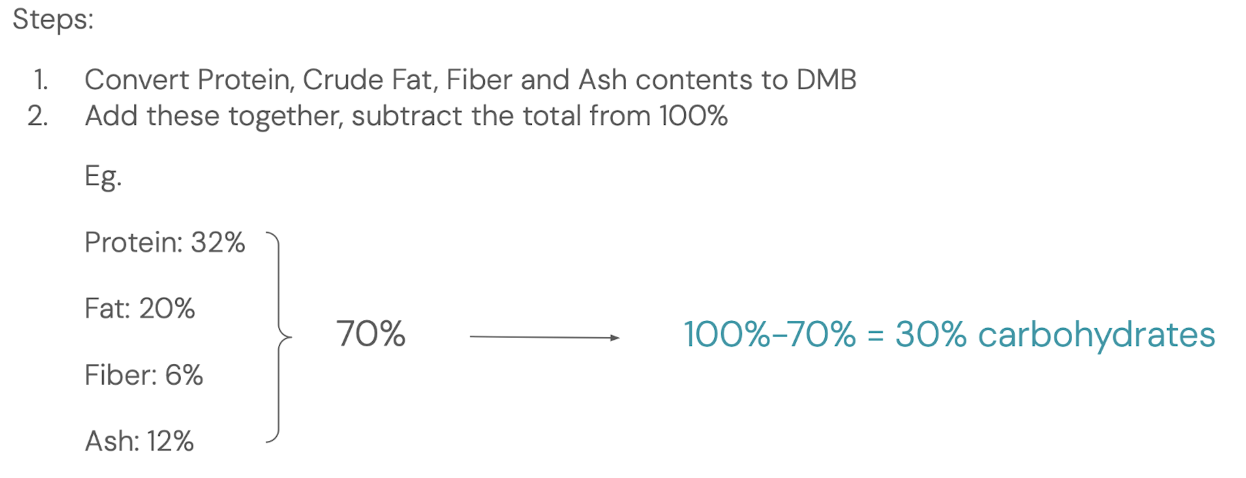
Association for Pet Obesity Prevention (APOP) found that ___% of dogs and ___% of cats were overweight or obese in a 2022 survey
59
61
Optimal body fat is ______% for dogs and cats
15-20
What is the definition of obesity?
>40% body fat
What are the 4 practical ways of determining the degree of obesity?
1. Relative body weight (RBW)
2. Body condition score (BCS)
3. Morphometric analysis
4. Body fat index (BFI)
What does relative body weight (RBW) equal?
= Animals weight ÷ Estimated ideal weight
What is one morphometric measurement that is consistent in both dogs and cats?
pelvic circumference
How does neuter status affect risk for obesity?
Gonadectomized dogs and cats: decreased metabolic rate by 20-25% due to loss of estrogens and androgens
What is the weight loss food break down in dogs?
● Dogs: 6-10% fat, 5-25% fibre, and 16-30% protein (think 10-20-30)
What is the weight loss food break down in cats?
● Cats: 8-12% fat, 3-15% fibre, and 34-42% protein (think 10-10-40)
If your animal is obese, Can you just feed less of the same food?
Calorie dense foods are higher in fat. Fat has 2.25X the calories of carbs and protein, and it is very efficiently digested and metabolized. Higher fat foods tend to promote retention of body weight, even when total calories consumed are reduced.
Decreased food fed = decreased nutrients = nutrient imbalances. Weight loss foods are designed to decrease calories without sacrificing nutrients such as protein, essential fatty acids, vitamins and minerals, as they are proportionally higher in these items
5 steps of a weight loss plan?
commitment
feeding plan
exercise plan
communication
monitoring
What is one thing you may have to supplement in pets trying to lose weight?
omega 3FAs
________ is a theoretical minimum for daily energy consumption, not an
actual one
RER
How fast or slow should my pet be losing weight?
● ≤ 2% of body weight per week, otherwise unhealthy
● ≥ 0.5% is needed to maintain owner interest