Geography IGCSE River Vocabulary
 Call Kai
 Learn
Learn Practice Test
 Spaced Repetition
 Match
Match Flashcards
 Knowt Play
1/55

There's no tags or description
Looks like no tags are added yet.
Name | Mastery | Learn | Test | Matching | Spaced | Call with Kai |
|---|
No analytics yet
Send a link to your students to track their progress
56 Terms
Abrasion
the pebbles being transported wear away the bed and banks of the river channel.
Alluvium
rock particles (clay, silt, sand and gravel) deposited by a river.
Attrition
The particles are knocked about as they are transported, and they gradually become more rounded and reduced in size.
Base Level
the mouth of the river and the point where the gradient becomes zero. No further erosion is possible during normal river flow at this point.
Bedload
the material carried by a river by being bounced or rolled along its bed.
Catchment
the total area of land drained by a river and its tributaries.
Confluence
Corrosion
a chemical process of erosion where weak acids in water—sea or river—dissolve minerals from rock, specifically limestone or chalk, causing it to weaken and break up.
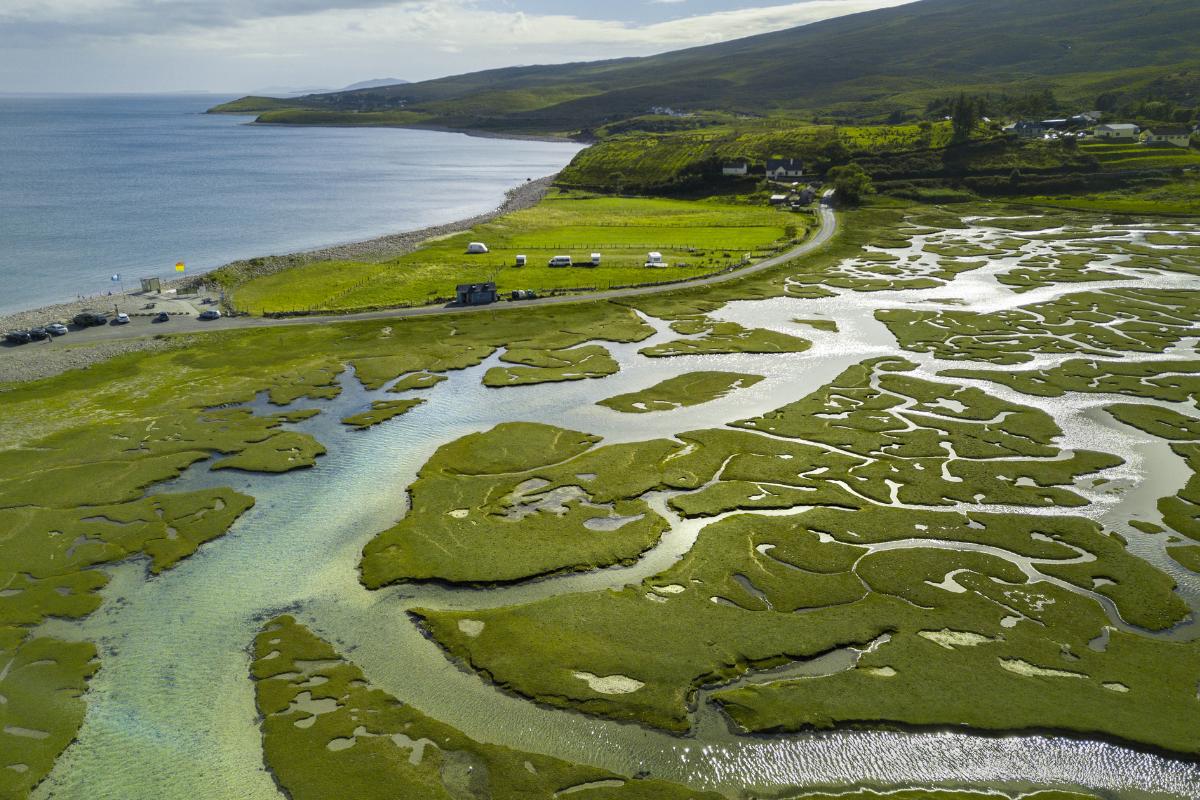
Delta
a river mouth choked with sediment causing the main channel to split into smaller branching channels or distributaries. The name originates from the Greek for the delta's 'D'-like shape.
Depth
increases downstream, a result of being joined by a number of tributaries.
Discharge
the amount of water passing a specific point at a given time. This become larger downstream as a result of the joining of many tributaries. It is calculated as: cross-sectional area x velocity, and measured in cubic metres per second (m³/sec).
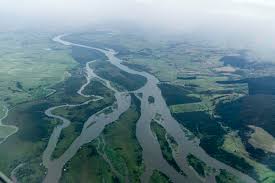
Distributaries
finger-like river channels which branch away from a main river channel in a delta.
Drainage Basin
the land that is drained by a river and its tributaries.
Erosion
the wearing away of the bed and banks of the river channel by abrasion, hydraulic action, solution and attrition.
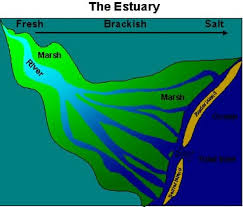
Estuary
the tidal mouth of a river, with large, flat expanses of mud exposed at low tide.
Eutrophication
high nitrate levels combined with phosphates cause excessive plant and algae growth, a deteriorating process that results in loss of oxygen and the biological death of the river.
Flood Plain
the wide, flat floor of a river valley. It consists of sediments (alluvium) deposited by the river.
Freeze-Thaw Weathering
also called frost-shattering as it occurs in cold climates when temperatures are often around freezing point and where exposed rocks contain many cracks. Water enters the cracks during the warmer day and freezes during the colder night. As the water turns into ice it expands and exerts pressure on the surrounding rock, causing pieces to break off.
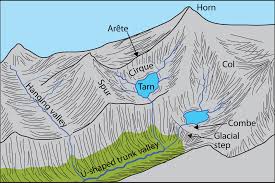
Glaciated Valley
a river valley widened and deepened by the action of glaciers (ice sheets); they become ‘U’-shaped instead of the normal ‘V’-shape of a river valley.
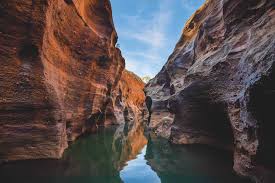
Gorge
a steep-sided, narrow rocky valley marking the retreat of a waterfall.
Gradient
the slope of the river profile, steep close to the source and gradually becoming more gentle until the river reaches sea level.
Hydraulic Action
The sheer force of the water by itself can erode material from the bed and banks of the river channel.
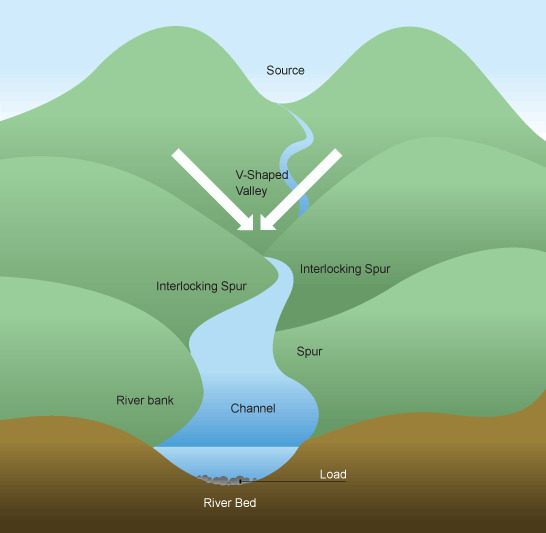
Interlocking Spurs
As the river descends from the highland, it begins to meander between spurs which interlock down the valley.
Lateral erosion
erosion by a river on the outside of a meander channel. It eventually leads to the widening of the valley and the formation of the flood plain.
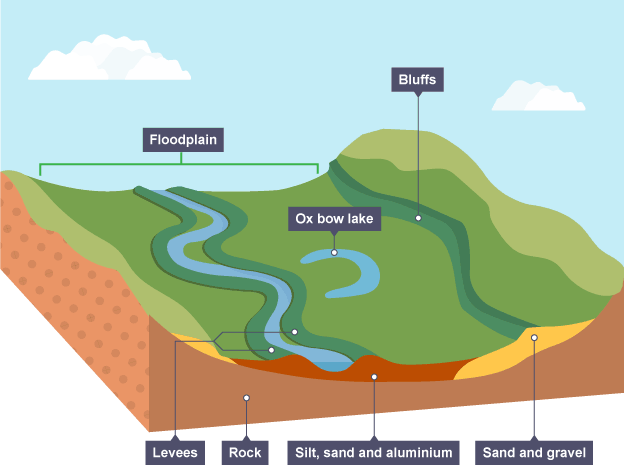
Levées
river embankments built by deposition as the river floods.
Load
the material transported by a river as bedload, suspended load or dissolved load (in solution).
Lower course
the section of the river near the sea, where deposition is the most important process and the valley becomes wider and flatter.
Meander
a bend in a river. The outside of the meander has the fastest flow and deepest water.
Middle Course
the section of the river between the mountains and the lowland, where transport of eroded material is important and the river begins to cut sideways due to the reducing gradient.
Mouth
where a river ends, at a lake or the sea.
Ox-bow Lake
a meander which has been cut off from the main river channel and abandoned.
Particle Size
range from clay (0.001mm), through silt, sand, gravel, pebbles, cobbles and boulders (500+mm).
Physical Weathering
the disintegration of rock into smaller pieces without any chemical change in the rock; this is most likely in areas of bare rock where there is no vegetation to protect the rock from extremes of weather e.g. freeze-thaw and exfoliation (or onion weathering).
Plunge Pool
the deep pool below a waterfall.
Point Bar
a crescent-shaped deposit of sand, gravel, and alluvium found on the inside bend (convex bank) of a meandering river.
Pot Holes
holes eroded in the solid rock of a river channel. They are drilled by pebbles caught in eddies in the river.
Profile
the cross-section of the river, from its source to its mouth, concave in shape.
Rapids
found where the river meets a band of resistant rock and usually precede a waterfall.
River Cliff
created on the outside of a meander bend by the erosive effect of fast-flowing water.
Saltation
material bounced along the bed of the river.
Sedimentation
The settling out of suspended particles from a body of water (or in some cases, very fine particles settled from the air or blown by the wind).
Slip-Off Slope
forms on the inside of a meander bend as a result of deposition in the slower flowing water.
Solution
some rocks such as limestone are subject to chemical attack and slowly dissolve in the water.
Source
where a river starts, usually in the mountains.
Spur
a narrow neck of highland extending into a river valley, often forming the divide between two tributaries.
Suspended Load
very small and light material, usually fine clay and silt, transported by the river in suspension.
Time
an important factor in river erosion and deposition.
Traction
material rolled along the bed of the river.
Transportation:
the river moves material as bedload, suspended load or dissolved load (in solution). Bedload can be moved by saltation or traction.
Tributary
a smaller river that joins a larger one.
Upper Course
the mountain stage of a river with steep gradients and much erosion.
V-shaped Valley
a deep v-shaped valley is usually found in the upper course of the river where the water has considerable erosive power.
Velocity
the speed of the water flow.
Waterfalls
form where the river meets a band of softer rock after flowing over an area of more resistant material. Waterfalls progressively cut back, leaving a gorge.
Watershed
the highland separating one river basin from another.
Weathering
the break-down or decomposition of rock by biological, physical or chemical processes.