Ecology Ch 11.
 Call Kai
 Learn
Learn Practice Test
 Spaced Repetition
 Match
Match Flashcards
 Knowt Play
1/18

There's no tags or description
Looks like no tags are added yet.
Name | Mastery | Learn | Test | Matching | Spaced | Call with Kai |
|---|
No analytics yet
Send a link to your students to track their progress
19 Terms
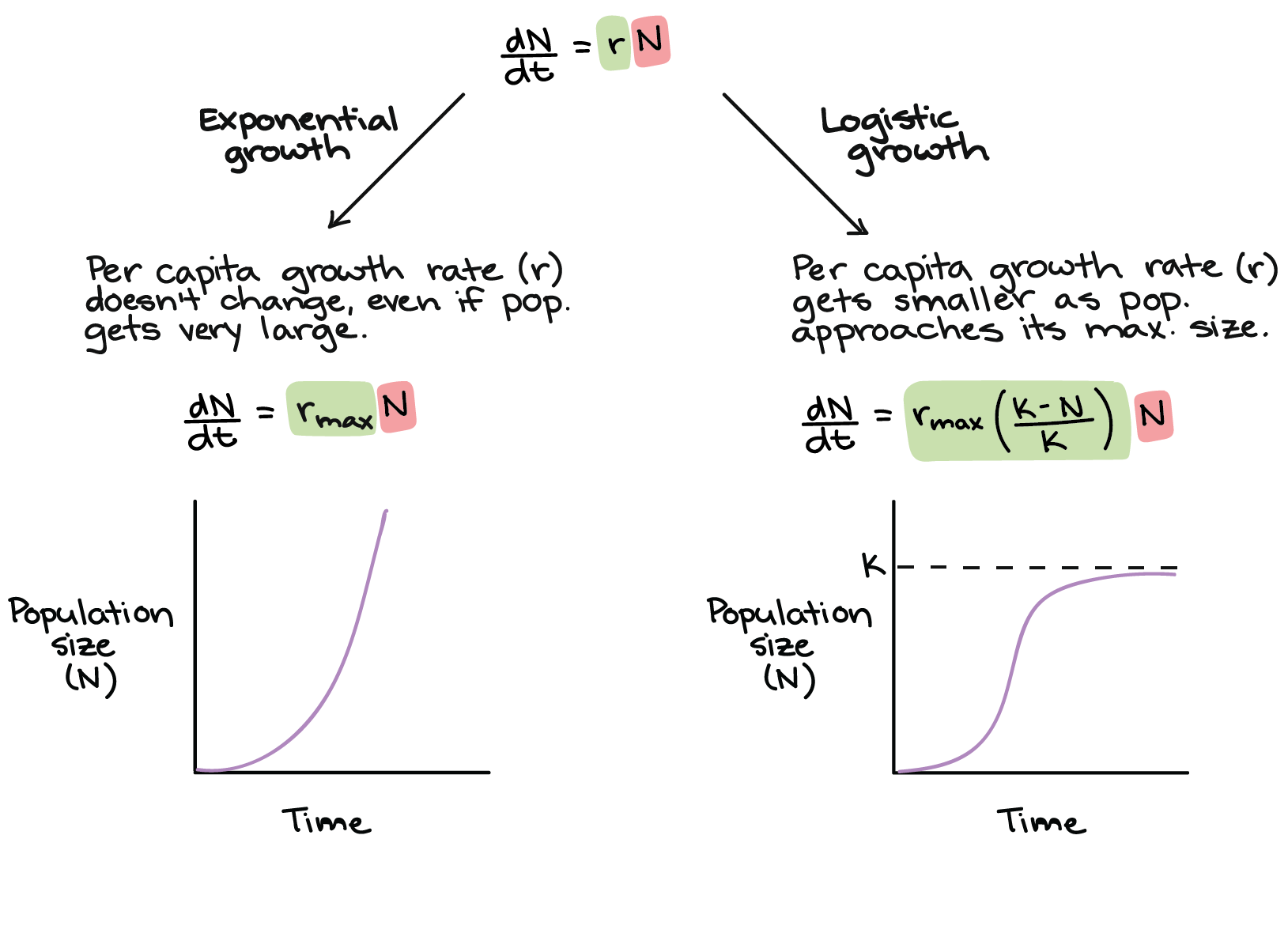
What are two types of growth?
Exponential Growth
Logistic Growth includes the intraspecific competition function. When the population is low, it grows exponentially. As it approaches carrying capacity, it flattens out
Positive R= population growth
Negative R= population shrinking
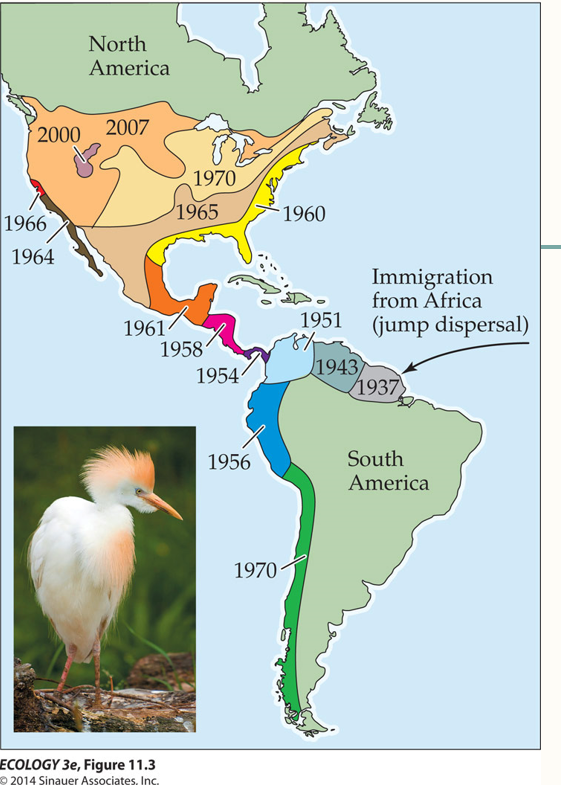
Why do invasive species often have exponential growth?
An example is Cattle Egret
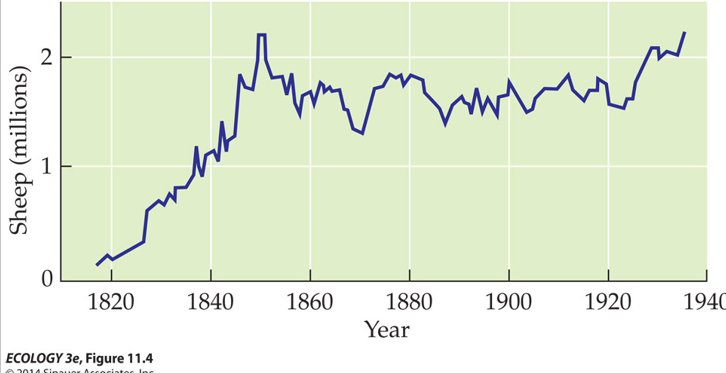
What is an example of logistic growth?
Sheep colonists of Tasmania. The growth curve doesn’t exactly match because the model assumes no growth once the population reaches K. This is not accurate to nature. After all, organisms do not always know when they reach carrying capacity. This causes fluctuations above and below carrying capacity.
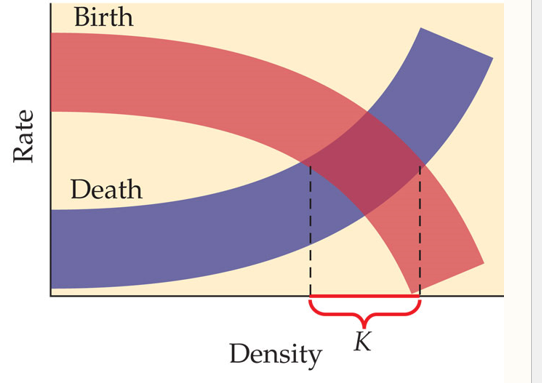
What is demographic stochasticity and what is its effect on K?
Demographic stochasticity is a random fluctuation in birth and death rates. This causes K to fluctuate.
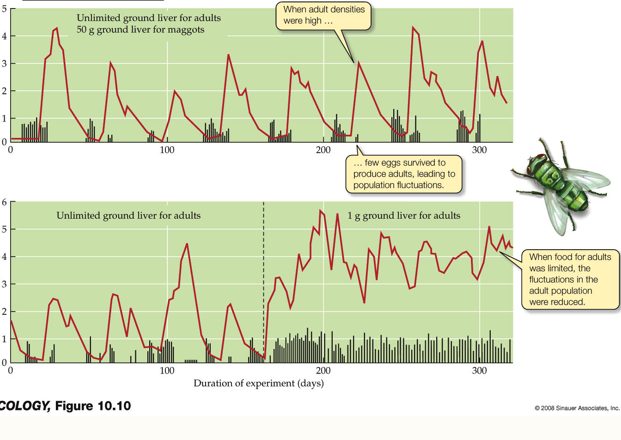
What is delayed density dependenece?
situation where population growth is controlled by negative feedback operating with a time lag
Adults are well fed and produce many maggots. This results in too many eggs being produced for the available resources to support, and the maggot population crashes.
If you reduce the amount of food available for adults, there is no crash because the adults do not overproduce maggot eggs. Still oscillations, but not a crash.
Limiting juvenile survival causes adult N to flucuate
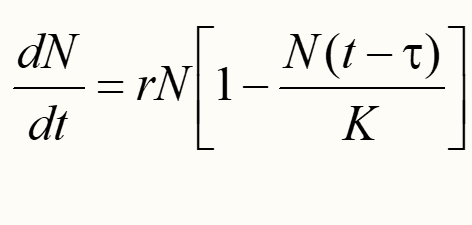
What is the time lag equation?
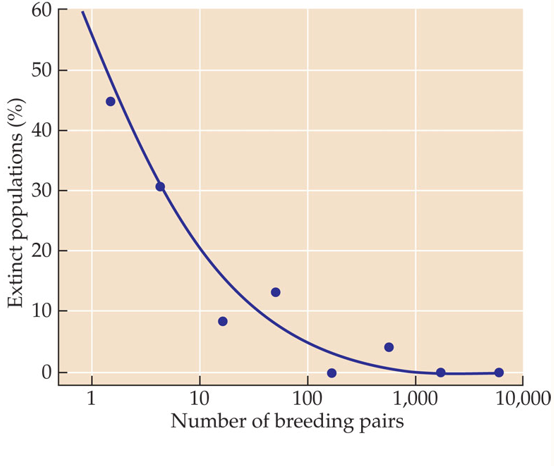
What is the relationship between population size and Extinction risk?
Small populations have higher extinction risk
genetic drift and interbreeding - results in less genetic variation over time and less ability to adapt to changing environments.
Allee effects - at very low densities, individuals struggle to find mates, cooperate in predator defense, or maintain social structures needed for reproduction. Results in low N causing low per capita reproduction. Extinction spiral
Environmental stochasticity - random fluctuations in the environment hit the smaller populations harder than the large populations
What does the Channel Island bird example show?
A larger population limits the negative effects of genetic drift
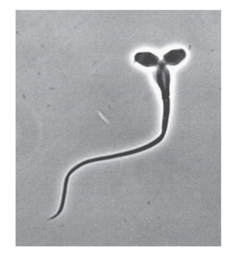
What was the result of plague of flesh eating flies on lions?
Flesh-feeding flies caused lion populations to crash. This population bottleneck caused inbreeding and increased the frequency of genetic abnormalities like two headed sperm.
What is the Allee effect?
A smaller population means it is harder to find a mate
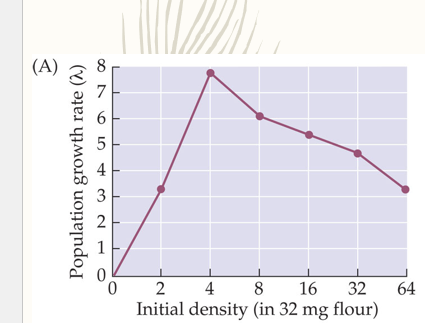
What is the effect of small N on environmental stochastiticty?
Environmental stochasticity has a greater impact at low N. Even with high growth rate, a small population can still go extinct because of reproductive variability.
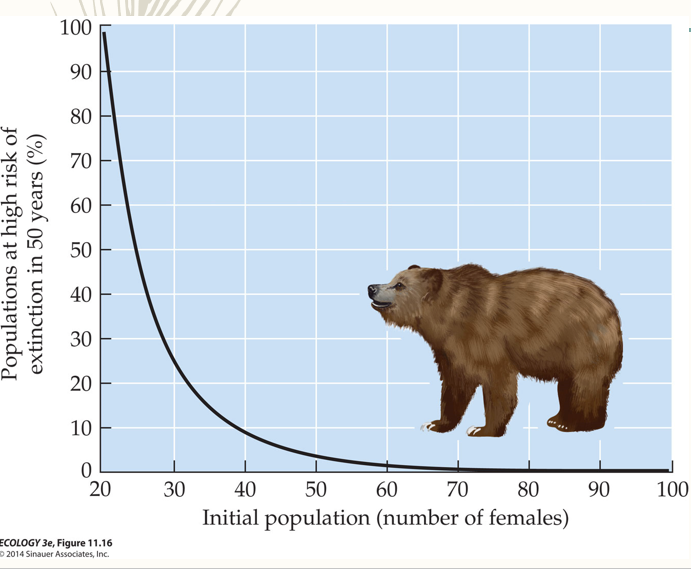
What are meta populations
Populations in specific patches that occasionally interact/A metapopulation is a network of local populations linked by migration.
Habitat fragmentation increases isolation and extinction ( creates meta-populations)
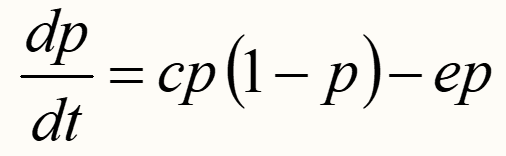
What is the patch colonization and extinction equation?
What is a source population?
A good habitat. N can increase and potential to disperse to other populations and rescue them.
What is a sink?
Population that individuals immigrate to from source. Often poor habitat, local population cannot sustain itself, needs to be rescued
What is a ecological trap
Rapid environmental change where a patch becomes a sink
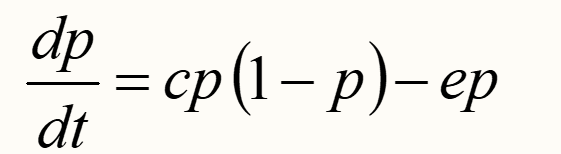
What is the Patch Colonization/Extinction model?
p= proportion of habitat patches occupied at time t
c = patch colonization rate
e= patch extinction rate
e<c metapopulation increases
e>c metapopulation decreases
What are the 4 assumptions of patch colonization/ extinction model?
1. There is an infinite number of identical habitat patches.
2. All patches have an equal chance of receiving colonists.
3. All patches have an equal chance of extinction.
4. Once a patch is colonized, the population increases to carrying capacity faster than colonization and extinction rates
This population model ignores population dynamics within patches to be ignored.
What is habitat fragmentation?
Fragmentation reduces colonization rate and increases extinction rate by reducing the suitable amount of habitat.