Plant Transport
 Call Kai
 Learn
Learn Practice Test
 Spaced Repetition
 Match
Match Flashcards
 Knowt Play
1/31

Earn XP
Description and Tags
Name | Mastery | Learn | Test | Matching | Spaced | Call with Kai |
|---|
No analytics yet
Send a link to your students to track their progress
32 Terms
Importance of transport system
To move water and mineral ions- soil to roots and up leaves
Distribute sucrose around plant
Plants are large multicellular organisms, with a large diffusion distance and a small SA:V ratio- need transport systems
Slower metabolic rate than animals
Vascular tissue
Xylem
Phloem
Xylem
Transports water and minerals upwards
Phloem
Transports assimilates upwards or downwards
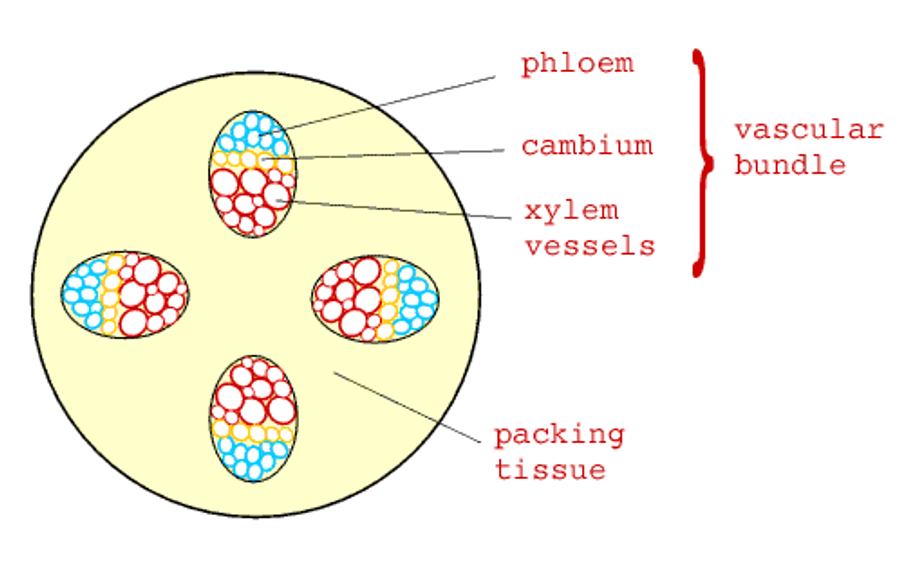
Vascular bundle in stem
Phloem outside
Cambium middle
Xylem inside
Ovals
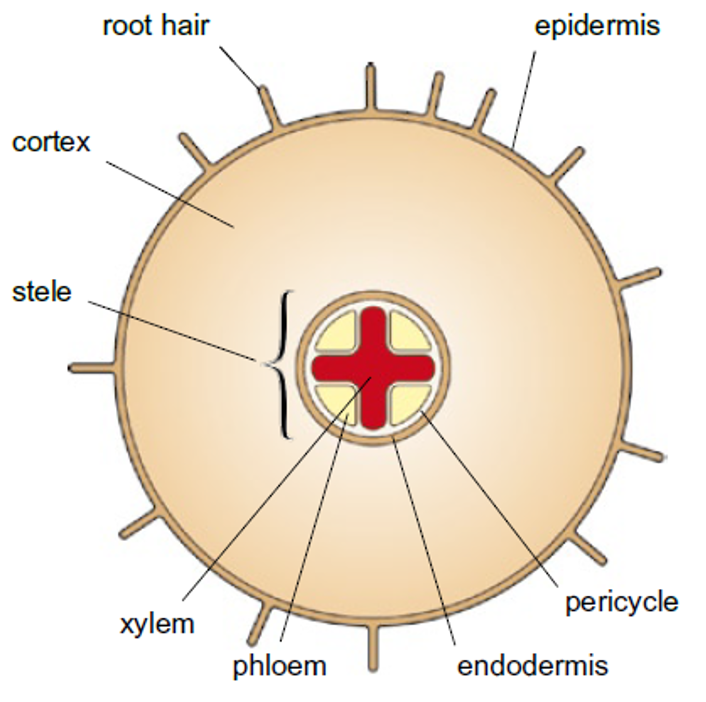
Vascular bundle in root
Xylem cross shaped
Phloem quarters
Surrounded by endodermis
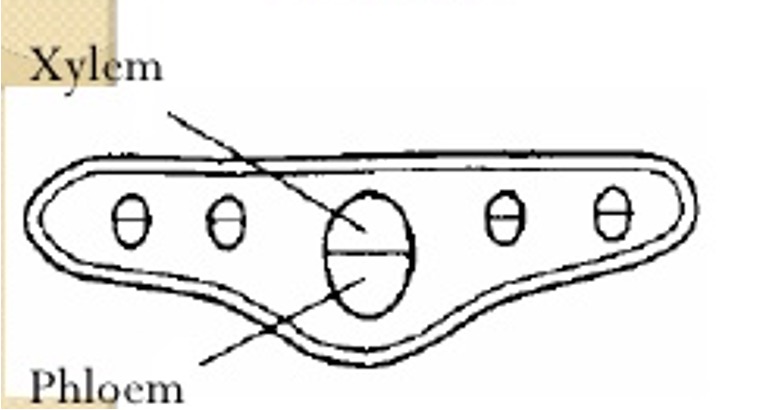
Vascular bundle in leaf
Xylem above
Phloem below
Xylem vessel structure
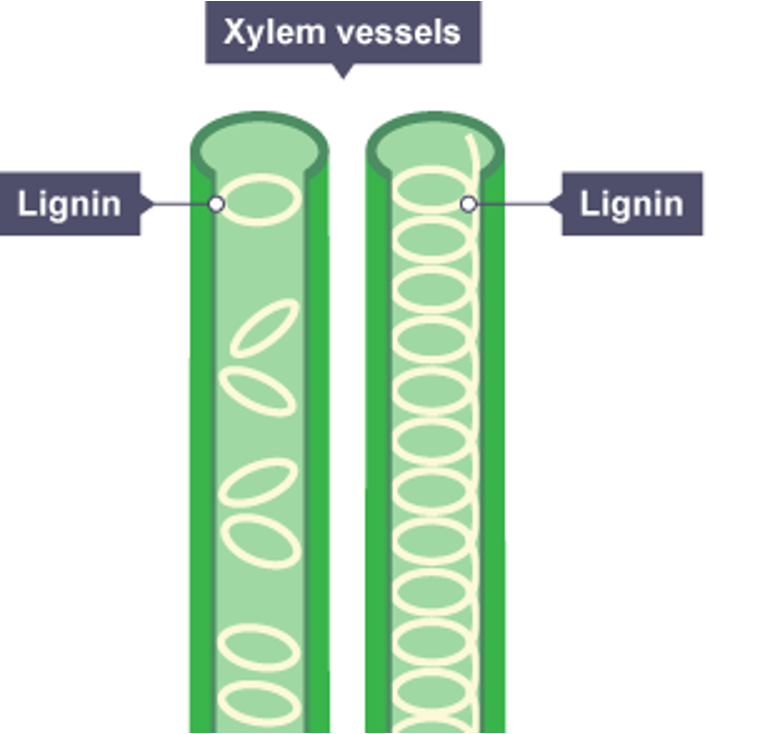
Long hollow tubes- dead cells
Walls impregnated with lignin for support, flexibility and waterproofing
Bordered pits- allow lateral movement of water between vessels
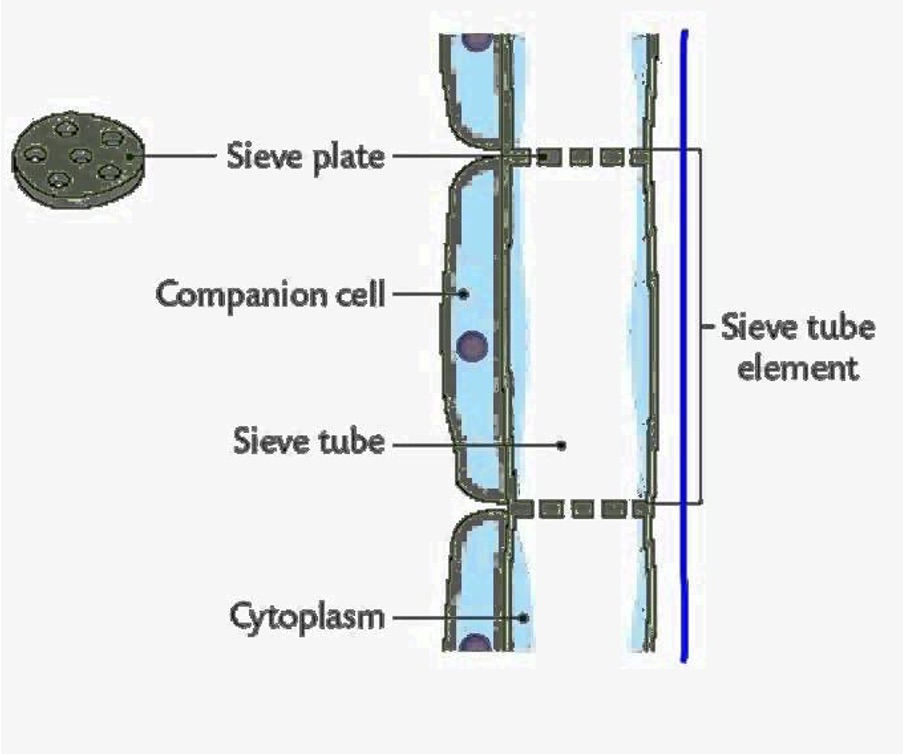
Phloem structure
Sieve plate- allow solute to pass through
Sieve tube elements- very little organelles
Companion cells carry out functions for sieve tube elements with more organelles
Linked by plasmodesmata with gaps to allow flow of minerals
Transpiration
Water loss due to evaporation from stomata of leaves
Transpiration rate factors
Number of leaves ( SA )
Number/ size of stomata
Light intensity ( Stomata open )
Temperature
Humidity
Wind ( keeps steeper water potential gradient )
Water availability
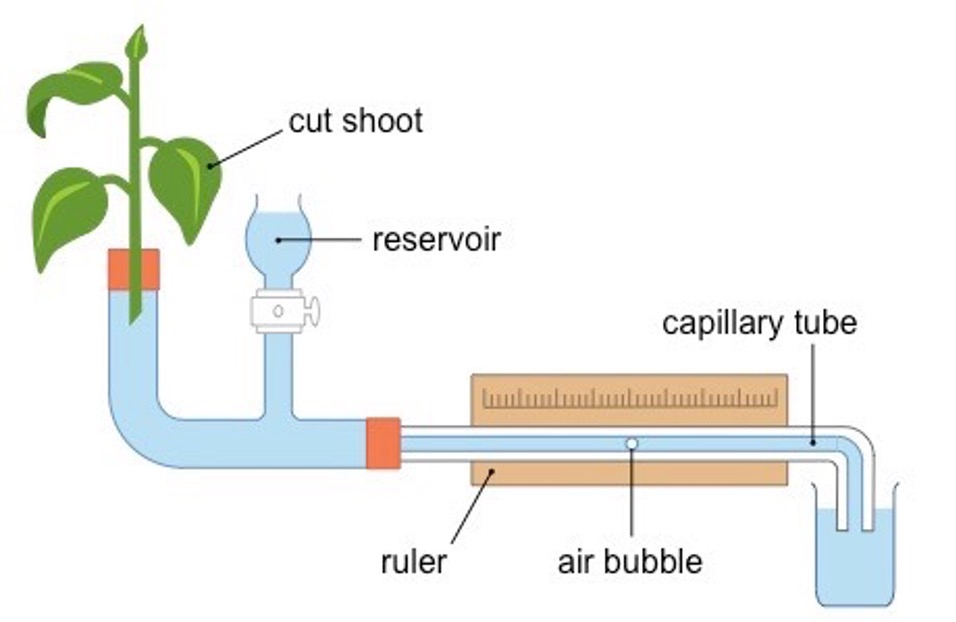
Potometer
Estimates transpiration rate
Record distance moved by an air bubble- indicates rate of uptake
Reducing potometer error
Ensure no unwanted air bubbles
Cut shoot underwater to prevent air entering cut end of xylem
Cut shoot at a slant to increase SA for water uptake
How does water enter roots?
By osmosis into the root hair cells in epidermis
Adaptations of root hair cells
Large SA
Many root hair cells
Thin cell wall
Low water potential
No chloroplasts
How does water move from root hair cells to xylem?
Symplast pathway
Apoplast pathway
Symplast pathway
water travels via osmosis through the cell surface membrane into the cytoplasm of the cells
Water moves from cell to cell through plasmodesmata
Apoplast pathway
Water travels by osmosis in the cellulose cell walls of the plant cells by osmosis
Water moves from the cell wall of one cell to cell wall of next until the endodermis
Casparian strip ( Apoplast pathway )
Blocks apoplast pathway at endodermis
Coating of Suberin on cell walls
Causes water to move across cell surface membrane of the cells
Movement of water up xylem
Up the stem
Mass flow
Cohesion- water molecules sticking together using H bonding
Pressure gradient- higher pressure in roots, lower in leaves
Adhesion- water molecules attracted to lignin in walls
Xerophytes
Plants adapted to living in dry conditions
Marram grass
Stomata sunk inside pits- sheltered from wind to reduce transpiration
Rolled leaves- air trapped, increasing humidity, decreasing water loss
Thick waxy cuticle to reduce evaporation
Cacti
Spines to reduce SA- reduces water loss
Close stomata when hottest
Wide spread roots to absorb maximum water
Hydrophytes
Plants adapted to wet conditions
Waterlilies
Air spaces- buoyancy
Stomata on upper epidermis- exposed to air for gas exchange
Many stomata- increase gas exchange
Large leaves- floating and SA
Thinner waxy cuticle
Translocation
Transport of assimilates throughout plant, in phloem tissue, from source to sink
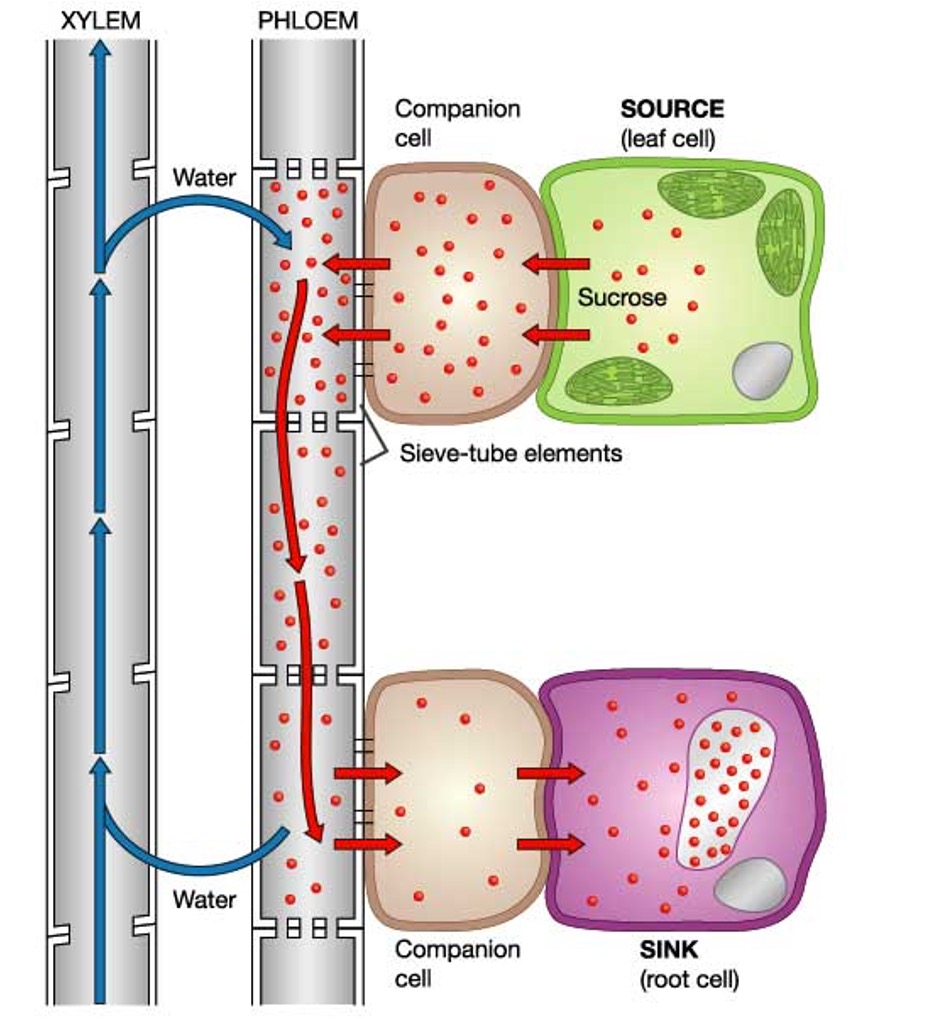
Source
Site where assimilates are loaded into phloem
Sink
Site where assimilates are removed from phloem
Assimilates
Sucrose, amino acids
Active loading at source
Active transport of hydrogen ions out of companion cells
Creates hydrogen ion conc. gradient
Facilitated diffusion of H ions back into companion cells
Assimilates move into companion cells with the hydrogen ions via cotransport
Assimilates diffuse through the plasmodesmata from the companion cells into the sieve tube elements
Mass flow of assimilate through sieve tubes
Assimilates arriving at the sieve tube element at the source causes lower water potential
Water moves in to sieve tube element from xylem, via osmosis creating higher hydrostatic pressure at source
Assimilates ære unloaded at sink and water follows via osmosis- lowers sink pressure
Assimilates move from high to low pressure ( hydrostatic at source and sink)- mass flow
Unloading of assimilates into phloem
Assimilates move out of phloem by facilitated diffusion
Occurs due to assimilates in phloem at higher conc. than surrounding sink cells
Assimilates move down conc. gradient out of phloem into cells