Tx Machines I
 Call Kai
 Learn
Learn Practice Test
 Spaced Repetition
 Match
Match Flashcards
 Knowt Play
1/52

There's no tags or description
Looks like no tags are added yet.
Name | Mastery | Learn | Test | Matching | Spaced | Call with Kai |
|---|
No analytics yet
Send a link to your students to track their progress
53 Terms
Grenz ray therapy energy and depth
very soft x-rays (below 20 Kv)
very low depth of penetration
Grenz ray is used to treat
inflammatory disorders, mycosis fungoides
no longer used in RT
contact therapy energy
x-ray produced at potential from 40 to 50 Kv
beam completely absorbed within 2 cm of soft tissue
contact therapy is used to treat? and why>
superficial skin lesions and superficial rectal tumors
rapidly decreasing depth dose in tissue, so skin is irradiated but underlying tissues are spared with depth
contact therapy is not used for
not good for tumors deeper than 1-2 mm
what is used with contact therapy
0.5-1 mm thick aluminum filter placed in the beam to absorb soft component of the energy spectrum
applicators come in contact with the patient for endocavitary treatments to produce a SSD of 2 cm or less
superficial therapy energy and what is treated
x-rays with energy ranging from 50-150 kVp
skin cancer or tumors no deeper than 5 mm (90% DD at 5 mm) are treated
accessories for superficial therapy
1-6 mm aluminum to harden the beam
applicator or cone to maintain SSD between 15-20 cm
orthovoltage (deep therapy) energy
150-500 Kv
orthovoltage deep is used to treat
skin, mouth, cervical (cones inserted into patient)
orthovoltage where does max dose occur
max dose occurs close to skin
90% DD at 2 cm
orthovoltage what can be used 1
by increasing filtration and combining 2 or more beams from different directions, high dose can be delivered to deeper tumors
orthovoltage therapy filters
filters to achieve HVL between 1 and 4 mm Cu
orthovoltage SSD is usually
set at 50 cm
orthovoltage therapy limitation
skin dose
increased absorbed dose in bone (for tumors behind bone)
supervoltage therapy energy
500 Kv to 1 Mv
KV unit problem
insulating the high voltage transformer
efficiency for xray tube
1%, the other 99% goes to heat
x-ray tube target
reflection target
what is the anode and what does it consist of
positive electrode
thicker copper rod at the end of which is a tungsten target
anode (positive electrode)- diagnostic vs therapy
diagnostic: anode rotates to reduce heat
therapy: the focal spot larger and anode not rotating
cathode what is it and what does it consist of
negative electrode
wire filament, current providing current, negatively charged focusing cup
wire filament in cathode
tungsten filament when heated emits electrons by thermionic emission
cathode cup function
negative charged and directs electrons to anode so they hit target in a well defined area called the focal spot
target-what is used
tungsten is used because of high z and high melting point
what is the focal spot
target region where xrays are emitted from
size of the focal spot
small for diagnostic so images are sharp
large for therapy xray tube
removal of heat
circulate oil, air, or water or rotate the anode in diagnostic xray
target angle and focal spot
a=A sin O
a=apparent focal spot, focal spot size seen on film
A=actual focal spot size
heel effect
xray beam not uniform, more xrays are absorbed in the back end of the target
xray tube efficiency defined
ratio of output energy emitted as xrays to input energy deposited by electrons
Eff= 9 × 10^-10 ZV
What happens to the rest of energy? Efficiency depends on what quantities
variation of line voltage with time
since the anode is positive only during half of the voltage cycle, the tube current flows through that half of the cycle
what is a self rectified unit
during the next half cycle, voltage is reversed and current cannot flow in the opp direction
tube current and xray are only made in the next half cycle when the anode is positive-called a self rectified unit
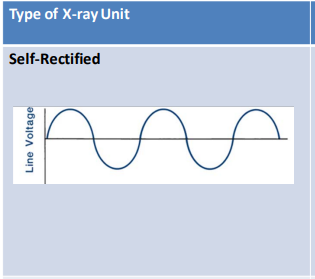
self rectifation
during the inverse cycle, electrons flow from anode to cathode bombarding it and destroying the filament
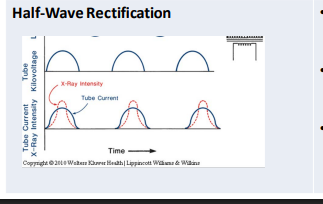
half wave rectification
voltage rectifiers can solve the problem of tube conduction during the inverse voltage
half wave rectification-what do rectifiers do
rectifiers prevent tube from conducting during inverse voltage cycle
current flows as usual during the cycle when the anode is positive relative to the cathode
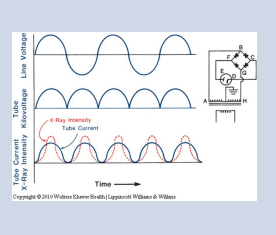
full wave rectification
cathode negative, anode positive during both cycle
full wave rectification described
four rectifiers are arranged in the high voltage part of the circuit so that the cathode is negative and anode is positive during both half cycles of voltage
effect of full wave rectification
effective tube current is higher since current flows in both half cycles
beam quality
quality in the range of kvp is specified as energy (kvp) and HVL
HVL
absorber thickness needed to reduce radiation intensity to half the OG value
effect energy of xray tube
energy of the monoenergetic beam that would give the same HVL as the xray beam in question
average energy
average xray energy is about 1/3 the max energy or kvp
the unfiltered xray spectrum shows
continuous distribution for BR
superimposed by characterisitc radiation of discrete energies
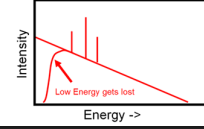
added filtration
enriches the beam with higher energy photons by absorbing lower energy components
what does the thoraeus filter contain and how are they oriented
Sn, Cu, Al
Sn faces the xray tube
aluminum faces the patient
Cu sandwiched between
what does the thor filter do
increases HVL of orthovoltage beam without reducing beam intensity to unacceptably low value
diagnostic and superficial xray energy range filters
primarily aluminum (mm Al)
orthovoltage range filter
1-4 mm Cu
cesium and cobalt therapy machine filter
none (monoenergetic)
MV xray beam filters
inherent filtration of transmission target
flattening filter