20 Prions (continued) + Stroke
 Call Kai
 Learn
Learn Practice Test
 Spaced Repetition
 Match
Match Flashcards
 Knowt Play
1/17

There's no tags or description
Looks like no tags are added yet.
Name | Mastery | Learn | Test | Matching | Spaced | Call with Kai |
|---|
No analytics yet
Send a link to your students to track their progress
18 Terms
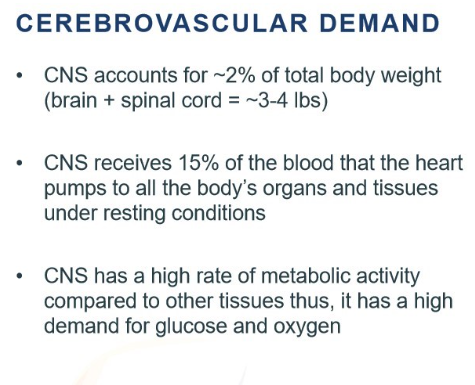
describe the reason behind CNS’s high demand for glucose and oxygen
this is because they have a high metabolic rate, leading to 15% of the blood being used for the CNS
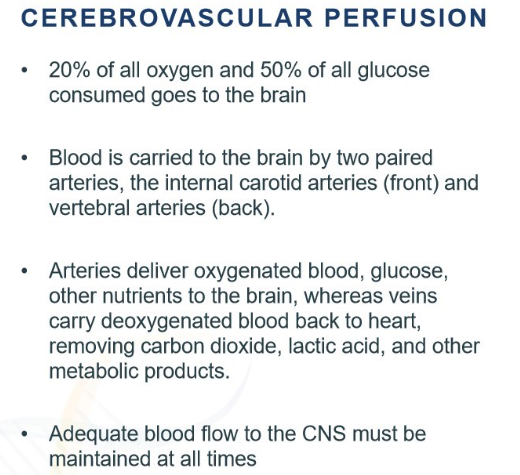
what percentage of oxygen and glucose are consumed and how is it delivered
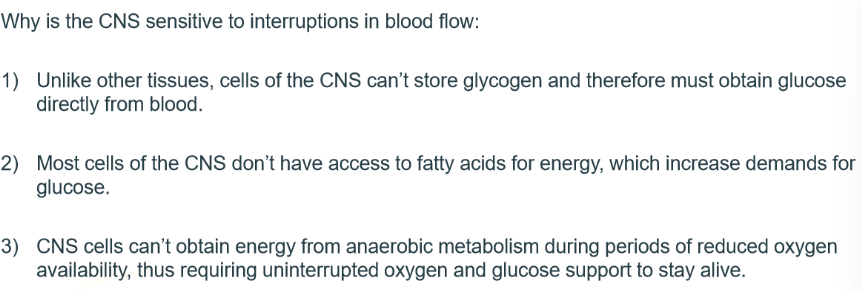
can the CNS store glycogen
no
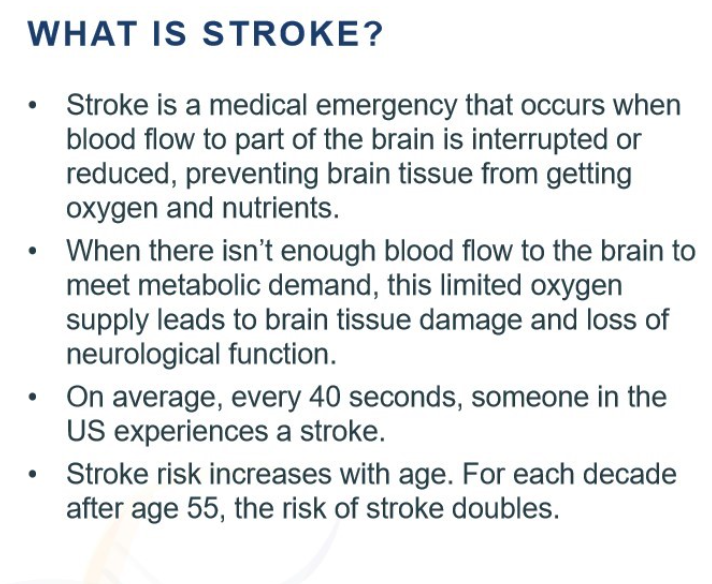
what is a stroke and what are its consequences
when the blood flow to the brain is interrupted or reduced; brain tissue damage and loss of neurological function
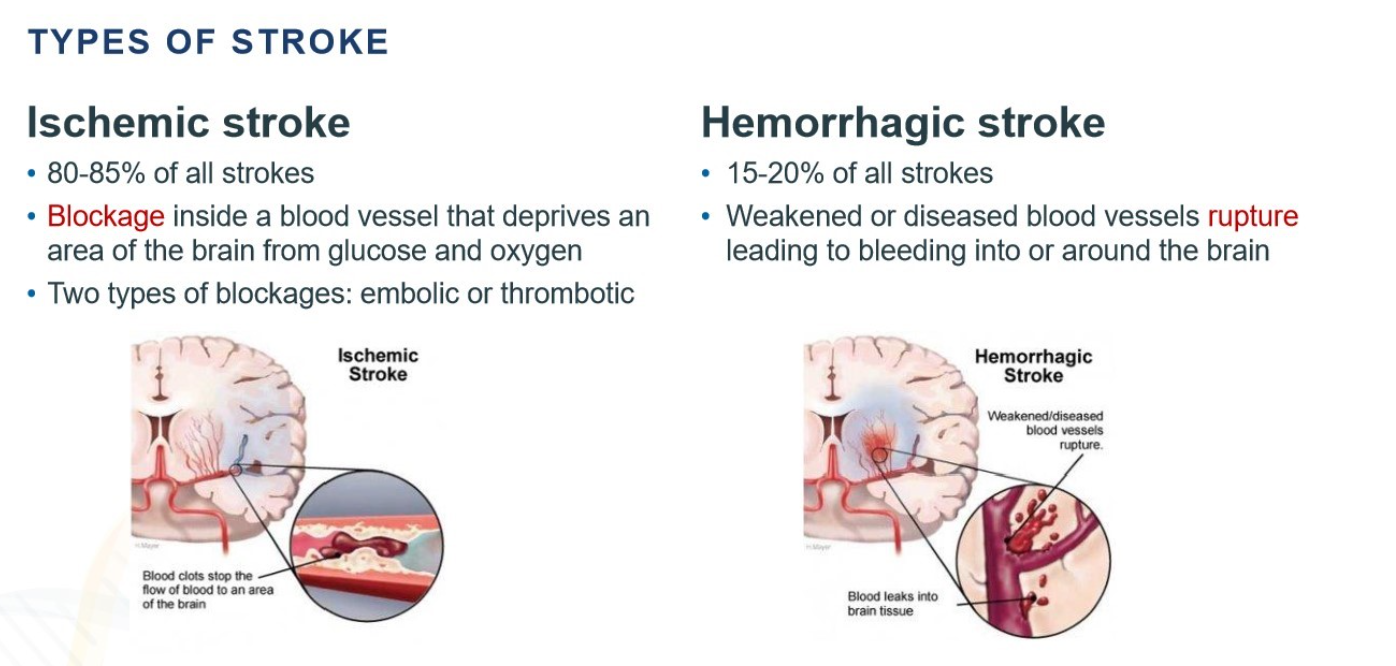
what are the two types of strokes
ischemic and hemorrhagic
what are the three types of ischemic stroke
thrombotic, transient, and embolic
what is a thrombotic ischemic stroke
blood clot
caused by the buildup of fat and lipids, such as from high cholesterol, diabetes, and atherosclerosis
may have mini strokes precedding
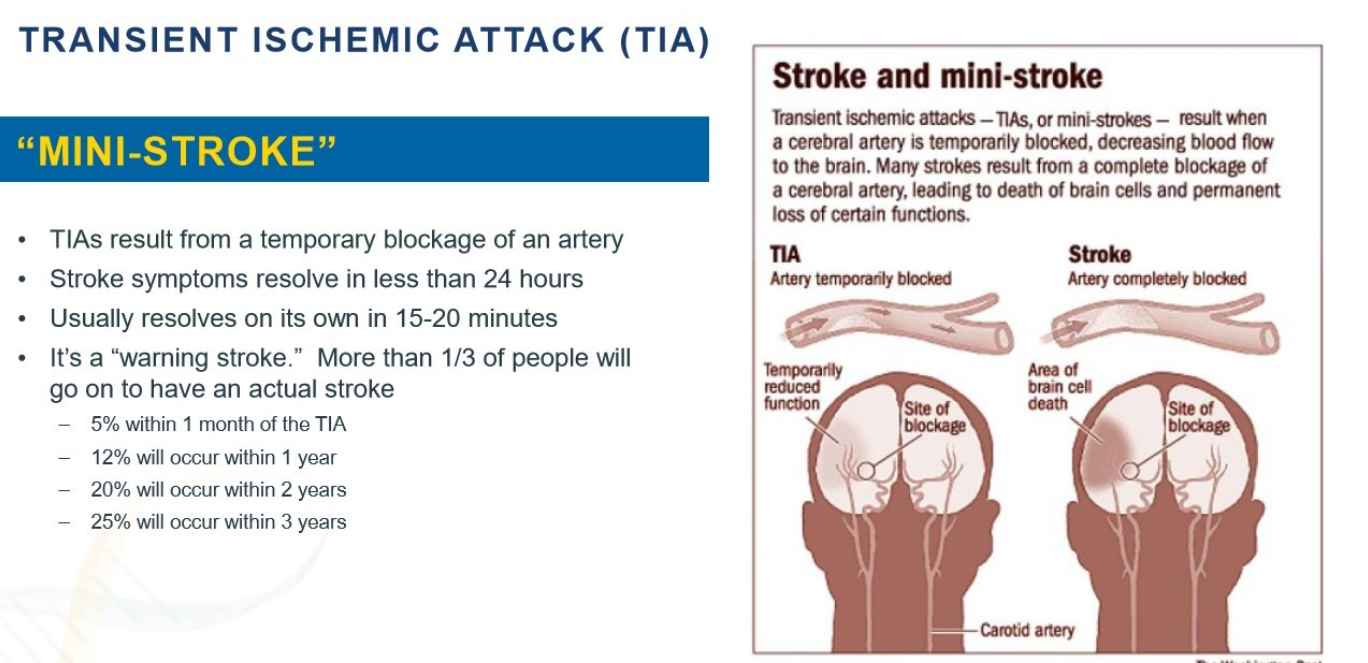
what is a transient ischemic attack (TIA)
a mini stroke that can resolve on its own
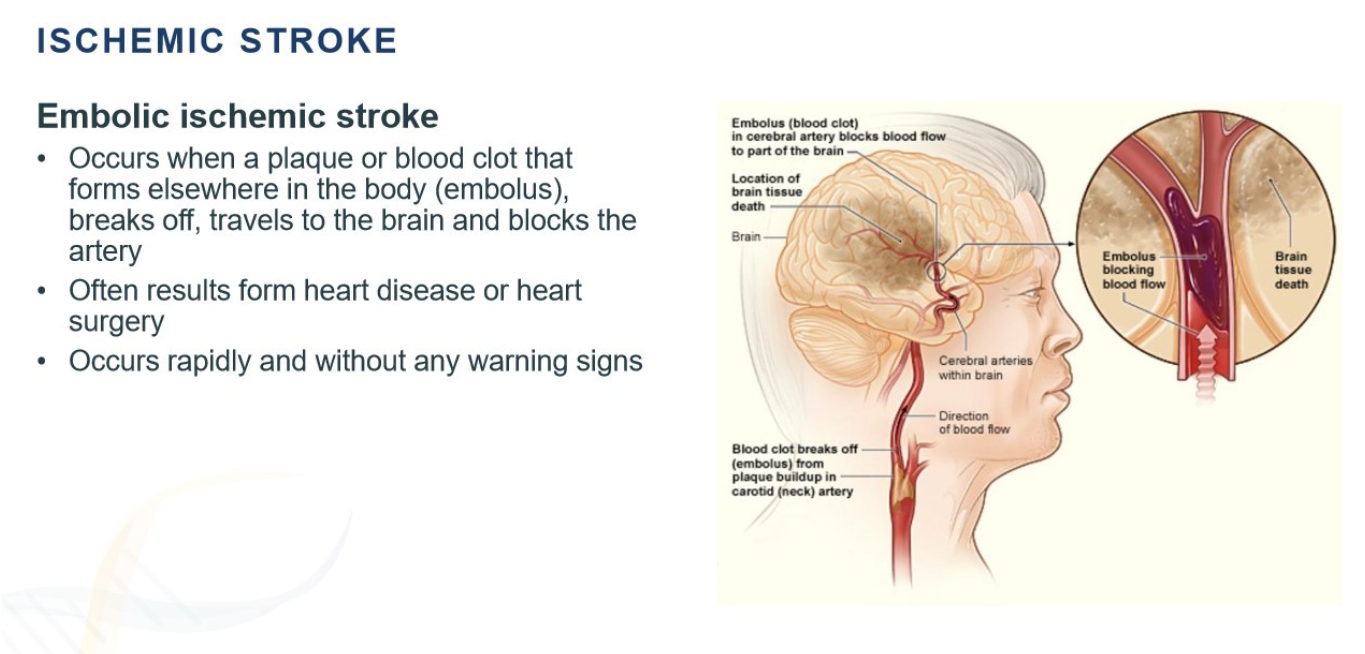
what is an embolic ischemic stroke
hemorrhagic stroke
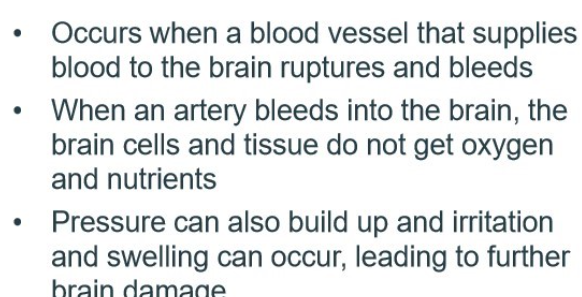
two types of hemorrhagic stroke
intracerebral hemorrhage and subarachnoid hemorrhage
intracerebral hemorrhage

subarachnoid hemorrhage

cause of hemorrhagic stroke
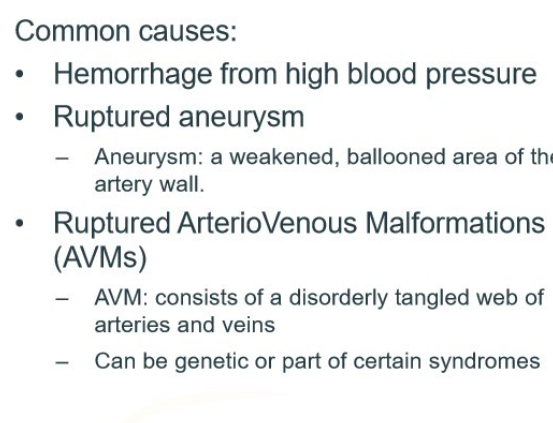
signs of a stroke
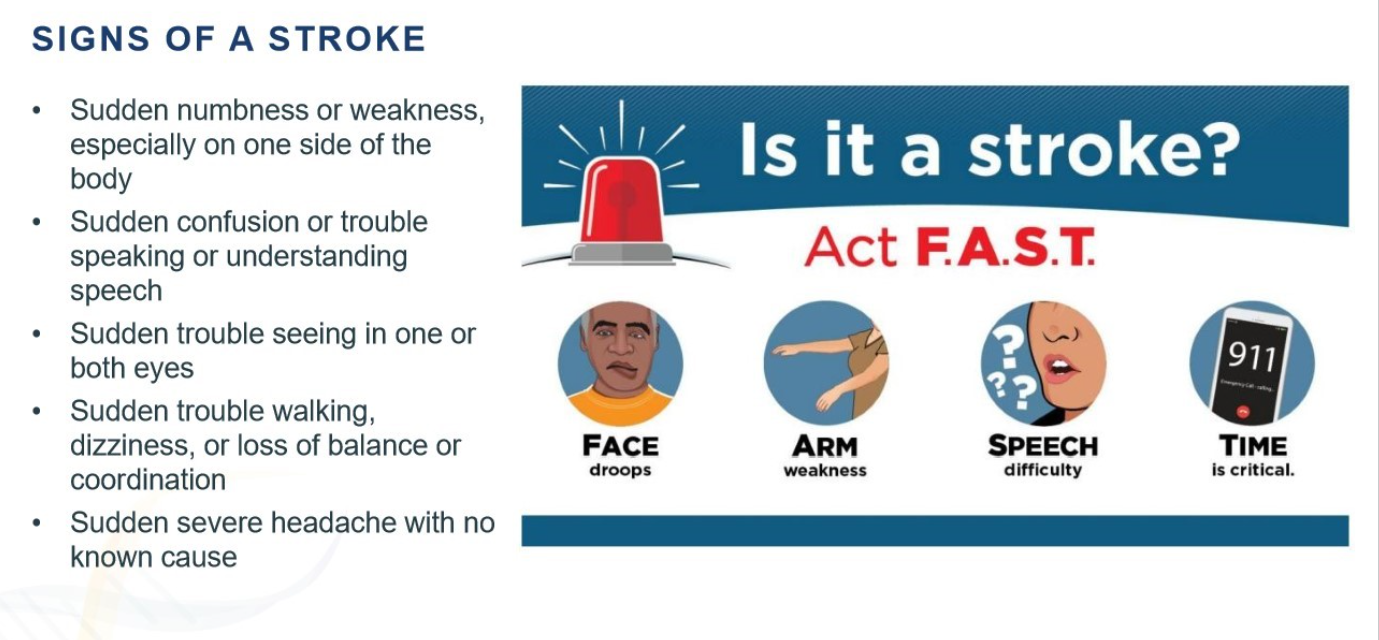
penumbra
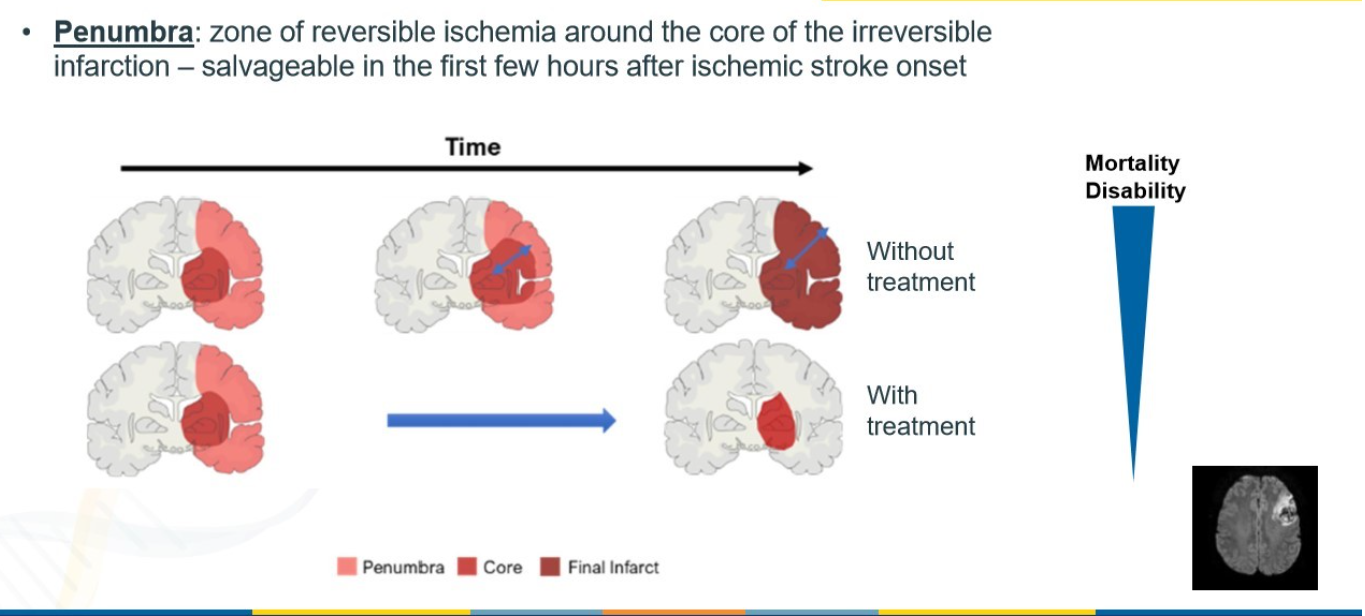
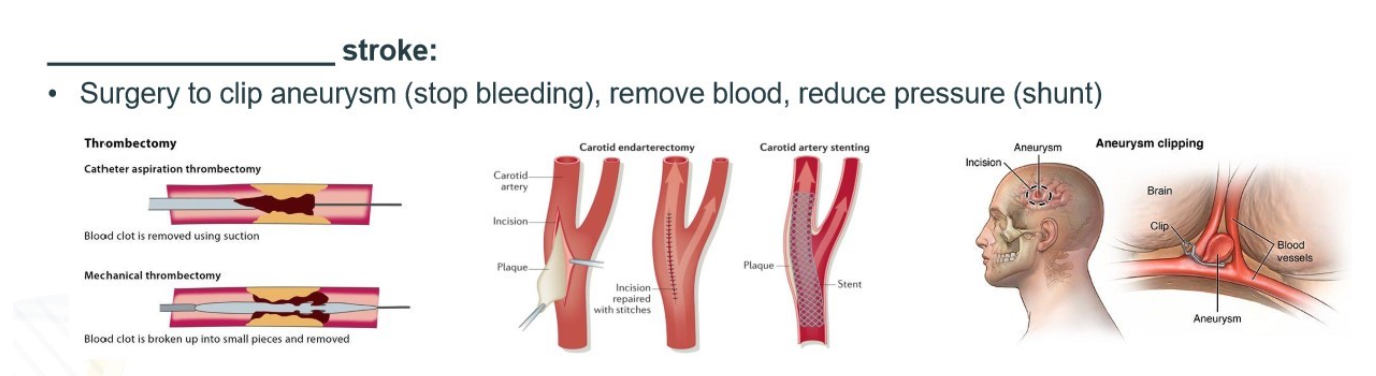
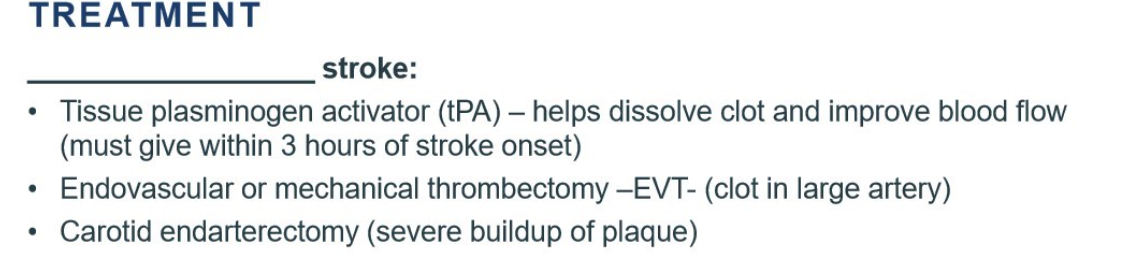
treatment for ischemic stroke
treatment for hemorrhage stroke