4: Provenance of Siliciclastic Sediments
 Call Kai
 Learn
Learn Practice Test
 Spaced Repetition
 Match
Match Flashcards
 Knowt Play
1/60

Earn XP
Name | Mastery | Learn | Test | Matching | Spaced | Call with Kai |
|---|
No analytics yet
Send a link to your students to track their progress
61 Terms
what does provenance mean? what else?
where do the sediments come from, reflected by weathering and erosion
what is sediment made of?
loose solids at the surface
what can loose solids at surface mean?
fragments of rocks, broken off minerals, shells, mineral crystals precipitated out of solution
how are fragments formed?
weathering from pre-existing sediments or rocks
what happens to fragments?
transported by air water or ice, deposited by settling, precipitated from solution, secreted by orgs
what do sediments form?
unconsolidated deposits on the earth’s surface
what sedimentary rock will gravel bar turn into?
conglomerate
what is bedrock?
solid rock underlying solids and surficial sediments at the surface
what is weathering?
at site breakdown of existing rocks or sediments by physical disintegration and/or chemical decomposition
what is an assumption of weathering?
exposure to atmosphere
what is erosion?
transport of weathering products away from their site of origin
what are the two modes of weathering?
physical and chemical
what is physical weathering?
disintegration of solid parent rock into smaller, loose pieces by various mechanical processes
what is chemical weathering?
decomposition of solid parent rock into dissolved or altered constituents or new compounds
what does chemical weathering occur most in?
aqueous solutions
where might chemical weathering be slow?
arid, dry environments, desert
what are examples of physical weathering?
freeze-thaw, exfoliation, roots, salt displacement
what is freeze-thaw?
frost shattering, water permeates into rocks through pore spaces or pre-existing cracks, then freezes and stresses the rock until it cracks
what is exfoliation?
rock breaks up into a thin surface, shedding
what is exfoliation most common in?
intrusive igneous rocks
what is a factor of root action as weathering?
root exchanged water with surroundings, affecting the rock and facilitating reactions on the surface and within the rock
what is salt displacement?
salt crystals expand as they grow, which will displace the material until they pop out of the ground
what are the types of chemical weathering?
simple solution, hydrolysis, oxidation and reduction, hydration or dehydration
what is simple solution?
minerals go into solution completely, without precipitation of other minerals
what is hydrolysis?
reaction between H+ and OH- ions of water and ions of silicate minerals, controlled by pH, minerals are partially dissolved, and mineral is produced
what is oxidation and reduction?
loss of an e- under oxygenated conds, gain of e- in water saturated/oxygen deficient conds below the water table
what is hydration and dehydration?
add or subtract water from existing minerals
what can microbes do in relation to rocks?
they can induce reactions that transform minerals/rocks or produce organic substances that react to decompose minerals/rocks
what is chelation?
removal of cations by forming org molecules with ring structures, these molecules keep ions in solution, the org molecules are soluble and wash away
what is karst topography? what is it the result of?
large mostly linear cracks from limestone dissolution, can be dolomite or gypsum, forms sinkholes, caves, and underground rivers
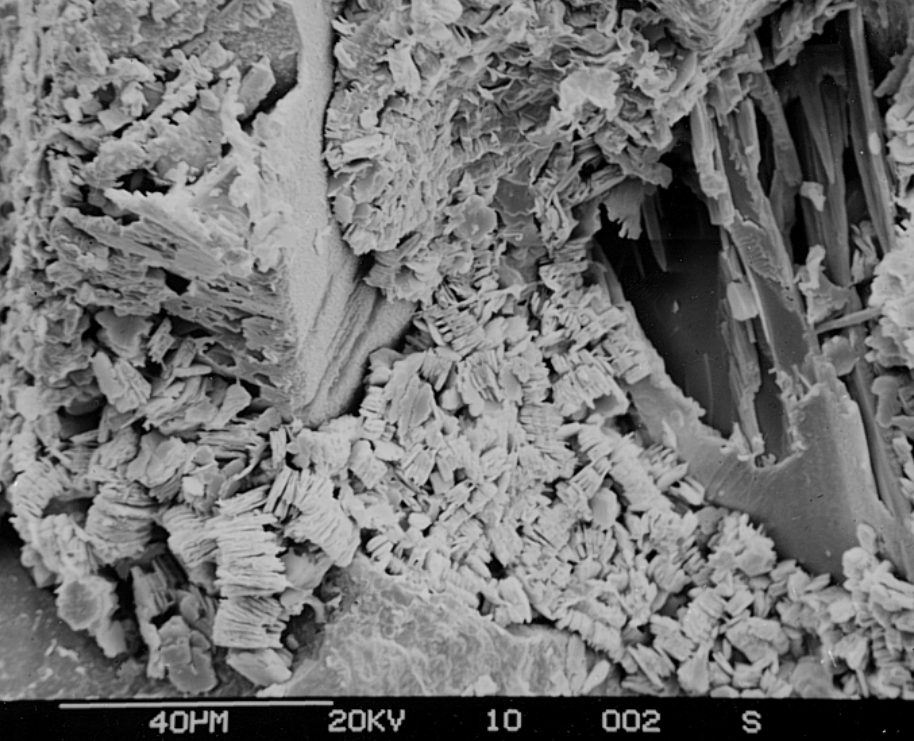
what is this? extra info?
conversion of feldspar to kaolinite, feathery plates are kaolinite, feldspar has the twinning and cleavage
what are the extremes of bowen’s reaction series? (sand/silt)
olivine is least stable, quartz is most stable
what are the extremes of bowen’s reaction series? (clay)
gypsum/halite is least stable, anatase/titanite/rutile/ilemenite/zircon is most stable
are clay minerals usually stable at the surface?
yes, if sediment has clay in it, it will stay, if it starts as other mineral, it will turn to clay
what does more surface area mean?
reactions can proceed more quickly
what are soils made from?
accumulated chemical and physical weathering of underlyng bedrock or sediment
what are peds?
the characteristics way that a soil crumbles, the pieces
what is the order of soil horizons?
O, A, E, B, C, R
what is the A horizon?
organic mixed with minerals
what is the E horizon?
bleached, organic matter and minerals are in solution, they flow right by
what is the B horizon?
enriched in organic matter, oxides, or clays
how is the B horizon enriched in organic matter?
the material is formed in upper layers turn into solution, then precipitate in B layer
what horizon is the weathering front in?
C
what do the soil horizons depend on?
climate, rainfall, type of substrate, slope
how does type of substrate affect soil horizons?
will affect downward movement of the weathering front
how does slope affect soil horizons?
steeper slope means soil growth progress will be washed away downhill
how does humidity affect soil horizons?
may cause intense leaching by organic acids resulting in silver and iron oxides precipitating, thick A and B horizons
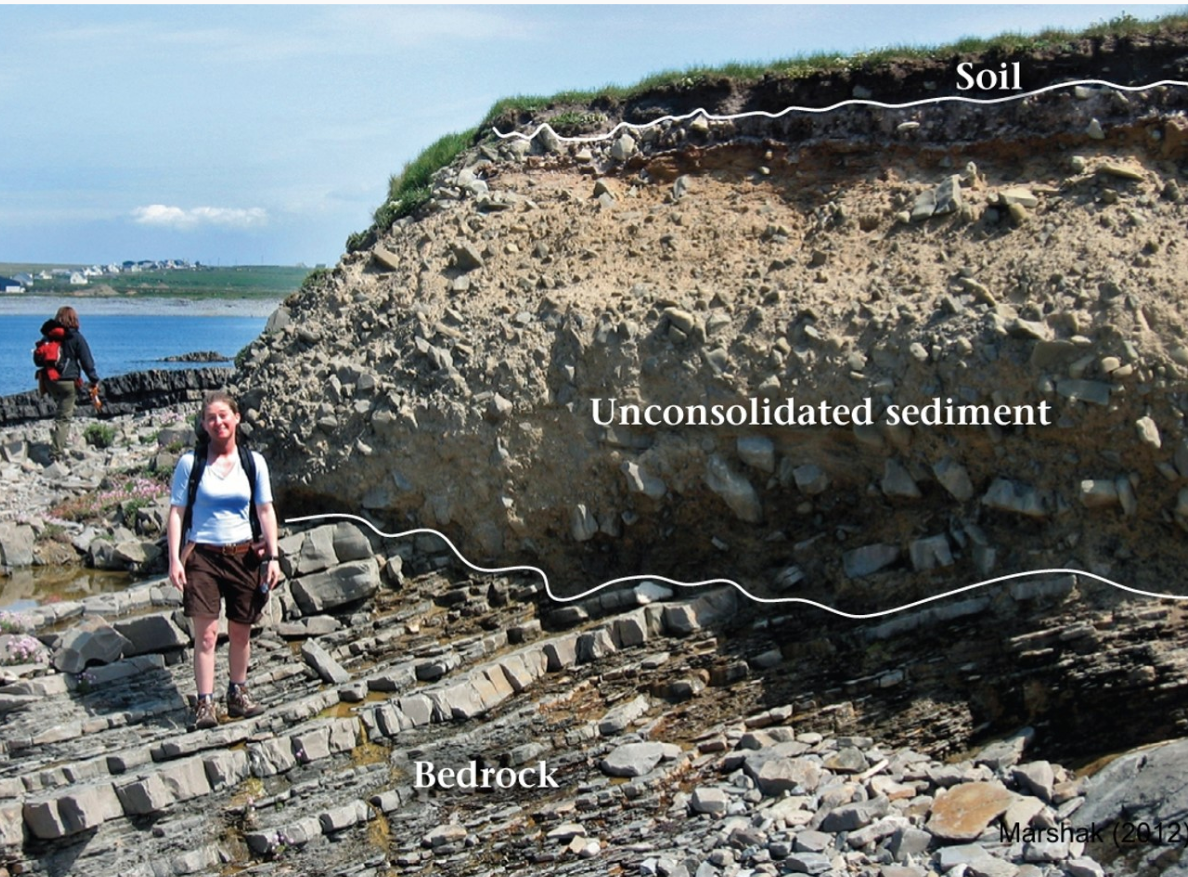
what is the surface above the unconsolidated sediment? why?
weathering front, soil processes are weathering into the unconsolidated sediment
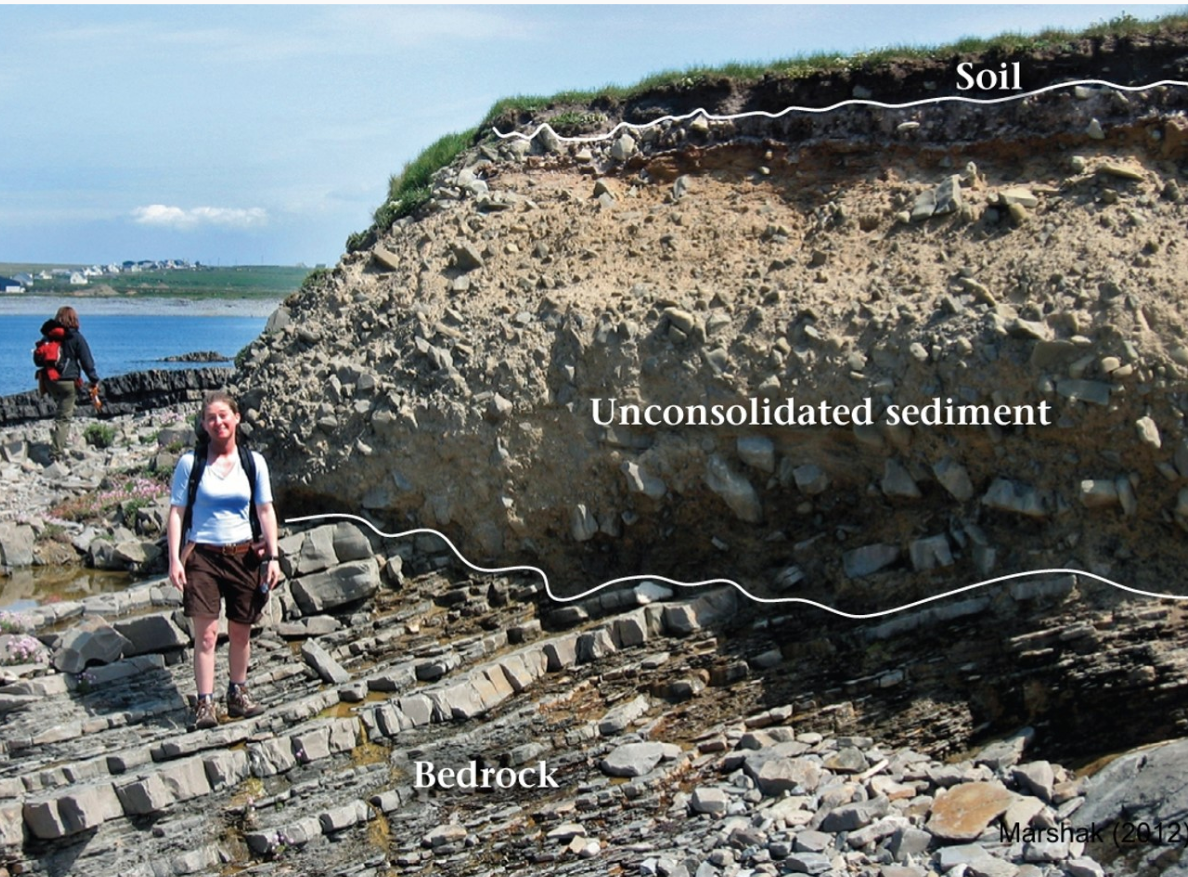
what is the surface below the unconsolidated sediment? why?
angular unconformity, bedrock is tilted, it was buried and tilted as it came back up, there is irregular erosion after this bedrock came back up
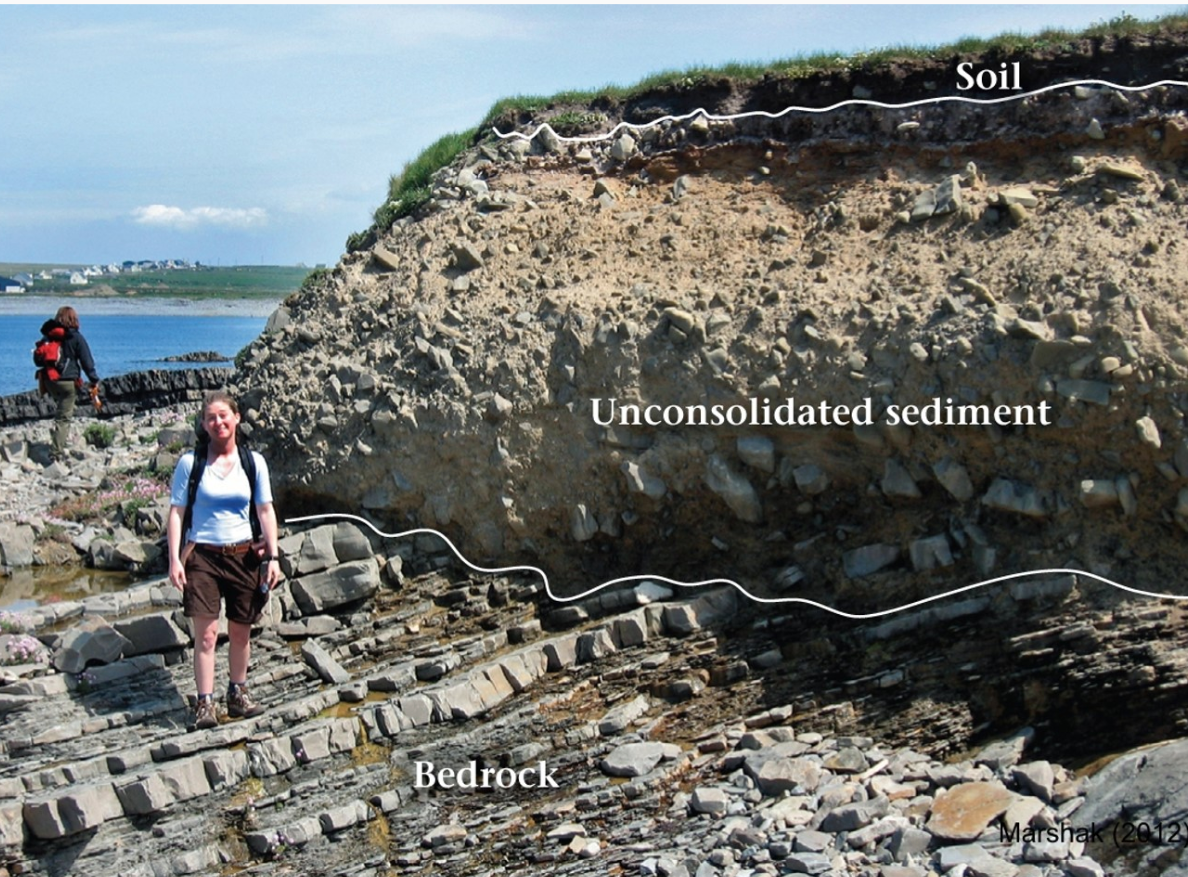
what is a possible story behind this?
the boulders in the sediment could have caused the irregular erosion in the bedrock, from a very fast flow, then the sediment got deposited and soil started forming on top
what are the controls on weathering?
chemical, physical, water chemistry, water availability, temp, climate, geomorphology
what are the controls on erosion?
wind, physiography, slope, flow velocity, vegetation, climate, fluid density
how is climate a control on erosion?
fast cold river in the north, transport by ice, frost wedging
what is a control by structure/texture of bedrock?
presence of fractures, rock cleavages, exposed surfaces
what is a control by drainage and topographic relief
the extent and direction of chemical weathering and erosion
what are the mechanisms of erosion that are gravity driven?
wind currents, rock fall, landslide, slump, debris flow, turbidity current, sheet wash, rills, gullies, streams, tidal currents, waves, oceanic currents
what can vegetation do as a control on erosion?
increase stability, decomposition of plants in soil, roots react with soil, induce chemical reactions
what are the 2 possibilities for uplift and erosion
once you erode a surface, physiography will result in uplift as compensation, or if there is uplift, then erosion will act on that area more than non-uplifted areas
what type of rocks are most likely to be sources for rock fragments in a sandstone?
finely crystalline volcanic rocks because they can yield sand-sized fragments
how will coarse crystalline structures with multiple minerals break apart?
will create smaller fragments containing only individual minerals
how will fine crystalline structures with multiple minerals break apart?
will create smaller fragments containing multiple minerals