HBS Quiz Covering Sections 4.1.1 to 4.1.5 on the Urinary System
 Call Kai
 Learn
Learn Practice Test
 Spaced Repetition
 Match
Match Flashcards
 Knowt Play
1/69

There's no tags or description
Looks like no tags are added yet.
Name | Mastery | Learn | Test | Matching | Spaced | Call with Kai |
|---|
No analytics yet
Send a link to your students to track their progress
70 Terms
how do your cells react to water?
without water blood pressure drops, cells shrivel, and homeostasis is lost
urinary system
-Cleanses the blood.
-Rids the body of wastes through urine
-Maintains salt and water balance
structures of urinary system
2 kidneys
2 ureters
1 urinary bladder
1 urethra
kidney
-filters blood
-regulates fluid volumes
-produces urine that is transported to bladder via ureters
-made up of nephrons
ureter
-tubes that transport urine from kidney to bladder
-each ureteric orfice into the bladder contains flaps to prevent backflow of urine
bladder
-stores urine
-when empty->sits in pelvic cavity entirely
-when filled->the superior surface domes upward into abdominal cavity
urethra
-tube that carries urine from bladder outside the body
-female: short, male: long
urine
-fluid waste that is secreted by the kidney
nephron
-tubular excretory unit of the kidney
-millions in kidney
-control which substances remain in the blood and filtered out in urine
parts of nephron
-glomerulus
-bowman's capsule
-proximal convoluted tubule
-loop of henle
-distal convoluted tubule
-collecting duct
GFR (glomerular filtration rate)
-the amount of fluid and dissolved substances both kidneys are capable of filtering per minute
tubular reabsorption
the movement of substances from the tubular fluid of nephron back into the blood
tubular secretion
the movement of substances from the blood into the tubular fluid of nephron
3 steps of urine formation
glomerular filtration, tubular reabsorption, tubular secretion
anything that stays in the tubules of the nephron
is urine
sequence of movement of urine
glomerulus->bowmans capsule->PC T->loop of henle->DCT->collecting duct->renal pelvis->ureter->bladder->urethra
the interaction between blood and tubule
help to balance our blood levels
renal artery
unfiltered, oxygenated blood
renal vein
filtered, deoxygenated blood
filtration
-from blood to tube (glomerulus to bowmans capsule)
-non-selective (just filters)
-blood/protein don't get filtered out
reabsorption
-from tube to blood
-selective (reabsorbs based on current levels)
-most water reabsorbed in loop of henle
secretion
-from blood to tube
-selective
-evaluates, maintain the levels at right amount, balance
blood and protein never get filtered out because
to big to diffuse
urine=
filtrate-(reabsorption + secretion)
absorption of glucose
immediately in pct
salt reabsorption
in pct and loop of henle
water reabsorption
in pct and mostly loop of henle
dct job
balance ions that affect pH
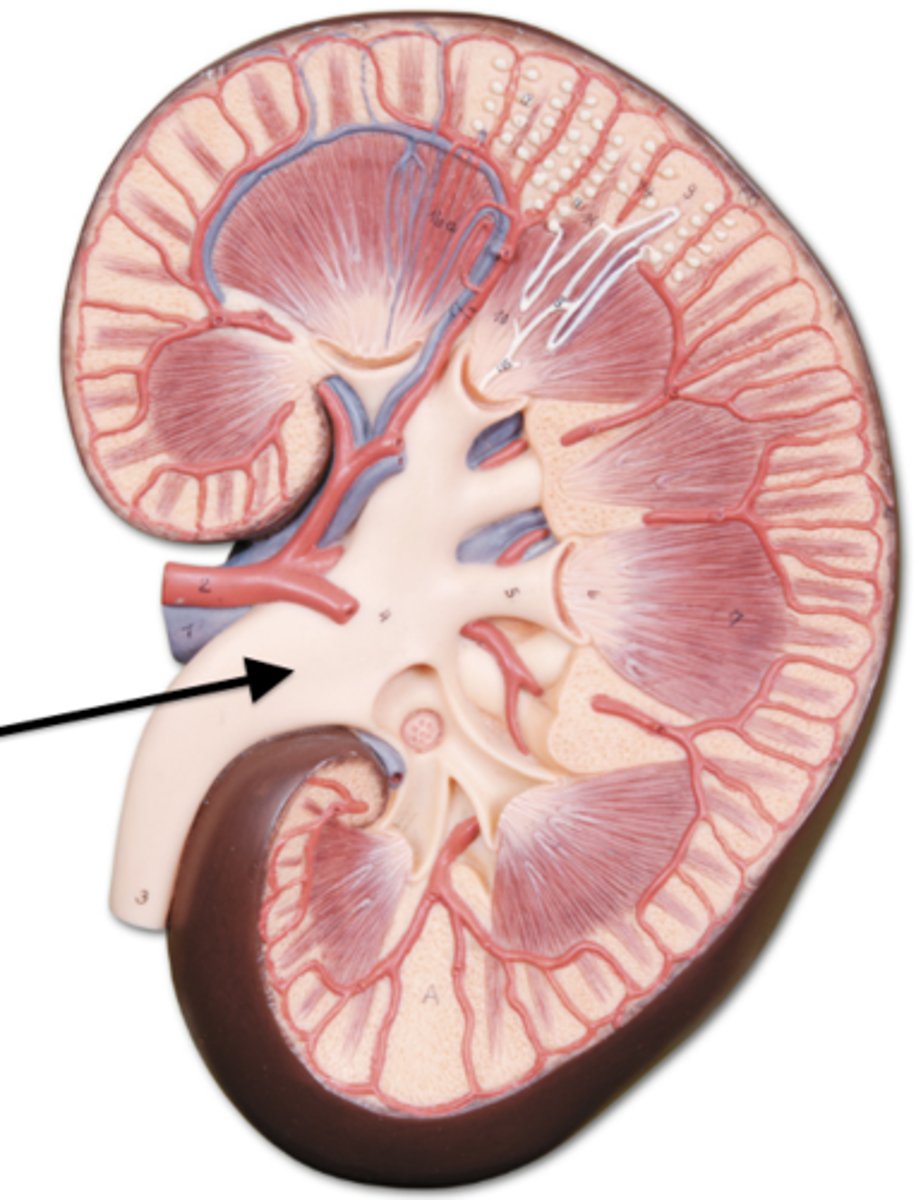
3 parts of kidney
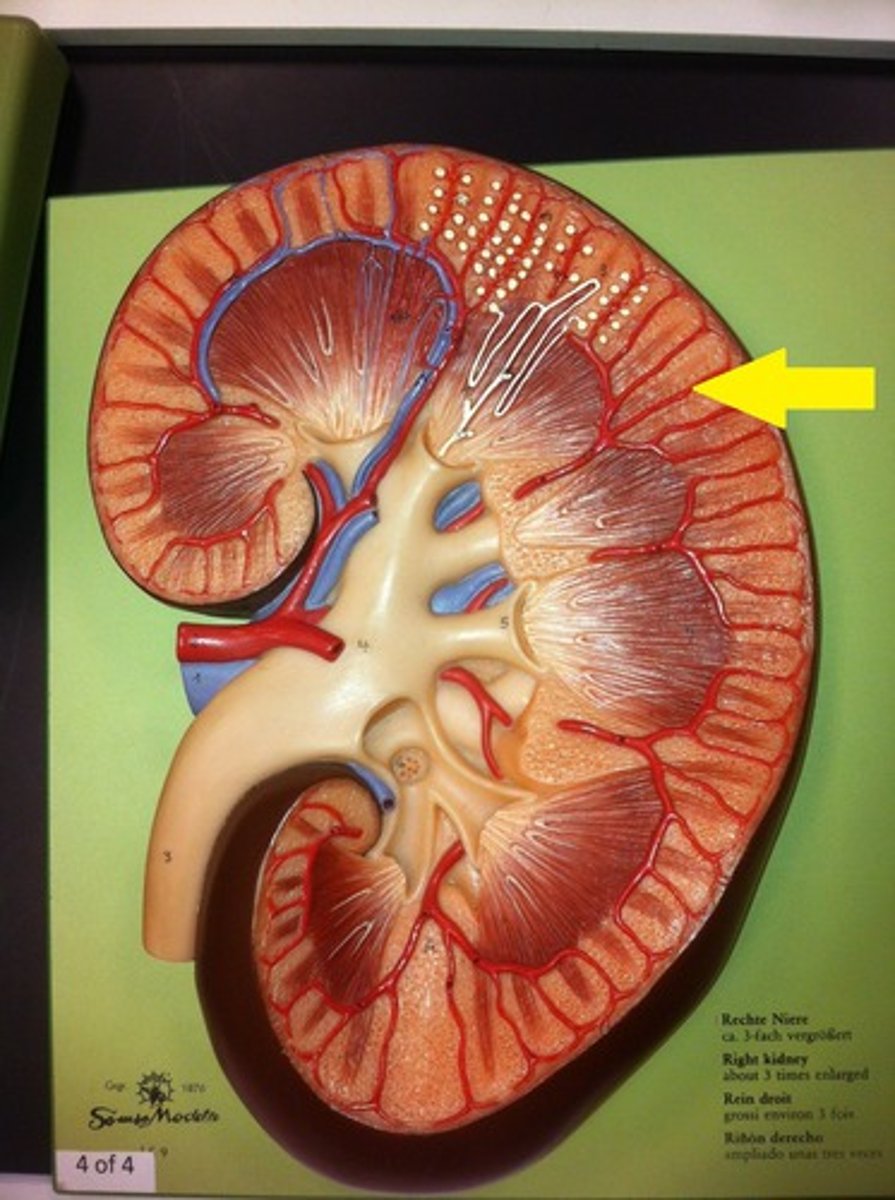
-renal cortex
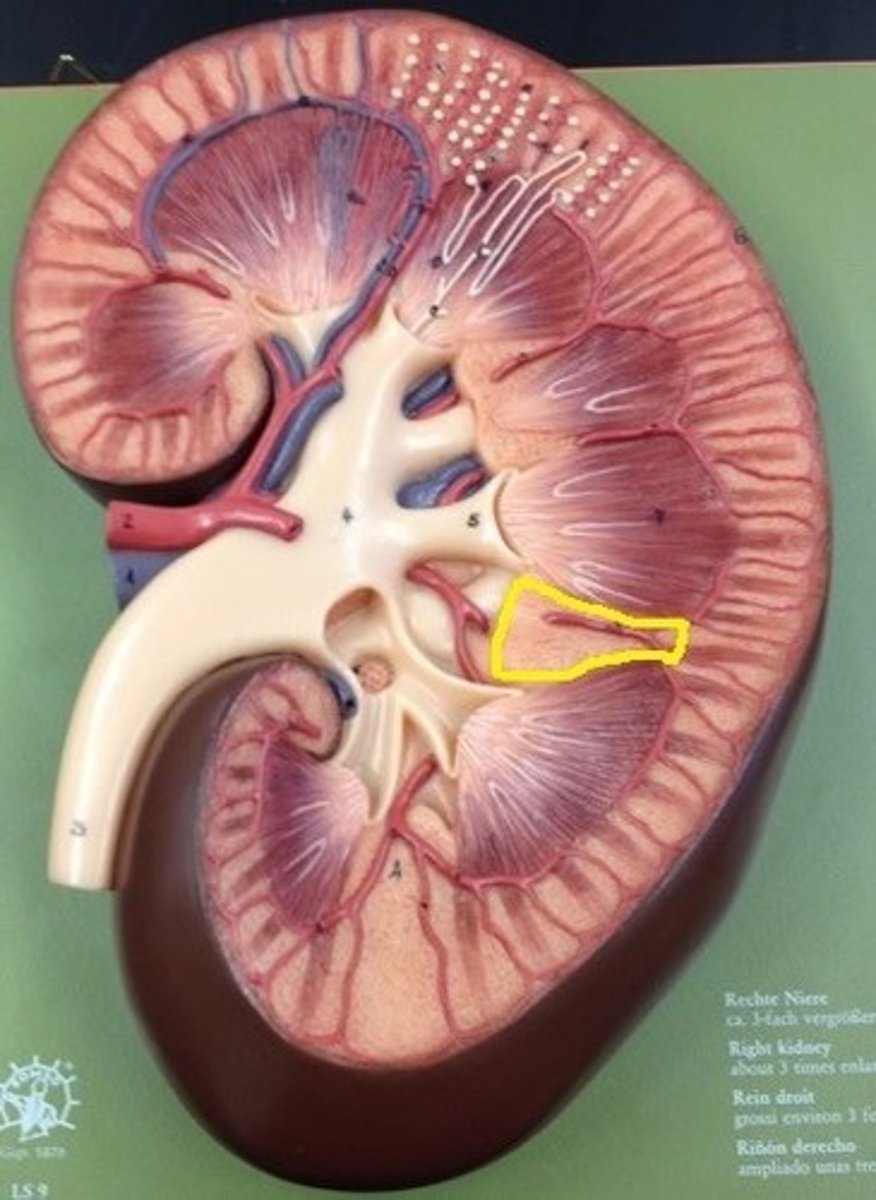
-renal medulla
-renal pelvis
the nephron in relation to kidney
-renal cortex: glomerulus, bowmans capsule, pct, dct, 1/2 collecting duct
-renal medulla: loop of henle, 1/2 collecting duct
-renal pelvis: none
afferent arteriole
brings oxygenated, unfiltered blood to the glomerulus
efferent arteriole
carries blood away from the glomerulus
peritubular capillaries
tiny blood vessels that travel alongside nephrons allowing reabsorption and secretion between blood and the tube of the nephron
main areas of reabsorption
pct, loop of henle, dct
main areas of secretion
loop of henle, dct, collecting duct
algorithm
a step-by-step procedure for solving a problem
resuscitate
to revive, bring back to consciousness
CKD chronic kidney disease
-kidney damage, loss of function
-cannot filter blood properly
vasodialation
-widening of blood vessel as a result of relaxation of blood vessel's muscular walls
-decreases blood pressure
PKD (polycystic kidney disease)
-inherited disorder (dominant inheritance)
-kidney produces cysts
-cysts obstruct blood flow and urine flow within nephrons
gross/macroscopic examination of urine
-examination to the naked eye
-color and clarity
microscopic examination of urine
-Viewing a specimen under a microscope
-white and red blood cells
Chemical examination of urine
-testing of urine
-pH, specific gravity, protein, glucose, ketones
gestational diabetes
high glucose levels and high specific gravity in urine
proteinuria
high protein in urine
UTI/Kidney infection
high white blood cells in urine
ketoacidosis
low pH and high ketones in urine
diabetes insipidus
low specific gravity in urine
kidney disease/failure
high protein levels and high red blood cells in urine
if a gene is autosomal
resides on a chromosome other than the sex chromosomes
How many chromosomes do humans have?
46 (23 pairs)
a condition that requires one copy of a gene is
dominant
a condition that requires 2 copies of a gene is
recessive
pkd 1
-more complications and require dialysis much earlier
-chromosome 16
pkd 2
-more mild symptoms and experience them later
-chromosome 4
PCR (polymerase chain reaction)
-technique for copying dna
restriction enzymes
-cut up dna at specific sequences (Restriction sights)
pieces of dna that restriction enzymes cut
RFLPs (restriction fragment length polymorphisms)
gel electrophoresis
-Procedure used to separate and analyze DNA fragments
-from negative end to positive
large rflps
stay towards top
small rflps
move farther down
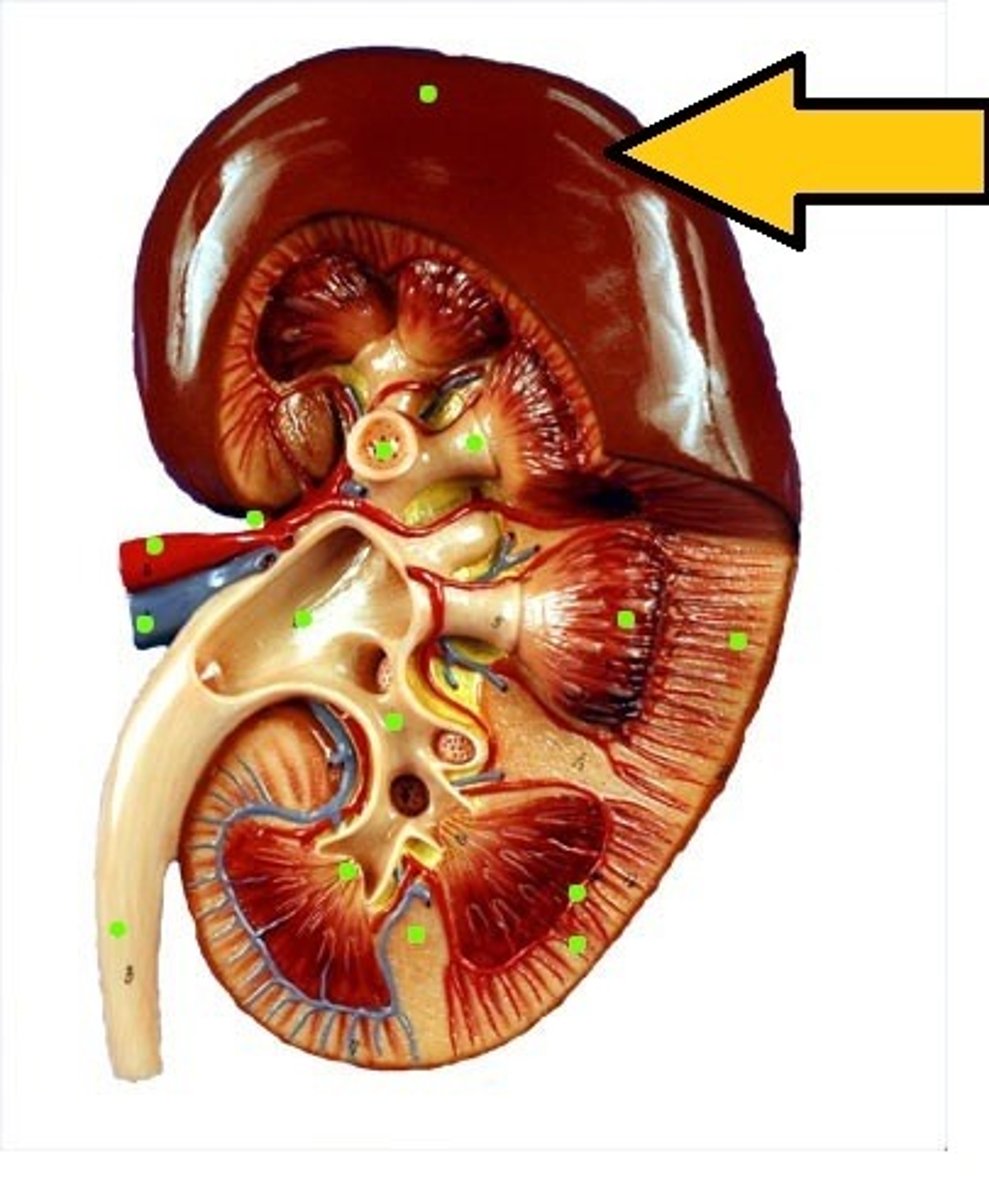
renal capsule
renal cortex
renal column
renal medulla
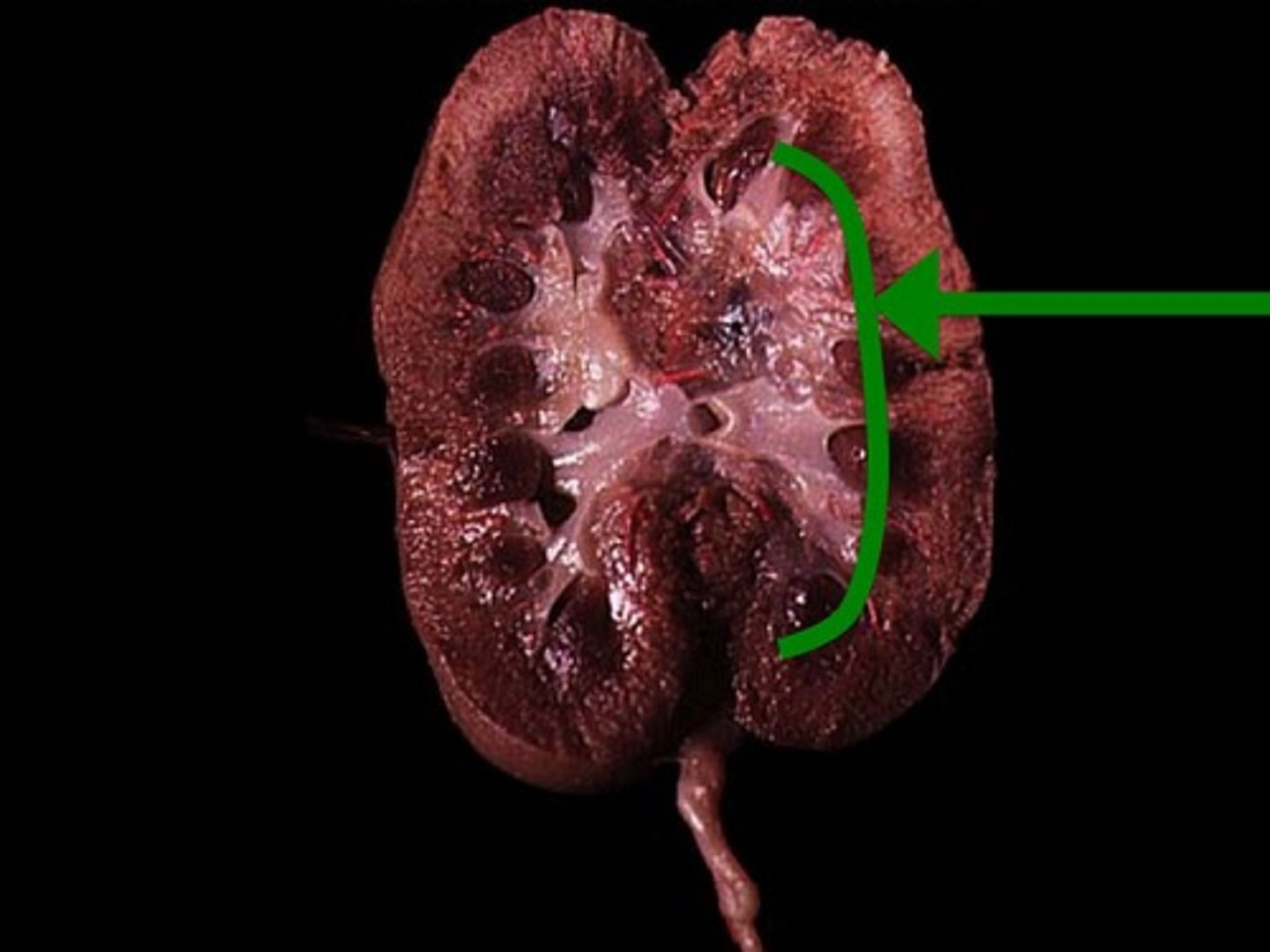
renal medullary pyramids
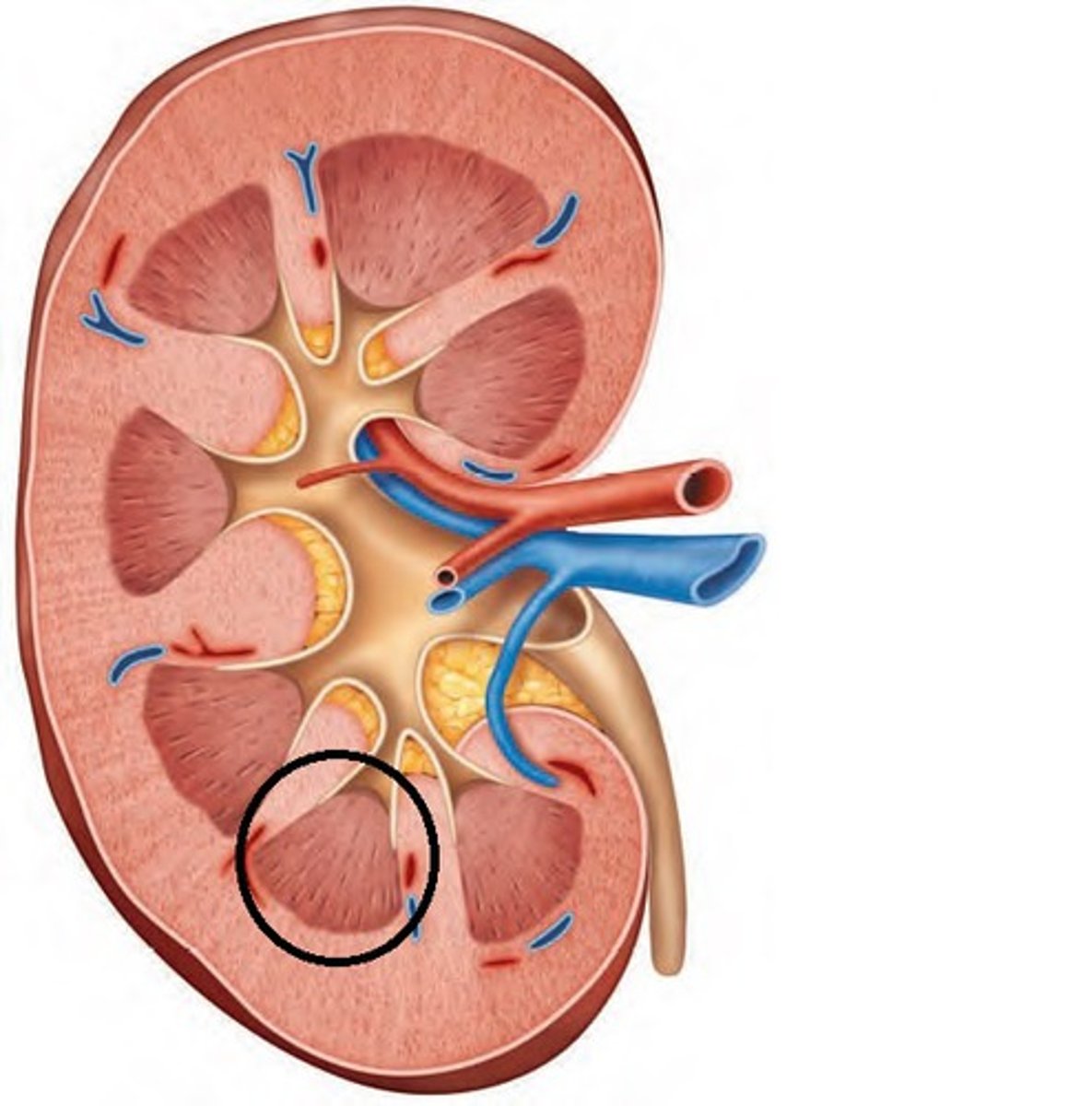
renal papilla
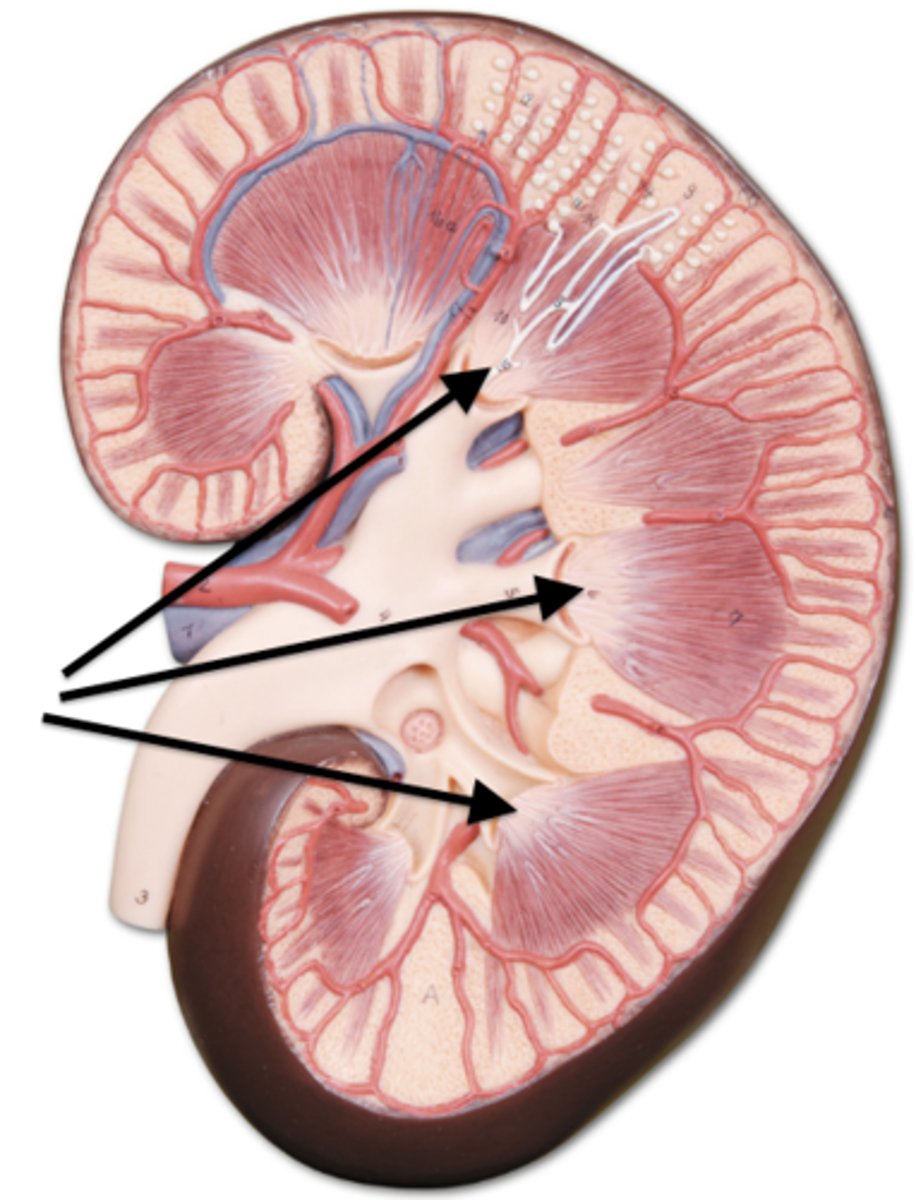
minor calyx
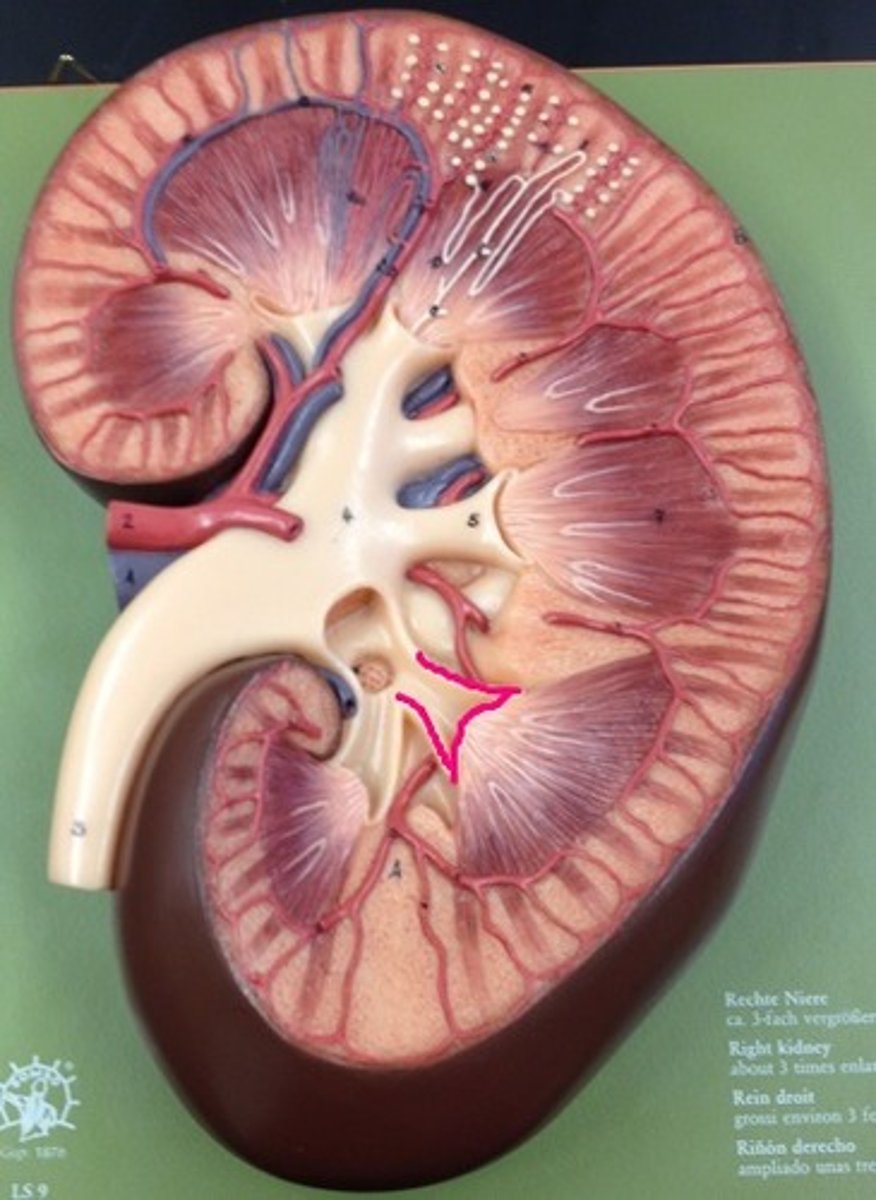
major calyx
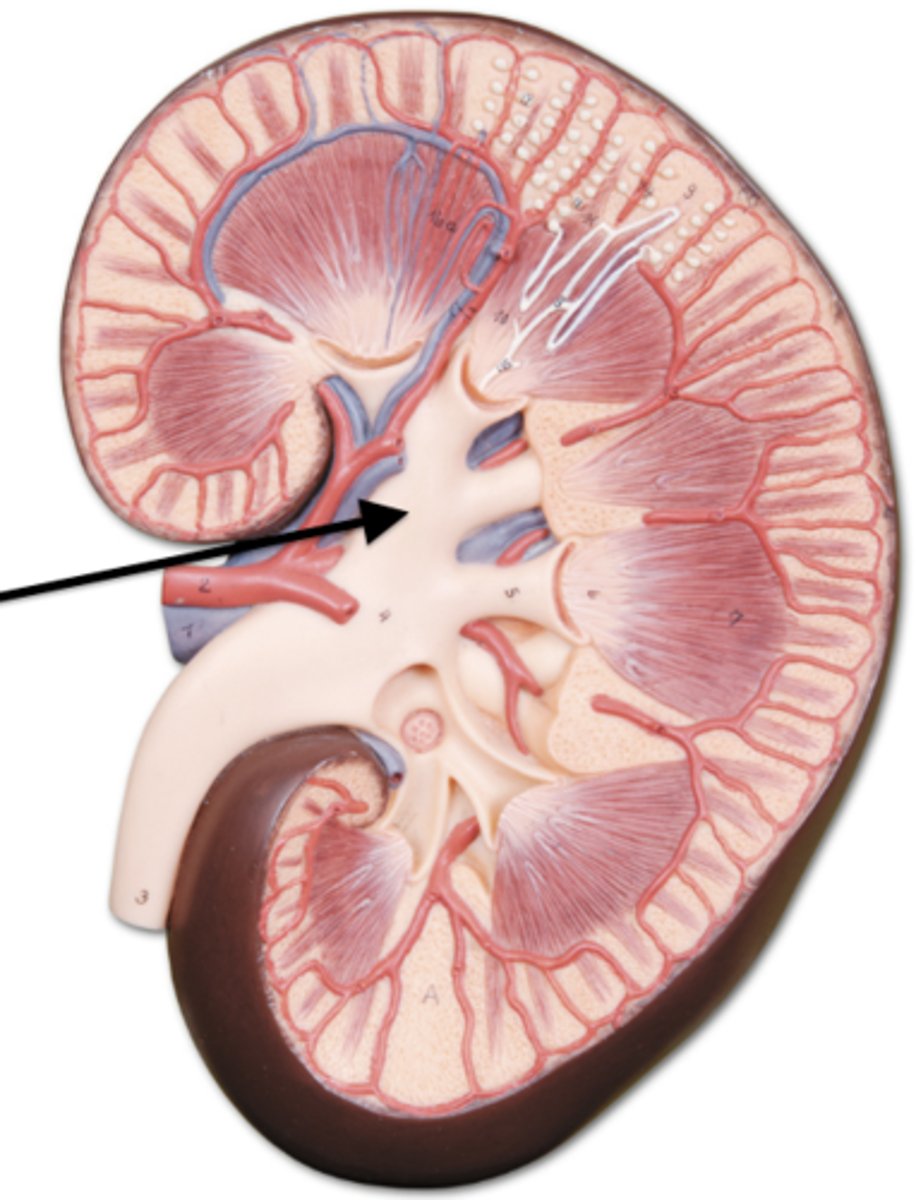
renal pelvis