Animals - Endocrine System
 Call Kai
 Learn
Learn Practice Test
 Spaced Repetition
 Match
Match Flashcards
 Knowt Play
1/29

There's no tags or description
Looks like no tags are added yet.
Name | Mastery | Learn | Test | Matching | Spaced | Call with Kai |
|---|
No analytics yet
Send a link to your students to track their progress
30 Terms
What is the endocrine system?
networks of glands and organs that control and maintain the body, produces/stores/releases hormones directly into the bloodstream to regulate vital bodily functions
What are 5 things the endocrine system controls?
metabolism, growth, reproduction, sleep, mood
Hormone
molecules that regulate processes in the body by signaling organs and tissues, chemical messengers
What are some examples of hormones?
corticosteroids, insulin, estrogen, epinephrine, testosterone, melatonin, dopamine
Hormones are produced by glands and organs. What is an endocrine gland?
small vascularized ductless glands composed of groups of cells arranged in cords or clumps
Why are endocrine glands highly vascularized?
need lots of oxygen to travel to all parts of the body via blood
How are hormones transported through the body by blood or fluid around cells?
interstitial fluid
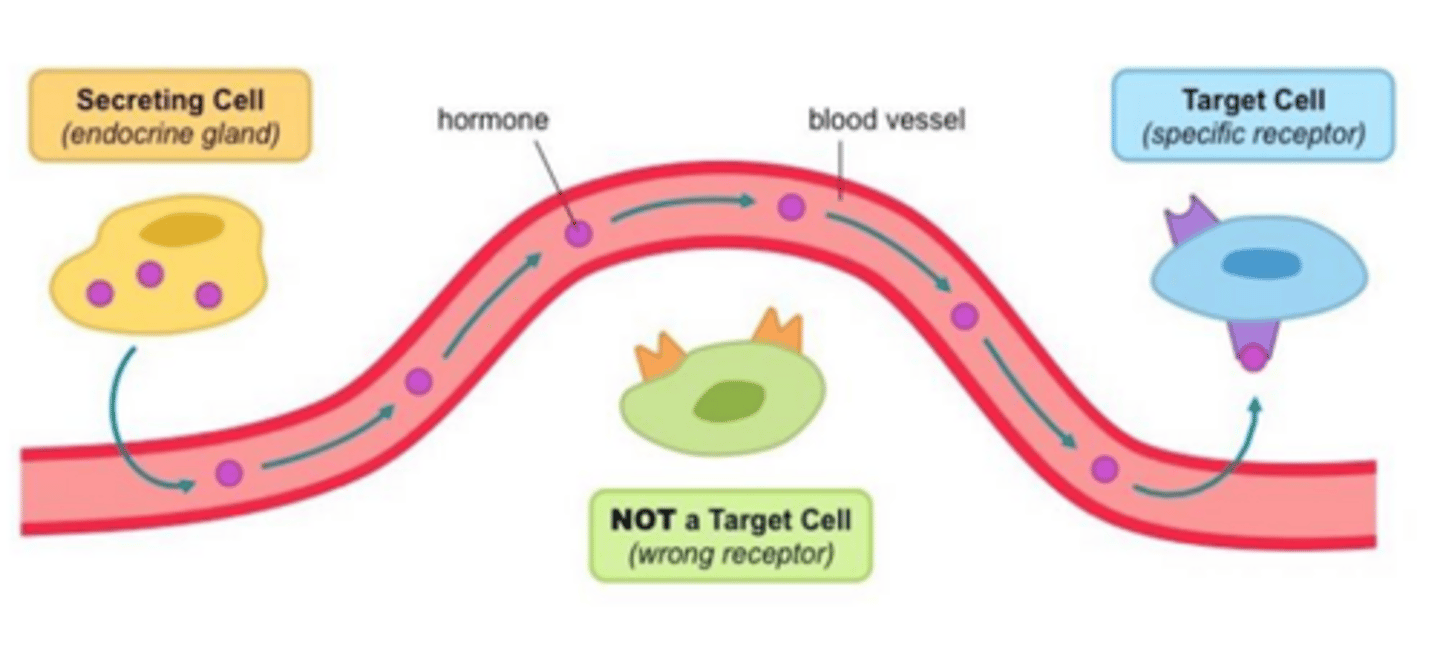
How do hormones reach cells?
through receptores in cell membranes
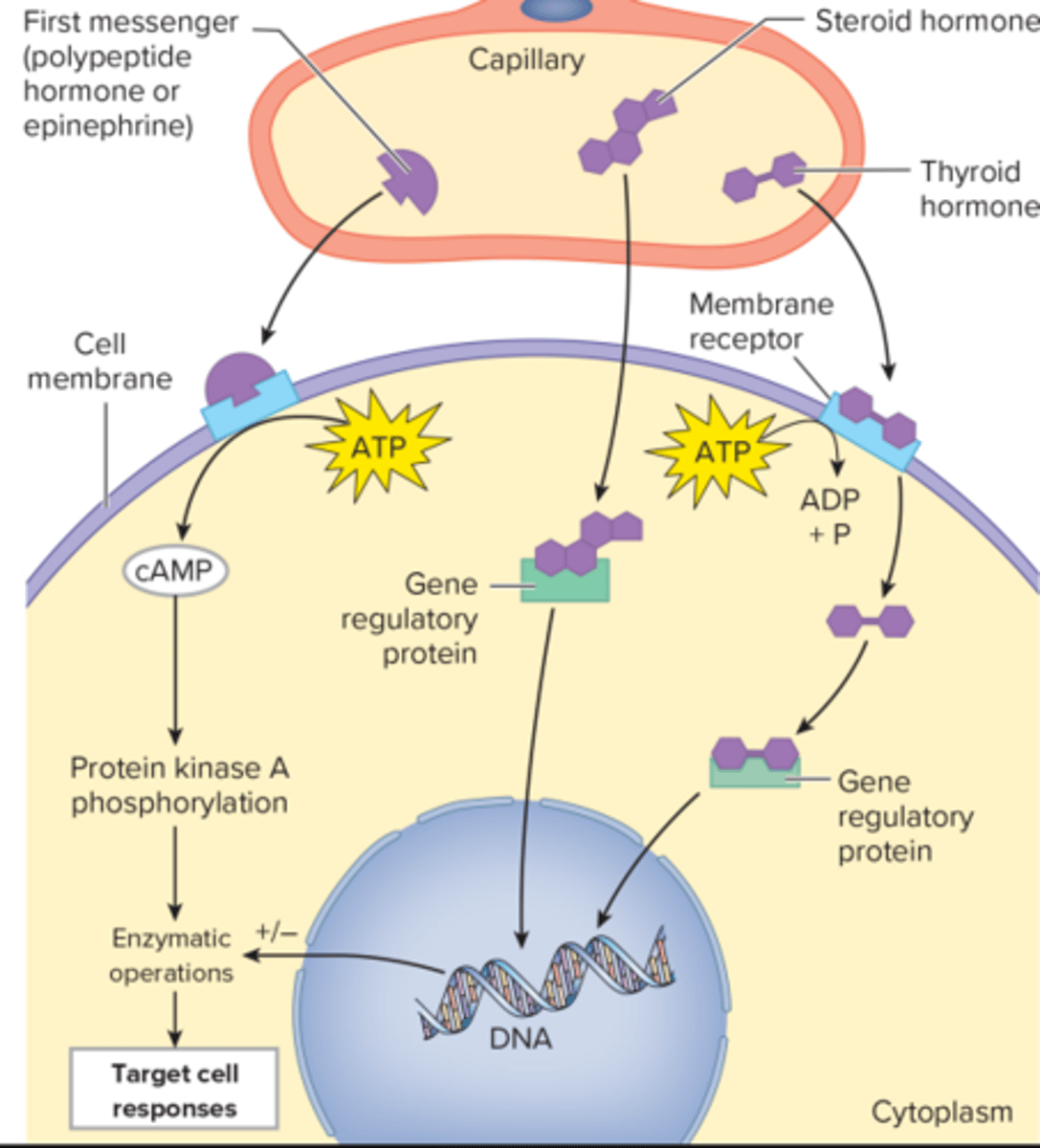
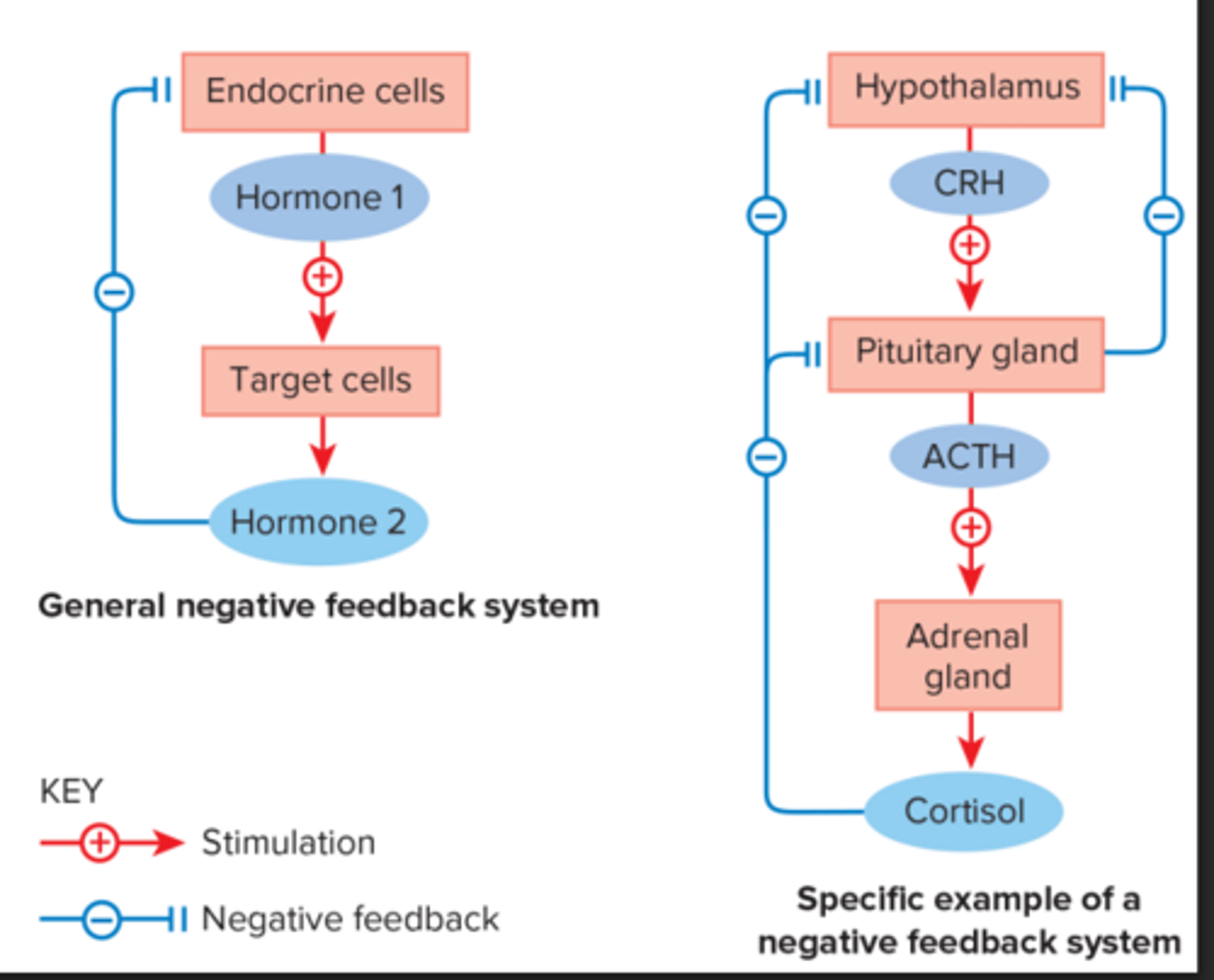
How is the endocrine system controlled? What is that?
negative feedback loop: pattern in which output is constantly compared to setpoint
Nuerotransmitter
chemical messengers that allow neurons to communicate, passing signals to other neurons, muscles, or glands
T/F: Certain hormones can function as neurotransmitters.
true
Describe endocrine systems in invertebrates.
chemical signalsmust move from source to target cells via interstitial fluids rather than circulating blood, most dont have traditional endocrine system, rely on neurosecretory cells
Neurosecretory Cells
specialized nerve cells capable of synthesizing and secreting hormones or hormone like molecules
Describe the endocrine system in phylum porifera (sponges).
hormone like molecules that function in cell to cell signlaing
Describe the endocrine system in phylum cnidaria (jellyfish).
neuroendocrine cells that function in signaling
Describe the endocrine system in phylum platyhelminthes (flatworms).
neurosecretory cells
Describe the endocrine system in phylum annelida (segmented worms).
neurosecretory with ganglion (brain) serving as the main source of hormones
Describe the endocrine system in phylum nematoda (roundworms).
neurosecretory cells
Describe the endocrine system in insects.
use hormones to control molting and transitioning to different life stages
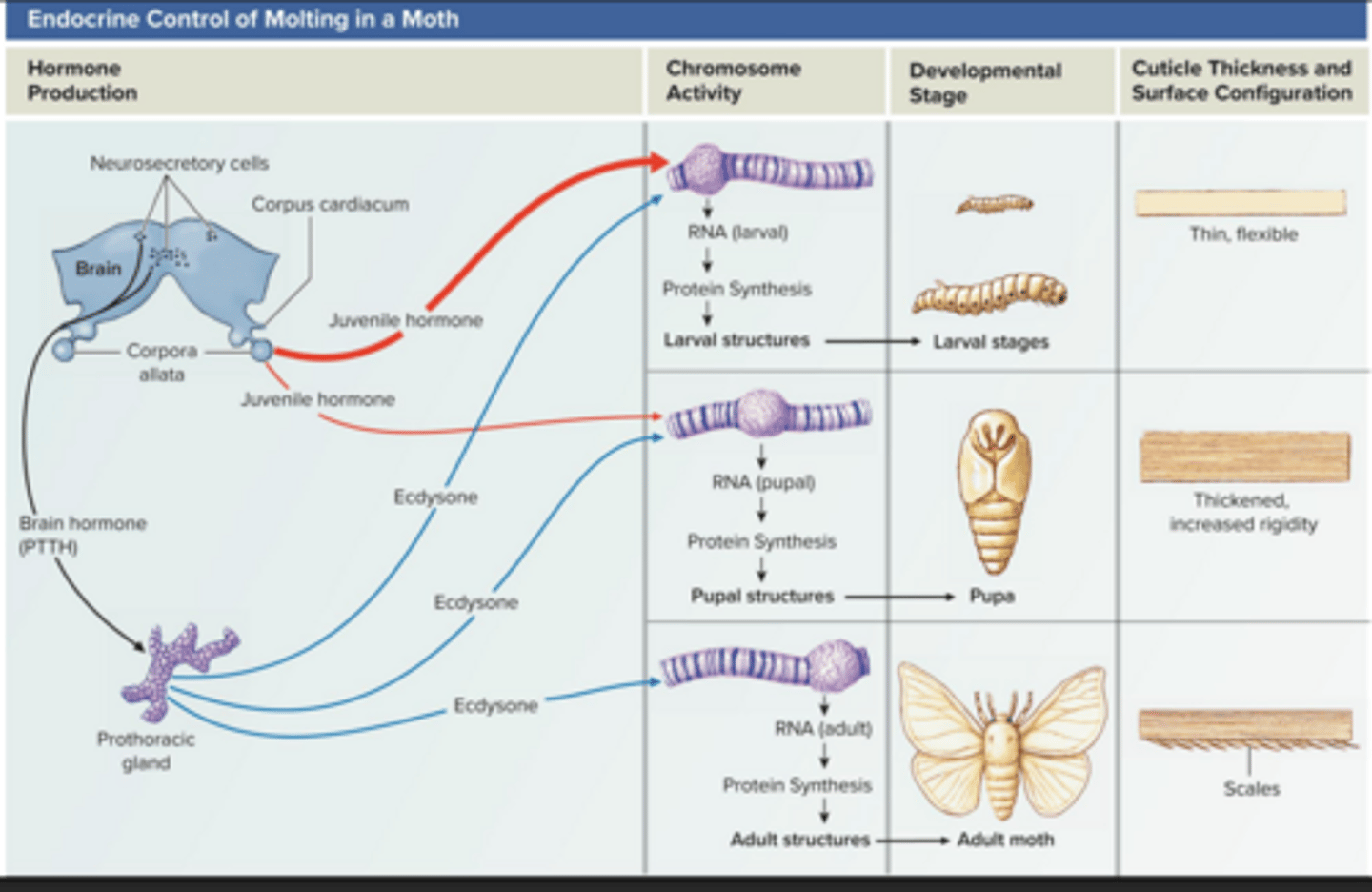
What are the three hormones insects use?
ecdysone, juvenile hormone (JH), prothoracicotropic hormone (PTTH)
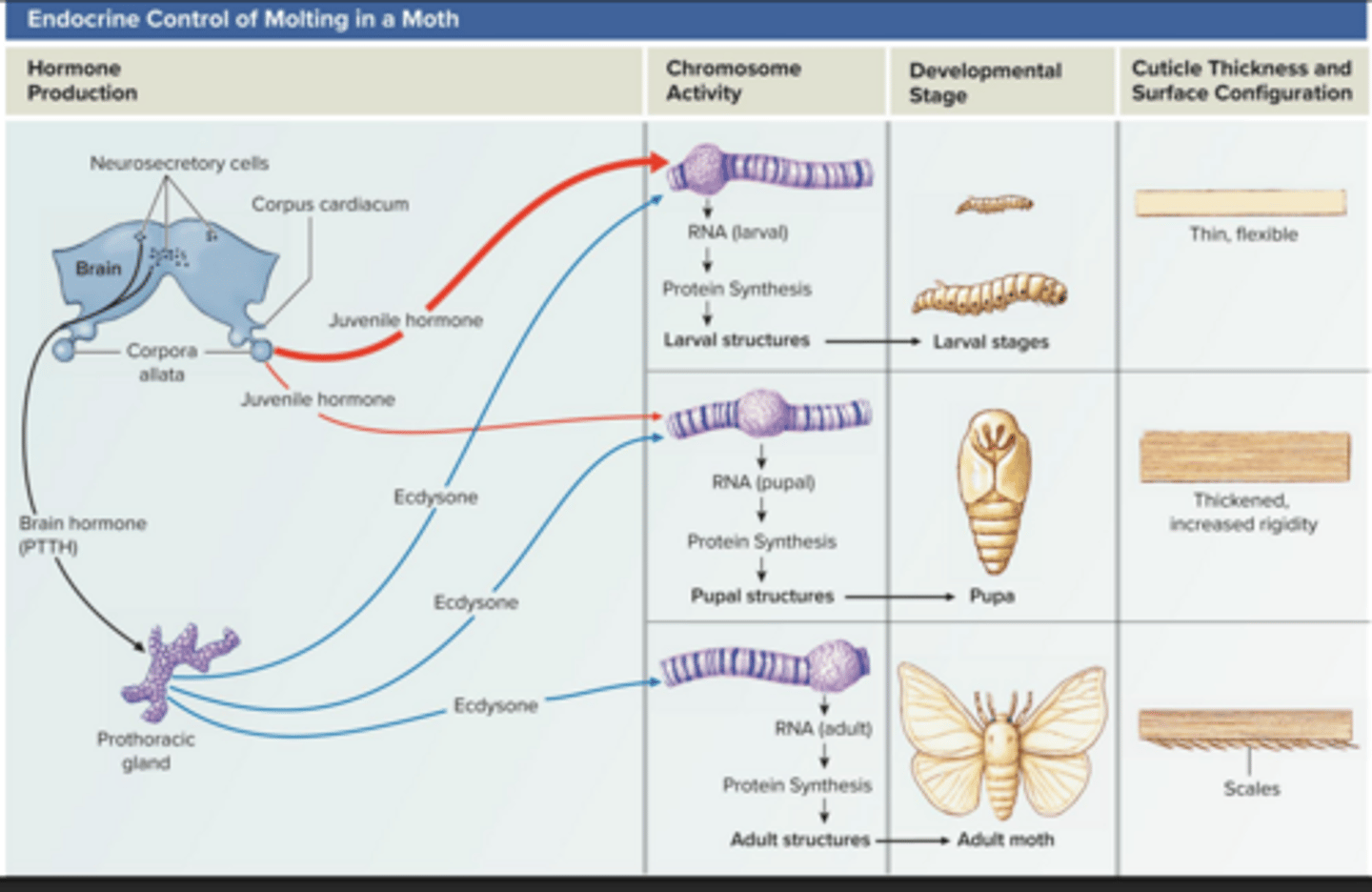
Ecdysone
produced by prothoracic gland and intiates molting
Juvenile Hormone (JH)
maintains immature tissues, suppresses expression and development of adult tissues
PTTH (prothoracicotropic hormone)
stimulates the prothoracic gland
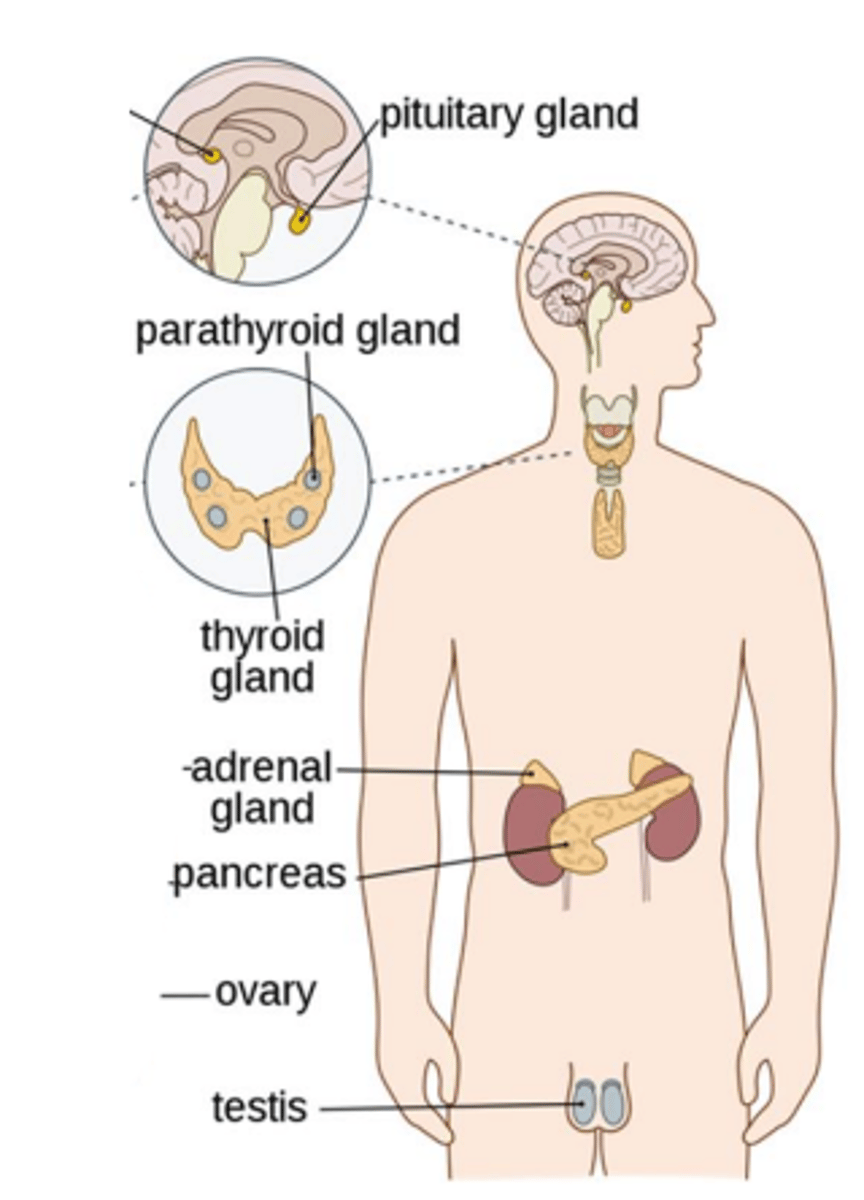
Vertebrate endocrine systems have many different glands, name some.
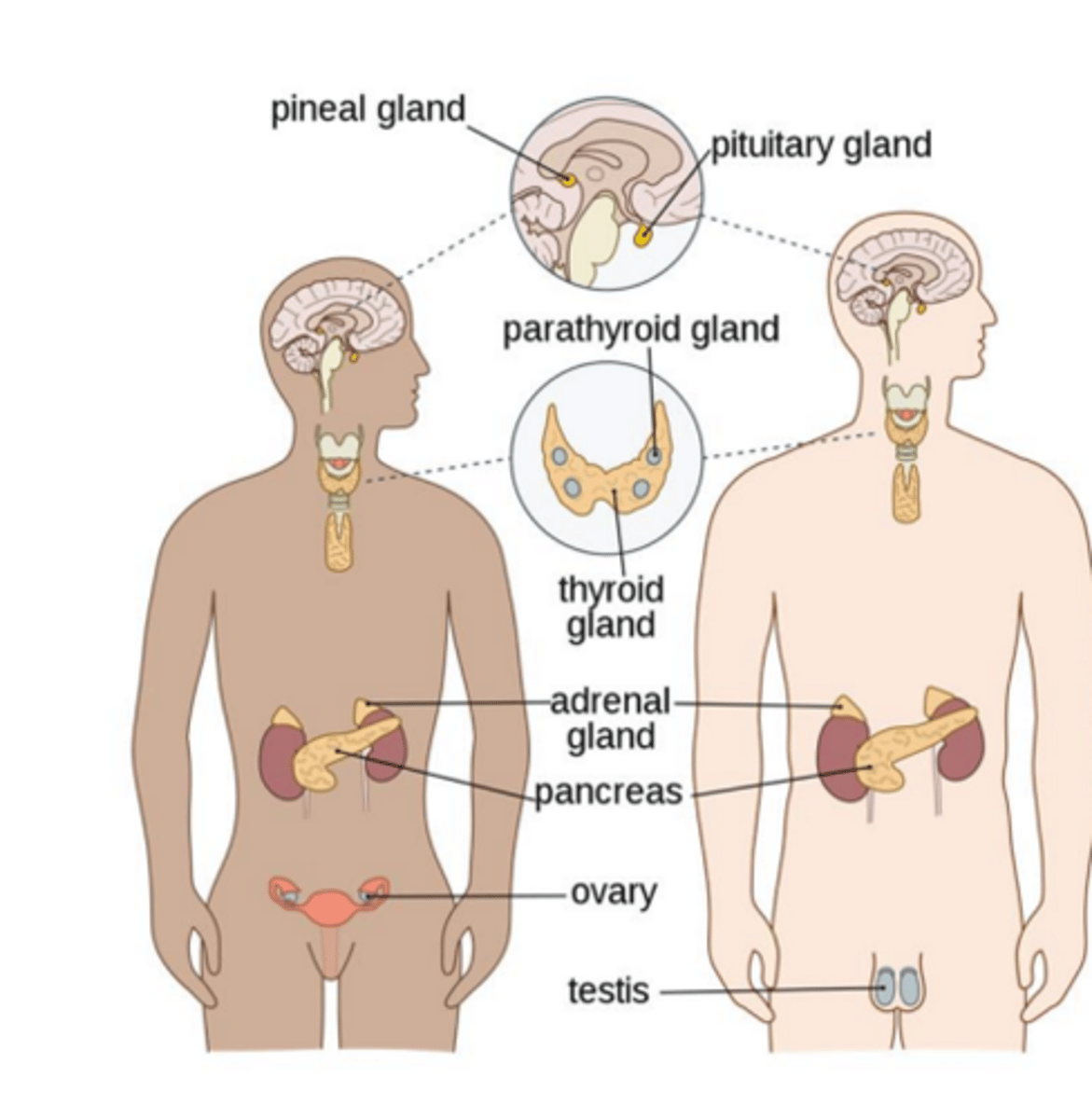
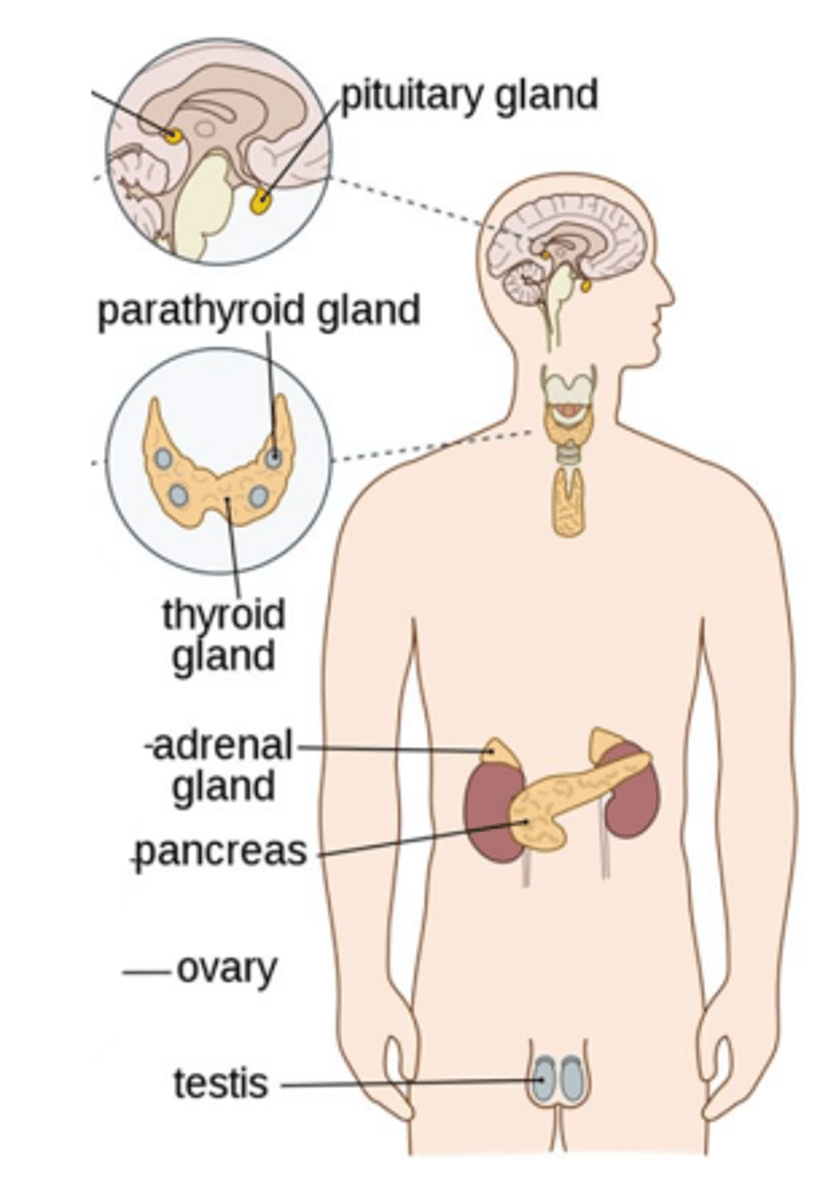
hypothalamus & pituitary, thyroid, adrenal glands, pancreas, reproductive organs (ovaries, testes)
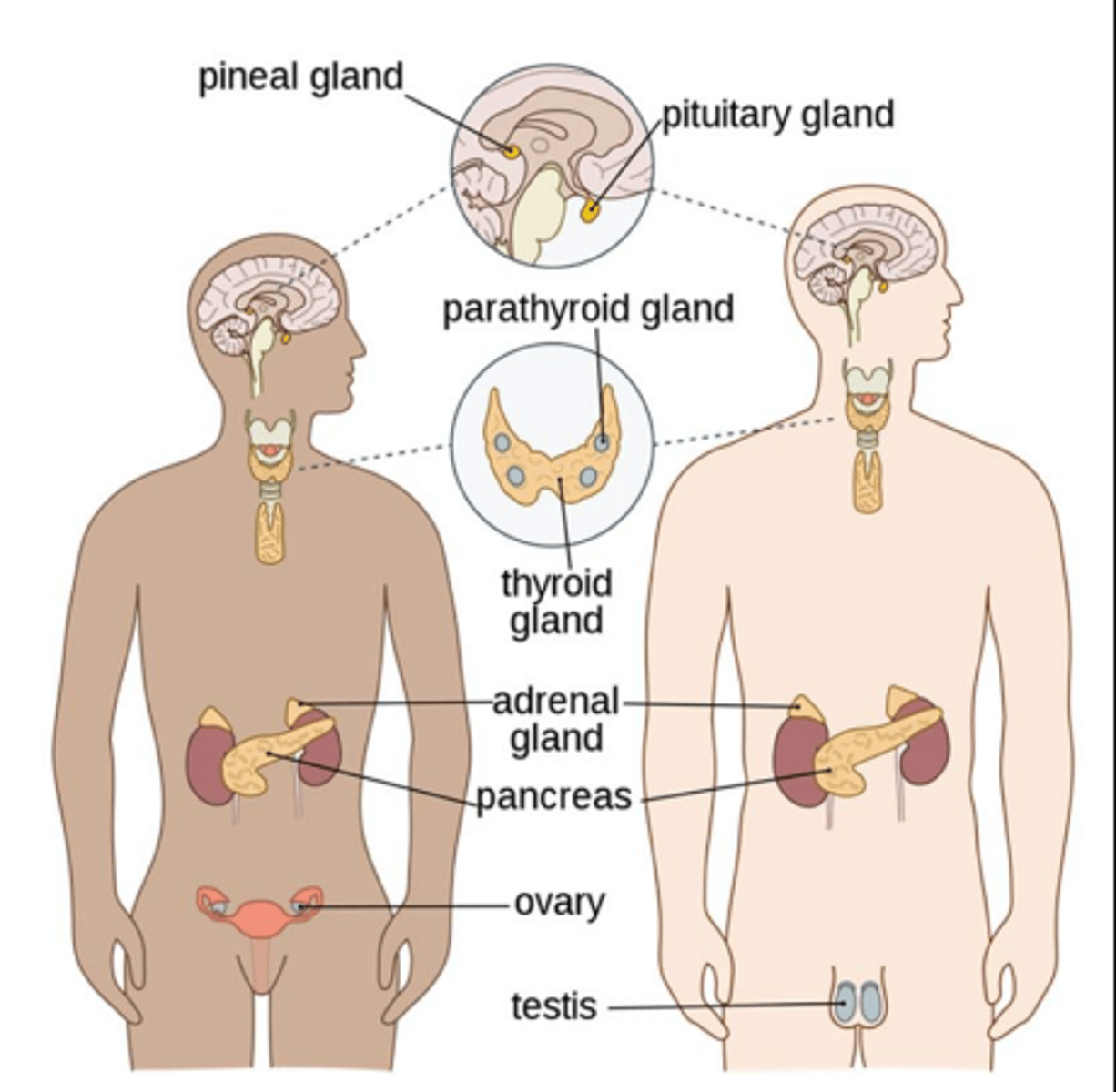
Hypothalamus & Pituitary Gland
located in brain, control other glands, manage growth/water retention/pain, pituitary gland produces hormones involved in many different processes
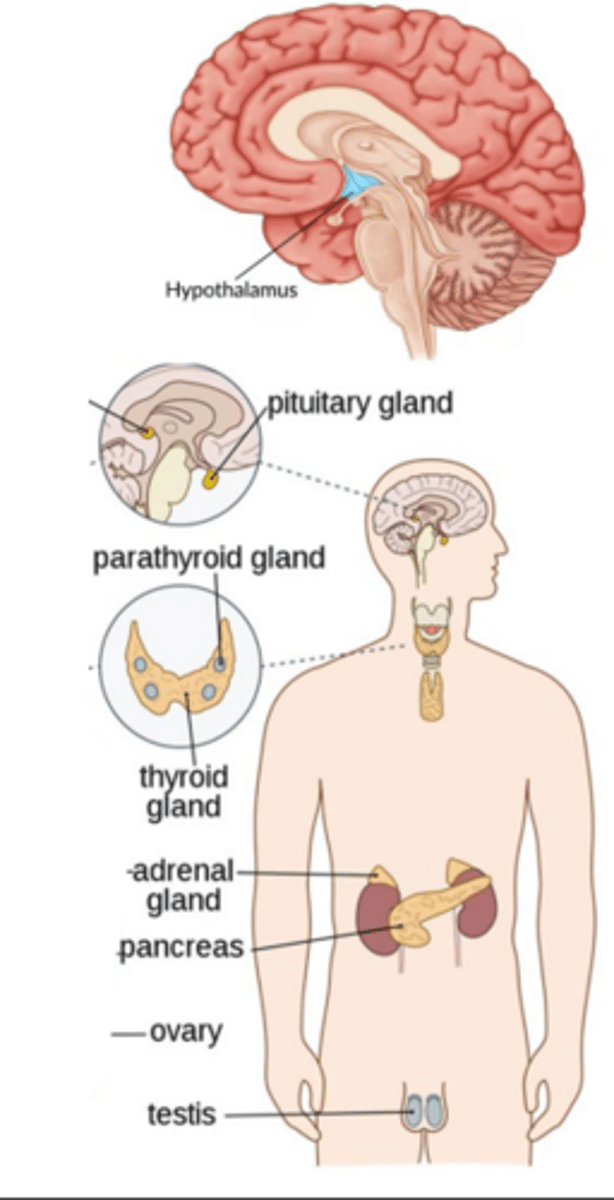
Thyroid Gland
located in neck, produces hormones that control metabolic rate/heart rate/temp/energy usage, regulates growth/physical maturation, produces hormones: triiodothyronine (T3), thyroxine (T4), calcitonin
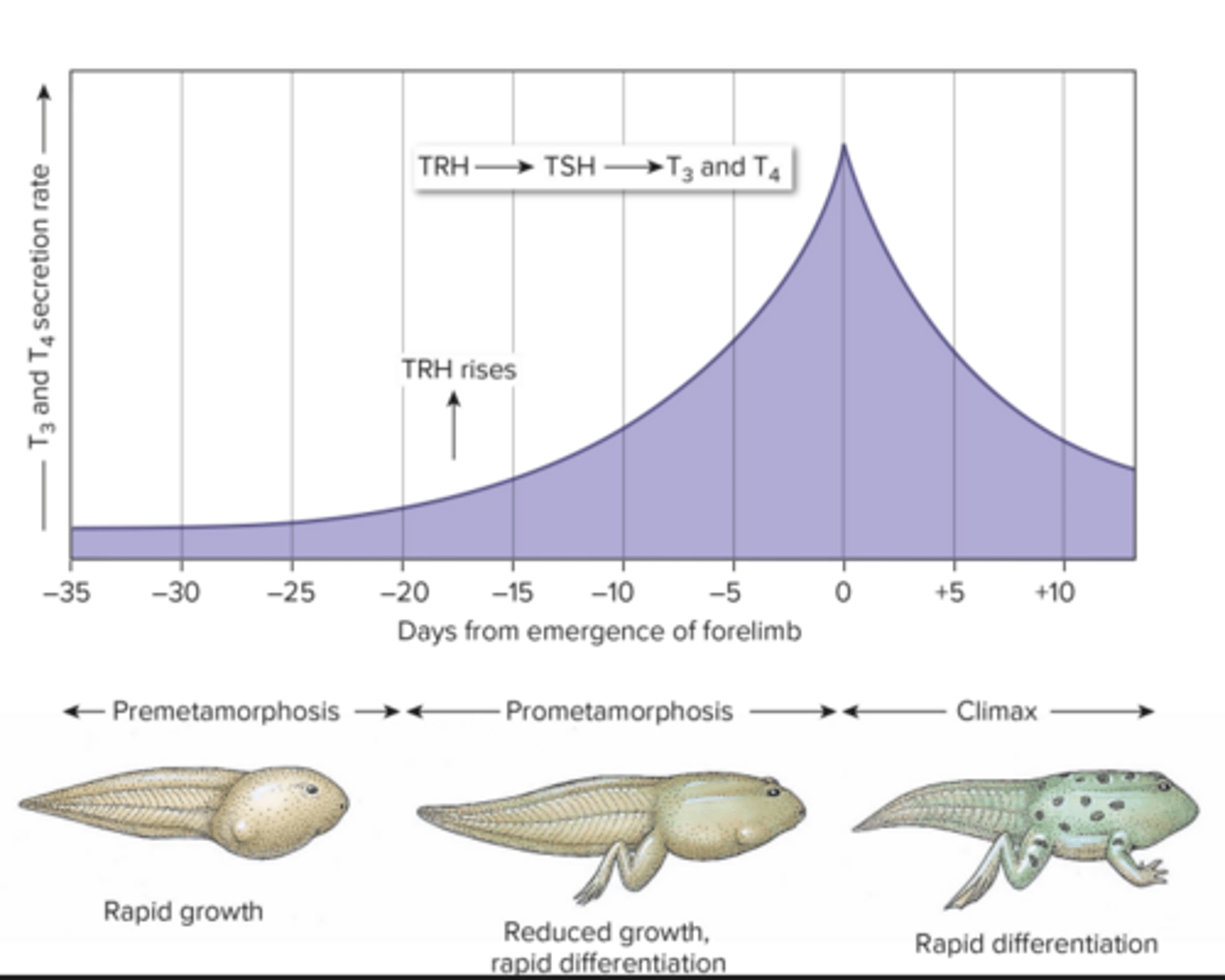
T3 and T4 impact what in frogs?
growth and metamorphosis
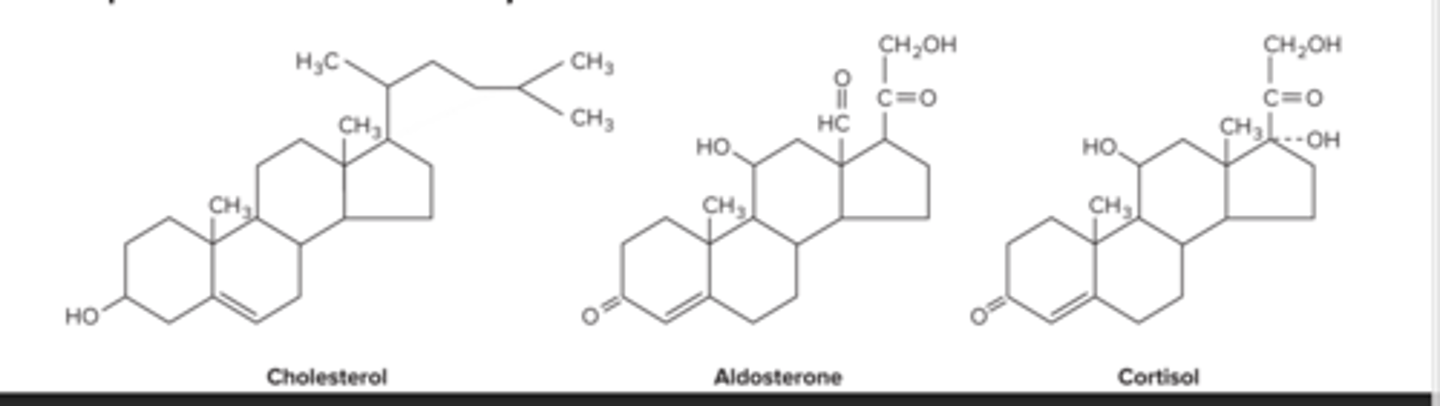
Adrenal Glands
sit atop the kidneys, regulate metabolism/blood pressure/immune system function/stress responses, produce various steroids, cortisol influences food metabolism/inflammation/stress, aldosterone promotes reabsorption of sodium and secretion of potassium in kidneys
Pancreas
located in upper abdomen, mangaes blood sugar using insulin/glucagon, insulin breaks down glucose, produces enyzmes to break down carbs, fats, proteins
T/F: The activty of glands and hormones in vertebrates are made of simple pathways.
false