AP European History Masterguide Vocab Terms Units 1-9
 Call Kai
 Learn
Learn Practice Test
 Spaced Repetition
 Match
Match Flashcards
 Knowt Play
1/103

There's no tags or description
Looks like no tags are added yet.
Name | Mastery | Learn | Test | Matching | Spaced | Call with Kai |
|---|
No analytics yet
Send a link to your students to track their progress
104 Terms
UNIT 1: Renaissance
The great revival of classical art, literature, and learning in Europe from the 14th century to the 17th century, marking the transition from the medieval to the modern world.
UNIT 1: City-states
Sovereign independent cities that controlled their own surrounding territory.
UNIT 1: Elizabethan Age
1558-1603. The reign of Queen Elizabeth I. Known as a “Golden Age” of peace in Europe.
UNIT 1: Secularism
Thinking went from relying on the church to more scientific thought/ the principle of separating religion from things like public policy and education.
UNIT 1: Christian Humanism
Philosophy that combines classical humanist principles, focusing on human potential, reason, and individualistic freedom. With Christian teachings, emphasizing that human dignity and self fulfillment are found in God.
UNIT 1: Humanism
A non-religious, progressive life stance that emphasizes human reason, ethics, and social justice, prioritizing human well-being over supernatural beliefs.
UNIT 1: Individualism
A moral, political, and social philosophy emphasizing the supreme importance of the individual over the collective or state.
UNIT 1: Mannerism
ITALIAN art movement characterized by a deliberate departure from High Renaissance harmony, favoring elongated forms, exaggerated poses, artificial colors, and complex, unbalanced compositions.
UNIT 1: Manorialism
The dominant economic, social, and political organization of rural Europe during the Middle Ages, structured around a self-sufficient landed estate called a manor.
UNIT 1: Open-field system
A common agricultural method where village land was divided into two or three large, unenclosed fields. They were cultivated by serfs.
UNIT 1: Credit
During the renaissance, it was redefined from a purely personal or religious trust mechanism into a formalized, sophisticated economic tool, primarily drive by Italian merchant bankers.
UNIT 1: Usury
Charging any interest on a loan of moeny, not merely excessive interest.
UNIT 1: Mercantilism
A dominant economic system in Europe from the Renaissance to the Enlightenment aimed at maximizing a nation’s wealth through state-controlled trade, focusing on accumulating gold and silver. Promoted a favorable trade balance.
UNIT 1: Deism
Emerged in its earliest form during the late Renaissance and Reformation and is defined as the rational belief in a Supreme Being based solely on reason and nature, rejecting revealed religion, dogmas, miracles, and the supernatural interventions of traditional Christianity.
UNIT 1: Scientific Revolution
About 1550-1700. A fundamental transformation in scientific thought replacing ancient/medieval, Aristotelian, and theological views with empirical observation, mathematics, and experimental methods. Helped establish modern science.
UNIT 1: Crop rotation
The systematic, planned alternation of different crops on the same plot of land across successive seasons or years, primarily aimed at restoring soil fertility without leaving land barren.
UNIT 1: Treaty of Tordesillas
1494 (during the Age of Exploration), an agreement between Spain and Portugal that divided the non-Christian world into two spheres of influence via a north-south line 370 leagues west of the Cape Verde Islands (The Demarcation Line). Signed by Isabella I of Castile and Ferdinand II of Aragon. All territories west of the line belonged to Spain while the East territories belonged to Portugal.
Purpose: The treaty aimed to prevent war over new territories and trade routes (specifically the Spice Islands between the two dominant Iberian maritime powers).
Context: Represents a key moment in the Renaissance-era Age of Discovery, demonstrating the role of the Church and European power dynamics in global colonization.
UNIT 1: Triangle Trade
Maritime system connecting Europe, Africa, and the Americas exchanging manufactured goods, enslaved people, and raw materials.
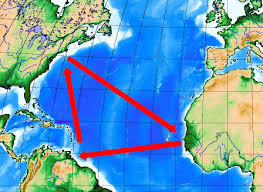
UNIT 1: Columbian Exchange
The massive, post-1492 transfer of plants, animals, diseases, culture, and human populations between the Old World (Afro-Eurasia) and the New World (the Americas). Initiated by Christopher Columbus’s voyages. It facilitated ecological, economic, and cultural transformations.
Effect Old-New: People in the New World died of disease brought over from people form the Old World, and the livestock ate the food which people ate which also decreased the population.
Effect New-Old: More calorically dense foods became available to the people of the Old World which fueled population growth in Europe and Africa.
UNIT 1: Potosi & Zacatecas
The two most important silver-producing mining centers in the Spanish Americas, functioning as the primary engines of wealth for the Spanish Empire. Founded in the 1540s. These cities generated massive quantities of silver that transformed the global economy, allowing Spain to finance wars, maintain a dominant role in international trade, and usher in a global commercial boom. REMEMBER: during the Renaissance period in Europe, wealth was measured by silver and gold.
UNIT 1: Encomienda
A Spanish colonial labor system (1503-1700s) where the Crown granted a colonist a specific number of indigenous people. while meant to provide protection and religious instruction to the natives in exchange for labor or tribute.
Effect: Catastrophic population decline and exploiting indigenous labor for mines and agriculture.
UNIT 1: Fall of Constantinople
May 29th 1453, the conquest of the Byzantine capital by the Ottoman Empire under Sultan Mehmed II after a 53-day siege. This event marked the end of the Byzantine Empire and solidified Ottoman dominance in the Eastern Mediterranean, and facilitated the rise of the Renaissance by driving Greek scholars westward.
UNIT 1: The Viceroyalty System
An administrative structure established in the 16th century to manage the vest territories of the Spanish Empire in the Americas. Ruled by viceroys acting directly as the king’s representatives, these regions (like new Spain and Peru) were considered kingdoms or provinces rather than colonies, allowing Spain to maintain centralized control over government, wealth, and indigenous populations.
UNIT 1: Middle Passage
The brutal, forced maritime journey of millions of enslaved Africans across the Atlantic Ocean to the Americas, forming the middle leg of the Triangular Slave Trade.
UNIT 1: The Medici Family
A powerful Italian banking dynasty that ruled Florence and later Tuscany for over 300 years, from the 15th-18th centuries. They became one of Europe’s most wealthy familites through the Medici Bank.
UNIT 1: Leonardo da Vinci
An Italian painter of the High Renaissance who was known for his masterpieces like the Last Supper and the Mona Lisa.
UNIT 1: Michelangelo
An Italian sculptor, painter, and architect of the High Renaissance who created sculptures like David and the Sistine Chapel ceiling.
UNIT 1: Petrarch
The Father of Humanism. He was a 14th century Italian scholar and poet. he was a foundational figure of the Renaissance. He revived interest in classical Roman/Greek literature.
UNIT 1: Boccaccio
Italian writer and poet. Correspondent of Petrarch, and an important Renaissance humanist.
UNIT 1: Niccolo Machiavelli
A Florentine diplomat, philosopher, and writer, best known for his work: The Prince which advised rulers to use ruthless tactics to maintain power. The term Machiavellian describes a cynical, amoral, and manipulative approach to politics or life.
UNIT 1: Erasmus
A Dutch Renaissance humanist, Catholic theologian, and influential scholar known as the prince of the Humanists. He promoted educational reform, criticized church abuses, and championed a philosophy of Christed based on study of the New Testament.
UNIT 1: Thomas More
He was an English lawyer, judge, social philosopher, author, statesman, theologian, and noted Renaissance humanist. He served Henry VIII as Lord Chancellor from October 1529-May 1532.
UNIT 1: Johann Gutenberg
Invented the printing press.
UNIT 1: Albrecht Dürer
A German painter, printmaker, and art theorist who bridged the Northern and Italian Renaissance movements.
UNIT 1: Castiglione
Influential Italian Renaissance author, diplomat, solider, and courtier. His work defined the Renaissance of etiquette, shaping the European concept of a gentleman.