Module 2 - Mesopotamia
 Call Kai
 Learn
Learn Practice Test
 Spaced Repetition
 Match
Match Flashcards
 Knowt Play
1/35

There's no tags or description
Looks like no tags are added yet.
Name | Mastery | Learn | Test | Matching | Spaced | Call with Kai |
|---|
No analytics yet
Send a link to your students to track their progress
36 Terms
The term patriarchy comes from two Greek root words. What are the two words and what does each word mean? What does the term patriarchy mean?
patri = father , arche = rule/domination. Patriarchy translates “rule of fathers and indicates a regime-commonly a family, community, or country ruled or culturally dominated by men
What environmental factors contributed to the creation of human civilization in ancient Mesopotamia?
Historians argue that the combination of the seasonal flooding and a dry climate helped lead to the rise of there civilization in accident Mesopotamia
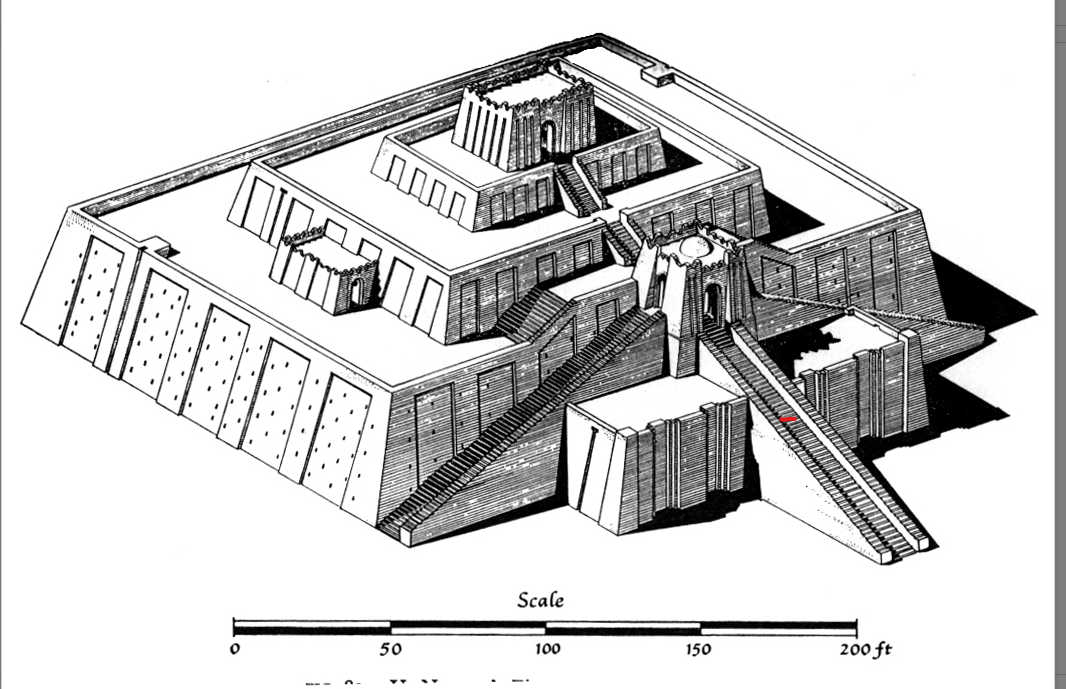
What is this? Be sure to refer to the culture/civilization that created it as well as the rationales behind it. How is it historically significant? What does this item tell us about the people who created it? Explain in detail.
This structure is a Sumerian Ziggurat, it reflects the wealth and organization. The term Ziggurat means translates to “mountain of god”. They were religious temples, Ancient Mesopotamians believed that theirs gods resided overhead, above in a bronze dome.
They were designed to be so tall so they could be close to the gods for their sacrifices. Sumerians lived in in a changing environments plagued by unpredictable flooding, and it was very dangerous. These temples were dedicated to storm gods
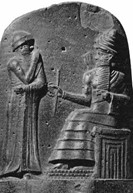
In the epic of Gilgamesh, why did Enlil sne d a flood to wipe out humanity
because humans were too noisy and the gods were unable to sleep.
Daughter of Sargon , she was a high prestress of nanna and wrote poetry in praise of ishtar
Enheduanna
Because of the expense of the dye used to make the shade of purples, it was associated with royalty in the ancient world. (HIGH VALUE : THIK GOT)
Tyrian
Probably originating on the steppes in this location, INdo-Europeans migrated across most of europe into Asia
Ukraine and Russia
This Indo-European people settled in central Anatolia, constructed war chariots that accommodated three riders, smelted iron by 1500BCE, and after conquering Babylonia adapted Babylonian traditions for their own uses.
Hittites
WHy did we examine the origins of Judaism when studying ancient Mesopotamia?
When the Tigris and euphrates rivers flooded, they left behind this nutrient-rich substance that farms love
silt
Bringing water from its source to farmlands
irrigation
Mesopotamian God who slew a huge sea monster and created the world out of her dead body
Marduk
Warrior-king of Uruk who lived sometime between 2700-2500 B.C.E., his best friend was Enkidu.
Gilgamesh
From Akkad, he was the ruler of the first Mesopotamian empire. According to legend, as a baby, he was put into a basket by his mother and floated down the Euphrates.
Sargon
This was the first human system of writing. It is a pictographic system that was developed by the Sumerians c. 3500 B.C.E.
cuneiform
Ruler of the Babylonian Empire, in the 1700s B.C.E. he attempted to supply his people with standard legislation by compiling a code of rulings.
Hammurabi
The people from Northern Mesopotamia military strength, They founded an empire and treated their captives brutally in the hopes of preventing rebeliion
Assyrians
He was the most famous of the NEO-Babylonian rulers and reportedly had hanging garden constructed in babylon
Nebuchadnezzar
Mesopotamians developed this metal beginning in about 4000 B.C.E., it is made from copper and tin.
bronze
Mesopotamians worked with this metal beginning in about 1000 B.C.E. It was less expensive and stronger than previously worked metals.
Iron
The name of this Canaanite god translates literally as "Lord Thunderer." Canaanites believed that he spoke in thunder and his weapons were lightning and storms.
Ball Hadad
This mother goddess was represented by the Tree of Life and was initially the wife of El.
Asherah
This god was called the "Swallower of the Dead." An enemy of Baal, his mouth stretched from horizon to horizon and his appetite was insatiable.
Mot
Initially one of many Mesopotamian storm gods, this figure became THE God of the Hebrew people
YHWH
This Semitic people, probably the Israelites, dominated Egypt between 1700-1500 B.C.E.
Hyksos
His reign marked the high point of the Israelite monarchy. He lived lavishly and engaged in long distance trading ventures and massive construction projects.
Solomon
Greek for "dispersal" or "scattering," this term refers to what happened to the Jewish people after Assyria destroyed Israel and the Neo-Babylonians conquered Judah.
Diaspora
Minoans lived on this island.
Crete
The greatest cultural contribution of this ancient people was the invention of a phonetic alphabet.
Correct:
Phoenicians
In the Epic of Gilgamesh, how did Enkidu describe the underworld and the beings in it? Be sure to provide a detailed answer.
Enkidu described the underworld as a dark and bleak place where the dead no longer had their former strength. The spirits were covered in feathers and survived by eating dust. In this gloomy realm, from which no one returned, even former kings lived miserable lives and served the gods like lowly servants.
In the Code of Hammurabi, which of the following could be sold into debt-slavery?
women and children
Phoenician purple dye was made from these creatures? What were they? Be specific
murex
Ancient Mesopotamia is within this contemporary nation. What nation is it?
Iraq
In the Code of Hammurabi, what happened to a son who struck his father?
His hand was cut off.
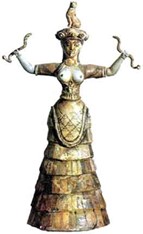
What is this? How can you tell? What culture created it?
This is a fertility goddess created by MInoans, also as Cretans. We can this is meant to represent a goddess from her tall headdress and her expensive, elaborated multi tiered gown, noth which show high status. Her espoused breasts indicate ties to fertility.
Did the Code of Hammurabi treat everyone equally? Explain and provide specific evidence of your assertion.
No the code of Hammurabi did not treat everyone equally. Women faced stricter expectations of material fidelity, and could be sold into slavery, and had far less rights than men. Punishments also varied by social class. Upper class men often received lighter penalties, such as paying silver fines, while lower class individuals faced harsher punishments like death or mutilation. Overall, the code favored wealthy men rather than promoting equal justice.