Past Exam Questions 1-13
 Call Kai
 Learn
Learn Practice Test
 Spaced Repetition
 Match
Match Flashcards
 Knowt Play
1/11

There's no tags or description
Looks like no tags are added yet.
Name | Mastery | Learn | Test | Matching | Spaced | Call with Kai |
|---|
No analytics yet
Send a link to your students to track their progress
12 Terms
(Exam 1)
What discovery/advance of the list below occurred during the Second Golden Age of Microbiology?
Chemotherapy and antibiotics (penicillin).
(Exam 1)'
Which of the following is the BEST definition of cellular respiration?
A means to extract energy from organic molecules
(Exam 1)
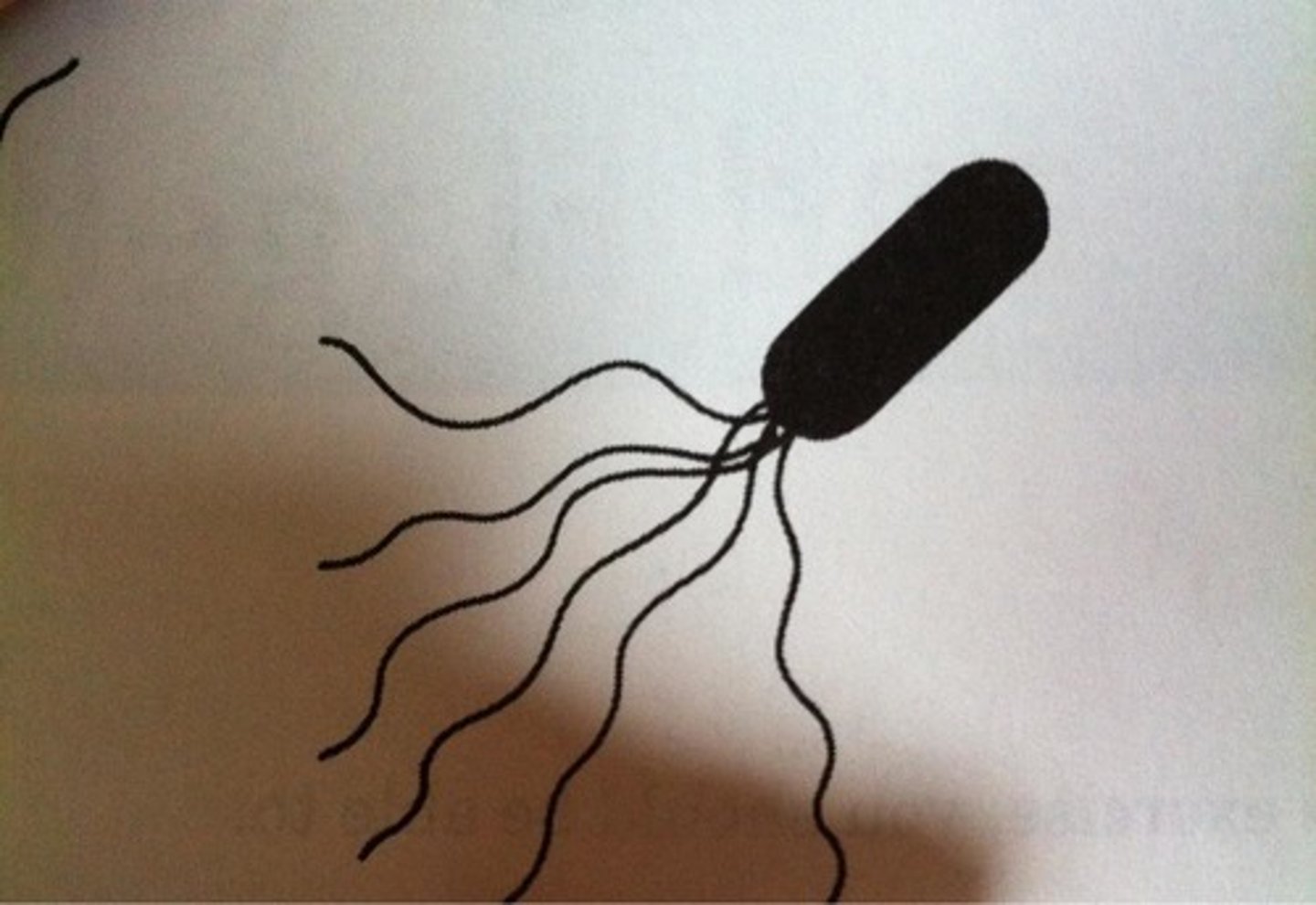
Draw ONE bacillus bacteria with lophotrichous flagella.
A drawing of a single rod-shaped (cylindrical) cell with a tuft of multiple flagella at one end.
(Exam 2)
Blue-white screening described in your text is a typical procedure when selecting a clone. The bacteria transformed with the recombinant plasmid and plated on media containing ampicillin and X-gal will ________.
Produce White Colonies
(Exam 2)
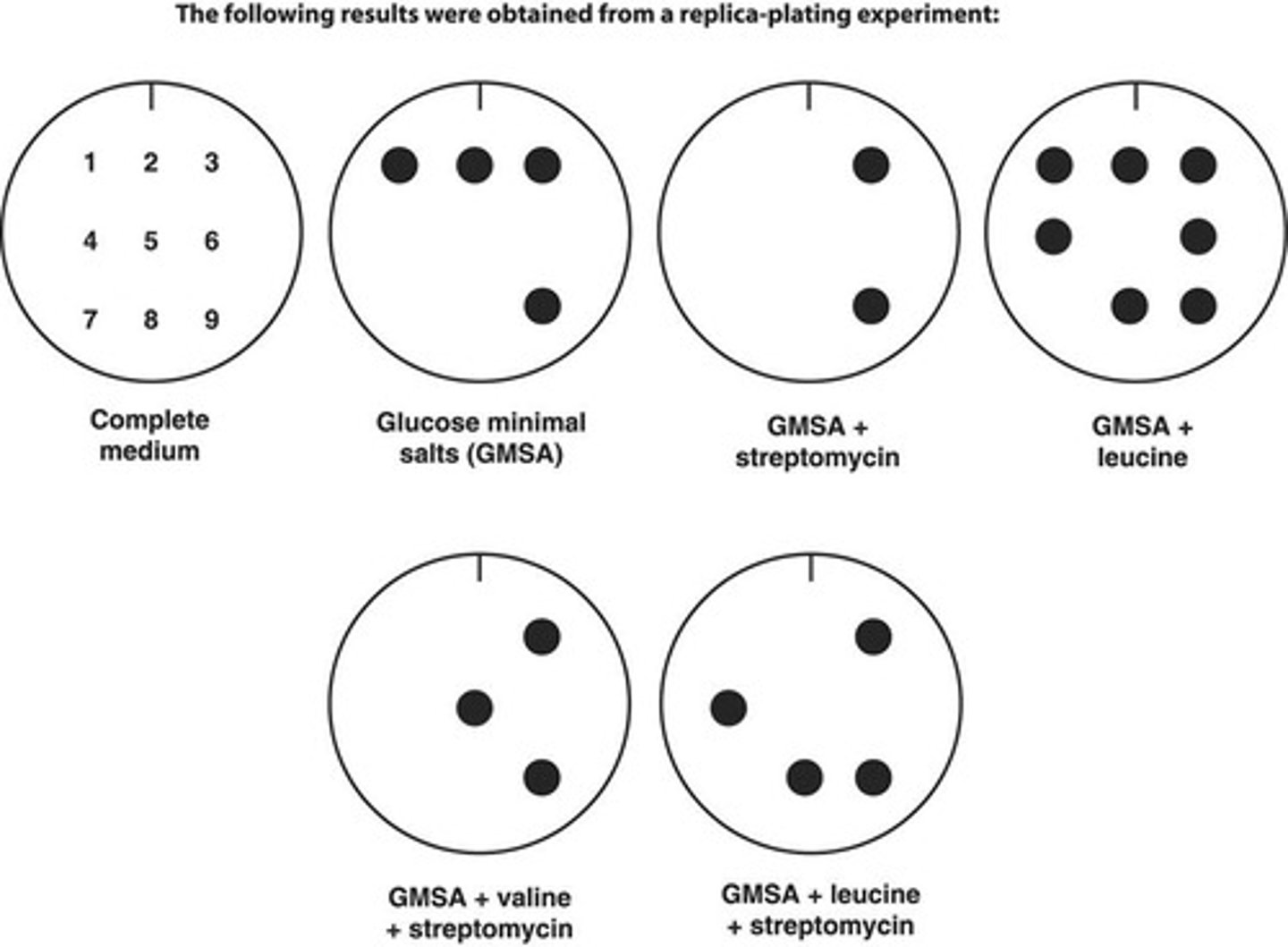
In the Figure, which colonies are streptomycin-resistant and leucine-requiring?(review Fig 8.22)
4 and 8
(Exam 2)Which chemical method(s) denatures proteins?
Denaturization
(Exam 2)
In Table 8.1, if culture 1 mutates to Hfr, what will be the result of conjugation between thetwo cultures?Culture 1: F+, leucine+, histidine+Culture 2: F-, leucine-, histidine-'
A) They will both remain the same.'=
B) 1 will become F+, leu+, his+;2 will become F+, leu+, his+
C) 1 will remain the same; recombination may occur in 2
D) 1 will become F-, leu+, his+; 2 will become Hfr, leu+, his+
E) The answer cannot be determined based on the information provided.
C) 1 will remain the same; recombination may occur in 2
(Exam 3)
(CH 13 Analysis) Use of culture independent techniques like rRNA sequencing and FISH increased our understanding of microbial diversity. Why should microbiologists still attempt to grow new species?
Yes, because there are many species yet to be discovered, mutations occur, and exploration of new places leads to the possibility of new microbes
(EXAM 3)
Which of the following best describes a key difference between prophages/proviruses and bacterial plasmids?
a. Plasmids integrate into host chromosomes, while prophages and proviruses remain independent
b. Prophages and proviruses are derived from viruses and can enter a lytic or active phase, while plasmids are independent DNA elements not derived from viruses
c. Plasmids always cause disease, while prophages and proviruses do not
d. Prophages and proviruses contain ribosomes, while plasmids do note. There is no difference between them
b. Prophages and proviruses are derived from viruses and can enter a lytic or active phase, while plasmids are independent DNA elements not derived from viruses
3 multiple choice options
(Exam 3)
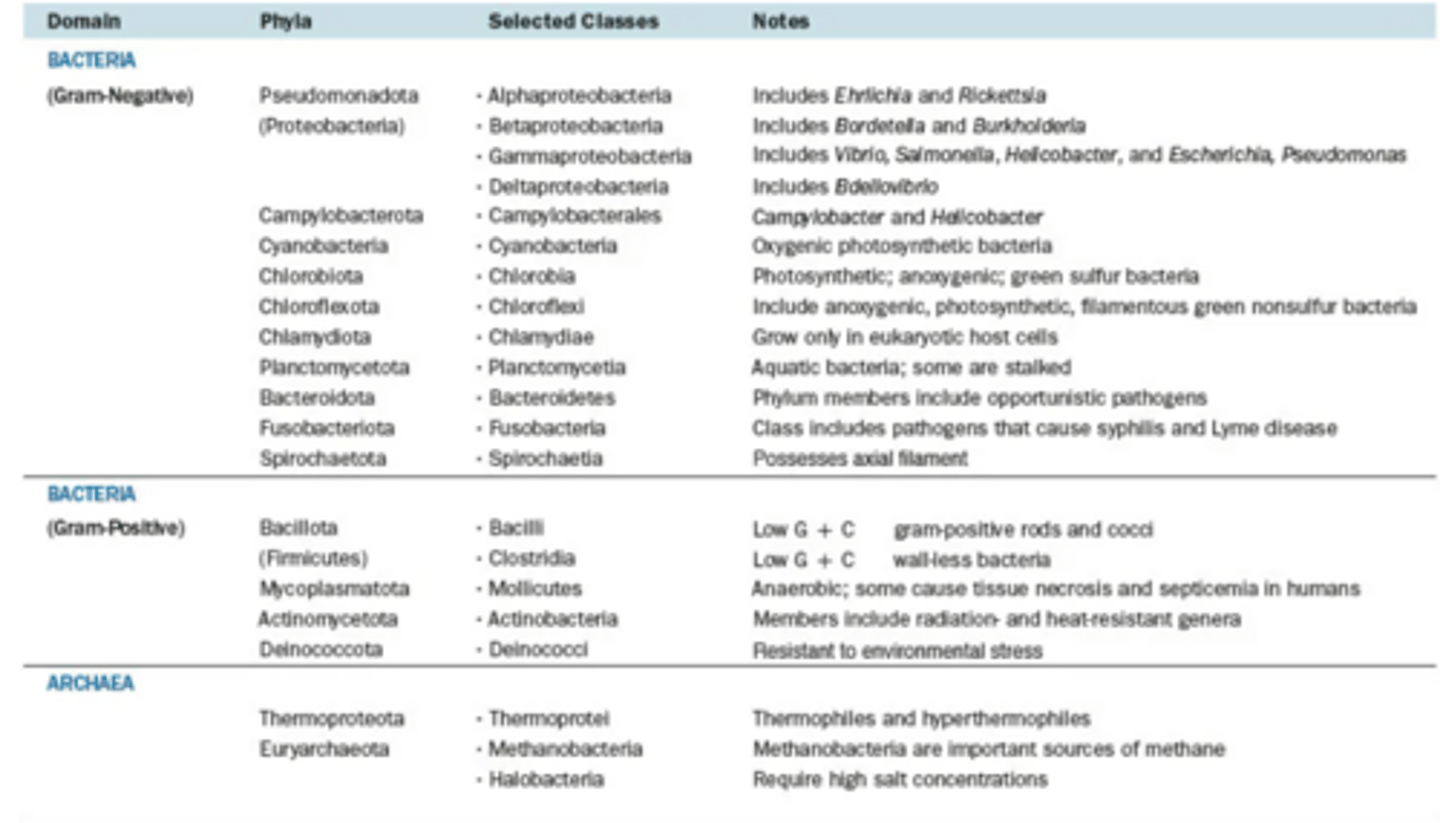
What phyla do the Methanobacteria and Halobacteria belong to? (review Table 11.1)
Phylum Euryarchaeota.
(UNSURE INCLUDED)( Exam 3)
Which of the following pairs is mismatched? (typo in Ex3 question... but still one best answer. review Ch12. Medically Important Fungi)
) Which of the following pairs is mismatched?
A) Basidiomycota - basidiospores
B) Ascomycota - conidiospores
C) Zygomycota - sporangiospores
D) microsporidia - lack mitochondria
E) anamorphs - lack spores
E) anamorphs - lack spores
(UNSURE INCLUDED) (Exam 3)
11) Which of the following pairs is mismatched?
A) teleomorph - produces both sexual and asexual spores
B) dermatomycosis - fungal infection of the skin
C) dimorphic fungus - grows as a yeast or a mold
D) systemic mycosis - fungal infection of body organs
E) coenocytic hyphae - hyphae with cross-walls
E) coenocytic hyphae - hyphae with cross-walls