CHEMISTRY MISTAKES
 Call Kai
 Learn
Learn Practice Test
 Spaced Repetition
 Match
Match Flashcards
 Knowt Play
1/16

There's no tags or description
Looks like no tags are added yet.
Name | Mastery | Learn | Test | Matching | Spaced | Call with Kai |
|---|
No analytics yet
Send a link to your students to track their progress
17 Terms
test for calcium
flame test
orange-red flame
test for ammonium ion
add SODIUM HYDROXIDE and warm
pungent gas is released
test for ammonia gas
turns damp red litmus paper blue
test for chlorine ions
add DILUTE NITRIC ACID
then add SILVER NITRATE SOLUTION
a white precipitate is formed
test for lithium ions
flame test
red flame
two characteristics of a reaction at dynamic equilibrium
forward and backward reaction occurs at the same rate
concentration of reactants and products remain constant
ionic bond
strong forces of attraction between oppositely charged ions
test for cation
add sodium hydroxide solution
if blue precipitate forms = contains copper(ii) ions
if green precipitate forms = contains iron(ii) ions
test for anion
add silver nitrate solution
if white precipitate = contains chloride ions
if cream precipitate = contains bromide ions
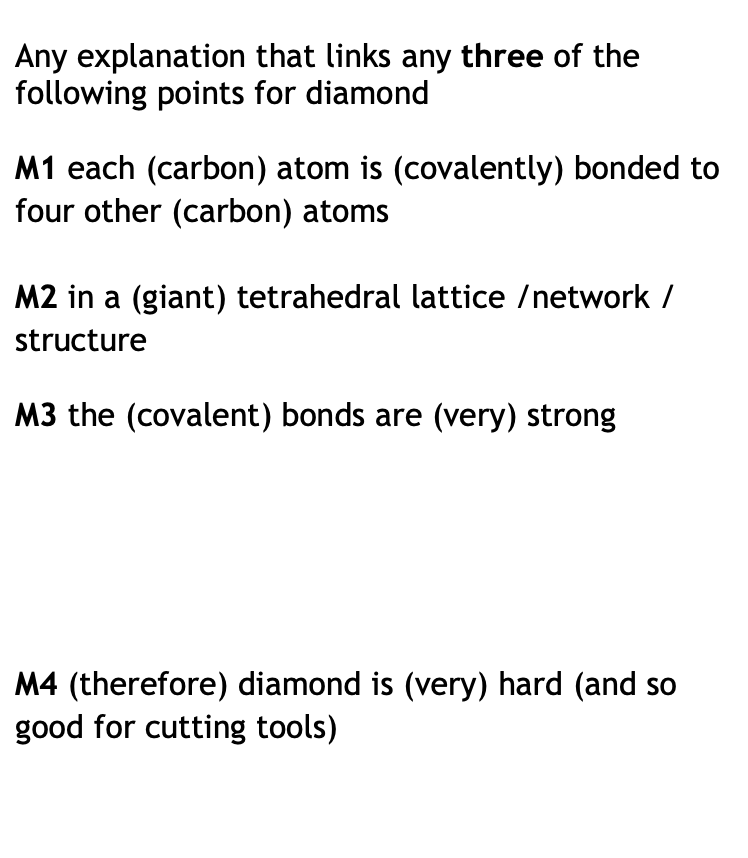
how is diamond suitable for cutting tools?
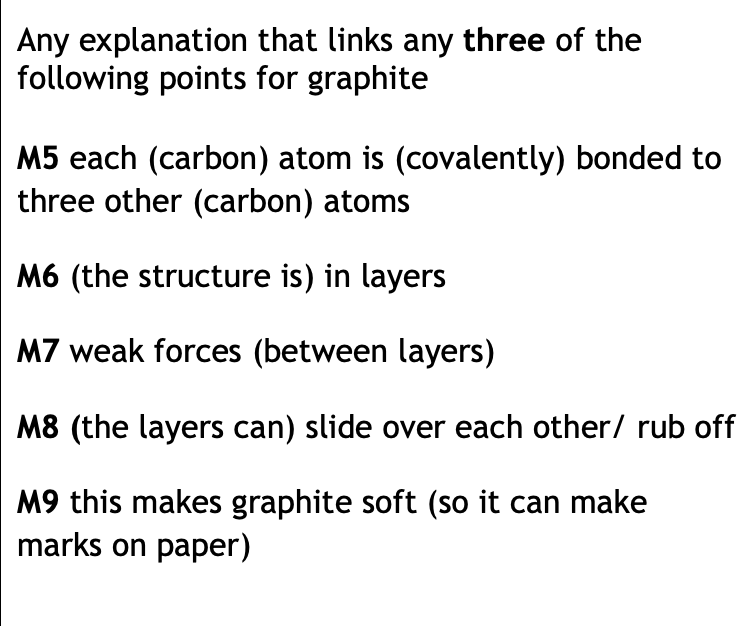
how is graphite suitable for pencils?
why the student needs to clean the platinum wire (for a flame test)?
remove any other substances
so it will not mask the colour of the flame
test for sodium
flame test
yellow flame
test for sulfate ions
add dilute hydrochloric acid
add barium chloride solution
white precipitate appears
reaction between ammonia and sulfuric acid
neutralisation
why does the mass of the contents decrease?
carbon dioxide gas is given off
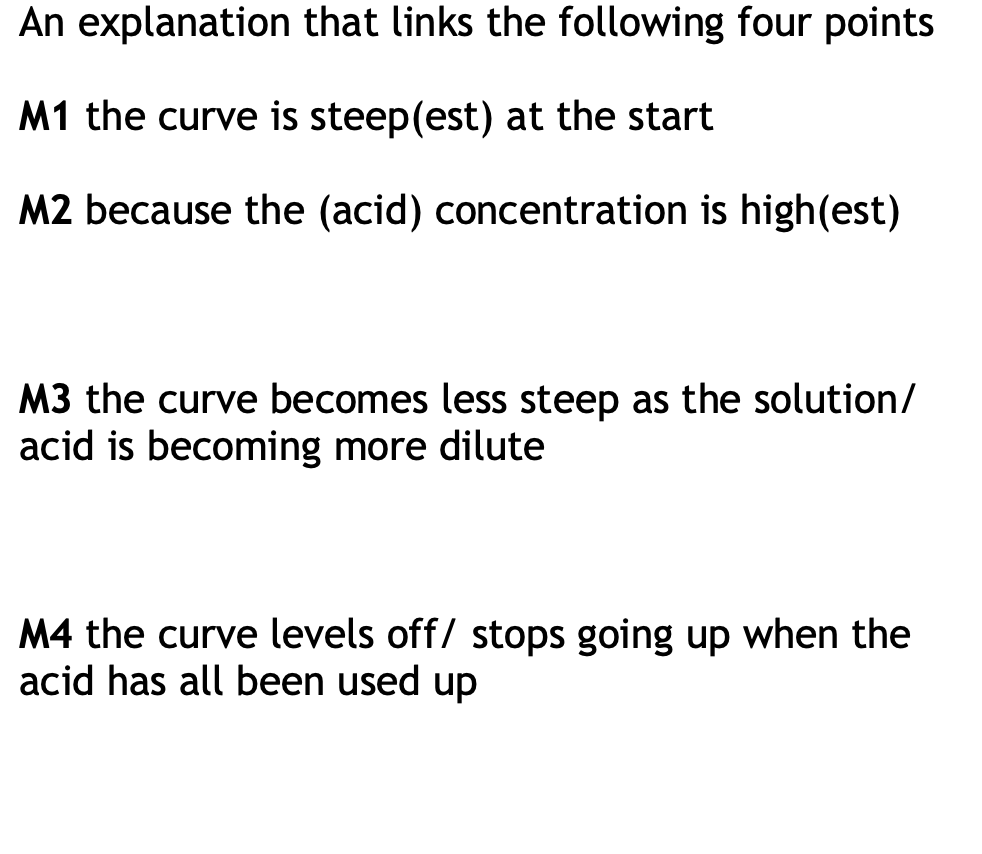
explain the shape of the graph (marble chips)