Introduction to Viruses and Cell Structure in Molecular Biology
 Call Kai
 Learn
Learn Practice Test
 Spaced Repetition
 Match
Match Flashcards
 Knowt Play
1/25

There's no tags or description
Looks like no tags are added yet.
Name | Mastery | Learn | Test | Matching | Spaced | Call with Kai |
|---|
No analytics yet
Send a link to your students to track their progress
26 Terms
What are the basic properties of cells?
Cells are highly complex and organized, controlled by a genetic program, can reproduce, assimilate energy, carry out chemical reactions, and respond to stimuli.
Are viruses considered alive?
No, viruses are not alive; they can only function and reproduce within living cells.
What is a virion?
A virion is an inanimate particle that viruses exist as outside of cells, made of DNA or RNA and a protein capsule called a capsid.
What is the size of the Tobacco Mosaic Virus (TMV)?
TMV is approximately 50 nm in size.
What classification system categorizes viruses based on their genome type?
The Baltimore classification system.
What type of virus is HIV?
HIV is a retrovirus, an RNA virus that can insert its genome into the DNA of a host cell.
What does the Ebola virus encode in its genome?
The Ebola virus encodes its genome in the form of single-stranded negative-sense RNA.
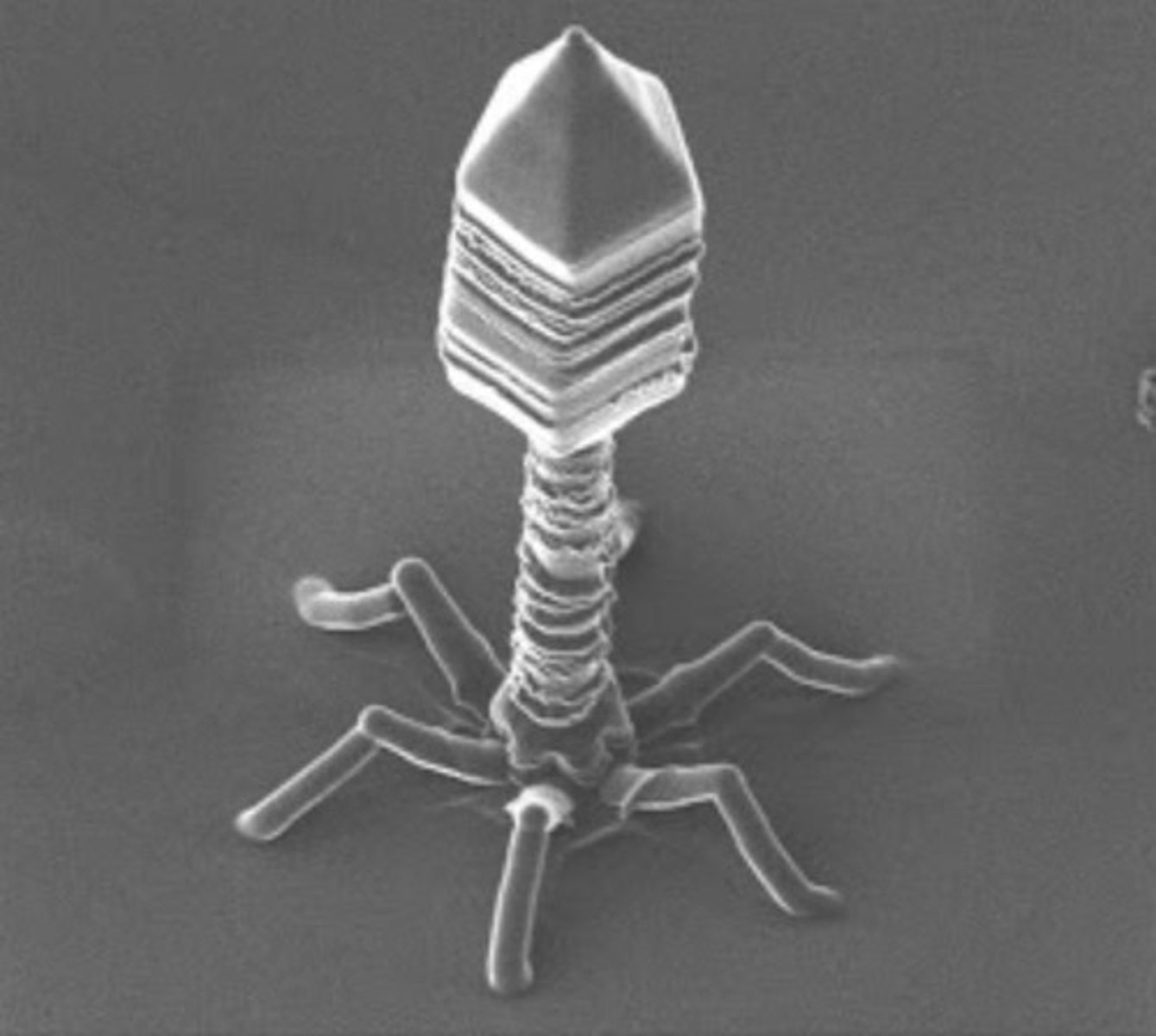
What are bacteriophages?
Bacteriophages are viruses that infect and replicate within bacteria and archaea.
What is the host range of a virus?
The host range defines the cell types a virus can infect, which can be narrow (e.g., human cold viruses) or wide (e.g., rabies).
What are the two main types of viral infection?
Lytic (kills the host cell) and non-lytic (integrative or lysogenic where the viral DNA is inserted into the host genome).
What is a provirus?
A provirus is viral DNA that is integrated into the host genome, allowing the infected cell to survive, often with impaired function.
What is microcephaly?
Microcephaly is a condition where the head circumference is smaller than normal, often associated with defects during early brain development.
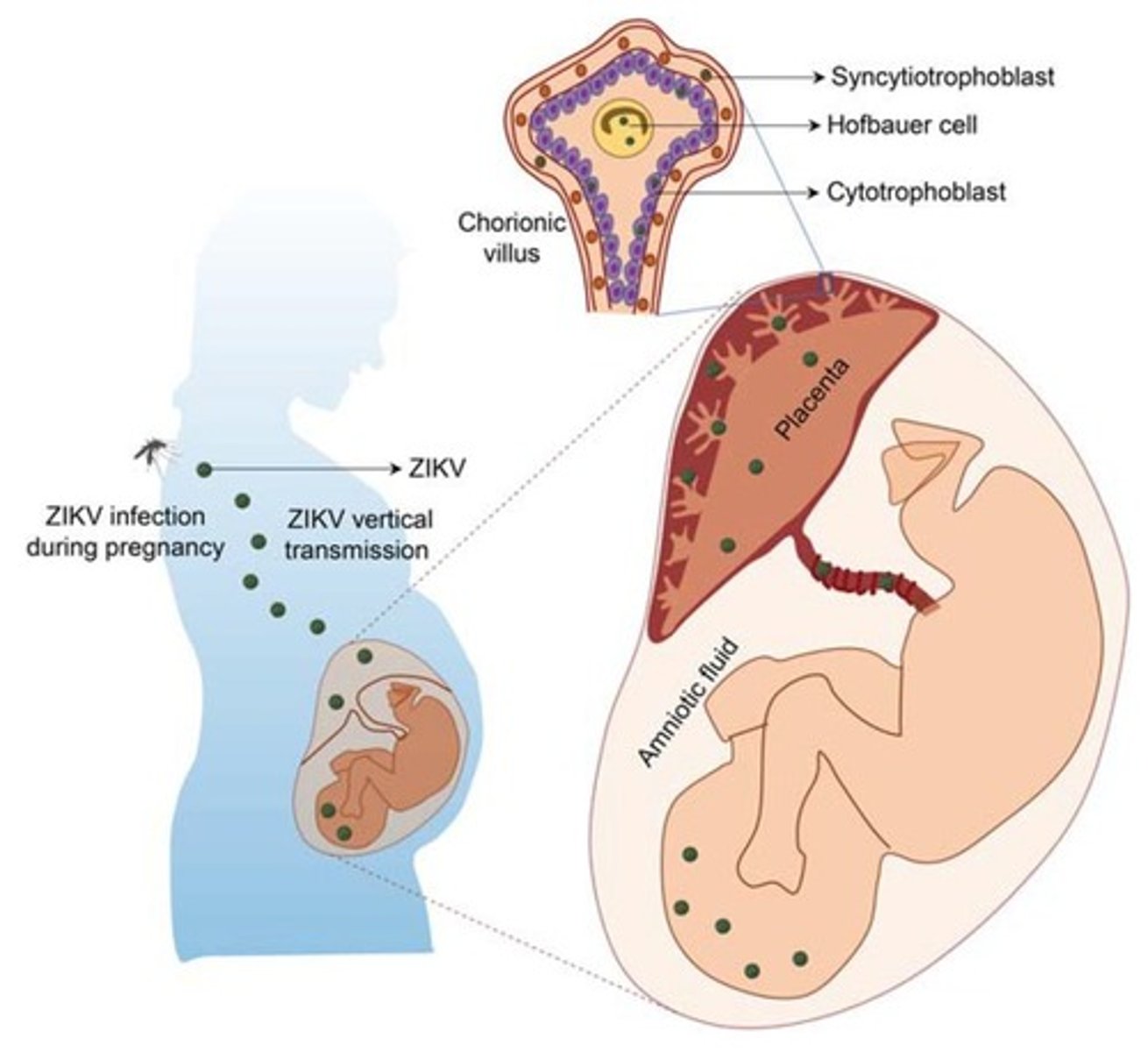
How can Zika virus be transmitted?
Zika virus can be transmitted primarily by mosquitoes, but also through sexual contact or blood transfusion.
What is the role of RNA vaccines?
RNA vaccines work by tricking the body's cells into producing a fragment of a virus, an antigen, from an RNA template.
What is the significance of CRISPR-Cas in bacteria?
CRISPR-Cas is an immune-like system that bacteria have evolved to battle attacks from bacteriophages.
What are the symptoms associated with microcephaly?
Delayed motor and speech functions, intellectual disability, seizures, facial distortions, hyperactivity, and balance problems.
What is the first vaccine treatment for rabies?
The first vaccine treatment for rabies was created in 1885 by Louis Pasteur and Émile Roux.
What are the main components of a virus?
A virus typically consists of a small amount of DNA or RNA and a protein capsule called a capsid.
What is the primary target of bacteriophages?
Bacteriophages primarily target bacterial cells.
What is the role of the capsid in a virus?
The capsid protects the viral genetic material and aids in the delivery of the viral genome into host cells.
What is the significance of the Baltimore classification?
It categorizes viruses based on their type of genome (RNA/DNA) and their method of replication.
What is the size range of the virosphere?
There are probably billions of distinct viruses, with only about 4,958 virus species formally described.
What is the function of the viral RNA polymerase in the rabies virus?
The viral RNA polymerase is responsible for synthesizing RNA from the viral RNA genome.
What is the relationship between Zika virus and fetal development?
Zika virus can cross the placental barrier and affect fetal development, leading to microcephaly.
What is the genetic material of the rabies virus?
The rabies virus has an enveloped single-stranded RNA genome.
What is the typical size of viruses compared to other organisms?
Viruses are generally much smaller than other organisms, such as mammals and plants.