Chapter 14: Energy Generation in Mitochondria
 Call Kai
 Learn
Learn Practice Test
 Spaced Repetition
 Match
Match Flashcards
 Knowt Play
1/16

There's no tags or description
Looks like no tags are added yet.
Name | Mastery | Learn | Test | Matching | Spaced | Call with Kai |
|---|
No analytics yet
Send a link to your students to track their progress
17 Terms
mitochondria functions
-energy production
-apoptosis
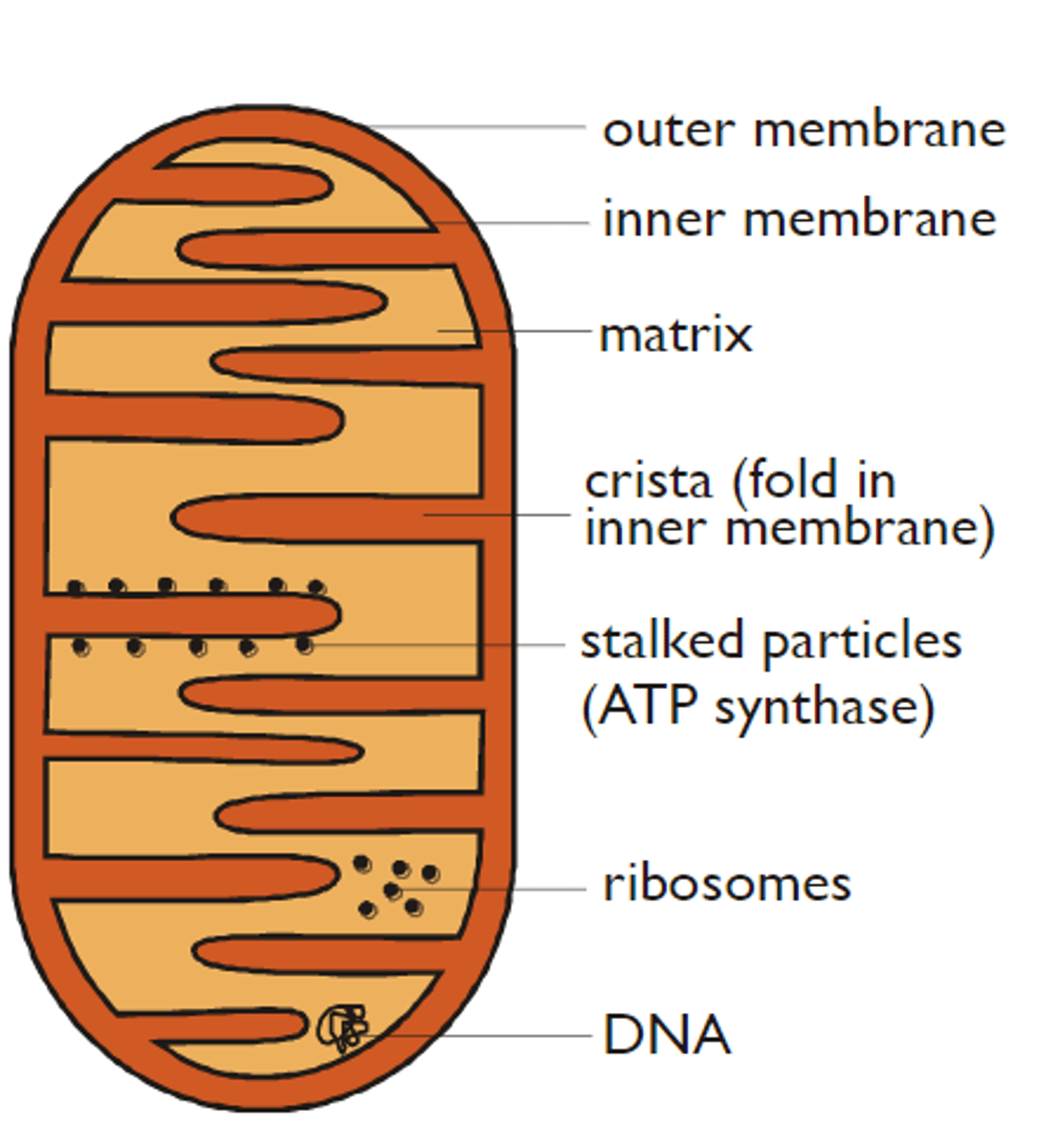
mitochondria structure
-outer membrane
-folded inner membrane
-intermembrane space
-matrix
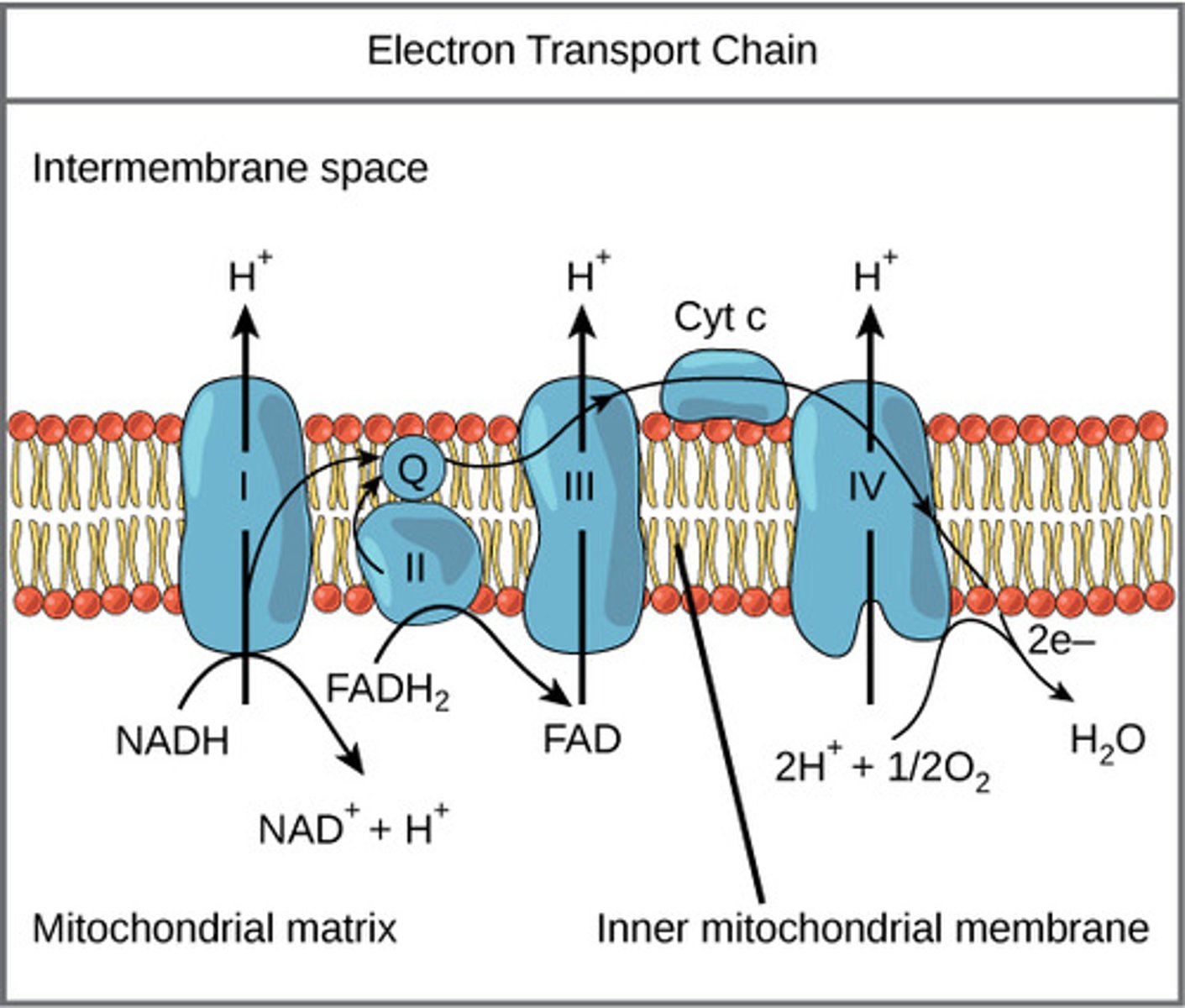
electron transport chain (ETC)
-creates a proton gradient that stores energy which is used as a fuel source to produce ATP
-part of oxidative phosphorylation
-happens in the mitochondria
what is the purpose of the electron transport chain
to make a proton gradient
oxidative phosphorylation
-The production of ATP using energy derived from the redox reactions of an electron transport chain
-the third major stage of cellular respiration.
-happens in the mitochondria
-REQUIRES A MEMBRANE
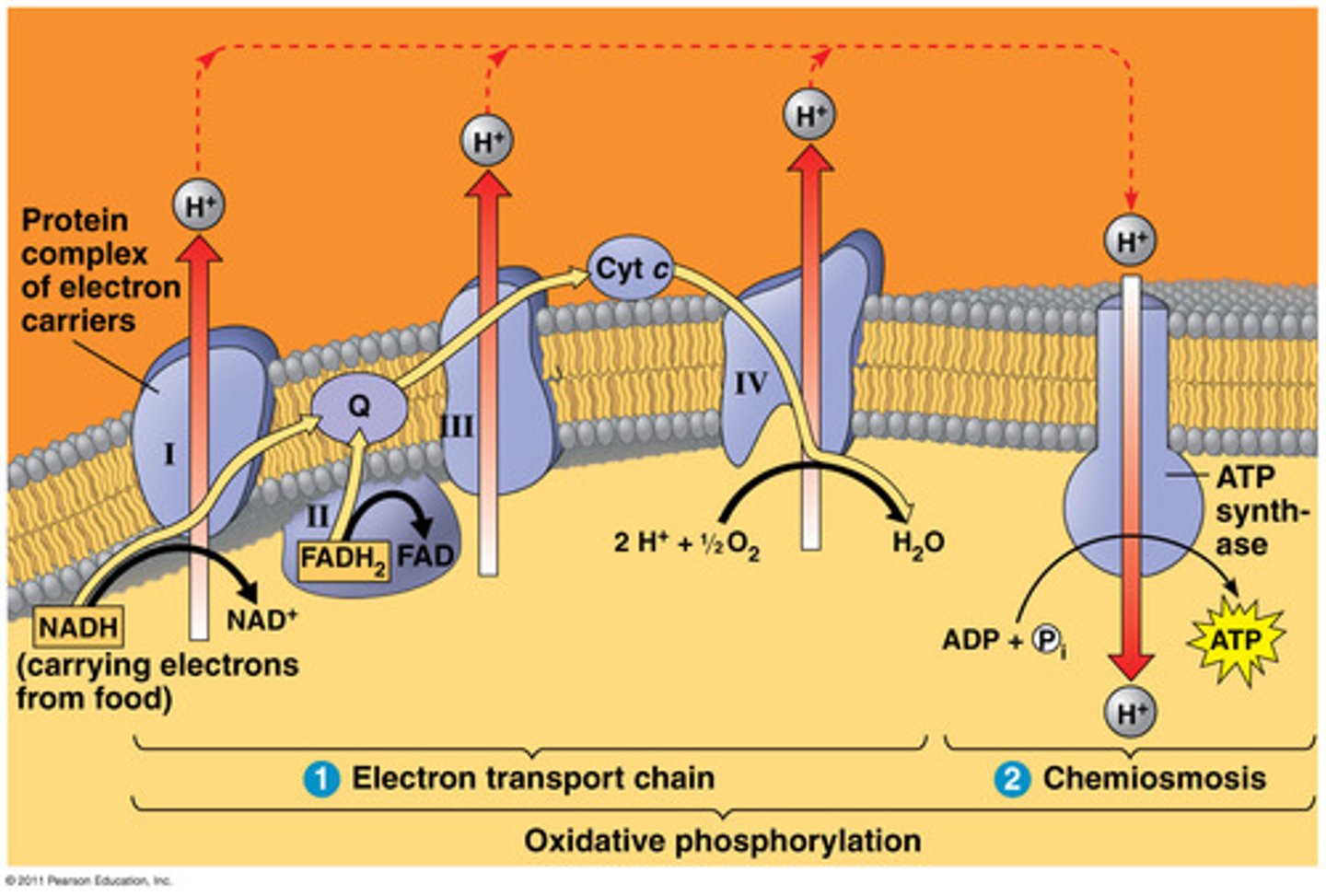
two main parts of oxidative phosphorylation
-electron transport chain
-energy generation via chemiosmosis
NADH role in oxidative phosphorylation
-donates electrons via a hydride (H-) ion to the ETC
-makes 2e- and NAD+
4 major complexes in ETC
-NADH dehydrogenase complex (complex 1)
-succinate dehydrogenase complex (complex 2)
-Cytochrome reductase complex (complex 3)
-Cytochrome oxidase complex (complex 4)
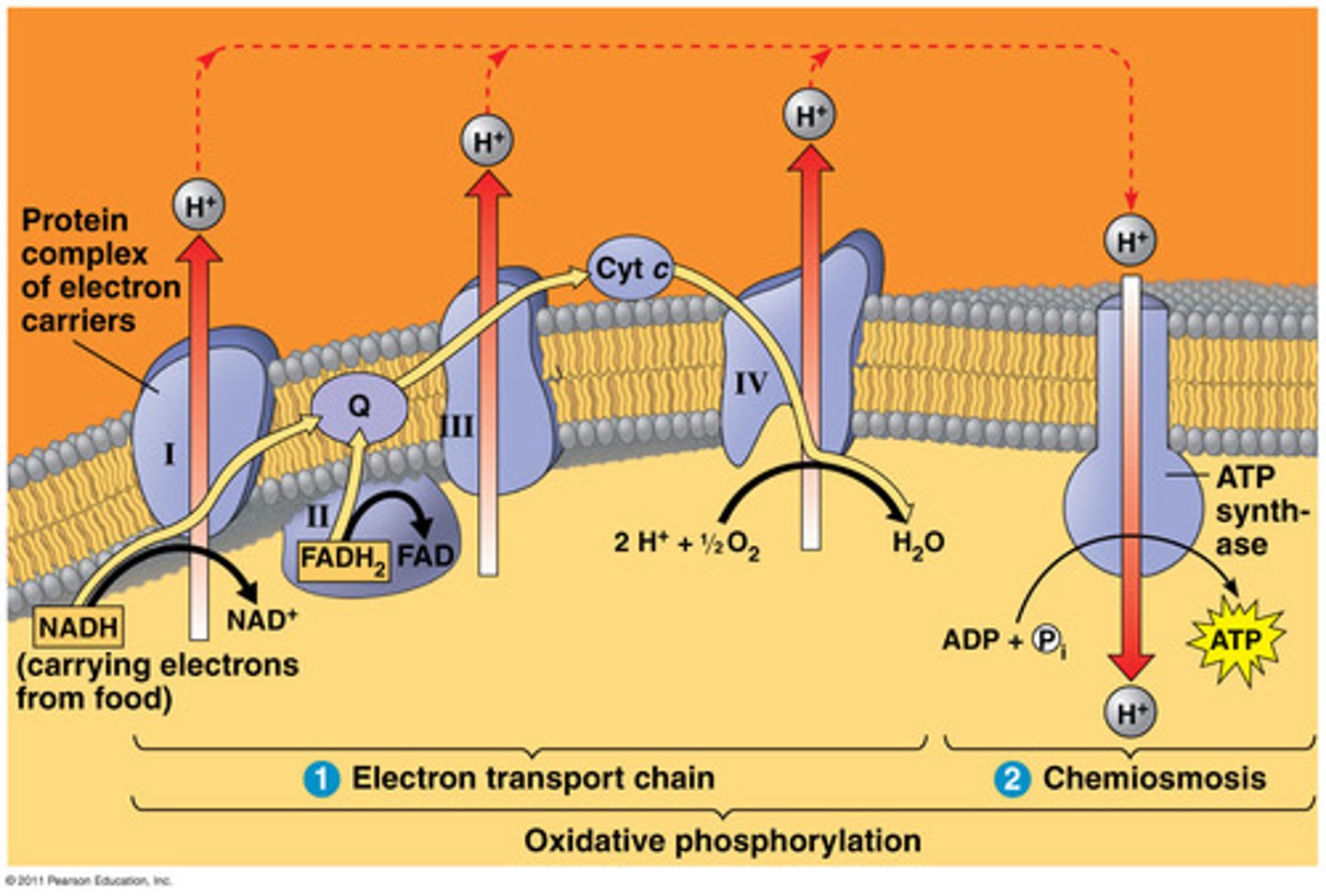
which of the four complexes function as proton pumps in the ETC
NADH dehydrogenase, Cytochrome reductase, and Cytochrome oxidase complexes (complexes 1, 3, and 4)
which of the four complexes in the ETC collects electrons from FADH2 and provides energy for the ETC
succinate dehydrogenase complex (complex 2)
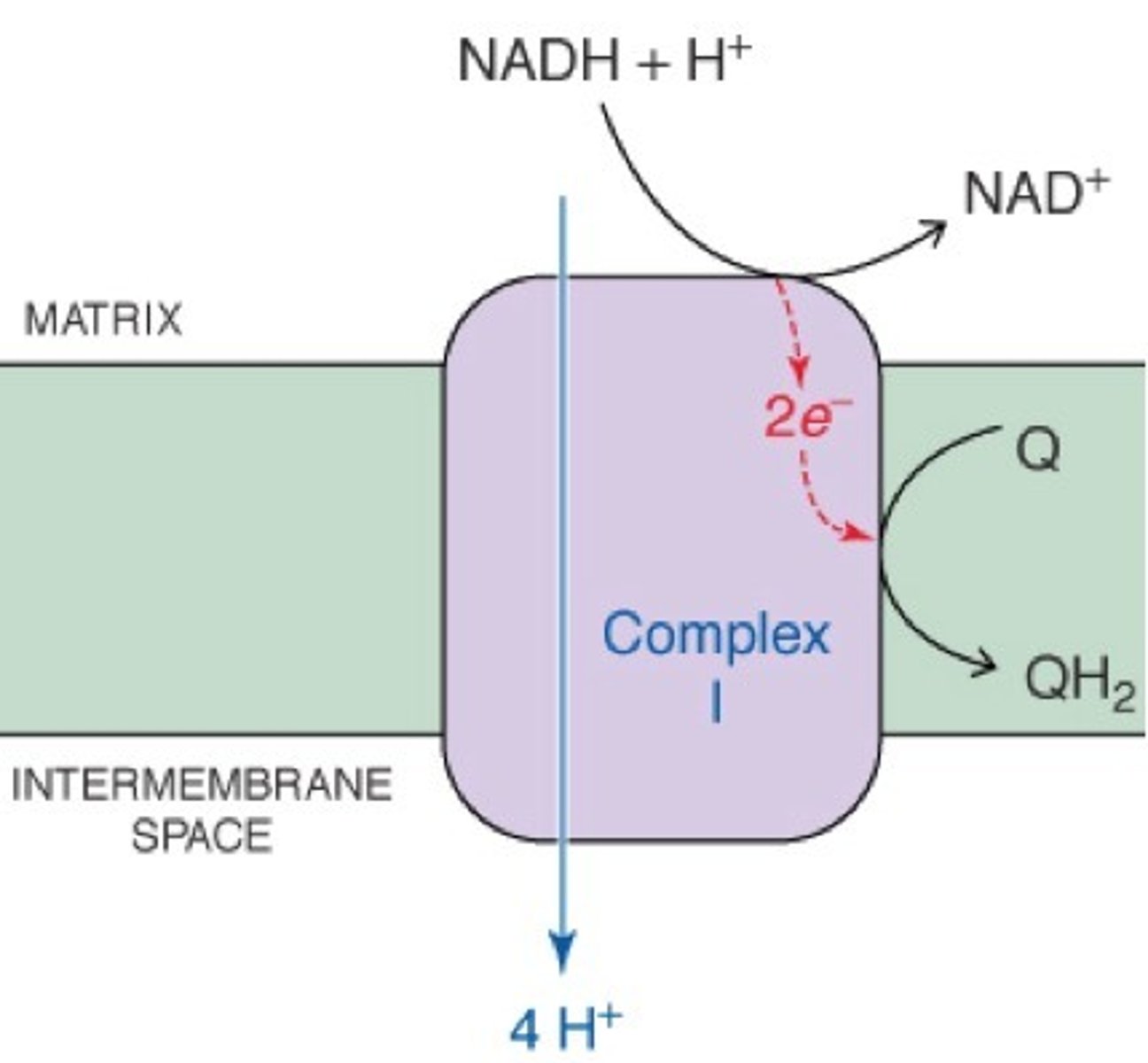
NADH dehydrogenase complex
-first complex in ETC
-accepts electrons from NADH
-protons driven from matrix to intermembrane space
-electrons (two produced per NADH) picked up by ubiquinone and transported to next pump (complex 3)
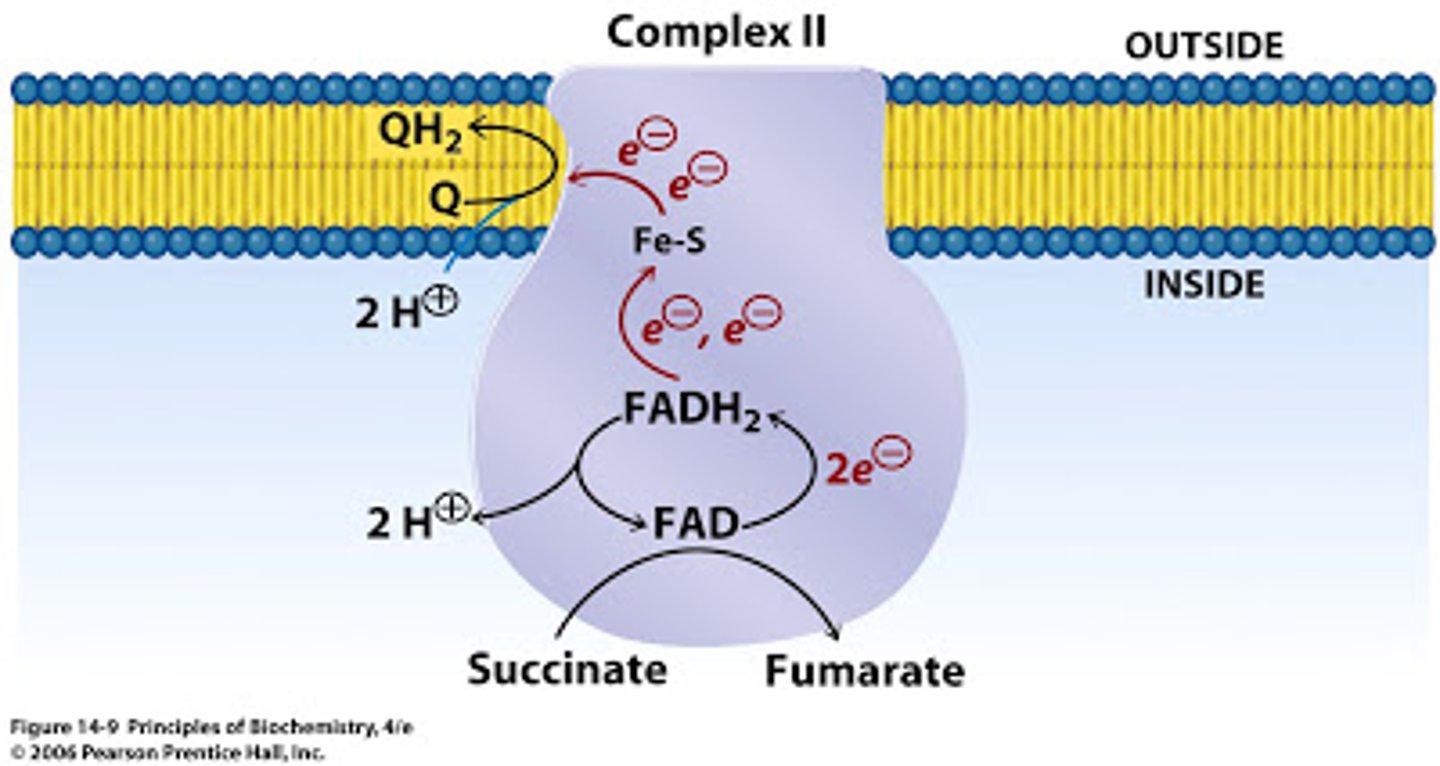
Succinate dehydrogenase complex
-second complex in ETC
-accepts electrons from FADH2
-does NOT pump protons
-electrons picked up by ubiquinone and moved to complex 3
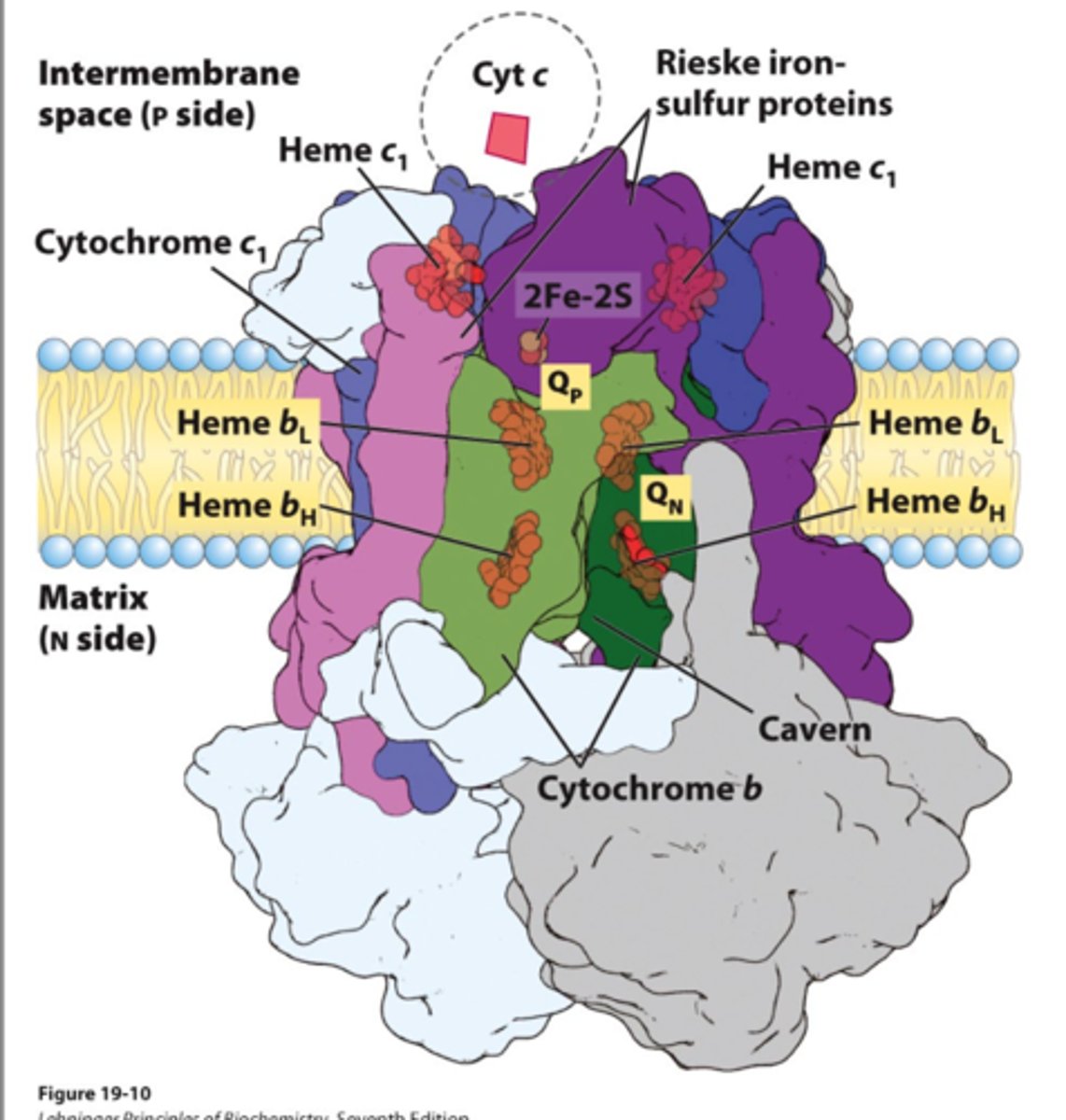
Cytochrome reductase complex
-third complex of the ETC
-electrons dropped off by ubiquinone
-proton pump
-electrons picked up by cytochrome c and moved to complex 4
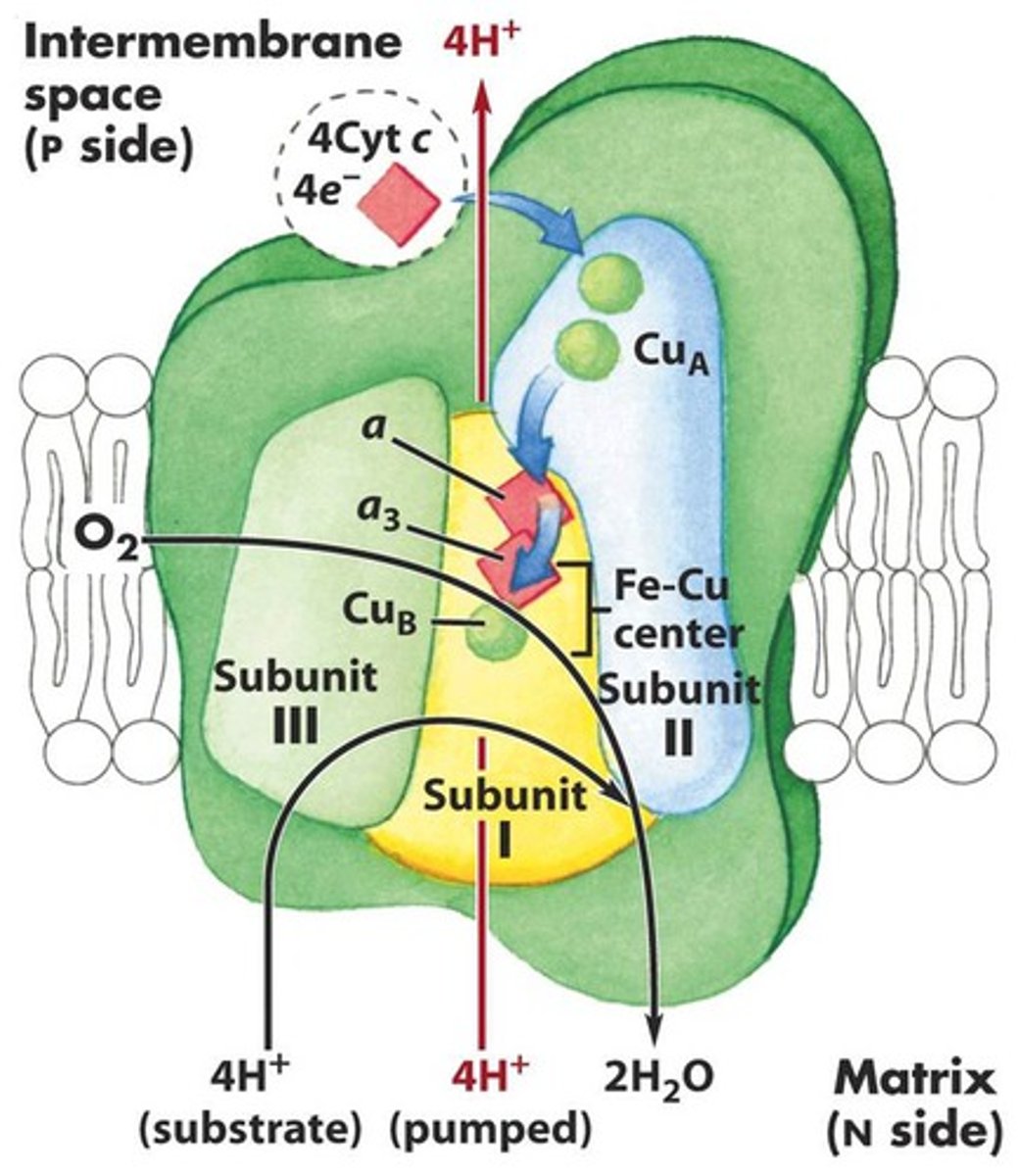
Cytochrome oxidase complex
-fourth complex of ETC
-electrons dropped off by cytochrome c
-electrons moved by copper to an oxygen-binding complex, producing water. THIS IS WHY OXYGEN IS REQUIRED FOR KREBS CYCLE!
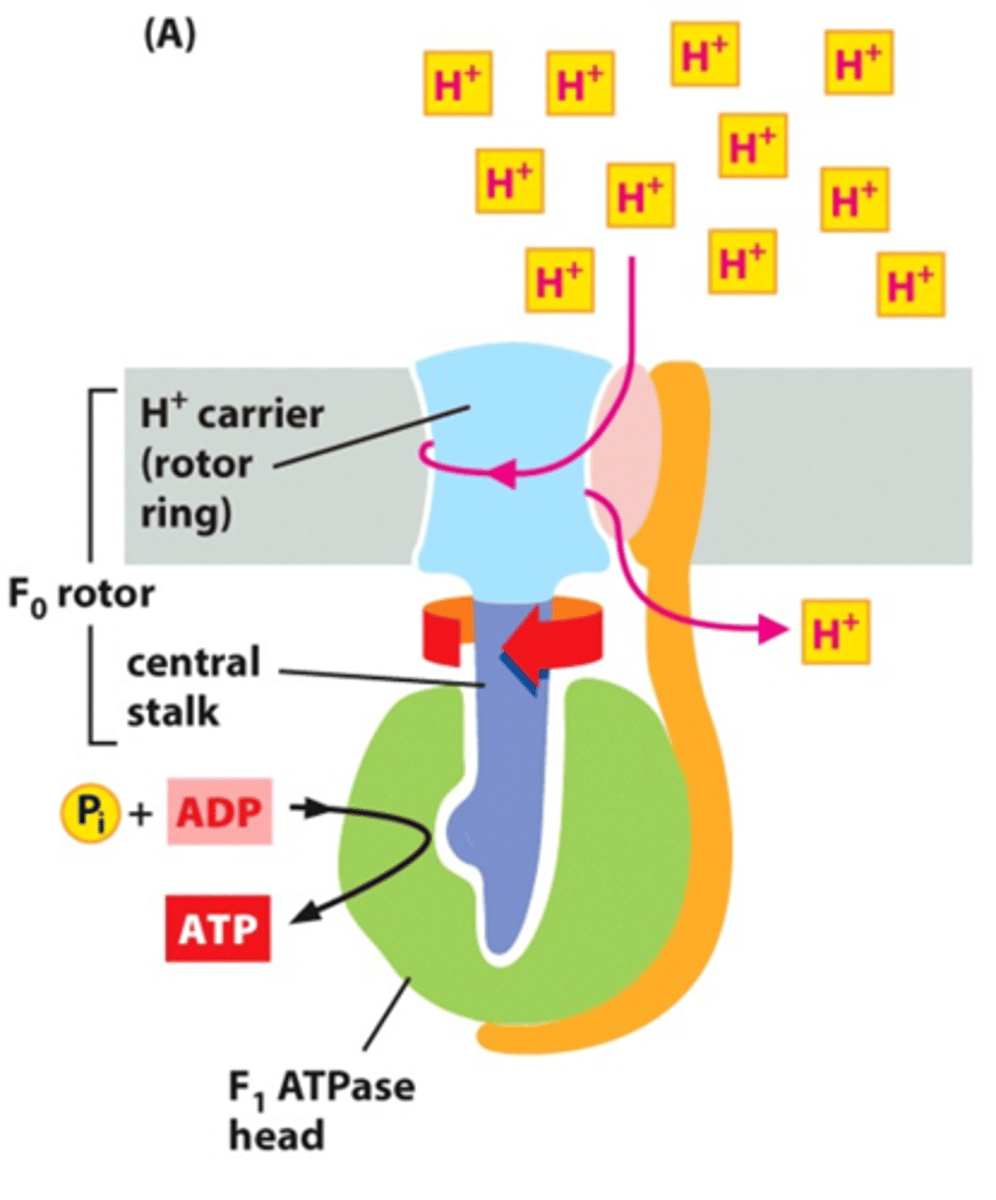
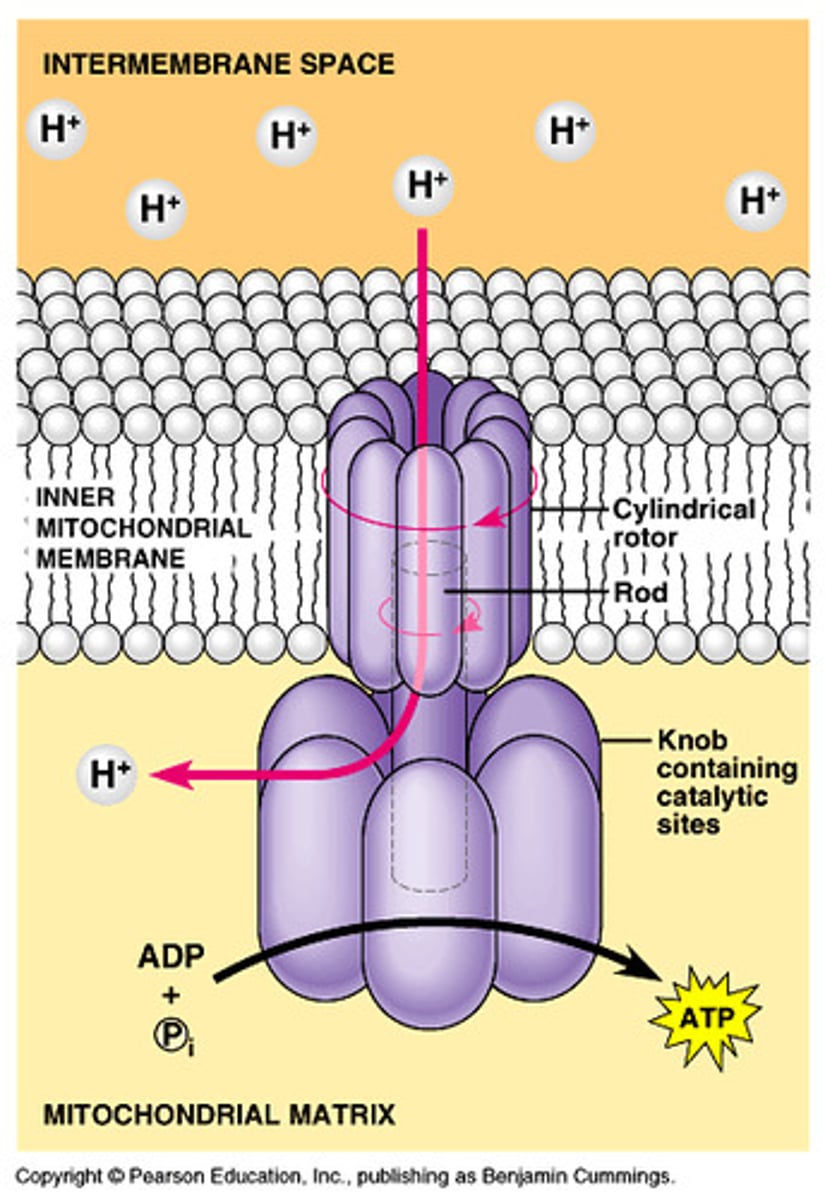
ATP synthase
Large protein that uses energy from H+ ions (from the proton gradient produced in ETC) to bind ADP and a phosphate group together to produce ATP
F0 rotor
H+ ions wrap around the complex
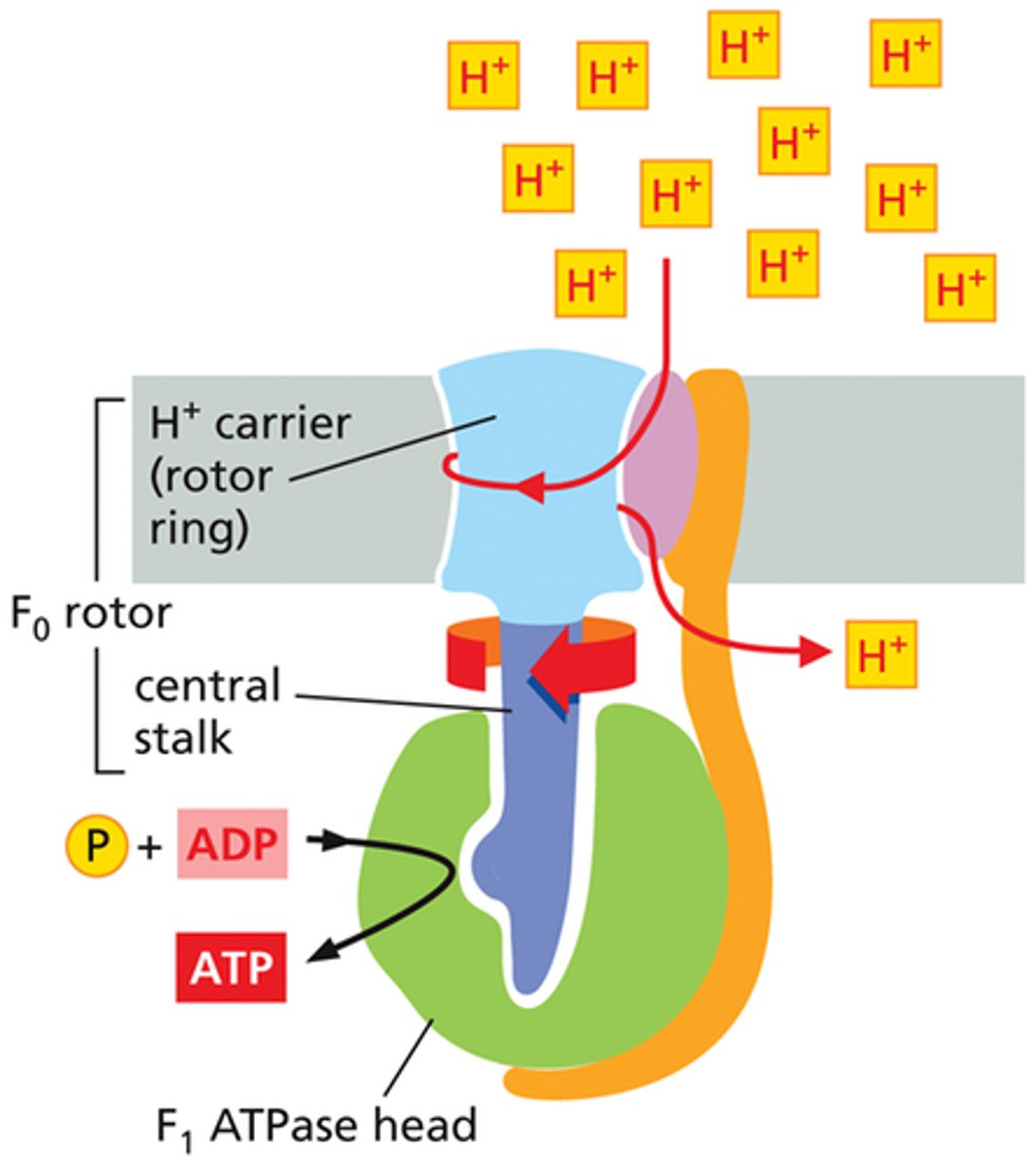
F1 ATPase head
Picks up ADP and kicks out ATP