EARTH 148 Midterm
 Call Kai
 Learn
Learn Practice Test
 Spaced Repetition
 Match
Match Flashcards
 Knowt Play
1/49

There's no tags or description
Looks like no tags are added yet.
Name | Mastery | Learn | Test | Matching | Spaced | Call with Kai |
|---|
No analytics yet
Send a link to your students to track their progress
50 Terms
Species
genera, family, order, class, phyla, kingdom
paraphyletic
artificial group; they include a common ancestor but exclude some of its descendants
ex. fish
Homology
fundemental similarities as a result of commono ancestry
Phylogeny
history of life
monophyletic
groups descended from a common ancestor + all living descendants of that common ancestor
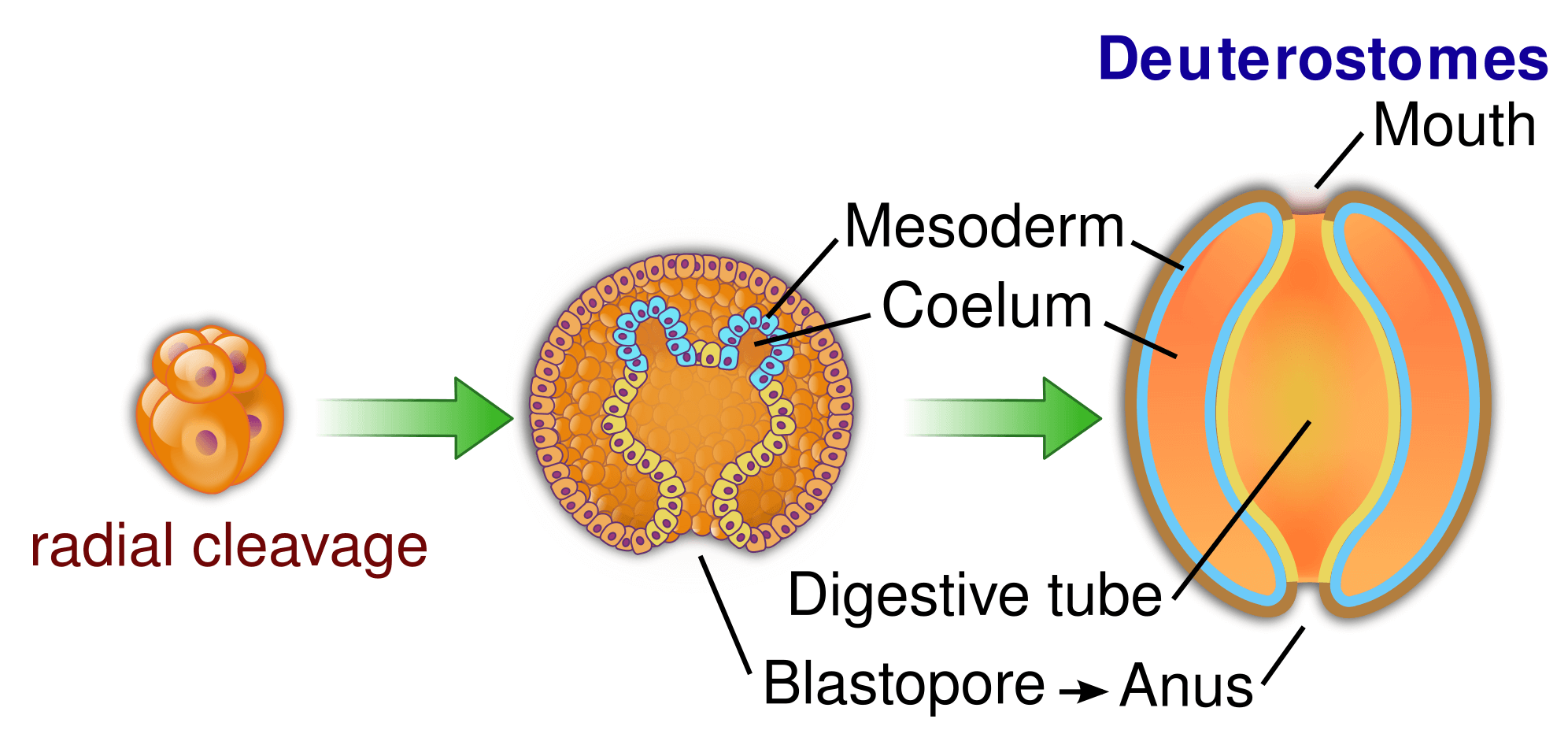
Deuterostomes (Cambrian)
NODE
Has blastopore; anus forms first
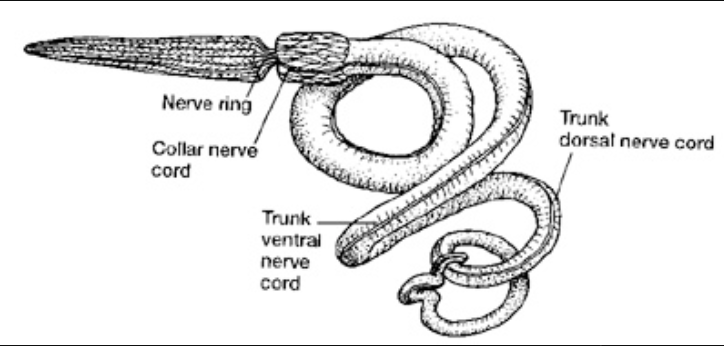
Hemichordates (Cambrian)
cilliated phayngeal gill slits
Chordates (Cambrian)
NODE
notochord
ciliated pharyngeal slits
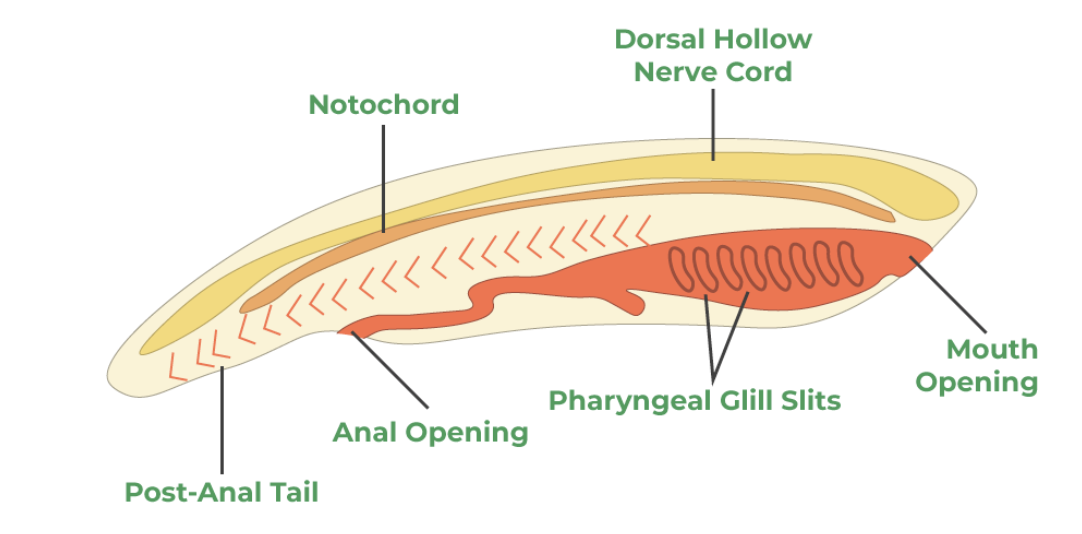
notochord
flexible, tough rod that is skeletal support for embryos of all chordates
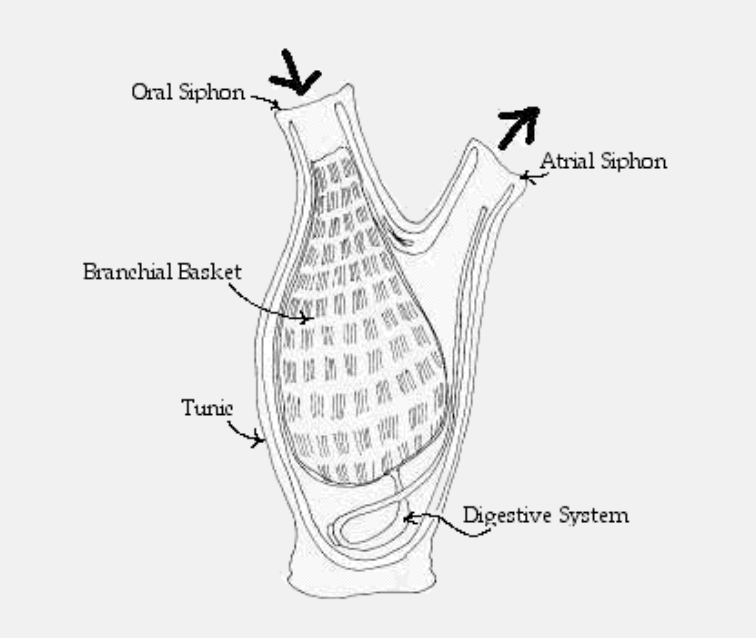
urochordate (Cambrian)
sessile
bag-shaped
loses notochord in adult stage
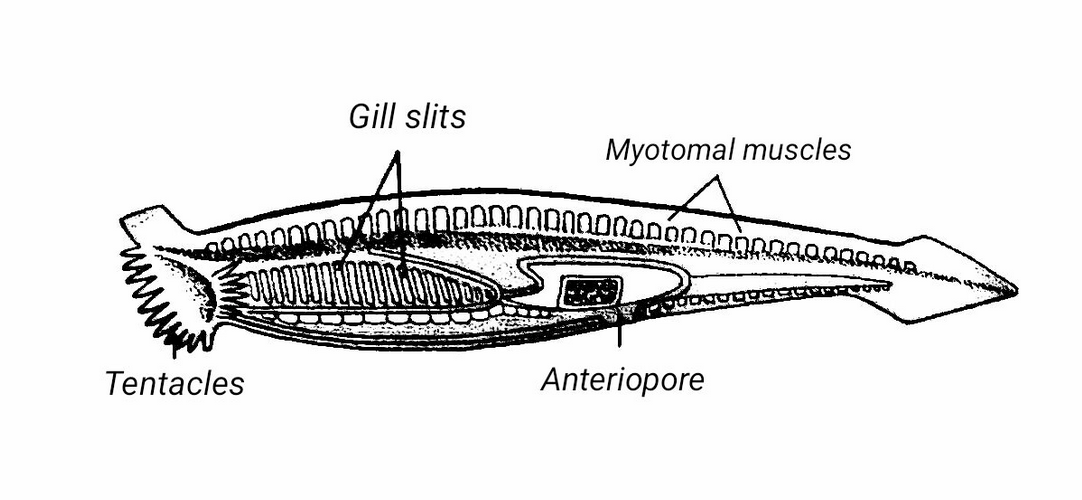
Cephalochordates (Cambrian)
anteriro tentacles
dorsal hollow nerve chord (formed by neural crest) + notochord
Vertebrates (Cambrian)
NODE
skull
dorsal hollow nerve chord (formed by neural crest)
Dexiothetism
theory that echinoderms & chordates the same as hemichordates turned 90°
Paedomorphosis/Juvenile Adult Theory
attainment of sexual maturity during otherwise juvenile state of development
Modern classification scheme
amniotes
reptiles
turtles
diapsids
lepidosaurs
archosaurs
crocodiles
birds
synapsids
Reptile
most recent common ancestor of turtles, birds, and all descendants
Hagfish (Carboniferous)
slime “eels”
jawless
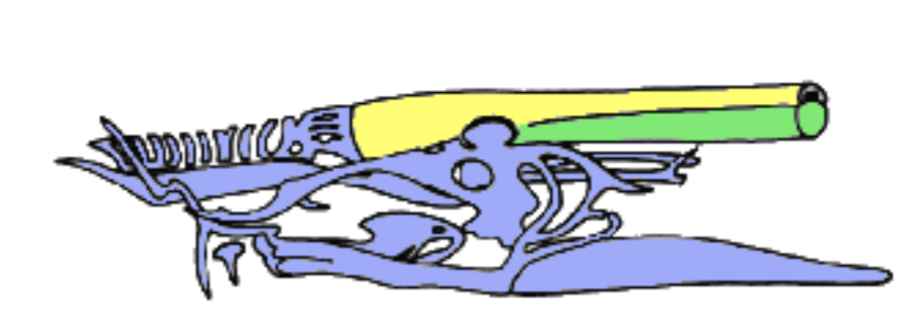
Lamprey (Devonian)
horny keratinized teeth
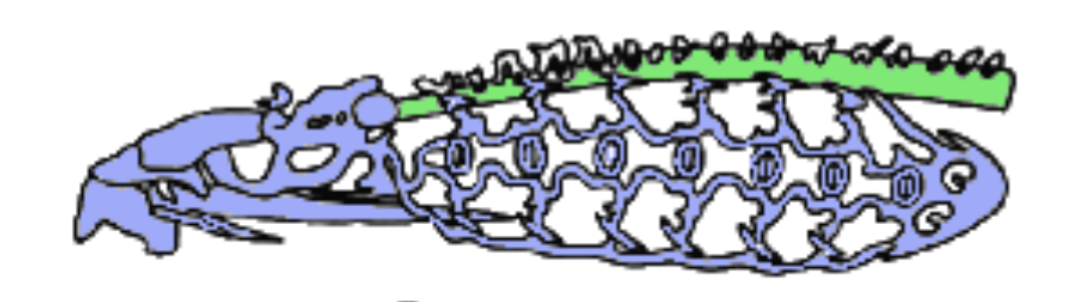
Ostracoderms (Ordovician)
shell skin
not monophyletic
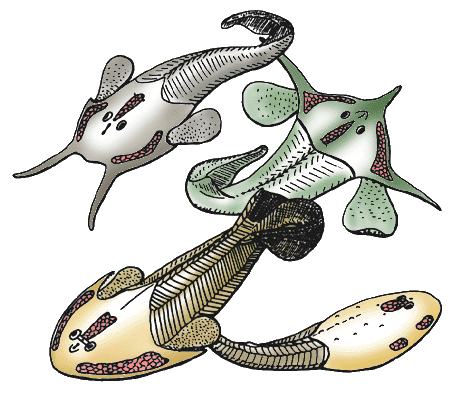
Heterostracans (Silurian)
1 opening on each side of armored head
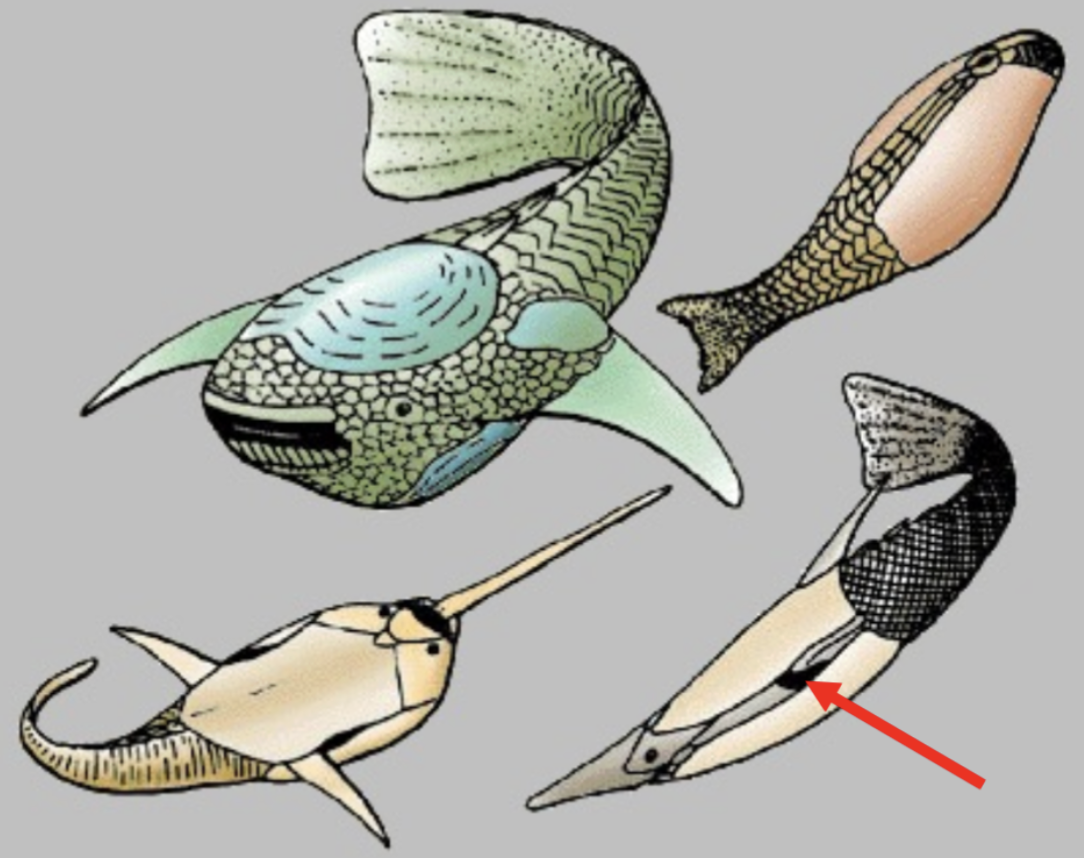
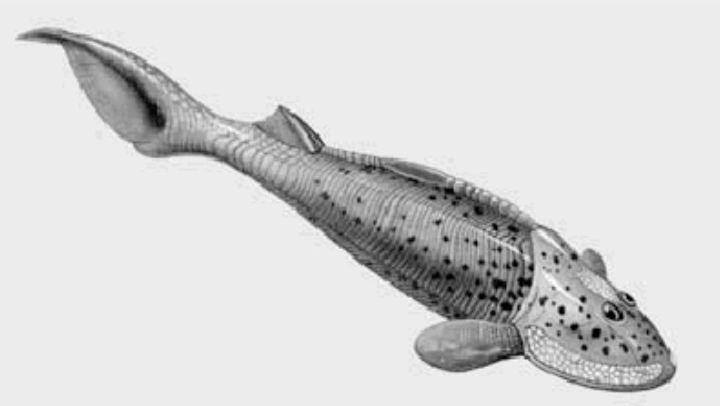
Osteostracans (Silurian)
scaled pectoral fins
paired appendages
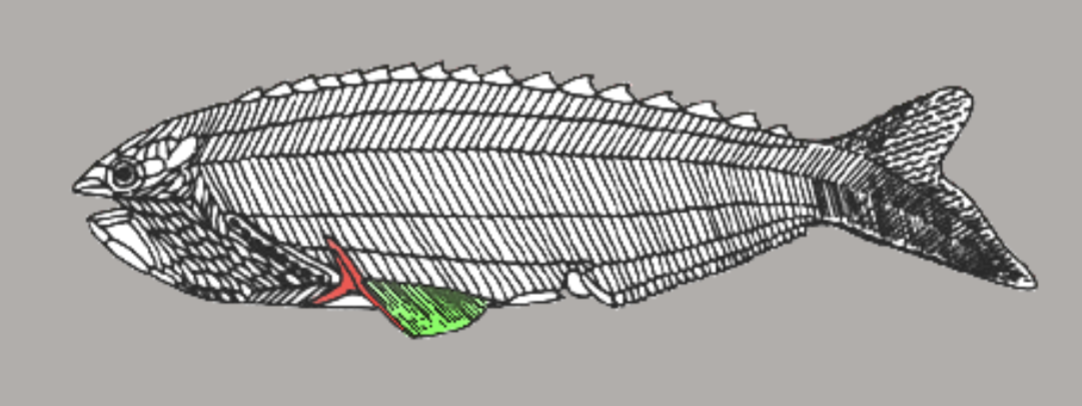
Anaspids
downward bent tail
paired appendages
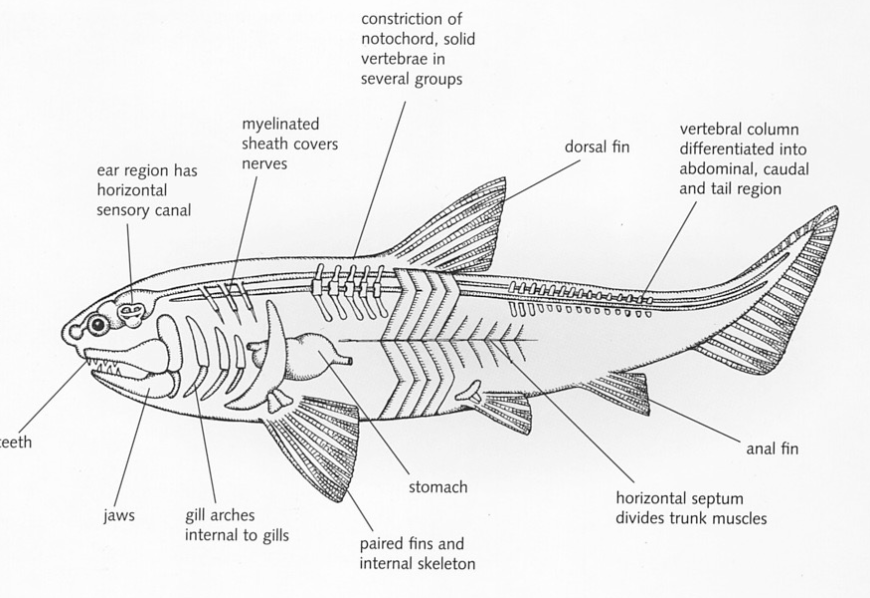
Gnathostomes (Silurian)
NODE
jawed
spiral intenstine
trabeculae
paired appendages
Trabeculae
paired, anterior components in the formation of embryonic baincase
Chondrichthyans (Devonian)
NODE
cartilagenous tooth-like placoid scales
internal fertilization via male calspers
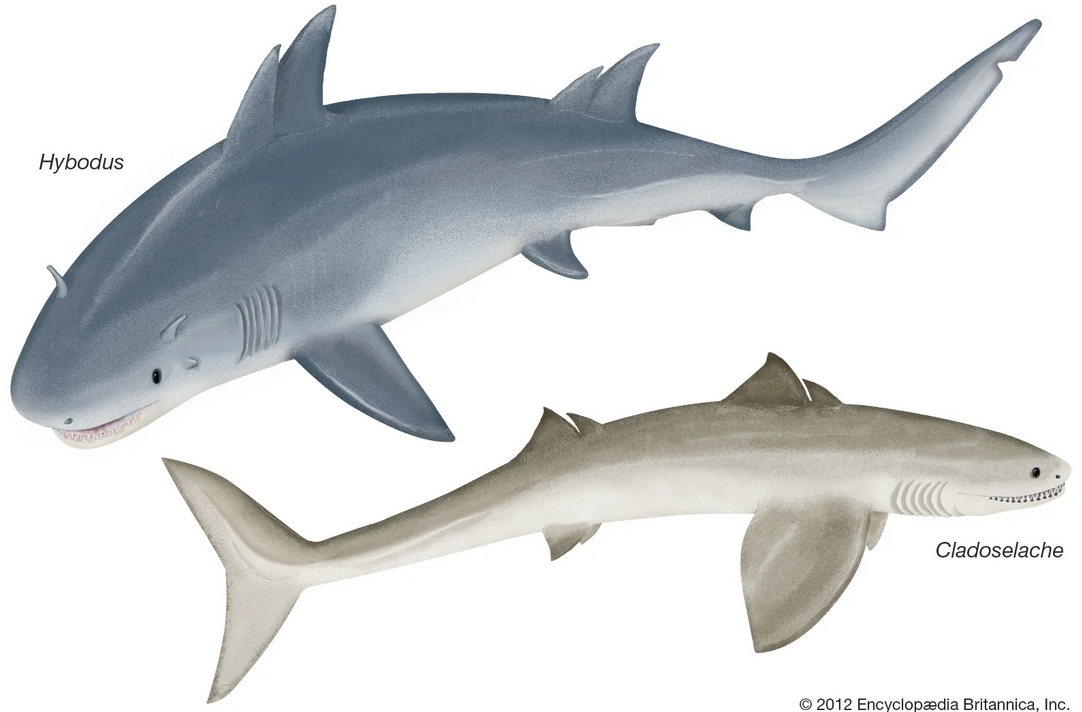
Placoderms (Devonian)
dermal armor
no true teeth; sharpened dermal bone plates
neurocranium
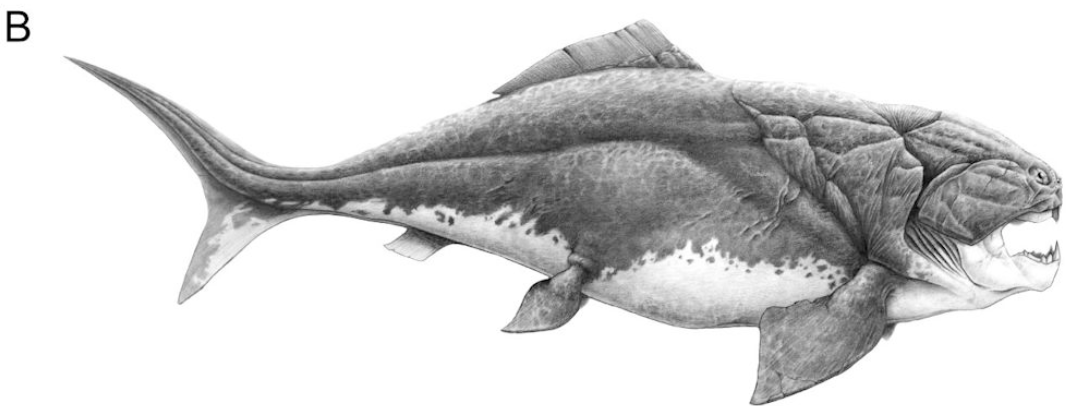
Osteichthyes (Silurian)
NODE
bony fish
lungs/swimbladder form from gut
terminal mouth
neurocranium
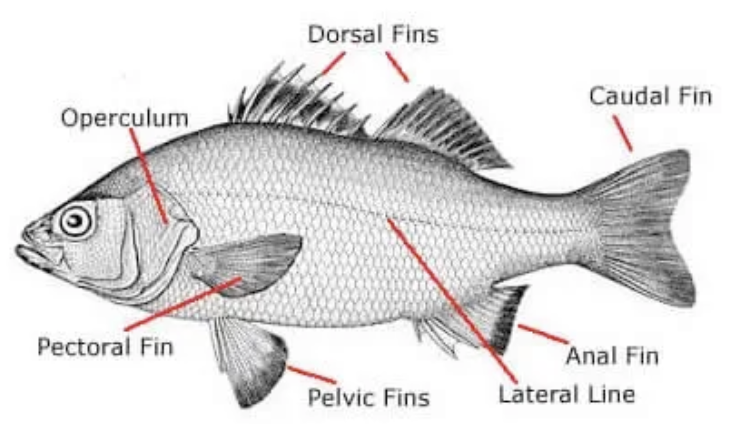
Acanthodian (Silurian)
spiny shark
terminal mouth
neurocranium
not monophyletic
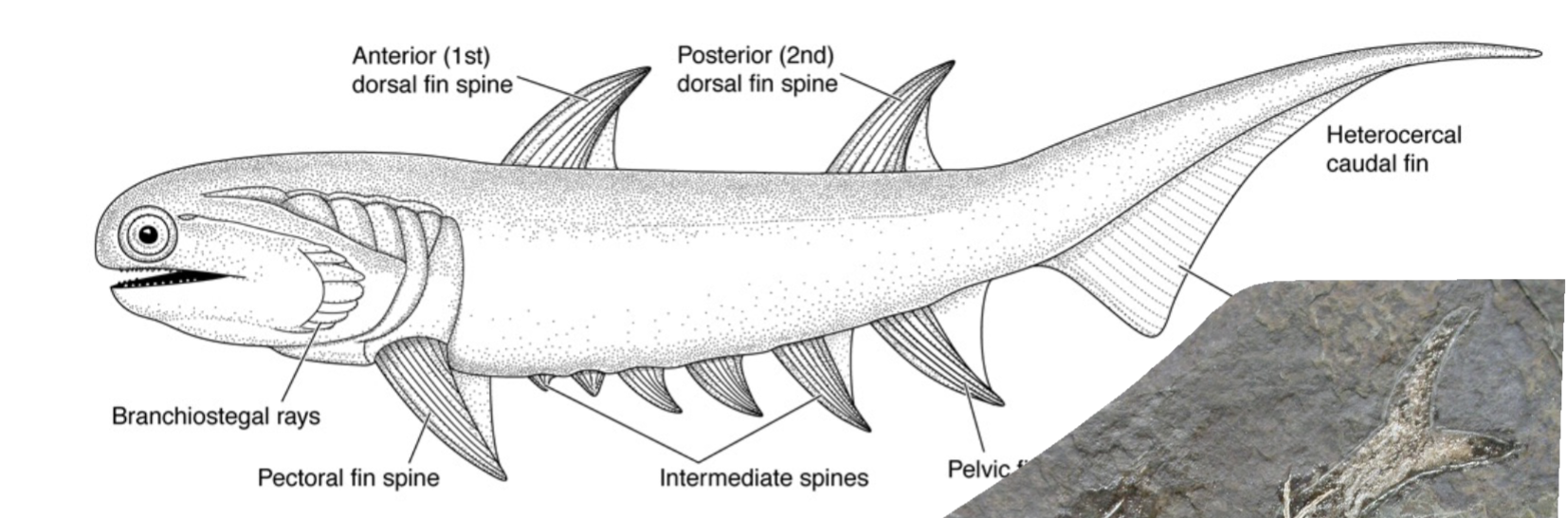
Actinopterygii (Devonian)
NODE
Ganoid scales
Acrodin caps on teeth
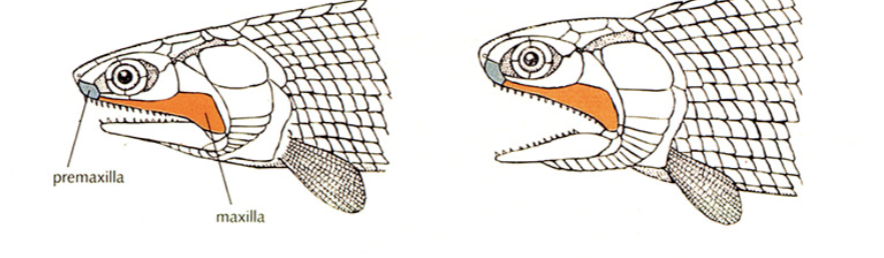
Polypterus (Devonian)
Actinopterygiian
swimbladder dorsal to foregut
fringing fulcra
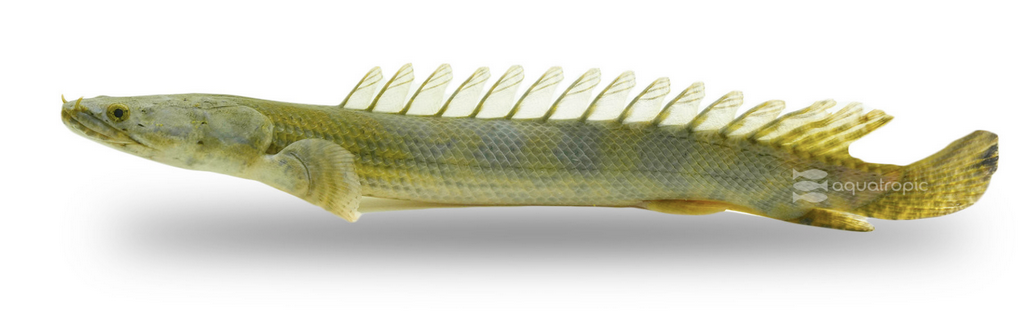
Neopterygii (Permian)
NODE
sympletic jaw joint
highly mobile maxilla
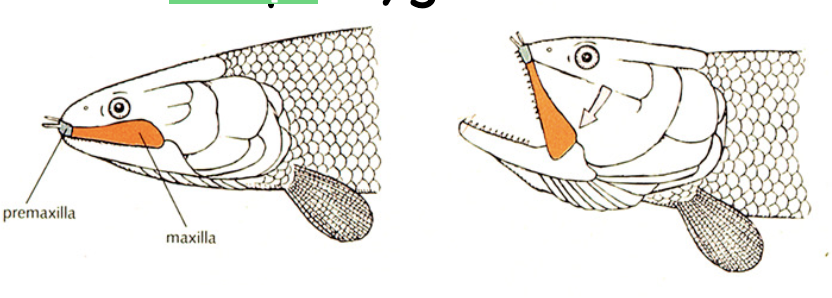
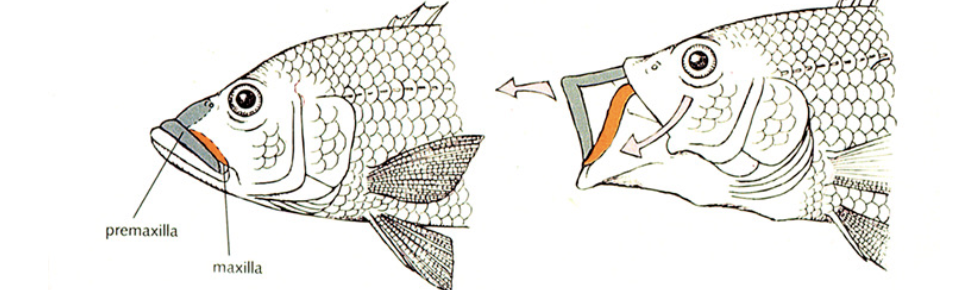
Teleost (Triassic)
maxilla is pulled in and lower jaw is pushed out
Sarcopterygii (Silurian)
NODE
large clavicle
beginning of pectoral girdle evolution
lobed fins/fleshy limbs
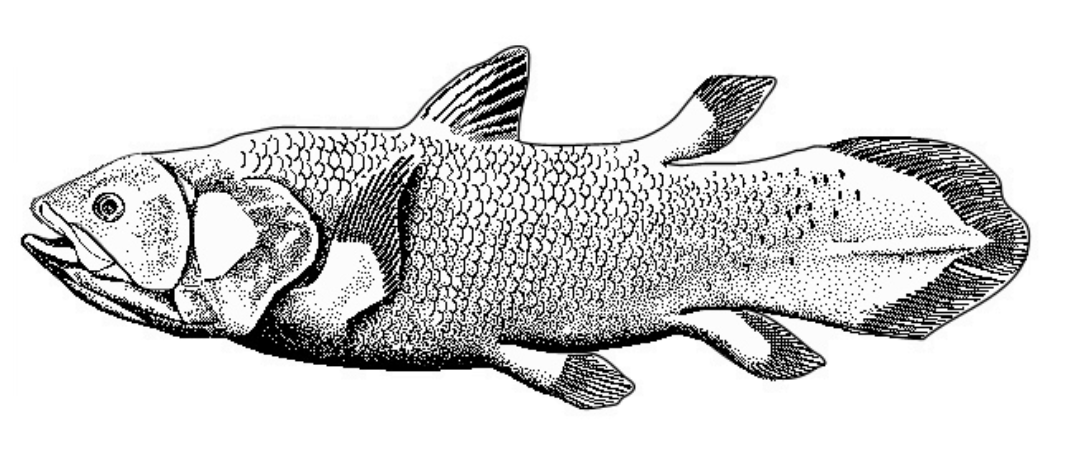
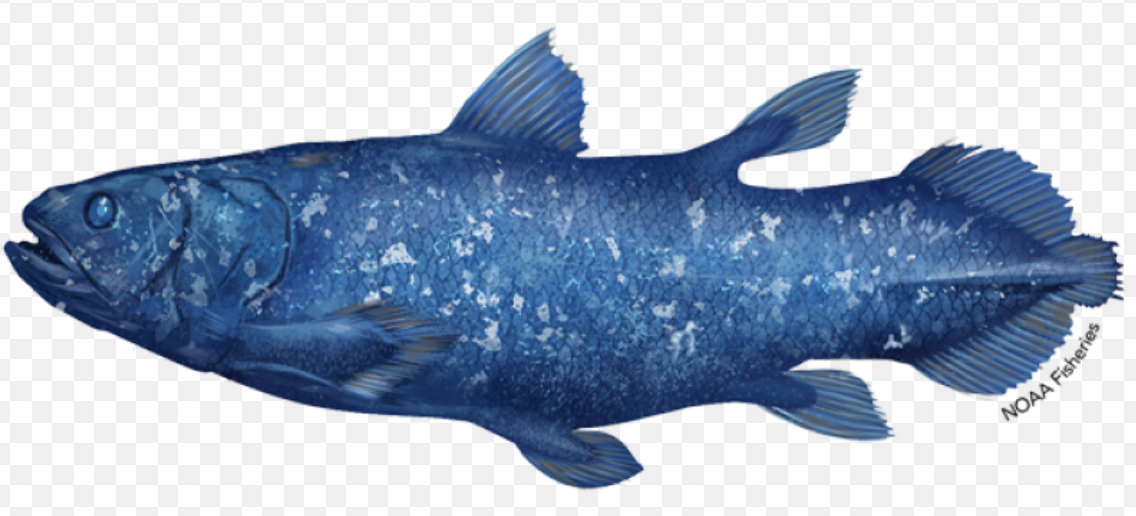
Coelacanth (Devonian)
sarcopts
Choanate (Devonian)
NODE
Front and back halves of braincase fuse
Stapes
Ossified inner ear capsule
Pectoral girdle free from skull
Pectoral and pelvic girdles articulate w. vertebral column
Polydactyl limb
Complex intervertebral articulations
Tetrapod (Devonian)
NODE
weight bearing joints
poldactyl fingers
stapes
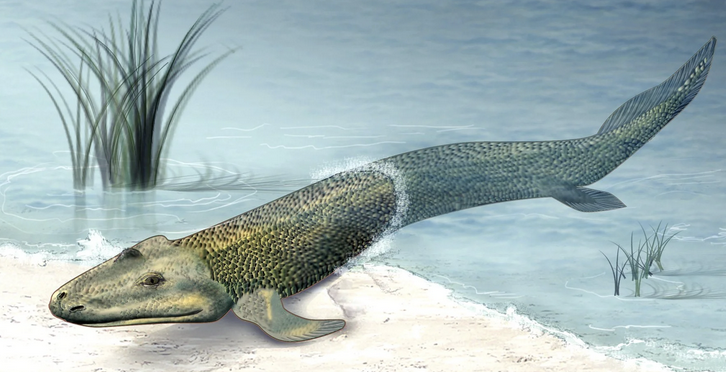
Stapes
evolved from hyomandibula (jaw) for sound
Amphibia (Devonian)
NODE
flat skull w. widely separate internal nares
Intercentrum
4 digit manus
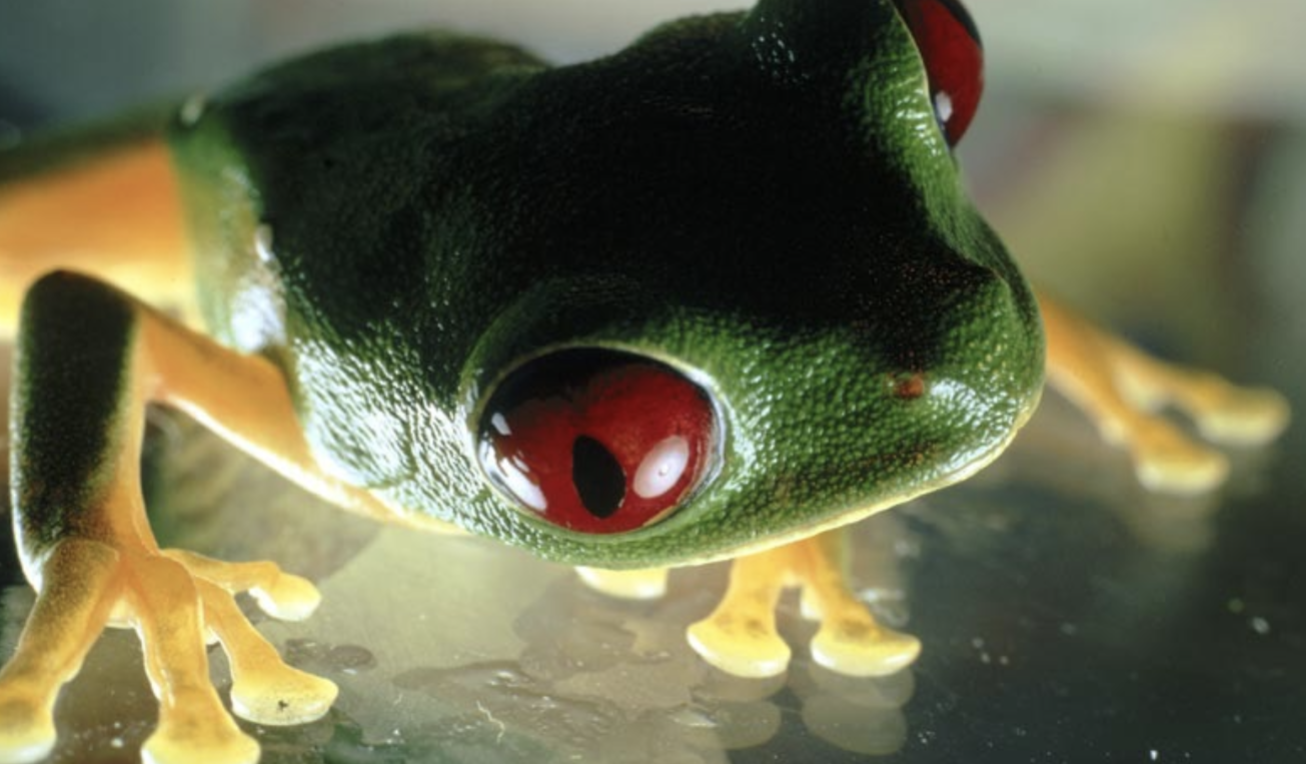
Temnospondyl (Carboniferous)
NODE
arge interpterygoid vacuities, double occipital condyle
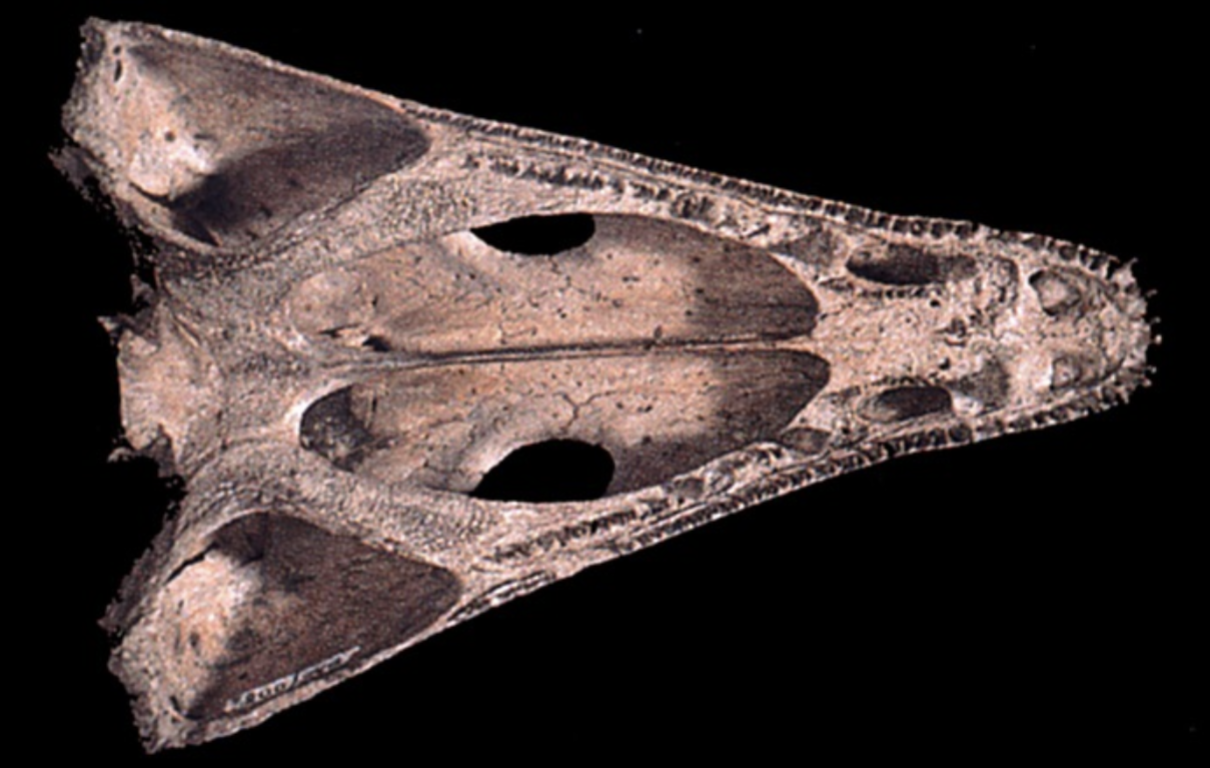
Lissamphibian (Permian)
Pedicellate teeth (Dissorophids juveniles too)
intercentrum dominant
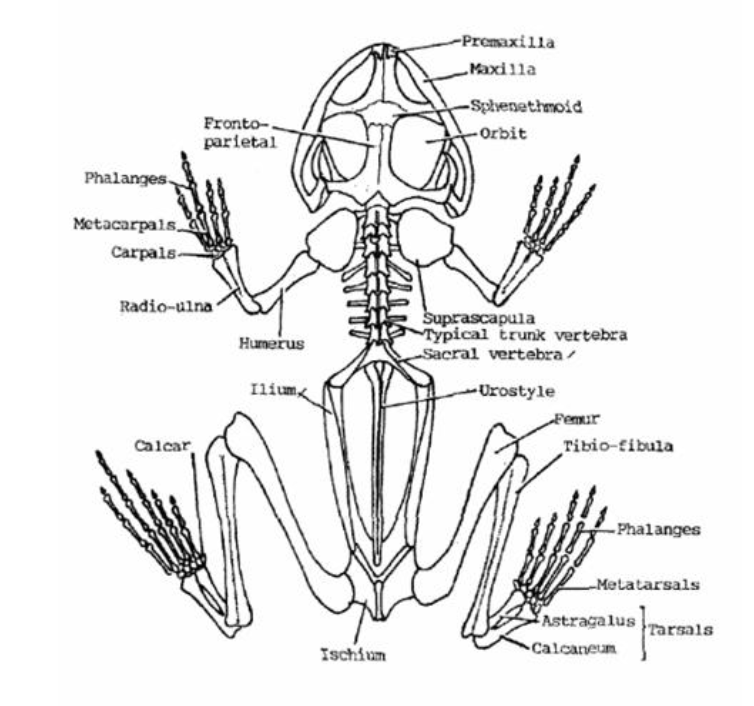
Lepospondyl (Carboniferous)
NODE
tabular parietal contact in skulls
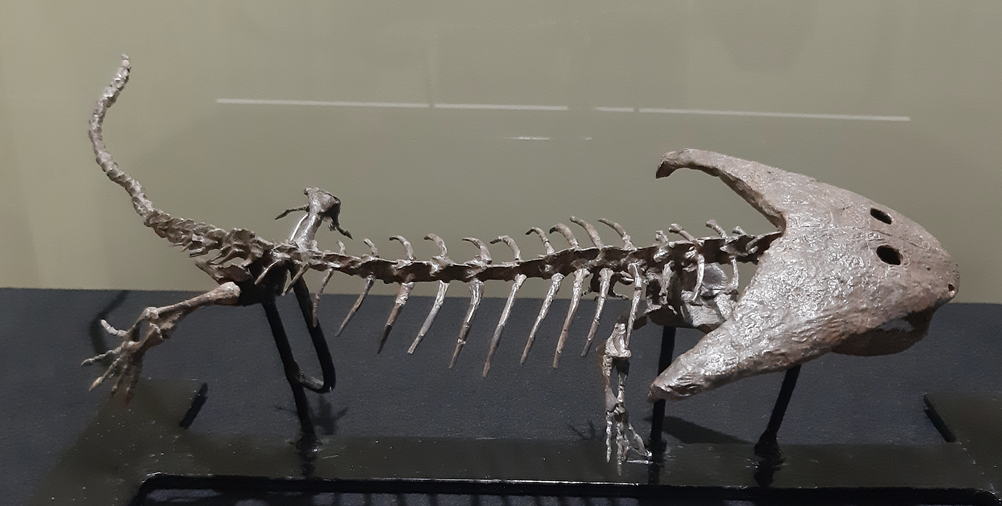
Lepospondyl skull
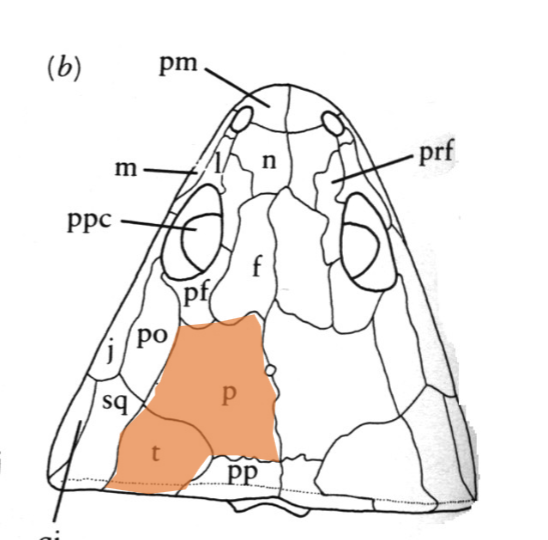
Amniote (Carboniferous)
NODE
astragalus (3 fused tarsals)
atlas-axis complex
amniotic egg
internal fertilization
waterproof scales/skin
large, complex lungs
loss of lateral line system
loss of otic notch
Anthracosaur (Carboniferous)
NODE
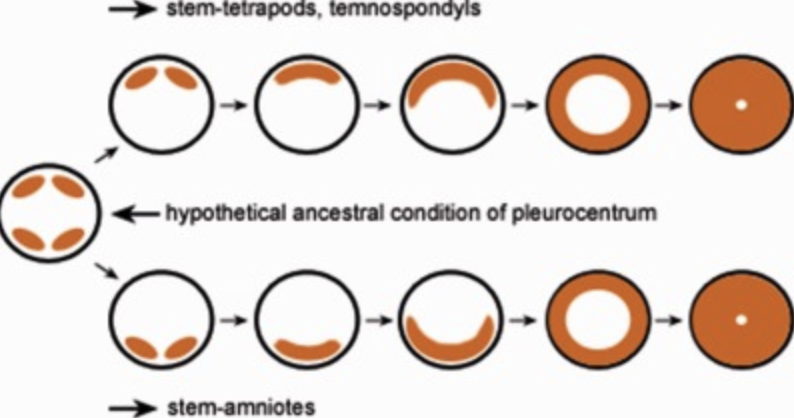
pleurocentrum dominant
intercentrum vs pleurocentrum dominant
Synapsid (Carboniferous)
NODE
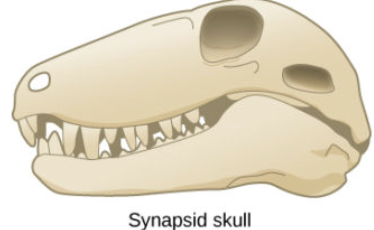
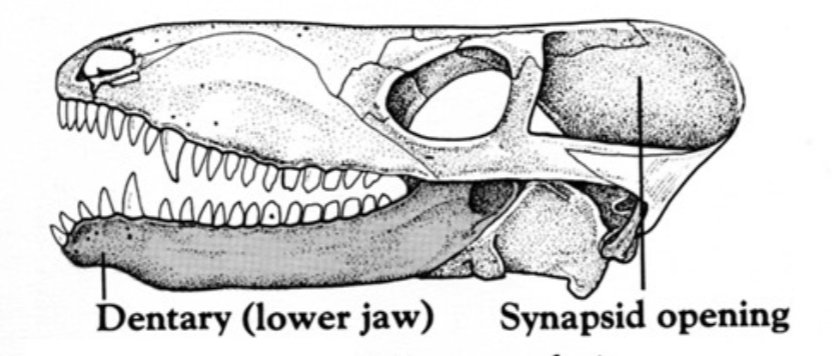
a single pair of temporal openings (fenestrae) in the skull behind the eye sockets
mammals and kin
Increased oral processing of food
Elevated levels of metabolism
Therapsid (Permian)
NODE
Enlarged temporal opening faces dorsally
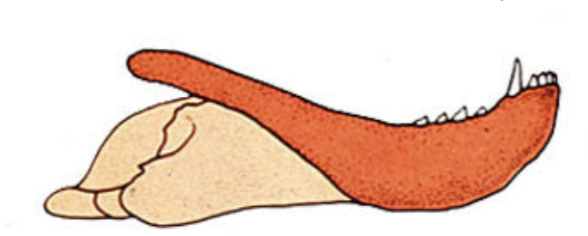
Incised angular bone
Initial changes toward upright posture
Cynodont (Permian)
NODE
Mammal (Triassic)
DS jaw joint
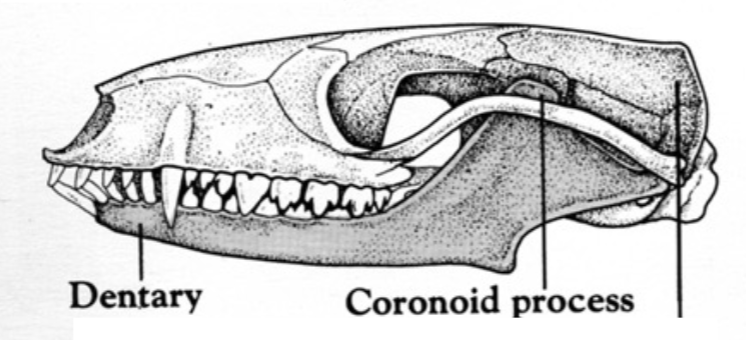
Groups to know
Dueterostomes (NODE)
Echinoderms
Hemichordates
Chordates (NODE)
Urochordates
Cephalochordates
Vertebrata (NODE)
Heterostracans
Lamprey
Osteostracans
Anaspids
Gnathostomes (NODE)
Placoderms
Acanthodians
Osteichthyes (NODE)
Actinopterygiians (NODE)
Polypterus
Neopterygiian (NODE)
Teleost
Sarcopterygiian (NODE)
Coelocanths
Lungfish
Tetrapods (NODE)