Marketing Program - Product and Promotion
 Call Kai
 Learn
Learn Practice Test
 Spaced Repetition
 Match
Match Flashcards
 Knowt Play
1/24

There's no tags or description
Looks like no tags are added yet.
Name | Mastery | Learn | Test | Matching | Spaced | Call with Kai |
|---|
No analytics yet
Send a link to your students to track their progress
25 Terms
how can consumer goods be classified
convenience goods - bought frequently with minimal efforts
shopping goods - purchased less frequently
specialty goods - high-involvement products and purchased infrequently
unsought goods - purchased infrequently as these are products that consumer wouldn’t normally think of buying
what are the three product propositions
Core, Embodied, Augmented
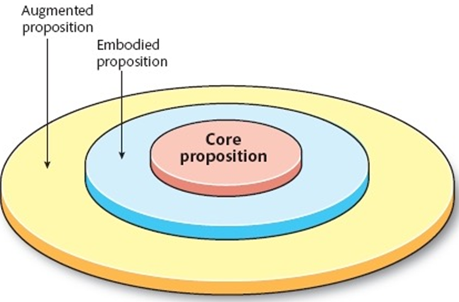
what is core proposition
its generic
its commodity
its meets buyers’ or users’ basic needs
its easy to copy
what is the embodied proposition
its expected
the value is engineered to satisfy a specific target’s minimum purchase conditions
consumers will often expect other features that are typical of most providers in industry
what is the augmented proposition
it has the added values satisfying non-functional as well as functional need
refers to the embodied along with all the additional factors that distinguish it from similar products offered by competitors
product lifestyles
products will go through several stages in their lifestyle
each stage requires different strategies for promotion, distribution and pricing due to changes in competition
what are the stages in product lifestyle
development
introduction
growth
maturity
decline
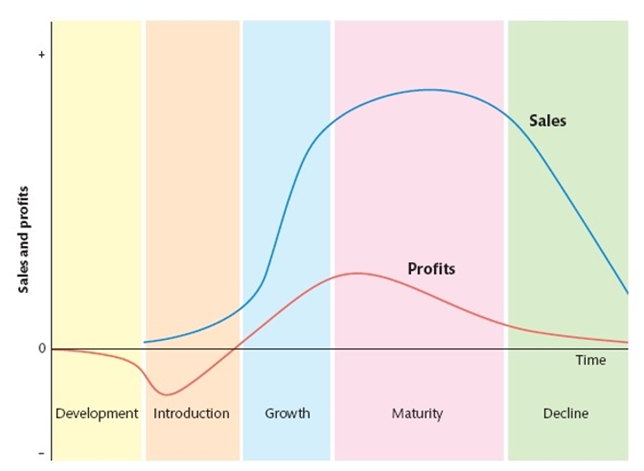
what is the development stage
it is where the company invests heavily in R&D - incurs significant expenses
what is the introduction stage
if R&D is successful the product is then launched and heavily advertised
the revenue from sales will not be sufficient to cover advertising costs - so profits are neg
what is the growth stage
if product succeeds, sales grow and cover expenses, the advertising efforts decrease
what is the maturity stage
competitors attract to market so companies may need to increase advertising to combat them or lower the prices to maintain market share
what is the decline stage
if the product is not strong enough or cannot withstand competition, it will begin to decline and advertising efforts are minimal
what does process of diffusion look like
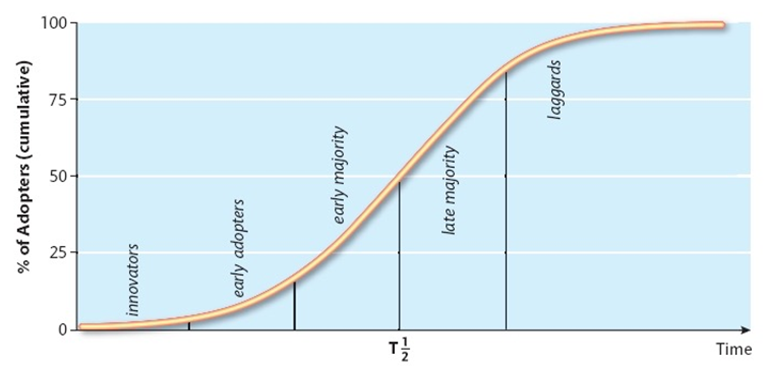
it shows the categories of consumers in terms of adopting to new products
the innovators
the first category of consumers to adopt a new product
they are eager to try new solutions
they are willing to take financial and other risks
they are prepared to pay premium prices
the early adopters and early majority
EAs are more cautious than innovators but still eager
these two and innovators are CRUCIAL for companies as they support new products in the early stages of lifecycle
the late majority
they are more risk-averse and price-sensitive
they sustain the “cash cow” products in a company’s portfolio
the laggards
only will adopt the product when the majority of consumers have moved onto newer solutions
what is a bran
Keller 1998 - a set of mental associations, held by the consumer, which add to the perceived value of a product or service
why do consumers like brands
as it helps them identify their preferred products
it informs consumers about source of product
it helps gauge a level of quality
it reduces level of perceived risk and improves shopping experience
why do manufacturers and retailers like branding
it enables premium pricing
it develops customer loyalty/retention and repeat-purchase buyer behaviour
it contributes to corporate identity programmes
it provides legal protection
Store brands Vs Manufacture brands
store:
advertising costs are lower - product can be offered at lower price
if store has strong reputation this can simplify consumer decision making
offers more flexibility as no need to coordinate decisions on discounts, bundling, or similar strategies with manufacturers
manufacturer:
avoid deep discounts and bundling with other brands
some manufacturers just destroy their leftover stock instead of discounting it to protect brand image
what are caveats of manufacturer brands
usually choose to sell under store labels when they have excess capacity that they won’t sell at discount
they may opt to produce extra units to lower overall manufacturing and distribution costs
different brand policies
individual branding/multi-brand policy:
requires each product offered by an organisation is branded independently of others
family branding/multi-product policy:
requires all products owned by company use the organisation’s name, either entirely or in part - umbrella brand
pros and cons of umbrella branding
Pros:
if umbrella has strong favourable associations, adding new brands requires less investment in advertising
Cons:
if new addition under umbrella is very different to original brand - the brand image may be diluted
Pros and cons of individual branding
Pros
allows market to develop formulations and positioning to appeal to diff segments in diff markets
if new line fails - firm has less damage to image
Cons
much higher marketing costs, resulting in reduced brand profitability