Plant Structure and Growth: Roots, Shoots, and Tissue Types
 Call Kai
 Learn
Learn Practice Test
 Spaced Repetition
 Match
Match Flashcards
 Knowt Play
1/27

There's no tags or description
Looks like no tags are added yet.
Name | Mastery | Learn | Test | Matching | Spaced | Call with Kai |
|---|
No analytics yet
Send a link to your students to track their progress
28 Terms
What is primary growth in plants?
Growth that occurs at the tips of roots and shoots, resulting in increased length.
What are the two layers of mesophyll in eudicot leaves?
Palisade mesophyll (upper layer) and spongy mesophyll (lower layer).
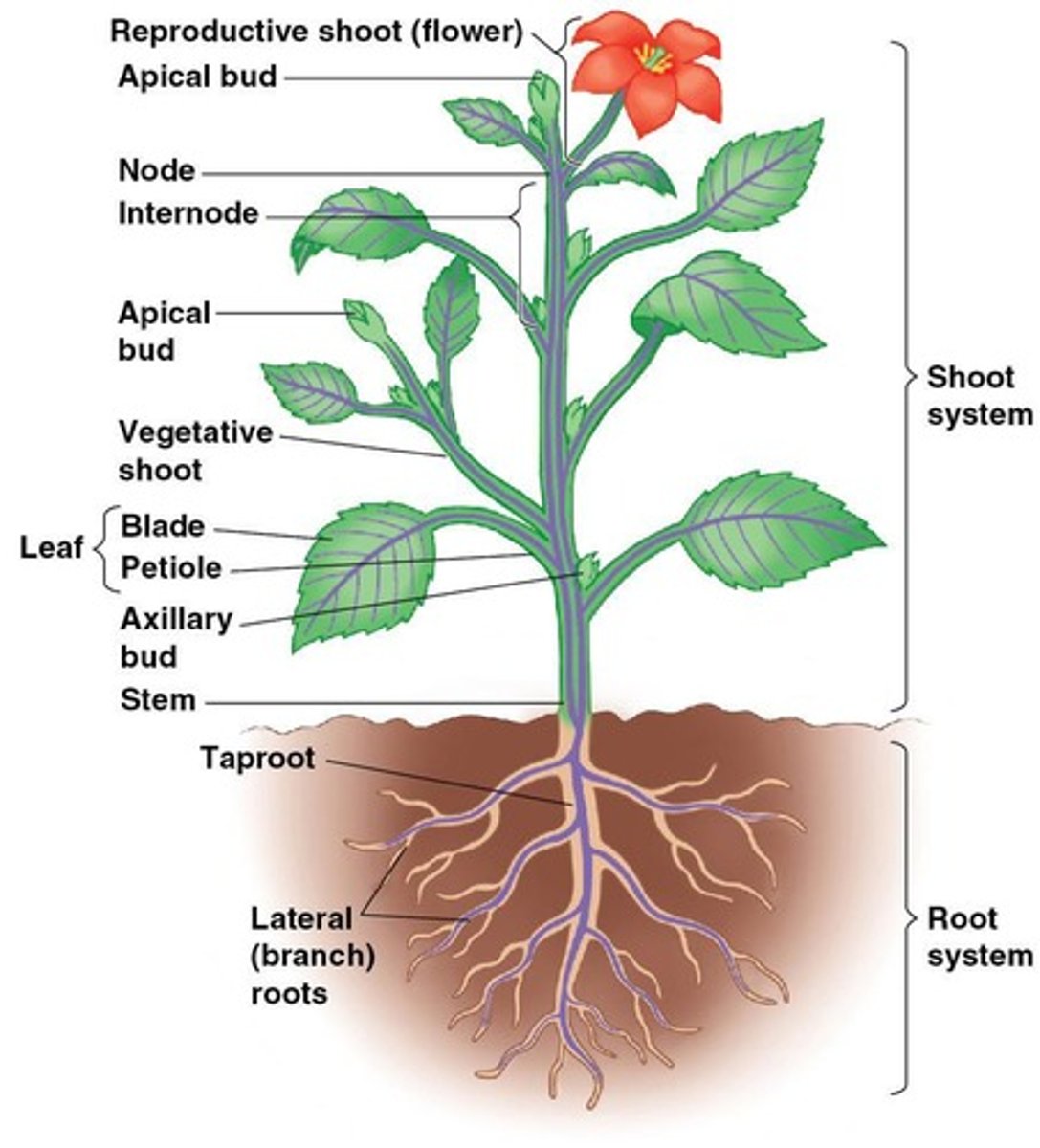
What are the two main systems of vascular plants?
Root and Shoot Systems
What is the primary function of the root system?
To absorb water and minerals, anchor the plant, and store food.
What are root hairs and their function?
Extensions of epidermal cells that increase the absorptive surface of the root for water and mineral absorption.
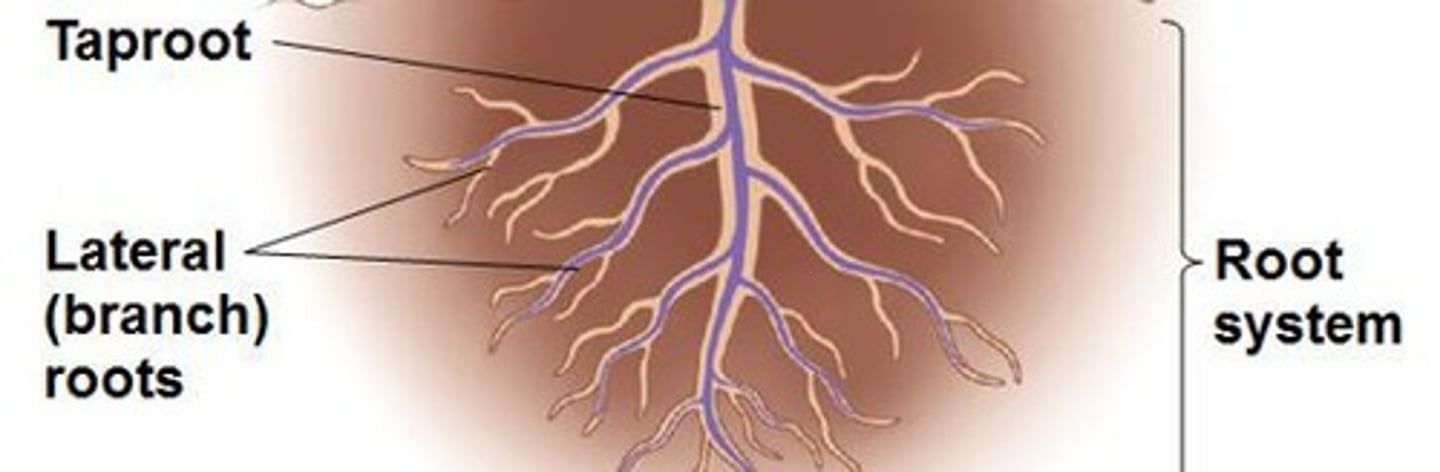
What is the difference between taproot and fibrous root systems?
Taproots are thicker and grow deeper (e.g., beet), while fibrous roots are shallower and provide support for tall plants (e.g., corn).
What is an example of an evolutionary adaptation of roots?
Tropical trees grow roots from the trunk base for support; mangroves have 'air roots' for oxygen acquisition.
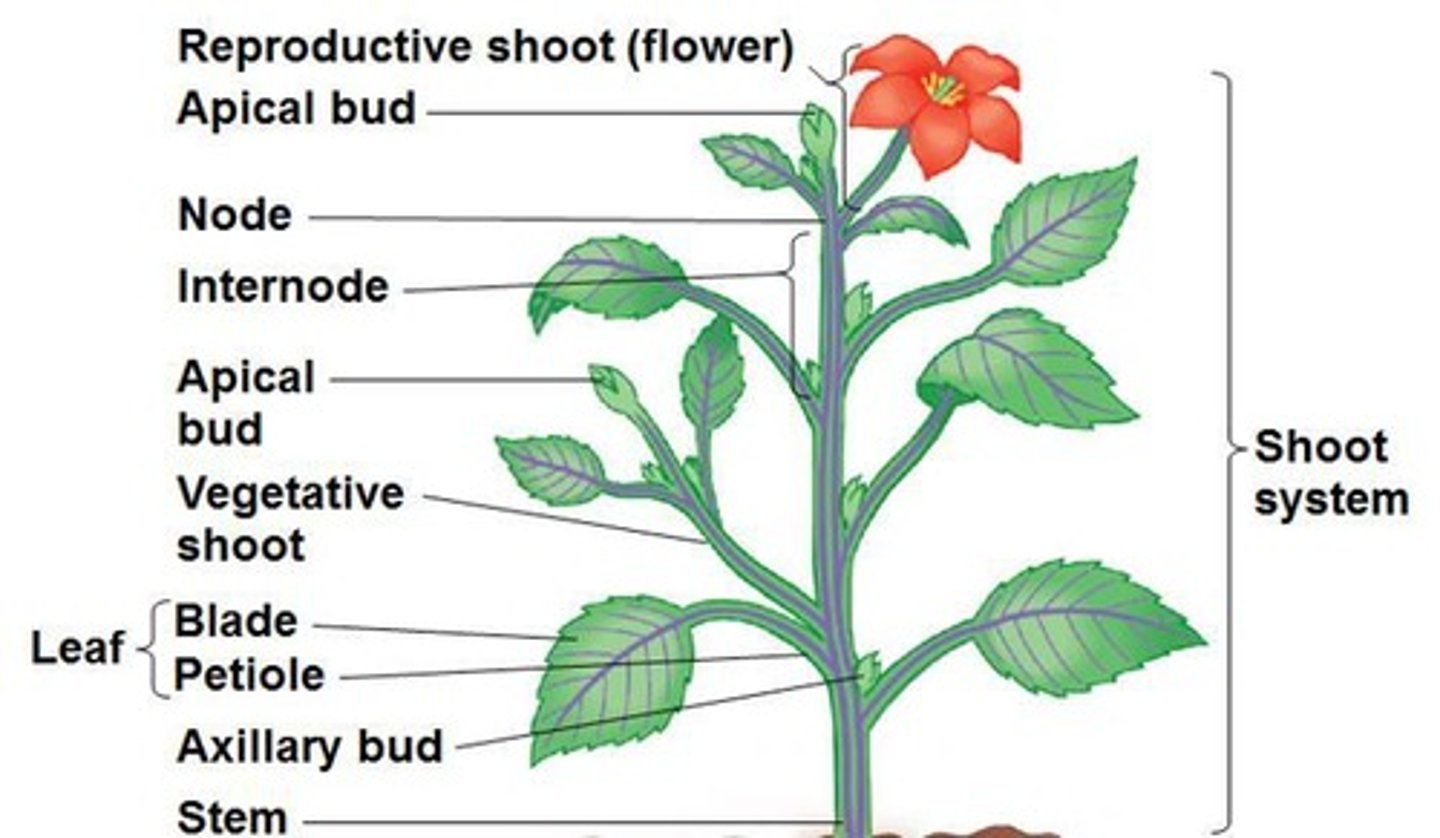
What does the shoot system consist of?
Stems and leaves, which are usually above the ground.
What is the main purpose of stems in plants?
To transport nutrients and maximize photosynthesis by elongating and supporting leaves.
What are apical and axillary buds?
Apical buds are at the tip of the stem and develop into branches, while axillary buds are at nodes and can develop into new shoots.
What is the main photosynthetic organ of a plant?
The leaf.
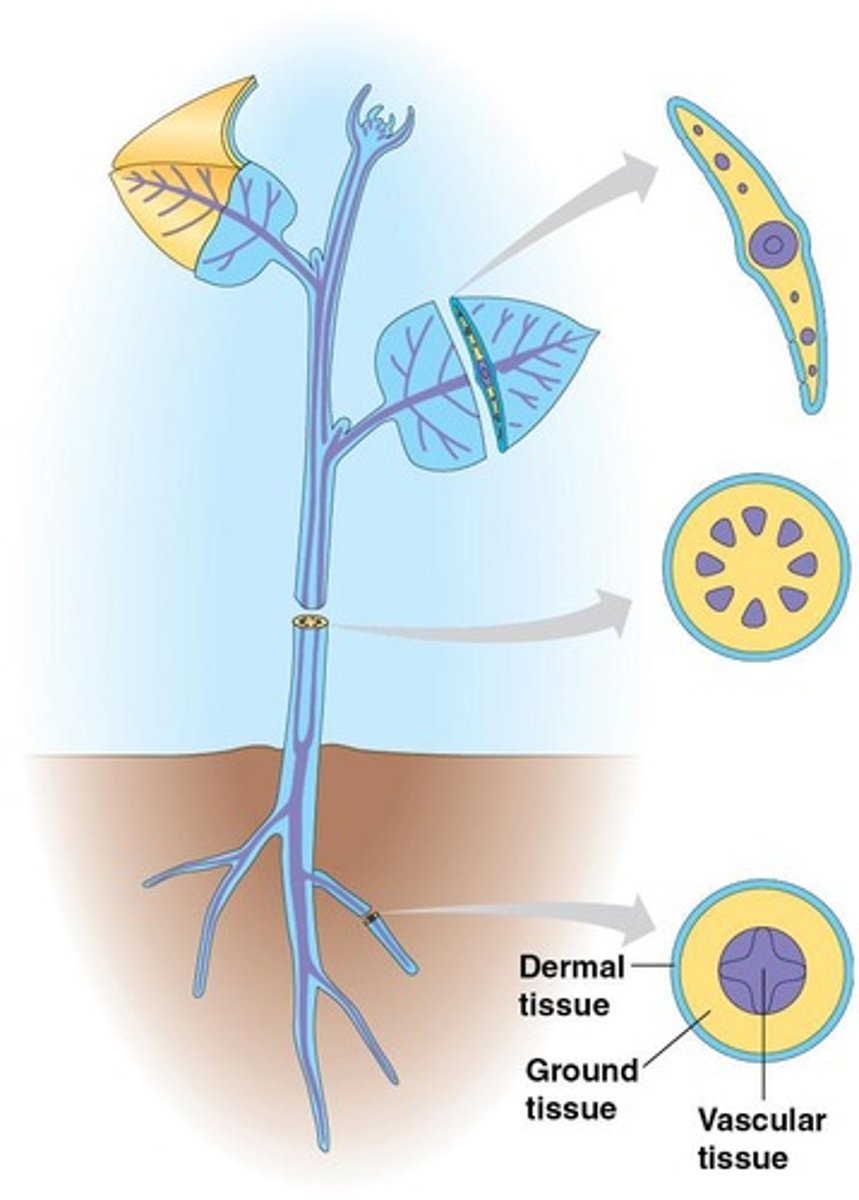
What are the two main types of vascular tissue in plants?
Xylem and phloem.
What is the function of xylem?
To conduct water and dissolved minerals upward from roots to shoots.
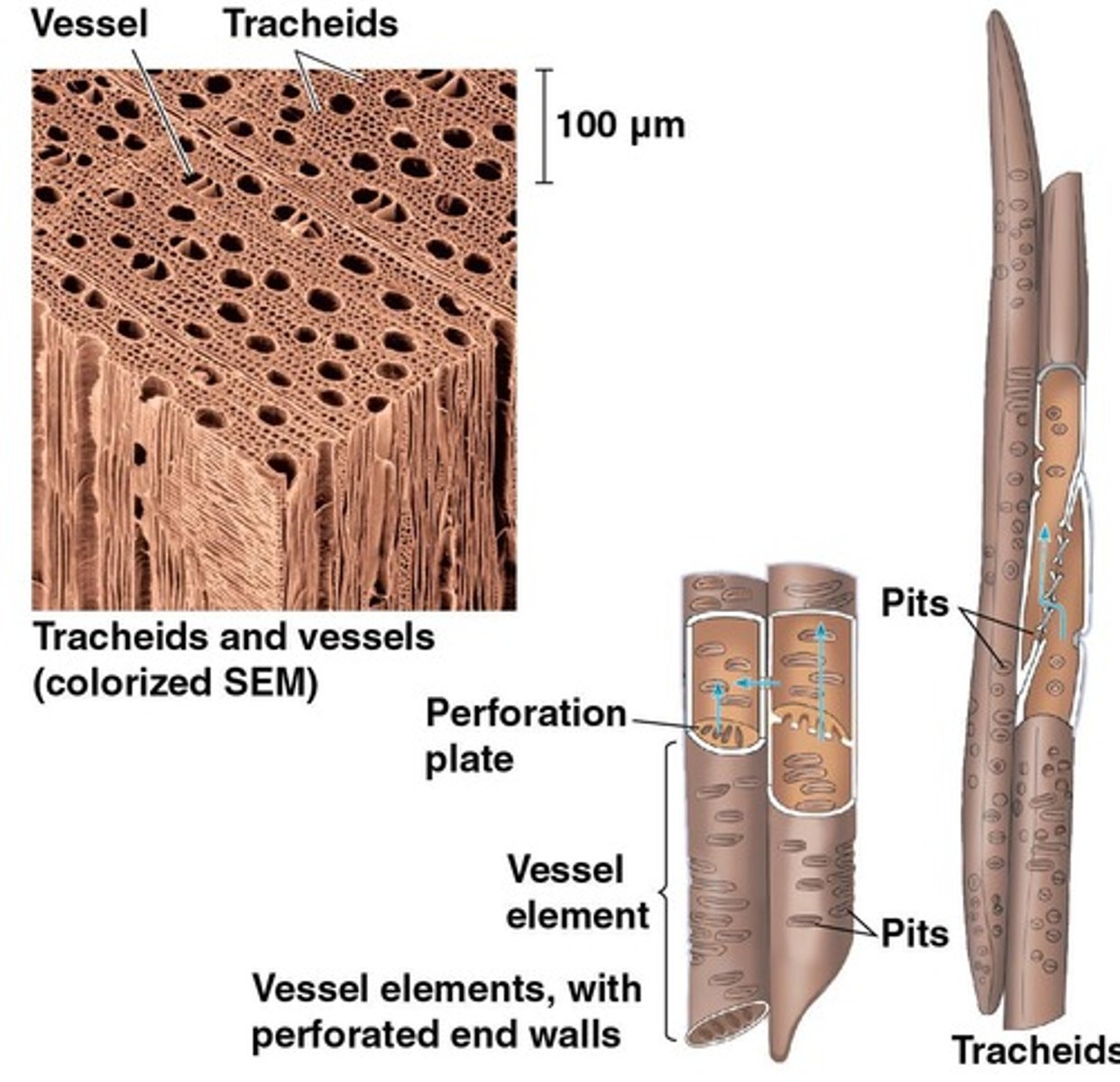
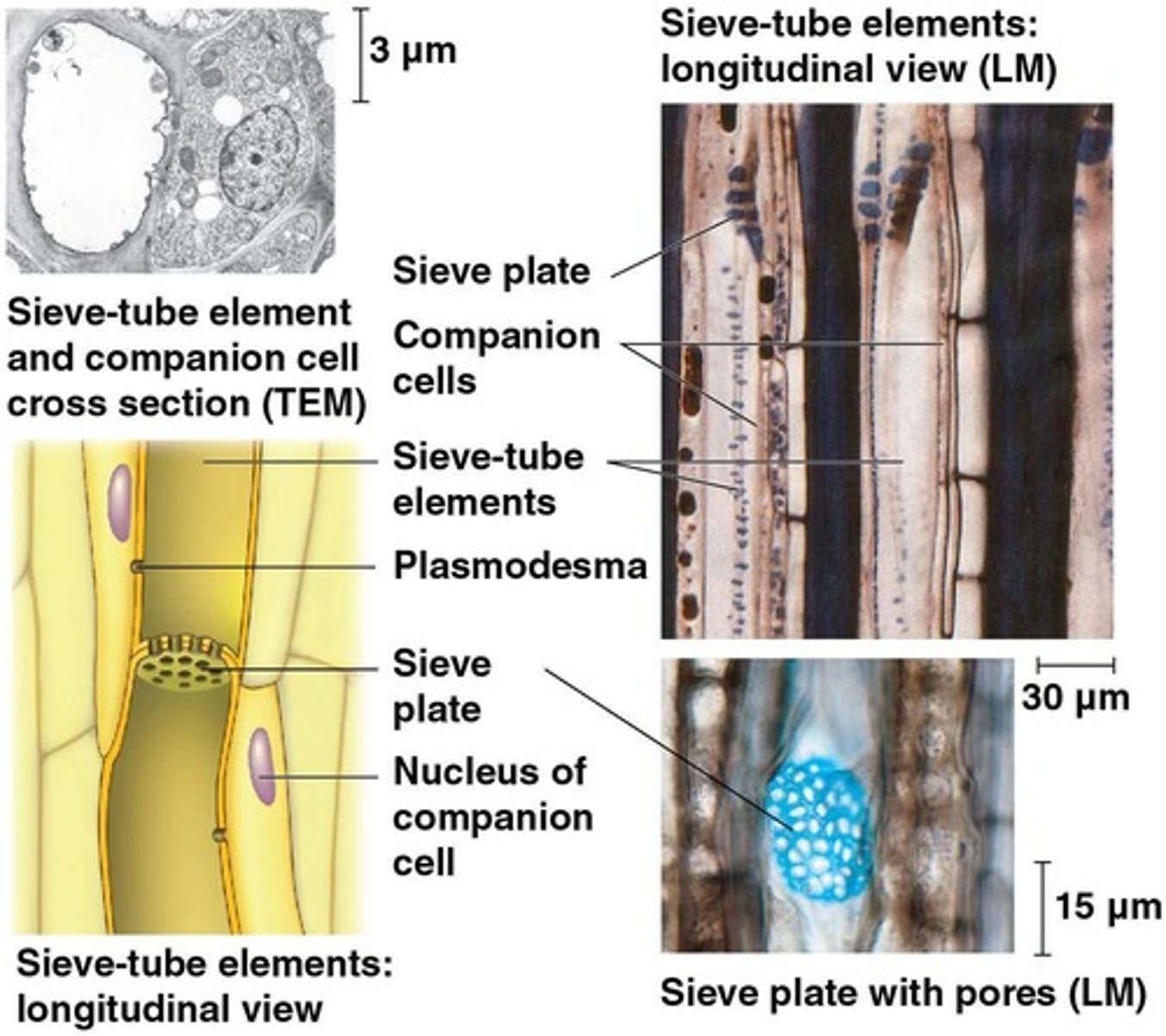
What is the function of phloem?
To transport sugars from leaves to other parts of the plant.
What is dermal tissue in plants?
A protective outer coating that defends against pests and prevents water loss.
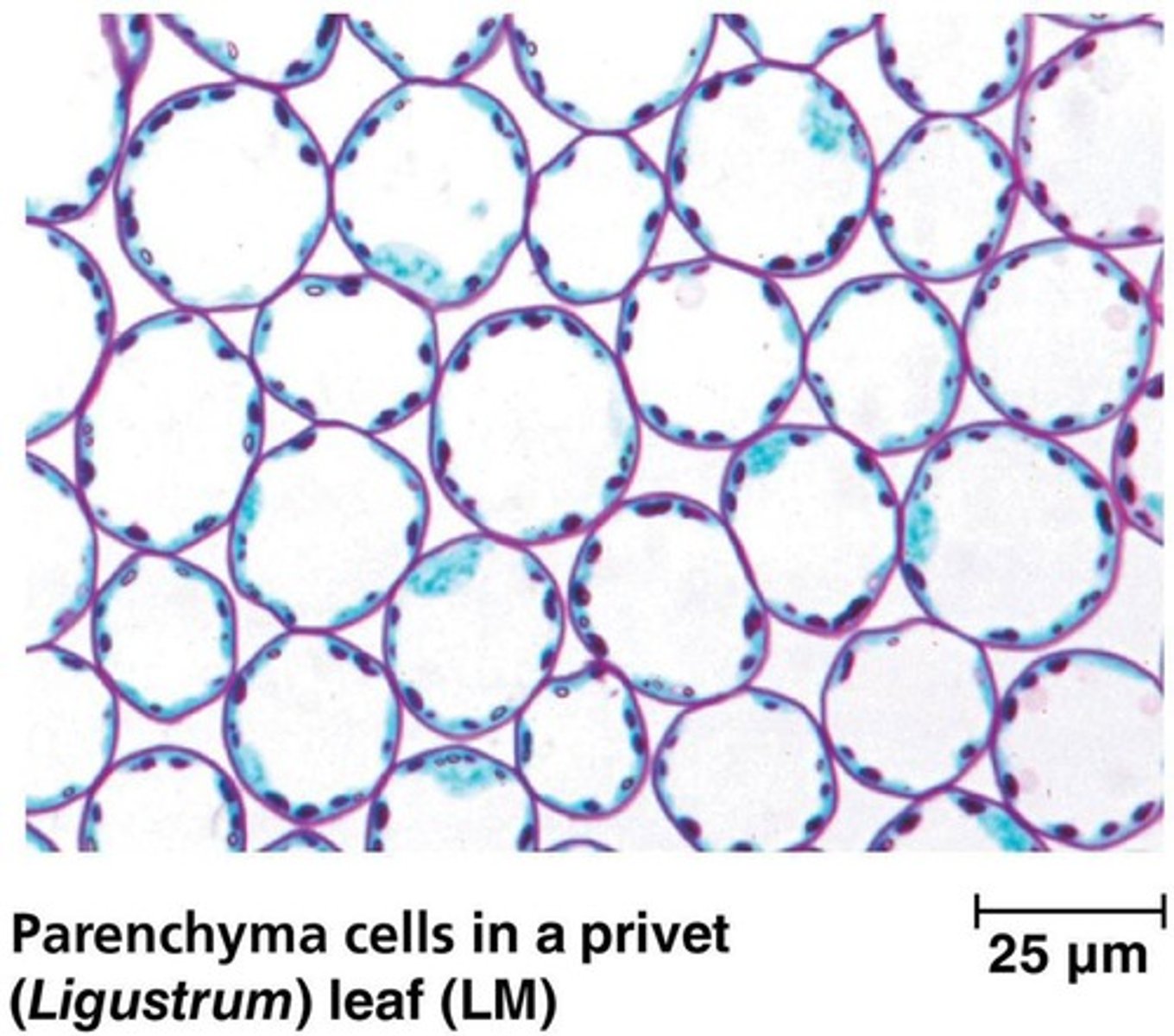
What is ground tissue and its functions?
The most common tissue in plants, involved in storage, photosynthesis, support, and short-distance transport.
What are meristems?
Regions of undifferentiated cells in plants that allow for continuous growth.
What is secondary growth in plants?
Growth that increases the thickness of stems and roots, primarily in woody plants.
What are the two types of lateral meristems?
Vascular cambium and cork cambium.
What does the vascular cambium produce?
Secondary xylem (wood) and secondary phloem (inner bark).
What is the role of cork cambium?
To produce periderm (outer bark) that protects the plant.
What is the structure of a eudicot root in cross-section?
Xylem has a starlike appearance with phloem between the arms.
What is the structure of a monocot root in cross-section?
A core of parenchyma cells surrounded by alternating rings of xylem and phloem.
What is mesophyll in leaves?
The ground tissue in a leaf, sandwiched between the upper and lower epidermis, involved in photosynthesis.
What is the function of stomata in leaves?
To allow gas exchange for photosynthesis, regulated by guard cells.
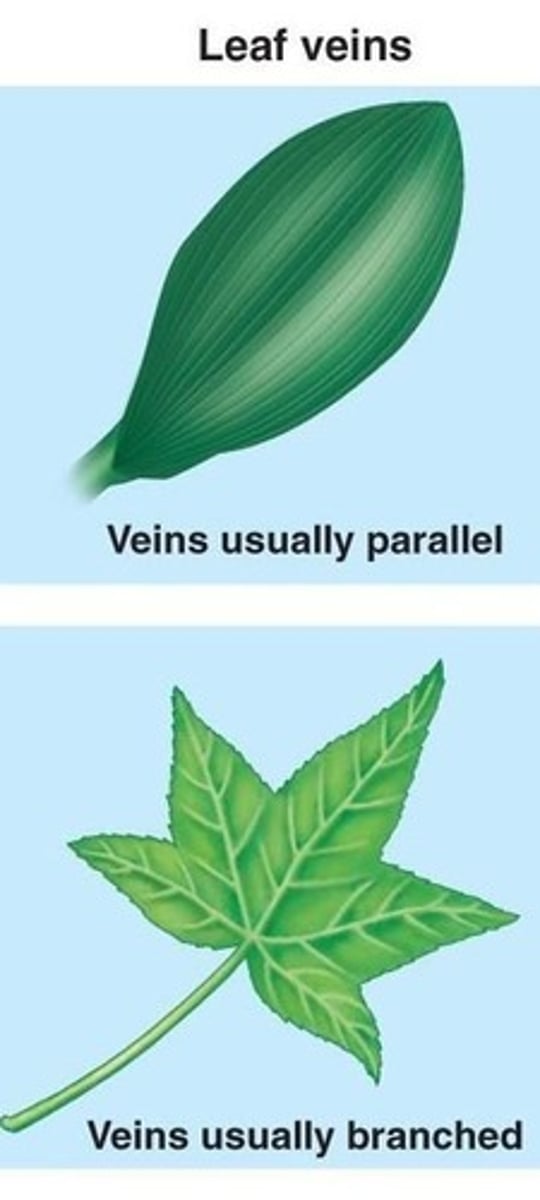
What is the role of leaf veins?
To protect and regulate the movement of substances between vascular tissue and mesophyll.
What is the significance of secondary growth?
It allows for increased thickness and support in stems and roots of woody plants.
Still learning (2)
You've started learning these terms. Keep it up!